L’Association
Internationale pour la Peinture Murale Antique (AIPMA) a été fondée à
Cologne en 1989 par un groupe de chercheurs de divers pays. Elle a pour
but de promouvoir les recherches scientifiques et techniques dans le
domaine de la peinture murale antique et d’établir des liens entre
chercheurs, techniciens ou institutions. L’Association organise, tous
les trois ans, un colloque international; le dernier s’est tenu à
Lausanne du 12 au 16 septembre 2016. Les actes en sont régulièrement
publiés. L’Association édite également un Bulletin bibliographique :
Apelles. À l’heure actuelle, L’Association compte des membres dans une
vingtaine de pays.
The Hungarian Academy in Jerusalem officially opened its doors on 1 July
2025, after the Hungarian Government made the historical decision to
establish a permanent scientific and cultural presence of the Hungarian
state in the Holy City. It is the second time that Hungary established a
state academy abroad, under its national flag, after the 1927 erection
of the Hungarian Academy in Rome, a century ago. In 2025, we are
celebrating the bicentennial of the 1825 foundation of the Hungarian
Academy of Sciences in Budapest as well, alongside the commemoration of
the 130th anniversary of the establishment of the Hungarian Historical
Institute in Rome (erected by Bishop Vilmos Fraknoi in 1895).
We have an article that is about to appear in the Journal of Open Humanities Data
on “Perseus and the Open-Source Ecosystem of Greco-Roman Studies,” but I
thought I would precede that more formal discussion with a very recent
example of what you can do in this open ecosystem. The discussion below
talks about how quickly we were able to provide a usable first digital
version for the Dionysiaca of Nonnus. For now, Nonnus appears in the exploratory Perseus Multitext Viewer and is hosted on Github pages: https://gregorycrane.github.io/persverscomp/.
I was looking at Hypotactic,
David Chamberlain’s foundational site with metrical analysis of Greek
and Latin poetry — 250,000 lines (probably more) and found this update
from July 12, 2026.
David was not kidding about having made a lot of corrections — I went through and checked the GitHub repository.
Because David had put so much work into
cleaning up our file and adding metrical analysis, I thought about
bumping Nonnus up — way up — the list of those works I am experimenting
with in the exploratory Perseus Multitext Viewer.
Adding the Greek was easy enough but most
readers also want an English translation. I looked back at the 1940 Loeb
edition and was very pleased to see that W. H. D. Rouse, one of my
favorite British translators from the 20th century, had produced the
translation. After I looked into converting the Rouse translation into
digital form, however, I thought to check ToposText and discovered that their Nonnus was Rouse and was based on a digital version that Theoi.com had created.
If we were entering the translation, we would try to keep the notes in
place and perhaps add some other features, but we can’t do everything
and we are very behind in providing translations.
ToposText uses HTML. Not so long ago, I
would have written a program to convert their HTML into XML. Now I was
able to ask OpenAI’s 5.6 Sol model to do the conversion for the whole
work. Thus we had the traditional Greek text with English translation.
But, of course, David Chamberlain had
labored over the text of Nonnus so that he could produce a metrical
analysis of the poem. Chamberlain publishes his work under a Creative
Commons license. Several years ago, I wrote a program to convert the
HTML format that David has used into something that I found more
convenient. This summer I asked Claude to write a program that would do
the conversion — which it did in a few minutes of work. A handful of
issues arose but I soon had what seems a plausible first version of the
Chamberlain analysis.
And, of course, we can provide more
support than just adding a translation. Giuseppe Celano had published
morpho-syntactic analyses (a Treebank) for each of the c. 125,000 words
in the Dionysiaca. This provides the dictionary form for each inflected form in the text, as well as its syntactic role and dependency.
Ideally we will add alignments at the word
and phrase level between the Greek source text and translation. When
readers have both translation alignments and treebanks, they can begin
to engage directly with source texts in unfamiliar languages. Automatic
translation alignment, however, remains tricky (though we can do a much
better job thanks to the Ugarit
project). On the other hand, Large Language Models (LLMs) have become
proficient at providing not only literal translations of Greek and Latin
but also word-by-word contextual glosses. We used DeepSeek to augment
Giuseppe Celano’s Opera Graeca Adnotata (OGA) treebank with translations and glosses to provide another layer of support for readers.
Figure 3: OGA Treebank (via Mark Bilby’s reformatting) for Nonnus with glosses and translation added by DeepSeek (deepseek-v4-pro).
Those working with large screens can open
up to seven windows side-by-side, allowing them to compare different
categories of data (or different translations or editions).
Figure 4: Four columns in the Perseus Multitext Viewer.
The automatic glosses are good but not perfect. Thus, we draw upon Helma Dik’s short definitions of Greek
(based originally upon, but a massive improvement over, short
definitions published by Perseus many years ago) to provide a short
explanation for each word. While most users will exploit the glosses as a
reading aid (as with traditional interlinear translations), the digital
glosses can be searched and used for semantic analysis.
Figure 5 shows those words in Homer and in
Nonnus with glosses that contain “anger.” Obviously, we need to
consider English synonyms (e.g., “anger,” “wrath”, “fury” etc.) but we
can use BERT-like systems to locate synonyms and mitigate the problem.
The figure above also includes some basic statistical information so
that readers can assess the significance of the results. In the figure
above, the ranges for the Iliad and Odyssey do not overlap. Thus, by the
metric that we have chosen, we may be 95% confident that “anger” would
be more frequent in the Iliad than the Odyssey if both works were
infinitely large. Again, statistical analysis must be used critically
but we need some to beyond comparing raw numbers when comparing search
results.
Finally, one of the charms of the Dionysiaca is that it refers to places that we can locate on a map. Much of the Odyssey
takes place in a never-never land that later Greeks eagerly linked to
their own world, at least some of us would argue that it is important to
imagine the world of gods and monsters through which Odysseus travels
as being fundamental separate from the world in which humans live. The
authors of later epics wanted to connect myths to their world and often
made sure to locate their events in the geographic models of their time.
ToposText had acquired the translation so that it could link the place
names to their gazetteer and then plot them on a map.
ToposTexts makes their data as well as
their texts available under an open license. We were thus able to
provide a map that illustrate the places mentioned in any book or
passage of the Dionysiaca.
Figure 6: places referenced in book 10 of the Dionysiaca with data published by ToposTexts in the Perseus Multitext Viewer.
A quick look at the fine print above will
show yet another layer of open Digital Classics: the basemaps for the
Greco-Roman world are from the Consortium of Ancient World Mappers.
While LLMs pose a range of challenges (including bot swarms that have crippled Perseus 4),
it is important to emphasize that I would not have been able to create
the integrated reader above this summer if Large Language Models had not
advanced so quickly. I use Gemini (to some extent) and Claude
(primarily) to design the data-structures and to generate the front end.
The reader currently runs on Google Pages and can be moved to Tufts for
long term support. (The source code is here and the data for the reader is here).
LLMs also allowed me to convert the ToposText HTML into Perseus
compatible XML and the Hypotactic HTML into a tab-delimited format. LLMs
also allowed me to fashion a viewer for the ToposText geospatial data
and the CAWM maps.
Conclusion: In the early
21st century, Digital Classicists, with the papyrologists playing a
leading role, adopted the practice of publishing their data under open
licenses. Decades later we can see the benefits compounding, as data
circulates from one project to another, acquiring new features as it
moves. We can create effective new reading environments even for less
read authors such as Nonnus, allowing readers to engage directly with
sources in ways that were not feasible in print culture.
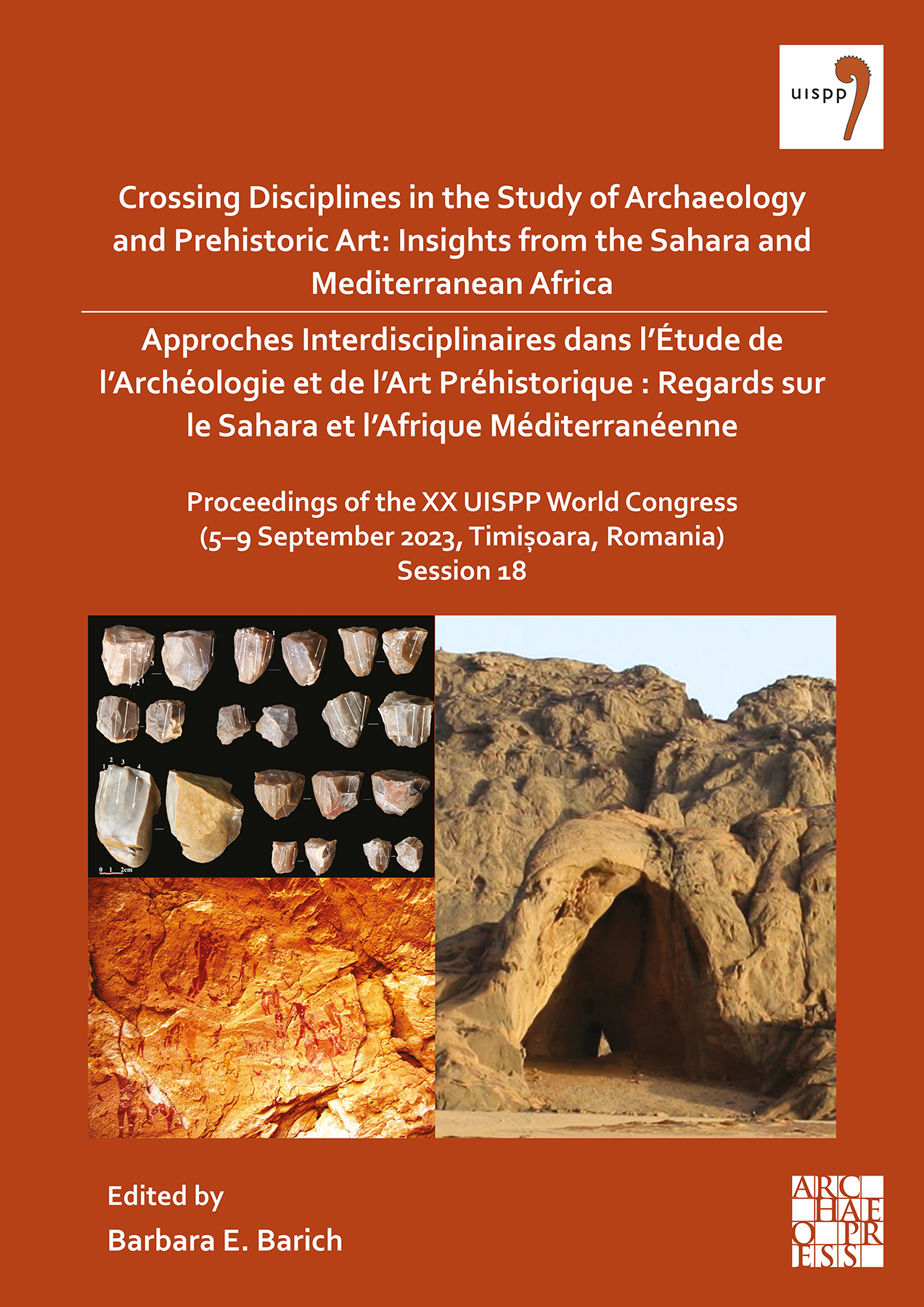
This
volume publishes part of the scientific contributions presented at the
XX UISPP World Congress in Timișoara, combining studies on North African
prehistoric art – both parietal and portable – with field investigation
results. Emerging from the session organised by the Commission ‘Art and
Civilizations of the Sahara during Prehistoric Times’, this book
demonstrates how Saharan research offers a comprehensive representation
of the society, environment, and intellectual world of past human
groups. In doing so, it embraces the inspiration of the congress
organisers, who established interdisciplinarity as the central theme of
the event.
The volume opens with an overview of research on the rock art corpus,
spanning from historical chronological classifications to studies
focused on the meaning of the artworks. The crisis of these traditional
approaches has given rise to the current trend, which focuses on digital
recording and image-enhancement technologies to facilitate
interpretation. Beyond parietal art, two chapters present valuable
studies on the ornamentation of ostrich eggshells, an ancient tradition
originating in the late Pleistocene and developing throughout the
Holocene. The Capsian environment of the Eastern Maghreb forms the focus
of these analyses, geographically centred between Tunisia and Algeria.
The illustration of excavations in two recently discovered,
significant caves leads into the Sahara – specifically the Saharan Atlas
and the Ahaggar region – presenting unpublished data from ongoing
research. The volume concludes with a fascinating topic in Saharan
protohistory: the ‘Chariot Peoples’ who introduced horse-drawn vehicles
to the Sahara. The author demonstrates how the technical features of the
Saharan harness replicate identical technological solutions used in
Pharaonic Egypt.
Contents
List of Figures and Tables
Foreword to the XX World Congress Proceedings Series by the UISPP President and General Secretary
Avant-propos à la collection des Actes du XXe Congrès mondial par le Président et le Secrétaire général de l’UISPP
Foreword to the Proceedings of the XX UISPP World Congress, Timișoara, 5–9 September 2023
Avant-propos aux Actes du XXe Congrès mondial de l’UISPP à Timișoara, 5–9 septembre 2023
Searching for Meanings and Connections – Past and Current Trends in Saharan Rock Art Research –Barbara E. Barich
Données paléoenvironnementales et culturelles dans la
Tassili-Tan-Ahaggar (Sahara central, Algérie) : premières observations
dans la grotte de Telem Fezza –Yasmina Damouche, Hayette Berkani et Iddir Amara
L’autruche Holocène dans les Sociétés de l’Afrique du Nord –Lotfi Belhouchet et Colette Roubet
L’art préhistorique à travers les gravures et incisions sur l’oeuf
d’autruche : étude des représentations géométriques et zoomorphes à Bir
Oum Ali durant l’Iberomaurusien –Khansa Hannachi
Exploitation de la grotte de Kheneg el-Ghar (Montagnes des Ksour,
Atlas saharien) par les derniers chasseurs-cueilleurs durant l’Holocène –Saida Kasri, Ilham Bentaleb et Iddir Amara
L’Homme Capsien : semi-nomade à travers ses outils en silex et la céramique –Khansa Hannachi
Quelle retenue pour les attelages de chevaux de la protohistoire saharienne au regard de celle du Nouvel Empire égyptien ? –Christian Dupuy
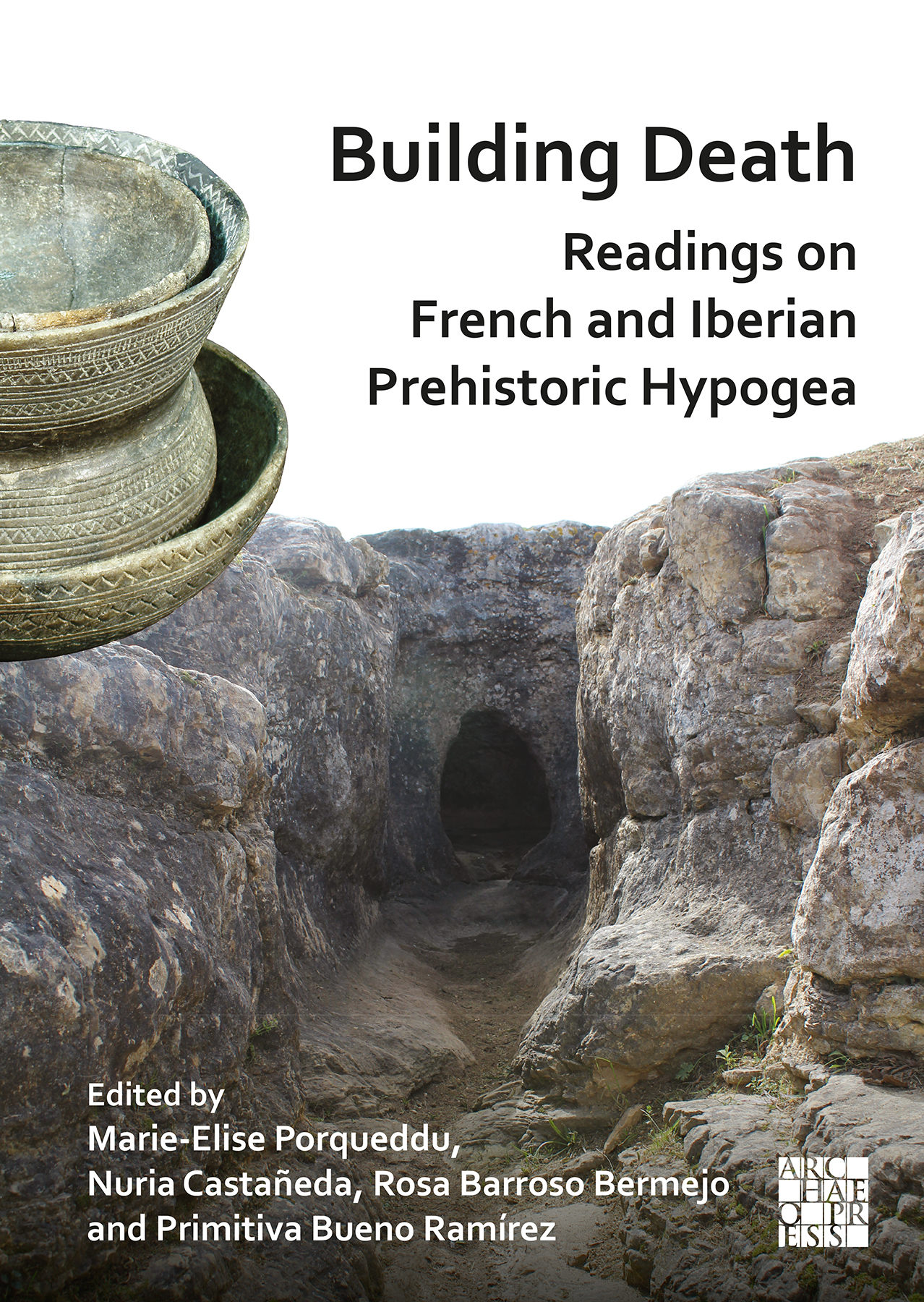
Building Death
analyses the role of hypogea within the diversity of funerary
constructions employed in the Western Mediterranean since the Neolithic.
Their underground nature, entirely or partially carved out rock, and
their architecture, sometimes hybrid, elevates them to the status of
complex tombs exhibiting a wide variety of forms and functions.
The book derives from an international conference held on 23 November
2023 at the University of Alcalá (UAH), in Alcalá de Henares (Madrid,
Spain), which brought together French, Portuguese, and Spanish
specialists on the subject. It offers a novel overview of the rich
assemblage of hypogea in Southwestern Europe. Papers address specific
studies of necropolises, regional syntheses, and broader perspectives
applied to the entire Mediterranean. The range of topics covers spatial
distribution, chronology, construction typologies, funerary practices
and grave goods, and even the contribution that can be made by analyses
of other underground features such as flint mines.
The Hypogean Phenomenon in Alentejo, South Portugal (4th and 3rd Millennia BC). A Summary – António Carlos Valera
The Necropolis of Valle de las Higueras, Huecas (Toledo).Cave 3 as a
Case-Study for the Characterisation of the Use of Bell Beaker Hypogea in
inland Iberia – Rosa Barroso Bermejo, Primitiva Bueno Ramírez, Rodrigo de Balbín-Behrmann
Displaying power: burial structures in Humanejos cemetery (Parla, Madrid) – Rafael Garrido-Pena, Raúl Flores Fernández, Ana Mercedes Herrero-Corral, Rodrigo Paulos-Bravo
Magdalena I: Funerary aspects in the Henares River lower valley (Madrid) during Late Prehistory – César Heras Martínez, Miriam Cubas Morera, Sergio Heras Bastida
What’s the relationship between hypogea and dolmens in the south of France? The example of the Fontvieille site in Provence – Xavier Margarit
Final Neolithic ornaments and rock-cut tombs in south-eastern France – Laurine Viel
Neolithic hypogea in the south-west of the Marne (France) – Rémi Martineau
Prehistoric rock-cut tombs in the western Mediterranean: a global approach to local phenomena – Marie-Elise Porqueddu
Flint Mining Know-How in the South European Neolithic – Nuria Castañeda
Dans
l'Antiquité, les pierres précieuses et semi-précieuses furent largement
appréciées pour leurs propriétés esthétiques, symboliques et supposées
protectrices et le plus souvent intégrées dans des bijoux, bagues ,
colliers, diadèmes. L'une des applications les plus remarquables des
pierres dans ce contexte était la gravure en intaille, une technique
consistant à sculpter des images en creux dans la pierre, créant ainsi
des empreintes inversées qui pouvaient être pressées sur des documents
ou des surfaces en argile ou en cire. Des artistes célèbres, connus par
les quelques exemplaires parvenus jusqu'à nous ont laissé leur nom sur
des pierres de grande qualité. Les Grecs et les Romains employaient
alors ces pierres gravées non seulement pour leur beauté, mais aussi
comme des sceaux personnels, des objets de pouvoir et des talismans
(souvent en association avec la vertu apotropaïque supposée de la nature
de la pierre)
In Antiquity, precious and semi-precious stones were widely appreciated
for their aesthetic, symbolic, and supposed protective properties, and
were most often incorporated into jewelry, rings, necklaces, and
diadems. One of the most remarkable applications of stones in this
context was intaglio engraving, a technique consisting of carving
recessed images into stone, thus creating reversed impressions that
could be pressed onto documents or clay or wax surfaces. Famous artists,
known from the few specimens that have survived to this day, left their
names on high-quality stones. The Greeks and Romans used these engraved
stones not only for their beauty but also as personal seals, objects of
power, and talismans (often in association with the supposed apotropaic
virtue of the stone's nature)
The AWOL Index: The bibliographic data presented herein has been programmatically extracted from the content of AWOL - The Ancient World Online (ISSN 2156-2253) and formatted in accordance with a structured data model.
AWOL is a project of Charles E. Jones, Tombros Librarian for Classics and Humanities at the Pattee Library, Penn State University
AWOL began with a series of entries under the heading AWOL on the Ancient World Bloggers Group Blog. I moved it to its own space here beginning in 2009.
The primary focus of the project is notice and comment on open access material relating to the ancient world, but I will also include other kinds of networked information as it comes available.
The ancient world is conceived here as it is at the Institute for the Study of the Ancient World at New York University, my academic home at the time AWOL was launched. That is, from the Pillars of Hercules to the Pacific, from the beginnings of human habitation to the late antique / early Islamic period.
AWOL is the successor to Abzu, a guide to networked open access data relevant to the study and public presentation of the Ancient Near East and the Ancient Mediterranean world, founded at the Oriental Institute, University of Chicago in 1994. Together they represent the longest sustained effort to map the development of open digital scholarship in any discipline.







 Posts
Posts


 Stumble It!

