Sunday, November 1, 2026

The Republic in Danger: Drusus Libo and the Succession of Tiberius


M. Scribonius Drusus Libo has always been considered an inexplicable victim of predatory prosecutors, destroyed in the changed conditions of Tiberius’ succession to the founder of the Principate. This is wrong. Drusus Libo conspired with a group of Tiberius’ opponents to challenge Tiberius’ right. The senate’s investigation of Drusus Libo will be examined in Chapter One and Chapter Two. It will be shown that Drusus Libo was treated in a way reminiscent of Catiline’s associate P. Lentulus Sura in 63 bc. Drusus Libo’s collaborators are then identified as a group of persons who supported first Gaius Caesar, then L. Aemilius Paullus and finally Agrippa Postumus. It is argued that the relationship of this group to Tiberius was beyond repair long before he succeeded Augustus. Tiberius’ succession to the supreme power in ad 14 signalled, therefore, a decisive defeat for this group. The succession is thus reconsidered from a new point of view: it was by no means sewn up. Drusus Libo is central to our understanding of Tiberius’ behaviour at this time. This is what the book examines in detail. A new historical model for the years 6 bc to ad 16 is offered, which has repercussions for the study of both the preceding and subsequent periods. The book is therefore a contribution to the study of the invention of the Principate at Rome.

Online ISBN:
9780191741524
Print ISBN:
9780199601745
Publisher:
Oxford University Press

Contents


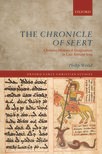
The Chronicle of Seert: Christian Historical Imagination in Late Antique Iraq

This book is a study of the cultural and political history of Christian Iraq, the Church of the East, the so–called ‘Nestorians’. This history is seen through the Chronicle of Seert, a medieval Arabic Chronicle that reuses sources written several centuries earlier. This monograph aims to isolate different layers of composition and looks for trends in the choice of material and the agenda of their historians. Each layer of the text provides insight into the social construction of ‘orthodox belief’ in Iraq and the church as an institution. A central narrative is the growing power of the bishops (catholicoi) of the Sasanian capital of Ctesiphon, their apostolic heritage, and their alliance with the Persian shahs. The monograph also considers the relationship of the catholicoi with monastic and scholarly centres and with Christian communities of the West. In each of these cases, the material that the Chronicle includes shows us how independent historical traditions were annexed by a narrative focused on Ctesiphon and its bishops. The monograph begins in the fifth century, when a series of abortive alliances between church and shah generated small-scale persecutions. It continues this story into the sixth and early seventh, when the church witnessed considerable growth in numbers and prestige. At each stage, we can see Christians rewriting the past to accommodate a new political and social situation, turning a murky past into a glorious golden age. The book concludes with a final chapter on the church under Muslim rule, when the Chronicle was compiled.

Online ISBN:
9780191760709
Print ISBN:
9780199670673
Publisher:
Oxford University Press

Contents


VITRVVIVS DIGITAL LIBRARY

The website currently presents a catalogue of 28 documents, including historical manuscripts and editions, alongside three indexed editions by Diego Kurilo. It offers searchable passages in Latin and translations, locus-based navigation, and links to digitized historical witnesses with their institutional attribution.

La colecciónBuscar en los textosLector bilingüe LA / ES / FR / ENEstudios académicos 

Principios editoriales Comparador de loci Índice textual y notas Índices locorum Ediciones libres Facsímiles manuscritosGeographia codicumLexicon VitruvianumScriptorium HTR 


M. V. Farmakovskij (1873–1946). Spécialiste de l’Antiquité, pionnier de la technologie archéologique en Russie

Vinogradov, Ju. A. et V. A. Goroncharovskij, éd. (2026) : М. В. Фармаковский (1873–1946). Антиковед у истоков отечественной археологической технологии : Материалы научной конференции, посвящённой 150-летию со дня рождения Мстислава Владимировича Фармаковского / M. V. Farmakovskij (1873–1946). Antikoved u istokov otechestvennoj arheologicheskoj tehnologii : Materialy nauchnoj konferencii, posvjashhjonnoj 150-letiju so dnja rozhdenija Mstislava Vladimirovicha Farmakovskogo, Saint-Pétersbourg, [M. V. Farmakovskij (1873–1946). Spécialiste de l’Antiquité, pionnier de la technologie archéologique en Russie : Actes de la conférence scientifique consacrée au 150e anniversaire de la naissance de Mstislav Vladimirovitch Farmakovskij]

Cet ouvrage rend hommage à M.V. Farmakovskij qui est le frère du grand archéologue B.V. Farmakovskij. Il est connu comme peintre, mais il a aussi été actif dans le domaine de l’archéologie, aidant M. I. Rostovtzeff pour son ouvrage sur les peintures du Bosphore et s’intéressant à la céramique peinte, aux vases en verre et au textile.

L’ouvrage compte deux parties. La première rassemblant quatre articles porte sur la vie, mettant en valeur davantage son caractère artistique, alors que la seconde partie rassemble neuf contributions archéologiques, notamment sur les thèmes qui ont intéressé M.V. Farmakovskij : céramique, verre, peinture. On notera une étude sur la présence des ossements de lion dans les villes du nord de la mer Noire aux VIe et Ve s. av. J.-C.

résumé en anglais.

L’ouvrage en ligne : https://www.old.archeo.ru/izdaniya-1/vagnejshije-izdanija/pdf/2026Farmakovskj.pdf/view