Friday, February 4, 2022

Das Grottenheiligtum am Osthang: Eine Mikrostudie zur späthellenistischen Kultpraxis. Mit einem Beitrag zu den Faunenresten von Peggy Morgenstern

Peggy Morgenstern 
Titelbild für Das Grottenheiligtum am Osthang: Eine Mikrostudie zur späthellenistischen Kultpraxis. Mit einem Beitrag zu den Faunenresten von Peggy Morgenstern
DOI: https://doi.org/10.34780/21b5-01te 

Mit dem Grottenheiligtum am Osthang des Stadtbergs nimmt dieser Band eines der innerstädtischen Naturheiligtümer in den Blick, die im späten Hellenismus ein integraler Bestandteil der urbanen Struktur Pergamons waren. Neben der Architektur, die Grotten und Felsen integriert und dabei in spezifischer Weise inszeniert, wird auch das umfangreiche Fundmaterial detailliert aufgearbeitet. Der besonders günstigen Überlieferungslage ist es zu verdanken, dass sich mit diesem Fundkomplex ein großer Teil des Heiligtumsinventars erhalten hat. Ein umfangreicher Komplex von gut erhaltener Gefäßkeramik schließt eine Lücke in der Chronologie der späthellenistischen Keramik aus Pergamon. Darüber hinaus erlaubt er die Rekonstruktion von Bankettgeschirrsets und wirft damit ein Schlaglicht auf die Ausstattung und Organisation eines mutmaßlichen Vereinshauses. Etwa 130 Terrakottastatuetten sowie Funde aus Metall, Stein, Glas und zahlreiche Tierknochen vervollständigen das facettenreiche Fundspektrum.

Benjamin Engels entwirft auf Grundlage einer nahansichtigen Analyse der Funde und Befunde ein detailliertes Bild der Bankett- und Votivpraxis im Grottenheiligtum und untersucht dessen sozial- und kulturhistorische Bedeutung im lokalen und überregionalen Vergleich.

Veröffentlicht
Februar 4, 2022


Kapitel

  • Vorwort des Herausgebers
  • Vorwort und Danksagung
  • 1 Einleitung
    1.1 Forschungsgeschichte und Problemstellung – 1.2 Aufbau
  • 2 Topografische und urbanistische Lage
  • 3 Architektur und Felsabarbeitungen
    3.1 Befund – 3.2 Rekonstruktion der Anlage
  • 4 Stratigrafie
    4.1 Die Oberflächenschichten und einzelne andere Befunde – 4.2 Die Nutzungshorizonte auf der Terrasse – 4.3 Die Verfüllung in Grotte 2 – 4.4 Rekonstruktion der Befundgenese
  • 5 Fundmaterial
    5.1 Keramik – 5.2 Terrakottastatuetten – 5.3 Tongerät – 5.4 Sonstige Funde
  • 6 Zwischenfazit: Überlegungen zu Rekonstruktion und Kultpraxis
  • 7 Gestaltung und räumlicher Kontext
    7.1 Felsen und Grotten in der lokalen Sakrallandschaft – 7.2 Gestaltung und Imitation von Natur in sakralen Kontexten – 7.3 Zwischenfazit
  • 8 Bankettpraxis
    8.1 Bankette in anderen Fels- und Grottenheiligtümern – 8.2 Zwischenfazit
  • 9 Votivspektren
    9.1 Votive aus pergamenischen Heiligtümern – 9.2 Votive aus ausgewählten Grotten- und Höhlenheiligtümern – 9.3 Zwischenfazit
  • 10 Synthese: Akteure, religiöse Funktionen und soziale Organisation des Grottenheiligtums
    10.1 Akteure und Sozialstruktur – 10.2 Soziale Organisation und historische Einordnung
  • 11 Schlussbetrachtung
  • Katalog der Befunde
    Abkürzungsverzeichnis – Fels- und Baubefunde – Erdbefunde
  • Katalog des Fundmaterials
    Keramik – Lampen – Webgewichte – Metallobjekte – Steinobjekte – Glasobjekte – Beinobjekte
  • Literaturverzeichnis
  • Die Faunenreste aus dem Grottenheiligtum
    Forschungsgeschichte – Zusammensetzung des Fundmaterials aus der Grotte – Schlussfolgerungen – Zusammenfassung – Literatur
    Peggy Morgenstern
  • Abbildungsnachweis
  • Tafelnachweis
  • Tafeln 1–181


Bridging the Gap: Disciplines, Times, and Spaces in Dialogue – Volume 1


Sessions 1, 2, and 5 from the Conference Broadening Horizons 6 Held at the Freie Universität Berlin, 24–28 June 2019 edited by Christian W. Hess and Federico Manuelli. Paperback; 203x276mm; 308pp; 108 figures, 8 tables (colour throughout). 151 2021. Available both in print and Open Access. Printed ISBN 9781803270944. Epublication ISBN 9781803270951.
Book contents pageDownload Full PDF  
Paperback; 203x276mm; 308pp; 108 figures, 8 tables (colour throughout). £48.00 Since 2007, the conferences organized under the title ‘Broadening Horizons’ have provided a regular venue for postgraduates and early career scholars in Ancient Near Eastern Studies. Three volumes present the proceedings of the 6th Broadening Horizons Conference, which took place at the Freie Universität Berlin from 24–28 June, 2019. The general theme, ‘Bridging the Gap: Disciplines, Times, and Spaces in Dialogue’, is aimed at encouraging communication and the development of multidisciplinary approaches to the study of material cultures and textual sources.

Volume 1 contains 17 papers from Session 1: Entanglement. Material Culture and Written Sources in Dialogue; Session 2: Integrating Sciences in Historical and Archaeological Research; and Session 5: Which Continuity? Evaluating Stability, Transformation, and Change in Transitional Periods.

About the Editors
Christian W. Hess (PhD Ancient Near Eastern Studies, 2013) is a research fellow at the Center of Advanced Studies ‘Rethinking Oriental Despotism’ at the Freie Universität Berlin. ;

Federico Manuelli (PhD Ancient Near Eastern Studies, 2011) is a researcher at the Institute of Heritage Science of the Italian National Research Council (ISPC-CNR) and a guest researcher at the Institut für Altorientalistik at the Freie Universität Berlin.


View Reviews

Download Full PDF  

Open Access users: by downloading this eBook you are agreeing to our standard terms and conditions available here.
Institutional subscribers: by downloading this eBook you are agreeing to abide by the subscription licence issued to The Institution. Contact your library for further details. If you encounter any issues with your download please contact info@archaeopress.com 

Thursday, February 3, 2022

Scellés de Balat / Balat sealings

Commencées en 1978, les fouilles de l’Ifao dans la ville antique de Balat-‘Ayn ’Asil ont mis au jour, en différents points du site, plus de 3000 scellés marqués d’empreintes de sceaux. Les scellés sont de petites mottes d’argile (appelées crétules dans le domaine mycénien, bullae dans le monde romain) qui étaient appliquées sur les système de fermeture (cordes en général) des objets qu’on voulait fermer de façon sécurisée (portes, coffres, sacs, etc…). Ceux de Balat datent d’une période comprise entre la 6e dynastie et le début du Moyen Empire (soit au moins tout le dernier quart du 3e mill.). Les sceaux utilisés alors étaient soit des estampilles (button-seals), petits objets gravés préfigurant les scarabées des deux millénaires suivants, soit des sceaux-cylindres, forme adoptée dès les premières dynasties par l’administration royale. Le but de cette base de données est de publier toute la documentation sigillographique du site urbain sous une forme d’accès commode, à la fois pour l’équipe en charge des fouilles et pour la communauté scientifique et le public général. Pour l’instant, seules deux collections complètes de scellés trouvés dans la ville ont été publiées au sein de monographies archéologiques. La collection rassemblée dans cette première livraison de la base de données provient toute entière de magasins royaux situés au sud du palais des gouverneurs. Elle provient exclusivement de couches incendiées, reflétant l’ultime usage des lieux de la première phase d’occupation du palais. Elle compte près de 800 numéros d’inventaire, représentant environ 1500 scellés. Progressivement y seront intégrées les autres collections inédites, celles déjà publiées, y compris sur la nécropole, et les quelques sceaux mis au jour à ‘Ayn ’Asil.

Le matériel n’étant plus accessible depuis 2015, certaines vérifications ou compléments n’ont pu encore être faits. Ils seront intégrés quand l’accès au terrain sera de nouveau possible.

Since 1978, the Ifao excavations in several areas of the ancient town of Balat-Ayn Asil brough to light more than 3000 sealings bearing seal impressions. Sealings are small lumps of clay (called cretulae in the Mycenian studies, bullae in Roman archaeology) which were applied, while wet, onto closing devices (generally pegs and ropes) of containers (doors, boxes, sacks…) to close them securely. Balat sealings date back to the period between the end of the 6th dynasty and the beginning of the Middle Kingdom – i.e. roughly the last quarter of the 3rd millenium b.c.e. The seals used then were either stamp- or button-seals - small objects of various shapes which evolved into the well-known scarabs of the 2nd and 1st millenia b.c.e., or cylinder seals, used by public administration since the first dynasties.

This database aims to publish the whole corpus of sealings and seals from the site under this convenient electronic format, to be used by the archaeologists working on the site, the scholarly community and the laypersons. So far, only small collections found in the town and tombs have been published in archaeological monographs. This first release includes only sealings found in a complex of royal magazines, in the south quarter of the governors’ Residence. All come from burnt layers reflecting the final state of these rooms, at the end of Phase 1 of the site use.

From these ca. 1500 sealings, nearly 800 are published here. Gradually the other unpublished sealings and few seals from the palace will be entered into the database, as well as sealings and seals from previous publications.

 orientale - Le Caire


The Byzantine Harbours of Constantinople

Falko Daim und Ewald Kislinger (Hrsg.) 
The Byzantine Harbours of Constantinople

Byzanz zwischen Orient und Okzident

Die Geschicke des byzantinischen Konstantinopel waren stets untrennbar mit dem Meer verbunden. Die topographische, demographische und wirtschaftliche Entwicklung der Stadt und ihre konnektive Vernetzung spiegeln sich in der Geschichte ihrer Häfen, die erstmalig im vorliegenden Band in ihrer Gesamtheit behandelt wird. Fünfzehn Untersuchungen von elf Verfassern zu den Häfen und Anlegestellen der Stadt am Marmarameer und am Goldenen Horn – aber auch zu jenen in ihrem europäischen und asiatischen Vorfeld – schaffen unter Auswertung schriftlicher, bildlicher und archäologischer Quellen eine breit dokumentierte Synthese des aktuellen Forschungsstandes.


Lizenz

Dieses Werk ist unter der
Creative Commons-Lizenz 4.0
(CC BY-SA 4.0)
veröffentlicht.
Creative Commons Lizenz BY-SA 4.0

Identifikatoren
ISBN 978-3-96929-086-6 (PDF)

Veröffentlicht am 02.02.2022.


Ancient Synagogue Coins: A Digital Dissertation Project

https://i2.wp.com/www.ancientsynagoguecoins.com/wp-content/uploads/2021/10/cropped-AdobeStock_102205584_Preview.jpeg?zoom=2&resize=2000%2C0&ssl=1
During archaeological excavations over the last century, fifty-seven separate coin deposits have been found in ancient synagogues from Late Antique Palestine and the Diaspora. This project provides an overview of these deposits, the buildings they were discovered in, and the specific coins they contained. Based on their archaeological contexts and an analysis of the Jewish religious and socio-economic circumstances of Late Antiquity, I argue that there are seven possible reasons for why these deposits were placed inside a synagogue building. This dissertation project gives an overview of these categories and explores the different economic and symbolic functions coins in sacred spaces could have had in ancient Jewish society.


Wednesday, February 2, 2022

Open Access Monograph Series: J. Paul Getty Trust Occasional Papers in Cultural Heritage Policy

J. Paul Getty Trust Occasional Papers in Cultural Heritage Policy

title banner that reads: J. Paul Getty Trust Occasional Papers in Cultural Heritage Policy 

The time is right for adopting a framework for the protection of cultural heritage. 

The J. Paul Getty Trust, prompted by the destruction of cultural heritage in Syria and Iraq, is enlisting the Global Centre for the Responsibility to Protect to engage in an educational campaign for the protection of cultural heritage in conflict zones. 

The campaign seeks to raise awareness of UN Member States regarding the 1954 Hague Convention for the Protection of Cultural Property in the Event of Armed Conflict and its additional protocols, as well as recent resolutions by the UN Security Council. 

To that end, the J. Paul Getty Trust has initiated a series of papers on culture at risk.

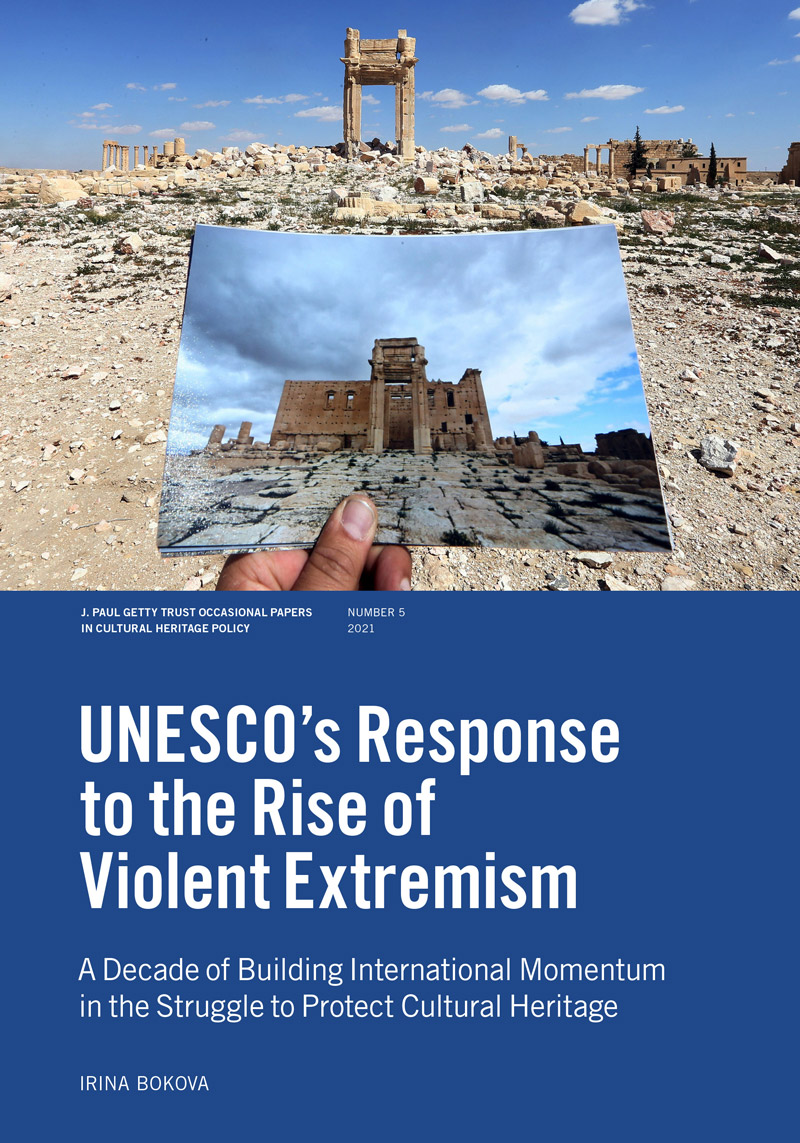
PAPER NO. 5, 2021

The fifth issue of this series, “UNESCO’s Response to the Rise of Violent Extremism” written by Irina Bokova, former director-general of UNESCO, focuses on the value that UNESCO can bring to the fight to protect cultural heritage. During her two terms at UNESCO, Bokova worked to promote international peace and cooperation by raising awareness of the value of cultural heritage and partnering with local communities to rebuild and revitalize their damaged heritage—and themselves. One of Bokova’s most successful campaigns, #Unite4Heritage, has created a global social network of people who are sharing stories, knowledge, and personal experiences about their heritage in an effort to challenge the hate-filled narratives put forward by extremists and keep threatened cultures alive and vital.


Irina Bokova is a Bulgarian politician and was director-general of UNESCO from 2009 to 2017.

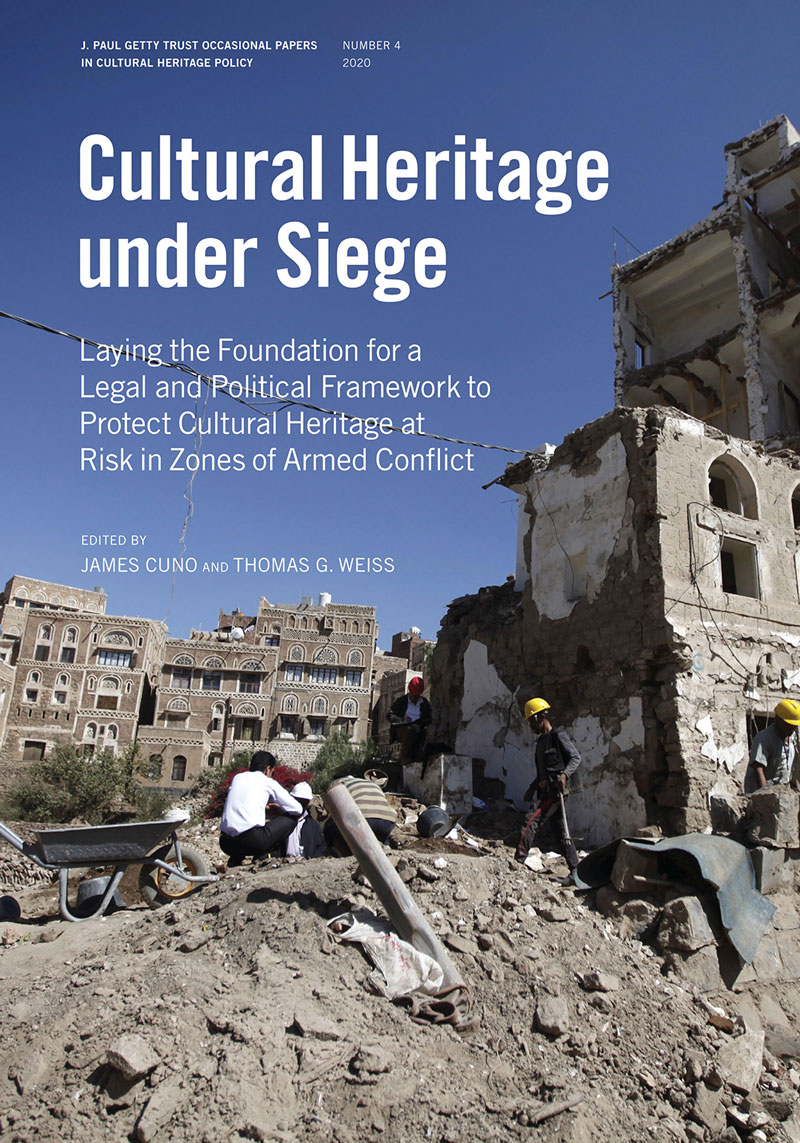
PAPER NO. 4, 2020

The fourth volume of the J. Paul Getty Trust Occasional Papers in Cultural Heritage Policy is the result of a multiday discussion on the issue of cultural heritage under siege. “Cultural Heritage under Siege” features an edited collection of papers and discussions by nineteen scholars and practitioners of different specialties in the field of cultural heritage.


James Cuno assumed his current position as President and CEO of the J. Paul Getty Trust in August 2011. He has held teaching positions at Vassar College, UCLA, Dartmouth, and Harvard, and served as Director of UCLA’s Grunwald Center of the Graphic Arts (1986–89), Dartmouth’s Hood Museum of Art (1989–91), Harvard University Art Museums (1991–2002), Director and Professor of the Courtauld Institute of Art, University of London (2002–04), and President and Director of the Art Institute of Chicago (2004–11).

Thomas G. Weiss is Presidential Professor of Political Science at the City University of New York’s Graduate Center and Director Emeritus of the Ralph Bunche Institute for International Studies. He also is Co-Chair, Cultural Heritage at Risk Project, J. Paul Getty Trust; Distinguished Fellow, Global Governance, The Chicago Council on Global Affairs; and Global Eminence Scholar, Kyung Hee University, Korea.

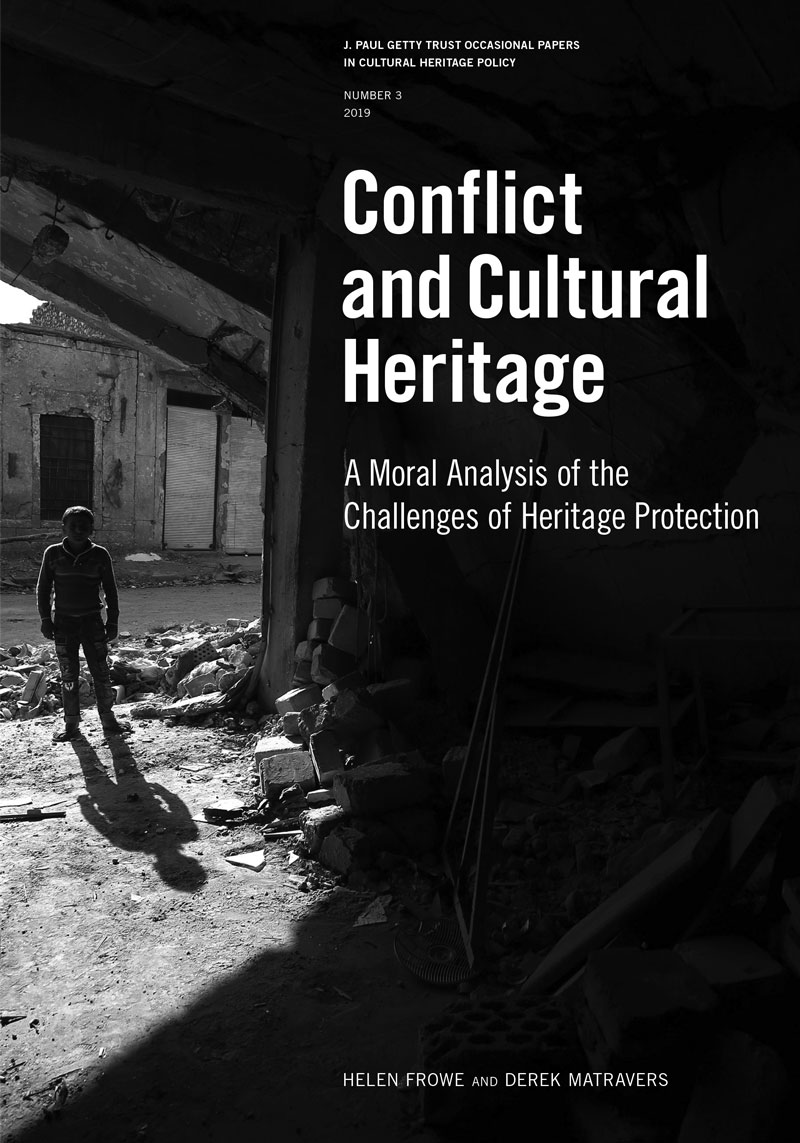
PAPER NO. 3, 2019

In the third issue of the J. Paul Getty Trust Occasional Papers in Cultural Heritage Policy, philosophers Helen Frowe and Derek Matravers discuss the appropriate response to attacks on cultural heritage in their paper “Conflict and Cultural Heritage: A Moral Analysis of the Challenges of Heritage Protection.” While Frowe and Matravers acknowledge the importance of cultural heritage, they caution that we must carefully consider the complex moral dimensions of forcefully protecting it—namely, the endangerment of human lives—before formulating international policy.


Helen Frowe is Professor of Practical Philosophy and Wallenberg Academy Fellow at Stockholm University, where she directs the Stockholm Centre for the Ethics of War and Peace.

Derek Matravers is Professor of Philosophy at the Open University and a senior member of Darwin College, Cambridge.

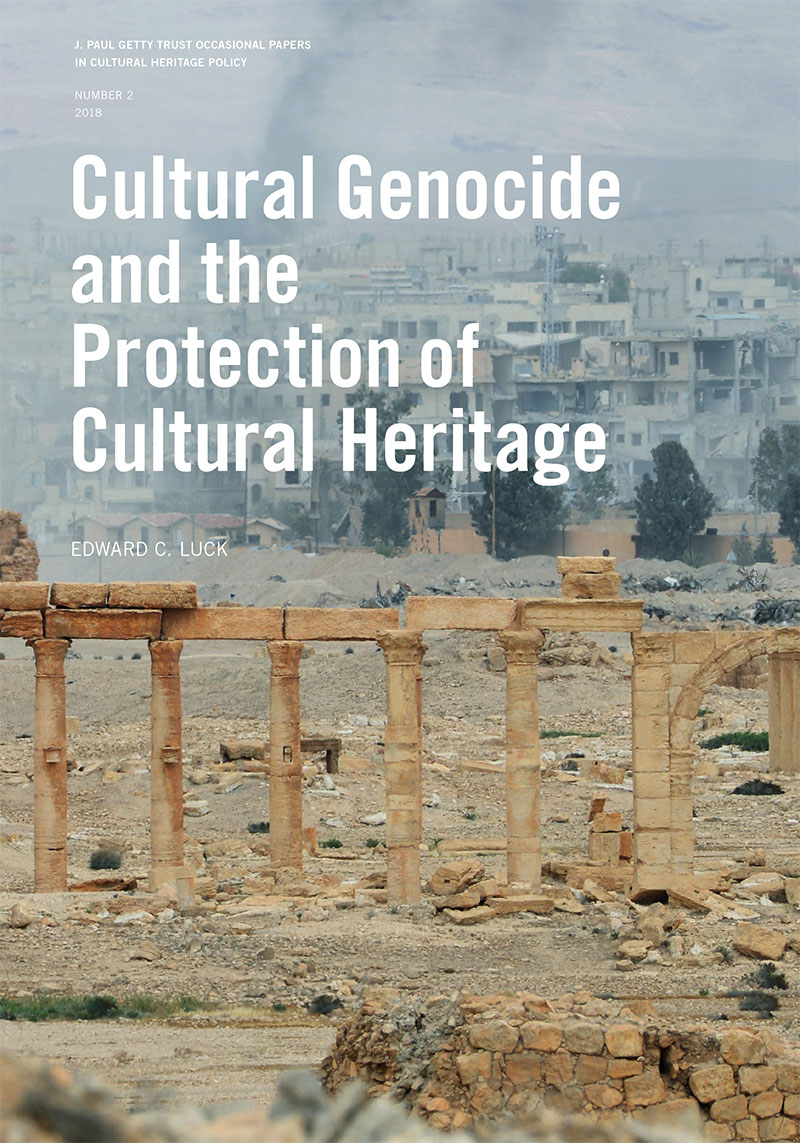
PAPER NO. 2, 2018

Cultural Genocide and the Protection of Cultural Heritage” examines the various lenses through which the international community defines attacks on cultural heritage—legal, accountability, security, counterterrorism, and atrocity prevention—and proposes a sixth, cultural genocide, that can be used to recast the debate over how to best protect the world’s cultural heritage.


Edward C. Luck (1948–2021) was Arnold A. Saltzman Professor of Professional Practice and Director of the Specialization in International Conflict Resolution, School of International and Public Affairs (SIPA), Columbia University. From 2008 to 2012, he served as United Nations assistant secretary-general and as the first special adviser to the UN secretary-general for the responsibility to protect (R2P).

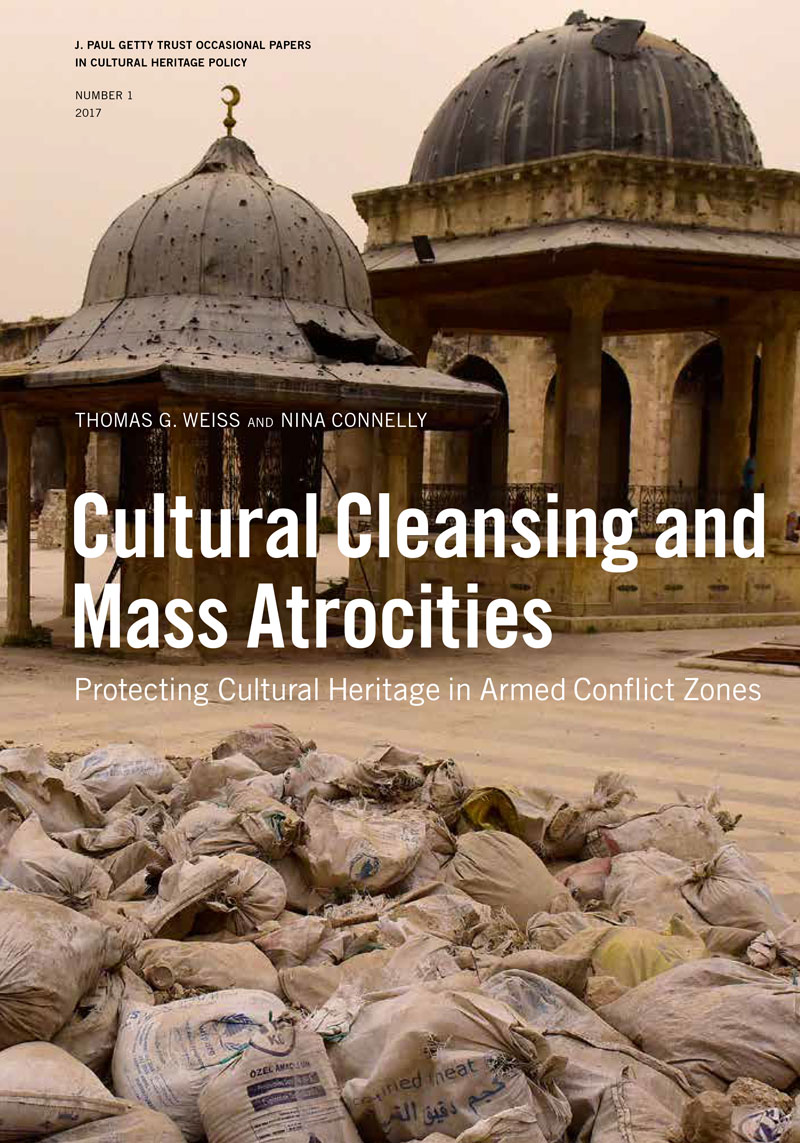
PAPER NO. 1, 2017

Cultural Cleansing and Mass Atrocities: Protecting Cultural Heritage in Armed Conflict Zones” addresses the connection between cultural heritage and cultural cleansing, mass atrocities, and the destruction of cultural heritage. Pulling together various threads of discourse and research, Cultural Cleansing and Mass Atrocities outlines the issues, challenges, and options effecting change.


Thomas G. Weiss is Presidential Professor of Political Science at the City University of New York’s Graduate Center and Director Emeritus of the Ralph Bunche Institute for International Studies. He also is Co-Chair, Cultural Heritage at Risk Project, J. Paul Getty Trust; Distinguished Fellow, Global Governance, The Chicago Council on Global Affairs; and Global Eminence Scholar, Kyung Hee University, Korea.

Nina Connelly is a research associate at the Ralph Bunche Institute of the City University of New York's Graduate Center, where she is researching international development and the United Nations.

And see AWOL's Alphabetical List of Open Access Monograph Series in Ancient Studies

Das antike Griechenland ist die schönste Erfindung der Neuzeit

François Hartog
Cover Image
Gunnar Hering LecturesVolume 3


History
  • Published online:May 2021

Information

© 2021, V&R unipress, Theaterstraße 13, 37073 Göttingen, Germany

This publication is licensed under a Creative Commons Attribution- Non Commercial-No