Tuesday, November 2, 2021

Reimagining Museums for Climate Action

Edited by Rodney Harrison and Colin Sterling

Museums for Climate Action London 2021

First published in 2021 by Museums for Climate Action

UCL Institute of Archaeology, 31-34 Gordon Square, London WC1H 0PY, UK

on the occasion of the Reimagining Museums for Climate Action exhibition at the Glasgow Science Centre, in advance of and during COP26, with the generous support of the Arts & Humanities Research Council (AHRC), part of UK Research & Innovation (UKRI).

Available to download for free at www.museumsforclimateaction.org

Collection © Editors, 2021
Chapters © Authors, 2021
Images © Contributors and copyright holders named in captions, 2021

The authors and editors have asserted their rights under the Copyright, Designs and Patents Act 1988 to be identified as the authors and editors of this work.

A CIP catalogue record for this book is available from The British Library.

ISBN: 978-1-7399715-0-2 (Print) 

ISBN: 978-1-7399715-1-9 (E-Book)
 

Monday, November 1, 2021

New Open Access Journal: Aldus 2.0: A Journal on Digital Philology

Aldus 2.0 is an international journal that promotes a debate on digital textuality in the philological, literary and linguistic fields.

Aims and scope

The aim of Aldus 2.0 is to encourage and promote a debate around the main themes of Digital Humanities both in the philological-literary field and in the linguistic one. The spread of new technologies and their application in the different areas of Italian studies offered new perspectives of study, analysis and research and opened technical and theoretical-methodological issues that represent a great challenge for philologists, linguists, publishers and more. Ideally recalling Aldo Manuzio’s revolution and the importance of his cultural project, Aldus 2.0 looks critically and attentively at progress in the Humanities with an eye constantly to the past, an essential element for a proper vision of the future.

The journal is not only addressed to linguists and philologists, but it also pursues to be an open space for discussions with other disciplines, such as the many areas of communication sciences, and to their contribution: the interdisciplinary approach enhances methods and perspectives that shed light on aspects that would risk being ignored or little discussed by adopting a mono-disciplinary approach. In this sense too Aldus 2.0 tries to propose itself as something new and innovative compared to other editorial realities that discuss themes connected to the web and its texts.

See AWOL's full List of Open Access Journals in Ancient Studies

VILLA ROMAINE D'AIANO-TORRACCIA DI CHIUSI: Une villa de l'Antiquité tardive au coeur de la Toscane


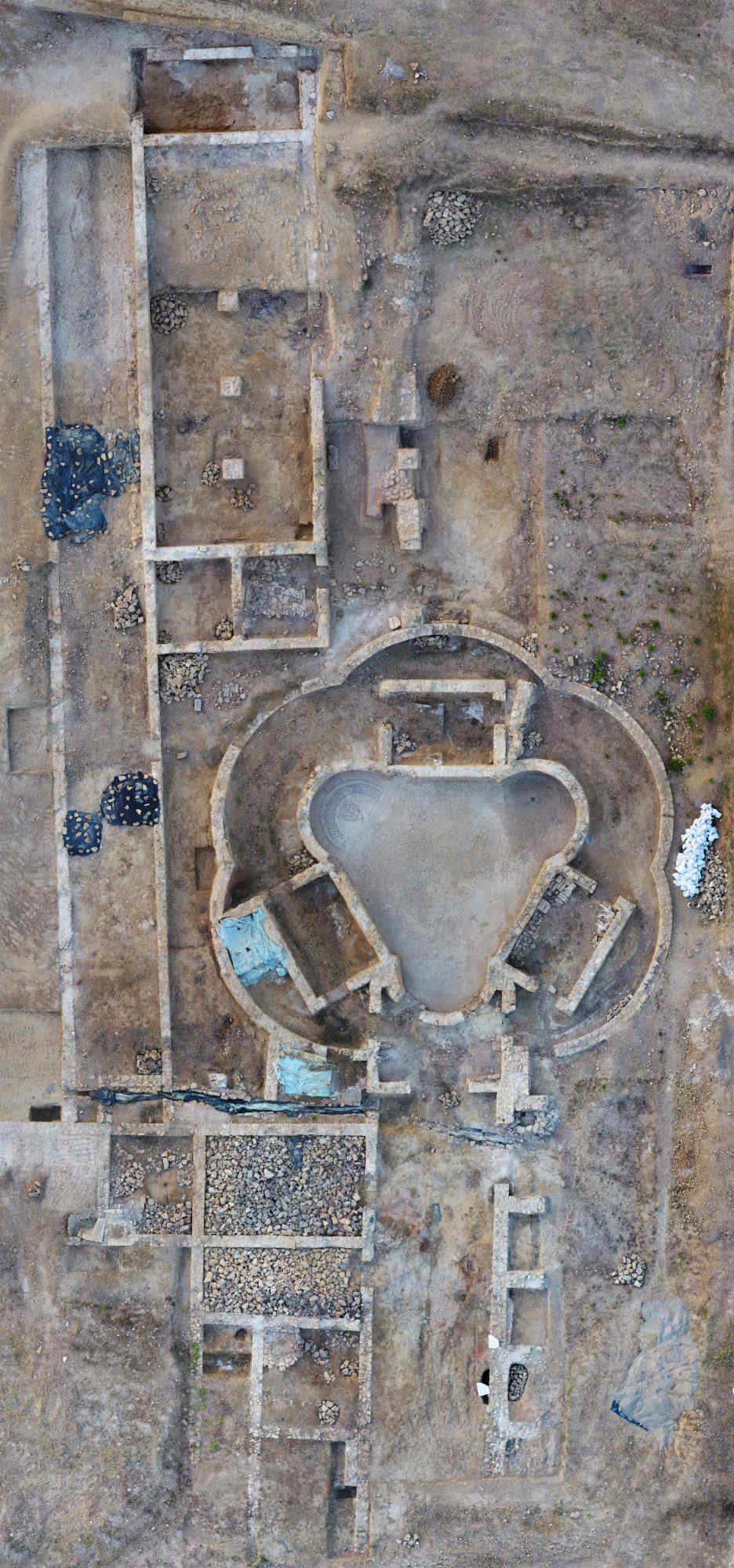
Le site de Torraccia di Chiusi est constitué d’un plateau étroit situé dans la petite vallée formée par le torrent Foci, affluent de l’Elsa, au coeur de la Toscane, entre les villes de Sienne, Volterra et San Gimignano. Il s’agit d’un site pour lequel le Ministero per i Beni e le Attività Culturali italien a donné à l’UCLouvain (Université Catholique de Louvain – Belgique) l’autorisation de fouille, et qui a comme directeur le professeur Marco Cavalieri. A partir de l’été 2005, une équipe de chercheurs, doctorants et étudiants a entamé une série d’enquêtes sur le site, retrouvant les restes d’au moins trois pièces d’une antique villa romaine, datable entre le IVème et le VIème siècle ap. J.C. Le but de l’enquête est de fouiller au moins une partie de l’édifice individualisé, d’en étudier le mobilier et d’organiser un colloque international sur les phases d’occupation romaine de la Toscane, région qui est le berceau de la civilisation étrusque. La rencontre/choc entre les mondes romain et étrusque est intéressante et, jusqu’à aujourd’hui, un domaine d’étude peu exploité: les fouilles de Torraccia di Chiusi voudraient l’approfondir à travers l’apport de nouvelles données archéologiques et interprétations historiques. Au cours de ces pages, vous pourrez découvrir toute la richesse découvertes qui y ont été faites et l’important travail de recherche réalisé par des archéologues belges et italiens pour en améliorer la connaissance et la compréhension. Bonne visite.


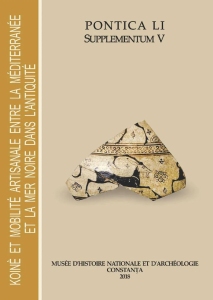
Open Access Monograph Series: Pontica Supplementum

Pontica Supplementum
pontica-51-supplementum-v-2018

Supplementum VII (2020) ANCIENT LAMPS FROM BEREZAN: THE HERMITAGE COLLECTION

Supplementum VI (2019) VARIA EPIGRAPHICA ET ARCHAEOLOGICA: Volume dédié à mémoire de MARIA BĂRBULESCU

Supplementum V (2018) KOINÈ ET MOBILITÉ ARTISANALE ENTRE LA MÉDITERRANÉE ET LA MER NOIRE DANS L’ANTIQUITÉ
Supplementum IV (2016) LES TIMBRES AMPHORIQUES GRECS D’HÉRACLÉE PONTIQUE ET DE QUELQUES AUTRES CENTRES DE PRODUCTION RECUEILLIS DANS L’ÉTABLISSEMENT DE KOSTADIN TCHECHMA PRÈS DE DEBELT (BULGARIE) (PREMIÈRE MOITIÉ DU IVe SIÈCLE AV. J.-C.)
 Supplementum III (2014) HISTRIA, HISTOIRE ET ARCHÉOLOGIE EN MER NOIRE
Supplementum II (2013) PATABS III
Supplementum I (2009) PONTIC GREY WARES

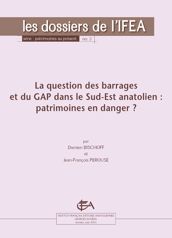
Open Access Monograph Series: Les dossiers de l'Institut Français d'Études Anatoliennes: série: patrimoines au présent

[First posted in AWOL 6 March 2015, updated 1 November 2021]

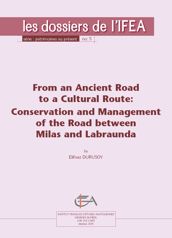
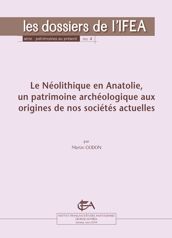
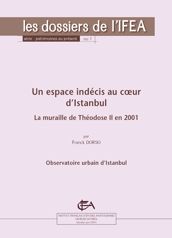
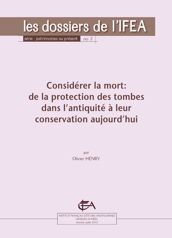
Les dossiers de l'IFEA: série: patrimoines au présent
Sous la direction de Jean-François Pérouse

2012-

Précédents directeurs de publication :
Pierre Chuvin, 2004-2006
Paul Dumont, 1999-2003


La collection « Patrimoines au présent » présente des synthèses courtes et actuelles sur les problématiques liées aux questions de préservation du patrimoine en lien avec les dynamiques propres à la société turque contemporaine. Tous comme leur série sœur « La Turquie aujourd'hui », ces dossiers alliant la rigueur du travail de fond à l'enquête de terrain sont le fruit des recherches de chercheurs turcs et français dans une perspective pluridisciplinaire.

OpenGulf

OpenGulf is a transdisciplinary research group focusing on historical documentation about the Gulf. OpenGulf was launched in the Arts and Humanities Division of NYU Abu Dhabi. The projects publish open historical datasets, corpora and digital exhibits with the aim of opening Gulf Studies to digital historical exploration, analysis and interpretation in the service of open research and pedagogy.

The project co-directors of OpenGulf are Nora Barakat (History, Stanford U) and David Joseph Wrisley (Digital Humanities, NYU Abu Dhabi)