Showing posts with label Cuneiform. Show all posts

Monday, August 3, 2026

Open Access Monograph Series: Keilschrifttexte aus Assur literarischen Inhalts

[First posted inAWOL 12 September 2020, updated 3 August 2026]

Keilschrifttexte aus Assur literarischen Inhalts

Cover
Der Gesamtbestand der zu publizierenden Keilschrifttexte literarischen Inhalts aus Assur wird in voraussichtlich 20 Bänden vorgelegt, welche die Monographienserie ‚KAL‛ (‚Keilschrifttexte aus Assur literarischen Inhalts‛) bilden. Er besteht einerseits aus Texten, die eindeutig lesbar sind und bestimmten inhaltlich definierten Textgruppen oder ‚Textsorten‛ zugewiesen werden können, andererseits enthält er stark fragmentierte Texte, die gleichwohl für die weitere Textrekonstruktion von großer Wichtigkeit sind. Es erschien deshalb als sinnvoll, die Reihe so anzulegen, dass in einem Teil ihrer Bände die Texte vorgelegt werden, die den inhaltlich definierten Textgruppen zuweisbar sind, und in einem zweiten, kleineren Teil der Bände die weniger gut erhaltenen Textbruchstücke.
Angesichts der großen Menge an Texten, die inhaltlich klassifiziert werden können, empfiehlt sich für die Präsentation dieses Textmaterials eine Ordnung, die einer Einteilung in inhaltlich definierte Textgruppen folgt. Eine solche Sortierung des Textbestandes liegt im Wesentlichen auch den älteren Editionen zugrunde. Deren Einteilung in eine große Gruppe solcher Texte, die religiösen Inhalts sind, und in eine ebenfalls sehr große Gruppe von Textdokumenten zur Pharmakologie und Medizin wird jedoch in KAL aufgrund ihrer mangelnden Tragfähigkeit nicht weitergeführt. Für die altorientalische Literatur ist diese Einteilung nicht zuletzt deshalb wenig sinnvoll, weil sie auf dem ‚aufgeklärten‛, westlichen Konzept einer zwischen ‚Religion‛ und ‚Wissenschaft‛ bestehenden grundsätzlichen Differenz beruht. Anstatt dessen beruht die Systematisierung des Textbestandes für die Edition in der Reihe ‚KAL‛ im wesentlichen auf einer Einteilung in Textgruppen, die sich an inhaltlichen, strukturellen und formalen Gemeinsamkeiten orientiert und so der typologischen und funktionellen Vielfältigkeit der altorientalischen Keilschriftliteratur eher gerecht werden dürfte. Auf eine allzu scharfe Grenzziehung zwischen den einzelnen Textcorpora wird dabei bewusst verzichtet. Das Gros des für die Publikation in ‚KAL‛ vorgesehenen Textbestandes ist folgenden Textgruppen zugewiesen:
  • Divinatorische Texte
  • Ritualbeschreibungen und Gebete
  • Historische und historisch-literarische Texte
  • Mythologische Texte
  • Festbeschreibungen und Liturgien
  • Lexikalische Texte
  • Sumerische und zweisprachige sumerisch-akkadische Texte

Band 1,1: Bagordo, Andreas: Alkimenes - Kantharos: Einleitung, Übersetzung, Kommentar, Heidelberg: Verl. Antike, 2014
Band 1,2: Bagordo, Andreas; Leucon: Leukon - Xenophilos: Einleitung, Übersetzung, Kommentar, Heidelberg: Verl. Antike, 2014
Band 3,1: Bianchi, Francesco Paolo; Cratinus: Cratino: introduzione e testimonianze, Heidelberg: Verlag Antike, 2017
Band 3,2: Bianchi, Francesco Paolo; Cratinus: Cratino: Archilochoi - Empipramenoi (frr.1-68) : introduzione, traduzione, commento, Heidelberg: Verlag Antike, 2016
Band 4: Bagordo, Andreas; Teleclides: Telekleides: Einleitung, Übersetzung, Kommentar, Heidelberg: Verl. Antike, 2013
Band 6: Comentale, Nicola; Hermippus; Verlag Antike [Contr.]: Ermippo: introduzione, traduzione e commento, [Heidelberg], Mainz: Verlag Antike, 2017
Band 7: Phrynichus; Stama, Felice [Editor]: Frinico: introduzione, traduzione e commento, Heidelberg: Verlag Antike, 2014
Band 8,1: Olson, S. Douglas; Eupolis: Eupolis: Testimonia and Aiges - Demoi (frr. 1-146), Heidelberg: Verlag Antike, 2017
Band 8,2: Olson, S. Douglas; Eupolis [Oth.]: Eupolis: Heilotes - Chrysoun genos (frr. 147-325) ; translation and commentary, Heidelberg: Verlag Antike, 2016
Band 8,3: Olson, S. Douglas; Eupolis: Eupolis frr. 326-497: translation and commentary, Heidelberg: Verl. Antike, 2014
Band 9,1: Orth, Christian; Alcaeus; Amipsias; Apollophanes: Alkaios - Apollophanes: [Alkaios, Ameipsias, Apollophanes]; Einleitung, Übersetzung, Kommentar, Heidelberg: Verl. Antike, 2013
Band 9,2: Orth, Christian; Aristomenes; Metagenes: Aristomenes - Metagenes: Einleitung, Übersetzung, Kommentar, Heidelberg: Verl. Antike, 2014
Band 9,3: Orth, Christian; Nicochares: Nikochares - Xenophon: Einleitung, Übersetzung, Kommentar, Heidelberg: Verlag Antike, 2015
Band 10,3: Orth, Christian; Aristophanes: Aristophanes, Aiolosikon - Babylonioi (fr. 1-100): Übersetzung und Kommentar, Heidelberg: Verlag Antike, 2017
Band 10,9: Aristophanes; Verlag Antike [Editor]: Aristophanes fr. 590-674: Übersetzung und Kommentar, Heidelberg: Verlag Antike, 2016
Band 10,10: Bagordo, Andreas; Aristophanes; Verlag Antike [Contr.]: Aristophanes fr. 675-820: Übersetzung und Kommentar, Heidelberg: Verlag Antike, 2017
Band 10,11: Bagordo, Andreas; Aristophanes: Aristophanes fr. 821-976: Übersetzung und Kommentar, Göttingen: Verlag Antike, 2018
Band 12: Miccolis, Elisabetta R.; Archippus: Archippos: Einleitung, Übersetzung, Kommentar, Heidelberg: Verlag Antike, 2017
Band 15: Pellegrino, Matteo: Nicofonte: introduzione, traduzione e commento, Mainz: Verl. Antike, 2013
Band 17: Benjamin, Millis; Anaxandrides: Anaxandrides: introduction, translation, commentary, Heidelberg: Verlag Antike, 2015
Band 20: Papachrysostomu, Athēna; Verlag Antike [Editor]: Amphis: introduction, translation, commentary, Heidelberg: Verlag Antike, 2016
Band 21: Apostolakēs, Kōstas: Timokles: translation and commentary, Göttingen: Verlag Antike, 2019

Monday, May 11, 2026

Open Access Journal: Cuneiform Digital Library Bulletin

[First posted in AWOL 31 August 2009.  Most recently updated 11 May 2026]


Cuneiform Digital Library Bulletin (CDLB)
ISSN: 1540-8760


The Cuneiform Digital Library Bulletin is an electronic journal constituted in conjunction with the organization and work of the Cuneiform Digital Library Initiative to afford contributors to that effort the opportunity to make known to an international community the results of their research into topics related to those of the CDLI.

The CDLB is a refereed e-journal for Assyriology and is conceived as a sister publication of the Cuneiform Digital Library Journal. While the latter journal seeks substantive contributions dealing with the major themes of the Cuneiform Digital Library Initiative, that is, with text analyses of 4th and 3rd millennium documents (incorporating text, photographs, data, drawings, interpretations), early language, writing, paleography, administrative history, mathematics, metrology, and the technology of modern cuneiform editing are welcome, articles in the Bulletin should be short notes of at most five pages that deal with specific topics, collations, etc., and do not attempt to offer synthetic treatments of complex subjects.

For more information on this journal, visit the CDLJ and CDLB information page.

No. Author(s) Title Date
2026:1 Surdi, Mirko Improving Legibility: Visual Strategies for Four Unpublished Cuneiform Objects from Ghent University 2026-01-02
2025:1 Barber, Joseph Four Old Babylonian Texts and Artefacts in a Private Collection 2025-10-02
2024:5 Ozaki Tohru On the Ur III Sumerian Term A.LU in Puzriš-Dagan Texts 2024-12-18
2024:4 Reid, Nicholas Feeding Gods and Dogs: New Ur III and Old Babylonian Texts in the Ashmolean Museum 2024-12-10
2024:3 Parian, Saber Amiri; Mahmoudi, Keyvan A New Reading of the 70th Paragraph of the Behistun Inscription 2024-10-15
2024:2 Pottorf, Andrew; Deloucas, Andrew The Groton School Cuneiform-Text Collection 2024-06-01
2024:1 Smidt, Gustav Ryberg An Old Babylonian Ura 3 text from the National Museum of Denmark 2024-03-21
2023:4 Homburg, Timo; Brandes, Tim; Huber, Eva-Maria; Hedderich, Michael A. From an Analog to a Digital Workflow: An Introductory Approach to Digital Editions in Assyriology 2023-10-10
2023:3 Földi, Zsombor J.; Molina, Manuel Identification of the Cuneiform Tablets Published in Nisaba 33 2023-08-21
2023:2 Kreitzscheck, Mathis Two More Dūr-Abiešuh Tablets: A Beer Account and a Letter From the Online Antiquities Market 2023-04-02
2023:1 Sulaiman, Rakan Two Unpublished Cuneiform Tablets Among the Texts Preserved in the Hama Museum 2023-02-21
2021:6 Born, Logan; Kelley, Kathryn Erin A Quantitative Analysis of Proto-Cuneiform Sign Use in Archaic Tribute 2021-12-10
2021:5 Sigrist, Marcel; Ozaki Tohru Neo-Sumerian Texts in the Newark Public Library 2022-01-26
2021:4 Johandi, Andreas; Sazonov, Vladimir; Fink, Sebastian A Neo-Sumerian Administrative Tablet in the University of Tartu Art Museum 2022-01-26
2021:3 Abaslou, Sina; Zamani, Amir Newly Found Inscribed Elamite Bricks of Untaš-Napiriša in the Čahār Fasl Museum of Arak 2022-01-26
2021:2 Mohr, Sara; Thompson, Shane M. A Selection of Tablets and Cones from Brown University 2022-01-26
2021:1 Liu Changyu Six Neo-Sumerian Texts in the Boston Public Library 2022-01-24
2020:2 Howard, J. Caleb Cuneiform Tablets in Collections at the University of Kansas 2022-12-07
2020:1 Parian, Saber Amiri A New Edition of the Elamite Version of the Behistun Inscription (II) 2022-01-24
2018:2 Potts, Daniel T. The Carian Villages 2018-09-15
2018:1 Brunke, Hagan A New Geometric School Text from Cornell 2018-09-15
2017:3 Parian, Saber Amiri A New Edition of the Elamite Version of the Behistun Inscription (I) 2017-12-22
2017:2 Zólyomi, Gábor The Secret Life of Lu-Ningirsu, the Judge 2017-09-30
2017:1 Alivernini, Sergio Nine Unpublished Texts in the Collection of the British Museum 2017-08-19
2016:2 Firth, Richard Some Comments on “Drehem Tablets” in the British Museum 2016-11-24
2016:1 Brumfield, Sara; Allred, Lance The Cuneiform Tablet Collection of the Los Angeles Unified School District 2016-11-24
2015:6 Brunke, Hagan Embedded Structures: Two Mesopotamian Examples 2015-12-25
2015:5 Liu Changyu; Nielsen, John P. Cuneiform Texts in the Special Collections of Knox College 2015-11-17
2015:4 Firth, Richard Notes on Ur III Period Textile Tablets from Ur 2015-11-13
2015:3 Freedman, I. The Marduk Star Nēbiru 2015-11-08
2015:2 Bartash, Vitali On the Sumerian City UB-meᵏⁱ, the Alleged “Umma” 2015-11-04
2015:1 Daneshmand, Parsa; Abdoli, Meysam A New King of Susa and Anshan 2015-02-16
2014:5 Miglio, Adam E. Ur III Tablets in the Wheaton College Archaeology Museum 2014-12-05
2014:4 Földi, Zsombor J.; Head, Ronan J. Two Tablets from the Johns Hopkins University Collection 2014-11-30
2014:3 Reid, Nicholas; Wagensonner, Klaus “My tooth aches so much” 2014-08-31
2014:2 Maidman, Maynard P. An Important New Early-Middle-Assyrian Letter 2014-08-03
2014:1 Andersson, Jakob Third Millennium Cuneiform Texts in a Swedish Private Collection 2014-05-21
2013:3 Földi, Zsombor J. Gleanings from the Antiquities Market: A Contribution to the Electronic Text Corpus of Sumerian Royal Inscriptions 2013-12-28
2013:2 Owen, David I. Of Dogs and (Kennel)Men 2013-10-26
2013:1 Siddall, Luis R. The Royal Inscriptions in the Museum of Ancient Cultures at Macquarie University, Sydney 2013-08-02
2012:3 Notizia, Palmiro; di Ludovico, Alessandro A New Ur III Letter-Order from the Semitic Museum at Harvard University 2012-11-23
2012:2 Liu Changyu Six Ur III Tablets from the Special Collections of the University of Missouri-Columbia 2012-09-20
2012:1 Abrahami, Philippe; Lion, Brigitte Remarks to W. Mayer’s Catalogue of the Nuzi Palace Texts 2012-06-16
2011:2 Brumfield, Sara The Term ab2-RI-e in Ur III Sources 2011-03-09
2011:1 Abrahami, Philippe Masculine and Feminine Personal Determinatives before Women’s Names at Nuzi: A Gender Indicator of Social or Economic Independence? 2011-02-19
2010:1 Metcalf, Christopher Six Ur III Tablets from the Hulin Collection in Oxford 2010-04-15
2007:2 Allred, Lance; Gadotti, Alhena The Cuneiform Collection of the Clinton Historical Society 2007-12-30
2007:1 Adams, Robert McC. The Limits of State Power on the Mesopotamian Plain 2007-12-25
2006:2 Veldhuis, Niek Another Early Dynastic Incantation 2006-04-23
2006:1 Monaco, Salvatore F. N16 in the Archaic Texts 2006-01-02
2004:4 Veldhuis, Niek ḪI-(še3) la2 2004-12-20
2004:3 Monaco, Salvatore F. Revisiting Jemdet Nasr Texts: IM 55580+ 2004-09-01
2004:2 Johnson, J. Cale Two Ur III Tablets from the Tulare County Library 2004-06-14
2004:1 Wunsch, Cornelia An Early Achaemenid Administrative Text from Uruk 2004-04-05
2003:6 Veldhuis, Niek Entering the Netherworld 2003-09-02
2003:5 Dahl, Jacob L. A Note on Ur III Text Duplicates 2003-06-30
2003:4 Nathan, David L. A "New" Proto-Cuneiform Tablet 2003-03-28
2003:3 Taylor, Jonathan Collations to ED Lu C and D 2003-02-25
2003:2 Fitzgerald, Madeleine pisan dub-ba and the Direction of Cuneiform Script 2003-02-24
2003:1 Englund, Robert K. Worcester Slaughterhouse Account 2003-01-28
2002:3 Lafont, Bertrand The Toponym Ligriᵏⁱ 2002-09-11
2002:2 Englund, Robert K. Notes on SET 274 2002-05-03
2002:1 Dahl, Jacob L. Proto-Elamite Sign Frequencies 2002-04-29

Total 64 record(s)


Friday, April 24, 2026

Open Access Journal: NABU: Nouvelles Assyriologiques Brèves et Utilitaires

[First posted in AWOL 17 November 2012, updated 24 April 2026]

NABU: Nouvelles Assyriologiques Brèves et Utilitaires
ISSN: 0989-5671
http://sepoa.fr/wp/wp-content/uploads/2012/05/cropped-Babylone-palmeraie1.jpg
Ce journal, intitulé Nouvelles Assyriologiques Brèves et Utilitaires, est publié quatre fois par an (mars, juin, septembre, décembre).
Comité de rédaction :
Dominique Charpin, Jean-Marie Durand, Francis Joannès, Nele Ziegler
Les numéros à partir de 1987 sont téléchargeables au format pdf.
Le signe * indique les numéros searchable (unicode seulement à partir de 2008/3). Les autres sont des fichiers-images. 

NABU 2026-1 (notes 1 à 42) 

NABU 2025

NABU 2024

NABU 2023

NABU 2022

NABU 2021

NABU 2020

NABU 2019

NABU 2018

NABU 2017

NABU 2016

NABU 2015

NABU 2014

NABU 2014

NABU 2013

NABU 2012

NABU 2011

NABU 2010

NABU 2010

NABU 2009

NABU 2008

NABU 2007

NABU 2006

NABU 2005

NABU 2004

NABU 2003

NABU 2002

NABU 2001

NABU 2000

NABU 1999

NABU 1998

NABU 1997

NABU 1996

NABU 1995

NABU 1994

NABU 1993

NABU 1992

NABU 1991

NABU 1990

NABU 1989

NABU 1988

NABU 1987


Also see the tables of contents of the Mémoires de NABU

Thursday, November 20, 2025

Open Access Journal: Journal des Médecines Cunéiformes

[Most recently updated 20 November 2025]

Journal des Médecines Cunéiformes
ISSN: 1761-0583

Journal des Médecines Cunéiformes

Vous trouverez ici les numéros du JMC déjà parus disponibles au téléchargement.

  • Pour consulter le sommaire des numéros (2003- juin 2021)
    par auteurs cliquez ici : Sommaire par auteurs
  • Pour consulter le sommaire des numéros (2003- juin 2021)
    cliquez ici : Sommaire par numéro

NB : En raison de la limitation de taille des fichiers imposée par le site, nous vous conseillons de télécharger les tirés-à-part pour les articles contenant des illustrations. Pour cela rendez-vous dans la rubrique ARTICLES (2021-2010).

No. 42 (2023) 

CHALENDAR V. 2023, « Vésicule biliaire et bile en Mésopotamie, maladies et thérapies », JMC 42, 1-35.
CHALENDAR_2023_JMC_42

SIMONS F. 2023, « A thorn by any other name: ašāgu ‘Yanqout' », JMC 42, 36-48.
SIMONS_2023_JMC_42

BÁCSKAY A. 2023, « Medicale Glosses and Embedded Variantes Addenda and Corrigenda to Bácskay 2021, JMC 42, 49-65.
BACSKAY_2023_JMC_42

PANAYOTOV S. 2023, « Old Babylonian inventory of scholarly texts (Ni.2909): Additions to BAMTU 9« JMC 42, 66-68.
PANAYOTOV_2023_JMC_42


No. 41 (2023)

 GELLER M. 2023, « Male Doctors and Female Patients », JMC 41, 1-15.
GELLER_2023_JMC_41 

PANAYOTOV S. 2023, « Witchcraft in Medicine: the Ashur Medical Catalogue and Relevant Nineveh Series Reexamined With an appendix by Gilles Buisson », JMC 41, 16-35.

PANAYOTOV_2023_JMC 41

MILLET ALBA A. 2023, « Mon fils Sukkukum a disparu de chez moi il y a huit ans », JMC 23, 36-46.
MILLET_ALBA_2023_JMC_41

MLADENOV K. 2023, « The Medical Information in LUDLUL BĒL NĒMEQI. Some Notes on the Suffering and its Treatment« JMC 41, 47-61.
MLADENOV_2023_JMC 41


Thursday, November 6, 2025

Elamita : Web de divulgación de la lengua elamita


Tuesday, July 8, 2025

Yale Babylonian Collection

[First posted in AWOL 23 May 2021, update 8 July 2025] 

Yale Babylonian Collection

The Yale Babylonian Collection is an international center for learning and research in ancient Western Asia, hosting scholars and students from across the globe. Its mission is to preserve, publish, and make available for everyone the cuneiform texts, seals, and other artifacts it houses. Generously supported by the National Endowment of the Humanities and the Council on Library and Information Resources, the Collection is digitized and available online for free.    

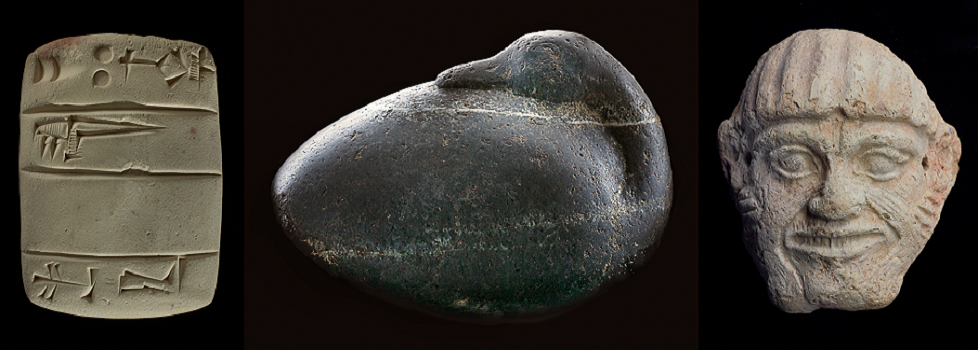
Left to right: Old Akkadian delivery of goats (NBC 6861), Babylonian duck weight (YBC 2262), Old Babylonian mask (YBC 2238).

The Collection holds some 40,000 items, including cuneiform clay tablets, stamp and cylinder seals, and a range of other materials. Some of its highlights are the world’s oldest culinary recipes, a mathematical school tablet which approximates the square root of 2, a poem composed by the first named author in world literature, a woman named Enheduana, as well as a manuscript of the Epic of Gilgamesh. The Yale Babylonian Collection was founded by 1911 by Albert T. Clay with support from the New York financier J. P. Morgan. The Collection joined the Yale Peabody Museum in 2017. It is located on the 3rd floor of the Sterling Memorial Library.

Saturday, April 5, 2025

Database of Neo-Sumerian Texts (BDTNS)

 [First posted in AWOL 19 January 2012, updated (new UELs), 4  April December 2025]

Database of Neo-Sumerian Texts (BDTNS) 

Last update April 2025

The Database of Neo-Sumerian Texts (or BDTNS, its acronym in Spanish) is a searchable electronic corpus of Neo-Sumerian administrative cuneiform tablets dated to the 21st century B.C. During this period, the kings of the Third Dynasty of Ur built an empire in Mesopotamia managed by a complex bureaucracy that produced an unprecedented volume of written documentation. It is estimated that museums and private collections all over the world hold at least 120,000 cuneiform tablets from this period, to which should be added an indeterminate number of documents kept in the Iraq Museum.

       Consequently, BDTNS was conceived by Manuel Molina (CSIC) in order to manage this enormous amount of documentation. The project initially rested on two fundamental pillars. First, the boost given by Marcel Sigrist, who in 1996 put at M. Molina’s disposal his Ur III catalogue of more than 30,000 texts. Second, the bulk of Ur III transliterations prepared in 1993 by Remco de Maaijer and Bram Jagersma (Rijksuniversiteit, Leiden), made freely available on their website; over the years this material grew considerably and was made accessible to M. Molina in 2001 via the Cuneiform Digital Library Initiative. All the transliterations in BDTNS based on that work are properly credited on their respective catalogue records.

       The work on BDTNS began, therefore, in 1996 at the Instituto de Filología (now Instituto de Lenguas y Culturas del Mediterráneo y Oriente Próximo) of the Consejo Superior de Investigaciones Científicas (CSIC). Six years later, in 2002, it appeared online. In the same year, it began to be officially supported, thanks to two three-year research projects funded by the Spanish Ministerio de Ciencia y Tecnología (now Ministerio de Ciencia, Innovación y Universidades):

  • BFF2001-2319. “Digitization of the Neo-Sumerian corpus of administrative cuneiform tablets (c. 2100-2000 BC)”. PI: M. Molina. Host institution: CSIC. Funding: €84,909. Duration: From 2002/01/01 to 2004/12/31.

  • HUM2004-1516. “Digitization of the Neo-Sumerian corpus of administrative cuneiform tablets (c. 2100-2000 BC). Second part”. PI: M. Molina. Host institution: CSIC. Funding: €71,600. Duration: From 2005/01/01 to 2008/03/31.

Throughout these years, BDTNS has worked closely with the Cuneiform Digital Library Initiative (CDLI), founded and directed by Robert K. Englund (UCLA) and Peter Damerow (Max Planck Institute for the History of Science), and now led by Jacob L. Dahl (University of Oxford), Bertrand Lafont (CNRS), Émilie Pagé-Perron (University of Oxford) and Jürgen Renn (Max Planck Institute for the History of Science). BDTNS also collaborates with the Pennsylvania Sumerian Dictionary Project (ePSD), directed by Steve Tinney (Penn Museum), and with several other projects. BDTNS has also benefited from the material generously provided by several other scholars, particularly Marcel Sigrist (École Biblique et Archéologique Française, Jerusalem) and David I. Owen (Cornell University, Ithaca NY). Likewise, authors of new publications of Neo-Sumerian texts have regularly supplied digitized versions of their works that have greatly facilitated the update of BDTNS.

       Since February 2025, BDTNS is hosted on the servers of the Galicia Supercomputing Center (CESGA), a center for research and services to R+D+i groups, promoted by the Xunta de Galicia and the CSIC.


BDTNS in Figures

BDTNS currently provides searchable cataloguing data, transliterations, images, bibliography, collections, seal inscriptions and geotagged locations for 104,923 Neo-Sumerian administrative cuneiform documents. Part of this material remains unpublished, and access to it is strictly at its editor’s discretion.

       More specifically, the texts in BDTNS can be classified as follows (April, 2025):

Published in handcopy and/or transliteration 69,910
Published only in catalogue or in photographic form 31,258
Auctioned 997
Unpublished 2,758
Total of texts in BDTNS 104,923

Transliterations for most of the published texts, images, a catalogue of seal inscriptions, collections, a complete bibliography, and geotagged data about their provenience are also provided by BDTNS:

Texts in transliteration 69,910 (100% of published texts) + 5,060 (only in catalogue, auctioned and unpublished texts)
Lines in transliteration 1,336,458
Texts with handcopy 33,332 (58.5% via CDLI)
Texts with photograph 49,589 (58.2% by CDLI)
Seal inscriptions 27,485
Bibliographical references 140,542
Links to external resources 273,201
Bibliography 2,273 titles
Collections 874 collections in
46 different countries

Provenience of the texts
Umma / Umma Region 33,873 35.6%
Girsu 29,872 31.4%
Puzriš-Dagan 17,119 18.0%
Ur 4,518 4.7%
Nippur / Nippur Region 3,638 3.8%
Irisagrig 3,038 3.2%
GARšana 1,702 1.8%
Other 1,499
1.6%

Staff

Editor:
Manuel Molina, CSIC

Collaborators:
Palmiro Notizia, Madrid (2011-2015)
Jesús M. Arrojería, Zarautz

Programmers:
Alejandro Feijóo Fraga, CESGA (2024-2025)
Cristina Corral Sánchez, SIGyHD, CCHS-CSIC (2020)
Carlos Fernández Freire, SIGyHD, CCHS-CSIC (2020)
Ángel Díaz del Castillo, ILC-CSIC (2015/04)
Jonatan Ortiz Salas, ILC-CSIC (2010/30/09 to 2012/09/29)
Juan Carlos Martínez Torres, ILC-CSIC (2002/01/01 to 2008/03/31)


  • Home
  • Collections
  • Seals
  • Bibliography & Abbreviations
  • Maps
  • About BDTNS
  • Other Links
  • Other Projects


  •