Showing posts with label Giza. Show all posts

Friday, July 3, 2026

Open Access Journal: AERAGRAM

[First posted in AWOL 29 October 2009. Updated 3 July 2026]

AERAGRAM
ISSN: 1944-0014 

AERAGRAM is the official newsletter of Ancient Egypt Research Associates.
PDFs of past issues are available below. The most recent issue is only available to our members. Click here to become an AERA member & help support our work in Egypt.

Most recent issue online 
Annual Report 2023-2024

AERAgram 25:1-2

  • The Great Pyramid South Floor Survey
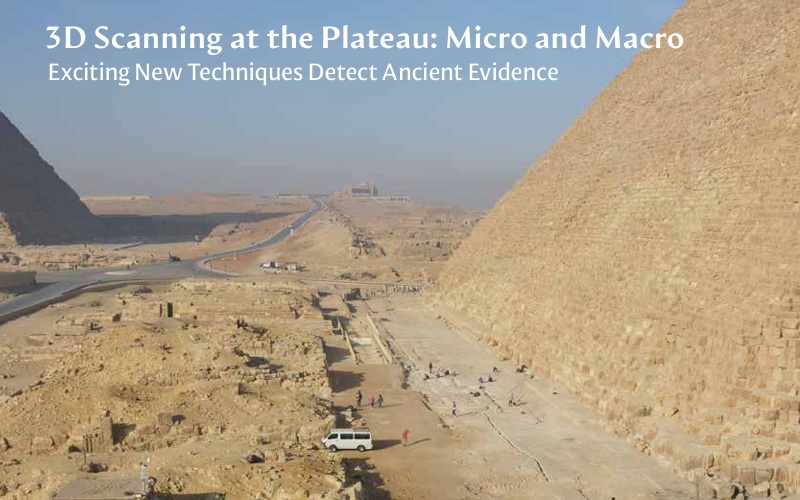
  • 3D Micro-Scans of Giza Clay Sealings
  • Return to the Sphinx Viewing Project
  • A Ground-Penetrating Radar Survey near the Great Sphinx
  • A Pilot Study of Textile Impressions on Giza’s Clay Sealings
  • Heartfelt Goodbyes to Dear Friends

DOWNLOAD PDF


Monday, December 31, 2018

ARCE Sphinx Project 1979-1983 Archive: Maps, drawings, and photographs from the American Research Center in Egypt (ARCE) Sphinx Project, 1979-1983

The ARCE SPHINX PROJECT (1979-1983) aimed to produce scale drawings (plans and elevations) of the Great Sphinx of Giza, where no scale drawings of this unique monument had been produced before, to map the greater Sphinx site, including three ancient Egyptian temples situated east of the statue, and the larger quarry forming the Sphinx "amphitheater." Objectives included elevations, profiles, and a detailed master plan of the Sphinx, detailed section and profile drawings showing the masonry restorations added to the statue, topographical maps of the Sphinx ditch and larger quarry, and maps of the structural geology of the site, showing stratification and faults.
The idea was that we could achieve a better understanding of the origin of the Sphinx and how the 4th Dynasty Egyptians created the Sphinx from careful, recorded observations of its structure and geology, and that a good part of the history of the Sphinx could be read from detailed survey and mapping of the stratified masonry on the Sphinx, and from the condition of the bedrock core under the earliest masonry, as well as from analysis of tool marks and mortar bonding the different phases.
Dr. James Allen, then Assistant Director of the American Research Center (now Charles Edwin Wilbour Professor of Egyptology at Brown University) applied as Project Director to the Egyptian Antiquities Organization to survey and map the Sphinx. Mark Lehner served as Field Director. Ulrich Kapp (German Archaeological Institute in Cairo) carried out the photogrammetric survey and plotted the master profiles and elevations of the Sphinx. Team members included Christiane Zivie-Coche (Director, Centre Wladimir Golenischeff, École Pratique des Hautes Études, Egyptology), Attila Vass (survey), Susan Allen (now, Museum of Fine Arts, Boston, survey), Peter Lacovara (then Museum of Fine Arts, Boston, now The Ancient Egyptian Egyptian Heritage and Archaeology Fund, survey) and Cynthia Schartzer (archaeology, survey), K. Lal Gauri (University of Louisville, geology), and Thomas Aigner (University of Tübingen, geology).
The ARCE SPHINX PROJECT ARCHIVE includes written, drawn, and color slide photographs and black and white photographs. Drawings include:
  • Master elevations of the front and sides of the Sphinx, scale 1:50.
  • Master plan of the Sphinx, scale 1:50
  • Detailed maps of the 4th Dynasty Khafre Valley Temple, the Sphinx Temple, and the 18th Dynasty Amenhotep II Temple, scale 1:100
  • Topographical and geological maps of the wider Sphinx “amphitheater,” scale 1:200
  • 1:1,000 map of the Sphinx and modern installations to the East as of 1979
  • Detailed architectural sections and elevations of the stratified ancient masonry layers applied to the Sphinx bedrock core body, scale 1:20 and 1:10
  • 5,000 slides
  • 2,716 black and white photographs
  • Profile of the Sphinx area with water table measurements taken during 1981-82.

Saturday, March 12, 2016

Ancient Egypt Research Associates: Analysis and Publication Field School Papers

Analysis and Publication Field School Papers
APFS_webcover
Ancient Egypt Research Associates is pleased to announce the release of Settlement and Cemetery at Giza: Papers from the 2010 AERA-ARCE Field School.
This volume is the first in a series of planned volumes representing the culmination of student work prepared during our Analysis and Publication Field Schools, the final step in our four-part field school for Ministry of Antiquities Inspectors run in conjunction with the American Center for Research in Egypt since 2005.
Settlement and Cemetery presents preliminary excavation and specialist reports detailing fieldwork and material culture analysis from the Heit el-Ghurab (HeG) and Khentkawes Town (KKT) sites carried out during 2010 and 2013 field school seasons. The book includes the following papers:
  • reports on the AA and EOG-D Bakeries by Hanan Mahmoud and James Taylor, and Rabee Eissa, respectively
  • a report summarizing excavation of enigmatic “pedestal” structures in the MSE Area by Ashraf Abd el-Aziz
  • a preliminary report on the MSE ceramics by Mahmoud el-Shafey, Mohamed Naguib, and Sherif Abd el-Monaem
  • an analysis of the faunal remains from the AA Bakery by Rasha Abd el-Mageed
  • an osteological study on the Chute burials by Scott Haddow and Afaf Wahba
  • a report and catalog of the archaeobotanical remains of House E by Mary Anne Murray and Rebab el-Gendy
  • a brief history of nine AERA-ARCE Field School sessions and the philosophical and functional blueprint behind the program by Ana Tavares
It is with great pride that we present this volume of our students’ work. In some cases, these papers are our students’ first print publication—a momentous achievement for any young scholar. Providing both training and a platform for publication helps our students become active participants in their country’s proud archaeological heritage, not only playing a role in safeguarding it but also in disseminating it to the world.
We are proud to present their work and feel strongly that it contributes towards a further understanding of Old Kingdom and Late Period Giza. Thank you to all our members for helping to make this rewarding endeavor possible.
Click here to download a PDF copy of Settlement and Cemetery at Giza: Papers from the 2010 AERA-ARCE Field School.

Tuesday, April 22, 2014

Open Access Publications: Giza Occasional Papers

 [First posted 8/6/09, updated 12/17/10, updated 22 April 2014]

Giza Occasional Papers
http://www.aeraweb.org/wp-content/themes/custom/images/logo.gif
The Giza Occasional Papers are the preliminary reports on AERA’s field seasons at Giza.
Hard copies of Giza Occasional Papers are now available from Casemate Academics. PDF versions can be downloaded below.

GOP 5

Summarizing our 2009 Field Season, GOP 5 consists of 244 pages, 29 color plates and six large foldouts, including two isometric drawings, a profile drawing and three maps.
Click here to download GOP5 Click here to download Table of Contents
Foldout 1Foldout 2Foldout 3Foldout 4Foldout 5Foldout 6
GOP4

GOP 4

Introduction
Excavations (KKT)
Archaeological Science
Saqqara Laser Scanning Survey

Click here to download GOP 4 Click here to download Table of Contents
GOP 3

GOP 3

Introduction
Excavations
Capital Zone Walk-About 2006
2006 Geophysical Season at Giza
Giza Geomorphological Report
Giza Laser Scanning Project

Click here to download GOP 3 Click here to download Table of Contents
GOP 2

GOP 2

Introduction
Area Clearing and Mapping
Excavations in 2005
Mapping Late Period Burials
Conservation

Click here to download GOP 2 Click here to download Table of Contents
GOP 1

GOP 1

Introduction
2004 Excavation
New Areas-Soccer Field
Wall of the Crow (N)
References

Click here to download GOP 1 Click here to download Table of Contents

Friday, March 7, 2014

GIZA3D

GIZA3D
http://giza3d.3ds.com/layouts/frontoffice/images/logo.png 

Giza 3D is a complex project, involving collaboration, and man- agement of a huge wealth of data in an attractive, realistic and user-friendly presentation. It is a perfect demonstration of the power of 3D in the service of specialized research on the one hand, and the sharing of knowledge with all types of people on the other. 

For the first time, the latest and most exhaustive information available on the Giza Necropolis will be made available to ev- eryone through a realistic experience that can satisfy mere cu- riosity or encourage more demanding research inquiries.
Who knows, we may even find the next George Reisner among the visitors to Giza 3D...

Sunday, November 4, 2012

The Grand Egyptian Museum website launched

The Grand Egyptian Museum
http://www.gem.gov.eg/photos/Bannernew.png
The Grand Egyptian Museum holds in trust for Egypt and the World a chronological statement for the ancient history of Egypt over the past 7000 years. Neighboring a timeless wonder, the Giza Pyramids, the new museum is to pay homage to eternal Ancient Egyptian monuments, treasures, and history hosting over 100,000 artifacts, about 3500 of which belong to the famous King Tutankhamen.

The design for the Grand Egyptian Museum was reached as a result of an international architectural competition initiated by the Ministry of Culture on January 7th, 2002. The competition was under the patronage of the UNESCO and supervised by the UIA. The museum complex aims to furnish all its visitors with a uniquely enjoyable, educational, and cultural experience. 

The Grand Egyptian Museum will allow Egypt to become a major worldwide hub for Pharonic history and a must-visit place for Egyptologists. The museum aims at taking grasp of the diversity of Egypt's heritage of monuments and arts needed to be shown in one place in one location to maintain and preserve this huge legacy. 

The site chosen for the GEM is only 2km from the legendary Pyramids. Nested between the ancient Great Pyramids and the modern city of Cairo, at the junction between dry desert and the fertile floodplain, the Grand Museum is a portal to the past. The Giza plateau Memphis and its Necropolis nominated by UNESCO among the world Cultural Heritage Sites, contains irreplaceable monuments from across time.The museum complex will be built on a plot of land approximately 117 feddans, about 480,000 square meters.

With its unique position on the cusp between the past and the present, the Grand Egyptian Museum will lie at the repository for ancient artifacts that creates an interactive experience for the visitor; it will build a bridge between the past and the future.

Tuesday, October 2, 2012

Giza 3D Launched

Giza3D
Harvard University—Museum of Fine Arts Boston expeditions
Dassault Systèmes
Giza 3D is a complex project, involving collaboration, and management of a huge wealth of data in an attractive, realistic and user-friendly presentation. It is a perfect demonstration of the power of 3D in the service of specialized research on the one hand, and the sharing of knowledge with all types of people on the other.

For the first time, the latest and most exhaustive information available on the Giza Necropolis will be made available to everyone through a realistic experience that can satisfy mere cu- riosity or encourage more demanding research inquiries.


Who knows, we may even find the next George Reisner among the visitors to Giza 3D.


Download the press kit
Download the images kit

Wednesday, June 20, 2012

Ancient Egypt Research Associates, Inc. (AERA) Update

Ancient Egypt Research Associates, Inc. (AERA) is pleased to announce the
following titles available for free download through our website,
<www.aeraweb.org>:

Giza Occasional Papers 5: Giza Plateau Mapping Project Season 2009 Preliminary
Report, ed. by Mark Lehner, published in 2011.

AERA Field Manual Series 1: A Manual of Egyptian Pottery by Anna Wodzinska,
published in 2010.
Volume 1, revised edition (Fayum A - Lower Egyptian Culture)
Volume 2, revised edition (Naqada III - Middle Kingdom)
Volume 3 (Second Intermediate Period - Late Period)
Volume 4 (Ptolemaic Period - Modern)

These titles are also still available for sale from David Brown/Oxbow Books:
<www.oxbowbooks.com>.
The David Brown Book Co
PO Box 511 (28 Main Street)
 Oakville CT 06779

Toll-
free: 800 791 9354
Tel: 860 945 9329
Fax: 860 945 9468

- - - - -
Alexandra Witsell
Managing Editor, Publications
Ancient Egypt Research Associates (AERA)
Boston
And see AWOL's Ancient Egypt Research Associates Open Access Publications

Thursday, June 4, 2009

President Barack Obama's visit to Giza in Egypt and Open Access Egyptian Archaeology

Earlier today, as the world knows, President Barack Obama gave an important speech at Cairo University. On this same day, he was given a tour of Giza by the ubiquitous Zahi Hawass. In addition to the usual tour of the pyramids and the Sphinx, he was privileged to visit the tomb of Qar, a small Dynasty 6 subterranean chapel with engaged statuary on the east side of the Great Pyramid. This tomb, numbered G 7101, was excavated in 1924-25 by the Harvard University–Boston Museum of Fine Arts Expedition. As luck would have it this tomb is quite completely documented and published in an open access publication from the Giza Archives project, at the Museum of Fine Arts, Boston:
William Kelly Simpson

Giza Mastabas Vol. 2:

The Mastabas of Qar and Idu

Boston: Museum of Fine Arts, 1976


Needless to say, luck has nothing at all to do with it. Peter Der Manuelian and his team have been working for years to organize and provide open access to the archaeological record of the excavations at Giza. For the full documentary record, go to the Giza Archives project page and enter "G 7101" in the search box.
