
In 1904, Edward Kennard Rand published a Latin sermon by an unknown author from a single manuscript of the ninth century that recounts the amazement of the devil at the crucifixion of Jesus and the devil’s defeat at the coming of Christ into the underworld, or the Harrowing of Hell. This Sermo de confusione diaboli et inferni added a new dimension to the already complex body of research on the sermons attributed to pseudo-Eusebius of Alexandria and the Gospel of Nicodemus. A century later, new witnesses of the text edited by Rand and an unedited Latin translation of pseudo-Eusebius’ Sermo 17 have begun to shed new light on the interconnectedness of all these materials.The present book critically edits the newly identified Latin documents and discusses them in relation to their Greek source(s) and to one another. It retraces the paths from the protean forms of pseudo-Eusebius’ Greek sermons 15 and 17 to their Latin translations, to the Sermo de confusione diaboli et inferni, and to the Gospel of Nicodemus. In the process, it highlights the creativity of the copyists and translators of Late Antiquity and the Middle Ages, and demonstrates their profound interest and investment in the story of Christ’s Descent into Hell.
© 2026 Brepols Publishers n.v.Open-access
Wednesday, November 4, 2026
A Late Antique Harrowing of Hell and Its Medieval Reception: Eusebius of Alexandria’s sermons 15 and 17 (CPG 5524 and 5526) and Their Latin Rewriting
From Coast to Coast: Current Archaeological Research on Cultural Exchange along and across the Baltic Sea

The Baltic Sea has functioned as a connecting environment for trade, migration, and cultural exchange since prehistory, enabling long-distance trade from the shores of Scandinavia to the modern-day Baltic States, Kaliningrad, Poland, and Germany. Despite the sea’s historical role as a conduit for long-distance interaction, however, the reception of archaeological research in this area remains shaped by twentieth-century political divisions that instead transformed it into a barrier.
This book offers a snapshot of recent and ongoing research, case studies, and archaeological projects focused on cultural interaction across and along the Baltic Sea. Covering the Iron Age, Roman and Migration Periods, Viking Age, and the Middle Ages, the volume presents examples of archaeological data that illustrate social and economic processes, cultural exchange, and the complex web of intercultural and cross-cultural relations among the societies that border the Baltic. Through these contributions, which foreground both continuity and disruption, this volume contributes to a deeper understanding of the Baltic Sea as a historically rich and multifaceted cultural landscape.
© 2026 Brepols Publishers n.v.This is an open access publication made available under a CC BY-NC 4.0 International Licence: https://creativecommons.org/licenses/by-nc/4.0/. No part of this publication may be reproduced, stored in a retrieval system, or transmitted, in any form or by any means, for commercial purposes, without the prior permission of the publisher, or as expressly permitted by law, by licence or under terms agreed with the appropriate reprographics rights organization.
Writing in the Church of the Nativity in Bethlehem: Inscriptions and Graffiti in a Multilingual and Multigraphic Perspective

The Church of the Nativity in Bethlehem is an exceptional epigraphic site. A major restoration campaign (2013–2020) and the recent bibliography dedicated to the building allow us to question hundreds of inscriptions and graffiti which appear on the mosaics, paintings, and walls of this shrine built on the presumed birthplace of Christ. The site exhibits a graphic symphony—if not cacophony—in Latin, Greek, Arabic, Syriac, Armenian, Georgian, Slavic, and Rus scripts, made by pilgrims and travellers as well as the authorities and the different religious communities over the centuries.
The goal of this book, which gathers epigraphists from different backgrounds, as well as historians, art historians, and restorers, is to approach those writings from a variety of perspectives. Which typologies of graphic acts are uncovered and can we escape from the labels ‘graffiti’ and ‘inscriptions’? What purpose do they serve? With which materials and using which techniques where they created, and by whom? Where were they located in the complex of the Church, which includes the caves, the cloister, and the monastic buildings?
This study explores the stratigraphy of the writings and offers several plans detailing their distribution, revealing a new chapter in the history of the building, in its use by pilgrims. It highlights the various actors in epigraphic communication and the interactions between these graphic acts in the different writings and languages. All these inscriptions and graffiti enable us to build a comprehensive picture of the rich heritage offered by this unique holy site.
© 2026 Brepols Publishers n.v.This is an open access publication made available under a CC BY-NC 4.0 International Licence: https://creativecommons.org/licenses/by-nc/4.0/. No part of this publication may be reproduced, stored in a retrieval system, or transmitted, in any form or by any means, for commercial purposes, without the prior permission of the publisher, or as expressly permitted by law, by licence or under terms agreed with the appropriate reprographics rights organization.
Open Access Journal: European Hebrew Journal (EHJ)
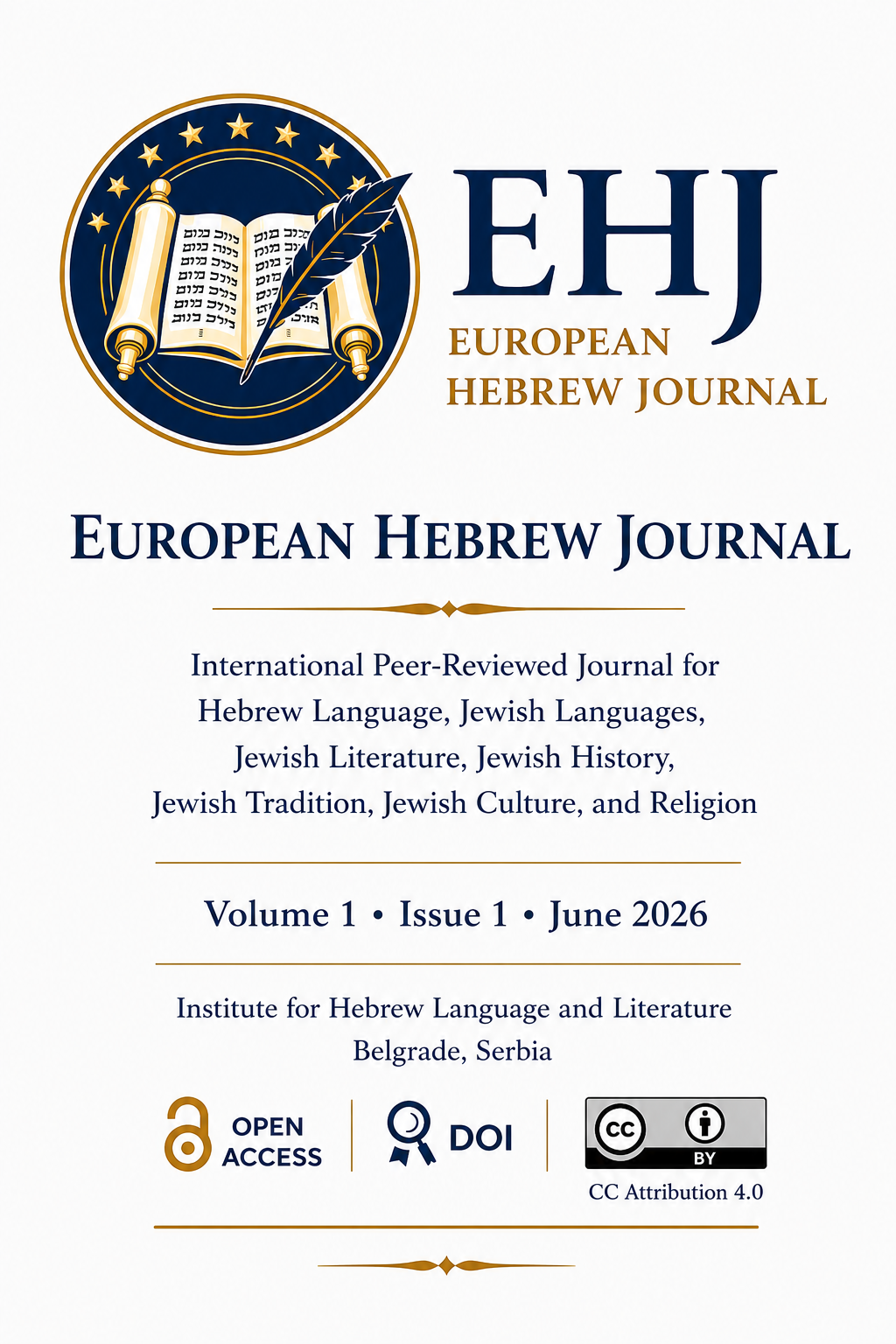
European Hebrew Journal (EHJ) ISSN 3122-8879 online, is an emerging international peer-reviewed scholarly journal, currently in the establishment phase, devoted to interdisciplinary research in Hebrew and Jewish Studies. The journal welcomes original research articles, review papers, translations, critical editions, and book reviews from scholars worldwide. The inaugural issue is currently in preparation.
European Hebrew Journal, Volume 1, Issue 2 (2026) presents original, peer-reviewed scholarship across Hebrew language and linguistics, Biblical Hebrew, Hebrew philology, textual criticism, translation studies, Hebrew Bible / Old Testament interpretation, Jewish studies, Second Temple Judaism, manuscript studies, archaeology, theology, and related interdisciplinary fields.
The publication of Volume 1, Issue 2 (2026) also provides the scholarly context for the EHJ International Scholarly Online Conference 2026, organised by the Institute for Hebrew Language and Literature, Belgrade, in association with the European Hebrew Journal. The conference is being organised to mark and extend the scholarly dialogue surrounding the publication of the journal’s second issue and to create a broader international forum for new research, discoveries, methodologies, and interdisciplinary discussion in Hebrew, biblical, Jewish, archaeological, linguistic, philological, and theological studies.
The EHJ International Scholarly Online Conference 2026 is scheduled for 6–10 November 2026 (five days), and is delivered live online via Zoom. Its programme brings together international scholars working across Hebrew studies, biblical studies, archaeology, Jewish studies, textual criticism, translation, linguistics, theology, manuscript studies, and related disciplines.
Volume 1, Issue 2 (2026) contributes to the international dissemination of current research in Hebrew studies and related disciplines and is intended for researchers, university faculty, biblical scholars, Hebraists, linguists, philologists, archaeologists, theologians, historians, translators, manuscript scholars, graduate students, research institutions, and academic libraries worldwide.
Published: 2026-08-17Full Issue
Articles
The inaugural issue of the European Hebrew Journal (EHJ) marks the launch of the journal and presents its first scholarly publications, including peer-reviewed research articles and an editorial introduction. This issue reflects the journal’s commitment to the study of the Hebrew language, Hebrew linguistics, Biblical Hebrew, Jewish studies, textual criticism, and related fields within the humanities.
Volume 1, Issue 1 (2026) includes an editorial introduction outlining the aims and scope of the journal, together with original scholarly articles addressing topics in Hebrew language and literature, biblical studies, and Jewish intellectual heritage. As a peer-reviewed open-access publication, EHJ seeks to provide an international forum for researchers working in Hebrew studies, Semitic linguistics, Dead Sea Scrolls research, textual criticism, manuscript studies, Jewish history, and related disciplines.
Additional peer-reviewed research articles may be published within this inaugural issue prior to its formal closure, in accordance with the journal’s Progressive Issue Publication Policy. The publication date of each article is recorded individually as part of the journal’s permanent scholarly record.
The journal is published by the Institute for Hebrew Language and Literature, Belgrade, Serbia.
ISSN 3122-8879 (Online)
Published: 2026-06-05Articles
See AWOL's full List of Open Access Journals in Ancient Studies
Tuesday, November 3, 2026
Open Access Journal: Al-ʿUsur al-Wusta: The Journal of Middle East Medievalists
[First posted in AWOL 21 May 2020, updated 3 November 2026]
Al-ʿUsur al-Wusta: The Journal of Middle East Medievalists
ISSN: 1068-1051
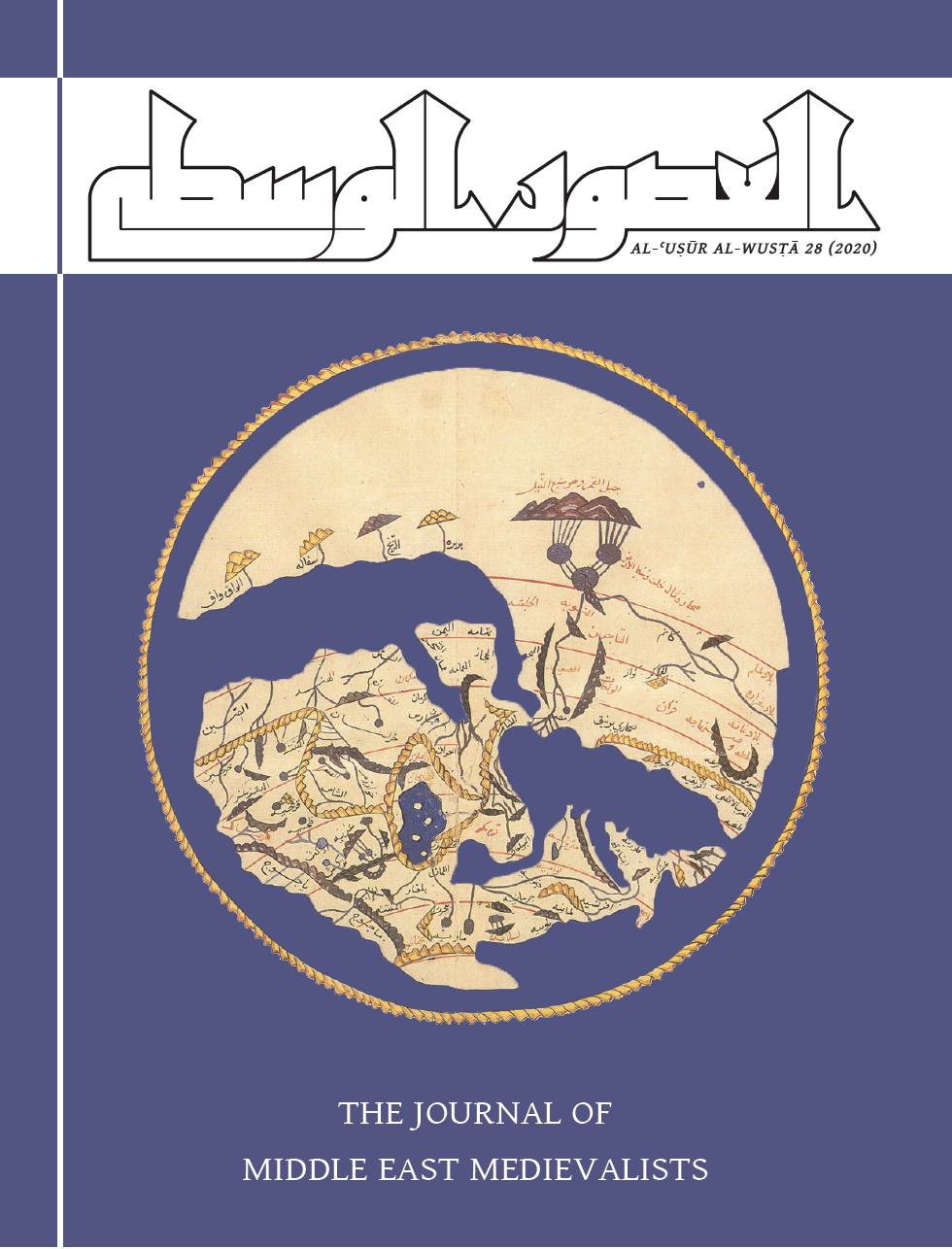
 Middle East Medievalists (MEM) is an international professional non-profit association of scholars interested in the study of the medieval Middle East, expansively defined to include all geographies with prominent Muslim political, religious, or social presences, at some point between the rough parameters of 500-1500 CE.MEM has two primary goals. The first is to increase the representation of medieval scholarship at scholarly meetings in North America and elsewhere by co-sponsoring panels. The other principal objective of MEM is to foster communication among individuals and organizations with an interest in the study of the medieval Middle East. MEM also hopes, in the future, to advance the study of the medieval Middle East by undertaking such projects as scholar exchanges, conferences, etc.As part of its effort to promote scholarship and facilitate communication among its members, MEM publishes Al-ʿUsur al-Wusta: The Journal of Middle East Medievalists.
MEM officially came into existence on 15 November 1989 at its first annual meeting, held in Toronto. MEM conducts its business meeting annually in the autumn, normally in conjunction with the meeting of the Middle East Studies Association (MESA), which is usually held in November. The general business meeting is open to all current members of MEM and to those considering membership. The Board of Directors of MEM is elected annually at the general business meeting. MEM is incorporated in the state of Illinois; contributions to MEM are considered exempt from federal income tax by the United States Internal Revenue Service.
Vol. 34 (2026)
January 28, 2026
Research Articles
Vol. 30 (2022)
April 1, 2022
Vol. 29 (2021)
December 5, 2021
Vol. 28 (2020)
June 3, 2021
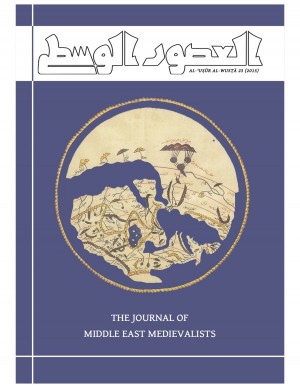
Vol. 27 (2019)
November 15, 2019
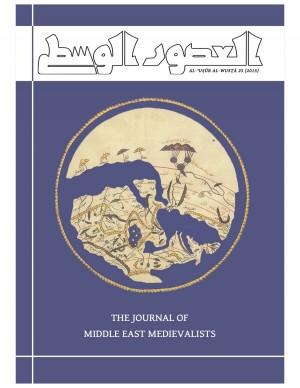
Vol. 26 No. 1 (2018)
November 15, 2018
Al-ʿUṣūr al-Wusṭā
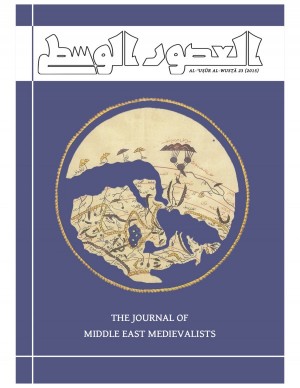
Vol. 25 No. 1 (2017)
November 15, 2017
Al-ʿUṣūr al-Wusṭā
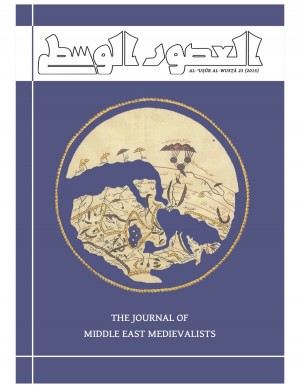
Vol. 24 No. 1 (2016)
November 15, 2016
Al-ʿUṣūr al-Wusṭā
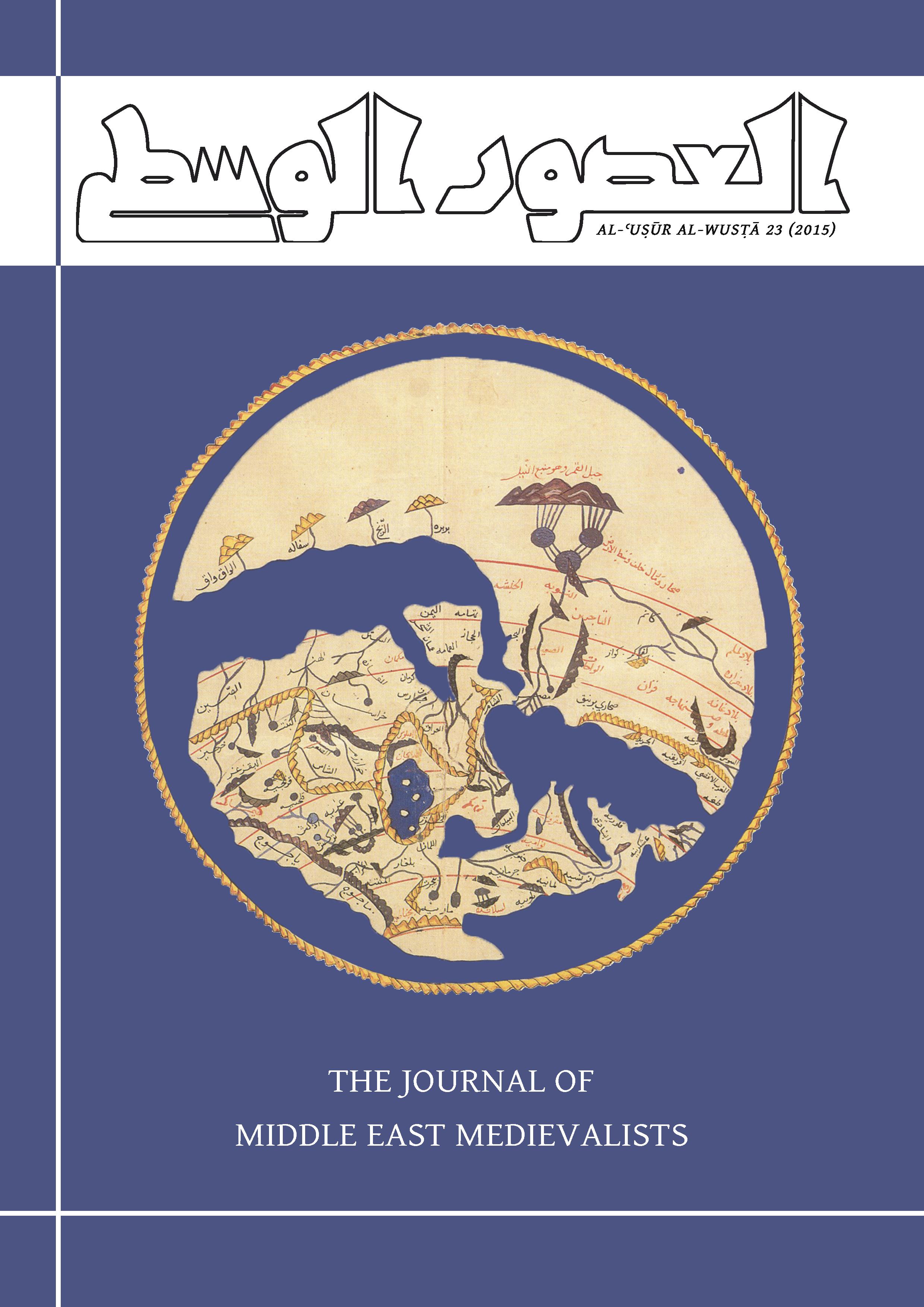
Vol. 23 No. 1 (2015)
November 15, 2015
Al-ʿUṣūr al-Wusṭā

Vol. 22 No. 1 (2010)
October 1, 2014
Al-‘Uṣūr al-Wusṭā

Vol. 21 No. 1 (2009)
April 1, 2009
Al-ʿUṣūr al-Wusṭā

Vol. 20 No. 2 (2008)
October 1, 2008
Al-ʿUṣūr al-Wusṭā

Vol. 20 No. 1 (2008)
April 1, 2008
Al-ʿUṣūr al-Wusṭā

Vol. 19 No. 2 (2007)
October 1, 2007
Al-ʿUṣūr al-Wusṭā

Vol. 19 No. 1 (2007)
April 1, 2007
Al-ʿUṣūr al-Wusṭā

Vol. 18 No. 2 (2006)
October 1, 2006
Al-ʿUṣūr al-Wusṭā

Vol. 18 No. 1 (2006)
April 1, 2006
Al-ʿUṣūr al-Wusṭā

Vol. 17 No. 2 (2005)
October 1, 2005
Al-ʿUṣūr al-Wusṭā

Vol. 17 No. 1 (2005)
April 1, 2005
Al-ʿUṣūr al-Wusṭā

Vol. 16 No. 2 (2004)
October 1, 2004
Al-ʿUṣūr al-Wusṭā

Vol. 16 No. 1 (2004)
April 1, 2004
Al-ʿUṣūr al-Wusṭā

Vol. 15 No. 2 (2003)
October 1, 2003
Al-ʿUṣūr al-Wusṭā

See AWOL's full List of Open Access Journals in Ancient Studies
And see AMIR's Alphabetical List of Open Access Journals in Middle Eastern Studies
Open Access Journal: al-rāfidān: Journal of western Asiatic studies
al-rāfidān: Journal of Western Asiatic Studies
ISSN: 0285-4406

イラク古代文化研究所では1980年以降、研究所の紀要としてラーフィダーンal-Rafidan: Journal of Western Asiatic Studiesを年一回発行しています。
学術の進展に寄与するため、所外の投稿希望者にも広く紙面を開放しています。投稿資格は問いません。詳しくは各PDFファイルの巻末「『ラーフィダーン』編集方針」をご覧ください。
Research Institute Research Institute RAFIDAN al-Rafidan: Journal of Western Asiatic Studies is issued once a year as a bulletin after 1980 by Iraqi ancient culture.
To contribute to development of art and science, space is being opened to a contribution applicant outside the place widely, too. I don't ask about contribution qualification. Please see back of the book of each PDF file " "RAFIDAN" edit policy" for more information.
- ラーフィダーンXLVII (2026年発行)
(9.57MB)(70ページ)
- ラーフィダーン XLVI (2025年発行)
- ラーフィダーン XLV (2024年発行)
- ラーフィダーン XLIV (2023年発行)
- ラーフィダーン XLIII (2022年発行)
- ラーフィダーン XLII (2021年発行)
- ラーフィダーン XLI (2020年発行)
- ラーフィダーン XL (2019年発行)
- ラーフィダーン XXXIX (2018年発行)
- ラーフィダーン XXXVIII (2017年発行)
- ラーフィダーン XXXVII (2016年発行)
- ラーフィダーン XXXVI (2015年発行)
- ラーフィダーン XXXV (2014年発行)
- ラーフィダーン XXXIV (2013年発行)
- ラーフィダーン XXXIII (2012年発行)
- ラーフィダーン XXXII (2011年発行)
- ラーフィダーン XXXI (2010年発行)
- ラーフィダーン XXX (2009年発行)
- ラーフィダーン XXIX (2008年発行)
- ラーフィダーン XXVIII (2007年発行)
- ラーフィダーン XXVII (2006年発行)
- ラーフィダーン XXVI (2005年発行)
- ラーフィダーン XXV (2004年発行)
- ラーフィダーン XXIV (2003年発行)
- ラーフィダーン XXIII (2002年発行)
- ラーフィダーン XXII (2001年発行)
- ラーフィダーン XXI (2000年発行)
- ラーフィダーン XX (1999年発行)
- ラーフィダーン XIX (1998年発行)
- ラーフィダーン XVIII (1997年発行)
- ラーフィダーン XVII (1996年発行)
- ラーフィダーン XVI (1995年発行)
- ラーフィダーン XV (1994年発行)
- ラーフィダーン XIV (1993年発行)
- ラーフィダーン XIII (1992年発行)
- ラーフィダーン XII (1991年発行)
- ラーフィダーン XI (1990年発行)
- ラーフィダーン X (1989年発行)
- ラーフィダーン IX (1988年発行)
- ラーフィダーン VIII (1987年発行)
- ラーフィダーン VII (1986年発行)
- ラーフィダーン V&VI (1985年発行)
- ラーフィダーン III&IV (1983年発行)
- ラーフィダーン II (1981年発行)
- ラーフィダーン I (1980年発行)


 Posts


 Stumble It!


