Thursday, October 8, 2026

Animus. A Study of Seneca's Psychology

Cassan, Melania
The notion of soul represents the beating heart of Seneca’s thought, as it constitutes the essential starting point for the investigation of numerous other aspects of his philosophy: the soul knows, judges, remembers, chooses, acts, suffers, feels. In this sense, studying the soul in its main elements, its characteristics, its structure and its functioning, is the necessary condition for understanding the author’s own theory of knowledge, action and passion. The explication of these essential theoretical premises is precisely the purpose of this work. In short, the present study aims to investigate the question of the soul – human, primarily – in the philosophical reflections of Seneca, bringing out a complex and philosophically pregnant picture that accounts for the main aspects of the theme in question. It is thus sketched a conception of the soul that is deeply in line with the dictates of the Stoic school and, at the same time, intimately Senecan.
ISBN
9788869696305
Publication date and place
Venice, Italy, 2022
Imprint
Edizioni Ca’ Foscari – Venice University Press
Series
Lexis Supplements
Pages
198


Hellenistic Literature and Culture: Studies in Honor of Susan A. Stephens

Benjamin Acosta-Hughes , Jacqueline Arthur-Montagne and Phiroze Vasunia (eds)
Hellenistic Literature and Culture

In this open access book, leading Greek scholars explore the rich and diverse poetry and prose of the long Hellenistic period. Chapters focus on the poets of Alexandria such as Callimachus, Theocritus, Apollonius, and Posidippus and on prose texts written in Greek in the Roman Empire. This volume demonstrates the versatility of this literature and examines its multiple cultural affiliations. The Hellenistic writers emerge from this volume as complex, playful, and politically engaged figures, interested in the relationship between culture and society, and far removed from the stereotype of them as distant or elitist. This book makes a major contribution to the study of Hellenistic Greek culture.

Susan Stephens is the Sarah Hart Kimball Emerita Professor in the Humanities at Stanford University, USA. Her contributions to the study of Hellenistic literature and culture are immense. She is the author of over fifty articles and the author or editor of ten books. Many of these publications have made a significant impact on the study of the ancient world. Her research on the poets of Alexandria and on ancient Greek prose fiction is widely regarded as path-breaking. She is an inspiring and influential teacher who guided and mentored generations of students and is closely associated with Stanford, where she obtained her undergraduate and doctoral degrees and where she taught from 1978 until her retirement.

The eBook editions of this book are available open access under a CC BY-NC-ND 4.0 licence on bloomsburycollections.com. Open access was funded by Stanford University. 

  • DOI:
    10.5040/9781350286047
  • ISBN:
    978-1-3502-8604-7 (online)

    978-1-3502-8601-6 (hardback)

    978-1-3502-8602-3 (epdf)

    978-1-3502-8603-0 (epub)
  • Date of Publication:
    2024
  • Published Online:
    27 November 2023
  • Collection(s):
    Bloomsbury Open Access, Classical Studies & Archaeology 2023, Title By Title
  • Place of Publication:
    London
  • Printer/Publisher:
    Bloomsbury Academic
  • Edition:
    First published
  • Identifier:
    b-9781350286047
  •  


    Crisis and Resilience in Ancient Greek Alliances: Cross-Border Cooperation

    Franchi, Elena (editor)
    Ganter, Angela (editor)
    Maier, Felix K. (editor)
    This is the first book to explore ancient Greek alliances in terms of both crisis and resilience, offering readers a deeper understanding of how such alliances were formed, dissolved and re-established. The chapters in this volume understand disputes between Greek allies not simply as precursors to alliance breakdown, but as a structural feature of bilateral and federal formations. By analysing their susceptibility to crises from both external (etic) and internal (emic) perspectives, this volume explores how these challenges proved to be catalysts for the transformation and adaptation of alliances. Ancient concepts of crisis were seen as inherent to the system, rather than modern notions of crisis as catalysts for revolution and instability, making resilience and adaptation crucial to the formation of alliances in ancient Greece. The book highlights the creative power and potential of ancient Greek alliances through a range of case studies, which revolve around sections on concepts and historiography, rituals and media, border management and a comparison between the Delian League and NATO. To showcase how the alliances thrived in the face of crises, the views of historiographers like Herodotus, Thucydides and Polybius are discussed. Equally, the actors within alliances are characterised: the Delphic Amphiktyony, powerful poleis like Athens and Sparta and federal states like the Aitolians and the Boiotians. Mainly with a view to Hellenistic kings, the impact of external powers on the texture of Greek alliances also comes into play. Crisis and Resilience in Ancient Greek Alliances will be valuable for students and scholars working on politics and diplomacy in ancient Greece, as well as those interested in ancient history and politics in the ancient world more broadly.
    ISBN
    9781040546925, 9781040668047, 9781003608707
    Publisher
    Taylor & Francis
    Publication date and place
    Oxford, 2026
    Imprint
    Routledge
    Series
    Routledge Monographs in Classical Studies, Multiple Funders,
    Pages
    308


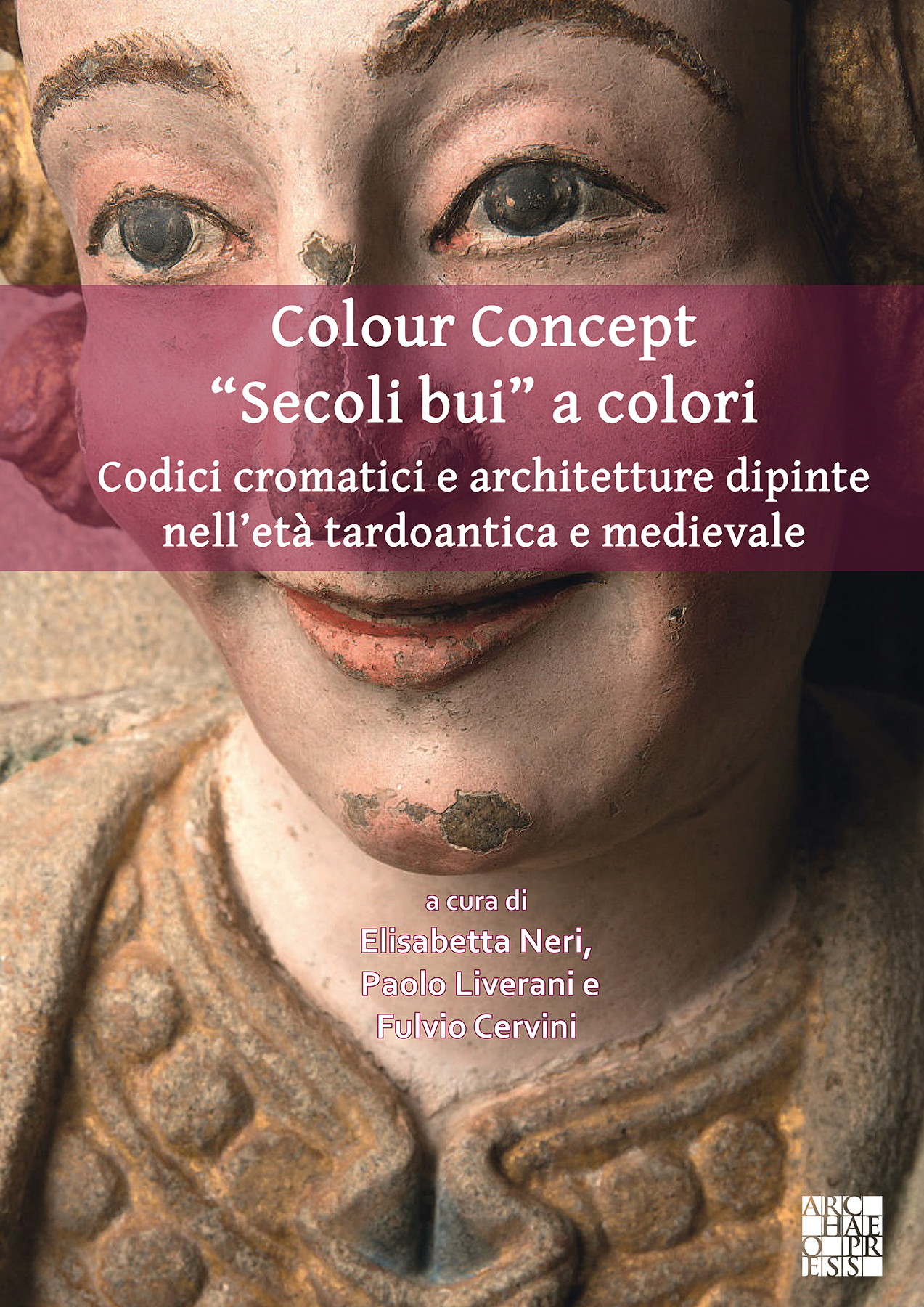
    Colour Concept “Secoli bui” a colori: Codici cromatici e architetture dipinte nell’età tardoantica e medievale

    book cover  

    Although colour was considered to be essentially for the perception of objects in ancient thought, its importance in archaeological and art-historical studies was underestimated until the 20th century.

    Recent scientific innovations in cultural heritage diagnostics have enabled a qualitative and quantitative increase in colour studies for the Classical and late medieval periods. Less well explored remains the transitional period of Late Antiquity and the Early Middle Ages, crucial for the development of the cultural history of colour in subsequent eras.

    Divided into two parts, firstly the book aims to explore the chromatic profile of various media in Late Antique visual culture, attempting to grasp the possible development of a distinct chromatic culture. The second part addresses issues related to colour in architecture, considering the evolution of chromatic space and its perception through a series of excavation, restoration, and research projects that reveal and interpret it.

    H 290 x W 205 mm

    336 pages

    210 figures, 3 tables (colour throughout)

    Published Oct 2026

    Archaeopress Archaeology

    ISBN

    Hardback: 9781805832218

    Digital: 9781805832225

    DOI 10.32028/9781805832218


    Wednesday, October 7, 2026

    Digital Roofs: an iDAI.field Configuration and Guideline

    This dataset was created within the framework of the Digital Roofs project (2020–2025), a research initiative of the German Archaeological Institute (DAI). The project focuses on the development and evaluation of methods and technologies for the high-quality digital documentation and publication of large quantities of archaeological roof tile finds.

    Ancient roof tiles, particularly from Greek and Roman contexts, represent a challenging category of material due to their size, weight, and the large number of fragments typically recovered during excavations and surveys. Despite their research potential, especially unornamented tiles are often insufficiently documented and rarely published in a form suitable for comparative analysis.

    Within the project, standardized workflows were developed that integrate database structures, documentation methodologies, and digital recording techniques. These workflows aim to ensure consistent, efficient, and high-quality documentation, facilitating reuse, comparability, and publication.

    The data were recorded using a customized configuration of iDAI.field developed within the Digital Roofs project. The development of this configuration formed a central part of the project’s methodological work, with Annalize Rheeder playing a key role in its design and implementation. This configuration, which reflects the project’s approach to structuring and documenting roof tile assemblages, is provided as part of the dataset for reuse in other projects.

    The configuration was created prior to the introduction of the dedicated “Find collection” category in iDAI.field; consequently, some structural elements represent earlier strategies for handling large groups of finds. Parts of the configuration can nevertheless be reused and imported into newer iDAI.field projects.

    The dataset further includes accompanying documentation in the form of methodological guidelines and manuals, provided in English and German, each in both high- and low-resolution PDF versions. These materials document the workflows and technologies applied and support the reuse and adaptation of the dataset.

    Cite this as

    Friederike Fless (0000-0003-4500-7778) (2026). Digital Roofs: an iDAI.field Configuration and Guideline [Data set]. DAI. https://doi.org/10.34780/c5fjjtaf
    Retrieved: 17:14 07 Oct 2026 (UTC)


    Beilagen und Fundstatistik zu: Die Gymnasien Prienes. Zur Geschichte der Bauten einer Polisinstitution

    Die Monographie zu den beiden Gymnasien Prienes ist eine archäologisch-historische und bauhistorische Arbeit, deren Ergebnisse auf Ausgrabungen in den beiden Baukomplexen, der Dokumentation des Baubestands und der Auswertung vorhergehender Forschungen beruhen. Ergänzend zur Buchausgabe werden hier die digitalen Beilagen mit großformatigen Plänen, Ansichten, Schnitten und Rekonstruktionen zusammengestellt, die einen unverzichtbaren Bestandteil des Buches darstellen. Die digitalen Beilagen stehen als einzelne PDF-Dateien zur Verfügung.

    Des Weiteren finden Sie hier die Tabelle zur Fundstatistik der Ausgrabungen. Sie soll es den Lesenden ermöglichen, sich einen Eindruck über die Zusammensetzung und Fundmenge der Befunde zu verschaffen, da zur qualitativen und chronologischen Auswertung der Ausgrabungen immer nur eine Auswahl von Fundstücken herangezogen werden kann. Die Fundstatistik-Tabelle ist als XSLX-, CSV- und PDF-Datei verfügbar. Detaillierte Informationen zur Datei sowie Erläuterungen zu den Spaltenüberschriften der Tabelle und den darin enthaltenen Daten sind in der Read-me-Datei zu finden.

    Cite this as

    Ulrich Mania (0000-0001-9044-0146) [05q9y3f51] (2025). Beilagen und Fundstatistik zu: Die Gymnasien Prienes. Zur Geschichte der Bauten einer Polisinstitution [Data set]. DAI. https://doi.org/10.34780/02jdhjj3
    Retrieved: 17:11 07 Oct 2026 (UTC)


    Sophocles, Antigone, trans. Ben Roy et al.

    Translated by Ben Roy, Bliss Perry, Alejandro Quintana, Sam Puopolo, Benji Ho, Sasha Barish

    Edited by Muhua Yang, Dexter Summers, Adonica McCray, Sheridan Marsh, Phoebe Lindsay, Chloe Brooks, Mitch Polonsky, Alice Donnellan

    Presented here under a Creative Commons License 4.0 (CC BY 4.0).