Tuesday, December 8, 2015
Monday, December 7, 2015
Digitized Hebrew Manuscripts at the Library of Congress
Digitized Hebrew Manuscripts at the Library of Congress

The Hebraic Section of the Library of Congress houses over 225 manuscripts; most of them in Hebrew but with a fair sampling of manuscripts also written in cognate languages such as Judeo-Arabic, Judeo-Persian, and Yiddish. It is a highly diverse collection, dating from the 11th to early 20th centuries and drawn from Jewish communities throughout the world. It is also a very eclectic collection, particularly rich in kabalistic material from Italy and Safed yet also offering material in everything from music and poetry to folk medicine and synagogue rites. Very little of the material is illustrated; the major exception to the rule being, in this case, a most spectacular exception indeed: the famous Washington Haggadah by Joel ben Simeon, an illuminated treasure from the late 15th century.
Lesser-known treasures in the collection are waiting to be discovered and researched. Amongst these we might mention a manuscript of the Diwan containing unpublished poems by Solomon ben Meshullam Dapiera (MS 154); a responsum concerning the kiddushin of two daughters, apparently in Lebanon (MS 31), and a pinkas of a synagogue in Mantua from the years 1739-1749 (MS 29). Those interested in Jewish folk culture will find rich materials (e.g., MSS 21, 35, 57, 182) as will those researching the modes of Jewish music in the Ottoman Empire (MSS 24; 144). Of special interest, perhaps, is a large autograph fragment by Moses b. Abraham Provençal (MS 147), a chapter from Hayyim Vital’s unpublished redaction of Shemoneh Shecarim(MS43), and an unpublished novel in Hebrew written just after the first Zionist Congress in 1896 (MS 77).
Manuscript Navigation 1 through 25 26 through 50
Sunday, December 6, 2015
EPWING for the Classics
このプロジェクトでは、古典ラテン語・ギリシア語を学ぶ方のために、羅英辞典(ELD, LS)、希英辞典(LS, LSJ)などのデータをEPWING形式で公開しています。 羅英・希英辞典は、数十万件に及ぶ変化形見だし付きのものも作りました。 いずれも著作権保護期間の過ぎた、CCL, GPLで公開されているデータを元にしていますので、どなたでも無料で自由に使えます。
This project provides EPWING data of
EPWING is a popular format of electronic dictionary in Japan. You can read it on Windows/Mac/Unix/iPhone/PDA etc with free viewers.
- Lewis, An Elementary Latin Dictionary
- Lewis and Short, A Latin Dictionary
- Liddell and Scott, An Intermediate Greek-English Lexicon
- Liddell and Scott, A Greek-English Lexicon.
- W.Smith, A Dictionary of Greek and Roman Antiquities (1890, 3rd ed.)
- W.Smith, A Dictionary of Greek and Roman Biography and Mythology
- W.Smith, Dictionary of Greek and Roman Geography (1854) etc
Anfore Brindisine
Anfore Brindisine

ANFORE
Le anfore da trasporto che si producevano, a partire dall’età repubblicana, nelle fornaci rinvenute nell’ager Brundisinus - già segnalate in una sezione particolare nel IX vol. del Corpus Inscriptionum Latinarum, pp. 613-615, sotto la denominazione di Amphorae Calabrae - sono oggetto negli ultimi decenni di studi articolati tesi a distinguere i vari centri di produzione, in connessione, ove possibile, con le varie tipologie e cronologie. I siti produttori individuati sono i seguenti: Apani e Giancola, lungo il litorale a nord di Brindisi, Marmorelle nell’entroterra e La Rosa nella zona portuale, alla periferia sud della città. Tutti questi siti presentano una conformazione ed una localizzazione geografica adatta all’impianto di officine per la produzione ceramica: vale a dire disponibilità in loco di cave di argilla, presenza di un corso d’acqua e di un facile approdo, vicinanza di un’arteria viaria.
Le forme
Il catalogo dei bolli: Aniniana, C. Aninius, L. Aninius, Antiochus, Apelles, Damas, Eikadios, Heraios, Kephalon, Numenius, Philemon, Pulades, Soterichus
Il gentilizio Aninius
I nomi servili
Il caso dei nomi
Note grafiche, linguistiche, paleografiche
Cronologia
Fenomeni di bilinguismo
CATALOGO DEI BOLLI
INDICE
Aniniana, C. Aninius (caratteri greci e latini ), L. Aninius, Antiochus (caratteri greci), Apelles (caratteri greci e latini ), Damas (caratteri greci e latini ), Eikadios (caratteri greci), Heraios (caratteri greci), Kephalon (caratteri greci), Numenius (caratteri greci e latini ), Philemon (caratteri greci e latini ), Pulades (caratteri greci e latini ), Soterichus (caratteri greci e latini ).
Altri gentilizi su anfore di forma II: Gentilizi seguiti dalla sigla Q, Altri gentilizi.
Gentilizi su anfore brindisine di forma non identificabileReferenze bibliografiche
Saturday, December 5, 2015
Open Access Book: Aproximación al "Antiguo Egipto".
Flammini, R. (Comp.), Aproximación al "Antiguo Egipto".
Buenos Aires, EDUCA, 2004. 180 pp., with maps and illustrations. ISBN 950-523-314-0.
This book reunites the outcomes of an extra-curricular Conference entitled “The Ancient Egypt, a Millenary Civilization,” that took place at UCA during October 2002.
Buenos Aires, EDUCA, 2004. 180 pp., with maps and illustrations. ISBN 950-523-314-0.
This book reunites the outcomes of an extra-curricular Conference entitled “The Ancient Egypt, a Millenary Civilization,” that took place at UCA during October 2002.

Content
13 Prólogo
17 Diversos aspectos de la representación plástica y la expresión en el arte del Antiguo Egipto
Jorge Bedoya
51 Próximos y distantes: Egipto y África, del Período Predinástico al Reino Antiguo
Marcelo Campagno
81 Ciudades de Egipto. Historia y Cerámica. Tell er -Ub'a (Mendes)
Alicia Daneri Rodrigo
101 Asiáticos en Egipto: Los Hicsos
Roxana Flammini
141 La vida en el más allá: de Mastabas, Pirámides e Hipogeos
Javier Paysás
Descripción: Prologo: El antiguo Egipto, lejano en el tiempo y en el espacio, no deja de sorprendernos cuando -mucho más allá de los descubrimientos arqueológicos que suelen concitar las primeras planas de los periódicos- logramos visualizar en una frase, en una imagen, en una construcción o en un ajuar funerario, parte del sentido que esa sociedad le daba al mundo. Por cierto, ese sentido del mundo dista mucho de asemejarse al nuestro: un universo permeado por lo sagrado, una concepción diferente del espacio y del tiempo, un Estado gobernado por un rey-dios. Si bien diferente, no carece de orden, sino que posee un ordenamiento propio, único y preciso. He aquí, entonces, que lo novedoso del enfoque se conjuga con lo ya conocido sobre esa sociedad para aproximarnos a ella con nuevos ojos. De este modo, ese antiguo Egipto nos convocó en el Curso de Extensión Universitaria organizado por el Centro de Estudios de Historia del Antiguo Oriente (CEHAO) y el Departamento de Historia, en el ámbito de la Facultad de Filosofía y Letras de la Universidad Católica Argentina, durante el mes de octubre de 2002. Bajo el título de "El Antiguo Egipto: una civilización milenaria", cinco encuentros pretendieron acercar algunos aspectos de ese universo a los jóvenes universitarios y al público en general; encuentros donde se hicieron presentes la historia, la arqueología, la antropología, la arquitectura y la historia de las artes. La explicación de las transformaciones expresivas de la representación plástica y de las técnicas utilizadas para elaborar esas imágenes y esculturas, proporcionó una visión del arte como vehículo de expresión de esa cosmovisión particular; mientras que la aproximación histórico-antropológica giró en tomo a una problemática que concitó -y concita- profundas discusiones teóricas en los ámbitos más especializados: los orígenes del Estado en Egipto. En este caso particular, compartimos una aproximación original al surgimiento del Estado, basada en el análisis de los lazos de parentesco dentro de las comunidades pre-estatales y el carácter de las relaciones intercomunitarias en un contexto netamente africano. El enfoque histórico-arqueológico se hizo presente en las aproximaciones a dos sitios de suma importancia para la historia de Egipto: Tell er-Rub'a y Tell el-Dabca. Ambos ubicados en el Delta del Nilo, el primero era el lugar donde se había erigido la ciudad de Mendes, habitada desde el Predinástico, que adquirió mayor preponderancia con los avatares político-económicos del 1 milenio a.C.; el segundo, de la antigua Avaris, capital de la dinastía hicsa, que controló parte de Egipto desde 1640 a 1540 a.e. pero que poseía una riquísima existencia anterior a ese momento. Finalmente, la perspectiva arquitectónica e histórica se conjugó en la presentación de los cambios y continuidades en el ámbito funerario egipcio. Un recorrido por las diferentes configuraciones espaciales, que las tumbas presentaron a lo largo de los 3000 años de la historia del Egipto faraónico, nos introduce en las variantes de ese tipo de construcciones: mastabas, pirámides e hipogeos. Como se observará, algunos de los trabajos conjugan aproximaciones originales para descubrir ese universo de formas y contenidos únicos, singulares y específicos; otros, sugieren la revisión de conceptos, modelos y teorías, presentando lo conocido desde ángulos poco concurridos; pero en definitiva, y más allá de todo, nuestro más profundo deseo radica en que el lector nos acompañe en esta búsqueda de nuevas perspectivas y percepciones para comprender mejor a esos antiguos conocidos, los egipcios
 |
Access the digital version of this book. |
Friday, December 4, 2015
The Theatre of Pompey
The Theatre of Pompey

The Theater of Pompey stood on the southern section of ancient Rome’s Campus Martius, the Field of Mars. As its name suggests, in the period when the Senate ruled Rome (the “Republic,” 509 B.C.– 31 B.C.), this largely empty space was the site where the Roman citizen army assembled before marching out against the city’s enemies, and its chief topographical features (marshes, streams, a sizeable lake) did not encourage extensive construction.
But, by the late second century B.C. some buildings were already beginning to go up, and after Pompey, the conqueror of Asia Minor (Turkey) and Syria, constructed his massive theater, in 55 B.C., the whole area developed rapidly. By the early second century A.D., private citizens and the emperors had filled the entire zone with elegant public and private buildings.
Thursday, December 3, 2015
Museo Archeologico Regionale "Paolo Orsi" Siracusa: Google Earth Walkthrough
Museo Archeologico Regionale "Paolo Orsi" Siracusa: Google Earth Walkthrough
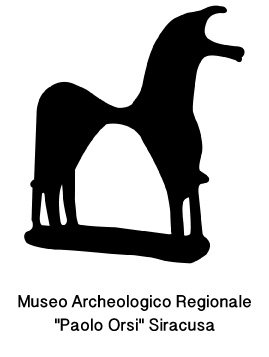
L'edificio fu costruito fra il 1967 e il 1986, su progetto dell'architetto Franco Minissi.
Situato, al momento della progettazione, in un'area non ancora urbanizzata, all'interno del parco storico di Villa Landolina,era destinato a costituire il punto focale di una zona di alto valore archeologico, caratterizzata dalla presenza del parco monumentale della Neapolis, con il teatro greco, l'ara di Jerone e l'anfiteatro romano, e il complesso delle catacombe.
E' stato aperto al pubblico nel 1988, sotto la direzione di Giuseppe Voza, dopo il trasferimento da Piazza Duomo, cuore della città vecchia, e sede storica del Museo Archeologico Nazionale
The present museum was built between 1967 and 1986 based on the design of architect Franco Minissi.
Sited in a then undeveloped part of Siracusa, the museum would become the focal point of a territory of great archeological importance, including the Neapolis Park with its Greek theatre and Hieron altar, the Roman anphiteather and the immense catacombs.
It was opened to the public in 1988 under the direction of Giuseppe Voza, completing the Museum's transition from its old seat in Piazza Duomo in the heart of the city centre.
Subscribe to:
Posts (Atom)





 Posts
Posts


 Stumble It!

