[First posted in AWOL 14 September 2012, updated 12 Novemeber 2025]
Opuscula: Annual of the Swedish Institutes at Athens and Rome
Opuscula is published yearly by the Swedish Institutes at Athens and Rome. First issued in 2008 (no. 1), Opuscula replaces the annuals Opuscula Atheniensia and Opuscula Romana published by the Swedish Institute at Athens and the Swedish Institute in Rome respectively.
The annual contains articles within classical archaeology, ancient history, art, architecture and philology, as well as book reviews within these subjects. Reports of fieldwork carried out under the supervision of the Institutes at Athens and Rome are regularly reported on in the Opuscula.
The annual welcomes contributions pertaining to the ancient Mediterranean world (prehistory to Late Antiquity) and the Classical tradition and drawing on archaeological, historical and philological studies; also, contributions dealing with later periods in the areas, especially in the fields of art, architecture, history and cultural heritage.
Opuscula is a refereed periodical, available in print and with Open Access six months after publication.
Vol. 18 (2025)
Original Article
Book review
Articles
Pergamos. An unexplored fortified site in north-eastern Greece
By Patrik Klingborg, Georgia Galani, Jesper Blid, Stavroula Dadaki & Penelope Malama, pp. 7–24, https://doi.org/10.30549/opathrom-17-02Download PDF - Size: 784.63 KB - Downloads: 124 (since 2024)
The Palamas Archaeological Project 2023. A preliminary report of the Greek–Swedish collaboration in the municipality of Palamas, region of Karditsa, Thessaly
By Maria Vaïopoulou, Robin Rönnlund, Fotini Tsiouka, Johan Klange, Derek Pitman, Ian Randall, Rich Potter & Harry Manley, pp. 25–45, https://doi.org/10.30549/opathrom-17-03Download PDF - Size: 1.21 MB - Downloads: 143 (since 2024)
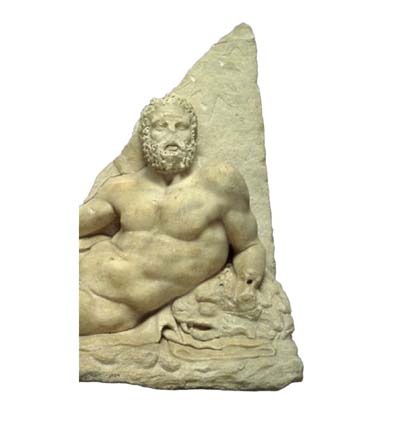
A bronze deposit excavated at Kalaureia in 2016. A statuette of the Herakles Chiaramonti type, a stand and a thymiaterion
By Julia Habetzeder, pp. 47–67, https://doi.org/10.30549/opathrom-17-04Download PDF - Size: 759.01 KB - Downloads: 96 (since 2024)
A Roman bath with broken windows in Asine, Argolis. The result of repeated earthquakes?
By Dominic Ingemark, pp. 69–93, https://doi.org/10.30549/opathrom-17-05Download PDF - Size: 769.05 KB - Downloads: 113 (since 2024)
The Tomba Åström and the 1969 excavations at San Giovenale
By Mattia D’Acri & Fredrik Tobin-Dodd, pp. 95–111, https://doi.org/10.30549/opathrom-17-06Download PDF - Size: 892.50 KB - Downloads: 97 (since 2024)
Architectural terracottas from San Giovenale. Addenda and conclusions
By Örjan Wikander, pp. 113–150, https://doi.org/10.30549/opathrom-17-07Download PDF - Size: 1.05 MB - Downloads: 87 (since 2024)
Etruscologia e ideologia nel XX secolo
By Marie-Laurence Haack, pp. 151–166, https://doi.org/10.30549/opathrom-17-08Download PDF - Size: 265.53 KB - Downloads: 89 (since 2024)
Building the social. A query into the societal impact of the Pompeian water supply
By Anne-Marie Leander Touati, pp. 167–214, https://doi.org/10.30549/opathrom-17-09Download PDF - Size: 2.05 MB - Downloads: 82 (since 2024)
A Ptolemaic context from Hellenistic Patara. Remarks on amphora stamps and coins
By Erkan Dündar & Ömer Tatar, pp. 215–229, https://doi.org/10.30549/opathrom-17-10Download PDF - Size: 547.03 KB - Downloads: 98 (since 2024)
The development of the water supply on the Peloponnese in Greco-Roman times
By Patrik Klingborg, pp. 231–250, https://doi.org/10.30549/opathrom-17-11Download PDF - Size: 672.40 KB - Downloads: 88 (since 2024)
Research review. Navigating the digital limes: Transformative practices and challenges in Classical and Mediterranean archaeology
By Nicolò Dell’Unto, pp. 251–257, https://doi.org/10.30549/opathrom-17-12Download PDF - Size: 203.96 KB - Downloads: 86 (since 2024)
Book reviews
E. Milka, Mortuary differentiation and social structure in the Middle Helladic Argolid, 2000–1500 B.C., Oxford: Archaeopress 2023
By Michael Lindblom (Uppsala University), pp. 259–260, https://doi.org/10.30549/opathrom-17-13Download PDF - Size: 155.99 KB - Downloads: 76 (since 2024)
D.M. Smith, W.G. Cavanagh & A. Papadopoulos, eds, The wider island of Pelops. Studies on prehistoric Aegean pottery in honour of Professor Christopher Mee, Oxford: Archaeopress 2023
By Christopher Nuttall (National Kapodistrian University of Athens & Swedish Institute at Athens), pp. 261–263, https://doi.org/10.30549/opathrom-17-14Download PDF - Size: 188.24 KB - Downloads: 74 (since 2024)
J. Neils & S.M. Dunn, eds, Hippos. The horse in ancient Athens. ΙΠΠΟΣ. Το άλογο στην αρχαία Αθήνα, Athens: American School of Classical Studies at Athens 2022
By Denis Searby (Stockholm University), pp. 263–264, https://doi.org/10.30549/opathrom-17-15Download PDF - Size: 180.33 KB - Downloads: 88 (since 2024)
R. Rönnlund, The cities of the plain. Urbanism in ancient western Thessaly, Oxford: Oxbow Books 2023
By Margriet J. Haagsma (University of Alberta), pp. 264–266, https://doi.org/10.30549/opathrom-17-16Download PDF - Size: 188.46 KB - Downloads: 97 (since 2024)
M. Moltesen & A. Rathje, eds, Approaches to Ancient Etruria (Danish Studies in Classical Archaeology. Acta Hyperborea 16), Charlottenlund: Museum Tusculanum Press 2022
By Hampus Olsson (Swedish Institute of Classical Studies in Rome), pp. 266–269, https://doi.org/10.30549/opathrom-17-17Download PDF - Size: 189.35 KB - Downloads: 89 (since 2024)
S. Maréchal, Bathing at the edge of the Roman Empire. Baths and bathing habits in the north-western corner of continental Europe (The Archaeology of Northern Europe 2), Turnhout: Brepols 2023
By Patrik Klingborg (Uppsala University), pp. 269–270, https://doi.org/10.30549/opathrom-17-18Download PDF - Size: 159.22 KB - Downloads: 79 (since 2024)
D. De Gianni, Iuvencus Evangeliorum Liber Quartus. Introduzione, testo criticamente riveduto, traduzione e commento (Klassische Philologie Palingenesia 123), Stuttgart: Franz Steiner Verlag 2020
By Gerd V.M. Haverling (Uppsala University), pp. 270–272, https://doi.org/10.30549/opathrom-17-19Download PDF - Size: 164.21 KB - Downloads: 45 (since 2024)
Dissertation abstracts 2023–2024
pp. 273–274, https://doi.org/10.30549/opathrom-17-20Download PDF - Size: 137.04 KB - Downloads: 64 (since 2024)
Bibliographical information
Opuscula. Annual of the Swedish Institutes at Athens and Rome (OpAthRom) 17, Stockholm 2024. ISSN 2000-0898. ISBN 978-91-977799-6-8. Softcover: 280 pages. https://doi.org/10.30549/opathrom-17
Article abstracts
Pergamos. An unexplored fortified site in north-eastern Greece
By Patrik Klingborg (Uppsala University), Georgia Galani (Swedish Institute at Athens), Jesper Blid (Independent scholar), Stavroula Dadaki (Ephorate of Antiquities of Kavala) & Penelope Malama (Ephorate of Antiquities of Kavala)
The aim of this article is to present the first results of a project investigating the hitherto unexplored site of Pergamos, located on a hill known as Koules/Alonaki just to the south of modern Moustheni in the Pieria valley. The site has a long history, with the earliest traces of human activity dating to the Late Bronze Age and the first visible architectural remains—impressive and well-preserved fortifications built in a stack-work technique—originating in the Late Archaic period. Following this, surface finds testify to activity and habitation throughout the centuries until a substantial strengthening of the defensive walls during Late Roman or medieval times, before the site was abandoned at a currently unknown point. To achieve the aim the article begins with an introduction to the site and its surrounding landscape. Following this, the results of a survey of the visible remains are presented, focusing on the fortifications and two architectural fragments. The site is then discussed within its spatial and chronological context, suggesting that Pergamos was an important settlement in the area, exhibiting traits of a polis, in particular during Archaic and Classical times before it fell within the sphere of influence of the Roman colony Philippi.
The Palamas Archaeological Project 2023. A preliminary report of the Greek–Swedish collaboration in the municipality of Palamas, region of Karditsa, Thessaly
By Maria Vaïopoulou (Ephorate of Antiquities of Karditsa), Robin Rönnlund (University of Thessaly & Swedish Institute at Athens), Fotini Tsiouka (Ephorate of Antiquities of Karditsa), Johan Klange (Halland Museum of Cultural History), Derek Pitman (Bournemouth University), Ian Randall (University of British Columbia), Rich Potter (University of Gothenburg), Harry Manley (Bournemouth University)
The 2023 fieldwork in the area of Palamas, Thessaly, was severely hampered by catastrophic weather events affecting the area. In spite of this, the project managed to conduct excavations, surface and architectural surveys, as well as geophysical prospection at a number of sites in the region. The work continues to highlight the chronological breadth of archaeological remains in the area, as well as further details regarding little-known periods of Thessalian history.
A bronze deposit excavated at Kalaureia in 2016. A statuette of the Herakles Chiaramonti type, a stand and a thymiaterion
By Julia Habetzeder (Swedish Institute at Athens & Stockholm University)
This article presents three bronzes found on the island of Poros in 2016, during excavations in Area L, the presumed area of Kalaureia’s ancient settlement, c. 200 m to the south of the Sanctuary of Poseidon. The deposit included: 1. A statuette of the Herakles Chiaramonti type, here suggested to have been produced during the 2nd or 1st century BC; 2. A stand which may have functioned as a thymiaterion (incense burner) or a lamp stand. Judging from close parallels the stand was most likely produced during the 5th or 4th century BC; 3. A high-stemmed dish, which is interpreted as a thymiaterion contemporary with the stand. The items are tentatively suggested to have been used together, perhaps in religious veneration of Herakles. The bronzes are suggested to have been deposited either for what was intended to be temporary safe-keeping, or for religious reasons.
A Roman bath with broken windows in Asine, Argolis. The result of repeated earthquakes?
By Dominic Ingemark (Uppsala University)
A substantial assemblage of Roman window glass—consisting primarily of “cast”, matt/glossy examples, but also including cylinderblown, double-glossy window glass—was discovered during the 1926 excavations of a Late Roman bath in Asine, Argolis, the Peloponnese, Greece. It is clear that this material emanates from damage done to the building, and the question of whether this had human or natural causes is discussed in this paper: was it the “barbarian” invasion of the Visigoth king Alaric in the late 4th century AD that led to the windows being broken? Or, was the damage caused by the earthquakes known to have hit the Eastern Mediterranean area in Late Antiquity? Traces of destruction typical of earthquakes were found in the bath building, and the destruction occurred in a period known for its high seismic activity: the so-called Early Byzantine Tectonic Paroxysm, which led to the conclusion that the bath was hit by at least one, possibly several, earthquakes, causing the windows to shatter and fall out of their frames. Some of the glass sherds were in all probability hidden under dust and debris and were never recovered despite the fact that glass was extensively recycled at the time.
The Tomba Åström and the 1969 excavations at San Giovenale
By Mattia D’Acri (Princeton University) & Fredrik Tobin-Dodd (Swedish Institute of Classical Studies in Rome)
In June 1969, Paul Åström and a group of students from the Swedish Institute of Classical Studies in Rome conducted a small series of excavations at San Giovenale, an Etruscan site in the inland between Cerveteri and Tarquinia. The material was unpublished until now, but a study of the finds and archival material suggests that it primarily comes from a chamber tomb constructed in the second half of the 7th century BC, in the late Orientalizing period, and probably used for several burials.
Architectural terracottas from San Giovenale. Addenda and conclusions
By Örjan Wikander (Lund University)
The publication of most excavation areas at San Giovenale has made it possible to offer a much more detailed and more accurate account of the use of architectural terracottas at the site. This article presents the finds according to categories and types as well as according to their distribution in different excavation areas. It also discusses technical matters and chronological issues. A survey of all decorative terracottas discovered at the site shows that these were not as rare as earlier believed. The conclusion tries to sketch the development of the local terracotta industry.
Etruscologia e ideologia nel XX secolo
By Marie-Laurence Haack (Université de Picardie)
Etruscology developed in the 20th century as a scientific discipline thanks to and against the ideologies of its time. In Italy, between Unification and the March on Rome, Etruscan studies were encouraged by an exacerbated nationalism. Once Unity was achieved, the Italians had to be made, considering the Etruscans the precursors of Rome and the ancestors of the Italians. Then, from 1922 until the end of World War II, Fascism favoured the structuring of Etruscology thanks to the Istituto di Studi Etruschi, which gave the discipline international visibility, but Fascism also oriented a whole series of Italian studies towards the idea of the autochthony of the Etruscans, against that of a heteroctony, promoted by Nazi Germany to identify the Etruscans as oriental individuals of an inferior race. Only slowly did Etruscologists shed the values associated with fascism and turn towards liberalism or communism to renew their conception of the origin, society and art of the Etruscans.
Building the social. A query into the societal impact of the Pompeian water supply
By Anne-Marie Leander Touati (Lund University)
This study explores the importance of the means of ensuring water supply in the formation of the architectural profile and basic social organization of Pompeii. It sees the city’s domestic water supply, for over two centuries ensured through rainwater-harvesting areas, basins and cisterns situated mainly in and below the many atria, as a stabilizing factor of both cityscape and household. Through the introduction of the city aqueduct in the 1st century AD and the creation of a generous network of public fountains this situation changes and the need to maintain the traditional organization of the “houseful”, comprising enlarged family, slaves and dependents of various kind including shopkeepers, is lessened; the physical proximity between those of different status renegotiated. This development, witnessed in adaptations of the architecture, can be followed through close study of the standing structures in Insula V 1. The hallmarks are the creation of upperfloor living quarters seemingly independent from the life of the large households of the atrium houses, and in parallel the introduction of private water lines from the city aqueduct. The remodelling that resulted in the creation of the double-atrium house of Caecilius Iucundus is focal to the discussion since it offers a coeval chronological fix point in the AD 40s for both remodelling and obtention of piped water. Given that the change in the domestic architecture observed was merely in its embryonic state in AD 79, the tenability to attribute a lower dating than that traditionnaly attributed not just to the private lines, but to the city’s distribution system of public aqueduct water as well, is reasoned. The particularities of Pompeii’s geomorphological situation and political status and how they impacted the discussed change in social relationships are also raised.
A Ptolemaic context from Hellenistic Patara. Remarks on amphora stamps and coins
By Erkan Dündar (Akdeniz University) & Ömer Tatar (Akdeniz University)
Archaeological investigation at Patara, on the south-western coast of Türkiye, has generated new data concerning the city’s status under Ptolemaic rule in the 3rd century BC. In this study, we focus on a Hellenistic context found at the Tepecik Settlement dating from the period of Ptolemaic hegemony. A Rhodian amphora bearing a stamp on each handle and four coins found in situ enable us to date this context to the first half of the 3rd century BC. The amphora, which was produced in the Rhodian Peraia, slightly further north-west along the Turkish coast, records the eponym Χρυσόστρατος (c. 266 BC) and fabricant Ἀστός. The pairing of these two persons is here clearly confirmed for the first time. The four coins found in the same context include a bronze Macedonian regal coin, two ancient counterfeit silver-plated bronze coins (one recording the name of Alexander the Great and the other recording the name of Ptolemy I Soter), and a genuine Rhodian silver coin carrying the name of the magistrate Ἀριστόβιος. The Rhodian amphora stamps lend further precision to the dating of this context and coins. Thus, we suggest the period c. 275–265/264 BC for the dating of the Rhodian silver coin and the tenure of the Rhodian magistrate Ἀριστόβιος.
The development of the water supply on the Peloponnese in Greco-Roman times
By Patrik Klingborg (Uppsala University)
It has long been clear that the water supply in ancient Greece was transformed over time, with the relative number of various types of water sources varying in time and space. Yet, what patterns this produced has never been explored, and the degree to which trends suggested by local or qualitative studies are representative for larger areas and patterns is unknown. The root of this uncertainty lies largely in the difficulty assembling an extensive and representative material beyond individual sites or cities. Following this, the present article has two aims. The first is to test and evaluate a method for collecting an extensive and (more) representative material for the investigation of the water supply in ancient Greece on a regional scale, based on a systematic review of the material from the Peloponnese published in Archaeological Reports 1887–2012. The second aim is to discuss how the collected data can be used to explore the transformations of the water supply systems on the Peloponnese in the period 900 BC–AD 300. Together the results are intended to develop further the WaterWorks project, which aims to create a better understanding of the development of the ancient water supply. The method produced a considerably better dataset than previously available. The dataset, recorded in an Access database, suggests that some hitherto acknowledged trends are probably valid for larger areas while others are less prominent than previously believed. However, in the end, the dataset is too limited to allow firm conclusions concerning how, and to a larger degree why, the water supply system was transformed over time. The dataset will be made publicly accessible in an open access repository.
Research review. Navigating the digital limes: Transformative practices and challenges in Classical and Mediterranean archaeology
By Nicolò Dell’Unto (Lund University)
This paper examines the profound impact of digital technology on Classical and Mediterranean archaeology, with a focus on digital field recording and infrastructures. Using the “Skeuomorphism of Practice” framework, it traces the integration of technology into our existing methodologies. The Swedish Pompeii Project is used as a case study to illustrate the adoption of 3D models into traditional archaeological practices. While highlighting the benefits, the paper also addresses the tensions between traditional and digital methods. As archaeological practices increasingly generate digital data, the role of infrastructures as collaborative hubs is emphasized. The study questions the adequacy of current pedagogy in preparing students for the digital and technological landscapes and argues for continued critical reflection on the impact of technology.
Contents
Peter M. Fischer & Teresa Bürge et al. | The New Swedish Cyprus Expedition (The Söderberg Expedition): Excavations at Hala Sultan Tekke autumn 2021 and spring 2022. Preliminary results
Maria Vaiopoulou, Robin Rönnlund, Fotini Tsiouka, Johan Klange, Derek Pitman, Rich Potter, Ian Randall, Harry Manley, Elisabet Schager, Sotiria Dandou & Lewis Webb | The Palamas Archaeological project. A preliminary report of the 2022 fieldwork conducted by the ongoing Greek–Swedish archaeological field programme in Palamas, region of Karditsa, Thessaly
Stelios Ieremias & Robin Rönnlund | A preliminary report on sculptures and figurative terracottas found at the site of Vlochos, region of Karditsa, Thessaly
Robin Rönnlund | An overlooked 2nd century BC decree by the polis of the Orthieians, Thessaly
Anna Tornberg | The humans of ancient Hermione. The necropolis in the light of bioarchaeology
Linda Talatas | Statuettes of pregnant sows from Knidos. New light on the cult of Demeter
Hüseyin Uzunoglu & N. Eda Akyürek Sahin | New Greek inscriptions from Akmoneia and its territory
Pawel Golyzniak | Hieronymus Odam, engraved gems and antiquarianism
Christian Klose | Johan Niklas Byström and the so-called Venus of Stockholm. New research on a presumably lost sculpture
Lovisa Brännstedt & Lewis Webb | Review article. Gender in ancient Rome: New directions and voices
Book reviews
Dissertation abstracts 2022–2023
And see AWOL's list of
Open Access Publications: The Swedish Institute in Rome









 Posts
Posts


 Stumble It!

