Showing posts with label Literature. Show all posts

Tuesday, May 12, 2026

Open Access Journal: Ancient Narrative

[First posted in AWOL 11 March 2013, updated 12 May 2026]

Ancient Narrative
Online ISSN: 1568-3532
Print ISSN: 1568-3540

As the name Ancient Narrative indicates, the areas of interest of the new journal are: Greek, Roman, Jewish novelistic traditions, including novels proper, the "fringe", as well as the fragments; narrative texts of the Byzantine age, early Christian narrative texts - and the reception of these works in modern literature, film and music. Ancient Narrative encourages approaches which range from editorial and philological work on these texts, and literary-theoretical studies, to theological, sociological, cultural and anthropological approaches. No particular area or methodology is preferred. The audience of our journal will thus comprise not only those who are working mainly in classical or religious studies, but all those who are interested in the birth and development of narrative fiction in all its aspects, from antiquity to the modern times.

Ancient Narrative (AN) is first and foremost an electronic journal, in which selected articles will be discussed during a period of several months. At the end of the year the authors have the opportunity to revise their articles. A volume containing all revised articles of the past year will appear both in print and on the website.
AN also publishes special, theme-oriented issues. Your suggestions for such issues are very welcome.

AN is the electronic continuation of the Petronian Society Newsletter (ed. Gareth Schmeling) and the Groningen Colloquia on the Novel (eds. Heinz Hofmann and Maaike Zimmerman). Therefore, AN will, besides full articles, publish bibliographical information as well as brief notes on relevant subjects. The editors will also invite specialists for reviews, which will be published in the electronic journal and in the annual printed volume of AN.
1-25 of 75 Last


Monday, April 20, 2026

Open Access Journal: Parekbolai. An Electronic Journal for Byzantine Literature

[First posted in AWOL 1 August 2011. Updated20 April  2026]

 
Parekbolai. An Electronic Journal for Byzantine Literature
ISSN: 2241-0228 

Wednesday, July 2, 2025

Lexicon Iconographicum Mythologiae Classicae (LIMC): LIMC-France : les bases de données

 [Updated  2 July 2025]

ISSN: 2679-2281 
 The French team of the International Foundation for the LIMC gives you access to the digital resources that have been developed around ancient iconography.
The three databases  :

LIMCicon contains data relating to ancient Graeco-Roman documents bearing a mythological or religious representation.

LIMCbiblio contains recent bibliographical data to complete the information published in the LIMC volumes.

LIMCabrev allows you to find the list of the articles published in the LIMC and the full names of the bibliographical abbreviations used in the LIMC, in the ThesCRA and on this site.


Any person wishing to add any information relating to ancient iconographic documents can contact us so that this information may be entered into the LIMCbiblio and/or LIMCicon databases.

About the digital resources LIMC-France

LIMC-icon

The LIMC-icon database contains the iconographical documents kept both in France and elsewhere that have been catalogued and analysed by the French LIMC team.
It is regularly updated and enhanced with new documents.
LIMC-icon is not an electronic version of the Lexicon Iconographicum Mythologiae Classicae, it is an independent and complementary source of information. An ancient document can therefore be dealt with either in the database, or in the book, or in both.

LIMC-biblio

LIMC-biblio is bibliographical database created to complement - from 1997 to 2009 - the information published in the LIMC volumes.

LIMC-abrev

Use LIMC-abrev to find the list of articles published in the LIMC and the full titles corresponding to the bibliographical abbreviations used in the LIMC, in the ThesCRA and on this site.
fr . en . de . it . es . ру . ma . عر . ελ


Friday, February 14, 2025

The Meters of Roman Comedy

 [First posted in AWOL 7 January 2018, updated 14 February 2025]

 The Meters of Roman Comedy

The Music of Roman Comedy

Timothy J. Moore, The Meters of Roman Comedy

This database is dedicated to the memory of Cesare Questa (1934-2016), the incomparable master of Roman Comedy’s numeri innumeri, without whom it would not have been possible.

Introduction

This is a database of all metrical units (passages in an individual meter) in the extant plays of Plautus and Terence except for the fragmentary Vidularia.

Each record represents a metrical unit, or a passage in a single meter (these range from one verse to over 200 verses), and includes the following fields:

Fields immediately visible in each record:

  • Playwright
  • Play
  • Starting Line: the number of the first verse of this metrical unit
  • Ending Line: number of the last verse of this metrical unit
  • Line Count: total number of verses in this metrical unit
  • Starting Text: a quotation of the first verse in the passage
  • Ending Text: a quotation of the last verse in the passage
  • Meter: the meter of the passage (in the case of verses that include more than one meter, all are recorded as one: e.g.: ba2bacol counts as one meter, as does a versus reizianus and cr2tr4cat)
  • Meter Before: the meter of the passage immediately preceding this one
  • Meter After: the meter of the passage immediately following this one
  • Character, Character Verses, Character Type: The name of each character who speaks or sings in the passage, the number of verses in which that character speaks or sings in the passage (in verses where one or more characters speak, one verse is attributed to each character, regardless of how much or how little of the verse that character delivers); and the character's type.
  • Meter Type: the type of meter to which the meter of the passage belongs (if two or more meter types occur in the same verse, both are counted: e.g.: cr2tr4cat counts as both cretic and trochaic)

Fields accessed by clicking “Notes” at the right of each record: (to hide the notes again, click on the box where they appear)

  • Closure: notes on how the passage ends (e.g., whether the end of the metrical unit corresponds with the end of a sentence or a scene)
  • Comments on Length: remarks on such matters as numbers of long and short syllables, resolutions, and variations on standard metrical forms
  • Comments, Other: notes on textual questions, content, choice of meter, and other matters.

How to Use the Database

  • Each of the following fields—“Playwright”, “Play”, “Character Type”, “Character”, “Meter”, “Meter Type”, “Meter Before”, and “Meter After”—comprises a dimension. Dimensions are listed on the left side of the database. Each dimension includes two or more facets (e.g., the dimension “Playwright” includes the facets “ Plautus” and “Terence”).
  • All the facets within a dimension can be viewed by clicking on the box with the dimension name. To hide the facets, click on the box again.
  • Using the upper row of the database, with its “select all” and “deselect all” options, in combination with the list of dimensions on the left column, one can view and calculate various aspects of Plautus and Terence’s metrical practice together or separately.
  • The same identical fields appear in each of the three pages of the database—“By Line,” “By Character Verse,” and “By Unit”—but the three pages calculate different things.
    • The page “By Line” calculates the total number of verses for each playwright, play, meter type, and meter.
    • The page “By Character Verse” calculates the total number of character verses (parts or all of a verse delivered by any individual character) for each playwright, play, character type, character, meter type, and meter. Note that these numbers tend to be higher than the number of verses because characters often share verses. If two characters of the same type share a verse, two character verses are counted for the character type.
    • The page “By Unit” calculates the total number of metrical units for each playwright, play, meter type, and meter, as well as how many times individual meters occur before and after metrical units.

Thursday, May 5, 2022

Open Access Monograph Series: Keilschrifttexte aus Assur literarischen Inhalts
[First posted inAWOL 12 September 2020, updated 5 May 2022]

Keilschrifttexte aus Assur literarischen Inhalts

Cover
Der Gesamtbestand der zu publizierenden Keilschrifttexte literarischen Inhalts aus Assur wird in voraussichtlich 20 Bänden vorgelegt, welche die Monographienserie ‚KAL‛ (‚Keilschrifttexte aus Assur literarischen Inhalts‛) bilden. Er besteht einerseits aus Texten, die eindeutig lesbar sind und bestimmten inhaltlich definierten Textgruppen oder ‚Textsorten‛ zugewiesen werden können, andererseits enthält er stark fragmentierte Texte, die gleichwohl für die weitere Textrekonstruktion von großer Wichtigkeit sind. Es erschien deshalb als sinnvoll, die Reihe so anzulegen, dass in einem Teil ihrer Bände die Texte vorgelegt werden, die den inhaltlich definierten Textgruppen zuweisbar sind, und in einem zweiten, kleineren Teil der Bände die weniger gut erhaltenen Textbruchstücke.
Angesichts der großen Menge an Texten, die inhaltlich klassifiziert werden können, empfiehlt sich für die Präsentation dieses Textmaterials eine Ordnung, die einer Einteilung in inhaltlich definierte Textgruppen folgt. Eine solche Sortierung des Textbestandes liegt im Wesentlichen auch den älteren Editionen zugrunde. Deren Einteilung in eine große Gruppe solcher Texte, die religiösen Inhalts sind, und in eine ebenfalls sehr große Gruppe von Textdokumenten zur Pharmakologie und Medizin wird jedoch in KAL aufgrund ihrer mangelnden Tragfähigkeit nicht weitergeführt. Für die altorientalische Literatur ist diese Einteilung nicht zuletzt deshalb wenig sinnvoll, weil sie auf dem ‚aufgeklärten‛, westlichen Konzept einer zwischen ‚Religion‛ und ‚Wissenschaft‛ bestehenden grundsätzlichen Differenz beruht. Anstatt dessen beruht die Systematisierung des Textbestandes für die Edition in der Reihe ‚KAL‛ im wesentlichen auf einer Einteilung in Textgruppen, die sich an inhaltlichen, strukturellen und formalen Gemeinsamkeiten orientiert und so der typologischen und funktionellen Vielfältigkeit der altorientalischen Keilschriftliteratur eher gerecht werden dürfte. Auf eine allzu scharfe Grenzziehung zwischen den einzelnen Textcorpora wird dabei bewusst verzichtet. Das Gros des für die Publikation in ‚KAL‛ vorgesehenen Textbestandes ist folgenden Textgruppen zugewiesen:
  • Divinatorische Texte
  • Ritualbeschreibungen und Gebete
  • Historische und historisch-literarische Texte
  • Mythologische Texte
  • Festbeschreibungen und Liturgien
  • Lexikalische Texte
  • Sumerische und zweisprachige sumerisch-akkadische Texte
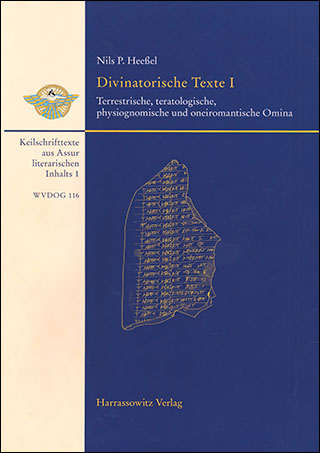
Band 1: Heeßel, Nils P.: Divinatorische Texte: I. Terrestrische, teratologische, physiognomische und oneiromantische Omina, Wiesbaden: Harrassowitz, 2007
Band 2: Schwemer, Daniel: Rituale und Beschwörungen gegen Schadenzauber, Wiesbaden: Harrassowitz, 2007
Band 3: Frahm, Eckart: Historische und historisch-literarische Texte, Wiesbaden: Harrassowitz, 2009
Band 4: Maul, Stefan M.; Strauß, Rita; Schwemer, Daniel: Ritualbeschreibungen und Gebete I, Wiesbaden: Harrassowitz Verlag, 2011
Band 5: Heeßel, Nils P.: Divinatorische Texte: II. Opferschau-Omina, Wiesbaden: Harrassowitz, 2012
Band 6: Maul, Stefan M. [Editor]: Glossare zu den Bänden "Keilschrifttexte aus Assur literarischen Inhalts 1 - 3", Wiesbaden: Harrassowitz, 2015
Band 7: Meinhold, Wiebke: Ritualbeschreibungen und Gebete II, 2017
Band 8, Teil 1: Weiershäuser, Frauke; Hrůša, Ivan: Ur5-ra: Einleitung, Katalog, Textbearbeitungen, Verzeichnisse, Wiesbaden: Harrassowitz Verlag, 2018
Band 8, Teil 2: Weiershäuser, Frauke; Hrůša, Ivan: Ur5-ra: Glossare und Keilschriftautographien, Wiesbaden: Harrassowitz Verlag, 2018
Band 9: Jakob, Stefan: Ritualbeschreibungen und Gebete III, Wiesbaden: Harrassowitz Verlag, 2017

Wednesday, June 9, 2021

DCLP: Digital Corpus of Literary Papyrology

[First posted in 20 December 2017, updated  (new URL9 June 2021]


DCLP: Digital Corpus of Literary Papyrology

DCLP offers information about and transcriptions of Greek and Latin literary and subliterary papyri preserved on papyri, ceramic sherds (ostraka), wooden tablets, and other portable media. It is built on the model of papyri.info, relying on its own versions of the Papyrological Navigator (PN) for searching and browsing and Papyrological Editor (PE) for peer-reviewed curation of texts. The site aims to do for ancient literature preserved on papyri what papyri.info does for Greek and Latin documents. An ultimate goal is also to provide search and browse functionality across the entire corpus of Greek and Latin papyri--documentary, literary, and subliterary alike.
DCLP aggregates material from the Leuven Database of Ancient Documents (LDAB), Bibliographie Papyrologique (BP), Thesaurus Herculanensium Voluminum, and the Parma Medical Project, and depends on close collaboration with the Department of Classics at the University of Würzburg and the Duke Collaborative for Classics Computing (DC3). The project was made possible by a generous grant from the National Endowment for the Humanities and Deutsche Forschungsgemeinschaft as part of their "Bilateral Digital Humanities Programme." ...read more.

Thursday, April 22, 2021

CEDOPAL: Centre de Documentation de Papyrologie Littéraire

 [First posted in AWOL 3 January 2013, updated  22 April 2021]

CEDOPAL: Centre de Documentation de Papyrologie Littéraire

Research Centre of the Faculty of Philosophy and Letters, CEDOPAL is situated since 1999 in the central building of the University of Liège (building A1), 7 Place du 20-Août, 3rd floor, room 3/46. It has at its disposal :

a file, the only one in the world, begun some fourty years ago by Professor Paul Mertens, containing the ca. 8000 Greek and Latin literary papyri recorded up to now ;
a unique collection, begun over fourty years ago and constantly added to, of more than 8000 photographs of literary papyri ;
a magnificent library of editions, commentaries, studies and periodicals concerning papyrology, included in the Bibliothèque des Sciences de l’Antiquité ;
a specialised library of ca. 600 works on the history of books ;
a collection of 3000 off-prints, some hundred theses and papers and 1200 photocopies of old and rare articles concerning papyrology ;
specialised bibliographies ;
a course into Initiation à la papyrologie documentaire (Jean A. Straus, senior lecturer) ;
several courses into Initiation à la papyrologie littéraire (Marie-Hélène Marganne, senior lecturer) ;
the computers necessary for the identification of literary texts in the papyri, as for information processing ;

The photographic archives, photocopies of old or rare articles, libraries, collections and the Catalogue of Greek and Latin literary papyri file are unrestrictedly accessible at the University. Barring copyright problems, the documents may be reproduced by digital images, photocopy, photograph or slide. The cost for such work varies according to the size of the reproductions requested.

Any request for information or appointments should be addressed to :

CEDOPAL
University of Liège
Département des sciences de l’antiquité
Place du 20-Août, 7
B-4000 Liège
Belgium
Phone : + 32 (0)4 366 55 77
E-mail : cedopal@uliege.be

Marie-Hélène MARGANNE
Director of CEDOPAL
E-mail : MH.Marganne@uliege.be

Thursday, December 26, 2019

Digi 20: Klassische Philologie. Byzantinistik. Mittellateinische und Neugriechische Philologie. Neulatein

Digi 20: Klassische Philologie. Byzantinistik. Mittellateinische und Neugriechische Philologie. Neulatein 
The present project was developed in the context of the long-term project “Digitalization of the DFG (German Research Society) special subject fields”. It concentrates on the digitalization of literature not in public domain, predominantly in the field of humanities and social sciences with an emphasis on monographs.
In the first phase of the project, approx. 4700 titles of programme segments of the publishers Vandenhoeck & Ruprecht, Wilhelm Fink / Ferdinand Schöningh as well as Otto Sagner were digitized. In a second phase, further approx. 1750 titles are being included till 2014 by consecutively digitizing all monographs up to a defined ‘Moving Wall’ of three to five years to the current year of publication.
Corresponding arrangements with publishing houses, who act in agreement with their authors, enable the BSB to digitize works protected by copyright and to provide accessibility according to the guidelines of the DFG via Open Access.
The Website provides a full-text search of the entire collection or of the single subject collections. All titles are also accessible with the OPAC of the Bavarian State Library. The inclusion in professionally relevant virtual subject libraries is in preparation.

Wednesday, December 25, 2019

Zipang: popularising the literature of ancient Iraq through the art of oral storytelling

[First posted in AWOL 2 October 2017, updated 25 December 2019]

Zipang: popularising the literature of ancient Iraq through the art of oral storytelling
  http://www.zipang.org.uk/images/welcome.jpg

Vision

The literature of Mesopotamia has lain dormant on clay tablets for more than 2000 years. Breathing new life into this literature through the art of oral storytelling is the ZIPANG mission

Mission Statement

The ZIPANG vision inspires the ZIPANG mission. ZIPANG is the Sumerian word for 'breath'.
The ZIPANG mission is undertaken by the Enheduanna Society, an education charity founded in 2002. To fulfil this mission, the Enheduanna Society:
• provides ZIPANG storytellers booked for public and private events organised by others
• publishes retold stories from ancient Iraq
• passes on Mesopotamian stories and storytelling skills to a new generation of ZIPANG storytellers
• promotes and organises ZIPANG storytelling activities for all ages and abilities
• brings together Iraqi and non-Iraqi scholars, storytellers, musicians and enthusiasts to develop their shared appreciation of Mesopotamian literature, and spread this appreciation to as many people as possible.
The ZIPANG storytellers depend for their performance material on the work of academic translators and teachers.

Monday, December 16, 2019

SEAL: Sources of Early Akkadian Literature

[First posted in AWOL 20 July 2009 updated 18 December 2019]

SEAL: Sources of Early Akkadian Literature
Home

Sources of Early Akkadian Literature (SEAL) is a joint project headed by Michael P. Streck of the Altorientalisches Institut of the University of Leipzig and Nathan Wasserman of the Institute of Archaeology of The Hebrew University of Jerusalem.

Project Description

Akkadian, i.e. Babylonian and Assyrian, literature, documented on cuneiform tablets from Ancient Mesopotamia, forms (together with Sumerian and Egyptian literature) the oldest written literary corpus of mankind.
In the 3rd and 2nd millennia BCE (c. 2400–1100), Akkadian literature encompassed many different literary genres: hymns, lamentations, prayers to various gods, incantations against different diseases, demons and other sources of evil, love-lyrics, wisdom literature (proverbs, fables, riddles), as well as epics and myths - roughly 900 different compositions (Summer 2019). Many of these compositions are not yet published in satisfactory modern editions or are scattered throughout a large number of publications.
SEAL is an ongoing project which started in 2007. It aims to compile an exhaustive catalogue of Akkadian literary texts from the 3rd and 2nd millennia BCE, to present this corpus in such a way as to enable the efficient study of the entire early Akkadian corpus in all its philological, literary, and historical dimensions. Many of the editions in SEAL rely on new collations and photographs.
Users should be aware that online SEAL is a work-in-process. Streck and Wasserman, and their respective Leipzig and Jerusalem teams, regularly add to the catalogue and improve the texts.  
In parallel to the online site, SEAL publishes sections of the corpus in printed monograph form as part of the series Leipziger Altorientalistische Studien (LAOS):
  • N. Wasserman, Akkadian Love Literature of the 3rd and 2nd Millennium BCE (Leipziger Altorientalistische Studien 4): Harrassowitz, Wiesbaden, 2016.
  • E. Zomer, Corpus of Middle Babylonian and Middle Assyrian Incantations (Leipziger Altorientalistische Studien 9): Harrassowitz, Wiesbaden, 2018.
  • N. Wasserman and Elyze Zomer: Akkadian Incantations of the Early 2nd Millennium BCE.
  • A. Pohl: Old Babylonian Hymns.
All texts [887] Expand Secondary Navigation Menu

Monday, November 11, 2019

Bibliographische Datenbank zur altägyptischen Literatur

 [First posted in AWOL 6 June 2014, updated 11 November 2019]

Bibliographische Datenbank zur altägyptischen Literatur
A database produced by the Altägyptisches Wörterbuch:
Das Projekt "Bibliographische Datenbank zur altägyptischen Literatur" galt der Erfassung, Auswertung und Aufbereitung von wissenschaftlicher Sekundärliteratur zu literarischen Texten aus dem pharaonischen und ptolemäischen Ägypten in einer computergestützten relationalen Datenbank.

Es war der Arbeitsstelle "Altägyptisches Wörterbuch" an der Sächsischen Akademie der Wissenschaften zu Leipzig zugeordnet, die im Rahmen des Langzeitvorhabens "Altägyptisches Wörterbuch" der Union der Deutschen Akademien der Wissenschaften das Corpus der altägyptischen "Schönen Literatur" für lexikalische, grammatikalische und weitere Recherchen in einer relationalen Datenbank erschließt.

Das Projekt wurde von der Fritz Thyssen Stiftung finanziell ermöglicht; seine Laufzeit reichte vom 15. Februar 2000 bis zum 14. Februar 2004.
Es stand unter der Leitung von Prof. Dr. Elke Blumenthal; Projektbearbeiter war Ekkehard W. Neumann.

Die Auswahl der ägyptischen Texte folgt im wesentlichen der Ausrichtung der Leipziger Arbeitsstelle auf literarische Texten unterschiedlicher Gattungen (Erzählungen, Weisheitslehren, Dialoge, Poesie) und klammert - wie diese - die demotische Literatur aus.

Eine Liste der einbezogenen Texte ist hier zu finden.

Auf Grund der Fülle und Bedeutung der Quellen und der entsprechenden Beachtung in der Forschung war es nötig, den Umfang der auszuwertenden Sekundärliteratur auf Zeitschriften, Fest- und Sammelschriften und einige einschlägige Monographien und auf den Zeitraum 1970 - 2003 zu beschränken. Eine Liste der ausgewerteten Sekundärliteratur ist hier zu finden.

Ursprünglich ausschließlich zur Unterstützung der Texteingabe an der Leipziger Arbeitsstelle konzipiert, wurde das Projekt alsbald mit dem Anspruch fortgeführt, auch unabhängig davon dem Zugriff der Fachwelt geöffnet zu werden. Damit erweiterte sich der Bereich der aufgenommenen Äußerungen über das bloße grammatikalische und inhaltliche Verständnis einzelner Textstellen hinaus. Dennoch gelten die weitaus meisten Datensätze weiterhin einzelnen kurzen Textpassagen. Dabei wurde jede Übersetzung aufgenommen, wenn sie einen Satz oder eine Phrase umfaßt und ihr eine Transliteration beigegeben ist. Einzelne Texte werden in der Regel nach Handschrift und Zeile zitiert, auch wenn die Autoren eine andere Zitierweise benutzt haben.

Weitere Datensätze enthalten Äußerungen über Fragen von Inhalt, Gliederung, Stil, Datierung und Funktion ganzer Werke, über Editionen einzelner Handschriften und Rezensionen von einschlägiger Sekundärliteratur.

Wednesday, August 28, 2019

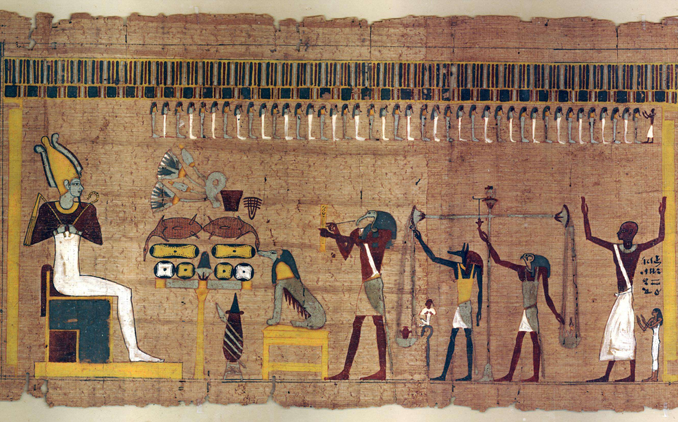
Das altägyptische Totenbuch: Ein digitales Textzeugenarchiv

 [First posted in AWOL 8 June 2014, updated 28 August 2019]

Das altägyptische Totenbuch: Ein digitales Textzeugenarchiv
http://totenbuch.awk.nrw.de/img/TEASER-Totengericht.png
Trotz der frühen, intensiven Erforschung in der zweiten Hälfte des 19. Jahrhunderts ist die Sammlung der Totenbuchtexte und deren Quellen so zahlreich, die Fragestellungen an das Material so facettenreich und die Aussichten auf Forschungsergebnisse, die über den Bereich des Totenbuchs hinaus von Bedeutung sind, so ertragreich, dass die geleistete Vorarbeit nur als Ausgangsbasis dienen kann. Schließlich beschränkte sich Naville auf die Bearbeitung der Manuskripte des Neuen Reichs (1550-1070 v. Chr.), obwohl sie heute weniger als ein Vierteil der bekannten Quellen ausmachen, wenngleich sie qualitativ am hochwertigsten sind. Außerdem wurde seine schwerpunktmäßig textbezogene synoptische Aufarbeitung dem Variantenreichtum der Totenbücher hinsichtlich Format und Vignetten nicht gerecht.
Deshalb wendeten sich zunächst in den 1920er Jahren, später erneut in den 1950ern und in einer dritten Phase in den 1970er und 80er Jahren Göttinger Ägyptologen intensiv dem Totenbuch zu. Zur letzten Gruppe zählten neben Wolfhart Westendorf auch Ursula Rößler-Köhler und Irmtraut Munro. Erstere widmete sich dabei intensiv dem zentralen Spruch Tb 17; letztere konzentrierte sich auf die Handschriften der 18. Dynastie.
Anfang der 1990er Jahre ermöglichte ein Ruf an die Universität Bonn Ursula Rößler-Köhler die Fortsetzung dieser Arbeiten und den Aufbau einer neuen Forschergruppe, dem sogenannten Totenbuch-Projekt. In ihren Berufungsverhandlungen konnte sie eine zweijährige Anschubfinanzierung erreichen. Anschließend förderte die Deutsche Forschungsgemeinschaft (DFG) das Projekt ab 1994 zehn Jahre lang weiter. Während dieser Phase war auch die Kölner Ägyptologie unter der Co-Projektleitung von Heinz-Josef Thissen beteiligt. Im Jahr 2004 übernahm schließlich die Nordrhein-Westfälische Akademie der Wissenschaften und der Künste das Projekt für weitere neun Jahre.

Tuesday, August 13, 2019

The Standard Babylonian Epic of Gilgamesh

[First posted in AWOL 26 April 2016, updated 13 August 2019]

The Standard Babylonian Epic of Gilgamesh

Sources of the Standard Babylonian poem

The Babylonian Epic of Gilgamesh is preserved on three groups of manuscripts (clay tablets), which give an account of the poem at different stages in its evolution, from the eighteenth century BC to the first millennium BC.
So far eleven pieces of Old Babylonian versions of the epic are extant, and eighteen pieces are known from later in the second millennium (Middle Babylonian and other intermediate manuscripts). If these twenty-nine fragments were all that had survived we would not be able today to give an accurate account of the poem's narrative and plot. Fortunately we have 184 fragments from the first millennium (count at January 2003). These come from ancient libraries in Assyria, most notably the library of the seventh-century king, Ashurbanipal, and from slightly later collections of tablets found in Babylonia, chiefly at Babylon and Uruk.
These Babylonian and Assyrian fragments bear witness to a standardized edition of the poem, which we call the Standard Babylonian epic. This last version of the poem was the result of a deliberate work of editorial, according to tradition carried out by a learned scholar called Sin-leqi-unninni, who probably flourished about 1100 BC. The oldest sources for his version are from the ninth or eighth centuries; the last dated manuscript comes from about 130 BC, when Babylonia was a dominion of the Parthian kingdom.
The edition of the Standard Babylonian Epic of Gilgamesh published in Andrew George's critical edition of the poem (further details available from Oxford University Press) is a composite variorum edition, in which the evidence of the different first-millennium manuscripts is combined. The result is a transliterated text reconstructed from the cuneiform witnesses according to the editor's judgement.
George's composite transliteration and translation of the standardized first-millennium text was based on a previous transliteration of the text of each individual manuscript. The text was established by first-hand study of each individual tablet and, for the most part, a newly drawn hand-copy (facsimile) of the cuneiform. The cuneiform of every fragment was published alongside the composite text.
Readers of the epic who do not read cuneiform may wish to consult the evidence of individual manuscripts. To this end, George's synoptic ("score") transliterations of each of the twelve tablets of the Standard Babylonian Epic of Gilamesh are published here as PDF files.
  1. SB Gilgamesh Tablet I (PDF)
  2. SB Gilgamesh Tablet II (PDF)
  3. SB Gilgamesh Tablet III (PDF)
  4. SB Gilgamesh Tablet IV (PDF)
  5. SB Gilgamesh Tablet V (PDF)
  6. SB Gilgamesh Tablet VI (PDF)
  7. SB Gilgamesh Tablet VII (PDF)
  8. SB Gilgamesh Tablet VIII (PDF)
  9. SB Gilgamesh Tablet IX (PDF)
  10. SB Gilgamesh Tablet X (PDF)
  11. SB Gilgamesh Tablet XI (PDF)
  12. SB Gilgamesh Tablet XII (PDF)