Showing posts with label Egypt. Show all posts

Thursday, October 29, 2026

Open Access Journal: The Ancient Egyptian Heritage and Archaeology Fund Newsletter

 [First posted in AWOL 6 June 1019, updated (new URLs) 29 October 2026]

The Ancient Egyptian Heritage and Archaeology Fund Newsletter

The Ancient Egyptian Heritage and Archaeology Fund is a registered 501c3, private, nonprofit organization with a mission is to support research and conservation on Egyptian history and culture. In particular, it seeks to record and publish sites and monuments at risk from agricultural and urban expansion, looting, and vandalism.

In affiliation with the American University of Cairo and working at the Invitation of the Ministry of Antiquities of Egypt, we have been working since 2017 at the site of Deir el-Ballas. As the forward capital for the Theban kings during the Hyksos expulsion, Deir el-Ballas is of great archaeological and historical importance, but the site is at extreme risk from both looting and from the uncontrolled expansion of the neighboring modern town. Our fieldwork also dovetails with a grant we received from the Shelby White and Leon Levy Program for Archaeological Publications to prepare the results of the original expedition conducted at the site in 1900-1901 by George Andrew Reisner working for the Phoebe A. Hearst Expedition of the University of California.


Wednesday, October 28, 2026

Open Access Monograph Series: Institute for the Study of Ancient Cultures (Oriental Institute) Nubian Expedition (OINE)

[First posted in AWOL  4 June 2014, updated (new URLs 28 October 2026]
 
12 publications
1991
The excavations at these cemeteries provide a full range of X-Group objects, dated to the fourth through sixth centuries a.d. Of special interest is the military equipment, including many decorated… Learn More
1967

Author(s): Herbert Ricke, George R. Hughes, and Edward F. Wente.

Series / Volume

Nubian Expedition 1

In March 1960 the United Arab Republic appealed to the world through the United Nations Educational, Scientific, and Cultural Organization (UNESCO) to send archeologists to Nubia in order to save the… Learn More


Wednesday, September 16, 2026

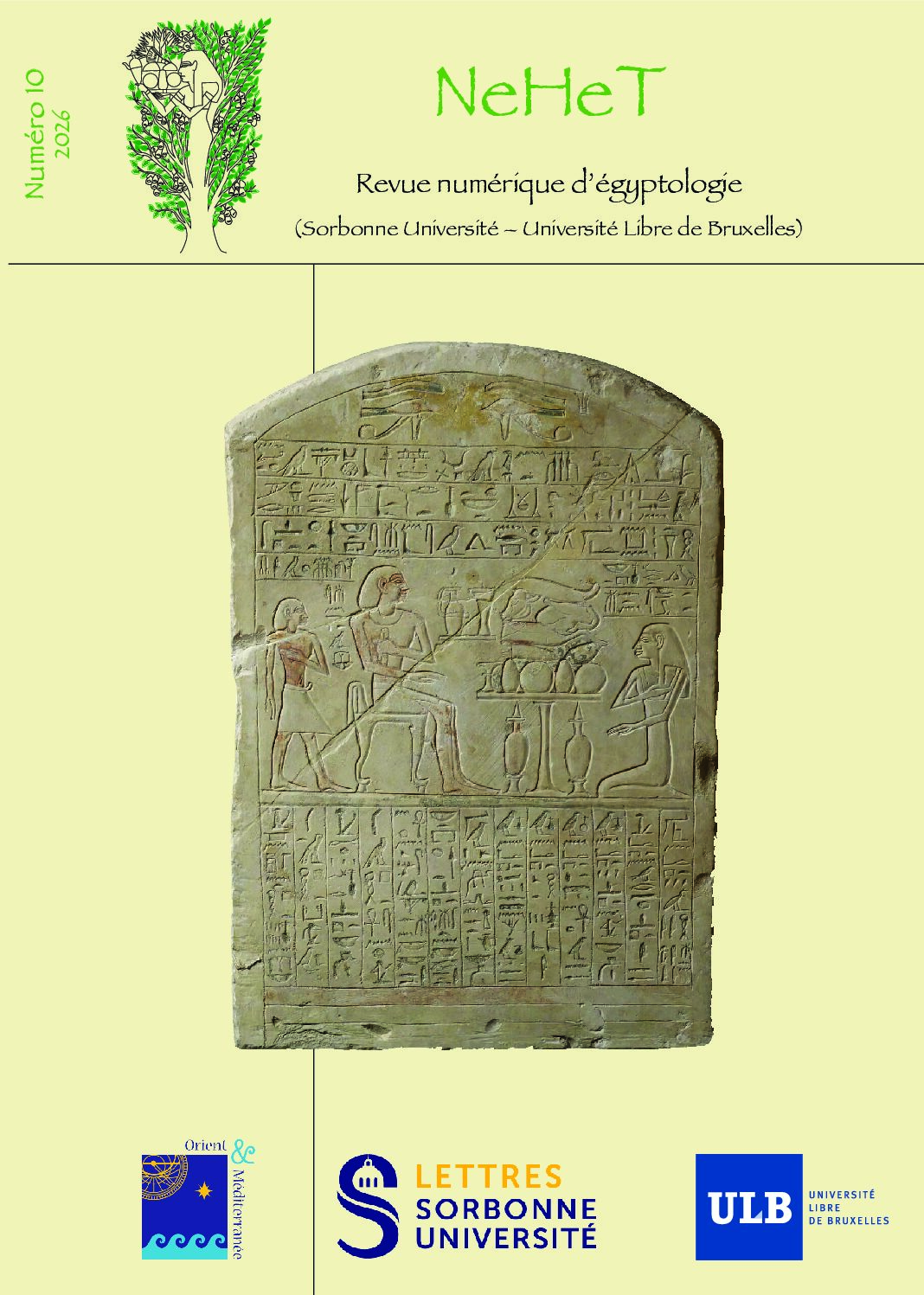
Open Access Journal: NeHeT: Revue numérique d'Égyptologie

[First posted in AWOL 5 February 2015, updated 16 September 2026]

NeHeT: Revue numérique d'Égyptologie
ISSN: 2429-2702 
NeHeT est une revue éditée conjointement par le Centre de Recherches Égyptologiques de la Sorbonne (Université Paris-Sorbonne – Paris IV ; équipe « Mondes Pharaoniques » de l’UMR 8167 Orient & Méditerranée) et le Centre de Recherches en Archéologie et Patrimoine de l’Université libre de Bruxelles. Elle est destinée à un lectorat constitué de chercheurs et d’érudits s’intéressant à l’histoire de l’Égypte et du Soudan, de la préhistoire à l’époque byzantine. Son format numérique, en libre accès, a été choisi afin de permettre une diffusion large et rapide des travaux égyptologiques. 

La revue a deux livraisons annuelles qui peuvent être soit des recueils d’articles sur des sujets variés, soit des numéros thématiques - publications d’actes de colloques, de journées d’études ou dossiers portant sur une problématique prédéfinie. 

Les éditeurs de la revue L. Bavay, N. Favry, Cl. Somaglino et P. Talle

Pouvoir(s) dans les sociétés sans écriture. En Égypte et ailleurs, dialogues sur les formes du pouvoir. Actes des journées d’étude « Pouvoir(s) dans les sociétés sans écriture », Sorbonne Université, Paris, 25-26 octobre 2023. Textes édités par Julie Villaeys Le Galic.

Sommaire :

Julie Villaeys Le Galic, « Introduction et bibliographie générale »

Bruno Boulestin, « The Power to Move Mountains: Considerations on the Transport of Megaliths in Middle Neolithic Western Europe »

Tangui Przybylowski, « Comment classer les sociétés secrètes? Violence privée, privation de la violence »

Sophie Krausz, « La naissance chaotique de l’État dans les sociétés de l’Europe continentale au Ier millénaire A.C. »

Béatrix Midant-Reynes et Dorian Vanhulle, « Pouvoirs et sociétés aux origines de l’Égypte (c. 4500-2900 BC). Un récit à reconstruire »

Anne-Laure Daubisse, « ÃŠtre « roi de Haute et de Basse-Égypte » à Thèbes durant la Deuxième Période intermédiaire : question de termes, affaires de sources »

Boris Lelong, « Système de parenté et construction de l’État : l’Égypte vue de Madagascar »

Julie Villaeys Le Galic, « Conclusion »


NeHeT 10 (2026)

Sommaire :

Nathalie FAVRY, Les camériers au Moyen Empire             p. 3 – 56

Nadine CHERPION, La stèle de Sennefer (C 1455)
au musée égyptien de Turin : quelques réflexions            p. 57 – 65

Saturday, August 8, 2026

Open Access Journal: Horizon: The Amarna Project and Amarna Trust Newsletter

 [First posted in AWL 1 March 2010. Updated 8 August 2026]

Horizon: The Amarna Project and Amarna Trust Newsletter
Amarna Project Home
The ancient Egyptian city of Tell el-Amarna (or simply Amarna) was the short-lived capital built by the ‘heretic’ Pharaoh Akhenaten and abandoned shortly after his death (c. 1332 BCE). It was here that he pursued his vision of a society dedicated to the cult of one god, the power of the sun (the Aten). As well as this historic interest Amarna remains the largest readily accessible living-site from ancient Egypt. It is thus simultaneously the key to a chapter in the history of religious experience and to a fuller understanding of what it was like to be an ancient Egyptian. There is no other site like it.

Issue 23 (Spring 2023)

In this issue: 

  • Tombs and a teratoma at the North Desert Cemetery
  • On the presence of one sandal
  • A.G.K. Hayter at Amarna: a detailed notebook and a “new” glass workshop
  • Continuing work at the Great Aten Temple
  • Animals in human settings in the Amarna Period (with special reference to the Amarna North Palace)
see all issues


Tuesday, July 28, 2026

Karanis Housing Project

Karanis Housing Project
Karanis was a Greco-Roman town located in Egypt's Fayoum Region. Founded in the third century BCE, the town remained inhabited until the fifth century CE. A small population of Roman mercenaries lived in the primarily agrarian town, where sustenance farmers produced crops such as wheat, barley, olives, figs, and walnuts. Alexandria, one of the major centers of Roman trade, lay a mere 124 miles to the north of Karanis, making this small, rural town a gateway to more populated and urban areas.

The site was primarily excavated by a team from the University of Michigan, lead by Francis W. Kelsey, in the 1920s. However, Kelsey was not the first person to show interest in Karanis; local farmers had been obtaining government permits to remove nitrogen-rich soil from the site to use as fertilizer (sebbakh) up until the early twentieth century, and the papyri they inevitably unearthed caught the attention of English scholars Bernard Pyne Grenfell and Arthur Surridge Hunt, who completed minor excavations of the site in 1895 before moving to a different site. As a result, Kelsey and his team were forced to work around whole swaths of the town that had been destroyed by earlier activities -- most notably, an area right in the center of the Karanis mound. The Michigan team completed a wonderfully thorough excavation of the areas that remained intact, cataloging each artifact and making careful note of where exactly each item was discovered. This provides crucial information to archeologists and classicists who wish to consider artifacts in their original contexts.

The Karanis Housing Project seeks to bring this valuable information into the twenty-first century by digitizing the dig and making a comprehensive list of finds easily accessible and searchable online. While still in its early stages, the model developed based on data from Karanis will eventually be applied to other excavations, providing a way to analyze finds and query specific artifacts that is far more user-friendly than sifting through boxes of field notes.

Thursday, July 9, 2026

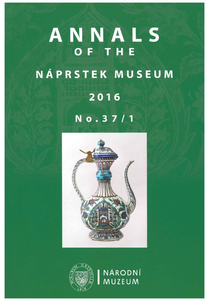
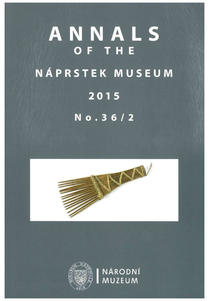
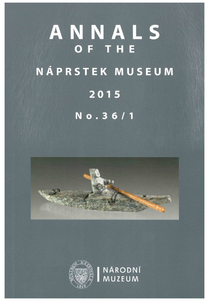
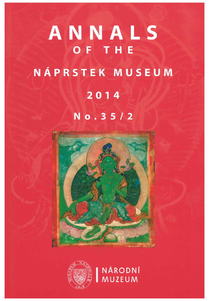
Open Access Journal: Annals of the Náprstek Museum

[First posted in AWOL 13 June 2018, updated 9 July 2026]
 
ISSN: 0231-844X (print)
ISSN: 2533-5685 (online) 

41-2

Annals of the Náprstek Museum, a National Museum journal, publishes the results of scientific research which have not been published yet, and which deals with material and spiritual culture and social relations in non-European cultures. Since its foundation in 1962 it was published once a year, since 2013 two issues per year are published. Each issue is structured into four sections: Papers, Research reports, Materialia, Revies of the literature dealing with non-European cultures
. Since 2008 the journal has been included to EBSCO database with full-text searching, in a group "Central & Eastern European Academic Source (CEEAS)", and in ERIH PLUS.