Sunday, December 31, 2023

Database of Classical Scholars

 [First posted in AWOL 30 November 2018, updated 31 December 2023]

Database of Classical Scholars

The Database of Classical Scholars is a multi-faceted database that aims to provide biographical and bibliographical information on classical scholars from the period associated with classical scholarship as currently understood, from the end of the eighteenth century and the publication of F.A. Wolf's Prolegomena zu Homer (1795) to the current day. Each entry is accompanied by an appreciation of the scholar's career by an expert and where possible, a portrait. This is a work of international cooperation with an advisory committee composed of experts in the history of classical scholarship not only in North America, but in the United Kingdom, Germany, and Italy.

The project is endorsed by the Society for Classical Studies.


Epigraphic Database Falsae

[First posted in AWOL 7 August 2019, updated 31 December 2023]

Epigraphic Database Falsae
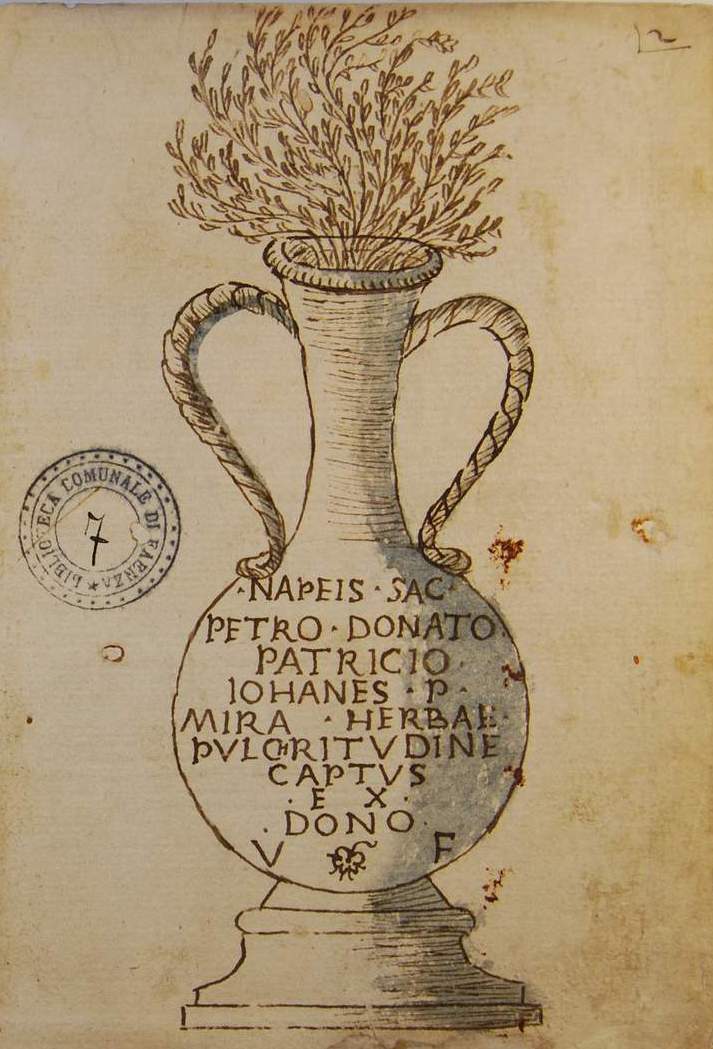
 book
Finanziato dal Progetto PRIN 2015 - False testimonianze. Copie, contraffazioni, manipolazioni e abusi del documento epigrafico.
Description from the Digital Classics Wiki:
The EDF (Epigraphic Database Falsae) is an electronic archive of forged ancient inscriptions. It is the main output of the Forged Evidence (False Testimonianze) research project, funded by the Italian Ministry of Education, University, and Research (MIUR) in 2017.
The EDF concerns all known typologies of forged inscriptions. These include intentional forgeries, copies of ancient inscriptions, Medieval and Renaissance inscriptions that imitate classical models, modern transcriptions, reproductions, and facsimiles of thousands of forgeries. They include a variety of materials: although intentional forgeries are most frequently written solely on paper, they can also be inscribed on actual objects including ancient or only partially ancient materials as well as more recent artefacts.
The EDF is meant to encompass all forged epigraphic documents and monuments that originate from the whole territory of Italy, but prospectively it will extend its geographic range to include the rest of Europe and the Mediterranean.
The EDF search engine allows users to perform queries in the following fields:
• textual typologies (actual forgeries, post-classical inscriptions, and copies of genuine ancient inscriptions);
• modes of transmission (paper vs. durable materials – stone, bronze, etc.);
• methods of production, distinguishing between forgeries invented wholly from complete, partial, or interpolated copies of ancient inscriptions;
• intentions of the forgers, distinguishing between commercial, historical and documentary forgeries;
• historical period when the forgery was created;
• identity of the forgers – certain or suspected – whenever possible;
• production site of actual forgeries;
• secondary displacements;
• current location whenever the objects are still traceable.
By combining the last three sets of data (production site of actual forgeries, secondary displacements, and current location), users can trace the routes of their dispersal, and follow the steps that brought them to their current place of conservation. This kind of information is entirely absent in the indices of the main printed epigraphic corpora (e.g. CIL, SupplIt, etc.). The EDF aims to stimulate historical research by presenting previously neglected sources using up-to-date technologies. In order to comply with the principles of the inclusive and intercultural approach to information promoted by the EU, it is an unrestricted online resource, freely accessible to multiple users.
The EDF is also reachable through the new EAGLE shared portal (European network of Ancient Greek and Latin Epigraphy: [www.eagle-network.eu]). It interacts with the main existing online resources related to epigraphy, in particular the EDR(Epigraphic Database Roma: [www.edr-edr.it]) and the EDB (Epigraphic Database Bari: [www.edb.uniba.it]).

Home
The Epigraphic Landscape of Athens

 [First posted in AWOL 3 December 2019, updated 31 December 2023]

The Epigraphic Landscape of Athens

The Epigraphic Landscape of Athens
Welcome to the Database of The Epigraphic Landscape of Athens, a project whose objective is to show the relationship between public inscriptions and urban space in ancient Athens
.
Every inscription, carved on stone and set up in the city space, can be also seen as a communication medium. Public documents (decrees, laws, treaties, accounts, lists, etc.) can be therefore considered as special objects, through which the 'voice' of the polis community is made tangible, becoming monument. In order to appreciate such an ancient communicative phenomenon in its entirety, it is important not to disjoint it from its physical presence and fruition in the polis-space, just as it is important not to ignore the double nature of the epigraphic documents as texts as well as monuments. In this regard, The Epigraphic Landscape of Athens is specially focused on the places of publication of the Athenian public inscriptions (i.e. documents issued from the late 6th century to Late Antiquity, and set up in the asty), grounding on the idea that urban spaces are able to complete, and even to enrich with further ideological or cultural overtones, the original message of the inscribed texts; and that these latter, with their very presence in the city, are able to produce a different sort of public space as 'written space'.
The Epigraphic Landscape of Athens project is funded by the Italian Ministry of Education and Research in the frame of the SIR Programme (Scientific Independence of young Researchers) 2014, and hosted by the Department of Historical Studies, University of Turin.
The ELA Database is an open-access online resource aimed at providing to scholars a new research tool for a topographical study of the Athenian public inscriptions as communication media in the frame of The Epigraphic Landscape of Athens project
.
The ELA Database population is currently in progress. Please consult the News section of the website for information about the current coverage, and the groups of inscriptions that are being scheduled for publication in the database. Updates on publications, conference speeches, and other activities related to The Epigraphic Landscape of Athens project are also provided on this page.
You are anytime welcome to write to us at anytime for enquiries at chiara.lasagni@unito.it. Of course, relevant comments and suggestions, or new collaboration proposals are more than appreciated. A training demo of the database form is available in the Backend section of the website, through the login info “demo@epigraphiclandscape.unito.it” (user) - “demo” (password).
How to cite the ELA Database as a source of reference
The ELA Database records can be referred to in long or in abbreviated form. As for the latter, we recommend to use the abbreviation "ELA" followed by the ELA-id number. For citations in the long form, please consult the post note attached to each record: e.g.: ELA no. 144 = Lasagni, Chiara, Fragment of an honorific decree, 2017. DOI: 10.13135/ELA-141

And see AWOL's Roundup of Resources on Ancient Geography

Friday, December 29, 2023

Open Access Journal: Préhistoires méditerranéennes

[First posted in AWOL 16 December 2009. Updated 29 December 2023]

Préhistoires méditerranéennes
ISSN électronique: 2105-2565
http://www.openedition.org/docannexe/image/2792/pm_160x75.png
Préhistoires méditerranéennes est une revue bilingue multi-supports à comité de lecture (prend la suite de Préhistoire Anthropologie Méditerranéenne). Elle accueille toute contribution originale sur la préhistoire des espaces méditerranéens. La revue publie, en flux continu, des contributions au format électronique, regroupées chaque année dans une édition papier. Elle propose, en outre, sous la forme de suppléments, des numéros thématiques. Préhistoires méditerranéennes se veut un espace de débats d'idées ; elle souhaite mettre à disposition des auteurs et des lecteurs une tribune de publication contradictoire — suscitée ou sollicitée — permettant la discussion scientifique autour des articles retenus.

Dernier numéro ouvert
11 | 2023 (numéro ouvert)
Varia

Notes de la rédaction

 Numéro ouvert le 20/12/2023

Dernier numéro en ligne
10 | 2022
Varia

Historique

 Numéro ouvert le 14/11/2022

Thursday, December 28, 2023

Les publications de l’Institut archéologique de Crimée

L’Institut archéologique de Crimée, rattaché depuis l’annexion de 2014 non reconnue internationalement, à l’Académie des Sciences de Russie met en ligne sur son site une partie de ses publications :

-la série Крым в сарматскую эпоху / Krym v sarmatskuju épokhu [La Crimée à l’époque sarmate], publié depuis 2013.

-la série Археологические памятники Северного Причерноморья / Arkheologicheskie pamjatniki Severnogo Prichernomor’ja [Sites archéologiques de la région nord de la mer Noire].

-la revue История и археология Крыма / Istorija i arkheologija Kryma [Histoire et archéologie de la Crimée] créée en 2014, après l’annexion de la Crimée par la Russie.

-les volumes Koltukhov S. G., Senatorov S. N. (2016 et 2020) : Скифы Предгорного Крыма в VII–IV вв. до н. э. / Predgornogo Kryma v VII–IV vv. do n. je., Simferopol’ [Scythes des piémonts de la Crimée aux VIIe-IVe s. av. n. è.].


Tuesday, December 26, 2023

Open Access Journal: transfer – Zeitschrift für Provenienzforschung und Sammlungsgeschichte | Journal for Provenance Research and the History of Collection

 
transfer

transfer – Zeitschrift für Provenienzforschung und Sammlungsgeschichte | Journal for Provenance Research and the History of Collection ist ein wissenschaftliches Publikationsorgan für Beiträge zur Provenienzforschung und Sammlungsgeschichte sowie zu benachbarten Forschungsbereichen wie der Kunstmarktforschung, Rezeptionsgeschichte, Kultursoziologie oder Rechtsgeschichte. Die jährliche Veröffentlichung der Beiträge erfolgt rein digital im Open-Access (diamond). Die Qualität von vollumfänglichen Aufsätzen in deutscher und englischer Sprache wird durch ein Double-Blind Peer-Review Verfahren gesichert. Sonstige Formate erfahren eine interne Begutachtung durch die Herausgeber:innen unterstützt durch den wissenschaftlichen Beirat. Sämtliche Beiträge erhalten ein professionelles Lektorat. Die Zeitschrift ist institutionell an der Forschungsstelle Provenienzforschung, Kunst- und Kulturgutschutzrecht der Rheinischen Friedrich-Wilhelms-Universität Bonn angebunden und wird durch die Deutsche Forschungsgemeinschaft finanziell gefördert.

transfer – Zeitschrift für Provenienzforschung und Sammlungsgeschichte | Journal for Provenance Research and the History of Collection
Bd. 2 (2023)

transfer – Zeitschrift für Provenienzforschung und Sammlungsgeschichte | Journal for Provenance Research and the History of Collection
Nr. 1 (2022)

See AWOL's full List of Open Access Journals in Ancient Studies


Rescatando a Helena: Caracterización de Helena en la tragedia homónima de Eurípides

Francisca Gómez Seijo
book: Rescatando a Helena

Transcending the dialectic between appearance and reality, Euripides succeeded in giving human intelligibility to a new Helena, who never loved Paris nor fled with him. Menelaus' wife must vindicate to her newfound husband that she is the real Helena, quite different from the ghost that the hero brought with him from Troy. The volume analyzes the various resources of re-characterization of Helena in Euripides' tragedy. 

  • Language: Spanish
  • Publisher: De Gruyter
  • Copyright year: 2024
  • Audience: Classical philologists, scholars of Classical Studies, in particular of Greek Literature
  • Pages
    • Front matter: 8
    • Main content: 264
  • Keywords: Ancient Greek; Euripides; Helena; tragedy
eBook
  • Published: December 31, 2023
  • ISBN: 9783111341408
Hardcover
  • Published: December 31, 2023
  • ISBN: 9783111341217


Coming to Terms: Approaches to (Ancient) Terminologies

Edited by: Markus Asper
book: Coming to Terms

Terminologies present various challenges to their inventors and to their users, ranging from epistemic adequacy over linguistic concerns to matters of strategy and group construction. With respect to historical terminologies, however, research has been dominated by linguistic approaches. Breaking new ground, Coming to Terms collects eleven articles that combine an interest in the history of knowledge, mostly ancient Greek, with research on scientific terminologies. They all share an interest in terminological practices, that is, questions such as how and when to coin a term and then what to do with it. Among the fields discussed are astronomy, the Roman surveyors, Aristotelian science, Renaissance and modern biology, contemporary medicine, ancient Chinese philosophy, 20th-century physics, and colonial linguistics. Confronting ancient with modern terminologies, the collection intends to test integrative interpretive approaches. Thus, the collection documents how rich ancient (and modern) terminologies are and shows that they are, beyond lexicography, worth being studied per se

  • Language: English
  • Publisher: De Gruyter
  • Copyright year: 2024
  • Audience: Classicists, historians of science, philosophers, linguists
  • Pages
    • Front matter: 8
    • Main content: 304
  • Illustrations
    • Illustrations: 11
    • Coloured Illustrations: 4
    • Coloured Line drawings: 3
    • Coloured Maps: 8
    • Tables: 5
  • Keywords: terminology; ancient science; Aristotle
eBook
  • Published: December 31, 2023
  • ISBN: 9783111314532
Hardcover
  • Published: December 31, 2023
  • ISBN: 9783111291864


Sunday, December 24, 2023

Representing the Ancient World through Data

Journal of Open Humanities Data logo

The study of the ancient world strongly benefits from the existence of datasets: from textual corpora and field reports, to collections of inscriptions and museum catalogues, scholars rely on the availability and distribution of well-curated data. In a world of technological connections, it has become crucial to ensure not just that research is of the highest standard, but also that the underlying data is shared to enable reuse and reproducibility to the widest extent. Nevertheless, venues that prioritise the publication of ancient world data are still scarce, thus leading to a widespread lack of recognition for work such as corpus design or data curation. This creates a  problem for the field and beyond, especially because the specific characteristics of ancient world data (their fragmentary and often incomplete nature, the lack of interpretative frameworks accompanying the data themselves, and so on) create a unique set of challenges.

To address this gap, we are inviting submissions to a special collection of the Journal of Open Humanities Data entitled: Representing the Ancient World through data. 

Please note that for this special collection we define the ancient world in its broadest sense: we encourage submissions that promote a view of the ancient world expansive in its geographic, chronological, linguistic, and cultural reach.


Archival City Jerusalem- 3D modeling Jerusalem’s Maghrebi Quarter

Authors : Raphael Banc-Lévêque, Vincent Lemire and 3D Research Srl  
This dataset has been produced in the framework of the I-SITE Future-funded research project Archival City Project. It is referred to with the alphanumeric code ACJ01_RB3D, where AC stands for Archival City project, J01 refers to the first data set of the Jerusalem study field and RB3D refers to the authors of the research paper describing the dataset. The various elements of the dataset are detailed in the finding aid document ACJ01_FA_01_RB3D available both in CSV and Excel formats. This dataset contains personal data and photographic archives subject to copyright restrictions. Users wishing to view "embargoed" images must make a formal request to Vincent Lemire (lemire.vincent@gmail.com).


Word lengths in Classical and Post-classical Greek


BeDuhn’s Greek Reconstruction of Marcion’s Gospel