Doctor of Philosophy, The Ohio State University, 2024, Greek and Latin
Committee: Fritz Graf (Advisor); Julia Nelson Hawkins (Committee Member); Sarah Iles Johnston (Committee Member)
Doctor of Philosophy, The Ohio State University, 2024, Greek and Latin
Committee: Fritz Graf (Advisor); Julia Nelson Hawkins (Committee Member); Sarah Iles Johnston (Committee Member)
Doctor of Philosophy, The Ohio State University, 2020, Greek and Latin
Committee: Carolina López-Ruiz (Advisor); Fritz Graf (Committee Member); Sam Meier (Committee Member)
Doctor of Philosophy, The Ohio State University, 2020, Greek and Latin
Committee: Anthony Kaldellis (Advisor); David Brakke (Committee Member); Fritz Graf (Committee Member)
About this journal
The current volume of <journal name> is open access via Subscribe to Open (S2O). All accepted articles will be published under a Creative Commons license at no cost to authors. Learn more about De Gruyter Brill’s Subscribe to Open program.
Objective
The Journal of Ancient History aims to provide a forum for scholarship covering all aspects of ancient history and culture from the Archaic Period to Late Antiquity (roughly the ninth century BCE through the eighth century CE). The journal publishes peer-reviewed articles concerning the history and historiography (ancient and modern) of the ancient Mediterranean world and of neighboring civilizations in their relations with it. The journal is open to submissions in discipline s closely related to ancient history, including epigraphy, numismatics, religion and law. The journal does not currently publish book reviews.
Vol. 14 (2026):
Doctor of Philosophy, The Ohio State University, 2021, Greek and Latin
Committee: Anthony Kaldellis (Advisor)
Doctor of Philosophy, The Ohio State University, 2023, History
Committee: Kristina Sessa (Advisor)
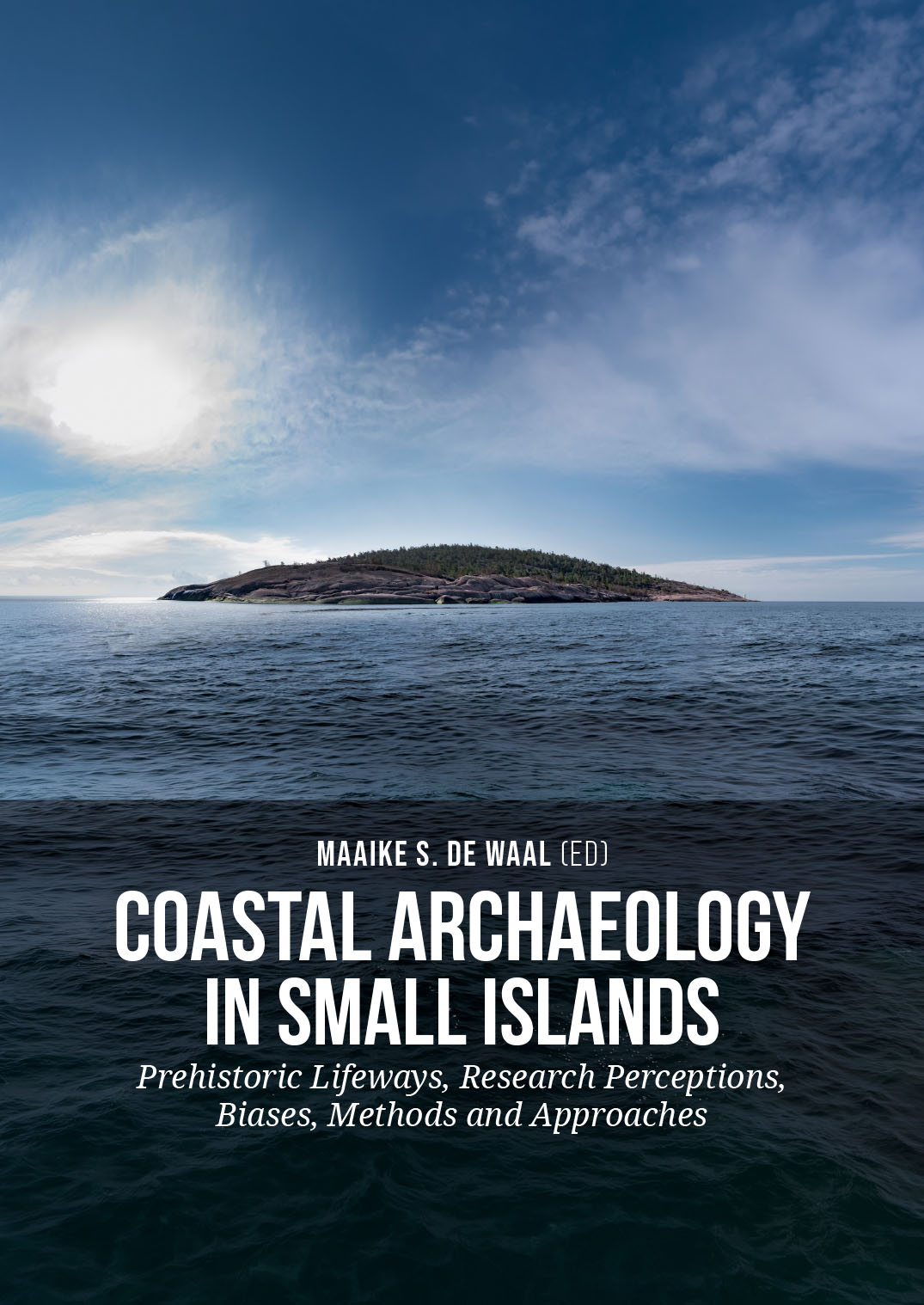
The potential of investigating archaeology on small islands has long been underestimated. Non-local archaeologists often regard such islands as offering (too) few opportunities for prehistoric use and habitation due to limited resources and isolation, whereas prehistoric communities saw them as resource-rich and well-connected. Accessibility and logistical challenges further affect research on small or remote islands, reflecting modern biases shaped by reliance on cars and (digital) infrastructure.
This volume brings together research projects on prehistoric coastal archaeology in islands now perceived as ‘small’ or ‘remote’. Divided into five sections, it includes 14 chapters by 23 contributors, covering case studies from the Cyclades (Greece), Adriatic (Croatia), Mediterranean, Galician Atlantic (Spain), Kalmarsund (Sweden), Scotland, Fiji, Japan, and the Caribbean.
The contributions address themes such as insularity, interaction, and connectivity, as well as biases linked to ideas of remoteness and isolation. By examining what islands offered to prehistoric communities and tracing the continuous use of coastal locations, the volume shows that these were not marginal areas but activity hotspots. It also considers coastal erosion, threatened heritage, island ecology, and prehistoric resource use and adaptation.
It is hoped that this volume will inspire local and non-local archaeologists and archaeology enthusiasts to collaborate in documenting, investigating, and protecting coastal heritage in small islands.
Paperback ISBN: 9789464264630 | Hardback ISBN: 9789464264647 | Imprint: Sidestone Press | Format: 182x257mm | 282 pp. | Language: English | 5 illus. (bw) | 71 illus. (fc) | Keywords: small islands; coastal archaeology; prehistory; coastal processes; remoteness; site survival | download cover | DOI: 10.59641/s3v9p0q1r2 | CC-license: CC BY-NC-ND 4.0
List of Figures and Tables
SECTION ONE. INTRODUCTION
Foreword
Helen Dawson1. Introduction: Coastal Archaeology in Small Islands
Maaike S. de Waal2. Island Archaeology: An Integrative Review from a Maritime Perspective
Veronica Walker Vadillo, & Kristin IlvesSECTION TWO. MOBILITY, CONNECTEDNESS, AND INSULARITY
3. Connecting the Coastline. Visibility and Coastal Navigation in the Southern Coastline of Menorca during the Late Bronze Age
Alejandra Galmés-Alba, & Manuel Calvo Trias4. Transporting Parian and Naxian Marble in the Cyclades
Judith Muñoz-Sogas5. The Relevance of ‘Far-Flung’ Island Landscapes in Prehistoric Scotland: Loch Roag and the Complex of Calanais
Gail Higginbottom, Vincent Mom, & Mike Efstathiou6. Challenging Concepts of Remoteness in the Outer Hebrides
Emily Gal, & Rebecca Rennell7. Beachware as a Cultural Resource in Prehistoric Small Island Societies: Examples from the Western Isles, Scotland, and the Ryukyu Islands, Japan
Matt LawSECTION THREE. METHODS
8. Project SENTINELA. Monitoring and Documenting the Erosive Processes on the Cultural Heritage of the Galician Atlantic Islands
Patricia Valle Abad, Alba Antía Rodríguez Novoa, Marta Lago Cerviño, & Adolfo Fernández Fernández9. Three Eroding Shetland Sites: Community Monitoring and Targeted Investigation
Ellie Graham10. Pre-colonial Indigenous Settlement in Eroding Coastal Landscapes. The Sites of Little Bay, Boscobelle Bay, and Skeetes Bay Plateau, Barbados
Maaike S. de WaalSECTION FOUR. LANDSCAPE NARRATIVES
11. From Defense to Display: Bronze Age Hillforts on the Small Adriatic Island of Ist
Pio Domines Peter12. What a Clam Can Reveal: Understanding Settlement Realignment c. 2500 cal yr BP in Southwestern Viti Levu, Fiji
Roselyn Kumar, Frank R. Thomas, and Amy Prendergast13. Within the Stories of a Landscape – Archaeology and Folklore on The Blue Maiden, a Pristine Island in the Kalmar Strait
Kenneth Alexandersson & Anna-Karin KarlssonSECTION FIVE. CONCLUSIONS
14. Epilogue: Looking Back and Looking Forwards
Maaike S. de WaalAcknowledgements
Author Biographies
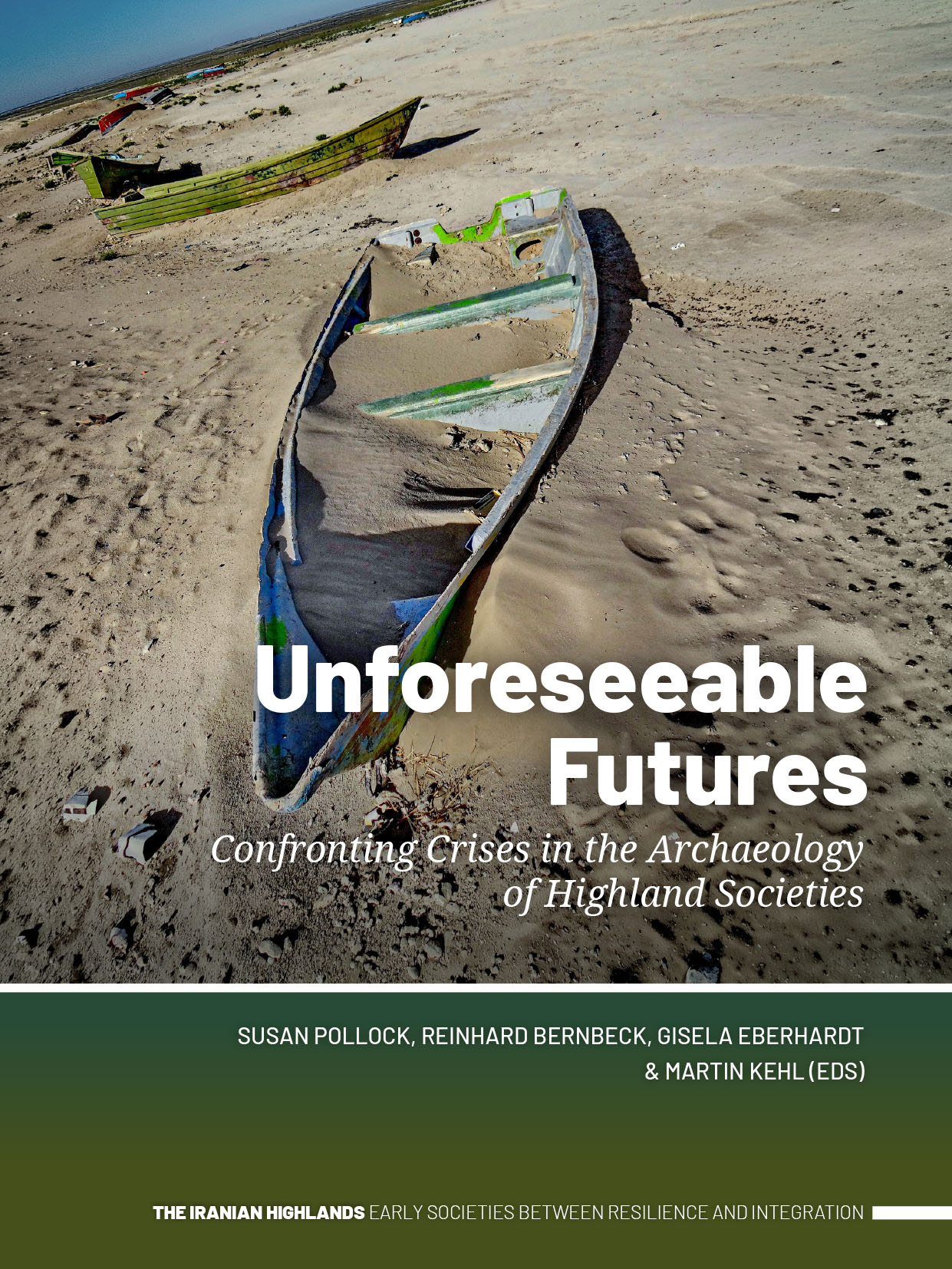
Despite their apparent ubiquity today, archaeologists have seldom focused explicitly on crises. The authors in this book take up the challenge of doing so, drawing on archaeological cases from a wide temporal and spatial range. In addition to identifying crises, the contributions search for the factors that underlie them. These range from climate to disease, environmental destruction, sudden natural events such as volcanic eruptions, and intra- or intersocietal conflicts.
Factors are often intertwined in complex ways that lead to emergent properties and that can neither be attributable solely to anthropogenic nor to natural causes. Coping with crises include rearrangements of ways of life, such as increasing or decreasing mobility, the use of alternative (‘second-choice’) food sources, recourse to intensified or newly developed rituals, demise of old institutions and/or the building of new ones, and small-scale acts of subversion.
This book is the fifth volume of a series published by the German-Iranian research cooperation “The Iranian Highlands: Resiliences and Integration in Premodern Societies”. The goal of the research project is to shine a new light on communities and societies that populated the Iranian highlands and their more or less successful strategies to cope with the many vagaries, the constant changes and risks of their natural and humanly shaped environments.
Paperback ISBN: 9789464271713 | Hardback ISBN: 9789464271720 | Imprint: Sidestone Press Academics | Format: 210x280mm | 228 pp. | The Iranian Highlands. Early Societies between Resilience and Integration 5 | Language: English | 19 illus. (bw) | 63 illus. (fc) | Keywords: crisis in archaeology; crisis factors; coping with crisis; highland societies; resilience; climate change; migration | download cover | DOI: 10.59641/y3b9v0w1x2 | CC-license: CC BY 4.0
Crises – An Introduction
Reinhard Bernbeck, Susan Pollock, and Martin KehlCharacterising crises
Crises of Our Own Making: Finding a Way Out of the Resilience Myth for Archaeology
Matthew C. ReillyAre Archaeologists Crisis-philic? Exploring the Nexus of Climate Change and Migration
Sepideh MaziarPolitics, religion, and crises
How did the Elamites Cope with Crises? Looking at the Gap between the Middle and the Neo-Elamite Period
Rafiei-AlaviIs This Burning an Eternal Flame? Political Crises and Dynastic Cults in Southwest Asia during Antiquity
Michael BrownDeath at the beginning of life. Medieval and early modern infant burial as response to multiple crises and what we can learn from it today
Barbara HausmairEnvironment and Crises
Climate and Crises: Towards an Eventful and Punctuated Prehistory
Felix RiedeDehqaed’s Natural Crises and the Challenge of Flooding
Zohreh ZehbariFending off Crises with Porosity: Sand, Water and Wind in the Helmand Basin
Moslem Mishmastnehi and Reinhard BernbeckResources, technology, and crisis
Probing Criticality: Sliding Scales of Crisis in Two Highland Societies
Reinhard Bernbeck, Susan Pollock, and Jana EgerOn the Edge of Crisis – A View from Archaeometry
Kristina A FrankeMetal and Crisis: Crisis Phenomena in the Production, Distribution and Utilisation of Copper and Other Metals Between the 4th and the Late 2nd Millennium BCE in West Asia
Thomas StöllnerNo Risk, No Neolithisation
Judith Thomalsky and Akbar Abedi
This study examines the theme of suicide in Seneca, analyzing all relevant passages from his prose works. Adopting a rhetorical and pragmatic approach, it treats the texts as communicative acts within a multifaceted debate—both philosophical and historical-political—set against the backdrop of the Julio-Claudian era, when the choice between life and mors voluntaria was a pressing and controversial issue.
eBook published on:October 5, 2026eBook ISBN:9783112241974Hardcover published on:October 5, 2026Hardcover ISBN:9783112241967Front matter:10Main content:582Tables:1
The scientific journal Heritage of Southwest Asia (Mīrās̠-i junūb-i gharbī-i Asiyā), affiliated with the Ancient Research Encyclopedia Institute, is published annually in two issues in Persian and English (with standard articles in the second language). This journal examines topics related to cultural heritage sciences, art, and architecture across the expanse of the lands of Southwest Asia.
- Access to the Heritage of Southwest Asia journal is completely free for authors and readers.
- The journal publishes various related and original articles.
- The journal serves as a platform for progressive achievements in the study of West Asian heritage.
- It emphasizes all disciplines of archaeological sciences, art, and architecture, with a focus on the heritage identity aspect.
Staging Survival in Nature: An Archaeological and Heritage Analysis of Performative Bushcraft and Its Threats to Caves and Rock Shelters
Article ID:1
10.22034/hsaj.2026.583845.1051
Nemat Hariri
Narrative Design in Qajar Pictorial Carpets from Gérard Genette’s Perspective
Article ID:2
10.22034/hsaj.2026.577631.1047
Laleh Ahani
Tools of Execution and Control in the Construction Technology of Traditional Iranian Karbandi Structures
Article ID:3
10.22034/hsaj.2025.558697.1023
Shahrzad Ainechi
Definition and Classification of Architectural Ornaments in Iran: Developing a Conceptual and Operational Framework Based on the Analysis of Identification and Classification Criteria
Article ID:4
10.22034/hsaj.2026.596896.1059
Yaser Hamzavi
Independent Drawings: An Inquiry into Single-Sheet Drawing in the Safavid, Mughal, and Ottoman Courts
Article ID:5
10.22034/hsaj.2026.564771.1037
Roya Rezapour Moghadam
1974 hatte die Entdeckung von mächtigen Mauerresten der spätantiken Befestigung Boitro in Passau-Innstadt eine berechtigte Aufregung hervorgerufen, zeigt sie doch eine Verbindung zur Tätigkeit des hl. Severin. Jetzt weiß man, daß die Anlage noch im 5. Jahrhundert in Benutzung war und nicht nur die Datierung, sondern auch der prominente Befund eines Speicherbaus sowie die abschließende Zerstörung bestätigen die Beschreibung der im frühen 6. Jahrhundert abgefaßten Vita Severini.
Lizenz
Dieses Werk steht unter der Lizenz Creative Commons Namensnennung - Nicht-kommerziell 4.0 International.
Veröffentlicht
19.10.2026
InhaltsverzeichnisSeiten
Dickinson College Commentaries
This site contains a Latin text of the love elegies of Sulpicia, which are preserved in the Appendix Tibulliana, along with notes, vocabulary lists, and audio recordings. It is intended for readers of Latin, so no translation is given. The notes focus on matters of Latin idiom and try to elucidate Sulpicia's sometimes difficult syntax, with the goal of relatively expeditious reading. Those interested in more in-depth interpretation should consult Laurel Fulkerson's A Literary Commentary on the Elegies of the Appendix Tibulliana (Oxford University Press, 2017), pp. 268–294, from which we occasionally quote. All students of Sulpicia will benefit from N.J. Lowe's seminal article, “Sulpicia’s Syntax,” Classical Quarterly 38 (1988): 193–205, to which this edition is indebted. Our text is based on J.P. Postgate's Loeb edition, Catullus. Tibullus. Pervigilium Veneris (Harvard University Press, 1913) as revised by G.P. Goold in 1987, the lone exception being that at 3.14.8 we accept the main manuscript's reading quamvīs nōn sinis, rather than the emendation quam vis non sinit, which is accepted by Goold and printed in Postgate's Oxford Classical Text. We have added macrons over long vowels and initial capitals for words beginning a sentence.
William Turpin, Scheuer Family Chair of Humanities and Classics at Swarthmore College, drafted the notes in 2023. Ashley Roman Francese, Adjunct Faculty in Classical Studies at Dickinson, extensively revised and supplemented them. During the revision process Ashley worked closely with two high school students who had participated in the Dickinson College Commentaries Summer Online Internship Program. In spring and summer 2026 Florian Shah (Lower Merion High School, Ardmore, Pennsylvania) read through the Latin and notes three times and suggested notes. Katya Lyubivaya (Walter Johnson High School, Bethesda, Maryland) edited the English sections and read through the edited Latin notes over the summer of 2026. The introduction combines material from Christopher Francese and R. Scott Smith, Ancient Rome: An Anthology of Sources (Hackett, 2014), which includes my English translation of these poems, with remarks by William and Ashley. I created the vocabulary lists using the Commentarius, a tool created by Raana Thacker, another veteran of the DCC high school internship program. Keziah Armstrong, who teaches Latin at Shenendehowa Highschool East in Saratoga, New York, created the lovely audio recordings of the poems. I am deeply grateful to all the contributors for their work on what I trust will be very useful resource for all lovers of Latin poetry.
Christopher Francese, Dickinson College, October 16, 2026
Doctor of Philosophy, The Ohio State University, 2024, Theatre
Committee: Stratos Constantinidis (Advisor); Benjamin Acosta-Hughes (Committee Member); Thomas Dugdale (Committee Member)
Doctor of Philosophy, The Ohio State University, 2024, Anthropology
Less Committee: Clark Spencer Larsen (Advisor); Debbie Guatelli-Steinberg (Advisor); Mark Hubbe (Committee Member)
Doctor of Philosophy, The Ohio State University, 2020, History
Committee: David Brakke (Advisor); Kristina Sessa (Committee Member); J. Albert Harrill (Committee Member) Subjects: Ancient History; Religion
Doctor of Philosophy, The Ohio State University, 2020, History
Committee: David Bernhard Brakke (Advisor); Anthony Kaldellis (Committee Member); Kristina Marie Sessa (Committee Member)




 Posts
All Comments
Posts
All Comments





 Stumble It!