Friday, May 31, 2024

Manuscripta Bibliae Hebraicae: The Hebrew Bible Manuscripts in Western Europe (England, France, Germany, Northern Italy) in the 12th and 13th Century: a Material, Cultural and Social Approach

Manuscripta Bibliae Hebraicae

Origins of the project 

In the last decades, we have seen two developments affecting the study of Hebrew Bible manuscripts. Firstly, there is the widespread availability of digitised Hebrew manuscripts on the internet. For example, the collections of the Vatican Library, the libraries of Oxford University, the British Library, Cambridge University Library and the National Library of France are easily accessible online. Secondly, various databases have been created which are dedicated to medieval Hebrew manuscripts in general, not specifically to biblical items. This development started in the early seventies of the previous century with SFAR Data and, in the past decade, the Friedberg Genizah Project and Books within Books databases, amongst others, have been launched. These two advancements have made it possible and desirable to reassess the systematic study of the medieval Hebrew Bible manuscripts that are widely available on the web, from an equally renewed collaborative and transversal perspective.

The great biblical scholar and Masorete Gérard E. Weil commenced working on a systematic study of Hebrew Bible manuscripts, preparing in the early 70’s a “Catalogue général de la Bible hébraïque et du Tafdeveloppedrgum, dans les collections publiques et privées”. Unfortunately, his untimely death in 1986 prevented its continuation. A critical re-evaluation remains crucial nonetheless, both for the insight it affords into the more general phenomena connected to the production of the Hebrew book, and to improve our discernment regarding the types of Bible produced during the Middle Ages and the variety of biblical texts used in the medieval Jewish world. A general, more quantitative insight could facilitate the in-depth research into specific qualitative aspects and thus determine the medieval socio-cultural standards, cultural transfers and socio-cultural practices concerning the transmission of the Biblical text.

Description of the project

Main aims

The starting point for this vast investigation is the Manuscripta Bibliae Hebraicae project directed by Élodie Attia at Aix-Marseille University CNRS (CPAF TDMAM UMR 7297). The aim of this four-year project financed by the French Organization for Scientific Research (ANR) is to introduce a preliminary typology of Hebrew Bibles produced before 1300 CE in Ashkenaz (England, Northern France, Germany, and Northern Italy under German authority). In order to facilitate the development of this preliminary typology, an analytical descriptive database with a multi-criteria search engine is being developed. Initially, the database will be limited to a corpus of circa 115 Ashkenazic manuscripts, either dated or mostly undated, which include biblical text (complete or partial). Later on, this database will enable the processing of a larger number of sources, whether late medieval texts or manuscripts from geocultural areas other than the Ashkenazic region, in order to further the comparative approach needed for an exhaustive look at the ‘Bible’ phenomenon. Finally, it should be stressed that a keen interest in ‘late’ Bibles can be reported for Latin Studies (Boynton & Rilley 2011; Light & Polegh 2013; Ruzzier & Hermand 2015; Togni 2016) but also in Hebrew Studies, as proved by the growing number of projects explicitly reflecting on this subject, among them, the SFB 933 Subproject B4 (Heidelberg); the LEGARAD project on late Sephardic Bibles initiated by Javier del Barco (Madrid). Among other current project dedicated to Bibles are the ERC ParaTextBib project on paratexts in Greek Bibles (Munich), the Biblia Arabica project held by Ronny Vollandt (Munich), and the Textual History of the Bible editorial project concerning the Bible in all languages supervised by Armin Lange (Vienna).

Therefore, the MBH project is not only intended to create a directory of manuscripts as already is the case for Latin (R. Gryson) and Greek (A. Rahlfs) biblical texts, though it could contribute to it. The MBH project and its connected database aspire to facilitate cross-questioning by means of codicological and palaeographical criteria, scribal practices and textual traditions, and the possible uses and functions of biblical manuscripts as object-books. Obviously, the project aims to take into account different kinds of sources: from dated codices (36 SfarData items are described from a codicological point of view) to a majority of non-dated codices and liturgical scrolls, whether the sources are complete, incomplete or fragmentary, which is a methodological novum.


Thursday, May 30, 2024

Les théâtres antiques et leurs entrées: Parodos et aditus

Sous la direction de Djamila Fellague et Jean-Charles Moretti
Couverture Les théâtres antiques et leurs entrées

Les principaux accès à l’orchestra et aux gradins dans les théâtres et les odéons grecs ou romains étaient partagés par les artistes comme les spectateurs. Essentiels pour l’usage des monuments, ils ont été en grande partie négligés dans la mesure où, comme tout passage, ils se définissent par un vide. Aucun ouvrage ne leur a été entièrement dédié. Aucune synthèse sur le théâtre antique ne comporte de chapitre qui en retrace l’histoire.
Le présent recueil tente de combler une lacune en envisageant l’évolution de ces accès depuis la naissance du théâtre grec jusqu’à la mort du théâtre romain, du Portugal au Proche-Orient. Il comporte sept synthèses régionales et autant de présentations monographiques, regroupées en trois zones géographiques : l’Orient, l’Italie et l’Hispanie, les Gaules et les Germanies.
Ces contributions témoignent de l’importance essentielle de ces passages dans le fonctionnement des édifices de spectacles antiques et la diversité régionale de leur configuration. Elles invitent à s’interroger sur la pertinence même de l’usage des termes « parodos » et « aditus » en soulignant les normes qu’ils véhiculent dans l’analyse architecturale.


Le texte seul est utilisable sous licence Creative Commons - Attribution - Pas d'Utilisation Commerciale - Pas de Modification 4.0 International - CC BY-NC-ND 4.0 

Éditeur : MOM Éditions

Lieu d’édition : Lyon

Publication sur OpenEdition Books : 29 mai 2024

ISBN numérique : 978-2-35668-156-0

DOI : 10.4000/11qs2 

Collection : Archéologie(s) | 11

Année d’édition : 2024

ISBN (Édition imprimée) : 978-2-35668-085-3

Nombre de pages : 379

Jean-Charles Moretti et Djamila Fellague

Introduction

Théâtres d'Orient

Jeanne Capelle

Parodos ou aditus ?

L’évolution des accès aux théâtres d’Ionie à l’époque impériale

Théâtres d'Italie et d'Hispanie

Théâtres des Gaules et des Germanies

Jean-Charles Moretti, Alain Badie, Sandrine Dubourg et al.

Les aditus du théâtre d’Orange

Djamila Fellague et Nicolas Delferrière

Le théâtre romain de Lyon et ses aditus

Filipe Ferreira et Nicolas Delferrière

Les aditus du théâtre du Haut du Verger à Autun


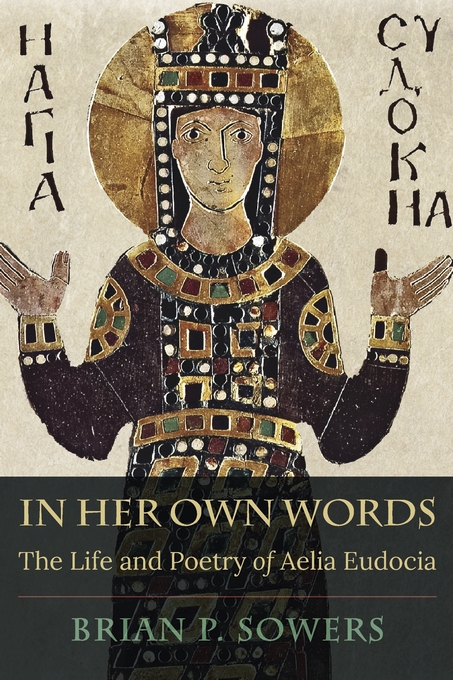
In Her Own Words: The Life and Poetry of Aelia Eudocia


 In Her Own Words: The Life and Poetry of Aelia Eudocia is the first full-length study to examine Eudocia’s writings as a unified whole and to situate them within their wider fifth-century literary, social, and religious contexts. Responsible for over 3,000 lines of extant poetry, Eudocia is one of the best-preserved ancient female poets. Because she wrote in a literary mode frequently suppressed by proto-orthodox (male) leaders, much of her poetry does not survive, and what does survive remains understudied and underappreciated. This book represents a detailed investigation into Eudocia’s works: her epigraphic poem in honor of the therapeutic bath at Hammat Gader, her Homeric cento—a poetic paraphrase of the Bible using lines from Homer—and her epic on the fictional magician-turned-Christian, Cyprian of Antioch. Reading her poetry as a whole and in context, Eudocia emerges as an exceptional author representing three unique late-antique communities: poets interested in preserving and transforming classical literature; Christians whose religious views positioned them outside and against traditional power structures; and women who challenged social, religious, and literary boundaries.

Sowers, Brian P. 2020. In Her Own Words: The Life and Poetry of Aelia Eudocia. Hellenic Studies Series 80. Washington, DC: Center for Hellenic Studies. http://nrs.harvard.edu/urn-3:hul.ebook:CHS_SowersBP.In_Her_Own_Words.2021.


This work is licensed under a Creative Commons 3.0 License.


Periplus: Mapping the Future

Periplus Atlas The Periplus Atlas is under development using ArcGIS Pro and ArcGIS Online, enabling multiple users to contribute collaboratively. A streamlined version has been shared as a webmap through the portal of ArchaeoCosmos of the National and Kapodistrian University of Athens. During the planning phase, we decided to incorporate the dataset from the Pleiades project in order to align our data as closely as possbile. Over the past five years (2019-2024), we have substantially improved the original dataset by adding new features, repositioning existing ones, eliminating duplicates and correcting errors, and importantly, by introducing thousands of new place names. Our initial focus was on incorporating ancient Greek names in polytonic Greek, endeavoring to include as many name variations and alternatives as possible. Consequently, the dataset is now searchable through Greek, Latin, or modern names. We have also made two significant enhancements: 1) rivers are illustrated as polylines rather than mere points, and 2) regions and islands are represented as polygons; they were drawn from scratch, a task that required considerable effort and time investment. Our goal was not to demarcate exact borders —an elusive task— but to position the labels as accurately as possible. The dataset also includes links to corresponding Pleiades entries and Wikidata. The Periplus Atlas stands out as one of the most complete and detailed interactive digital maps of the ancient world. Nevertheless, it must be pointed out that the map is still not in its final form.
Periplus Logos The Periplus Logos project builds upon the foundation laid by the Periplus Atlas, with the ultimate goal to compile a comprehensive gazetteer of geographic terms found in ancient Greek and Latin literature up until the end of Late Antiquity. Its mission extends to the publication of these texts, offering them both in their original form and in translations into English (and eventually modern Greek), accompanied by an interactive web map and hyperlinked geographic terms within each passage. This approach allows readers to visually explore the mentioned locations directly on the web map while engaging with the texts, whether in the original language or translation. Significantly, this feature enables readers to not only pinpoint individual places but also visualize all locations mentioned in a text, thereby providing a holistic understanding of the geographic context. This integrated experience is designed to enrich the reader's comprehension and appreciation of ancient literary landscapes.
Periplus App The Periplus App allows users to interactively engage with ancient texts. Users can add geo-tags to the texts and easily pinpoint locations on the Periplus Atlas. Moreover, the App facilitates the automatic generation of HTML pages. These pages feature dynamic and navigable hyperlinks embedded within the ancient texts and their modern translations.

Together, these modules are designed to enhance our understanding of ancient geography, making it more accessible and interactive for scholars, students and the public to explore the ancient world.

The Team

Periplous Logo

Project coordinator: Prof. Konstantinos Kopanias, Department of History and Archaeology, National and Kapodistrian University of Athens (NKUA)

The Periplus project operates under the auspices of the Research Center for Digital Humanities at the University Center for Research and Innovation (directed by Prof. Dimitris Plantzos) of the National and Kapodistrian University of Athens.


Group supervisors: Barlagianni P. (2019-2022), Doulfis G. (2019-2022), Gerochristou A. (2019-2022), Ladas A. (2019-2022), Mavros Str. (2019-2022), Papageorgiou D. (2019-2022), Sidiropoulou K. (2019-2022),Vemou E. (2019-2022)


Student participants (122 in total): Agelouli E. (2019-2020), Andreadakis E. (2019-2020), Androulidakis A. (2020-2021), Argyropoulou-Theodoropoulou A. (2019-2020), Armakola-Charilaou D. (2020-2021), Athanasiadis G. (2019-2021),Bairaktaris I. (2020), Charoura I. (2020-2021), Chatzaki E. (2019-2020), Chatzinikolaou A. (2019-2020), Danielidou M. (2019-2020), Delimpoi A.-M. (2019-2020), Desikou A. (2019-2020), Diamanti I. (2019-2020), Didaskalou D. (2019-2020), Dimitriou A. (2020), Dimitrokalli M. (2020-2021), Doani G.-E. (2019-2020), Eleutheriadi K. (2020-2021), Famprikatzi K. (2020-2021), Gavriel D. (2020), Georgiopoulou V. (2019-2021), Giannoulaki P. (2019-2020), Golfinopoulou V. (2019-2020), Gourgouleti E. (2020-2021), Ibrahim El Asah S. (2019-2020), Iliopoulos-Koulakos E.-A. (2019-2020), Ioannidou V. (2019-2020), Kakara V.-O. (2020-2021), Kallimani V. (2019-2020), Kalogerakou M. (2019-2020), Kanelou M. (2020-2021), Karaleka E. (2020-2021), Kariophyllis P. (2020-2021), Katakaleas A. (2019-2020), Kazani Sp. (2019-2020), Kokkini P. (2019-2020), Kolliakou A. (2020-2021), Kosmidi Chr. (2020-2021), Kotsanou S.-K. (2019-2020), Kotzampasaki K. (2021), Koulouri E. (2019-2020), Koumpouli Ch. (2019-2020), Koutalianou Chr. (2019-2020), Lamprinos V. (2020-2021), Lavari E. (2019-2021), Letti E. (2019-2020), Liapati V. (2019), Liopeta Chr. (2019-2020), Liosi P. (2019-2020), Louki M.-E. (2019-2020), Loukopoulos K. (2020-2021), Lourida S. (2019-2020), Makris A. (2019-2020), Markoglou K. (2020-2021), Markou K. (2019-2020), Markou Th. (2019-2020), Marten S. (2020-2021), Mastora St.-St. (2019-2020), Mastrogianni Eir.(2020-2021), Metaxa E.-A. (2020-2021), Michalopoulou A. (2020-2021), Mistiloglou Sp. (2019), Mitakou M.-M. (2019-2020), Mitropoulou N.(2019-2020), Mylonias-Ploutos E. (2019-2020), Nikolopoulou A. (2019-2020), Nikoloulea A. (2019-2020), Nimas Th. (2019-2020), Ntouzou A. (2020-2021), Oikonomou Chr. (2019-2020), Omiridou E. (2019-2020), Panagopoulou St. (2020-2021), Papadakis E. (2019-2020), Papadogona S. (2019-2020), Papadothomakos A. (2020-2021), Papagora A. (2019-2020), Papatzikou-Ntaifa E. (2019-2020), Patoura F. (2020-2021), Peppe E. (2019-2020), Peristeraki K. (2019-2020), Petresi E. (2019-2020), Petropoulou Eir. (2019-2020), Pisina M. (2019-2020), Ploumistou E. (2020-2021), Poila A. (2019-2020), Poimenides A. (2020-2021), Psilou F. (2020-2021), Raptis K. (2019-2020), Risba M. (2019-2020), Rompo St. (2020-2021), Rozaki Chr.-A. (2019-2020), Sidiropoulou V. (2020-2021), Sotiropoulos S. (2019-2020), Spyropoulou Eir. (2020-2021), Stavropoulos A. (2020), Stergiou Chr. (2019-2020), Strimenopoulos A. (2020), Theotokatou Ch. (2020), Triantafyllou M. (2020-2021), Tribyzas I. (2020-2021), Tsagkari V.-St. (2020-2021), Tsalla M. (2020), Tzortzaki Z. (2019-2020), Valavanis Sp. (2019-2020), Vanikioti A. (2020), Vasileiou K. (2021), Vasileiou V.-A. (2020-2021), Vereketi E. (2020-2021), Vlachopoulos G. (2020-2021), Zika M.-K. (2019-2020), Zoi O. (2020-2021)


Wednesday, May 29, 2024

Euripides’ Iphigenias

Ana Inácio
Iscte - University Institute of Lisbon
https://orcid.org/0000-0002-6993-9089
Maria de Fátima Silva
University of Coimbra
https://orcid.org/0000-0001-5356-8386
Nuno Simões Rodrigues
University of Lisboa
https://orcid.org/0000-0001-6109-4096 
As Ifigénias de Eurípides

Synopsis

The main purpose of this volume is the transcription of the translations / adaptations of Euripides’ Iphigenia in Aulis and Iphigenia among the Taurians, made by Cândido Lusitano. Preceding the text of the plays, transcribed from a still unpublished manuscript, the book opens with an introductory study, focused on two essential topics: the Greek tradition of the myth of Iphigenia and the specificity of the Euripidean versions; the treatment of the myth of Iphigenia, in the form of translation and adaptation, among the members of the Arcádia Lusitana.

Published
July 11, 2022

Details about the available publication format: PDF

PDF
ISBN-13 (15)
978-989-26-2300-9
doi
10.14195/978-989-26-2300-9


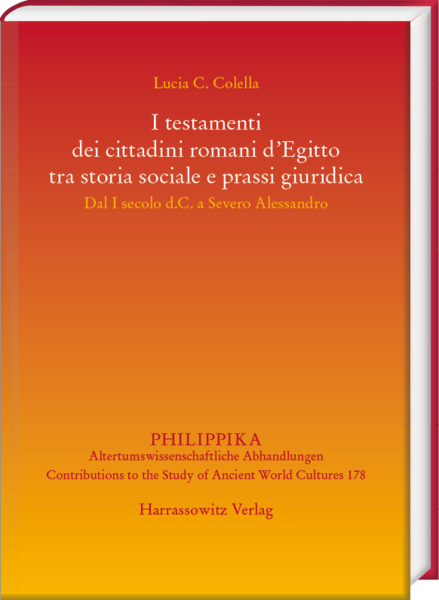
I testamenti dei cittadini romani d’Egitto tra storia sociale e prassi giuridica: Dal I secolo d.C. a Severo Alessandro

Lucia Consuelo, Colella

Lucia Consuelo Colella offers both a critical edition and a historical and juridical analysis of the documentation for Roman testamentary practice in Egypt prior to the constitution of Alexander Severus, which authorized the use of the Greek language in drafting Roman wills. Before this measure, the Roman citizens in Egypt, most of whom spoke Greek, used drafts and translations in Greek, as can be seen from the surviving documents. The material analyzed here includes Roman wills which have survived on wax tablets or papyrus both in Latin and Greek. There are 26 wills, one of which is identified for the first time and two unpublished documents on testamentary dispositions.
The critical edition of these documents also takes into account paratextual and linguistic aspects, for the first time in some cases. The new information that emerges forms the basis for an analysis of the socio-economic profile and the language skills of the testators, beneficiaries and witnesses in relation to the groups of Roman citizens in Egypt for whom we have information from other sources, as well as reflections on the representativity of the papyrological sources with regard to the proportion of soldiers and veterans among Roman citizens in the province prior to the Constitutio Antoniniana. In the light of new textual information, it is also possible to address the relationship between Roman law and local practice in the period before the constitution of Alexander Severus, also in terms of the extension of the privilege of the so-called testamentum militis.

series:
volume: 178
pages/dimensions: XIV, 430 pages, 1 ill., 6 tables, 24 plates
language: English
binding: Book (Hardback)
dimensions: 17.00 × 24.00 cm
publishing date: 17.07.2024
prices: ca. 98,00 Eur[D] / 100,80 Eur[A]
ISBN: 978-3-447-12161-3


Open Access Journal: Scripta Mediterranea

Scripta Mediterranea

Logo of the Canadian Insitute for Mediterranean Studies 

Scripta Mediterranea has ceased publication.

Scripta Mediterranea was an annual refereed journal published by the Canadian Institute for Mediterranean Studies. The journal published articles studying all aspects of Mediterranean culture, past and present, with a special interest in interdisciplinary and cross-cultural research and issues.

View All Issues


Tuesday, May 28, 2024

Pausanias. Description of Greece. Book III

Maria de Fátima Silva
University of Coimbra
https://orcid.org/0000-0001-5356-8386  
Pausânias III

Synopsis

Pausanias is our only testimony to periegetic literature and the author of a precious account of Greece under Roman occupation (2nd century AD). His description is that of someone who has travelled and synthetizes what he 'saw', with a gaze that is not only that of a curious tourist, but of an intellectual who has a solid cultural background and extensive information, as a result of a careful collection of all kinds of sources, oral and written.
We owe an enormous debt to Pausanias: that of having saved a ballast of monuments, historical events, figures and traditions which, without him, would have been definitively erased from the memory of mankind.

Published
November 8, 2022


Tale of the Two Brothers: Historical-Philological Study with Hieroglyphic Text, Transliteration and Translation

Telo Canhão
Centre for History of the University of Lisbon
https://orcid.org/0000-0001-9455-8379  
Conto dos Dois Irmãos

Synopsis

The Tale of the Two Brothers, Bata and Anpu, is a New Kingdom text and one of the best-known tales in all of Egyptian literature. Although it is considered a literary text, it was written with great simplicity and, apparently, without any literary pretension, being clearly timeless. It contains two distinct parts. The first presents a universal theme: the interest and anger of a woman towards a man she has no right to love and who, despite him refusing her advances, ends up denouncing him to her husband as having tried to rape her; the second part, the solitary life of a man far from everything and everyone, where magic and the wonderful, the extraordinary and the unusual are a constant. This text allows two essential types of reading: a literal reading, or manifest content (confrontation with the material, intellectual and geographical knowledge of the time in which it was written), and a metaphorical reading, or underlying content (analysis of the symbols it contains, prefiguring an allegory, created to remain hidden beyond literal reading).

Published
December 5, 2022

Details about the available publication format: PDF

PDF
ISBN-13 (15)
978-989-26-2318-4
doi
10.14195/978-989-26-2318-4


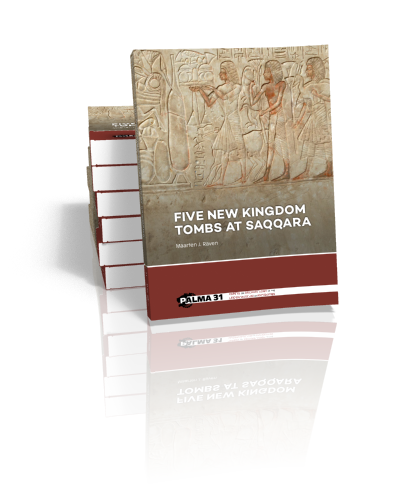
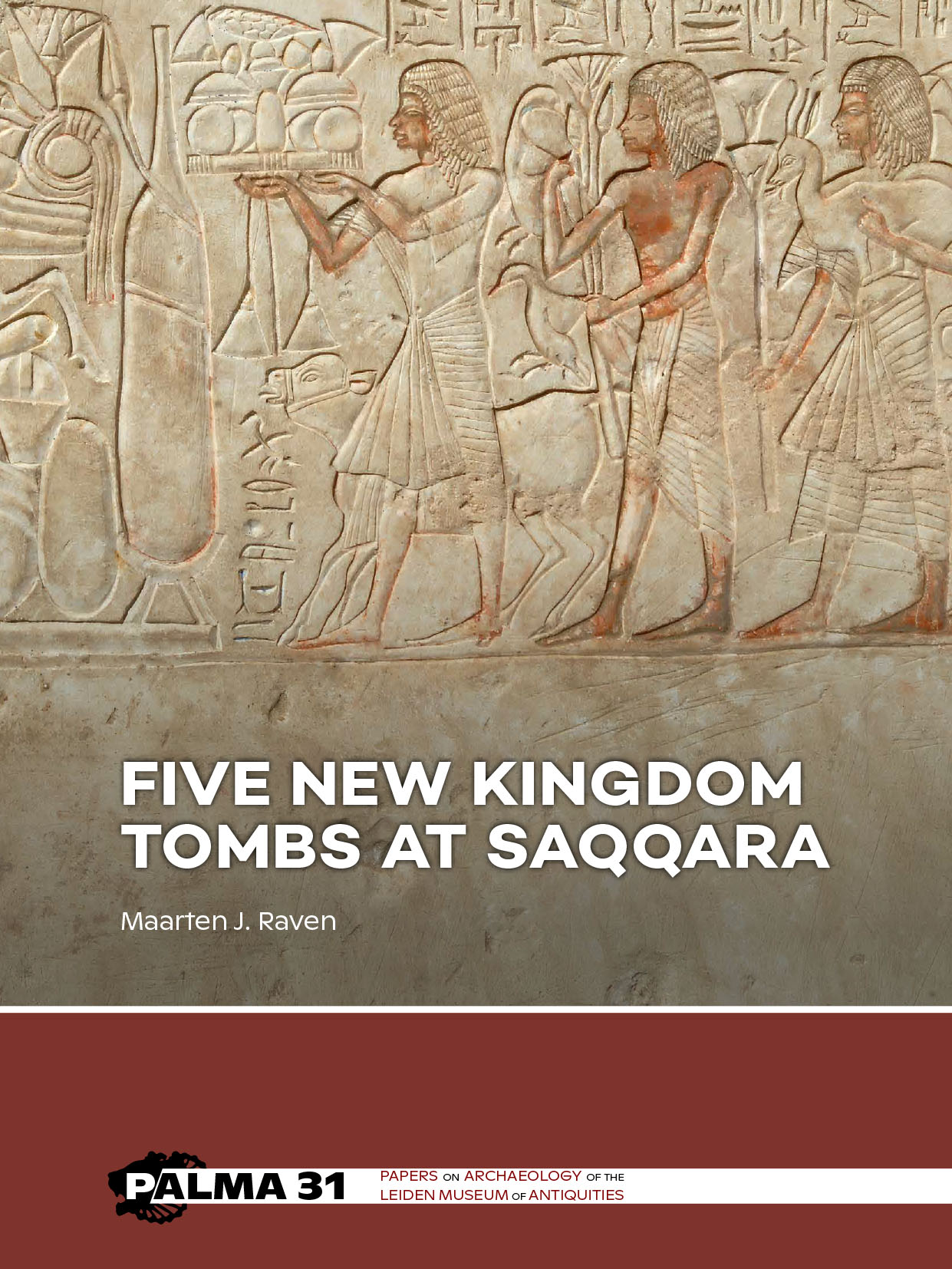
Five New Kingdom Tombs at Saqqara

Maarten J. Raven 


The five tombs dealt with in this book were explored between 2009 and 2017 by the Leiden-Turin Expedition in the New Kingdom necropolis of Saqqara. All of them can be described as minor tombs, constructed wherever some space was still available in the cemetery between the major monuments of 18th Dynasty date. Some of them were clearly built against the exterior walls of these previous monuments, whereas their unusual plans show how the builders had to adapt to the cramped conditions in the cemetery.

The five tombs vary in date from the very end of the 18th Dynasty to well into the Ramesside period. The most important one was built for Ry, an army officer who must have served under general (later Pharaoh) Horemheb. The rediscovery of his tomb finally enables us to understand the provenance of a whole series of reliefs now in the Berlin Museum and elsewhere.

The set of five also comprises two tombs of priests in the temple of Ptah, the Memphite town god. Both Khay and Tatia served in the sanctuary as carrier of the divine barque during processions, combining this office with other jobs: chief royal gardener in the case of Khay, and chief of goldsmiths for Tatia. The latter was a contemporary of Pharaoh Ramesses II, whereas Khay seems to have lived slightly earlier.

The tomb of Samut is a very humble affair consisting of a rare four-sided stela standing next to a simple burial shaft. The owner was a simple stone-mason or necropolis workman, and the presence of his funerary monument in what used to be an elite cemetery comes as a surprise. Less informative is the fifth tomb of this series, which is no more than an unfinished and anepigraphic limestone chapel with a now inaccessible shaft in front.

Paperback ISBN: 9789464262711 | Hardback ISBN: 9789464262728 | Imprint: Sidestone Press | Format: 210x280mm | 442 pp. | Papers on Archaeology of the Leiden Museum of Antiquities 31 | Series: PALMA | Language: English | 400 illus. (bw) | 250 illus. (fc) | Keywords: Archaeology; ancient Egypt; New Kingdom; cemetery; Saqqara; Egyptology; funerary archaeology | download cover | DOI: 10.59641/1ry5aust

Preface
Staff of the Expedition, 2009–2022

I. The site and its history
Maarten J. Raven

II. The tomb of Khay II
Maarten J. Raven

III. The tomb of Samut
Maarten J. Raven

IV. The tomb of Ry
Nico T.B. Staring, with a section by Maarten J. Raven

V. Tomb 2013/7
Maarten J. Raven

VI. The tomb of Tatia
Vincent Oeters, with a section by Maarten J. Raven

VII. Reliefs and inscriptions without context
Maarten J. Raven

VIII. Objects
Maarten J. Raven

IX. Pottery
Barbara G. Aston

X. Skeletal remains
Ladislava Horáčková, Ali Jelene Scheers, and Sarah Schrader

Concordance of excavation numbers and catalogue numbers
Spatial distribution of finds
List of designated features
Abbreviations
Bibliography
Indices

Monday, May 27, 2024

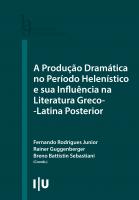
Dramatic Production in the Hellenistic Period and Its Influence on Later Greek-Latin Literature

Fernando Rodrigues Jr.
University of São Paulo
https://orcid.org/0000-0002-4481-2364
Rainer Guggenberger
Federal University of Rio de Janeiro
https://orcid.org/0000-0003-0543-2606
Breno Battistin Sebastiani
University of São Paulo
https://orcid.org/0000-0002-3777-6086  
A Produção Dramática no Período Helenístico
Keywords: Dramatic Poetry, Late Greco-Latin Literature, Hellenism

Synopsis

The texts gathered in this book were presented at two conferences, the Sixth Week of Studies on the Hellenistic Period: Dramatic Production in the Hellenistic Period and its Influence on Later Greco-Latin Literature, held at the Faculty of Philosophy, Letters and Human Sciences of the University of São Paulo, between March 10 and 11, 2020; and in the First Journey of Studies on the Hellenistic Period: Dramatic Poetry, held at the Faculty of Arts of the Federal University of Rio de Janeiro, between April 12 and 13, 2021. Both events are linked to the Hellenistica research group, founded in 2011 at the University of São Paulo with the objective of periodically organizing events aimed at the study of literature from the Hellenistic period, bringing together Brazilian and foreign scholars working in this area.

Published
February 6, 2023

Details about the available publication format: PDF

PDF
ISBN-13 (15)
978-989-26-2394-8
doi
10.14195/978-989-26-2394-8


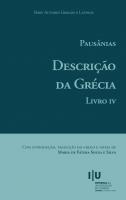
Pausanias. Description of Greece. Book 4

Maria de Fátima Silva
University of Coimbra
https://orcid.org/0000-0001-5356-8386  
Pausânias IV

Synopsis

Pausanias is our only testimony to periegetic literature and the author of a precious account of Greece under Roman occupation (2nd century AD). His description is that of someone who has travelled and synthetizes what he 'saw', with a gaze that is not only that of a curious tourist, but of an intellectual who has a solid cultural background and extensive information, as a result of a careful collection of all kinds of sources, oral and written.
We owe an enormous debt to Pausanias: that of having saved a ballast of monuments, historical events, figures and traditions which, without him, would have been definitively erased from the memory of mankind.

Details about the available publication format: PDF

PDF
ISBN-13 (15)
978-989-26-2442-6
doi
10.14195/978-989-26-2442-6


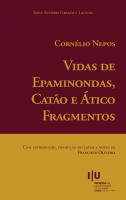
Cornelius Nepos. Lifes of Epaminondas, Cato and Atticus. Fragments

Francisco de Oliveira
University of Coimbra
https://orcid.org/0000-0003-4871-243X  
Cornélio Nepos

Synopsis

The volume is dedicated to the work of Cornelius Nepos, Lives of Illustrious Men. It contains a general introduction about the author; a summary of each untranslated life, and a translation of the biographies of Epaminondas, Cato and Atticus (with developed commentary and annotation). The translation and notes of the fragments are also presented. The text constitutes an important source for the study of the biographical genre and the history of classical antiquity, from classical Greece to the end of the Roman Republic and the beginning of the Principate and its contacts with other civilizations.

Published
May 10, 2023

Details about the available publication format: PDF

PDF
ISBN-13 (15)
978-989-26-2440-2
doi
10.14195/978-989-26-2440-2

Details about the available publication format: Amazon


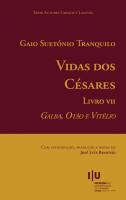
Gaius Suetonius Tranquillus, Lives of the Caesars. Book VII. Galba, Otho, Vitellius

José Luís Brandão
University of Coimbra
https://orcid.org/0000-0002-3383-2474  
Suetónio VII

Synopsis

This volume contains the translation, with introduction and notes, of the Lives of the three brief emperors - Galba, Otho, and Vitellius - who succeeded each other in Rome between the death of Nero in June 68 AD and the violent entry of Vespasian’s partisans into Rome in December 69. These are, then, the biographies of the protagonists of a bloody period of dynastic transition between the Julio-Claudian emperors, who died out with Nero, and the Flavians, the dynasty inaugurated by Vespasian: a period of 18 months of upheaval in which the imperial investiture was decentralized, and provincial armies and praetorian soldiers rivaled each other with the aim of imposing an emperor of their liking.

Published
July 10, 2023

Details about the available publication format: PDF

PDF
ISBN-13 (15)
978-989-26-2352-8
doi
10.14195/978-989-26-2352-8

Details about the available publication format: Amazon


Sunday, May 26, 2024

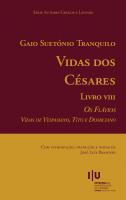
Gaius Suetonius Tranquillus, Lives of the Caesars. Book VIII. The Flavians. Lives of Vespasian, Titus and Domitian

José Luís Brandão
University of Coimbra
https://orcid.org/0000-0002-3383-2474  
Suetónio VIII

Synopsis

Translation accompanied by introduction and notes of the Vidas dos Flávios, the dynasty that ruled Rome between 69 and 96 A.D. This family, although it did not have ancestors as illustrious as their predecessors and was of Sabine origin, brought stability to Rome after the successive coups d'état that took place after Nero's death. But while the biographies of Vespasian and Titus emphasise mainly positive aspects (Vespasian is presented as a good-natured restorer of the city and society, and Titus is described as "love and delight of the human race"), Vespasian's youngest son Domitian is associated with the typical platitudes of tyrants, a set of vices that justify his death.

Published
July 10, 2023


Borja Antela-Bernádez
Universitat Autònoma de Barcelona
https://orcid.org/0000-0002-3118-3300
Marc Mendoza
Universitat Autònoma de Barcelona
https://orcid.org/0000-0001-7891-3553  
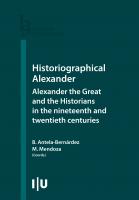
Historiographical Alexander

Synopsis

In a famous statement, Ulrich Wilcken argues that each historian has his own Alexander. A critical examination of the traditions in Historiographic Alexander allows to reconsider both our ideas of alterity and success, and how great can be a human being, or to what extent what was great in the past still has to be accepted as such in our present days. To sum up, to revisit Alexander from the eyes of the historians in the Contemporary Age offers a genuine opportunity to rethink History as such, and to evaluate how can we imagine new ways to explain the past in order to build a rich appreciation of the present in order to imagine brand new futures. The aim of the following pages is to review Alexander’s portraits and concerns in the works and scopes of the more recent historical traditions of the XIXth and XXth Centuries

Published
September 19, 2023


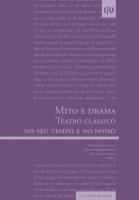
Myth and Drama: Classical Theatre in its Time and in Ours

Maria de Fátima Silva
University of Coimbra
https://orcid.org/0000-0001-5356-8386
Susana Marques Pereira
University of Coimbra
https://orcid.org/0000-0002-4432-2517
Rui Tavares de Faria
University of the Azores
http://orcid.org/0000-0002-0529-9107  
Mito e Drama

Synopsis

This title brings together a set of texts, grouped into two sections: a Part 1, still focused on the old myths and their expression in the ancient theatre, tragic and comic, and a Part 2, which goes through a variety of rewritings, dispersed among the various literatures under discussion.
In addition to returning to the specific analysis of some classical myths and themes, it expands a set of studies on mainly contemporary rewritings, scattered across different literatures of the Latin world, set in specific historical contexts that explain and justify them.

Published
September 26, 2023


Vani : une Pompéi géorgienne

Lordkipanidzé, O. (1995) : Vani : une Pompéi géorgienne, Besançon.

Cet ouvrage est l’adaptation en français d’un ouvrage en russe. Il est organisé autour de découvertes archéologique sur le site de Vani, en Géorgie, site dont le nom grec est encore inconnu.

ouvrage largement illustré

L’ouvrage en ligne : https://www.persee.fr/doc/ista_0000-0000_1995_mon_546_1


Saturday, May 25, 2024

Index to «Counting the number of words in Greek and Latin papyri»

Daniel Riaño Rufilanchas, ILC, CSIC
Esta página ofrece un índice de las páginas en las que hemos anotado el número de palabras completas que se conservan en los papiros digitalizados por el proyecto papyri.info, distribuidas en cada siglo en el que está fechado cada papiro. Igualmente presenta el número de papiros fechado en cada siglo. Para esta estadística sólo hemos considerado aquellos papiros que están fechados en un siglo concreto; han sido ignorados, por ello, tanto los papiros no fechados como aquellos fechados entre dos o más siglos. Para realizar estas estadísticas hemos procesado cada uno de los que a fecha 10-04-2024 estaban accesibles en el repositorio de GitHub del proyecto, extrayendo cada palabra (las palabras separadas en dos o más líneas se han unido) y comprobando cuáles eran palabras completas, o solo fragmentos. La forma de citar estos datos es esta (haga clic para copiar la referencia):

Riaño Rufilanchas, Daniel 2024 "Counting the number of words in Greek and Latin papyri" <https://glg.csic.es/words_in_papyri/palabrasPorSiglos_ALL_PLACES.html> [Acceso: 25/05/2024].

Desde este índice se tiene acceso a las estadísticas para el vocabulario en cualquier lengua, o para cada una de las lenguas contabilizadas: griego, latín, copto.

¿Por qué tres clasificaciones para cada lengua?

Hemos hecho tres estadísticas:

a) En la primera, sólo contabilizamos los papiros datados en un siglo concreto (por ejemplo, los fechados en "14 A.C.", "14-80 A.C.", s. "c. I A.C.").

En las otras dos categorías incluimos:

b) Papiros datados con una exactitud igual o superior a 200 años (por ejemplo, los fechados en "14 a.C. - 25 d.C.", "180 - 14 a.C.", s. "c. II-I a.C." e incluso "100 - 101 d.C.").

c) Papiros datados con una exactitud igual o superior a 500 años (por ejemplo, los fechados en "14 a.C. - 313 d.C.", "18 d.C.- 414", s. "c. I-V d.C.").

Cómo se distribuyen las palabras y los papiros entre varios siglos

Para distribuir las palabras (y los papiros) entre varios siglos hemos empleado un procedimiento que considera la extensión temporal como una simple probabilidad estadística de que las palabras pertenezcan a uno u otro siglo.

Por ejemplo, tomemos un papiro que contiene 200 palabras y está fechado entre el año 75 y el año 215 d.C.. El periodo cubre 25 + 100 + 15 = 140 años. La distribución seria por tanto:

  • siglo I: 25 años (17'86% del periodo) = 35'72 palabras
  • siglo II: 100 años (71,43% del periodo) = 142,86 palabras
  • siglo III: 15 años (10,71% del periodo) = 21,43 palabras
Para cualquier duda o corrección, por favor escriban a esta dirección.
This page presents an index to all the pages where we have annotated the number of complete words preserved in the digitized papyri by the project papyri.info, distributed by century according to the dating of each papyrus. It also provides the number of papyri dated to each century. For this statistic, we have only considered those papyri that are dated to a specific century; thus, undated papyri and those dated across two or more centuries have been ignored. To compile these statistics, we processed each of the papyri that were accessible in the project's GitHub repository as of 10-04-2024, extracting each word (words split across two or more lines were combined) and verifying which were complete words and which were merely fragments. The proper citation for these data is as follows (click to copy the reference):

Riaño Rufilanchas, Daniel 2024 "Counting the number of words in Greek and Latin papyri" <https://glg.csic.es/words_in_papyri/palabrasPorSiglos_ALL_PLACES.html> [Accessed: 25/05/2024].

From this index, access is provided to the vocabulary statistics for any language, or for each of the recorded languages: Greek, Latin, and Coptic.

Why Three Classifications for Each Language?

We have conducted three types of statistics:

a) In the first category, we only account for papyri dated to a specific century (for example, those dated "14BC", "14-80BC", "c. I BC").

In the other two categories, we include:

b) Papyri dated with an accuracy of 200 years or less (for example, those dated "14BC - AD 25", "180 - 14 BC", "c. II-I BC" and even "AD 100 - 101").

c) Papyri dated with an accuracy of 500 years or less (for example, those dated "14BC - AD 313", "AD 18 - 414", "c. AD I-V").

How Words and Papyri Are Distributed Across Centuries

To distribute the words (and papyri) across several centuries, we employed a method that considers the temporal range as a simple statistical probability that the words belong to one century or another.

For example, let us consider a papyrus that contains 200 words and is dated between AD 75 and AD 215. The period covers 25 + 100 + 15 = 140 years. The distribution would therefore be:

  • 1st century: 25 years (17.86% of the period) = 35.72 words
  • 2nd century: 100 years (71.43% of the period) = 142.86 words
  • 3rd century: 15 years (10.71% of the period) = 21.43 words
For any questions or corrections, please write to this address.