BBC Radio 4 Series tracing the stories of ten antiquities and cultural sites that have been destroyed or looted in Iraq and Syria
Episodes to download
 View Programme information
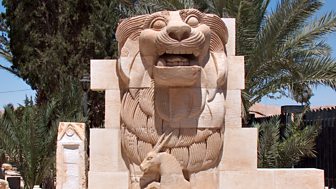
The Lion of al-Lat
FridayThe fearsome 2,000-year-old statue, regarded as one of the symbols of Palmyra.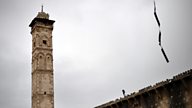 View Programme information
Minaret of the Umayyad Mosque, Aleppo
ThursdayThe unique minaret of Aleppo's Great Mosque, which is now only a waterfall of rubble.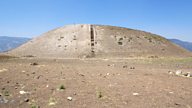 View Programme information
Tell Qarqur, Hama Province
WednesdayThe ancient hill in western Syria that became a modern battleground.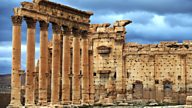 View Programme information
Palmyra: Temple of Bel
TomorrowOne of Palmyra's most iconic structures and the man who gave his life to protect the city.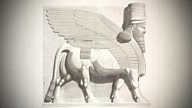
Winged-Bull of Nineveh
TodayThe 2,700-year-old sculpture that guarded the gates of one of antiquity's fabled cities.
Monday, February 29, 2016
Podcast: Museum of Lost Objects
Museum of Lost Objects
East Anglian Archaeology
East Anglian Archaeology
The East Anglian Archaeology website has been revamped and relaunched and now features PDF downloads of the first 100 volumes of the monograph series. Additional PDFs are due to be made available on a rolling basis.
East Anglian Archaeology is a series of reports on the archaeology of an English region. The first report was published in 1975 and there are now more than one hundred and eighty titles in the series. They’re listed under Publications , grouped by period. New titles appear each year, for the most recent ones see Recent posts and for those in press see Forthcoming.
Epigrafía latina: Introducción a la epigrafía latina en ExtremaduraClásica
Epigrafía latina: Introducción a la epigrafía latina en ExtremaduraClásica
La epigrafía es el estudio de las inscripciones antiguas.
La historia de la epigrafía, si bien con algunos conatos en la Edad Media, comienza con los humanistas del Renacimiento, cuyo interés arqueológico les llevó copiar y dibujar inscripciones.
A partir de 1853 comenzó la recopilación de todas las inscripciones latinas en una sola obra, el Corpus Inscriptionum Latinarum (CIL), que fue encomendada en un principio a Th. Mommsen y que aun hoy está sin terminar.
Las inscripciones latinas más antiguas que se conocen datan de los primeros tiempos de la historia de Roma, y se pueden fechar en torno al siglo VI a.C. Si pasamos por alto la fíbula de Preneste, cuya autenticidad es hoy muy discutida, el testimonio más antiguo en latín es el llamado lapis niger (imagen y descripción).
La información epigráfica tiene una grandísima importancia en el estudio de la historia de Roma, ya que proporciona documentos de primera mano sobre aspectos sociales, económicos, jurídicos, religiosos...
En ExtremaduraClásica queremos ofrecer al estudiante de secundaria este sencillo manual para iniciarse en el mundo de la epigrafía.
- Inicio
- Introducción
- Alfabeto y números
- Escritura
- Edición
- Tria nomina
- Cursus honorum
- Tipología
- Funerarias
- Votivas
- Honoríficas
- JurídicasAbreviaturas
ExtremaduraClásica
And see AWOL's list of Open Access Textbooks and Language Primers
Epigrafia 3D
Epigrafia 3D

La escritura es uno de los avances tecnológicos más importantes de la historia de la humanidad y los testimonios escritos que se conservan de las antiguas civilizaciones nos acercan a la sociedad que los generó. A través de esta web podrás acceder a una selección de inscripciones romanas que se conservan en el Museo Arqueológico Nacional (Madrid) y en el Museo Nacional de Arte Romano (Mérida), a través de modelos en 3D que te acercarán a estos testimonios escritos de la Hispania romana. Con los conocimientos que podrás adquirir a través de los recursos elaborados para esta web y de otras que hemos seleccionado en la sección de enlaces, podrás iniciarte en el apasionante oficio de epigrafista, resolviendo la lectura de algunas inscripciones seleccionadas.Este proyecto de innovación científica suma la experiencia en investigación básica en Humanidades con la investigación tecnológica de la ingeniería gráfica, para acercar las inscripciones romanas a los estudiantes más jóvenes y al público en general, en el marco de los proyectos "Descifrando inscripciones romanas en 3-D. Ciencia epigráfica virtual" (FCT-13-6025) e "Inscripciones romanas de Augusta Emerita en 3D: del Museo a los dispositivos móviles", financiados por la Fundación Española para la Ciencia y la Tecnología – Ministerio de Economía y Competitividad y la Universidad de Las Palmas de Gran Canaria.
Sunday, February 28, 2016
ANCIENT ROME LIVE: A new way to learn about Rome's past
ANCIENT ROME LIVE: A new way to learn about Rome's past

Rome’s enduring contribution to world civilization can, and should, be communicated in a way that combines the hard facts, solid reasoning, and new discoveries of university research with the excitement and immediacy of on-location filming in Rome. If a picture is worth a thousand words, then a video is worth a million.
Ancient Rome Live (ARL) is an immersive journey that provides new perspectives about the ancient city. A multi-platform learning experience, ARL first and foremost presents original content:
ARL provides an interactive platform to engage the many layers of Rome: monuments, people, places, and events. Ancient Rome Live is a valuable resource for teachers- and a lot of fun for anyone interested in history.
- a clickable map of ancient Rome
- a library of videos arranged according to topic
- live streaming from sites in Rome and her empire.
Later in 2015 ARL will release an ebook, app, and free online course. WIth all of these new, coordinated formats, ARL will change the way ancient Rome is studied.
Darius Arya, Archaeologist and TV host, Founder, director, producer
Albert Prieto, Archaeologist, Chief film and editing
Mark Brewer, Zagara Films, Film and editing
Andrea Troiani, Animator
Darbouze & Daughters, Digital Creative
Friday, February 26, 2016
New Online from the CHS: Kinyras: The Divine Lyre
John Curtis Franklin, Kinyras: The Divine Lyre

Kinyras, in Greco-Roman sources, is the central culture-hero of early Cyprus: legendary king, metallurge, Agamemnon’s (faithless) ally, Aphrodite’s priest, father of Myrrha and Adonis, rival of Apollo, ancestor of the Paphian priest-kings (and much more). Kinyras increased in depth and complexity with the demonstration in 1968 that Kinnaru—the divinized temple-lyre—was venerated at Ugarit, an important Late Bronze Age city just opposite Cyprus on the Syrian coast. John Curtis Franklin seeks to harmonize Kinyras as a mythological symbol of pre-Greek Cyprus with what is known of ritual music and deified instruments in the Bronze Age Near East, using evidence going back to early Mesopotamia. Franklin addresses issues of ethnicity and identity; migration and colonization, especially the Aegean diaspora to Cyprus, Cilicia, and Philistia in the Early Iron Age; cultural interface of Hellenic, Eteocypriot, and Levantine groups on Cyprus; early Greek poetics, epic memory, and myth-making; performance traditions and music archaeology; royal ideology and ritual poetics; and a host of specific philological and historical issues arising from the collation of classical and Near Eastern sources. Kinyras includes a vital background study of divinized balang-harps in Mesopotamia by Wolfgang Heimpel as well as illustrations and artwork by Glynnis Fawkes.
List of Figures
Preface
Conventions and Abbreviations
Introduction
1. Kinyras and Kinnaru
Part I: The Cult of Kinnaru
2. Instrument Gods and Musician Kings in Early Mesopotamia: Divinized Instruments
3. The Knr
4. Starting at Ebla: The City and Its Music
5. Mari and the Amorite Age: The City and Its Music
6. Peripherals, Hybrids, Cognates
7. Kinnaru of Ugarit
8. David and the Divine Lyre
Part II: Kinyras on Cyprus
9. Kinyras the Kinyrist
10. Praising Kinyras
11. Lyric Landscapes of Early Cyprus
12. Kinyras the Lamenter
13. The Talents of Kinyras
14. Restringing Kinyras
15. Crossing the Water
16. The Kinyradai of Paphos
Part III: Kinyras and the Lands around Cyprus
17. Kinyras at Pylos
18. The Melding of Kinyras and Kothar
19. Kinyras, Kothar, and the Passage from Byblos: Kinyras, Kinnaru, and the Canaanite Shift
20. Kinyras at Sidon? The Strange Affair of Abdalonymos
21. Syro-Cilician Approaches
Appendices
Appendix A. A Note on ‘Balang’ in the Gudea Cylinders
Appendix B. Ptolemy Khennos as a Source for the Contest of Kinyras and Apollo
Appendix C. Horace, Cinara, and the Syrian Musiciennes of Rome
Appendix D. Kinyrízein: The View from Stoudios
Appendix E. The ‘Lost Site’ of Kinyreia
Appendix F. Theodontius: Another Cilician Kinyras?
Appendix G. Étienne de Lusignan and ‘the God Cinaras’
Balang-Gods, Wolfgang Heimpel
Bibliography
Announcing the NEH-Mellon Fellowships for Digital Publication
Announcing the NEH-Mellon Fellowships for Digital Publication
February 25, 2016
| By Brett Bobley
I'm very pleased that the Office of Digital Humanities has teamed up with our colleagues in the NEH's Division of Research as well as our friends at the Andrew W. Mellon Foundation to offer this new fellowship program. If you are a scholar doing research which will result in a digital publication, I urge you to consider applying to this program!
Announcing the NEH-Mellon Fellowships for Digital Publication
Great scholarship can be communicated in many forms – books and articles, of course, but also through multimedia, including interactive or enhanced ebooks, websites, audio clips, videos, and other formats. Today, we are also seeing scholarly presses begin to peer review and publish digital publications of various kinds. To help accelerate the creation of these new forms of scholarly communication, the National Endowment for the Humanities and The Andrew W. Mellon Foundation are pleased to announce the NEH-Mellon Fellowships for Digital Publication. This special opportunity with the NEH Fellowships program seeks to encourage scholars who are engaged in research leading to digital publications. For example, for scholarship in fields like art history, musicology, or media studies, an interactive digital publication may allow the author to use multimedia to make arguments or illustrate critical points that would be otherwise difficult or impossible in traditional print formats.
NEH-Mellon Fellowships for Digital Publication support individual scholars pursuing research projects that require digital expression and digital publication. To be eligible, the project must be conceived as digital because the nature of the research and the topics being addressed demand presentation beyond traditional print publication. Successful projects will likely incorporate visual, audio, and/or other multimedia materials or flexible reading pathways that could not be included in traditionally published books.
Because NEH-Mellon Fellowships for Digital Publication is a special opportunity within the larger NEH Fellowships competition, applications with be judged by the same criteria and held to the same standards of scholarly excellence. Applications received for the special opportunity will be evaluated by a separate peer review panel of scholars engaged with humanities research and knowledgeable about digital humanities/digital publications.
Like the NEH Fellowships programs, NEH-Mellon Fellowships for Digital Publication support continuous full-time work for a period of six to twelve months. Successful applicants receive a stipend of $4,200 per month. The maximum stipend is $50,400 for a twelve-month period.
Applications are due by April 28, 2016. For more information, please consult the special opportunity guidelines on the NEH website.
PPND: Platform for the publication of Neolithic Radiocarbon Dates
: Platform for the publication of Neolithic Radiocarbon Dates

The radiocarbon dates of Epipalaeolithic and early Neolithic sites in the Near East are here compiled and analysed in order to compare the sites in chronological context and check if differences between sites are due to chronological differences alone. This compilation does not intend to be complete but only comprises sites analysed within the frame of the SIGN Project (www.vorderasien.uni-freiburg.de/sign_benz).The preliminary results provided here are intended as a working platform for all those who are interested in the comparison of cultural and environmental developments during the important transitional phase from foraging to farming. References to all radiocarbon dates are given in the descriptions of the sites: the references in the text are only to discussions and archaeological data. All authors and readers are welcomed to help complete and correct the files. The more researchers who offer us their cooperation, the better a basis for archaeological interpretation this compilation will be. Consequently, it has seemed useful to publish all the compiled files (OxCal) ready for calibration analyses, which will facilitate chronological analyses without the need to retype dates.
Information Sites Summary References
Thursday, February 25, 2016
Open Access Monograph Series: Roma Subterranea Judaica
Roma Subterranea Judaica (series)

The following pdfs are provided as a service to the community by the International Catacomb Society.
All the items are authored by Jessica Dello Russo, ICS Executive Director & Doctoral Candidate at the Vatican's Pontificio Istituto di Archeologia Cristiana:
“ICS On-Site in the Vigna Randanini Catacomb, Fall 2001,” Roma Subterranea Judaica 1 (2010)
“The Jewish Catacomb of the Vigna Cimarra,” Roma Subterranea Judaica 2 (2010, rev. 2013)
“The Jewish Catacomb on the Via Labicana,” Roma Subterranea Judaica 3 (2011)
“The Monteverde Jewish Catacombs on the via Portuense,” Roma Subterranea Judaica 4 (2010)
“The Discovery and Exploration of the Jewish Catacomb of the Vigna Randanini in Rome: Records, Research, and Excavations through 1895,” Roma Subterranea Judaica 5 (2010)
“Building a Great Catacomb Library: The Gifts and Legacy of John Harvey Treat to Harvard University” (2010)
Click here for further research by Jessica Dello Russo on the Jewish catacombs.
Getty Scholars' Workspace
Getty Scholars' Workspace

Getty Scholars' Workspace™ is an online environment designed to support collaborative art-historical research. It provides a space and a toolset that enable research teams to examine digital surrogates of works of art and primary source materials, build a bibliography, translate and annotate texts, and exchange ideas. With Scholars' Workspace, research and communication are consolidated into a single online location accessible from anywhere.
The outcome of a project conducted in Scholars' Workspace might be an exhibition, a seminar, a digital or print publication, a scholarly talk, or something else entirely. While it is not designed to produce these outcomes itself, Scholars' Workspace helps research teams to organize their materials, such as texts and images, and facilitates analysis, investigation, and communication. The workspace is designed to accommodate the multiple perspectives that are typical of humanities research.
Getty Scholars' Workspace was made possible in part through generous support from the Seaver Institute.Features

Before Getting Started
Can I install Getty Scholars' Workspace on my own computer?
If you have the necessary technical skills, you can install a local version of Getty Scholars' Workspace, but it is not recommended as this disables its collaborative features. Will I need help from a technology specialist?
We strongly recommend that an experienced system administrator install and maintain the instance of Getty Scholars' Workspace for use on a server at your institution. I am interested in publishing something similar to Pietro Mellini's Inventory in Verse, 1681 (2015). Will Getty Scholars' Workspace allow me to produce a similar publication?
Getty Scholars' Workspace is a research environment only. It has no ability to directly publish to the web or any other platform. It does have the ability to export the data and other assets produced during the course of a research project. Is Getty Scholars' Workspace used to analyze only items in the Getty Research Institute's Special Collections?
No! Getty Scholars' Workspace can be used with digital content from any archive of any person or institution. Does the Getty Research Institute offer technical support for general users of Getty Scholars' Workspace?
No. Neither the Getty Research Institute nor any part of the Getty Trust offers direct technical support. Installation instructions and a user guide are downloadable below. The open-source community may generate more significant support. What are the system requirements for Getty Scholars' Workspace?
Getty Scholars' Workspace is built in version 7.21 of Drupal, an open-source content management system. Visit Drupal.org for the most current details on system/server requirements. Is Getty Scholars' Workspace open source?
Yes, Getty Scholars' Workspace is distributed under the GNU General Public License, version 3.
Downloads


Tuesday, February 23, 2016
News from the Cuneiform Commentaries Project
News from the Cuneiform Commentaries Project
Several new texts have been recently added to the corpus of the Cuneiform Commentaries Project (http://ccp.yale.edu).
Thanks are expressed to the following scholars, who have contributed their editions and feedback: Yoram Cohen, Uri Gabbay, Strahil Panayotov, Matthew Rutz, and Henry Stadhouders. We would like to renew our invitation to Assyriologists around the world to contribute their editions of as yet unedited commentary tablets, for which they will receive full credit.
In addition, the website has been migrated to a new server (Acquia Cloud), which has resulted in a considerable improvement in both performance and speed.
Best wishes,
Enrique Jiménez (Senior Editor of CCP)
⁂
CCP 3.1.u94.b (Astrological): The fragment VAT 9434 has received scant attention since it was published in copy in the early 1940s. (Read more)
CCP 3.2.11 (Enūma Anu Enlil / Sîn ina tāmartīšu 11): This small fragment from Kuyunjik preserves badly damaged remains of the last line of a commentary, together with the beginning of a catchline and a rubric. According to the latter, it would be the 11th [tabl]et of a mukallimtu-commentary on Enūma Anu Enlil. (Read more)
CCP 3.5.34 (Ālu 34): This fragment belongs to the British Museum’s “Babylon Collection” (its accession number is 81-4-28,294). (Read more)
CCP 3.6.3.A (Izbu 7 A): This almost perfectly preserved tablet contains a thirty-four line commentary on the 7th tablet of the teratological series Šumma Izbu. (Read more)
CCP 3.8.1.B (Iqqur īpuš, série génerale B): The tablet MLC 2627 probably stems from the city of Uruk, in Babylonia. It represents the only published commentary on a tablet with a projection (a so-called amulet-shaped tablet) discovered to date. (Read more)
CCP 4.1.3.A (Sagig 3 A): This small fragment from Uruk contains remains of a commentary on the third chapter of the medical series of diagnoses and prognoses, Sagig. (Read more)
CCP 4.1.3.B (Sagig 3 B): The present tablet, previously unidentified, consists of two nearly joinable fragments from the British Museum’s “Sippar Collection,” which in all likelihood stem from Babylon or Borsippa. The colophon dates the tablet to the 8th month of the 46th year of an Antiochus, during a period of co-regency with another Antiochus, “his son.” The only possible date is 266 BCE. (Read more)
CCP 7.2.u44 (Uncertain): This tiny fragment from the British Museum’s “Babylon Collection” preserves meager remains of a lexical list or tabular commentary dealing with field pests. (Read more)
CCP 7.2.u49 (Uncertain): The previously unpublished fragments BM 41481 and BM 41635 belong both to the British Museum’s 81-6-25 consignment of tablets, which is reported to stem mostly from Babylon. (Read more)
CCP 7.2.u51 (Uncertain): This previously unpublished commentary is preserved in two small fragments that have been joined back to back, in a so-called “sandwich join.” Both fragments belong to the 81-6-25 consignment, reported to stem from the city of Babylon. (Read more)
Monday, February 22, 2016
Living Latin and Greek Blogs
Living Latin and Greek

Paideia's Living Latin and Living Greek blogs provide interesting, intermediate content in Latin and ancient Greek to help bridge the gap between textbook Latin and classical authors. With the conviction that in language learning an appeal must be made first and foremost to the ears, every post is accompanied by an audio recording. The reader is advised first to make use of our Chromium browser-based dictionary to read each post, then to listen and reread until the audio can be understood without the text.
The Living Latin and Greek blogs are edited by Joseph Conlon.
See also AWOL's list of Open Access Textbooks and Language Primers
Vulgate available on Tesserae
Vulgate available on Tesserae

Jerome’s Vulgate is now available for Tesserae searches, either as full text or by individual book.
Our text, taken from Perseus, lacked the punctuation Tesserae needs to determine phrases in prose. We have added semicolons at the end of each verse so that verse functions as the Vulgate’s primary phrase unit. When the Vulgate is compared to a work of poetry, Tesserae also reads the poetry by phrase (rather than by line). We welcome comments and suggestions, and anticipate intriguing results. Happy searching,
The Tesserae Team
Open Access Journal: Revue Archéologique de l’Ouest
Revue Archéologique de l’OuestISSN électronique 1775-3732

La Revue Archéologique de l’Ouest est éditée annuellement par l’Association pour la Diffusion des Recherches archéologiques dans l’Ouest de la France. Elle publie des travaux originaux concernant l'archéologie des époques préhistoriques et historiques, consacrées à l'Ouest de la France ou ayant des rapports précis avec ces régions.
Derniers numéros
Numéros en texte intégral
See the full List of Open Access Journals in Ancient Studies
Sunday, February 21, 2016
Open Access Journal: Etruscan Studies
[First posted in AWOL 9 December 2011. Updated 21 February 2016]
Etruscan Studies
Etruscan Studies

Etruscan Studies: Journal of the Etruscan Foundation is the leading scholarly publication on Etruscology and Italic Studies in the English language. The journal details activity in all areas of research and study related to Etruscan and pre-Roman Italy and publishes articles as well as reviews of meetings, exhibitions, and publications of interest to the professional community.
The journal invites submissions of original research in all disciplines relating to Etruscan and Italic Studies, such as archaeology, archaeometry, art history, epigraphy, and history. Archaeological site reports, either annual or multi-year, are also welcome. Submissions may be in English, French, German or Italian, but the final publication will be in English. All articles are peer-reviewed.
Founded in 1994, Etruscan Studies is a publication of the Etruscan Foundation. For information about the foundation and becoming a member, please click here. Members receive a complimentary subscription to Etruscan StudiesThe following volumes are accessible at the Center for Etruscan Studies
Volume 11 (2008)
Volume 10 (2007)
Volume 9 (2002)
Volume 8 (2001)
Volume 7 (2000)
Volume 6 (1999)
Volume 5 (1998)
Volume 4 (1997)
Volume 3 (1996)
Volume 2 (1995)
Volume 1 (1994)
See the full List of Open Access Journals in Ancient Studies
Subscribe to:
Posts (Atom)





 Posts
Posts


 Stumble It!

