Showing posts with label Mesopotamia. Show all posts

Thursday, September 26, 2019

KeiBi online: Die Keilschrift-Bibliographie im Netz - Cuneiform e-Bibliography - La e-bibliographie du Cunéiforme

[First posted in AWOL 2 March 2012. Most recently updated 26 September 2019 (Band 75 (2016) added)]

KeiBi online: Die Keilschrift-Bibliographie im Netz - Cuneiform e-Bibliography - La e-bibliographie du Cunéiforme
http://vergil.uni-tuebingen.de/keibi/assets/img/keibi.jpg
Die in der Zeitschrift Orientalia des Päpstlichen Bibelinstituts in Rom erscheinende Internationale Keilschriftbibliographie (KeiBi) ist seit ihrer ersten Ausgabe im Jahre 1940 (Orientalia N.S. Bd. 9) zu einem unentbehrlichen Hilfsmittel für Forschung, Lehre und Studium der altorientalistischen Disziplinen geworden. Jedoch - wie in allen gedruckten, über einen längeren Zeitraum hinweg erscheinenden Bibliographien - ist die Recherche darin nicht ohne Mühe. Um dies zu erleichtern, präsentieren wir die KeiBi-Daten in Form einer Datenbank, in der alle erschienenen Ausgaben gleichzeitig durchsucht werden können.
Ermöglicht wird der Aufbau der KeiBi-Datenbank durch die Deutsche Forschungsgemeinschaft (DFG), die ihre Erstellung im Rahmen der Förderung der Virtuellen Fachbibliothek Altertumswissenschaften „Propylaeum“ unterstützt. Die KeiBi-Datenbank wird im Rahmen des Propylaeum-Moduls Alter Orient an der Universitätsbibliothek Tübingen mit Unterstützung des Instituts für die Kulturen des Alten Orients (IANES) der Universität Tübingen entwickelt.
Die KeiBi-Daten der Ausgaben seit Ausgabe 57 (Orientalia N.S. 68, 1999) werden uns im Rahmen einer Kooperation mit dem Institut für Altorientalische Philologie und Vorderasiatische Altertumskunde der Universität Münster vom jetzigen Ersteller der Bibliographie, Prof. Dr. Hans Neumann, zur Verfügung gestellt. Die Jahrgänge davor wurden eingescannt und digital aufbereitet.
Aus urheberrechtlichen Gründen sind die beiden jeweils neusten Nummern nicht enthalten, d.h. beim Erscheinen einer neuen Ausgabe der KeiBi wird das vorletzte Heft hinzugefügt.
The International Keilschriftbibliographie (KeiBi) was first published by the Pontifical Biblical Institute, Rome in the journal Orientalia in 1940 (Orientalia N.S. 9). It became an essential tool for the study, research, and teaching of Ancient Near Eastern Studies. The search for entries, though, proves quite cumbersome – a weakness that all bibliographies issued over a substantial period of time share. To enable better access we hereby present the KeiBi online Database, where all issues already published can be searched simultaneously.
The KeiBi online is made possible with the support of the German Research Foundation (DFG) within the project „Propylaeum“ – Virtual Library Classical Studies. It was developed as part of the Propylaeum module Ancient Near Eastern Studies at the University Library Tübingen, with the support of the Institute of Ancient Near Eastern Studies (IANES), University of Tübingen.
Prof. Dr. Hans Neumann, in cooperation with the Institut für Altorientalische Philologie und Vorderasiatische Altertumskunde, University of Münster, provided the KeiBi entries from volume 57 (Orientalia N.S. 69, 1999) onwards. Earlier issues were scanned and digitally processed.
Due to copyright the most recent two volumes are not included. After the issue of a new volume the next to last issue will be added.
La publication de la Bibliographie Internationale de l'Écriture Cunéiforme (KeiBi) a commencé en 1940 et fut alors réalisée par l'Institut Biblique Pontifical de Rome dans la revue "Orientalia" (Orientalia N.S., Vol. 9). Elle fut ainsi un outil primordial pour l'étude, la recherche et l'enseignement des Études de l'Ancien Proche-Orient. La recherche de renseignements s'avéra difficile – une faiblesse commune à toutes les bibliographies rédigées pendant une période de temps considérable. Pour en faciliter l'accès, nous présentons donc ici la banque de données KeiBi, avec laquelle tous les volumes déjà publiés peuvent être consultés simultanément.
La réalisation de cette banque de données KeiBi est rendue possible grâce au soutien de la Deutsche Forschungsgemeinschaft (Fondation Allemande de Recherche), dans le cadre du projet "Propylaeum" – Virtuelle  Fachbibliothek Altertumswissenschaften (projet "Propylée" – pour encourager la Bibliothèque Virtuelle d'Études Classiques). La banque de données KeiBi est développée à l'Universitätsbibliothek (Bibliothèque Universitaire) de l'Université de Tuebingen, Allemagne, avec le soutien de l'Institut für die Kulturen des Alten Orients, IANES (Institut des Cultures de l'Ancien Proche-Orient, IANES) de l'Université de Tuebingen.
Prof. Dr. Hans Neumann, le rédacteur actuel de la bibliographie, a coopéré avec l'Institut für Altorientalische Philologie und Vorderasiatische Altertumskunde de l'Université de Münster, Allemagne, pour fournir les résultats KeiBi publiés à partir du volume 57 (Orientalia N.S. 68, 1999). Les volumes précédents furent scannés et numérisés.
A cause de la protection du droit d'auteur, les deux plus récents volumes ne peuvent être inclus, donc l'avant-dernier volume sera traité dès la publication d'un nouveau volume.

Keilschriftbibliographie - Übersicht

Band 75 (2016)

Bearbeiter: Hans Neumann

Die vorliegende Folge 75 der KeiBi umfaßt die Publikationen des Jahres 2016 (unter Berücksichtigung von Nachträgen aus früheren Jahren). Bei der Literaturrecherche und -beschaffung unterstützte mich [...]

Band 74 (2015)

Bearbeiter: Hans Neumann

Publikationen des Jahres 2015 (unter Berücksichtigung von Nachträgen aus früheren Jahren). Bei der Literaturrecherche und -beschaffung unterstützte mich erneut Frau Sarah Schlüter, B.A. (Münster), [...]

Band 73 (2014)

Bearbeiter: Hans Neumann

Die vorliegende Folge 73 der KeiBi umfaßt die Publikationen des Jahres 2014 (unter Berücksichtigung von Nachträgen aus früheren Jahren). Bei der Literaturrecherche und -beschaffung unterstützte mich [...]

Band 72 (2013)

Bearbeiter: Hans Neumann

Publikationen des Jahres 2013 (unter Berücksichtigung von Nachträgen aus früheren Jahren). Bei der Literaturrecherche und -beschaffung unterstützte mich Frau Sarah Schlüter, B.A. (Münster), der für [...]

Band 71 (2012)

Bearbeiter: Hans Neumann

Die vorliegende Folge 71 der KeiBi umfaßt die Publikationen des Jahres 2012 (unter Berücksichtigung von Nachträgen aus früheren Jahren). Bei der Literaturrecherche und -beschaffung unterstützte mich [...]

Band 70 (2011)

Bearbeiter: Hans Neumann

Die vorliegende Folge 70 der KeiBi umfaßt die Publikationen des Jahres 2011 (unter Berücksichtigung von Nachträgen aus früheren Jahren). Bei der Literaturrecherche und -beschaffung unterstützte mich [...]

Band 69 (2010)

Bearbeiter: Hans Neumann

Die vorliegende Folge 69 der KeiBi umfaßt die Publikationen des Jahres 2010 (unter Berücksichtigung von Nachträgen aus früheren Jahren). Bei der Literaturrecherche und -beschaffung unterstützte mich [...]

Band 68 (2009)

Bearbeiter: Hans Neumann

Die vorliegende Folge 68 der KeiBi umfaßt die Publikationen des Jahres 2009 (unter Berücksichtigung von Nachträgen aus früheren Jahren). Bei der Literaturrecherche und –beschaffung unterstützte mich [...]

Band 67 (2008)

Bearbeiter: Hans Neumann

Die vorliegende Folge 67 der KeiBi umfaßt die Publikationen des Jahres 2008 (unter Berücksichtigung von Nachträgen aus früheren Jahren). Bei der Literaturrecherche und –beschaffung half mir in [...]

Band 66 (2007)

Bearbeiter: Hans Neumann

Die vorliegende Folge 66 der KeiBi umfaßt die Publikationen des Jahres 2007 (unter Berücksichtigung von Nachträgen aus früheren Jahren). Bei der Literaturrecherche half mir Frau Susanne Paulus, M.A. ( [...]

Band 65 (2006)

Bearbeiter: Hans Neumann

Die vorliegende Folge 65 der KeiBi umfaßt die Publikationen des Jahres 2006 (unter Berücksichtigung von Nachträgen aus früheren Jahren). Bei der Literaturrecherche half mir Frau Susanne Paulus, M.A. ( [...]

Band 64 (2005)

Bearbeiter: Hans Neumann

Die vorliegende Folge 64 der KeiBi umfaßt die Publikationen des Jahres 2005 (unter Berücksichtigung von Nachträgen aus früheren Jahren). Bei der Literaturrecherche half mir Frau Susanne Paulus, M.A. ( [...]

Band 63 (2004)

Bearbeiter: Hans Neumann

Die vorliegende Folge 63 der KeiBi umfaßt die Publikationen des Jahres 2004 (unter Berücksichtigung von Nachträgen aus früheren Jahren). Bei der Literaturrecherche half mir erneut Herr Dr. Christian [...]

Band 62 (2003)

Bearbeiter: Hans Neumann

Die vorliegende Folge 62 der KeiBi umfaßt die Publikationen des Jahres 2003 (unter Berücksichtigung von Nachträgen aus früheren Jahren). Bei der Literaturrecherche half mir Herr Dr. Christian Eder ( [...]

Band 61 (2002)

Bearbeiter: Hans Neumann

Die vorliegende Folge 61 der KeiBi umfaßt die Publikationen des Jahres 2002 (unter Berücksichtigung von Nachträgen aus früheren Jahren). Bei der Literaturrecherche half mir Frau Kristin Kleber, M.A. ( [...]

Band 60 (2001)

Bearbeiter: Hans Neumann

Die vorliegende Folge 60 der KeiBi umfaßt die Publikationen des Jahres 2001 (unter Berücksichtigung von Nachträgen aus früheren Jahren). Bei der Literaturrecherche halfen mir Frau Kristin Kleber, M.A. [...]

Band 59 (2000)

Bearbeiter: Hans Neumann

Die vorliegende Folge 59 der KeiBi umfaßt die Publikationen des Jahres 2000 (unter Berücksichtigung von Nachträgen aus früheren Jahren). Bei der Bereitstellung der durchzusehenden und aufzunehmenden [...]

Band 58 (1999)

Bearbeiter: Hans Neumann

Beginnend mit der vorliegenden Folge 58 der KeiBi, umfassend die Publikationen des Jahres 1999 (unter Berücksichtigung von Nachträgen aus früheren Jahren), wird die Keilschriftbibliographie nunmehr [...]

Band 57 (1997 - 1998)

Bearbeiter: Hans Neumann

Vorbemerkung der Herausgeber von Orientalia

Mit dieser Folge geht die Keilschriftbibliographie in neue Hände über. Von 1986 bis 1996 - KeiBi 48-56 - wurde sie von Prof. Karlheinz Deller, seinen [...]

Band 56 (1996)

Bearbeiter: Karlheinz Deller, Horst Klengel, Anais Schuster

Die Keilschriftbibliographie 56 umfaßt die 1996 erschienenen Monographien, Artikel und Rezensionen wie auch Nachträge der vergangenen Jahre.
Wir danken allen, die uns durch Zusendung ihrer neuesten [...]

Band 55 (1995)

Bearbeiter: Karlheinz Deller, Horst Klengel, Anais Schuster

Im Gedenken an Anneliese Kammenhuber, † 24. Dezember 1995.

Die Keilschriftbibliographie 55 umfaßt die 1995 erschienenen Monographien, Artikel und Rezensionen wie auch Nachträge der vergangenen Jahre. [...]

Band 54 (1994)

Bearbeiter: Karlheinz Deller, Horst Klengel

Die Keilschriftbibliographie 54 umfaßt die 1994 erschienen Monographien, Artikel und Rezensionen wie auch Nachträge der vergangenen Jahre.
Wir danken allen, die uns durch Zusendung ihrer neuesten [...]

Band 53 (1993)

Bearbeiter: Karlheinz Deller, Horst Klengel, Kerstin Maksen

Die Keilschriftbibliographie 53 umfaßt die 1993 erschienen Monographien, Artikel und Rezensionen wie auch Nachträge der vergangenen Jahre.
Wir danken allen, die uns durch Zusendung ihrer neuesten [...]

Band 52 (1992)

Bearbeiter: Karlheinz Deller, Horst Klengel, Kerstin Maksen

Die vorliegende Keilschriftbibliographie 52 umfaßt die 1992 erschienen Monographien, Artikel und Rezensionen.
Wir danken allen, die uns durch Zusendung ihrer neuesten Sonderdrucke und jener Artikel, [...]

Band 51 (1990 - 1991)

Bearbeiter: Karlheinz Deller, Horst Klengel

Die vorliegende KeiBi 51 umfaßt die Literatur aus 1990 und 1991; KeiBi 52 (in Or 62/1) wird die Literatur aus 1992 auflisten. Die Bearbeiter danken allen, die den auf der Rencontre in Paris 1991 [...]

Band 50 (1988 - 1989)

Bearbeiter: Karlheinz Deller, Horst Klengel

Die nachstehende Bibliographie umfaßt die Literatur der Jahre 1988 und 1989. Sie erscheint zum großen Bedauern der Herausgeber und der Bearbeiter mit erheblicher Verspätung, die durch die Umstellung [...]

Band 49 (1987)

Bearbeiter: Karlheinz Deller, Horst Klengel

Die nachstehende Bibliographie wurde zwischen dem 29. April 1987 und dem 5. März 1988 kompiliert. Besonderen Dank für die Bereitstellung von bibliographischen Informationen schulden die Bearbeiter R. [...]

Band 48 (1986)

Bearbeiter: Karlheinz Deller, Horst Klengel

Annelies Kammenhuber
in dankbarer Verbundenheit
zum 19. März 1987


Die Bearbeiter sprechen R. I. Caplice S. J. ihren aufrichtigen Dank dafür aus, daß er zwanzig Folgen hindurch (28-47) die [...]

Band 47 (1985)

Bearbeiter: Richard Caplice, Horst Klengel

We thank those who kindly helped in supplying information about publications, particularly J. Bottéro (Paris), J. A. Brinkman (Chicago), G. Cardascia (Paris), K. Deller (Heidelberg), A. M. Dinçol ( [...]

Band 46 (1984)

Bearbeiter: Richard Caplice, Horst Klengel

Once again we thank those who helped in supplying information about publications, particularly L. Arnold (Rome), J. A. Brinkman (Chicago), G. Cardascia (Antony), G. G. Giorgadze (Tbilissi), A. [...]

Band 45 (1983)

Bearbeiter: Richard Caplice, Horst Klengel

Again we thank those who kindly helped in supplying information about publications, particularly J. A. Brinkman (Chicago), A. M. Dinçol (Istanbul), B. R. Foster (Yale), G. G. Giorgadze (Tbilissi), L. [...]

Band 44 (1982)

Bearbeiter: Richard Caplice, Horst Klengel

Again we thank those who kindly helped in supplying information about publications, particularly J. A. Brinkman (Chicago), Marinella Casini (Pisa), A. M. Dinçol (Istanbul), В. R. Foster (Yale), A. [...]

Band 43 (1981)

Bearbeiter: Richard Caplice, Horst Klengel, Claudio Saporetti

Again we thank those who gave information about publications, particularly A. Kammenhuber (Munich), M. Yoshikawa (Hiroshima), G. Komoróczy (Budapest), A. Ünal (Ankara) who supplied the information on [...]

Band 42 (1980)

Bearbeiter: Richard Caplice, Horst Klengel, Claudio Saporetti

Thanks are again due to those who gave information about publications, especially A. Kammenhuber (Munich), M. Yoshikawa (Hiroshima), L. Golovleva (Erevan), M. Popko (Warsaw), and J. A. Brinkman ( [...]

Band 41 (1979)

Bearbeiter: Richard Caplice, Horst Klengel, Claudio Saporetti

Thanks are due to all who supplied information and assistance in the preparation of the annual bibliography; notable among these are A. Kammenhuber (Munich), M. Yoshikawa (Hiroshima), G. Komoróczy ( [...]

Band 40 (1978)

Bearbeiter: Richard Caplice, Horst Klengel, Claudio Saporetti

Before compiling the present number of the bibliography, I was able to take advantage of a stay in Chicago to utilize the resources of the University of Chicago libraries and the Oriental Institute " [...]

Band 39 (1977)

Bearbeiter: Richard Caplice, Horst Klengel, Claudio Saporetti

Once again we wish to express our gratitude to all who have contributed to the completeness of the bibliography by informing us about publications. We are particularly grateful to G. Komoróczy ( [...]

Band 38 (1976)

Bearbeiter: Richard Caplice, Horst Klengel, Claudio Saporetti

The compilers again wish to express their gratitude to all who sent offprints or information about publications, and so contributed to the completeness of the bibliography. A particular debt is owed [...]

Band 37 (1975)

Bearbeiter: Richard Caplice, Horst Klengel, Claudio Saporetti

The compilers again express their gratitude to all colleagues who have contributed to the bibliography by informing us about publications. A particular debt is owed to M. Popko (Warsaw) and G. [...]

Band 36 (1974)

Bearbeiter: Richard Caplice, Horst Klengel, Claudio Saporetti

As announced in KeiBi 35 (Or 43, p. 1*), the present issue lists materials published in the calendar year 1974 or bearing that publication date, so far as these are presently available to the [...]

Band 35 (1973)

Bearbeiter: Richard Caplice, Horst Klengel, Claudio Saporetti

The present bibliography completes the listing of publications which appeared during 1973, insofar as material published in that year is presently available to the compilers. As indicated in KeiBi 34 [...]

Band 34 (1972 - 1973)

Bearbeiter: Richard Caplice, Horst Klengel, Claudio Saporetti

Because of a change in the publication schedule of Orient aha, the present issue of KeiBi appears in the fourth fascicle rather than the third, and materials from the first quarter of 1973 are [...]

Band 33 (1971 - 1972)

Bearbeiter: Richard Caplice, Horst Klengel, Claudio Saporetti

Die Bearbeiter möchten allen, die durch Übersendung von Publikationen oder durch Literaturhinweise geholfen haben, ihren herzlichen Dank aussprechen und sie um ihre weitere Unterstützung bitten. Zu [...]

Band 32 (1970 - 1971)

Bearbeiter: Horst Klengel, Richard Caplice, Claudio Saporetti

Die Herausgeber freuen sich, in der vorliegenden Folge den Benutzern der Keilschriftbibliographie einen neuen Mitarbeiter vorstellen zu können. C. Saporetti beteiligte sich bei der Sammlung [...]

Band 31 (1969 - 1970)

Bearbeiter: Karlheinz Deller, Horst Klengel, Richard Caplice

Die vorliegende Folge der Keilschriftbibliographie 31 entspricht in Anordnung und Auswahl des Materials seiner Vorgängerin 30. Aus Gründen, die wir Or 38 (1969) 1* angegeben haben, wurden die [...]

Band 30 (1967 - 1969)

Bearbeiter: Karlheinz Deller, Horst Klengel, Richard Caplice

Die vorliegende Folge der Keilschriftbibliographie 30 entspricht in der Anordnung der Folge 29. Leider sah sich die Redaktion der Orientalia und das Autorenteam der Keilschriftbibliographie gezwungen, [...]

Band 29 (1966 - 1967)

Bearbeiter: Karlheinz Deller, Horst Klengel, Richard Caplice

Die vorliegende Folge der Keilschriftbibliographie 29 folgt in ihrer systematischen Anordnung der Folge 28. Neugegliedert wurden lediglich die Sektionen 912 und 9157. Der Umfang der [...]

Band 28 (1965 - 1966)

Bearbeiter: Karlheinz Deller, Horst Klengel, Richard Caplice

Die vorliegende Folge 28 der Keilschriftbibliographie unterscheidet sich von den vorhergehenden Folgen in fünf Punkten: 1. Das bibliographische Material wird in 206 statt bisher drei (Folge 24-27: [...]

Band 27 (1964 - 1965)

Bearbeiter: Karlheinz Deller, Horst Klengel

Gegenüber den 214 Seiten der Keilschriftbibliographie. 26 ist die vorliegende Folge wieder auf ein normaleres Mass reduziert. Der sachliche Horizont der Bibliographie ist aus dem Index systematicus ( [...]

Band 26 (1963 - 1964)

Bearbeiter: Karlheinz Deller, Horst Klengel

Die stark angewachsene Zahl der in die vorliegende Folge der Keilschriftbibliographie aufzunehmenden Titel machte die Aufspaltung in drei Lieferungen (OR 34 [1965] Heft 1, 2 und 3) unvermeidlich. Die [...]

Band 25 (1963)

Bearbeiter: Karlheinz Deller, Horst Klengel

Mit vorliegender Folge erscheint die Keilschriftbibliographie wieder als Gemeinschaftsarbeit. Die Aufteilung der Sammelgebiete erfolgt nach den Ursprungsländern der einschlägigen Publikationen. Die [...]

Band 24 (1962 - 1963)

Bearbeiter: Karlheinz Deller

Dem Andenken P. Alfred Pohls S. J.

Die von A. Pohl im Jahre 1940 begründete und durch dreiundzwanzig Folgen geführte Keilschriftbibliographie war in Fachkreisen als Quelle rascher, umfassender und [...]

Band 23 (1961)

Bearbeiter: Alfred Pohl

(Nach dem Tode des Verfassers fortgeführt durch die Redaktion der Zeitschrift Orientalia, zum Druck vorbereitet durch P. NOBER - Rom).

Band 22 (1959 - 1960)

Bearbeiter: Alfred Pohl

Band 21 (1958 - 1959)

Bearbeiter: Alfred Pohl

Band 20 (1957 - 1958)

Bearbeiter: Alfred Pohl

Band 19 (1956 - 1957)

Bearbeiter: Alfred Pohl

Band 18 (1955 - 1956)

Bearbeiter: Alfred Pohl

Band 17 (1954 - 1955)

Bearbeiter: Alfred Pohl

Band 16 (1953 - 1954)

Bearbeiter: Alfred Pohl

Band 15 (1951 - 1953)

Bearbeiter: Alfred Pohl

Band 14 (1950 - 1951)

Bearbeiter: Alfred Pohl

Diese Zusammenstellung berücksichtigt besonders das Interessengebiet der Keilschriftforschung im weiteren Sinn.

Band 13 (1949 - 1950)

Bearbeiter: Alfred Pohl

Diese Zusammenstellung berücksichtigt besonders das Interessengebiet der Keilschriftforschung im weiteren Sinn.

Band 12 (1948 - 1949)

Bearbeiter: Alfred Pohl

Diese Zusammenstellung berücksichtigt besonders das Interessengebiet der Keilschriftforschung im weiteren Sinn.

Band 11 (1947 - 1948)

Bearbeiter: Alfred Pohl

Diese Zusammenstellung berücksichtigt besonders das Interessengebiet der Keilschriftforschung im weiteren Sinn.
Für eine ausführliche Bibliographie von Palästina und dem Alten Testament sei auf die [...]

Band 10 (1946 - 1947)

Bearbeiter: Alfred Pohl, Cyrus H. Gordon

Diese Zusammenstellung berücksichtigt besonders das Interessengebiet der Keilschriftforschung im weiteren Sinn. Für eine ausführliche Bibliographie von Palästina und dem Alten Testament sei auf die [...]

Band 9 (1945 - 1946)

Bearbeiter: Alfred Pohl, Cyrus H. Gordon

Diese Zusammenstellung berücksichtigt besonders das Interessengebiet der Keilschriftforschung im weiteren Sinn. Für eine ausführliche Bibliographie von Palästina und dem Alten Testament sei auf die [...]

Band 8 (1944 - 1945)

Bearbeiter: Alfred Pohl, Patrick W. Skehan

Diese Zusammenstellung berücksichtigt besonders das Interessengebiet der Keilschriftforschung im weiteren Sinn. Für eine ausführliche Bibliographie von Palästina und dem Alten Testament sei auf die [...]

Band 7 (1943 - 1944)

Bearbeiter: Alfred Pohl, Patrick W. Skehan

Diese Zusammenstellung berücksichtigt besonders das Interessengebiet der Keilschriftforschung im weiteren Sinn. Für eine ausführliche Bibliographie von Palästina und dem Alten Testament sei auf die [...]

Band 6 (1942 - 1943)

Bearbeiter: Alfred Pohl, Patrick W. Skehan

Diese Zusammenstellung berücksichtigt besonders das Interessengebiet der Keilschriftforschung im weiteren Sinn. Für eine ausführliche Bibliographie von Palästina und dem Alten Testament sei auf die [...]

Band 5 (1941 - 1942)

Bearbeiter: Alfred Pohl, Cyrus H. Gordon

Diese Zusammenstellung berücksichtigt besonders das Interessengebiet der Keilschriftforschung im weiteren Sinn. Für eine ausführliche Bibliographie von Palästina und dem Alten Testament sei auf die [...]

Band 4 (1941)

Bearbeiter: Alfred Pohl, Cyrus H. Gordon

Diese Zusammenstellung berücksichtigt besonders das Interessengebiet der Keilschriftforschung im weiteren Sinn. Für eine ausführliche Bibliographie von Palästina und dem Alten Testament sei auf die [...]

Band 3 (1940 - 1941)

Bearbeiter: Alfred Pohl, Cyrus H. Gordon

Diese Zusammenstellung berücksichtigt besonders das Interessengebiet der Keilschriftforschung im weiteren Sinn. Für eine ausführliche Bibliographie von Palästina und dem Alten Testament sei auf die [...]

Band 2 (1940)

Bearbeiter: Alfred Pohl, Cyrus H. Gordon

Diese Zusammenstellung berücksichtigt besonders das Interessengebiet der Keilschriftforschung im weiteren Sinn. Für eine ausführliche Bibliographie von Palästina und dem Alten Testament sei auf die [...]

Band 1 (1939 - 1940)

Bearbeiter: Alfred Pohl

Diese Zusammenstellung berücksichtigt besonders das Interessengebiet der Keilschriftforschung im weiteren Sinn. Für eine ausführliche Bibliographie von Palästina und dem Alten Testament sei auf die [...]

Tuesday, August 13, 2019

The Standard Babylonian Epic of Gilgamesh

[First posted in AWOL 26 April 2016, updated 13 August 2019]

The Standard Babylonian Epic of Gilgamesh

Sources of the Standard Babylonian poem

The Babylonian Epic of Gilgamesh is preserved on three groups of manuscripts (clay tablets), which give an account of the poem at different stages in its evolution, from the eighteenth century BC to the first millennium BC.
So far eleven pieces of Old Babylonian versions of the epic are extant, and eighteen pieces are known from later in the second millennium (Middle Babylonian and other intermediate manuscripts). If these twenty-nine fragments were all that had survived we would not be able today to give an accurate account of the poem's narrative and plot. Fortunately we have 184 fragments from the first millennium (count at January 2003). These come from ancient libraries in Assyria, most notably the library of the seventh-century king, Ashurbanipal, and from slightly later collections of tablets found in Babylonia, chiefly at Babylon and Uruk.
These Babylonian and Assyrian fragments bear witness to a standardized edition of the poem, which we call the Standard Babylonian epic. This last version of the poem was the result of a deliberate work of editorial, according to tradition carried out by a learned scholar called Sin-leqi-unninni, who probably flourished about 1100 BC. The oldest sources for his version are from the ninth or eighth centuries; the last dated manuscript comes from about 130 BC, when Babylonia was a dominion of the Parthian kingdom.
The edition of the Standard Babylonian Epic of Gilgamesh published in Andrew George's critical edition of the poem (further details available from Oxford University Press) is a composite variorum edition, in which the evidence of the different first-millennium manuscripts is combined. The result is a transliterated text reconstructed from the cuneiform witnesses according to the editor's judgement.
George's composite transliteration and translation of the standardized first-millennium text was based on a previous transliteration of the text of each individual manuscript. The text was established by first-hand study of each individual tablet and, for the most part, a newly drawn hand-copy (facsimile) of the cuneiform. The cuneiform of every fragment was published alongside the composite text.
Readers of the epic who do not read cuneiform may wish to consult the evidence of individual manuscripts. To this end, George's synoptic ("score") transliterations of each of the twelve tablets of the Standard Babylonian Epic of Gilamesh are published here as PDF files.
  1. SB Gilgamesh Tablet I (PDF)
  2. SB Gilgamesh Tablet II (PDF)
  3. SB Gilgamesh Tablet III (PDF)
  4. SB Gilgamesh Tablet IV (PDF)
  5. SB Gilgamesh Tablet V (PDF)
  6. SB Gilgamesh Tablet VI (PDF)
  7. SB Gilgamesh Tablet VII (PDF)
  8. SB Gilgamesh Tablet VIII (PDF)
  9. SB Gilgamesh Tablet IX (PDF)
  10. SB Gilgamesh Tablet X (PDF)
  11. SB Gilgamesh Tablet XI (PDF)
  12. SB Gilgamesh Tablet XII (PDF)

Friday, August 9, 2019

Babylon 3D

Babylon 3D

http://www.kadingirra.com/images/header_pic.jpg
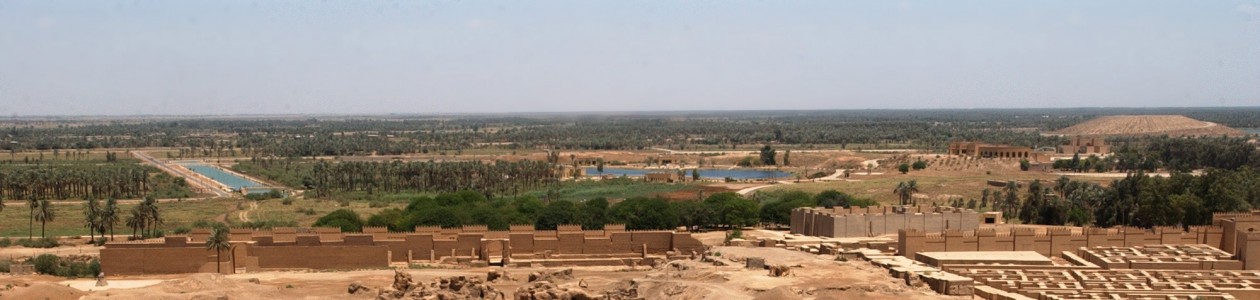
Reconstruction of the ancient city of Babylon was created by me between March and May of 2013 for the Mesopotamia exhibition of the Royal Ontario Museum. See ROM webpage for more information. 

As there are more than enough textual, but not enough visual material on the web, this site will consist mostly of visuals.


INTRODUCTION

CITY PLAN

BABYLON

PALACES

ETEMENANKI

TEMPLES

HANGING GARDENS

PROCESSION STREET

GATES

WALLS

CONTACT

Tuesday, July 30, 2019

Open Access Journal: NABU: Nouvelles Assyriologiques Brèves et Utilitaires

[First posted in AWOL 17 November 2012, updated 30 July 2019]

NABU: Nouvelles Assyriologiques Brèves et Utilitaires
ISSN: 0989-5671
http://sepoa.fr/wp/wp-content/uploads/2012/05/cropped-Babylone-palmeraie1.jpg
Ce journal, intitulé Nouvelles Assyriologiques Brèves et Utilitaires, est publié quatre fois par an (mars, juin, septembre, décembre).
Comité de rédaction :
Dominique Charpin, Jean-Marie Durand, Francis Joannès, Nele Ziegler
Les numéros à partir de 1987 sont téléchargeables au format pdf.
Le signe * indique les numéros searchable (unicode seulement à partir de 2008/3). Les autres sont des fichiers-images. 

    Also see the tables of contents of the Mémoires de NABU

    Wednesday, July 3, 2019

    Open Access Monograph Series: Ivories from Nimrud

     [First posted in AWOL 9 June 2014, updated 3 July 2019]

    Ivories from Nimrud

    Equestrian Bridle-Harness Ornaments: Catalogue & Plates

    Front cover of IN 1/2
    Author: J.J. Orchard
    Volume: I/2
    1967
    Format: x+48 pp., 46 pls., hardback
    Price: £9.95

    Ivories in the Assyrian Style

    Front cover of IN 2
    Author: M.E.L. Mallowan & L.G. Davies
    Volume: II
    1970
    Format: v + 60 pp., 46 pl., hardback
    Notes: Out of print.
    pdf
    Ivories in the Assyrian Style

    Furniture from SW 7, Fort Shalmaneser

    Front cover of IN 3
    Author: M.E.L. Mallowan & G. Herrmann
    Volume: III
    1974
    Format: 120 pp., 111 pls., hardback
    ISBN: 0-903472-02-3
    Price: £9.95

    Ivories from Room SW 37, Fort Shalmaneser, part I

    Front cover of IN 4/1
    Author: G. Herrmann
    Volume: IV/1
    1986
    Format: 276 pp, hardback
    ISBN: 0-903472-10-4
    Notes: Text. Out of print.
    pdf
    Ivories from Room SW 37 Fort Shalmaneser part I

    Ivories from Room SW 37, Fort Shalmaneser, part 2

    Front cover of IN 4/2
    Author: G. Herrmann
    Volume: IV/2
    1986
    Format: 472 pls., hardback
    Notes: Plates. Out of print.
    pdf
    Ivories from Room SW 37 Fort Shalmaneser part 2

    The Small Collections from Fort Shalmaneser

    Author: G. Herrmann
    Volume: V
    1992
    Format: xiv + 145 pp., 104 pls., hardback
    ISBN: 0-903472-12-0
    Price: £19.95

    Ivories from the North West Palace (1845-1992)

    The front cover of Ivories from Nimrud, vol. VI
    Author: G. Herrmann, S. Laidlaw & H. Coffey
    Volume: VI
    2009
    Format: 168 + 138 pp, 138 b/w, 24 colour plates, hardback
    ISBN: 9780903472265
    Price: £75.00
    Notes:
    The great, ninth century palace which Ashurnasirpal II (883-859) built at his new capital of Kalhu/Nimrud has been excavated over 150 years by various expeditions. Each has been rewarded with remarkable antiquities, including the finest ivories found in the ancient Near East, many of which had been brought to Kalhu by the Assyrian kings. The first ivories were discovered by Austen Henry Layard, followed a century later by Max Mallowan, who found superb ivories in Well NN. Neither Layard nor Mallowan was able to empty Well AJ: this was achieved by the Iraqi Department of Antiquities and Heritage, who retrieved arguably the finest pieces found at Nimrud. Finally, an interesting collection of ivory and bone tubes was found by Muzahim Mahmud, the discoverer of the famous Royal Tombs, in Well 4.
    This volume publishes for the first time the majority of the ivories found in the Palace by location. These include superb examples carved in Assyria proper and across the Levant from North Syria to Phoenicia and provide an outstanding illustration of the minor arts of the early first millennium. In addition ivories found in the Central Palace of Tiglath-pileser III and fragmentary pieces found in the domestic contexts of the Town Wall Houses are also included.
    In addition to a detailed catalogue, this book also aims to assess the present state of ivory studies, discussing the political situation in the Levant, the excavation of the palace, the history of study, the various style-groups of ivories and their possible time and place of production. This volume is the sixth in the Ivories from Nimrud series published by BISI.

    Ivories from Rooms SW11/12 and T10 Fort Shalmaneser, parts 1-2

    Front cover of IN 7/1
    Author: G. Herrmann and S. Laidlaw
    Volume: VII/1-2
    2013
    Format: Hardback, 2 vols.
    ISBN: 9780903472296
    Price: £90.00
    Notes:
    The attached PDF contains the text of volume I: Chapters 1-6 and the Appendices. The full contents, including the Catalogue and Colour & Black and White Plates, are available as print only and can be ordered from Oxbow Books for £90.00. BISI members receive a 20% discount. 
    About Ivories from Nimrud VII - The Lost Art of the Phoenicians 
    Fifty years have passed since the British School of Archaeology in Iraq raised the last ivory from the soil of Fort Shalmaneser. Literally thousands were found, many of which have already been published in Ivories from Nimrud I-V, while VI recorded the outstanding pieces from the North West Palace. Ivories from Nimrud VII, Ivories from Rooms SW11/12 and T10 completes the publication of the assemblages in the Fort, as far as records permit. The ivories of Room SW11/12 are similar in character to those of Room SW37 and probably represent another consignment of booty, while those of T10 in the Throne Room block include pieces from all four traditions, as well as some entirely new ones.

    With the primary publication completed, it is now possible to look at these remarkable ivories as a whole rather than studying them by prov­enance, as is discussed in detail in the Commentary. Not surprisingly, it immediately becomes apparent that the majority can be assigned to the Phoenician tradition. There are at least twice as many Phoenician ivo­ries than the other Levantine and Assyrian ivories. They form therefore an incredible archive, recording the lost art of the Phoenicians, long famed as master craftsmen.

    The Phoenician ivories can be divided into two; the finest, the Clas­sic Phoenician, often embellished with delicate, jewel-like inlays, and the other examples still clearly Phoenician in style and subject. While the Classic pieces were probably carved in a single centre, possibly Tyre or Sidon, the others would have been carved in a variety of dif­ferent Phoenician centres, located along the Mediterranean seaboard.

    Designs on Syrian-Intermediate ivories are versions of some Phoe­nician subjects, employing different proportions and styles. They may represent the art of the recently-arrived Aramaean kingdoms, copying their sophisticated neighbours, while North Syrian ivories are entirely different in subject and character and derive from earlier Hittite traditions.

    The ivories found at Nimrud present a unique resource for studying the minor arts of the Levantine world.
    pdf
    Ivories from Rooms SW11/12 and T10 Fort Shalmaneser