Showing posts with label England. Show all posts

Sunday, November 3, 2024

Open Access Journal: Melilah: Manchester Journal of Jewish Studies

 [First posted in AWOL 16 July 2010, updated 3 November 2024]

Melilah: Manchester Journal of Jewish Studies
ISSN 1759-1953
https://blogger.googleusercontent.com/img/b/R29vZ2xl/AVvXsEhRm0aU55mwYqzBYaBz020DW9h4rq4CHBz0SV3YnIdQB3pO7O7L09k83G3IDArV7ZsATKbEZRnjuC4TnJDAo2O_Q9yEs1KOwrIR85_oeTJqCyn_5HrJVX3bnqw0vCtDZ3JxkhLcqpzqoi86/s860/melilah+logo+MELILAH+BANNER.png 
Melilah is an interdisciplinary Open Access journal available in both electronic and book form concerned with Jewish law, history, literature, religion, culture and thought in the ancient, medieval and modern eras. It encourages work from younger scholars at the start of their academic careers as well as contributions from established scholars. The editors are Daniel Langton and Renate Smithuis, supported by a Manchester-based editorial board that includes Philip Alexander, Moshe Behar, Rocco Bernasconi, Jean-Marc Dreyfus, Cathy Gelbin, Alex Samely, and Bill Williams, and an international advisory board that includes Miriam Ben-Zeev, Gad Freudenthal, Moshe Idel, Paul Mendes-Flohr, Shmuel Moreh, Norman Solomon, David Sorkin, Günter Stemberger, Paul Wexler and Eli Yassif.

Melilah was launched in 2004 by Bernard Jackson and Ephraim Nissan under the auspices of the Centre for Jewish Studies at the University of Manchester as the New Series of the journal of the same name founded by Edward Robertson and Meir Wallenstein and published (in Hebrew) by Manchester University Press from 1944 to 1955. Five substantial volumes, each of around two hundred pages, were produced before the series was discontinued. In his editorial foreword to the first edition, Robertson explained that Melilah had been established to promote Jewish scholarship in the face of the threat posed by the Second World War and its aftermath. The title of the journal refers to the ears of corn that are plucked to rub in the hands before the grains can be eaten (Deut. 23:25). 

Index: Original Series

Melilah: A Volume of Studies cover
Melilah: A Volume of Studies was founded by Edward Robertson and Meir Wallenstein, and published (in Hebrew) by Manchester University Press from 1944 to 1955. Five substantial volumes, each of around three hundred pages, were produced before the series was discontinued. In his editorial foreword to the first edition, Robertson explained that Melilah had been established to promote Jewish scholarship in the face of the threat posed by the Second World War and its aftermath; the title of the journal refers to the ears of corn that are plucked to rub in the hands before the grains can be eaten (Deut. 23:25). 
 

1944, volume 1

Title page, Contents, and Prefaces
Index in eScholar (16)

The Climatological Factor in Yehudah Hallevi's Theory of Prophecy (Altmann, A.)
The Ancient Synagogue of Damwah (Egypt) (Assaf, S.)
The Translation of Jonathan b. Uzziel on the Pentateuch (Gottlieb, W.)
Ibn Ezra, the Karaites and the Halakah (Weis, P.R.)
Moshe Yehudah Abbas (A Hebrew Poet of the 17th century) (Wallenstein, M.)
The Language of the Payyetanim (Zulay, M.)
Maimonides' Treatise on Resurrection. A 13th Century Forgery (Teicher, J.L.)
The Emperor Julianus in the Aggadah of R. 'Ahâ (Marmorstein, A.)
The Kitl (Markon, I.)
The Midrash Haggadol: Its Author, its date and place, and its importance in Rabbinic Literature (Fisch, S.)
A Summary of Mesopotamian Material concerning the Mabbul (Fish, T.)
Byronism in Modern Hebrew Poetry (Klausner, J.)
The Law and the Prophets (Rowley, H.H.)
The Testament of a Simple Jew (Roth, C.)
Samuel Alexander 1859-1938 (Roth, L.)
The Influence of Deutoronomy on Hosea (Sperber, S.)

1946, volume 2

Title page, Contents and Prefaces
Index in eScholar (18)

Kedushah Hymns in the earliest Hechaloth Literature (From an Oxford Manuscript) (Altmann, A.)
Shechter's Letters to Ahad Ha-am (Bentwich, N.)
Islamic Influences on the Hebrew Cultus (Wieder, N)
Ibn Ezra, the Karaites and the Halakah (Weis, P.R.)
Moshe Yehudah Abbas, a Poet of the XVII century (From an Oxford Manuscript) (Wallenstein, M.)
The Word SARAY in Midrash Texts (Wartski, I.)
The Source of Saadia Gaon's Piyyut on the Alphabet  (Zulay, M.)
A Contribution to Hebrew Lexicology (Yalon, H.)
Rashi, an Appreciation (Lipschutz, E.M.)
Discipline in the Ancient Hebrew School (Morris, N.)
The Karaite Daniel Al-Kumisi and his Commentary on the Minor Prophets (Markon, I.D.)
The Cosmology of Solomon Ibn Gabirol (Simon, M.)
The Greatness of Rome and Persia: Their Provinces and Towns (Krauss, S.)
Halachoth Kezubhoth (Zair, R.)
The Ancient Arabic Dialects and their Relationship to Hebrew (Rabin, Ch.)
"The Spiritual Centre" and the Diaspora in the Writings of Ahad Ha-am (Rubinstein, A.)
The Priesthood and the kingdom (Robertson, E.)
The customs of Urbino (Roth, C.)

1950, volumes 3-4

Title page, Contents, and Prefaces
Index in eScholar (24)

Variants in Editing (Zuckerbram, J.)
The Lachish Ostraca (Winton Thomas, D.)
On an Ancient Proverb (Tur-Sinai, N.H.)
The Targums (Kahle, P.)
The Christian Legislation (Krauss, S.)
The Discussions of the Angels with God (Marmorstein, A.)
Was there a Jewish Settlement in Sepphoris after the Talmudic Era (Benayahu, M.)
A Contribution to Hebrew Lexicography (Yalon, H.)
New light on Obscure Expressions in the Midrashic Literature (Wartski, I.)
The history of the Translation into Hebrew of the Canon (Rabin, Ch.)
The Development of Language (Martin, W.J.)
Did the Caliph Omar allow the Jews to Reside in Jerusalem (Goitein, S.D.)
Sa'adia Gaon as Payyetan under Pseudonym (Zulay, M.)
The Legend of the Jewish origin of the Fatimid Caliphs (Lewis, B.)
Ibn Ezra, the Karaites and the Halakha (Weis, P.R.)
An Epithalamic tour-de-force by Yakob Daniel Olmo (Roth, C.)
A Hitherto Unpublished Responsum by Maimonides (Assaf, S.)
The Ten Tribes, the Canaanites and the Anglo-Saxons (Klausner, J.)
M. Y. Abbas, a Poet of the 17th century (from an Oxford MS) (Wallenstein, M.)
A Collection of Poems from the Book "Shirim u-Zemiroth ve-Tishbahoth" (Markon, I.D.)
The Main Teachings of Samuel David Luzzatto (Heller, J.E.)
The Conception of Culture in 'Ahad Haam's Writings (Rubinstein, A.)
The Astronomical Tables and Calendar of the Samaritans (Robertson, E.)
The Secret of the Samaritan Calendar (Akaviah, A.A.)

1955, volume 5

Title page, Contents, and Prefaces
Index in eScholar (17)

Arabic Affinities in the Dialect of Ras Shamra (Gray, J.)
The disruption of Israel's Monarchy (Robertson, E.)
Some aspects of Luzzatto's commentary on Isaiah in the light of DSIA (Rubinstein, A.)
Features in Arabic Translations of the Pentateuch (Edelmann, R.)
The Origin of the Dead Sea Scrolls (Rowley, H.H.)
Were Hillel and Shammai real brothers? (Zulay, M.)
The economic situation of the Jews in Babylon (Jacobs, L.)
Studies in the language of the Midrashim (Wartski, I.)
Beraitha de Shemuel (Akaviah, A.A.)
A new fragment from the 'Sepher Ha-Galuy' of R Saadyah Gaon (Stern, S.M.)
A Piyyut by Smuel the Third (Wallenstein, M.)
The doctrine of R Moses b Joseph Halevi on Providence (Vajda, G.)
An historical document in R Samuel de Medina's Responsa (Lewis, B,)
Karaite funeral poems (Roth, C.)
Some Dramatists of the Haskalah Period in Germany (Rabin, Ch.)
The Autobiography of S. D. Luzzatto (Haezrahi, J.)
Character and mentality of Ahad Haam (Heller, J.)
 

Friday, July 23, 2021

Open Access Journal: Centre for the Study of Ancient Documents Newsletter

[First posted in AWOL 1 November 2009. Updated (additional issues) 23 July 2021 (new URL)]

Centre for the Study of Ancient Documents Newsletter

Home

The Centre's Newsletter, published biannually in spring and autumn, offers news of events and activities at CSAD. The newsletter can be read or downloaded either in HTML format or as an Adobe Acrobat document. Copies of the Acrobat Reader can be downloaded directly from Adobe.

The following issues are available:

Newsletter no. 1 (Winter 1995/96)

HTML format

Adobe Acrobat format

Newsletter no. 2 (Spring 1996)

HTML format

Adobe Acrobat format

Newsletter no. 3 (Autumn 1996)

HTML format

Adobe Acrobat format

Newsletter no. 4 (Summer 1997)

HTML format

Adobe Acrobat format

Newsletter no. 5 (Autumn 1997)

HTML format

Adobe Acrobat format

Newsletter no. 6 (Summer 1998)

HTML format

Adobe Acrobat format

Newsletter no. 7 (Spring 1999)

HTML format

Adobe Acrobat format

Newsletter no. 8 (Autumn 1999)

HTML format

Adobe Acrobat format

Newsletter no. 9 (Winter 2002)

HTML format

Adobe Acrobat format

Newsletter no. 10 (Autumn 2002)

HTML format

Adobe Acrobat format

Newsletter no. 11 (Winter 2004/5)

HTML format

Adobe Acrobat format

Newsletter no. 12 (Winter 2009/10)

Adobe Acrobat format

Newsletter no. 13 (Summer 2010)

Adobe Acrobat format

Newsletter no. 14 (Winter 2010/11)

Adobe Acrobat format

Newsletter no. 15 (Winter 2011/12)

Adobe Acrobat format

Newsletter no. 16 (Spring 2013)

Adobe Acrobat format

Newsletter no. 17 (Spring 2014)

Adobe Acrobat format

Newsletter no. 18 (Spring 2015)

Adobe Acrobat format

Newsletter no. 19 (Spring 2016)

Adobe Acrobat format

Newsletter no. 20 (Winter 2016/17)

Adobe Acrobat format


Newsletter no. 21 (Spring 2018)

Adobe Acrobat format 


Newsletter no. 22 (Autumn 2018)

Adobe Acrobat format


Newsletter no. 23 (Spring 2019)

Adobe Acrobat format


Newsletter no. 24 (Autumn 2019)

Adobe Acrobat format

Sunday, September 13, 2020

The Warburg Institute Iconographic Database

 [First posted in AWOL 12 June 2014, updated 13 September 2020]

The Warburg Institute Iconographic Database
http://warburg.sas.ac.uk/vpc/images/black_header.jpg
The Warburg Institute Iconographic Database contains digitised images from the Institute's Photographic Collection and Library. The material for which the Warburg Institute holds the copyrights is licensed under a Creative Commons Attribution-Non Commercial 3.0 Unported License.
Search by iconographic keywords or browse the iconographic classification system.
To search by artist, date, location, or other parameters, please use the advanced search menu.

The iconographic classification system of the database is based on that of the Warburg Institute Photographic Collection. Please note, however, that the database is not the digital equivalent of the Photographic collection.
The Warburg Institute Iconographic Database is a work-in-progress. The holdings of the Photographic Collection are being digitised per section. The first section to be completed is our selection of photos from astronomical and astrological manuscripts from the Middle Ages and Renaissance (look under 'Magic & Science: Astronomy and Astrology' or search for 'astronomy'). We are currently entering the contents of the Gods & Myths section (some 40,000 photos of subjects from classical mythology), a project generously sponsored by the Dean's Development Fund of the School of Advanced Studies (University of London), which we hope to complete by September 2013.

For comments and queries please contact photographic.collect@sas.ac.uk .
ANTIQUITIES

ARCHITECTURE

GODS & MYTHS

HISTORY

LITERATURE

MAGIC & SCIENCE

ORNAMENT

PORTRAITS

PRE-CLASSICAL ICONOGRAPHY

RELIGIOUS ICONOGRAPHY

RITUAL

SECULAR ICONOGRAPHY

SOCIAL LIFE

browse by attribute, significant scene etc.

Index of Iconography

Thursday, March 15, 2018

Open Access Journal: Scripture Bulletin

[First posted in AWOL 26 November 2013, updated 15 March 2018 (links now all to Internet Archive)]

Scripture Bulletin
ISSN: 0036-9780
SCRIPTURE BULLETIN is a peer-reviewed journal published twice yearly since 1969 by the Catholic Biblical Society of Great Britain (ISSN 0036-9780).
EDITORIAL BOARD
Jeremy Corley
Ian Boxall (Editor)
Mary Mills
Martin O’Kane (Reviews Editor)
Seth Turner (Treasuer)

All editorial communications and requests for back numbers should be addressed to:
The Editor, Mr. Ian Boxall, St Stephen’s House, 16 Marston St, Oxford, OX4 1JX.
Email: ian.boxall@ssho.ox.ac.uk

Since January 2010 Scripture Bulletin has been published exclusively online. Articles may be downloaded in pdf format, for which a suitable reader such as Adobe Reader is required. To download an article, simply click on the pdf icon which appears below the abstract or opening paragraph.
Articles from past online issues are available to browse online. You can either:
  1. Click on the relevant section (Editorial, Articles or Reviews & Notices) and browse the contents (most recent first).
  2. Search for a word or phrase using the search box at the top-right of every page (this performs a full-text search of all articles).
  3. Click on 'Past issues' then select the issue year and month
Additionally, all print issues since the first issue in 1969 are available to download. To access these either use the search box (which searches the full text of every issue automatically) or click on 'Past issues' > 'Pre-2010 issues'. A separate online archive of Scripture, the predecessor to Scripture Bulletin, is also available.
Articles may be cited as if printed conventionally, using the page numbers which appear in the pdf document. The volume and issue number of the current issue are displayed on the front page, and for previous issues may be found in the editorial article corresponding to the publication date.
Manuscripts for publication should be typed with double spacing and footnotes/endnotes numbered consecutively and submitted on disk, formatted in Word.
All material on this website is copyright © The Catholic Biblical Society of Great Britain, with the exception of images which are in the public domain or otherwise attributed. If you wish to reproduce any material, other than quoting short excerpts for academic purposes (properly attributed to the author and Scripture Bulletin), please contact the Editor.
         See AWOL's full List of Open Access Journals in Ancient Studies
Wednesday, February 17, 2016

Open Access Journal: Digressus: The Internet Journal for the Classical World

[First posted in AWOL 2 November 2009. Most recently updated 17 February 2016] 
n.b. Digressus ceased publication at the end of 2014, and the domain expired at the end of 2015. Links below are to the latest version visible in the Internet Archive.

Digressus: The Internet Journal for the Classical World
ISSN 1475-9578
Digressus - The internet journal of the Classical World
Welcome to Digressus, a fully refereed online journal publishing reviews and articles related to Classical Studies, Archaeology and Byzantine Studies.
Publication Termination Notice 
As of December 31, 2014, Digressus will no longer be published.
The website will remain active with links to all articles and reviews until December 14, 2015.
All material published by Digressus is also available via EBSCOhost (www.ebscohost.com). Access is gained via subscribing universities and libraries. Our articles and reviews can be found in the Humanities Source collection. We recommend that you use the advanced search feature and the ISSN 14759578.
Thank you to all who have contributed material, served as referees, liaisons, and advisors, and have otherwise helped to promote Digressus.
Digressus – Volume 14 (2014)
Review: Shane Butler and Alex Purves (eds.), Synaesthesia and the Ancient Senses. (2013) Reviewed by Jo Day (University College Dublin)
14.1-8
Review: Kirsty Corrigan, Virgo to Virago. Medea in the Silver Age. (2013) Reviewed by Rosanna Lauriola (Idaho)
14.9-20
Review: Robert Mondi and Peter L. Corrigan, A Student Handbook of Greek and English Grammar. (2013) Reviewd by Juan Coderch (St. Andrews)
14.21-27
Review: A New Interpretation of Sophocles’ Oedipus Tyrannus: In the Light and Darkness of Apollo. Shigenari Kawashima (translated by Naoko Yamagata 2014) Reviewed by Rosanna Lauriola (U. Idaho)
14.28-49
Digressus – Volume 13 (2013)
Review: Mark Buchan, Perfidy and Passion: Reintroducing the Iliad. Reviewed by Michael Broder (CUNY Graduate Center).
13.1-6
Review (English): Rodolfo Lopes, Platão, Timeu-Crítias. Tradução do grego, introdução e notas. Reviewed by José C. Baracat, Jr. (Federal University of Rio Grande do Sul, Brazil).
13.7-11
Review (Portuguese): Rodolfo Lopes, Platão, Timeu-Crítias. Tradução do grego, introdução e notas. Reviewed by José C. Baracat, Jr. (Federal University of Rio Grande do Sul, Brazil).
13.12-16
Review: R. Laurence, A. Strömberg (eds. 2012) Families in the Greco-Roman World. Reviewed by Camila Condilo (Cambridge).
13.17-23
Review: David Mulroy (trans.), Antigone. Reviewed by Rush Rehm (Stanford).
13.24-28
Review: Faith Wallis, (trans.), Bede: Commentary on Revelation. Reviewed by George Brown (Stanford).
13.29-31
Review: Timothy D. Barnes and George Bevan (2013), The Funerary Speech for John Chrysostom. Reviewed by Alberto Quiroga (Granada).
13.32-36
Digressus – Volume 12 (2012)
Review: J. Andreau and R. Descat (M. Leopold, trans. 2008), The Slave in Ancient Greece and Rome. Reviewed by James H. Dahlinger (Le Moyne).
12.1-4
Review: J. Lauritsen (ed. 2011) Aeschylus. Oresteia: the Medwin-Shelley Translation and Prometheus bound by Aeschylus, translated by Thomas Medwin and Percy Bysshe Shelley; Prometheus unbound by Percy Bysshe Shelley. Reviewed by H. Stead (Open University).
12.5-11
Response To Stead Digressus 12 (2012) 5-11. J. Lauritsen (Independent Scholar).
12.12-20
Erratum to correct Lauritsen, J., Response to Stead Digressus 12 (2012) 5-11 at Digressus 12 (2012) 5-11.
12.21
Article: "A raça de Pandora: (b)ónus? Quando Hipócrates e Aristóteles se revelam ilustres representantes de uma misoginia Clásica." R. Pereira (Universidade da Beira Interior)
12.22-41
Review: L. C. Nevett (2010) Domestic Space in Classical Antiquity (Key Themes in Ancient History). Reviewed by Anna Kouremenos (Oxford)
12.42-47
Review (English): P. R. Martins (2011). Pseudo-Xenofonte. A Constituição dos Atenienses. Tradução do Grego, Introdução, Notas e Índices. Reviewed by Denis Renan Correa (Universidade Federal do Recôncavo da Bahia, Brasil)
12.48-55
Review (Portuguese): P. R. Martins (2011). Pseudo-Xenofonte. A Constituição dos Atenienses. Tradução do Grego, Introdução, Notas e Índices. Reviewed by Denis Renan Correa (Universidade Federal do Recôncavo da Bahia, Brasil)
12.56-63
Review: G. Cornelli, O pitagorismo como categoria historiográfica (Pythagoreanism as a historiographical category). Reviewed by Manuela Dal Borgo (University College London)
12.64-71
Review: D. M. Schaps, Handbook for Classical Research. Reviewed by Kevin R. Cole (Miami International)
12.72-76
Review: Charles Freeman, A New History of Early Christianity. Reviewd by Cydne Rosa Lopes Losekann (Universidade Federal do Rio Grande do Sul, Brasil)
12.77-82
Review: Eric Poehler, Miko Flohr and Kevin Cole (eds.), Pompeii: Art, Industry and Infrastructure. Reviewed by Irene E. Schrüfer-Kolb (Oxford)
12.83-89
Review: Anna Kouremenos, Sujatha Chandrasekaran and Roberto Rossi (eds.) From Pella to Gandhara: Hybridisation and Identity in the Art and Architecture of the Hellenistic East. Reviewed by Nicholas L. Wright (Sydney)
12.90-97
Digressus – Volume 11 (2011)
Article: Schmitz, Michael, "Dacian Military Equipment and Technology".
1-30
Review: D. Mulroy (trans.), Sophocles, Oedipus Rex. Reviewed by Elpida-Sophia Christianaki.
31-35
Review: P. Johsnon (2008), Ovid Before Exile. Art and Punishment in the Metamorphoses. Wisconsin Studies in Classics. Reviewed by Ioannis Ziogas.
36-38
Review: M. Blandenet, C. Chillet and C. Courrier (2010), Figures de l'indentité Naissance et destin des modèles commmunautaires dans le monde romain. Reviewed by James H. Dahlinger.
39-41
Review: S. Butler (2011), The Matter of the Page: Essays in Search of Ancient and Medieval Authors. Reviewed by Richard Fletcher.
42-50
Article: Kelly, Caroline, "Greek Piety in a Roman Context: Aelius Aristides's Panathenaic Oration."
51-73
Article: Manuello, Patrick, "La trattazione del mito argonautico nella Pitica IV e in Apollonio Rodio."
74-152

Digressus – Volume 10 (2010)
Article:Papadodima, Efi, "The Greek/Barbarian Interaction in Euripides' Andromache, Orestes, Heracleidae
A Reassessment of Greek Attitudes to Foreigners"
1-42
Review:Vickers, Michael, Sophocles and Alcibiades: Athenian Politics in Ancient Greek Literature. Stocksfield: Acumen (2008). Reviewed by T. V. Buttrey.
43-49
Article: Reina Pereirag, "Orquídeas: Ensaio sobre a Intimidadena Antiguidade Clássica"
50-96
Digressus – Volume 8 (2008)
Review:Theresa Urbainczyck, Slave Revolts in Antiquity. Stocksfield: Acumen (2008). Reviewed by Saskia Roselaar.
33-38
Article: de Haas, Tymon C.A. (Groningen), Comparing settlement histories in the Pontine Region (southern Lazio, central Italy): surveys in the coastal landscape near Nettuno.
1-32
Digressus – Volume 7 (2007)
Review: Ardle Mac Mahon and Jennifer Price, eds. (2005). Roman Working Lives and Urban Living. Reviewed by Katherine S Tipton (University of Newcastle upon Tyne)
1-7
Review: P. Galveth (2006). Υπατία· Η γυναίκα που αγάπησε την επιστήμη. (Hypatia: The Woman Who Loved Science.) Reviewed by Maria Vaiou (Sabanci University, Istanbul)
8-13
Review: Christopher Francese. Ancient Rome In So Many Words. New York: Hippocrene Books (2007). Reviewed by Patrick Hunt (Stanford University)
14-18
Digressus – Volume 6 (2006)
Review: Ann Raia, Cecelia Luschnig, Judith Lynn Sebesta (2005). Worlds of Roman Women. Reviewed by Ortwin Knorr (Willamette University)
1-5
Review: Erin Shanower (2004). Age of Bronze Volume 2: Sacrifice. Reviewed by Thomas E. Jenkins (Trinity University)
6-9
Review: Susan O. Shapiro (2005). O tempora! O mores! Cicero’s Catilinarian Orations. A Student edition with historical essays. Reviewed by Cristina Rosillo López (Universidad del País Vasco) English version
10-14
(Spanish)
15-19
(English)
Digressus – Volume 5 (2005)
Review: Charles Matson Odahl (2004). Constantine and the Christian Empire. Reviewed by Roberto Chiappiniello (Manchester)
1-4
Digressus – Volume 4 (2004)
Graham Wheeler (Cambridge). Battlefield Ephiphanies in Ancient Greece: A Survey
1-14
Digressus – Supplement 1 'Romanization'? (2003)
Merryweather, Andrew D. (Sydney) & Prag, Jonathan R.W., (UCL) Preface'
5-6
Crawley Quinn, Josephine, (UC, Berkeley) Roman Africa?
7-34
Roth, Roman Ernst, (Cambridge) Towards a ceramic approach to social identity in the Roman world: some theoretical considerations
35-45
Berrendonner, C., (Paris I) La romanisation de Volterra: 'a case of mostly negotiated incorporation, that leaves the basic social and cultural structure intact?' (N. Terrenato, in Italy and the West, Oxford, 2001)
46-59
Burns, Michael T., (UCL) The Homogenisation of Military Equipment Under the Roman Republic (Note: this pdf is 2 megabytes)
60-85
Raja, Rubina, (Oxford) Urban development and built identities. The case of Aphrodisias in Caria in the late republican period
86-98
Franklin, Claire, (Reading) To what extent did Posidonius and Theophanes record Pompeian ideology?
99-110
Hingley, Richard, (Durham) Recreating coherence without reinventing Romanization
111-119
Download entire volume (Note: this pdf is 3 megabytes)
Digressus – Volume 3 (2003)
Review: Ittai Gradel (2002). Emperor Worship and Roman Religion. Reviewed by Graham Wheeler (Cambridge)
1-4
Review: K. Jenkins (2003). Refiguring History. New Thoughts on an Old Discipline. Reviewed by Ulrike Roth (Nottingham)
5-10
Digressus – Volume 2 (2002)
Review: Bruce Lincoln (1999). Theorizing Myth. Reviewed by Graham Wheeler (Cambridge)
1-3
Review: Miroslav Marcovich (2001). Eustathius Macrembolites: De Hysmines et Hysminiae amoribus libri XI. Reviewed by Andreas Rhoby (Irvine)
4-7
Merryweather, Andrew D. (Sydney) & Prag, Jonathan R.W., (UCL) 'Romanization'? or, Why Flog a Dead Horse?
8-10
Digressus – Volume 1 (2001)
Review: Jonathan Roth (1998). The Logistics of the Roman Army at War (264 B.C. - A.D. 235). Reviewed by James Thorne (Manchester)
1-3
Review: Alan Kaiser (2000). The Urban Dialogue. An Analysis of the Use of Space in the Roman City of Empúries, Spain. Reviewed by Penny Goodman (Christ Church, Oxford)
4-7
Luschnig, Celia, (Idaho) Medea in Corinth: Political Aspects of Euripides' Medea
8-28
Review: Benedetto Marzullo (2000). Scripta Minora I and II. (Spudasmata, 77). Reviewed by Alan Sommerstein (CADRE, Nottingham)


Thursday, February 4, 2016

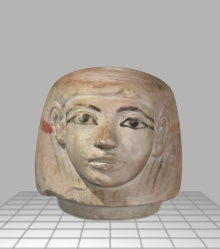
3D Petrie Museum

[First posted in AWOL 27 May 2014, updated 4 February 2016]

3D Petrie Museum
http://www.ucl.ac.uk/3dpetriemuseum/3dobjects/images/UC30116_2.jpg 
Since 2009, The Petrie Museum of Egyptian Archaeology at UCL, in collaboration with UCL's Department of Civil, Environmental and Geomatic Engineering and business partner Arius 3D, has been developing a groundbreaking programme for creating 3D images of objects in the Petrie collection. The aims of the projects are:
  • To develop a viable workflow for the production of high quality 3D models of museum objects, in particular using colour laser scanning.
  • To develop a range of digital 3D applications that will engage audiences.
  • To undertake audience evaluations of the 3D models and applications to better understand the potential of 3D in cultural heritage.

The virtual lives of things

Interact with ancient Egyptian objects from our collection.
Ancient life

Ancient life

Explore the daily habits and rituals of the ancient Egyptians

Excavation and rediscovery

Excavation and rediscovery

See how ancient Egyptian objects were discovered in Victorian times through Petrie's excavations.

Modern life

Modern life

Find out how objects contribute to our knowledge of ancient Egypt today.

BROWSE ALL 3D OBJECTS