Monday, November 27, 2023

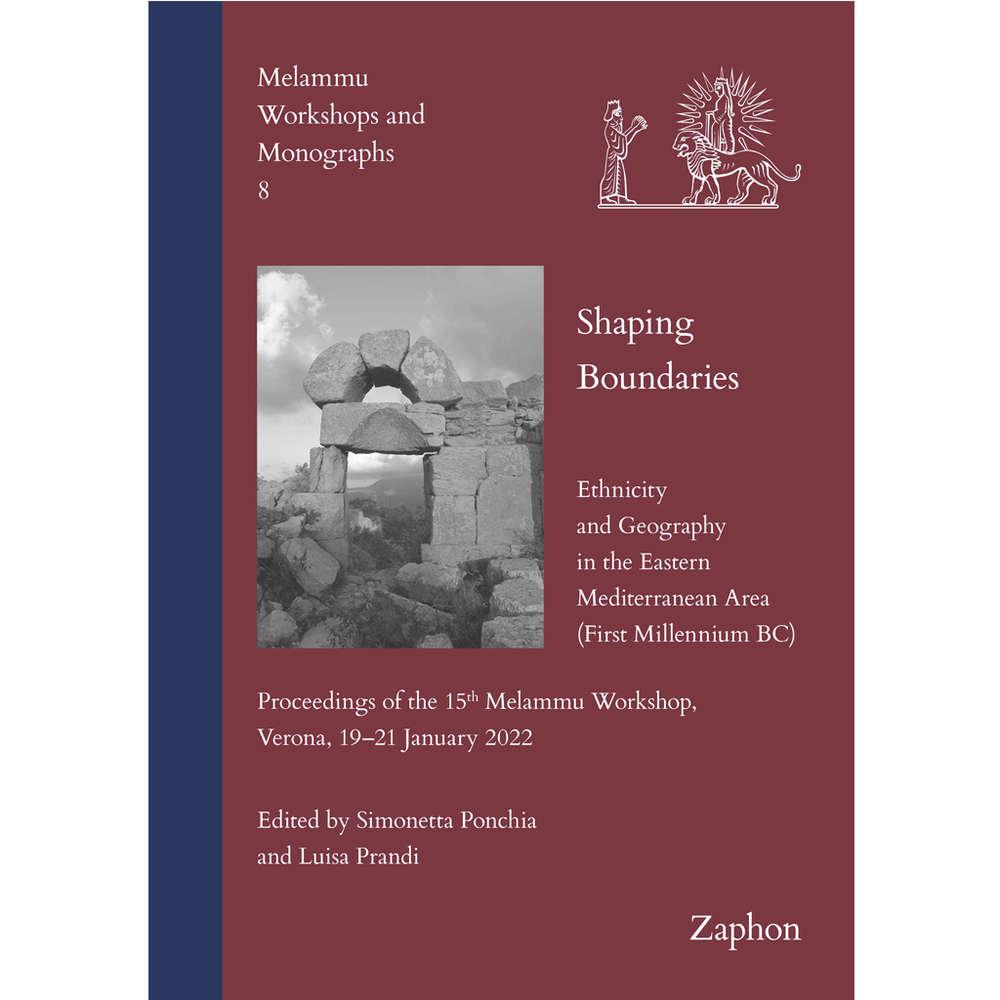
Shaping Boundaries. Ethnicity and Geography in the Eastern Mediterranean Area (First Millennium BC): Proceedings of the 15th Melammu Workshop, Verona, 19–21 January 2022

Edited by Simonetta Ponchia and Luisa Prandi
Shaping Boundaries

Melammu Workshops and Monographs 8

2023

ISBN 978-3-96327-202-8 (book)

ISBN 978-3-96327-203-5 (e-book, via Ebsco, ProQuest, ISD)

282 pp. / 17 x 24 cm / hardcover, thread stitching

This conference volume assembles 16 contributions to “Ethnicity and Geography in the Eastern Mediterranean Area (First Millennium BC). In combination with the corresponding “Shaping Boundary” project of the University of Verona it aims to analyse a crucial period: the formation of Greek identity, the first one documented in the West, at the time of the contacts with the Near East during the first millennium BC. More in detail, the authors examined the interactions between the Syro-Mesopotamian, Levantine and Aegean worlds that took place along the coastal region extending from Bosporus to Syria and Lebanon. Special attention was paid to methodological issues and diverse approaches in the investigation of boundaries and borderlands. These can be interpreted as different kinds of geo-political, or socio-cultural lines of separation, but should also be interpreted by taking into account their fundamental functions of communication spaces, where new, mixed, or hybrid identities took shape over time. – Among other, Giovanni B. Lanfranchi examines the borders between Assyria and Northwestern Iran as Polities of Unequal Power from the 9th to the 7th century BCE. – Raija Mattila discusses Neo-Assyrian letters reporting from the border areas on guarding and protecting the border, on building and maintenance of fortresses, and on the movements on the other side of the border. – The Northwest boundaries of Achaemenid expansion (Anatolia and the North Aegean) is taken into account by Sarah P. Morris. – Luisa Prandi questions the conception of the Cimmerian Bosporus as a Boundary between Europe and Asia according to Aeschylus. – Silvia Gabrieli reconstructs the foundation myth of Tarsus between Assyrian propaganda and Hellenistic fascination.
Simonetta Ponchia / Luisa Prandi: Introduction

Giovanni B. Lanfranchi: Border(s) between Polities of Unequal Power: Assyria and Northwestern Iran from the IXth to the VIIth century BCE

Raija Mattila: Reporting from the Border

Alvise Matessi: Identities in the Making: Cultural Frontiers in Central Anatolia in the 2nd Millennium BCE

Simonetta Ponchia: Boundary Definition in the Aramean Socio-political Context

Silvia Gabrieli: Tarsus Foundation Myth: Assyrian Propaganda and Hellenistic Fascination

Marco Iamoni: Pots and People again? Changing Boundaries in the Levant between the Canaanites and Phoenicians

Luigi Turri: Boundaries, Borders, and Interaction Points: Some Considerations from Cyprus.

Stéphanie Anthonioz: The Place and Frontiers of Judea in Judg 1 or How the Tribal System builds Greater Judea

Mary R. Bachvarova: The Seer Mopsos: Legendary Foundations in Archaic Anatolia before the Neileids

Madalina Dana: «Mobilités mythiques»: Récits de fondation, liens légendaires et traversée des frontières entre cités grecques de Troade et de Propontide

Fabrizio Gaetano: Civiltà a contatto in Asia Minore: Frigi, Lidi e Persiani

Omar Coloru: From the ends of the earth you are come: Greek Perceptions of the Boundaries of the Near Eastern Empires. A Brief Journey

Claudia Posani: Alcune considerazioni sull’iscrizione luvio-geroglifica TELL AHMAR 2 e sull’episodio erodoteo di Gige e Candaule: I verba videndi e le connotazioni etico-sociali della vergogna connessa alla nudità

Sarah P. Morris: “Yauna across the Sea?” Northwest Boundaries of Achaemenid Expansion (Anatolia and the North Aegean)

Ennio Biondi: I fiumi nell’impero achemenide: Frontiere naturali o mezzi di espansione imperiale?

Luisa Prandi: The Cimmerian Bosporus as a Boundary between Europe and Asia according to Aeschylus: An Invented Tradition?

Index


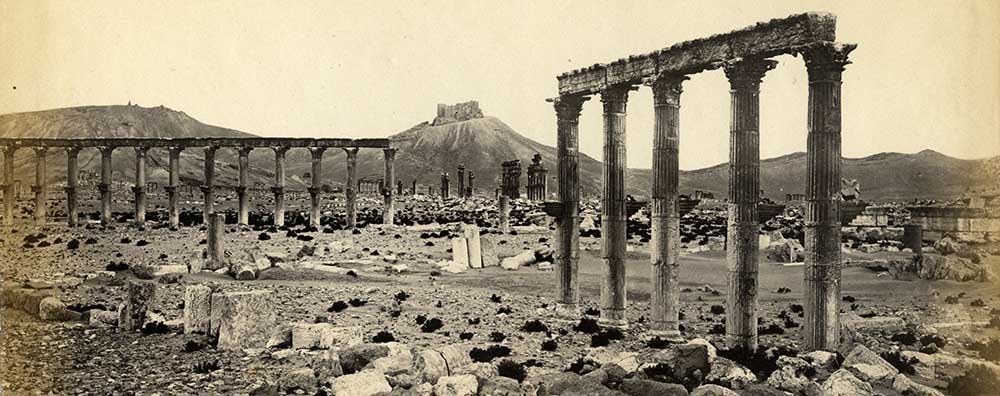
Photorientalist: A website dedicated to exhibiting 19th and 20th century photographs of the Middle East and North Africa

 [First posted in AWOL 1 June 2017, updated 27 November 2023]

Photorientalist: A website dedicated to exhibiting 19th and 20th century photographs of the Middle East and North Africa

Photorientalist.org is an independent public history website dedicated to the visual history of the Middle East from its 19th century beginnings until the 20th century before the digital age. The first images of the region were taken by European photographers and travelers shortly after the birth of photography in their own continent. Although these photographs offer valuable documentation of the people, landscapes, and archeological sites of the region, they were taken through a western lens reflecting a bias which came to be labeled as Orientalism. However, as the medium evolved it was taken over by indigenous photographers whose work stood out as more authentic than that of their predecessors.

The mission of photorientalist.org is to preserve and share its growing collection in order to raise awareness about the rich and diverse history of the Middle East and North Africa. While the region has often been portrayed as homogenous and primitive, photographs spanning two hundred years of history prove the contrary. Moreover, in order to explain the significance of the images in our collection, we contextualize the photographs with in-depth articles or personal narratives. The texts and photographs are featured in exhibitions focused on a range of topics including historical personalities and events, archeological sites and trails, and successful businesses and ventures.

In order to reach a wider audience and cover a broader range of topics, the website seeks to collaborate with other collectors who share the same passion by showcasing their images and the stories behind them. Submissions may be made in the form of scanned images and text which will be appropriately credited. The website’s success depends on these valuable contributions.

For submissions, please contact us at nschiller@photorientalist.org


West Semitic Research Project

 [First posted in AWOL 1 February 2010, updated (new text and links) 27 November 2023]


West Semitic Research Project
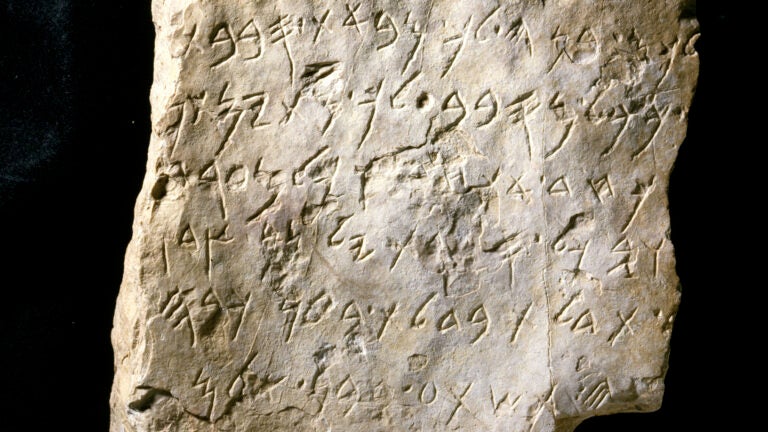
The West Semitic Research Project is an academic project affiliated with the University of Southern California School of Religion and directed by Professor Emeritus Bruce Zuckerman. For the past 40 years WSRP has used advanced photographic and computer imaging techniques to document artifacts and texts from the ancient Near East and Mediterranean worlds. In doing this we have built a vast collection of images that are available to scholars, students, educators and the general public through the USC Digital Library.

About WSRP

WSRP was started in the early 1980s by Bruce Zuckerman and his brother Kenneth. Bruce, a scholar and teacher of the Bible and ancient Semitic languages, was frustrated by the lack of good photographs of important ancient inscriptions. With the help of his brother, Ken, he set out to remedy the situation.

The study of ancient writing is called epigraphy. In this field it has been typical of scholars who read ancient texts to do their own reading, produce a drawing of the text and publish the drawing, translation and transcription as the main tool for study. Photographs, if provided, can rarely be used for study. The reason is that the photographs are either taken by scholars who know little about photography, or by photographers who cannot read what they are looking at and so may miss important data.

The most important principle that governs the work of the WSRP is the combining of good photography with knowledge of the scripts and languages. We believe in training scholars to be good photographers, or at least encouraging them to work closely with photographers to get the best possible results.

For Educators and Students

This site is designed to provide an educational experience for students, teachers and the general public. It includes images of Dead Sea Scrolls, biblical manuscripts and ancient texts relating to the Bible, together with descriptions and informative discussions of the images. We encourage instructors to make these images available, on a non-commercial basis, to their students as a resource in the study of history, culture, religion, biblical studies, and related subjects.

Non-Biblical Ancient Texts Relating to the Biblical World
Biblical Manuscripts
Dead Sea Scrolls
USC Archaeological Research Collection

For Scholars

The image collection of West Semitic Research (WSR) includes a wide variety of inscriptional material, particularly in the languages and scripts of Northwest Semitic. The following is a listing of image collections in high-resolution digital form. Many are subject to arrangements with collaborating institutions. Scholars can use the links here to browse through the image lists.

These images are for study purposes only. Permission to publish must be obtained in writing from WSR and collaborating institutions.

The West Semitic Research Project launched its image database as an Internet database application, InscriptiFact, in 2004. That application is now closed, but the images found on that application, as well as many others, can be found through the USC Digital Library, InscriptiFact–An Image Database of Inscriptions and ArtiFacts.


 Training Program in the Use of Reflectance Transformation Imaging (RTI)

Sunday, November 26, 2023

Tracking Colour - the polychromy of Greek and Roman sculpture

 [First posted in AWOL 2 June 2013, updated 26 November 2023]

Tracking Colour: Polychromy of the Ancient World
http://www.trackingcolour.com/images/bg-top.jpg
The purpose of this website is to develop a broader public awareness of polychromy studies. By using this online service you will be able to gain knowledge of the current research on polychromy at the Ny Carlsberg Glyptotek. It is a resource dedicated to research on the use of colour on sculptures and buildings in the ancient Mediterranean world.

On this website you will find an introduction to the field. It also provides information on the history of polychromy scholarship and updated information on current research. The user has access to a database of literature on ancient polychromy and of monuments known to have traces of their original colouring.

Read more here: About

ṭuppu

[First posted in AWOL17 May 2018, updated 26 November 2023]

ṭuppu

https://tuppublog.files.wordpress.com/2016/06/cropped-tuppu.jpg
Academics today occupy a precarious position. The voices that glorify the profession are often drowned out by those that denigratingly claim its redundancy. However, what is most worrying, is that the larger part of the population is indifferent to the matter. And who can blame them? Knowledge for knowledge’s sake does not concern the man in the street. We, academicians, must plead guilty; all too often do we retreat to our ivory tower, speaking a language that only our peers can understand. We may frown upon the laymen with their outdated and false information about our fields of study, but isn’t it our own fault?
Luckily, the academic world is in a process of rethinking its position in society. Little by little, we are opening up to the broader public – if merely for the sake of our own survival. With this blog I hope to contribute to that development, and I wish to do it in such a manner that everyone with interest can understand what I am writing.
As Assyriologist I study languages and history of more than 5000 years ago, and even though a lot has changed since then, sometimes I am struck by the familiarity of things. This blog is about those familiarities – it is about humanness. Because even though the ancient Mesopotamians lived in different times and places from ours, they were people just like us.

Saturday, November 25, 2023

Open Access Newsletter: Tabulae: Newsletter, Department of Classics, UNC-Chapel Hill

[First posted 11 December 2009. Updated 25 November 2023]

Tabulae: Newsletter, Department of Classics, UNC-Chapel Hill
Tabulae, the department’s annual newsletter, describes the activities and current research of members of the department, including undergraduate, post-bac, and graduate students, as well as faculty and alumni. Each issue also provides updates on all the changes that have occurred within the department in the preceding year, from budget updates to retirements and new hires. Please take a moment to browse through our current and past issues below.
Letter from Chair Cecil Wooten
Azoria wins Archaeological Institute of America’s “Best Practices for Site Preservation” award
Faculty News
Calendar of Events
Letter from Chair Cecil Wooten
New faculty members: Robert Babcock; Lidewijde de Jong; Owen Goslin
Letter from Chair Cecil Wooten
Letter from James Rives, Kenan Eminent Professor of Classics
A Word from Werner Riess
News on Azoria
Faculty and Graduate News
Commencement 2007
Alumni News
Letter from Cecil Wooten, interim chair for Fall 2005
Maura Lafferty’s Year in Rome
Our Newest Faculty Members: Brook Holmes and Monika Truemper
Andy Gloege’s Goodbye
George Houston’s Retirement
Faculty, Graduate, Post-Bac, Undergraduate, and Alumni News
Hidden Treasures – The Department’s Collection of Ancient Coins
Commencement 2006
Letter from Chair Jim O’Hara
Jerzy Linderski Festshcrift
The Kenneth Reckford Fund
Variae Viae Reportant
Faculty, Graduate, and Post-Bac News
The Fauna of Old Murphey: A Reminiscence
Letter from William Race, Chair
Murphey Hall Overhaul
UNC Excavations Begin at Azoria
Faculty, Graduate, and Undergraduate News
Azoria Field Report
Kenneth J. Reckford Offers a Feast for Mind and Spirit
William Custis West, III: A Man for All Seasons
Gerhard M. Koeppel
Variae Viae Reportant
Commencement 2002
Murphey Hall Remade – Pictures of the Renovation Process
The Kenneth Reckford Fund
Rites of (temporary) Passage
Sara Mack
Variae Viae Reportant
Inaugurating a New Era
Plutarch and Philip Stadter
In Praise of Philophron
Variae Viae Reportant
Call for Papers, UNC/Duke Graduate Colloquium 2001 (Gods and Monsters: Divinization and Demonization in the Ancient World)
Yielding Place to New
Ed Brown Retires
Variae Viae Reportant
Conference Announcement (Sage and Emperor: Plutarch and Trajan)
Call for Papers, UNC/Duke Graduate Colloquium 2000 (The Animal in the Ancient World)
Alma Mater Murpheia
Patch Adams
Dedication of the B.L. Ullman Library
Epochs of Office
Variae Viae Reportant
Call for Papers, UNC/Duke Graduate Colloquium 1999 (Pimps, Peasants, and Potentates: Low-Lifes and Leaders in the Ancient World)
Building for the Future
David Ganz Leaves
Death of John Herington
The Undergraduate Program
Variae Viae Reportant
Murphey on the Web
Call for Papers, UNC/Duke Graduate Colloquium 1998 (Finem Egressi Legemque Priorum: Oddities and Vulgarities in the Ancient World)
Tanti Auguri
Jerzy Linderski
Variae Viae Reportant
Remaking Murphey Hall
Call for Papers, UNC Graduate Colloquium 1997 (SKENE PAS HO BIOS: Theater in the Ancient World)
Performance of Aristophanes’s Birds
Labor Omnia Vicit Improbus
Berthe Marti: In Memoriam
Berthe and Medieval Latin
Variae Viae Reportant
Call for Papers, UNC Graduate Colloquium 1996 (Imitatio et Aemulatio)
Looking Backward, and Forward
The Beginning Latin Program
Variae Viae Reportant
Call for Papers, UNC Graduate Colloquium 1995 (The Body in the Ancient World)
A Time for Renovation
The Undergraduate Program
So, What Can You Do With a Degree in Classics?
Call for Papers, UNC Graduate Colloquium 1994 (Ut et in Occasu Suo Splendorem et Ornamenta Praeteritae Vitae Retineant: Ancient Ceremony and Spectacle)
Announcement for the Production of Plautus’s Poenulus
Announcement for the Biennial Meeting of CAMWS Southern Section
Discovery and Rediscovery
The Turkish Connection – ARIT, Digs, Byzantion, and Ankara
Bacchylides, Live from Chapel Hill
First Annual Ancient Studies Colloquium
Domi Militiaeque
Pausing to Give Thanks
Performance of Plautus’s Curculio
Ancient Historians Meet
Jay Bolter Leaves for Georgia Tech
Variae Viae Reportant
George Kennedy, the Persuasive
“You Richly Deserve Delight”
Annabelle (A Song for Nancy)
Variae Viae Reportant
The Latin Play Returns!
The Immerwahr Connection
Keeping the Show on the Road
The Italian Connection
Sedes Ubi Fata Quietas
Friedrich Solmsen
Variae Viae Reportant
Changing of the Guard
Roman Magistrates: Past, Present, & Future
On the Tenure Track
Variae Viae Reportant
Chiron Awards for Medical Research
 

Connected Contests: Ancient Athletes Online

[First posted in AWOL 28 January 2021, updated 25 November 2023]

Connected Contests: Ancient Athletes Online

Connected Contests

Connected Contests is an evolving online research tool to facilitate the study of agonistic networks in the ancient, post-classical world. It is part of a wider research project on the history of athletic and other agonistic festivals from 300 BC-AD 300. (see above under about). This website aims to provide an intuitive database of the many contests of the Greek world, and of the athletes, performers and other participants in these contests. 

HOW TO USE THE DATABASE?

The quickest way of consulting the database is by clicking on Search Database (click top right in the menu bar). You may also consult the individual databases (left in the menubar)  which may take some time to load - we are working on that. The search will yield a list of 'events' (i.e. victories or other achievements) that can be sorted in different ways. From there you can refine your search. You can also download a CSV file with the results. A future release will include the possibility to produce geographically or chronologically determined distribution maps.

WHAT IS IN THE DATABASE?

The database is compiled from modern collections and catalogues with the aim of making these specialist data available as an accessible and public tool for further studies and network analyses of athletes and their role in connecting the Mediterranean. At this moment (April 2020) we have entered a selection of the data including inter alia the Isthmionikai - which we have based on  Andrew Farrington's  Isthmionikai : a catalogue of Isthmian victors (2012)as well as the Pythonikai (collected by Jean-Yves Strasser, 2001), Aktionikai, and Capitolionikai (based on Caldelli's L'Agon Capitolinus (1993). We are currently in the process of adding the last of the >1000 Olympionikai (collected by Luigi Moretti in 1957). The Nemeonikai are expected this summer, thus completing all known victors of the periodos

HOW TO CONTRIBUTE?

We aim to make this website available as an evolving open-access tool.  Approved users will be able to edit or add records. Individual users will soon be able to leave comments. We have made agreements for collaboration and data-sharing with international colleagues. We welcome further offers of collaboration. Please contact us via the address below.
If you have questions or comments please let us know at connected.contests@rug.nl

Connected Contests is provided through a grant from the Digital Humanities of the University of Groningen (see About)

Recent Posts

  • New content! Competitors associated with Hellenistic dynasties

    Over the winter we’ve added a miscellany of competitors associated with the royal dynasties of the Hellenistic world. These range from actual royalty (the Ptolemies in particular were very fond of chariot-racing) to Greeks who came to take part in the new contests established by rulers eager for recognition and cultural authority. Particularly notable is Arsinoe II (Person ID 4178) - successively married to two of the most powerful rulers in the Hellenistic world and the first woman in Greek history to be declared a god, she won three races at the same Olympic festival in 272 BC. Also fun is an unnamed actor from Tegea (Person ID 4202). Known for outstanding performances in tragedies, he also managed to win a boxing contest at the newly-founded Ptolemaia festival at Alexandria. It’s still uncertain whether this means that the quality of the new competition was low, or whether he simply got very lucky!

  • Caldelli's Capitolian victors online

    All victors and participants collected by Caldelli (L'Agon Capitolinus. Storia e protagonisti dall'istituzione domizianea al IV secolo, 1993) have been added to the Connected Contests database. Find out all about the strange story of Herakleides, whose dream that he butchered the audience and judges during his performance meant that he would lose - which he did (event ID 30166). Or about the enormously successful Marcus Aurelius Asklepiades (person ID 656), a.k.a. Hermodoros, who quit boxing in his prime (he was 25) because of 'dangers and envious people' in IG XIV 1102. 

  • Spatial Data Support awarded to the Deep-Mapping Sanctuaries project

    Christina Williamson's project 'Deep-Mapping Sanctuaries', a subproject of 'Connecting the Greeks', is the recipient of a competitive call for 5 days of support from the Geo-services at the University of Groningen. As a pilot, this support will focus on mapping the experiences of Aelius Aristides in the Asklepieion in Pergamon. See also: https://deepmappingsanctuaries.wordpress.com/2020/03/30/support-grant-from-the-geodienst/

  • Erfurt students learn about networking with ancient competitors

    Where did the victors in the Isthmian games come from in the Hellenistic period? What about the Roman period? What festivals did Pythokles, son of Aristarchos from Hermione, compete in? These were some of the questions that first-year digital humanity/archaeology students in Erfurt were able to answer after an introduction by Christina Williamson in network theory, ancient festivals, and the Connected Contests database. Students were interested to learn about festival culture in the post-classical world, how it spread and how inscriptions provide great sources of data for analyzing relationships ('Those lists aren't as boring as I thought' was overheard). We also learned that exporting files on csv works much better on a laptop than a tablet or smartphone, certainly if you want to do some geo-networking with Palladio! But they enjoyed the interactive component and working with the database. If you want to try out the practicum yourself, the instructions and files are available at  https://github.com/cgwilliamson1/connectinggreeks_demo

  • New Search Option Available

    We have added more sophisticated search option. Not only can you specify that you want to have a list of persons, rather than events, you also can use Boolean operators AND & OR. The find results are downloadable in CSV format for further processing. For instructions,  click on the search database button.