Saturday, February 28, 2026

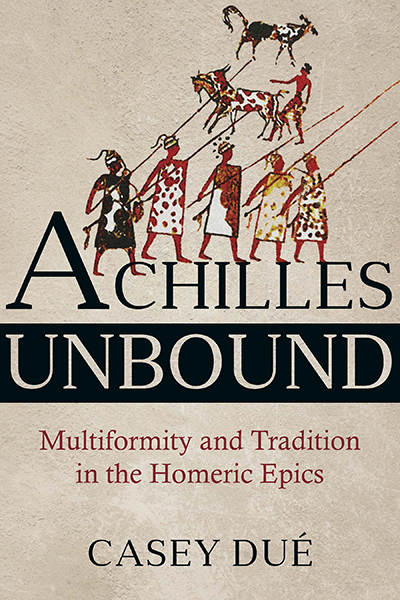
Achilles Unbound: Multiformity and Tradition in the Homeric Epics


Though Achilles the character is bound by fate and by narrative tradition, Achilles’s poem, the Iliad, was never fixed and monolithic in antiquity—it was multiform. And the wider epic tradition, from which the Iliad emerged, was yet more multiform. In Achilles Unbound, Casey Dué, building on nearly twenty years of work as coeditor of the Homer Multitext, explores both the traditionality and multiformity of the Iliad in a way that gives us a greater appreciation of the epic that has been handed down to us.

Dué argues that the attested multiforms of the Iliad—in ancient quotations, on papyrus, and in the scholia of medieval manuscripts—give us glimpses of the very long history of the text, access to even earlier Iliads, and a greater awareness of the mechanisms by which such a remarkable poem could be composed in performance. Using methodologies grounded in an understanding of Homeric poetry as a system, Achilles Unbound argues for nothing short of a paradigm shift in our approach to the Homeric epics, one that embraces their long evolution and the totality of the world of epic song, in which each performance was newly composed and received by its audience.


Dué, Casey. 2018. Achilles Unbound: Multiformity and Tradition in the Homeric Epics. Hellenic Studies Series 81. Washington, DC: Center for Hellenic Studies. http://nrs.harvard.edu/urn-3:hul.ebook:CHS_Due.Achilles_Unbound.2018.


This work is licensed under a Creative Commons 3.0 License.


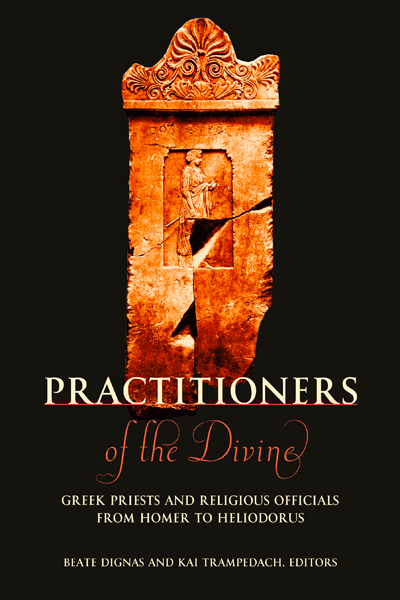
Practitioners of the Divine: Greek Priests and Religious Officials from Homer to Heliodorus


“What is a Greek priest?” This volume, which has its origins in a symposium held at the Center for Hellenic Studies in Washington, D.C., focuses on the question through a variety of lenses: the visual representation of cult personnel, priests as ritual experts, variations of priesthood, ideal concepts and their transformation, and the role of manteis. Each chapter looks at how priests and religious officials used a potential authority to promote themselves and their posts, how they played a role in conserving, shaping and reviving cult activity, how they acted behind the curtain of polis institutions, and how they performed as mediators between men and gods. It becomes clear that Greek priests had many faces, and that the factors that determined their roles and activities are political as well as historical, religious as well as economic, idealistic as well as pragmatic, personal as well as communal.

Dignas, Beate, and Kai Trampedach, eds. 2008. Practitioners of the Divine: Greek Priests and Religious Figures from Homer to Heliodorus. Hellenic Studies Series 30. Washington, DC: Center for Hellenic Studies. http://nrs.harvard.edu/urn-3:hul.ebook:CHS_DignasB_and_TrampedachK_eds.Practitioners_of_the_Divine.2008.


This work is licensed under a Creative Commons 3.0 License.


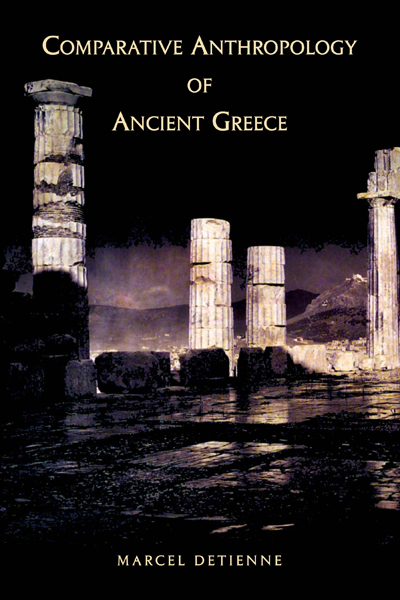
Comparative Anthropology of Ancient Greece

 
Comparative Anthropology of Ancient Greece looks at the anthropology of the Greeks and other cultures across space and time, and in the process discovers aspects of the art of comparability. Historians and ethnologists can pool a wealth of knowledge about different cultures across space and time. Their joint task is to analyze human societies and to understand cultural products. Comparative analysis involves working together in an experimental and constructive enterprise. Marcel Detienne, alerted by dissonances, tries to see how cultural systems react not just to a touchstone category, but also to the questions and concepts that arise from the reaction. What does it mean to found something, or rather to establish a territory, or to have or not have roots? What is a site or a place? 


Detienne, Marcel. 2009. Comparative Anthropology of Ancient Greece. Hellenic Studies Series 17. Washington, DC: Center for Hellenic Studies. http://nrs.harvard.edu/urn-3:hul.ebook:CHS_Detienne.Comparative_Anthropology_of_Ancient_Greece.2009.


This work is licensed under a Creative Commons 3.0 License.

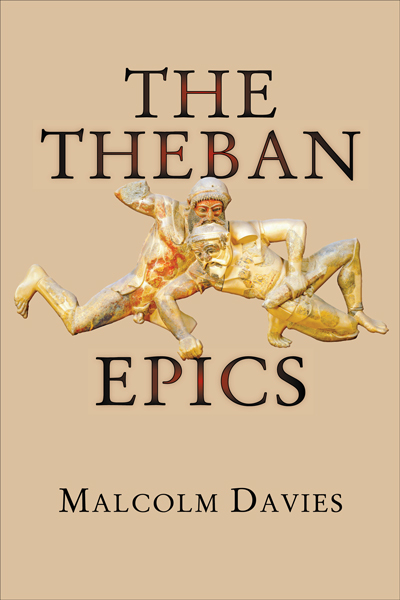
The Theban Epics


In antiquity, the story of the failed assault of the Seven against Thebes ranked second only to the Trojan War. But whereas the latter was immortalized by Homer’s Iliad, the account of the former in the epic Thebais survives only in fragments preserved in later authors. The same is true of the Oedipodeia and Epigoni, which dealt respectively with events leading up to the Seven’s campaign and with the successful assault on the city in the next generation. The Thebais was probably the most important of the three—certainly more and longer fragments of it have survived—and it has been alleged that its recovery would tell us more about Homer than any comparable discovery.

Paradoxically, these fragments suggest very un-Homeric content and style (in particular its detail of the hero Tydeus forfeiting immortality by gnawing on the head of a dying enemy). The same is true of the epic Alcmaeonis, named after one of the Epigoni, whose few surviving fragments pullulate with un-Homeric features. Malcolm Davies provides the first full commentary on all four epics’ fragments. He attempts to set them in context and examines whether artistic depictions of the relevant myths can help reconstruct the lost epics’ contents.

Davies, Malcolm. 2015. The Theban Epics. Hellenic Studies Series 69. Washington, DC: Center for Hellenic Studies. http://nrs.harvard.edu/urn-3:hul.ebook:CHS_DaviesM.The_Theban_Epics.2015.

This work is licensed under a Creative Commons 3.0 License.


Friday, February 27, 2026

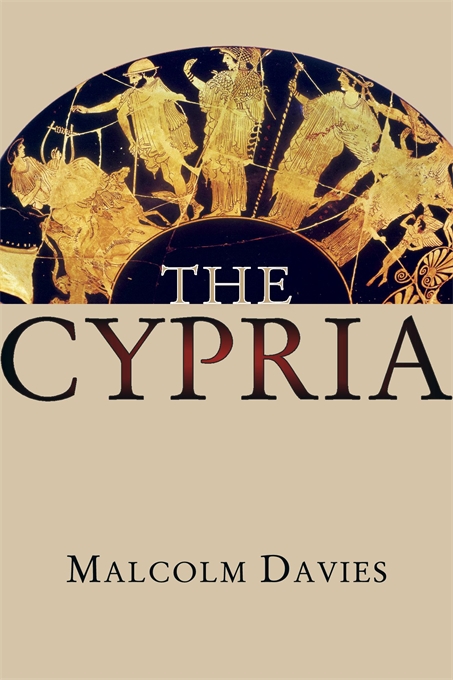
The Cypria

Hellenic Studies Series

The Cypria, so named because its poet supposedly came from the island of Cyprus, was an early Greek epic that is known to us primarily through quotations and references to passages by later authors, as well as through a prose summary of its plot and contents. Malcolm Davies uses linguistic evidence from the available verbatim fragments, along with other considerations, to suggest that the Cypria was written after Homer and was intended as a sort of prequel to the plot of the Iliad. In light of this evidence, it is noteworthy that many of the incidents described in the Cypria seem markedly un-Homeric; to give just one example, the Judgment of Paris, a popular subject in later Greek literature and art, most likely received its first detailed treatment in the Cypria, whereas the Iliad mentions it only fleetingly. Here Davies collects and translates the extant fragments of the Cypria and provides a commentary that anchors it in the Homeric context as well as in the broader world of ancient Greek art and literature 

Davies, Malcolm. 2019. The Cypria. Hellenic Studies Series 83. Washington, DC: Center for Hellenic Studies. http://nrs.harvard.edu/urn-3:hul.ebook:CHS_DaviesM.The_Cypria.2019.


This work is licensed under a Creative Commons 3.0 License.


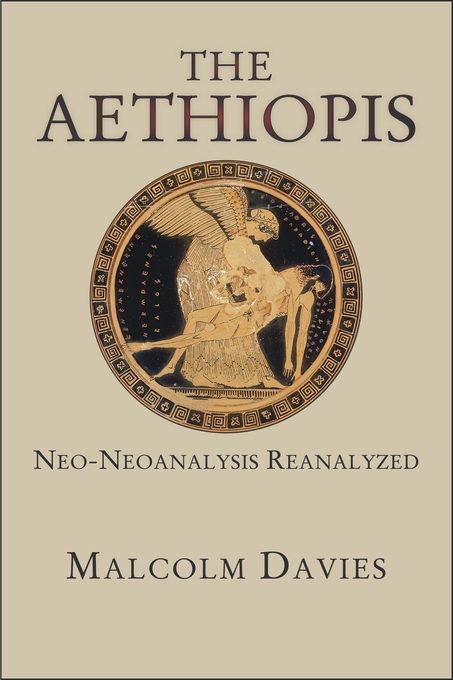
The Aethiopis: Neo-Neoanalysis Reanalyzed


Hellenic Studies Series 

It may seem odd to devote an entire book, however short, to a lost epic of which hardly any fragments (as normally defined) survive. The existence of a late prose summary of the epic’s contents hardly dispels that oddness. One (rather long) word may supply justification: Neoanalysis.

This once influential theory held that motifs and episodes in the Iliad derive from the Aethiopis, called thus after an Ethiopian prince who allied with Troy against the Greeks, only to be killed by the Greeks’ greatest hero, Achilles. The death of that hero himself, at the hands of Paris, was then described, followed by the suicide of Ajax and preparations for the sack of Troy. The prose summary thus suggests a sequel to Homer’s poem, rather than its source, and for various reasons, especially the theory’s apparent failure to allow for the concept of oral composition, Neoanalysis fell into disfavor. Its recent revival in subtler form, given its vast potential implications for the Iliad’s origins, has inspired this volume’s critical reappraisal of that theory’s more sophisticated reincarnation. In addition, even more than with other lost early epics, the possibility that Greek vase paintings may reflect episodes of the poem must be examined.


Davies, Malcolm. 2016. The Aethiopis: Neo-Neoanalysis Reanalyzed. Hellenic Studies Series 71. Washington, DC: Center for Hellenic Studies. http://nrs.harvard.edu/urn-3:hul.ebook:CHS_DaviesM.The_Aethiopis.2016.

This work is licensed under a Creative Commons 3.0 License.

Open Access Journal: Dotawo: A Journal of Nubian Studies

 [First posted in AWOL 13 June 2014, updated (new URLs) 27 February 2026]

Dotawo: A Journal of Nubian Studies
Nubian studies needs a platform in which the old meets the new, in which archaeological, papyrological, and philological research into Meroitic, Old Nubian, Coptic, Greek, and Arabic sources confront current investigations in modern anthropology and ethnography, Nilo-­Saharan linguistics, and critical and theoretical approaches present in post­colonial and African studies.

The journal Dotawo: A Journal of Nubian Studies brings these disparate fields together within the same fold, opening a cross­-cultural and diachronic field where divergent approaches meet on common soil. Dotawo gives a common home to the past, present, and future of one of the richest areas of research in African studies. It offers a crossroads where papyrus can meet internet, scribes meet critical thinkers, and the promises of growing nations meet the accomplishments of old kingdoms.

We embrace a powerful alternative to the dominant paradigms of academic publishing. We believe in free access to information. Accordingly, we are proud to collaborate with DigitalCommons@Fairfield, an institutional repository of Fairfield University in Connecticut, USA, and with open-access publishing house punctum books. Thanks to these collaborations, every volume of Dotawo will be available both as a free online pdf and in online bookstores.
Volume 9, 2026

Articles

From Homescape to Flora Landscape

In Sudan, the study of earthen construction materials is very rare, mudbricks were and still are widely used as building materials in many regions. This paper gives a new perspective for applying the technique of extorted plant remains from mudbrick in Sudan. The material was collected during the fieldwork of Mahas Archaeological project in April 2019 from four Christian mudbrick sites, approximately four kilograms (one kilogram from each site). The material was soaked in water for six hours to dissolve the hard mud and sand. Two metal sieves with a mesh size of 0.5 and 1 mm were used. The separated material was dried and examined under binoculars and for identification fresh seed was used as a reference collection and determination literature. Seven plant species were as seeds, fruits were extracted and identified. These include *Triticum aestivum, Hordeum vulgare, Sorghum bicolor, Setaria italica, Adansonia digitate, Acacia nilotica* and *Cyperus rotundus*. In addition, some large unidentified deposits of glumes of wild grasses (of the Poaceae family) were presented in the samples from the four sites. Some animal dung and insect remains were separated during the sorting processing of the plant macro-remains. The archaeobotanical evidence from these four Christian mudbrick sites in El Mahas region provided evidence of the economy and flora landscape in this area. This flora can be divided into three types, i.e. riverine wild flora, cultivated flora, and wild trees.

A Bioarchaeological Approach to Everyday Life: Squatting Facets at Abu Fatima

Human skeletal remains adapt throughout the life course, thereby recording a lived experience. Bioarchaeologists can interpret skeletal data in light of everyday life, a crucial component to social practice, structure, and transformation. In this article, I examine tibial squatting facets, as an embodied product of repetitive squatting, to elucidate everyday life in Bronze Age Nubia. I use the site of Abu Fatima (2500-1500 BCE, Third Cataract) as a case study. At Abu Fatima, 95% of individuals (20/21) had squatting facets, suggesting the vast majority of the population repetitively engaged in a squatting position throughout their lifecourse. This included men and women of all ages. This is much higher than most other comparative studies on tibial squatting facets. Additionally, I reference previous strontium isotope analysis to speak to whether or not migrants or locals were more likely to squat. Both groups, were squatting with regularity. While we cannot speak to the exact activities that were being done while squatting, this study posits a few suggestions and draws an interesting line of continuity between the daily lives of ancient and modern Nubian populations.

Textiles Activities in Context: An Example of Craft Organization in Meroitic Sudan

In Sudan and Nubia, textile implements such as spindle whorls and loom weights are common finds, especially in the excavations of both rural and urban Meroitic settlements. This paper will focus on restoring the textile implements to their archeological locations in order to identify and understand the context of textile activities within the two settlements of Tila Island and Meroe-city. The two sites - a small rural settlement on one hand and the royal capital city on the other hand - offer various examples of how craft production was integrated amidst the Meroitic urban landscape. From domestic production inside living quarters to the creation of multi-tasking industrial areas, the making of textiles was tightly woven into the economic fabric of the Meroitic kingdom.

The Use and Experience of Painting Materials in Ancient and Modern Nubia

Homes in Nubia are decorated by their inhabitants, using materials from the landscape around them. This has been the case for thousands of years. Taking the ancient town of Amara West (c. 1250 BC--800 BC) and the modern residents of its environs as a case study, the procurement and application of painting materials and their social implications are considered, using archaeological evidence and recently conducted interviews. The ancient evidence includes paint on walls, pigments, paint palettes, grindstones, and painted coffins, samples of which were scientifically analysed to determine the pigments and binders used. Twelve interviews were conducted via translator with modern residents living near to Amara West about their use of paint in their houses, including how they collected painting materials, when painting took place, and who was responsible. Several paints were re-created with tools and materials that were used by the ancient population in order to experience the process and consider it from a sensory perspective. Taking all of this evidence as inspiration, several fictional passages have been added to attempt to imagine ancient events relating to paint making and use.

A House Against Housing: Post-Displacement Nubian Domesticity

This text discusses the displacement of the Nubian community and their houses due to hydropower projects, particularly the Aswan Low Dam, and subsequent developments. The impact of these projects led to economic hardships, male migration to urban areas for work, and women managing the Nubian houses. Despite these challenges, the Nubian community displayed resilience in rebuilding their villages. The text also examines the housing project initiated by the state for resettlement, known as \"New Nubia", by the state but referred to unfavorably as \"*Al Tagheer*\" by Nubians. The planning and implementation of this project were criticized for not adequately considering the Nubian culture and community needs, resulting in dissatisfaction among residents. Here, I highlight how Nubians took matters into their own hands, making modifications to the state-built dwellings to align them with their cultural norms. Nubian women played a crucial role in these modifications and the construction of houses, displaying their resilience and adaptability.

Nubian Architectural and Environmental Features Before and After Displacement: The Model of the Village Tūmās wa ʿĀfya

This essay concerns the history of the three main Nubian groups that were displaced as a result of the building of the Aswan High Dam, and their reactions to this displacement. The loss of their homes was a traumatic experience for most Nubians, as the house was more than just a physical object for them. These were valued spaces, where day-to-day existence, festivities, and family customs unfurled. The Nubian house was imbued with social importance, addressing the heredity of a family and a community. The resettlement that the families had to endure cut off the associations with these social and hereditary spaces, leaving a void that the new homes couldn't fill. This paper compares traditional old Nubian homescapes before relocation with the new governmental dwellings built for them following their forced displacement. I have focussed upon the village of Tomas wa 'Afya, which was located 220 kilometers south of the town of Aswan, discussing the history of the village, the houses that were built there, and the failures of the government's promises to the people. While the families that were displaced were deeply disappointed in the new area and houses, they were eventually able, through their resilience and resourcefulness, to retain a lot of the aspects and details of their heritage, habits, and traditions.

Remaking Home After Displacement: A Case Study From Egyptian Nubia

For centuries, the Nubians lived between the First and Fourth Cataracts of the Nile as an ethno-linguistic group united by their language, customs and distinctive architecture. However, the construction of the High Dam in 1964 forced the displacement of Nubians from their homeland to another location completely different to the environment in which the Nubian culture arose and developed. In this research I examine the daily life in the Nubian village Abu Hor in Old and New Nubia as a case study to explore how the Nubians tried to regain the sense og being-at-home in the aftermath of their displacement. I use auto-ethnographic tools to explore the material and social techniques they had developed to create a sense of home in New Nubia. The research demonstrates how the displacement of Nubians and the changing spatial context have deeply affected their culture, and how they used and adapted their culture to overcome alienation feelings and displacement by remaking their homes and homeland in the new settlement.

Nubian Women’s Bridal Rooms

The article discusses the decoration of wedding rooms in Egyptian Nubia before the resettlement of the population due to the construction of the Aswan High Dam in 1964. In the former Nubian villages, it was the task of a bride to decorate a special place, the so-called bride’s room, before the marriage. This activity was part of the extensive house-decoration, consisting foremost of wall paintings, which the women painted with earth colors on their home’s outer and inner walls. Their rich and often opulent adornment with three-dimensional objects made the Nubian bridal rooms particular. Homemade handiwork hung up on the walls or suspended from the ceilings formed the main feature of the room’s design. On top of this, a mixture of peculiar items was displayed. These could be anything the brides considered valuable and composed inventively into an artistic design, whether as an assemblage or as “objets trouvés”. The custom to furnish a bridal room in this manner was discontinued after the Nubians were moved to the new villages north of Aswan. The article is a part of my forthcoming publication “Colors of Nubia, the lost art of women’s house decoration”.

Houses of Egyptian Nubia: West Aswan — Then and Now

Most of the Nubians in Sudan and Egypt were relocated when the Egyptian High Dam was constructed in 1964, but not all of them were. Several Nuban villages sitting north of the High Dam were in no danger of inundation, and were not evacuated. The houses which the Nubians built and continue to build in these villages, distinctive and beautiful, continue to be cherished by their owners. Here I present photographs of the houses in the village of West Aswan, where I lived for 3 ½ years, showing traditional as well as more modern styles, to demonstrate that the extraordinary Nubian culture, ancient as it is, has not disappeared despite great change.

Stereotypes and Negative Indexes of the Nubians in Egypt

This paper examines the stigmatized portrayal of Nubians, particularly Fadija and Kunuz speakers, in Egyptian media, focusing on negative stereotypes that continue to permeate these representations. Nubian speakers of Fadija and Mattoki are frequently depicted as unintelligible in Arabic, blackfaced, and confined to lower-class roles. Terms such as 'barbari' (barbarian), and 'bijtkalem ʕarabi mekasar' (speaking broken Arabic) reinforce social and racial biases, fostering prejudice and discrimination. As a result, some Nubians feel compelled to adopt Arabic to avoid mockery and marginalization. Nonetheless, many Nubians remain resolute in preserving their mother tongues to maintain cultural identity, linguistic heritage, and ideological values. Applying the theory of indexicality, this study explores how both linguistic and non-linguistic elements—including language, dress, occupation, skin color, and character traits—are utilized in media to perpetuate negative stereotypes. It underscores the importance of learning Nubian languages at home to sustain linguistic diversity and preserve cultural values deeply rooted in Nubian homescapes. The study reveals how media producers deliberately create and reinforce negative racial and social indexes, shaping public perceptions of Nubians. It also investigates how Nubian speakers perceive and resist these stereotypes by preserving their language and culture within their households. Nubian homes are presented not merely as physical dwellings but as vibrant embodiments of history, identity, and social structure. While Arabic proficiency is associated with prestige and social status in domains such as education, religion, and media, the paper emphasizes the need for public awareness and counter-narratives to foster positive representations of Nubian language and culture. It concludes that language preservation within the home is crucial for cultural continuity and combating negative portrayals of Nubians in Egyptian media.

The Homescapes of the Manasir: A Book Review of Welsby, Derek A. (ed.), Archaeology by the Fourth Nile Cataract.

This book review discusses the first volume in the series announced by the Sudan Archaeological Research Society to present the results of their work within the Merowe Dam Archaeological Salvage Project. It places particular emphasis on how the theme of the volume—“Homescapes”—is expressed in the context of the Archaeology of the Fourth Nile Cataract, with a focus on the homescapes of the Manasir, the people who lived in this region.

A Conversation with Khalid Shatta

Anna Boozer interviewed visual artist Khalid Shatta about his artwork and its relationship to homelife over Zoom on August 22nd 2024. The following interview offers a transcript of that conversation, while smoothing over side comments and transitions.


Time and Tradition: Temporal Thinking in Ecclesiastes in the Context of Emerging Apocalypticism and the History of Ideas in the Hellenistic Period

Moritz F. Adam
Cover of 'undefined' 
2025. 335 pages.
DOI 10.1628/978-3-16-164798-7

 Moritz F. Adam explores conceptions of time in the book of Ecclesiastes and its place in the history of thought in Hellenistic Judaism. He situates Ecclesiastes before a wider panorama of emerging apocalyptic thought and investigates how the text reflects, resists, and reworks prevailing ideas about time, history, knowledge, and meaning. Adam shows how Ecclesiastes stands at an important moment of conceptual transformation to the manner in which time was thought about in ancient Judaism, and how the book reflects new, broader, totalising, and abstract concerns in conversation with contemporary interlocutors. Through textual studies, comparative discussions and theoretical engagements with the fields of Classics and Literature, Adam challenges scholarly boundaries between wisdom, apocalypticism, and other genres, and highlights Ecclesiastes' pluralistic, open-ended discourse as a vital part of ancient Jewish thought.

Table of contents:

Chapter 1: Introduction
Chapter 2: The Date and Compositional History of the Book of Ecclesiastes
A. Composition
B. Structure
C. Dating
D. Excursus: The Problem of the Abstract Orientation of the Book of Ecclesiastes and Its Deliberate Avoidance of Historical and Contextual References
Chapter 3: The Status Quaestionis in Scholarship on Ecclesiastes and Apocalypticism
A. Ancient Perspectives on Apocalyptic Dimensions in Ecclesiastes
B. Categories and Problems in the Modern History of Scholarship
C. On the Approach of this Overview on the Status Quaestionis
D. Wisdom and Apocalypticism Since the Middle of the 20th Century
E. Ecclesiastes and Apocalypticism in Recent Scholarship
F. Scholarly Engagements with the Subject of Time in Ecclesiastes
Chapter 4: Reflections on Method
Chapter 5: Polemic, Critique, and Intellectually Constitutive Interaction: Eccl 4:17-5:6 as a Test Case
A. Dreaming as a Mode of Revelation
B. Mediation by Angels
Chapter 6: Rhetoric and Discourse in Ecclesiastes and 4QInstruction: AComparative Test Case
Chapter 7: The Genre Apocalyptic: Rethinking Morphologies
A. What is Apocalypticism? Problems in Taxonomy
B. Prototype Theory
C. Constellations
D. Discourses in Ancient Jewish Thought - Three Propositions
Chapter 8: The Category of Time in the Book of Ecclesiastes and Its Place in the History of Ideas
A. Time as a Total Category in the Hellenistic Period
B. Time as Ordered and Arranged
C. Comparative Reflections
Chapter 9: Time and Abstraction: Moving Across Tradition as a Mode of Literary Authorisation
A. Authorisation by Ascription
B. The Historical Blending of Ideas
Chapter 10: Pluriformity and Pluralism: Literary Diversity, Hermeneutical Openness, and the Function of Texts in Second Temple Judaism
A. Ecclesiastes and Pluriformity
B. Method
C. Calendars and Total History
D. Variety and Vitality in the Dead Sea Scrolls
E. New Cultural Histories
F. Intellectual Pluralism in Ecclesiastes
G. Excursus: Literary-Theoretical Points of Comparison
Chapter 11: Conclusions
 

Thursday, February 26, 2026

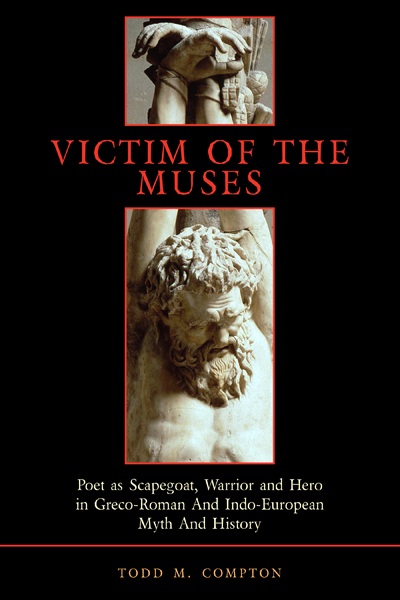
Victim of the Muses: Poet as Scapegoat, Warrior and Hero in Greco-Roman and Indo-European Myth and History

Hellenic Studies Series 

This book probes the narratives of poets who are exiled, tried or executed for their satire. Aesop, fabulist and riddle warrior, is assimilated to the pharmakos—the wretched human scapegoat who is expelled from the city or killed in response to a crisis—after satirizing the Delphians.

In much the same way, Dumezil’s Indo-European heroes, Starkathr and Suibhne, are both warrior-poets persecuted by patron deities. This book views the scapegoat as a group’s dominant warrior, sent out to confront predators or besieging forces. Both poets and warriors specialize in madness and aggression, are necessary to society, yet dangerous to society.

Compton, Todd M. 2006. Victim of the Muses: Poet as Scapegoat, Warrior and Hero in Greco-Roman and Indo-European Myth and History. Hellenic Studies Series 11. Washington, DC: Center for Hellenic Studies. http://nrs.harvard.edu/urn-3:hul.ebook:CHS_Compton.Victim_of_the_Muses.2006.


This work is licensed under a Creative Commons 3.0 License.


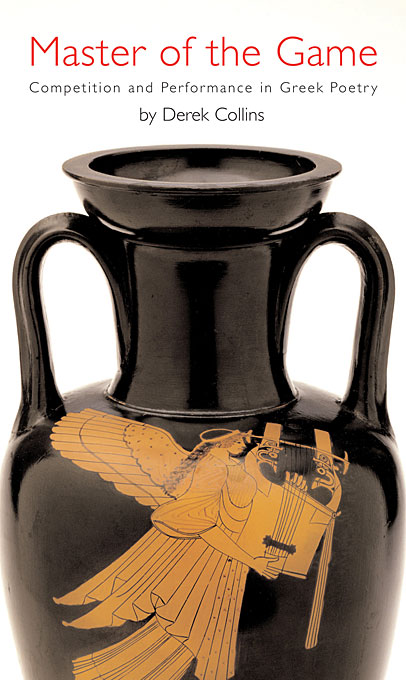
Master of the Game: Competition and Performance in Greek Poetry

Hellenic Studies Series 

The interest in the performance of ancient Greek poetry has grown dramatically in recent years. But the competitive dimension of Greek poetic performances, while usually assumed, has rarely been directly addressed. This study provides for the first time an in-depth examination of a central mode of Greek poetic competition—capping, which occurs when speakers or singers respond to one another in small numbers of verses, single verses, or between verse units themselves. With a wealth of descriptive and technical detail, Derek Collins surveys the wide range of genres that incorporated capping, including tragic and comic stichomythia, lament, forms of Platonic dialectic and dialogue, the sympotic performance of elegy, skolia, and related verse games, Hellenistic bucolic, as well as the rhapsodic performance of epic. Further, he examines historical evidence for actual performances as well as literary representations of live performances to explore how the features of improvisation, riddling, and punning through verse were developed and refined in different competitive contexts.

Anyone concerned with the performance of archaic and classical Greek poetry, or with the agonistic social, cultural, and poetic gamesmanship that prompted one performer to achieve “mastery” over another, will find this authoritative volume indispensable.

Collins, Derek. 2004. Master of the Game: Competition and Performance in Greek Poetry. Hellenic Studies Series 7. Washington, DC: Center for Hellenic Studies. http://nrs.harvard.edu/urn-3:hul.ebook:CHS_CollinsD.Master_of_the_Game.2004.


This work is licensed under a Creative Commons 3.0 License.


Le Caucase et la région circumpontique dans l’Antiquité : matériaux, recherches et hypothèseséd.

Kleshchenko, A. A. et M. T. Kashuba.. (2025) : Кавказ и Циркумпонтийский регион в древности: материалы, исследования, гипотезы / Kavkaz i Cirkumpontijskij region v drevnosti: materialy, issledovanija, gipotezy, Moscou [Le Caucase et la région circumpontique dans l’Antiquité : matériaux, recherches et hypothèses].

Ce recueil en mémoire de Alexander Yu. Skakov rassemble 15 articles consacrés aux Âges du Bronze et du Fer et à l’Antiquité, dans le nord et l’est de la mer Noire. On trouvera notamment des article sur les Colques ou sur la céramique grecque classique dans les tombes du Don moyen.

Le livre en ligne : https://archaeolog.ru/el-bib/el-cat/el-books/el-books-2025/kavkaz-2025


New Open Access Journal: Sharjah Journal of Archaeological Studies

Under the patronage of His Highness Sheikh Dr. Sultan bin Mohammed Al Qasimi, Supreme Council Member and Ruler of Sharjah, the Sharjah Journal of Archaeological Studies is a peer-reviewed academic journal published by the Sharjah Archaeology Authority. The journal is dedicated to publishing original, multidisciplinary research in the fields of archaeology, civilization, and material cultural heritage of the Arabian Peninsula and its coasts, from prehistoric times through historical, Islamic, and modern periods.

The journal also opens horizons for regional comparative studies with geographically and culturally connected areas, such as the Arabian Peninsula, the Red Sea, the Arabian Gulf, and the Indian Ocean.

The journal is published twice a year, in May and December, in both print and electronic editions. It adopts an open-access policy, allowing free and immediate access to all published articles upon release, thereby promoting the widest possible dissemination of scholarly knowledge.

The journal aims to support and advance scholarly research in the fields of archaeological studies, conservation, and restoration, while providing an interactive platform for knowledge exchange among researchers and academic institutions both locally and internationally. It is committed to promoting the values of credibility, scientific openness, and knowledge integration, in line with the goals of sustainable cultural development.

Manuscripts are accepted for publication in both Arabic and English and are subject to a double-blind peer-review process conducted by a distinguished panel of professors and experts from within the country and abroad.

The journal fully adheres to the ethics of research and scholarly publishing, and authors are required to obtain all necessary official approvals before submitting their manuscript for double-blind peer review.

See AWOL's full List of Open Access Journals in Ancient Studies 

Wednesday, February 25, 2026

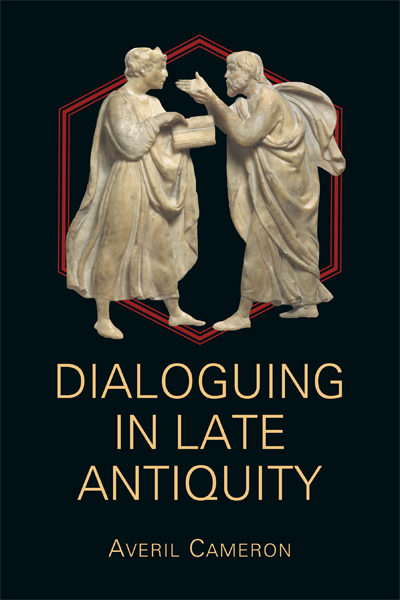
Dialoguing in Late Antiquity

 Hellenic Studies Series

Christians talked, debated, and wrote dialogues in late antiquity and on throughout Byzantium. Some were philosophical, others more literary, theological, or Platonic; Aristotle also came into the picture as time went on. Sometimes the written works claim to be records of actual public debates, and we know that many such debates did take place and continued to do so. Dialoguing in Late Antiquity takes up a challenge laid down by recent scholars who argue that a wall of silence came down in the fifth century AD, after which Christians did not “dialogue.”

Averil Cameron now returns to questions raised in her book Christianity and the Rhetoric of Empire (1991), drawing on the large repertoire of surviving Christian dialogue texts from late antiquity to make a forceful case for their centrality in Greek literature from the second century and the Second Sophistic onward. At the same time, Dialoguing in Late Antiquity points forward to the long and neglected history of dialogue in Byzantium. Throughout this study, Cameron engages with current literary approaches and is a powerful advocate for the greater integration of Christian texts by literary scholars and historians alike.

Available for purchase in print via Harvard University Press.


Cameron, Averil. 2014. Dialoguing in Late Antiquity. Hellenic Studies Series 65. Washington, DC: Center for Hellenic Studies. http://nrs.harvard.edu/urn-3:hul.ebook:CHS_CameronA.Dialoguing_in_Late_Antiquity.2014.


This work is licensed under a Creative Commons 3.0 License.


Choruses of Young Women in Ancient Greece: Their Morphology, Religious Roles, and Social Functions

Curated Books

New and revised edition, translated by Derek Collins and Janice Orion

In this groundbreaking work, Claude Calame argues that the songs sung by choruses of young girls in ancient Greek poetry are more than literary texts; rather, they functioned as initiatory rituals in Greek cult practices. Using semiotic and anthropologic theory, Calame reconstructs the religious and social institutions surrounding the songs, demonstrating their function in an aesthetic education that permitted the young girls to achieve the stature of womanhood and to be integrated into the adult civic community. This first English edition includes an updated bibliography. 

Originally published in 2001 by Rowman & Littlefield as a part of the series Greek Studies: Interdisciplinary Approaches. Copyright, Roman & Littlefield. Available for purchase in print via Roman & Littlefield.

Use the following persistent identifier: http://nrs.harvard.edu/urn-3:hul.ebook:CHS_Calame.Choruses_of_Young_Women_in_Ancient_Greece.2001.

This work is licensed under a Creative Commons 3.0 License.

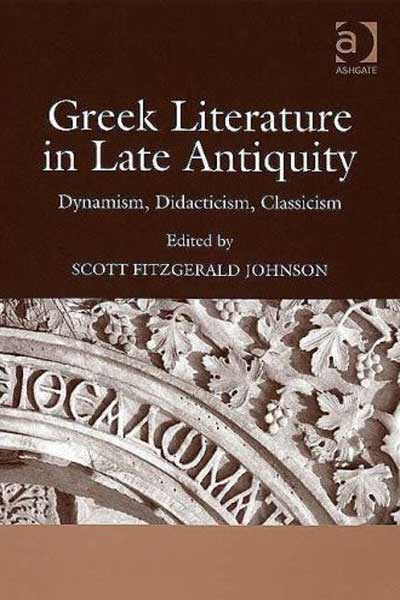
Greek Literature in Late Antiquity: Dynamism, Didacticism, Classicism

 Curated Books

Late Antiquity has attracted a significant amount of attention in recent years. As a historical period it has thus far been defined by the transformation of Roman institutions, the emergence of distinct religious cultures (Jewish, Christian, Islamic), and the transmission of ancient knowledge to medieval and early modern Europe. Despite all this, the study of late antique literary culture is still in its infancy, especially for the Greek and other eastern texts examined in this volume. The contributions here presented make new inroads into a rich literature notable above all for its flexibility and unparalleled creativity in combining multiple languages and literary traditions. The authors and texts discussed include Philostratus, Eusebius of Caesarea, Nonnos of Panopolis, the important St Polyeuktos epigram, and numerous others. The volume makes use of a variety of interdisciplinary approaches in an attempt to provoke discussion on change (Dynamism), literary education (Didacticism), and reception studies (Classicism). The result is a study which highlights the erudition and literary sophistication characteristic of the period and brings questions of contextualization, linguistic association, and artistic imagination to bear on little-known or undervalued texts, without neglecting important evidence from material culture and social practices. With contributions by both established scholars and young innovators in the field of late antique studies, there is no work of comparable authority or scope currently available. This volume will stimulate further interest in a range of untapped texts from Late Antiquity.

Originally published in 2006 by Ashgate Press. Available for purchase via Routledge

Use the following persistent identifier: http://nrs.harvard.edu/urn-3:hul.ebook:CHS_Johnson_ed.Greek_Literature_in_Late_Antiquity.2006.

Copyright, Scott Fitzgerald Johnson. This online edition appears by permission of the editor.

Open Access Journal: The Journal of Iran National Museum

[First posted in AWOL 29 July 2022, updated 25 February 2026] 
 
ISSN:  2783-222 
Journal of Iran National Museum


Journal of Iran National Museum publishes research and reports on all issues associated with museums and archaeology. It publishes two peer-reviewed issues per year in English and Persian.

The journal brings together curators, museum administrators, and archaeologists to present their research results about the museums and archaeology. Submissions must comply with the requirements set out in the instructions to contributors. The journal is open access and free to all individuals and institutions.

Volume & Issue: Volume 4, Issue 1 - Serial Number 6, February 2026 
Number of Articles: 18


See AWOL's full List of Open Access Journals in Ancient Studies

Tuesday, February 24, 2026

Homeric Imagery and the Natural Environment

Hellenic Studies Series

Responding to George Lakoff’s and Mark Johnson’s analysis of metaphor, William Brockliss explores the Homeric poets’ use of concrete concepts drawn from the Greek natural environment to aid their audiences’ understanding of abstract concepts. In particular, he considers Homeric images that associate flowers with the concepts of deception, disorder, and death, and examines the ways in which the poets engage with natural phenomena such as the brief, diverse blooms of the Greek spring. Taken together, such Homeric images present a more pessimistic depiction of the human condition than we find in the vegetal imagery of other archaic Greek genres. While lyric poets drew on floral imagery to emphasize the beauty of the beloved, the Homeric poets used images of flowers to explore the potentially deceptive qualities of bodies adorned for seduction. Where the Hesiodic poets employed vegetal images to depict the stable structure of the cosmos, the Homeric poets set arboreal imagery of good order against floral images suggestive of challenges or changes to orderliness. And while the elegiac poets celebrated the brief “flower of youth,” the Homeric poets created floral images reminiscent of Hesiodic monsters, and thereby helped audiences to imagine the monstrous otherness of death. 

2019. Hellenic Studies Series 82. Washington, DC: Center for Hellenic Studies. http://nrs.harvard.edu/urn-3:hul.ebook:CHS_BrocklissW.Homeric_Imagery_and_the_Natural_Environment.2019.


This work is licensed under a Creative Commons 3.0 License.


Homer’s Versicolored Fabric: The Evocative Power of Ancient Greek Epic Word-Making

Hellenic Studies Series 

Anna Bonifazi suggests that the Homeric text we have now would have enabled ancient audiences to enjoy the evocative power of even minimal linguistic elements. The multiple functions served by these elements are associated not only with the variety of narrative contexts in which they occur but also with overarching poetic strategies.

The findings relate to two strategies in particular: unfolding the narrative by signaling the upcoming content with αύ- adverbs and particles, and letting the complexity of Odysseus’s identity resonate through the ambiguous use of third-person pronouns. The words’ evocative power springs from the deliberate merging of distinct meanings, which prompts multifaceted interpretations. The text allows the incorporation of different viewpoints, just as an iridescent fabric allows the simultaneous perception of different colors.


2012. Hellenic Studies Series 50. Washington, DC: Center for Hellenic Studies. http://nrs.harvard.edu/urn-3:hul.ebook:CHS_Bonifazi.Homers_Versicolored_Fabric.2012.

This work is licensed under a Creative Commons 3.0 License.


The Art of Reading: From Homer to Paul Celan

Hellenic Studies Series 

Trans. C. Porter and S. Tarrow with B. King. Edited by C. Koenig, L. Muellner, G. Nagy, and S. Pollock. Hellenic Studies Series 73. Washington, DC: Center for Hellenic Studies. http://nrs.harvard.edu/urn-3:hul.ebook:CHS_BollackJ.The_Art_of_Reading.2016.


This work is licensed under a Creative Commons 3.0 License.

he Art of Reading is the first—long overdue—collection of essays by the French classical philologist and humanist Jean Bollack to be published in English. As the scope of the collection demonstrates, Bollack felt at home thinking in depth about two things that seem starkly different to most other thinkers. We see on the one hand the classics of Greek poetry and philosophy, including the relatively obscure but in his hands illuminating re-readings of Greek philosophy by the doxographers. Then, on the other hand, there is modern, including contemporary, poetry. The author of monumental commentaries on the Oedipus Tyrannos of Sophocles and on the fragments of Empedocles, Bollack cultivated in himself and in a generation of students (academics and others) a way to read both sets of texts closely that is as uncompromising and demanding of the interpreter as it is of the reader of the interpretation. The results, which this wide-ranging but compact collection brings to mind, are designed to get beyond flat and clichéd approaches to familiar works and to awaken the reader anew to the aesthetics, the complexity, and the intelligence that careful reconstruction of the text can bring to light. 


Rhythm without Beat: Prosodically Motivated Grammarisation in Homer

In this study, the author argues that syntactical development beyond the autonomy of single words or word groups was facilitated by an aspect of Homeric prosody that differs from the metrical surface structure, though it is realized together with meter. The focus will be on the strength of metrical boundaries as phonetically realized pauses. This work will deal, in other words, with the combination of metrics and phonetics. The hypothesis will be that phonetically realized pauses demarcate phonological phrases, and that they do so because of the non-demarcative value of the remaining metrical boundaries.

– modified from the Introduction

First online edition of a 2014 preliminary study to the thesis Audible Punctuation: Performative Pause in Homeric Prosody.

Use the following persistent identifier: http://nrs.harvard.edu/urn-3:hul.ebook:CHS_BlankenborgR.Rhythm_without_Beat.2014.


Copyright, Ronald Blankenborg. Published here with permission of the author.