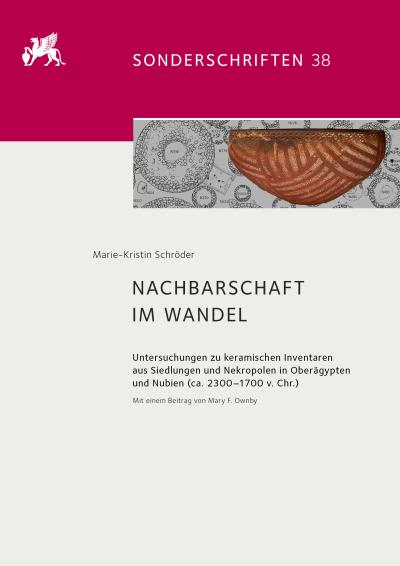
The in-depth and long-term investigation of the Middle Nubian cultures – the C-Group and Kerma cultures as well as the Pan-Grave Horizon – has fundamentally expanded our understanding of these significant archaeological cultures of the 3ʳᵈ and 2ⁿᵈ millennia B.C. However, since the extensive flooding of the Lower Nubian Nile Valley in the 1970s, modern fieldwork is largely restricted, and our current knowledge primarily relies on older excavations from the 20ᵗʰ century.
The present analysis and re-evaluation of ceramic inventories in Egyptian and Nubian tradition from settlements and cemeteries, with a main focus on the C-Group, aims to address this issue by closing research gaps and opening new perspectives on the interactions of the Middle Nubian cultures. At the same time, the study sheds light on the complex Egyptian-Nubian relations during the pharaonic Old and Middle Kingdoms. The investigation centers on the analysis of ceramic assemblages from the settlement of Elephantine at the First Cataract, which were excavated as part of the »Realities of Life« project of the German Archaeological Institute Cairo. This material is complemented by inventories from six cemeteries associated with the C-Group in Upper Egypt and Nubia, e. g. cemetery N at Aniba. For the first time, inventories of various ceramic traditions and contexts from old and recent excavations are systematically synthesised.
In addition to a detailed qualitative and quantitative presentation of the finds, the work is particularly dedicated to pressing chronological questions. The linking of old material with finds from current excavations in Egypt and Sudan proves to be an important methodological approach for re-evaluating the chronological division established so far.
Published
December 11, 2025Online ISSN
3052-783XPrint ISSN
1868-9450Categories
Bibliographic Information and Reviews
Copyright (c) 2025 Deutsches Archäologisches Institut
Abkürzungsverzeichnis Vorwort 1. EinleitungNubien im 3. und 2. Jahrtausend v. Chr. – Die Mittelnubischen Kulturen – Forschungsgegenstand und Methode 2. Nubiens nördlicher Nachbar: Oberägypten in dem Zeitraum vom späten Alten Reich bis zum Ende des Mittleren ReichesEin kurzer historischer Überblick zum pharaonischen Ägypten von ca. 2300–1700 v. Chr. – Oberägyptische Provinzstädte im Mittleren Reich – Ägyptische Präsenz in Nubien 3. Siedlungskeramik aus der Nordweststadt von ElephantineDas ägyptische Inventar – Das nubische Inventar – Klassifikation des nubischen Inventars – Kontextualisierung des nubischen Keramikinventars aus der Nordweststadt – Einbettung des nubischen Keramikinventars in das ägyptische Korpus – Synthese 4. Nubische Präsenz in Oberägypten am Beispiel der Nekropolen in Hierakonpolis (HK27C) und Kubanieh-NordDie Nekropole HK27C – HK27C: Das Keramikinventar – Die Nekropole Kubanieh-Nord – Eine Synthese der Bestattungssitten in nubischer und ägyptischer Tradition in Oberägypten 5. Eine Neubewertung keramischer Inventare aus unternubischen NekropolenMethode und Ziel – Die nubische Friedhofskeramik – Die Keramik in ägyptischem Stil – Der N-Friedhof in Aniba – Der Friedhof Adindan T – Der Friedhof Dakka W101 – Ergebnis der Neubewertung ausgewählter unternubischer Gräberfelder 6. Die Beziehungen zum südlichen Kulturraum anhand der Nekropole in KermaDie Kerma-Nekropole – Die Keramik im Stil der C-Gruppe – Die Keramik in ägyptischem Stil – Chronologische Konsequenzen der Keramikanalyse für den Eastern Cemetery in Kerma 7. Eine Revison der Chronologie der mittelnubischen C-GruppePhase Ia – Phase Ib – Phase IIa – Phase IIb – Stufe III – Regionalität und Individualität innerhalb der C-Gruppe 8. Nachbarschaft im Wandel: Synthese und AusblickFrühe Kulturkontakte im Kermabecken – Die C-Gruppe in Oberägypten & Unternubien – Nubische Präsenz in Oberägypten – Ägyptische Präsenz in Unternubien – Neubewertung der Mittelnubischen Interaktionen – Keramikklassifikation, Identitäten & Lebensrealität AnhangAnhang 1 Tabellen – Anhang 2 Petrographic Analysis of Nubian-Style Pottery from Elephantine Samples Abbildungsverzeichnis Literaturverzeichnis Tafeln Karten und Pläne

No comments:
Post a Comment
