Monday, September 30, 2019

Livius.org: Articles on ancient history

Livius.org: Articles on ancient history
Livius Onderwijs

Livius

The Livius.org website offers information on ancient history. There are currently 4181 pages. You will also find almost 9,800 original illustrations. You can search to find what you are looking for or browse through the articles using categories or tags; the articles listed after the map are just the most recent ones.

Common categories


Vision, Narrative, and Wisdom in the Aramaic Texts from Qumran: Essays from the Copenhagen Symposium, 14-15 August, 2017

Vision, Narrative, and Wisdom in the Aramaic Texts from Qumran: Essays from the Copenhagen Symposium, 14-15 August, 2017
Cover Vision, Narrative, and Wisdom in the Aramaic Texts from Qumran

Series:

The Aramaic Dead Sea Scrolls from Qumran have attracted increasing interest in recent years. These texts predate the “sectarian” Dead Sea scrolls, and they are contemporary with the youngest parts of the Hebrew Bible. They offer a unique glimpse into See More

Sunday, September 29, 2019

Outline of Gāndhārī Grammar

Outline of Gāndhārī Grammar 
Stefan Baums 
(29 September 2019)
Five years ago, I made available an Outline of Gāndhārī Grammar that had grown out of my classes at the University of California, Berkeley, the University of Leiden and the University of Munich. This past July, I updated my Outline for another class that I taught in the Leiden Summer School in Languages and Linguistics. The new version is freshly typeset and now features links from example words into the Dictionary of Gāndhārī that illustrate the range of evidence on which my grammar statements are based. Gāndhārī words are now cited in Dictionary orthography as well as by their reconstructed pronunciation. Like the previous version, this updated version of the Outline is made available under the terms of the CC BY-ND license. [Text via Gāndhārī Language and Literature]

See AWOL's list of Open Access Textbooks and Language Primers relating to the ancient world

AUAC: The Association for the Understanding of Ancient Cultures

AUAC: The Association for the Understanding of Ancient Cultures
Logo
AUAC is a purely non-profit institution with the primary aim to support and encourage projects focusing on archaeological research and exploration mainly in the Mediterranean area. AUAC is especially trying to support small but efficient projects guaranteeing an original and scientific approach to specific questions and problems about Mediterranean archaeology. If you have an interesting project or publication you want to publish on AUAC please contact us via info@auac.ch.


Friday, September 27, 2019

Open Access Journal: Al Malweah for Archaeological and Historical studies - مجلة الملوية للدراسات الآثارية والتاريخية

Al Malweah for Archaeological and Historical studies - مجلة الملوية للدراسات الآثارية والتاريخية
ISSN: 2413-1326
Al Malweah for Archaeological and Historical studies:A Scientific, Periodical and Coherent Journal, Issued by college of Archeology in Samarra university. It is interested in publishing Archaeological and Historical researches, it is founded in 2013. 
Most recent Issue:

Article

Article
Administratives and Politicals Situations in AMIDA Until the end of the Fourth Century A.H/ Tenth A.D الاوضاع السياسية والادارية في مدينة آمِد حتى نهاية القرن الرابع الهجري/ العاشر الميلادي

Article
The Presence of the names of Assyrian Cities and States in the Personal Names in Light of the Cuneiform Resources حضور أسماء المدن الآشورية والبلدان في الأسماء الشخصية في ضوء المصادر المسمارية

Article
The organization of commercial transactions during the old Babylonian era in light of Hammurabi's law تنظيم المعاملات التجارية إبان العصر البابلي القديم في ضوء قانون حمورابي

Article
The political dimensions and administrative and economic systems of the Saadi Supervisory Authority for the period (915-1070 A.H/ 1509 - 1659 AD) Historical study الابعاد السياسية والنظم الادارية والاقتصادية لدولة الاشراف السعديين للفترة (915-1070هـ/ 1509– 1659م) دراسة تاريخية

Article
European Women in the Middle Ages– Women of the public Class Model المرأة الاوروبية في العصور الوسطى- نساء الطبقة العامة إنموذجاً

Article
The Trade exchange in the second Lagash Period- Gudea era a model التبادل التجاري في عصر لكَش الثانية– عهد كَوديا انموذجاً

Article
Kushan Empire in India (30 – 375 E.C) and Trade with Roman Empire إمبراطورية كوشان في الهند (30 – 375م) وتجارتها مع الإمبراطورية الرومانية

Article
The effect of the two insects: Reticulitermes sp. and Apis sp. on the architectural buildings
تأثير حشرتي النمل الأبيضReticulitermes sp. والنحل البري .Apis sp على المباني الأثرية

See AWOL's full List of Open Access Journals in Ancient Studies

Discovering Sacred Texts

Discovering Sacred Texts
banner
Discovering Sacred Texts is a new online learning resource, designed for Religious Education students and teachers as well as lifelong learners. The site allows visitors to explore the world’s major faiths through our collections of sacred texts.
Our resource features content on the six most-practiced faiths in the UK – Buddhism, Christianity, Hinduism, Islam, Judaism and Sikhism – as well as a number of other faiths, including the Baha’i Faith, Jainism and Zoroastrianism. The site showcases over 270 digitised collection items, alongside articles written by academics, curators and faith leaders, film content and teachers’ resources.

Themes

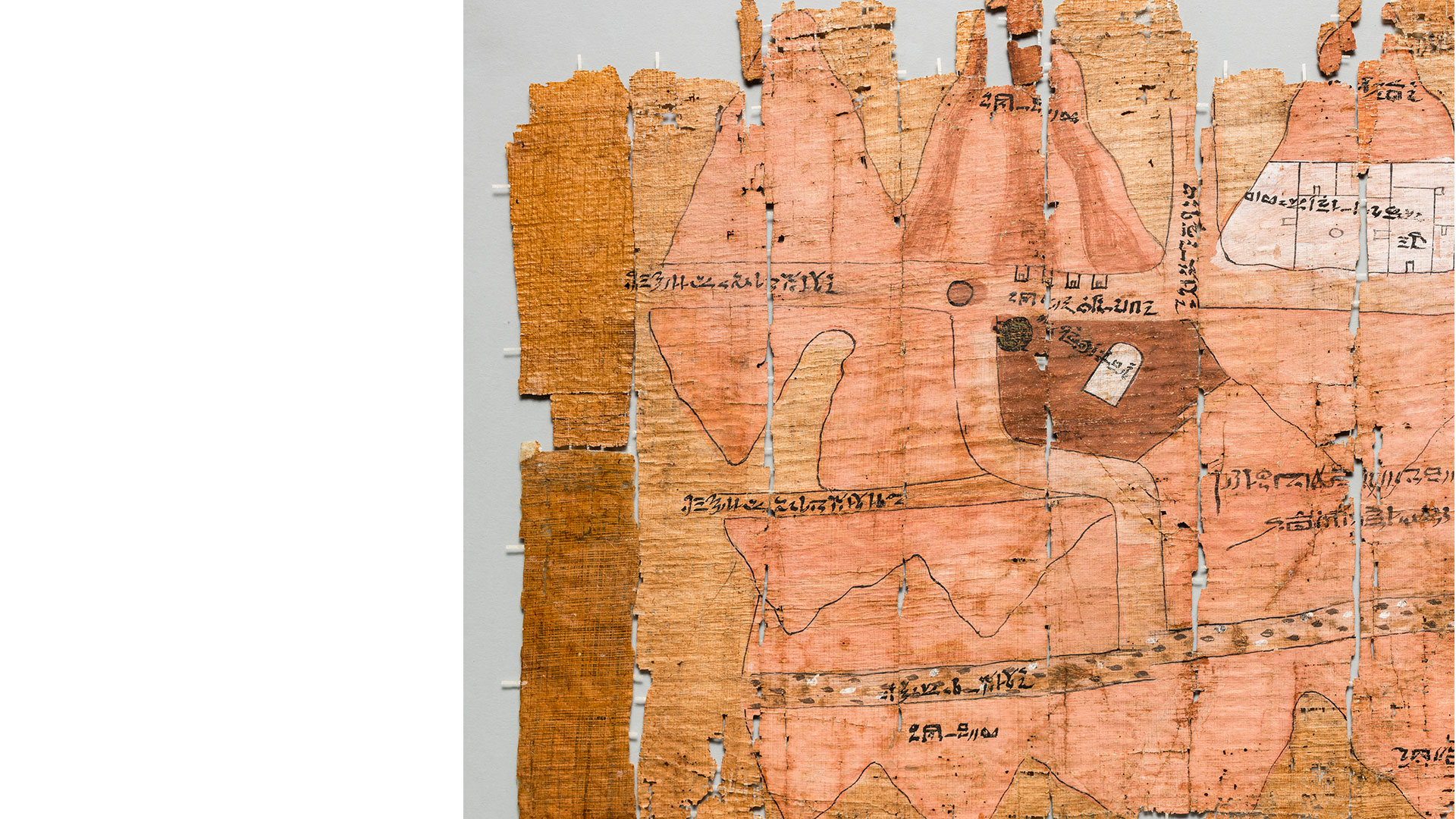
Papyrus Collection Museo Egizio: "Turin Papyrus Online Platform (TPOP)" - A step away from closed archives towards open data

Papyrus Collection Museo Egizio: "Turin Papyrus Online Platform (TPOP)" - A step away from closed archives towards open data
https://collezionepapiri.museoegizio.it/assets/home-page-img.jpg
The purpose of this website is to put the papyrus collection in the Museo Egizio online via the Turin Papyrus Online Platform. The final aim is to provide public access to all of the museum’s papyri in the long run.
The website allows the academic community and general public alike to search, browse and collect information about the papyri.
Work on the online platform is in progress. Currently, only a selection of the collection is visible on the website. Registered users, on the other hand, have access to the whole collection of Ramesside hieratic papyri, except for the smaller fragments. The number of accessible papyri will be constantly expanded over the coming years.
We are collaborating with an international academic community of scholars who are engaged in research on our papyri. Therefore, the language of the database is English. However, translations of the texts written on the papyri will be included in several languages, and an Italian version of the website will be launched very soon. 
This website provides vivid narratives targeted at the non-specialist, focusing on the history and content of the Turin papyri, the ongoing papyrus projects and their workflow, and the application of innovative technology to investigate ancient manuscripts.

Thursday, September 26, 2019

Coptic Scriptorium News: New release of Natural Language Processing Tools

New release of Natural Language Processing Tools
Amir Zeldes and Luke Gessler  have spent much of the past summer improving Coptic Scriptorium’s Natural Language Processing tools, and are now happy to announce the release of Coptic-NLP V3.0.0. You can read more about what we’ve been doing and the impact on performance in our three part blog post (part 1, part 2, part 3). Some of the new improvements include:
  • A new 3 step normalization framework, which allows us to hypothetically normalize bound groups before deciding how to segment them, then normalize each segment again
  • A smart rebinding module which can handle deciding to merge split bound groups based on context (useful for processing messy texts with line-breaks mid word, or other segmentation anomalies)
  • A re-implemented segmentation algorithm which is especially better at handling ambiguous groups in context (e.g. “nau” in “peja|f na|u” vs. “nau ero|f”) and spelling variation
  • A brand new, more accurate part of speech tagger
  • Higher accuracy across tools thanks to hyperparameter optimization
  • More robust test suite to ensure new errors don’t creep in
  • Various data/lexicon/ruleset improvements and bugfixes
You can download the latest version of the tools here:
https://github.com/CopticScriptorium/coptic-nlp/
Or use our web interface, which has been updated with the latest version:
https://corpling.uis.georgetown.edu/coptic-nlp/
We appreciate your feedback and comments, and hope to release more data processed with these tools very soon!

Tuesday, September 24, 2019

Diogenes: A tool for searching and browsing the databases of ancient texts, primarily in Latin and Greek

[First posted in AWOL 5 November 2015, updated 24 September 2019]

Diogenes
screenshot
Diogenes is a desktop/laptop application for searching and browsing the legacy databases of texts in Latin and ancient Greek that were once published on CD-ROM by the TLG and the PHI. (NB. These databases are not distributed with Diogenes and must be obtained separately.)
Diogenes is a project of the Department of Classics and Ancient History, Durham University.

Version 4

Version 4 of Diogenes (released autumn 2019) represents a major overhaul of the software; all users are advised to upgrade. Previous versions of Diogenes are 32-bit software, so they will have stopped working under the Catalina release of OS X.

New Features in Version 4

Browser Component
Previously, Version 3 of Diogenes included a browser component (xulrunner) drawn from the Mozilla project. Unfortunately, this component is no longer supported. Version 4 integrates a completely new browser front-end (Electron), which is based upon Google Chrome. This major change has enabled the elimination of many bugs and the implementation of additional features.
User Interface
The interface has been modernised and made easier to use, with better usage hints. A number of frequently requested new features have been added, such as the ability to do a quick search within one author without having to first define a subset of texts containing that author.
XML Export
Texts can be exported as TEI-compliant XML for use with other text-analysis software. The development of his functionality was sponsored by the DigiLibLT project. Exported texts validate against a full TEI schema (see the notes on XML output).
TLL integration
PDFs of the print version of the Thesaurus Linguae Latinae have been made freely available from the website of the Bayerische Akademie der Wissenschaften, and if you have downloaded them, Diogenes provides a link to the correct page of the correct volume of that lexicon for each Latin word that has an entry. If you have not yet downloaded the files, Diogenes provides a facility to help do this.
Corrected LSJ
Diogenes now includes by default the version of the LSJ Greek Lexicon from Perseus with errors corrected by the Logeion project.

Monday, September 23, 2019

Open Access Journal: Réflexion(s) – Regards croisés sur le monde antique et le monde moderne

[First posted in AWOL 19 October 2011, updated 23 September 2019]

Réflexion(s) – Regards croisés sur le monde antique et le monde moderne
ISSN : 2100-0034
http://reflexions.univ-perp.fr/templates/beez_20/images/reflexions.jpg
Réflexion(s) est une revue thématique réalisée par des spécialistes de l'antiquité gréco-latine.


Chaque thème analyse une question qui intéresse le monde actuel en la mettant en relation avec des événements, des textes ou des personnages antiques. Notre but est de réfléchir autrement sur notre temps et nos sociétés, mais aussi de comprendre pourquoi la connaissance de notre antiquité est encore indispensable pour penser le monde d'aujourd'hui. Ce but est, plus largement, le but des études classiques : la lecture de Cicéron ou la visite des ruines de Pompéi sont un miroir dans lequel nous pouvons apprendre à voir avec un peu de recul (et donc un peu plus clairement) notre époque.


Nous t'invitons donc, lecteur, à pratiquer avec nous ce que, depuis les travaux du philosophe allemand H.G. Gadamer, on appelle le "cercle herméneutique" : lorsque nous abordons l'antiquité, nous ne l'interprétons pas avec un esprit vierge, mais avec une conception des choses (actuelles et antiques) déjà formée (Heidegger parlerait de "préconception"). Mais la réalité de l'aspect de l'antiquité que nous examinons ne correspond pas forcément avec cette préconception, ce qui nous oblige à la modifier et non seulement change ensuite le regard que nous porterons sur l'antiquité mais nous invite aussi à concevoir différemment, ne serait-ce qu'en l'interrogeant, le monde contemporain. De ce mouvement circulaire qui s'instaure entre la chose antique et notre esprit au fur et à mesure que s'enrichit notre réflexion, naît un changement radical de notre regard sur nous-mêmes.