First complete concordance of the 758 coin engravings in Fulvio Orsini's Familiae Romanae quae reperiuntur in antiquis numismatibus (Rome: Tramezini, 1577).
Each of the 223 plates across 166 Roman gentes is matched to its modern catalogue reference — Crawford RRC, Mattingly–Sydenham RIC, Burnett–Amandry–Ripollès RPC, or specialist references — with a specimen photograph and Orsini's original commentary. Built from a single private copy with documented copy-specific features: cancel plates (pp. 101 and 104) and eight manuscript annotations datable c. 1848, six traceable to Mionnet's De la rareté et du prix des médailles romaines (3rd ed., 1847).
All 758 coin engravings are accounted for. The dataset holds 767 entries in total: the 758 coin engravings, eight manuscript annotations added c. 1848, and one printing anomaly (Fufia_2). Validated catalogue split: Crawford 649 / RIC 91 / RPC 13 / specialist 4. Ten Orsini identification errors and ten engraver metal mismatches are documented.
This version (v2.0) follows a full multi-dimensional verification across five independent dimensions (identification, description, specimen linkage, image integrity, and commentary), each checked against an external ground truth — the open linked-data collections for identifications and specimens, and Orsini's own 1577 text for every commentary block. Wrong-coin specimen photographs, obverse/reverse face-swaps, and metal-field and catalogue-ID errors were remediated; the commentary now carries only Orsini's own observations (or a specific note on what he got wrong).
The data is expressed in nomisma.org-aligned JSON-LD (741 of 767 entries carry a resolvable nomisma type URI) for ingestion into the numismatic Linked Open Data networks.
The portable HTML file is fully self-contained and opens in any browser with no internet connection required.
IMAGE RIGHTS. The concordance data — structure, descriptions, identifications, and commentary — is licensed CC-BY 4.0. Specimen photographs are NOT covered by that licence: each remains the copyright of the institution or source that produced it, is reproduced under that source's own terms (predominantly CC-BY-NC licences, public-domain dedications, or permission for non-commercial scholarly use), and is credited individually in the data and beneath each coin. Rights-reserved and permission-only images (certain auction records and RPC Online aggregations) are referenced by link rather than reproduced. Reuse of any specimen photograph beyond non-commercial scholarly use requires permission from the institution named in its credit.
Note on file metadata. The
_versionfield insideorsini_concordance.jsonreads "1.1-revised". That is a labelling error in that file only: its contents are the v2.0 data described here. The CSV and JSON-LD carry no version field and are unaffected.
Saturday, September 19, 2026
Heritage at War: Plan and Prepare
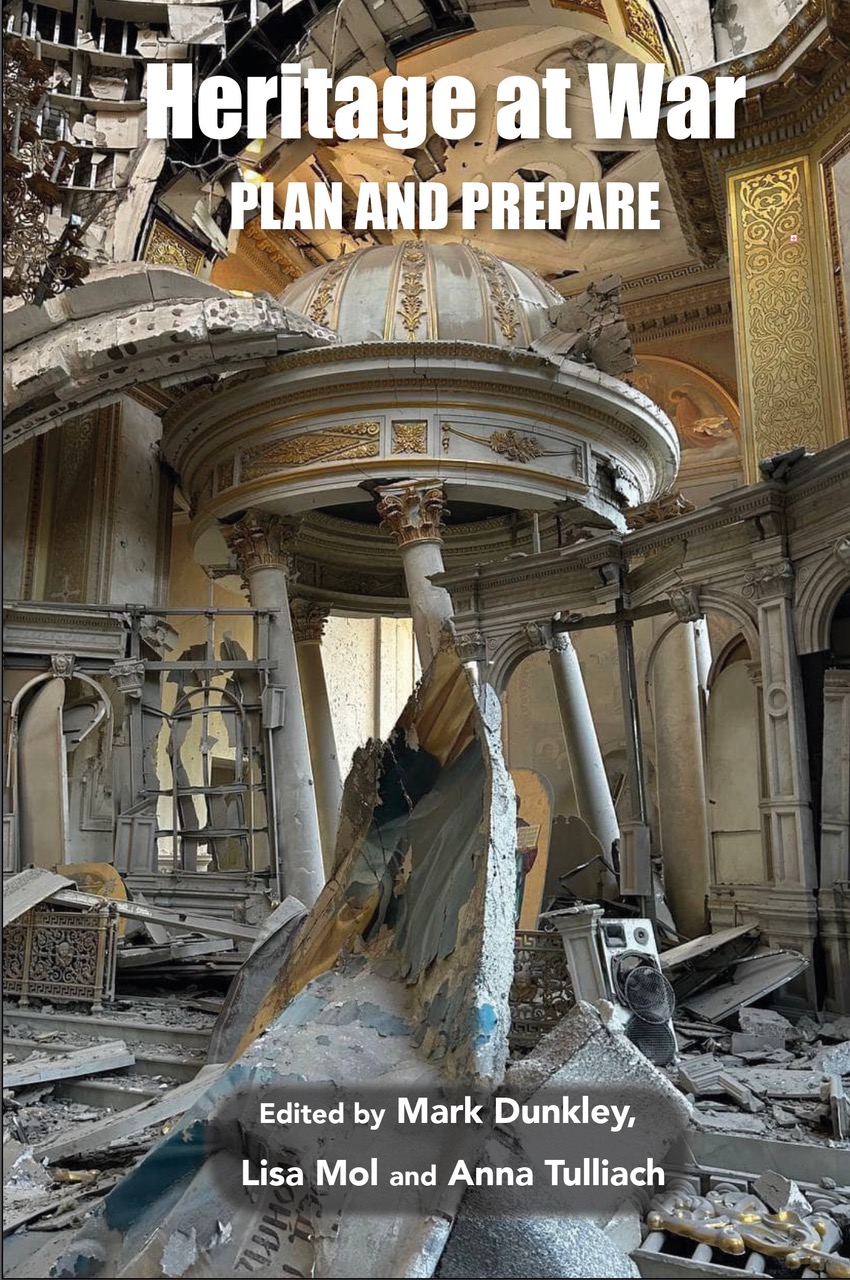
The right of access to, and enjoyment of, cultural heritage is enshrined in human rights norms and the devastating effects of armed conflict on cultural heritage are well documented, with the deliberate destruction of cultural heritage having been an integral part of warfare throughout history. Culture now, once again, finds itself on war’s frontline. Marking the 70th anniversary of the Hague Convention for the Protection of Cultural Property in the Event of Armed Conflict, and in the current context of devastating conflicts in Ukraine, Gaza and Sudan, among others, Heritage at War – Plan and Prepare brings together military, academic,and heritage practitioners’ voices from across the Euro-Atlantic, North Africa and the Middle East and the Indo-Pacific to explore how lessons learned from past experiences of conflict can inform approaches to the safeguarding of cultural heritage today. Emerging from and building upon an international conference held at the V&A Museum in February 2023, the book addresses how the military, the heritage sector and other stakeholders in Human Security can, and must, collaborate to give primacy to people and protect tangible and intangible cultural heritage under attack. The volume’s case studies highlight interdisciplinary efforts to protect heritage in conflict zones, drawing out guidance for those working in the Heritage Sector in these contexts, with specific relevance to those engaged in cultural heritage protection and those working in related interdisciplinary fields. Reviewing the historic relationship between heritage and armed conflict, and offering lessons for present-day practitioners, Heritage at War shows how, in different contexts, heritage can be a catalyst and target of conflict, an obstacle to stabilisation, and yet also a potential vector of peace-building and the return to normality.
DOI https://doi.org/10.3197/63853892508906.book Landing page https://www.whpress.co.uk/publications/2024/03/20/heritage-at-war/ License https://creativecommons.org/licenses/by-nc/4.0/ Copyright The White Horse Press Publisher The White Horse Press Publication place Winwick, Cambs. Published on 2024-10-15 ISBN 978-1-912186-86-0 (Hardback) 978-1-9121 ContentsForeword
(pp. xiii–xv)Preface
(pp. xvi–xx)Introduction: Heritage at War – Plan and Prepare
(pp. 1–24)Rome and the Second Temple: Early Imperial Roman Attitudes Toward Cultural Heritage During Armed Conflict
(pp. 27–44)
- Kevin Malmquist
Lessons from the Past: Land Warfare and Cultural Heritage in World War II Italy: The Role of the MFAA
(pp. 45–63)
- Carlotta Coccoli
Cultural Property Protection Issues Past and Present: Current UK Approach and Delivery
(pp. 64–76)
- Roger Curtis
- Mark Dunkley
Challenges and Practices for Protecting Cultural Property in Armed Conflict: A Case Study of Korea
(pp. 77–93)
- Yang Chang-hun
From Scientific Investigation to Evidence: Investigating Armed Conflict Damage to Immovable Heritage
(pp. 94–116)
- Lisa Mol
The Hague Convention and Beyond: Cultural Property Protection in the Netherlands
(pp. 119–131)
- Ankie Petersen
Peace-time Preparations for a Museum Near the Occupation Line: NGO-led Efforts
(pp. 132–148)
- Manana Tevzadze
On the Art Frontline: The Experience of French Conservation Officers in Protecting Cultural Property on Operations
(pp. 149–170)
- Tim Le Berre
The Vital Role of NGOs in Rescuing and Promoting Recovery for Cultural Heritage and Cultural Bearers in Times of Crisis and War
(pp. 171–189)
- Amira Sadik Aly
Culture in Crisis – Supporting the World’s Cultural Heritage and Communities that Suffer Cultural Loss through Conflict
(pp. 190–204)
- Vernon Rapley
Family Ties at Changing Times: The Vizier and the High Priest of Re during the Fourth and Fifth Dynasties of Egypt
Thesis
posted on 2025-11-19, 22:34 authored by Gemma Green A thesis submitted for the degree of Doctor of Philosophy
Department of History and Archaeology
Macquarie University, August 2024
The roles of t3jtj s3b T3tj ‘he of the curtain, chief justice and vizier’ and wr-m3w (Jwnw) ‘Greatest of Seers (of Heliopolis)’ were two of the most important positions during the Fourth and Fifth Dynasties of Egypt (2543 BCE–2306 BCE). While the vizier was responsible for implementing the orders of the king and overseeing the administration, the Greatest of Seers was the highest priesthood in the Re cult, who became the supreme god during this time. Given the magnitude of these positions, the loyalty and support of the men in these offices was undoubtedly crucial for the strength and stability of both the reigning king and the Egyptian state. While the significance of these roles has long been understood from an administrative standpoint, the officials as individuals are far more ambiguous. Who were the viziers and the High Priests of Re, and what was their background? How did they come to be appointed to some of the highest positions in the Old Kingdom administration? This thesis will seek to understand more about the men employed in the t3jtj s3b T3tj and wr-m3w (Jwnw) offices, why they may have been selected for these positions, and the implications of this on both the monarchy and the Egyptian state more broadly.
From Trash to Treasure; Nahal Omer (Israel)
From Trash to Treasure; Nahal Omer (Israel)
Curated by:SilkRoadVirtualMuseum
This special exhibition, developed in collaboration with the archaeologists who conducted the recent excavations, explores the Early Islamic site of Nahal Omer (7th–9th centuries CE), where textile finds illuminate long-distance trade and desert connectivity.
يستكشف هذا المعرض الخاص، الذي تم تطويره بالتعاون مع علماء الآثار الذين أجروا الحفريات الأخيرة، موقع نحل عُومر من العصر الإسلامي المبكر (القرن السابع–القرن التاسع الميلادي)، حيث تكشف المكتشفات النسيجية عن التجارة بعيدة المدى والترابط الصحراوي.
View exhibition catalog
Friday, September 18, 2026
Open Access Journal: Journal of Neolithic Archaeology
[First posted in AWOL 29 December 2014, updated 18 September 2026]
Journal of Neolithic Archaeology
ISSN: 2197-649X
Journal of Neolithic Archaeology
ISSN: 2197-649X

Die jungsteinSITE bietet eine wissenschaftliche Informations- und Diskussionsplattform für aktuelle archäologische Fragestellungen und Forschungsprojekte. Das thematische Spektrum umfasst alle Aspekte der Jungsteinzeit-Forschung; der geographische Schwerpunkt liegt im mitteleuropäischen Raum. Die Beiträge stammen in der Regel aus erster Hand, d.h. von Wissenschaftlern, die in den dargestellten Projekten federführend bzw. in den jeweiligen Forschungsfeldern wissenschaftlich tätig sind.
The Journal of Neolithic Archaeology provides a scientific information platform on the archaeology of the Neolithic period. The articles are mainly in German and English, and for all articles English summaries and figure captions are available.
See AWOL's full List of Open Access Journals in Ancient Studies
L’offrande et le tribut: Histoire politique de la fiscalité en Judée hellénistique et romaine (200 a.C.-135 p.C.)

L’impôt étranger était détesté en Judée, paraît-il, par un peuple fier de participer de ses biens au culte du temple de Jérusalem. Cette idée, très répandue dans l’historiographie, vient en effet des sources antiques, mais est-elle historique ? En explorant des sources variées et des découvertes récentes (textes de la tradition littéraire, manuscrits de la mer Morte, monnaies, inscriptions, vestiges archéologiques) et en s’appuyant sur une méthodologie transdisciplinaire (sociologie, psychologie sociale, droit fiscal), cet ouvrage prétend replacer la fiscalité en Judée hellénistique et romaine dans l’histoire politique de cette région. Comme l’impôt est une manifestation de la souveraineté, certains groupes se demandent s’il est permis de payer tribut à un maître étranger en plus de l’offrande obligatoire versée à Dieu. Mais cette doctrine est protéiforme, variable selon les milieux, évolutive selon les conjonctures, tantôt visible et tantôt invisible en fonction des aléas de l’histoire. Plus encore, loin d’être consubstantielle au judaïsme, cette doctrine est le fruit d’une instrumentalisation politique, un outil rhétorique brandi pour motiver le peuple à l’insoumission. Apparue à l’époque des Maccabées, elle est récupérée sous des formes plus ou moins radicalisées par divers partis d’époque romaine. Pourtant, on ne la repère nulle part au-delà des discours : même les plus hostiles au tribut lèvent des impôts sitôt qu’ils se trouvent au pouvoir, souvent en reprenant l’ancien tribut à leur profit. En confrontant cette omniprésence de la contestation antifiscale dans les discours, à la réalité de l’impôt sur la période, cet ouvrage révèle la distance entre la politique et la vie concrète et incite à revoir avec prudence divers élément souvent admis sans réserve : ainsi, que l’impôt tributaire était oppressif, que la population s’est appauvrie du fait de l’exploitation étrangère des ressources, ou encore que les maîtres de la région n’ont visé que leurs intérêts au détriment du consentement des contribuables.
Publisher: Ausonius Éditions
Place of publication: Pessac
Published on OpenEdition Books: September 10, 2026
Digital ISBN: 978-2-35613-795-1
DOI: 10.4000/16rbn
Series: Scripta Antiqua
Year of publication: 2022
ISBN (Print version): 978-2-35613-435-6
Number of pages: 542
Le temps et ses noms: Construire une chronologie égéo-balkanique du 7e au 4e millénaire avant J.-C.

The book focuses on the relative and absolute chronology of the long period—about 3,500 years—known in Greece as the “Neolithic.” The diversity of chronological divisions and terminologies, within Greece as well as in neighboring Bulgaria and western Turkey, combined with the uneven distribution and variable quality of available dates, makes it particularly difficult today to establish temporal parallels between the phenomena observed in different places. To remedy this, the author proposes a new periodization scheme—neutral, reliable, and applicable across the entire region—which can be used either independently or as a reference standard between existing systems. It is based on the stratigraphic sequences of 146 archaeological sites from the three countries, which have yielded around 2,000 dates, mainly obtained through the radiocarbon method (14C). More than half of these dates are further analyzed in detail and modeled using Bayesian methods, allowing for the validation and refinement of the new scheme. This unprecedented undertaking lays the foundations for a renewed understanding of this crucial period, which witnessed—though at different paces across regions—the emergence and diversification of agropastoral economies, pottery, architecture, cemeteries, and metallurgy. Designed for archaeologists specializing in the Aegean and Balkan prehistory, as well as for anyone interested in the measurement of time, dating methods, and the integration of chronological data into historical narratives, the new scheme—reliable and easy to use—offers a shared standard for the entire corpus, which should prove equally valuable to other disciplines (geography, natural sciences, genetics) engaged in large-scale modeling
Publisher: École française d’Athènes
Place of publication: Athènes
Published on OpenEdition Books: September 17, 2026
Digital ISBN: 978-2-86958-725-0
DOI: 10.4000/16ssx
eries: Bibliothèque des Écoles françaises d’Athènes et de Rome (BEFAR) | 419
Year of publication: 2025
ISBN (Print version): 978-2-86958-609-3
Number of pages: 503
Chapitre 5. Validation et affinage du schéma chronologique
Subscribe to:
Posts (Atom)




 Posts
Posts


 Stumble It!

