Wednesday, September 9, 2026

Persuasive Language in Cicero’s Pro Milone: A close reading and commentary

Lynn S. Fotheringham
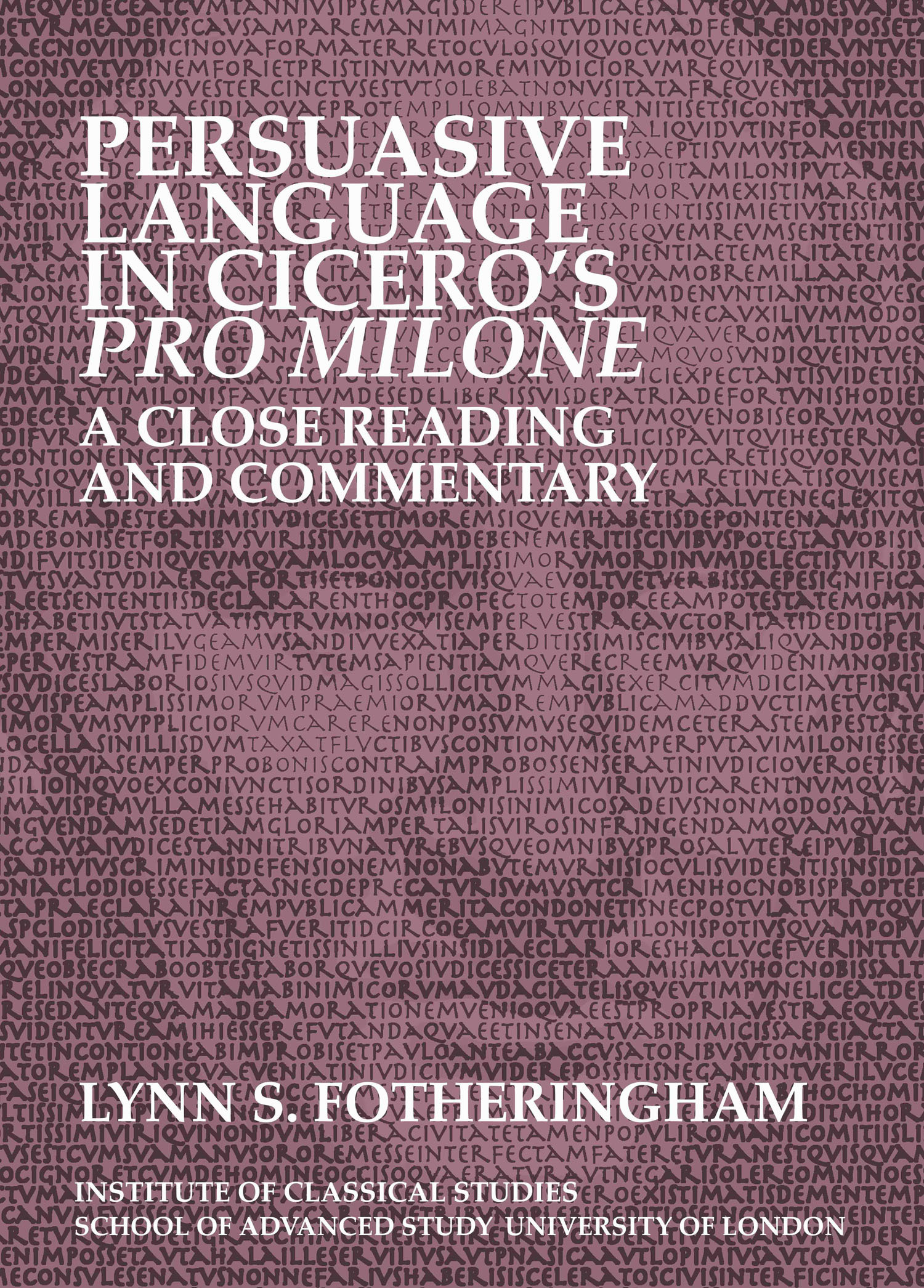
Persuasive Language in Cicero’s Pro Milone: A close reading and commentary - cover image 

This innovative approach to Cicero's persuasive language analyses the style and structure of one of his important speeches in more detail than has ever been done before. It applies ideas from modern linguistics (sentential topic, lexical patterning, interactional discourse), and explores the possibilities and limitations of quantitative analysis, made easier by modern computing power, in the areas of syntax and vocabulary. The result is a reading of the Pro Milone as a unified text, whether aimed at persuading the jury to acquit Milo or at persuading a wider audience that Milo should have been acquitted. This reading not only contributes to our understanding of late republican discourse, but also suggests a new methodology for using the study of language and style to illuminate literary/historical aspects of texts.
PublisherUniversity of London Press
Publication placeLondon, GB
Published on2017-09-01
Series
  • Bulletin of the Institute of Classical Studies Supplements vol. 4
  • ISSN Print: 2398-8770
  • ISSN Digital: 2398-8770
ISBN978-1-905670-48-2 (Paperback)
978-1-905670-68-0 (PDF)
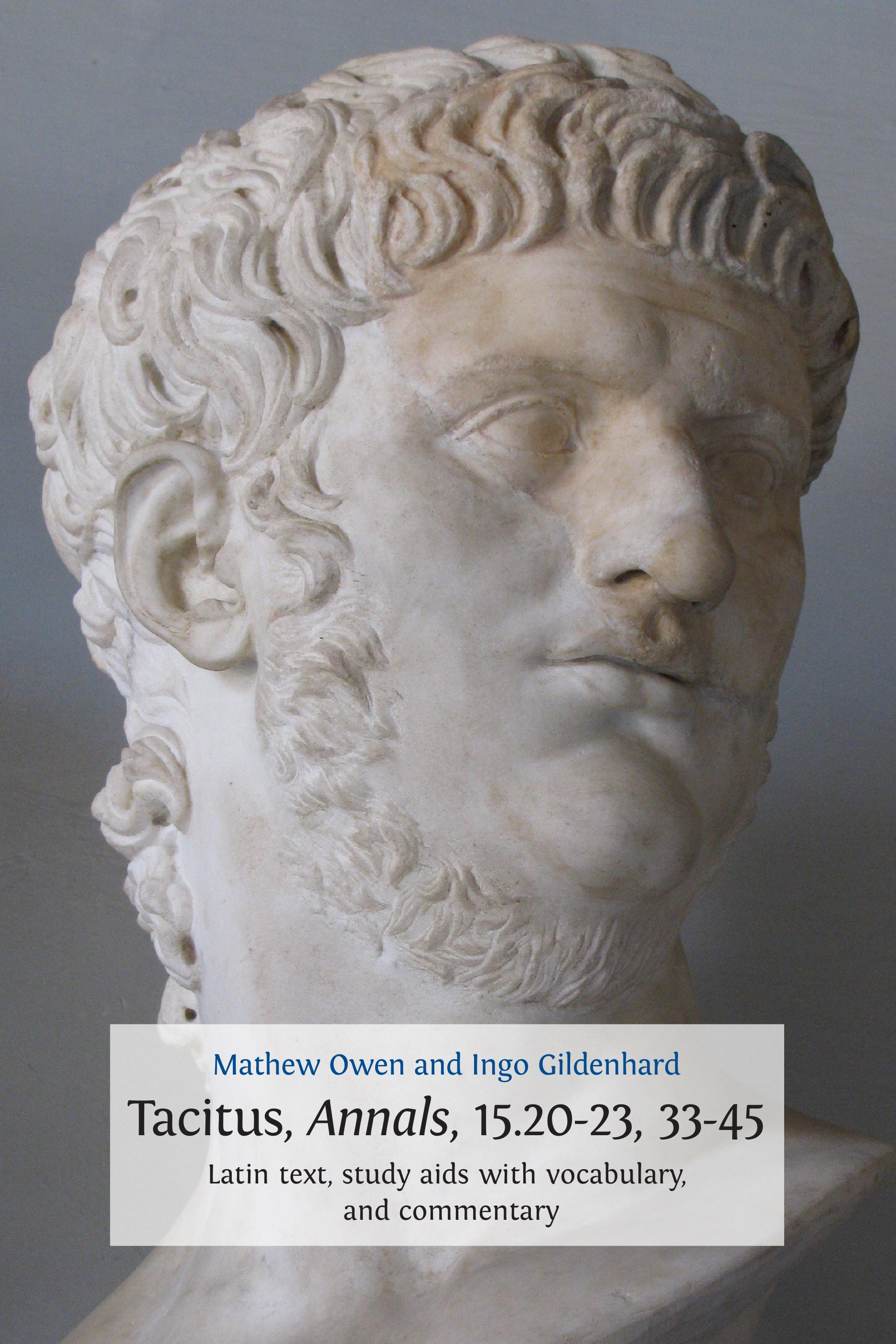


Tacitus, Annals, 15.20-23, 33-45: Latin Text, Study Aids with Vocabulary, and Commentary

  • Mathew Owen (author)
  • Ingo Gildenhard (author)
  • Tacitus, Annals, 15.20-23, 33-45: Latin Text, Study Aids with Vocabulary, and Commentary - cover image 


    The emperor Nero is etched into the Western imagination as one of ancient Rome’s most infamous villains, and Tacitus’ Annals have played a central role in shaping the mainstream historiographical understanding of this flamboyant autocrat. This section of the text plunges us straight into the moral cesspool that Rome had apparently become in the later years of Nero’s reign, chronicling the emperor’s fledgling stage career including his plans for a grand tour of Greece; his participation in a city-wide orgy climaxing in his publicly consummated ‘marriage’ to his toy boy Pythagoras; the great fire of AD 64, during which large parts of central Rome went up in flames; and the rising of Nero’s ‘grotesque’ new palace, the so-called ‘Golden House’, from the ashes of the city. This building project stoked the rumours that the emperor himself was behind the conflagration, and Tacitus goes on to present us with Nero’s gruesome efforts to quell these mutterings by scapegoating and executing members of an unpopular new cult then starting to spread through the Roman empire: Christianity. All this contrasts starkly with four chapters focusing on one of Nero’s most principled opponents, the Stoic senator Thrasea Paetus, an audacious figure of moral fibre, who courageously refuses to bend to the forces of imperial corruption and hypocrisy. This course book offers a portion of the original Latin text, study aids with vocabulary, and a commentary. Designed to stretch and stimulate readers, Owen’s and Gildenhard’s incisive commentary will be of particular interest to students of Latin at both A2 and undergraduate level. It extends beyond detailed linguistic analysis and historical background to encourage critical engagement with Tacitus’ prose and discussion of the most recent scholarly thought.
    Print length278 pages (vi + 272)
    LanguageEnglish (Original)
    Dimensions156 x 15 x 234 mm | 6.14" x 0.58" x 9.21" (Paperback)
    156 x 17 x 234 mm | 6.14" x 0.69" x 9.21" (Hardback)
    Weight870g | 30.69oz (Paperback)
    1253g | 44.20oz (Hardback)
    Media2 illustrations
    11 tables
    OCLC Number1086537339
    LCCN2019452794

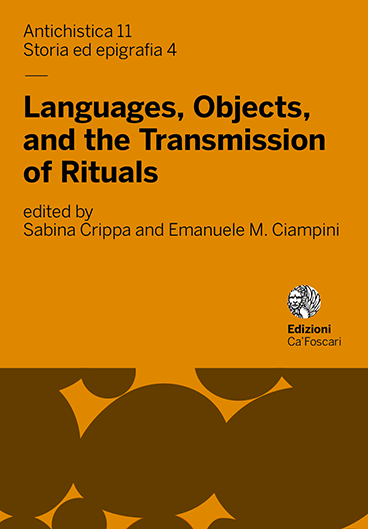
    Languages, Objects, and the Transmission of Rituals: An Interdisciplinary Analysis On Some Unsearched Ritual Practices in the Graeco-Egyptian Papyri (PGM)

  • Sabina Crippa(editor)
  • Emanuele Marcello Ciampini(editor)
  •  Languages, Objects, and the Transmission of Rituals: An Interdisciplinary Analysis On Some Unsearched Ritual Practices in the Graeco-Egyptian Papyri (PGM) - cover image

    The transformations in ancient mind can be recognized by means of texts, which testify to the elaboration of the cultural semantic. Amongst these written sources, we can recognize some specific case-studies, such as the Greaco-Egyptian Papyri (PGM). By conducting open and experimental group research, this study aims to introduce new elements and suggestions for the history of both ideas and tradition of the scientific thought, in the frame of some late rituals. The starting point of this research is the Mediterranean Late Antiquity, an extraordinary lab for exchange, contacts and conflicts amongst traditions and knowledge: as stated by Ph. Borgeaud in his foreword, a perfect place for the study of cultures in contact. 

    PublisherEdizioni Ca’ Foscari – Venice University Press
    Publication placeVenice, Italy
    Published on2017-07-12
    Series
    • Antiquity Studies vol. 11
    • ISSN Print: 2610-9344
    • ISSN Digital: 2610-9344
    ISBN978-88-6969-180-5 (PDF)


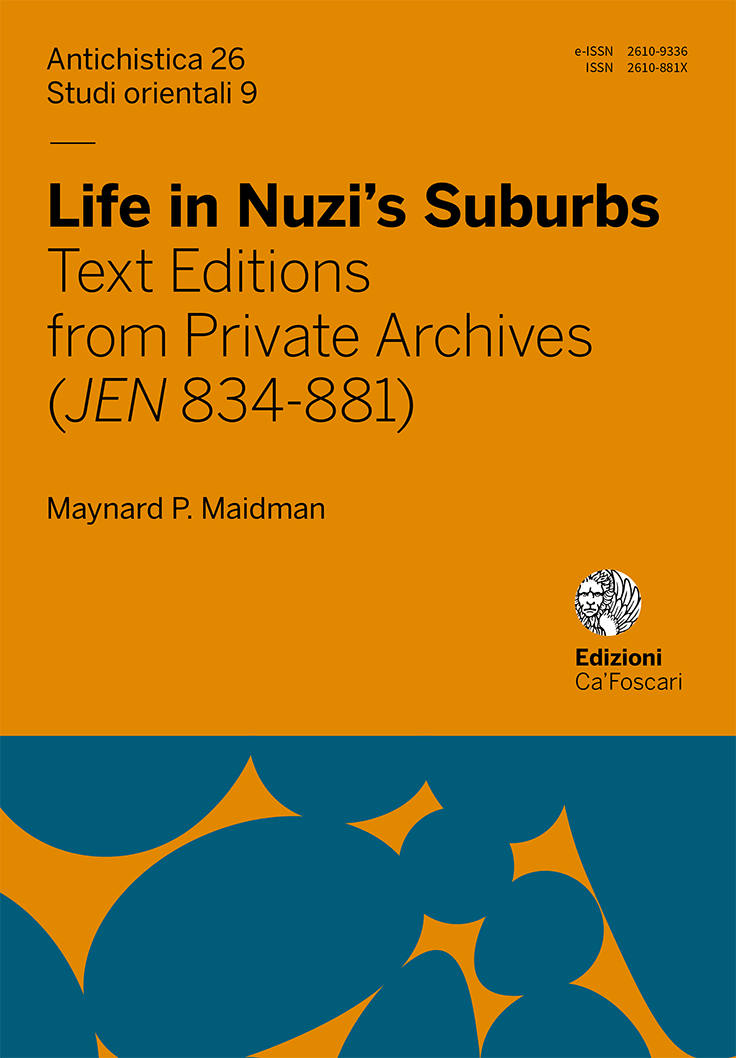
    Life in Nuzi’s Suburbs: Text Editions from Private Archives (JEN 834-881)

    Maynard P. Maidman
    Life in Nuzi’s Suburbs: Text Editions from Private Archives (JEN 834-881) - cover image 

    Nuzi was a town in what is today northeastern Iraq. It flourished as part of the kingdom of Mittanni from about 1475 to 1350 BCE, early in the Late Bronze Age. Uniquely for a town of its moderate size, Nuzi produced a huge number of documents of which almost 7,000 survive. These include economic, legal, administrative, and even a few scholastic texts. They come from government offices in the town, private houses from several of the town’s neighborhoods, and private villas in Nuzi’s wealthy suburbs. The present volume presents text editions, including transliterations, translations, and analyses of some of these tablets from the suburbs, predominantly from a single family’s records, a huge private archive, one of the largest ever to have been unearthed in the entire ancient world. 

     
    PublisherEdizioni Ca’ Foscari – Venice University Press
    Publication placeVenice, Italy
    Published on2020-05-21
    Series
    • Antiquity Studies vol. 26
    • ISSN Print: 2610-9344
    • ISSN Digital: 2610-9344
    ISBN978-88-6969-404-2 (Paperback)
    978-88-6969-404-2 (PDF)

    Tuesday, September 8, 2026

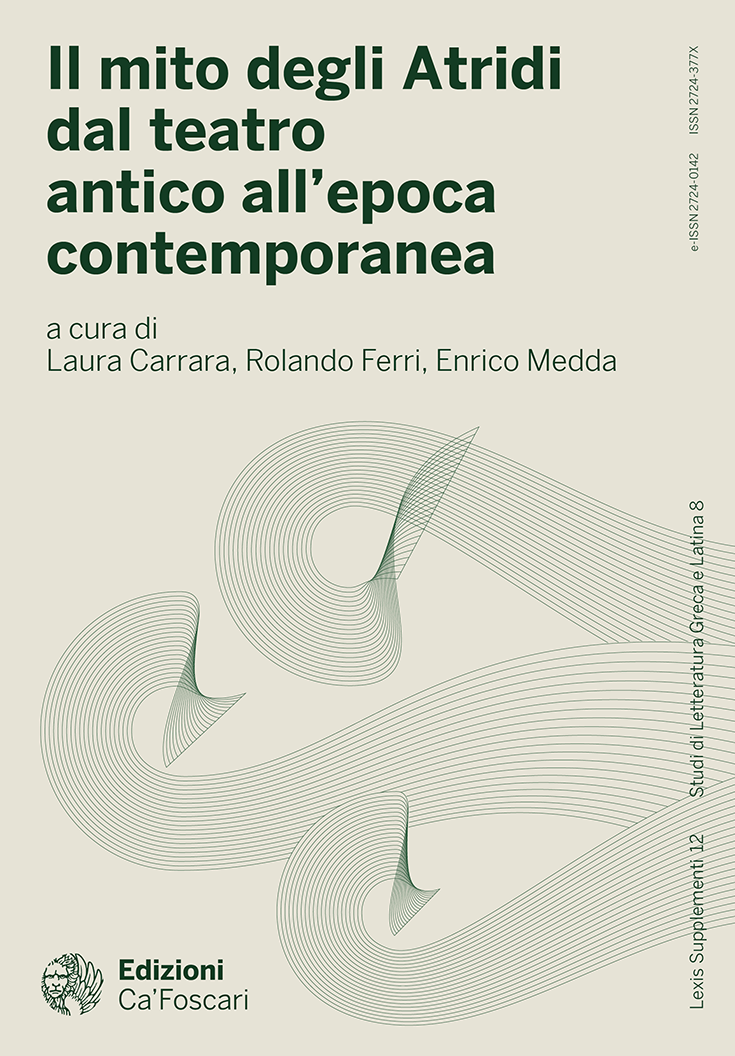
    Il mito degli Atridi dal teatro antico all’epoca contemporanea

    a cura di Laura Carrara, Rolando Ferri, Enrico Medda 
    Il mito degli Atridi dal teatro antico all’epoca contemporanea - cover image 

    The volume collects the proceedings of the International Conference The Myth of the Atreidai from Ancient Theatre to Contemporary Times, held in Pisa on 26-27 May 2022, at the conclusion of a Research Project financed by the University of Pisa and coordinated by Prof. Enrico Medda. The papers presented here aim to investigate various aspects of a myth that had an immense fortune in antiquity and profoundly influenced art and literature throughout Western culture. The subject is approached from a number of different perspectives and methods (textual-critical study of ancient texts, historical-anthropological research on issues posed by the myth, dramaturgical analysis of plays, and study of their reception in modern authors). Without aspiring to deal comprehensively with such a broad topic, the authors have concentrated on peculiar aspects that have been less investigated up to now, and on modern authors for whom there is still much to say about their relationship with ancient myth. The contributions range, for the ancient part, from mythographers to Greek tragedy and comedy (with particular attention to fragments of lost works), up to Roman tragedy and comedy; for the modern part, the investigations concern authors from Italian, English and German literature: Alfieri, D’Annunzio, Pirandello, Saba, Pasolini, Testori, E. Pfeiffer, G. Hauptmann. 
    PublisherEdizioni Ca’ Foscari – Venice University Press
    Publication placeVenice, Italy
    Published on2023-07-07
    Series
    • Lexis Supplements vol. 12
    • ISSN Print: 2724-3362
    • ISSN Digital: 2724-3362
    ISBN978-88-6969-709-8 (Paperback)
    978-88-6969-709-8 (PDF)


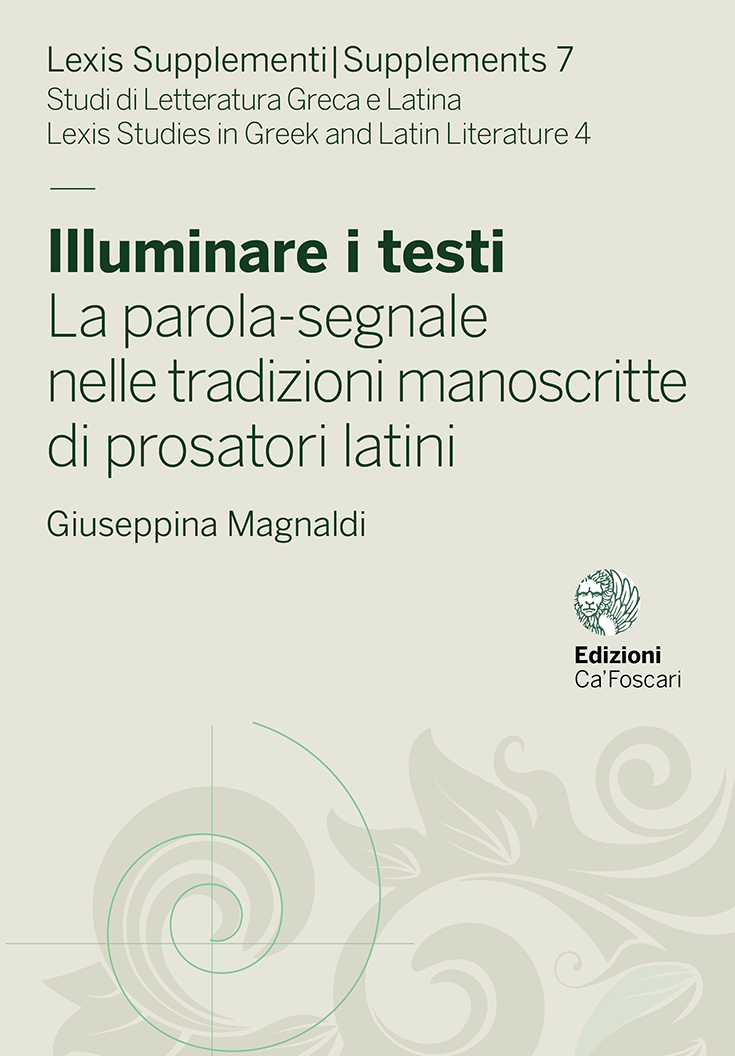
    Illuminare i testi: La parola-segnale nelle tradizioni manoscritte di prosatori latini

    Giuseppina Magnaldi
    book cover 

    Collana | Lexis Supplementi
    Volume 7

    Il volume raccoglie i risultati più significativi di trent’anni di ricerche su antiche integrazioni e correzioni con parola-segnale meccanicamente inglobate nel testo tràdito di prosatori latini dall’età repubblicana alla tarda antichità (Cicerone, Varrone, Livio, Seneca Padre, Seneca, Petronio, Svetonio, Tacito, Gellio, Apuleio e Pseudo-Apuleio, Macrobio). La parola-segnale (ovvero la parola antecedente o seguente il termine omesso o erroneo, duplicata dai correttori più scrupolosi per indicare il luogo di lacuna o di errore) consente ancor oggi di decifrare ed eseguire l’antico intervento correttivo. Si possono così sanare gravi corruttele, come mostrano le decine di luoghi qui discussi. 

     Copyright © 2022 Giuseppina Magnaldi. This is an open-access work distributed under the terms of the Creative Commons Attribution License (CC BY). The use, distribution or reproduction is permitted, provided that the original author(s) and the copyright owner(s) are credited and that the original publication is cited, in accordance with accepted academic practice. The license allows for commercial use. No use, distribution or reproduction is permitted which does not comply with these terms.


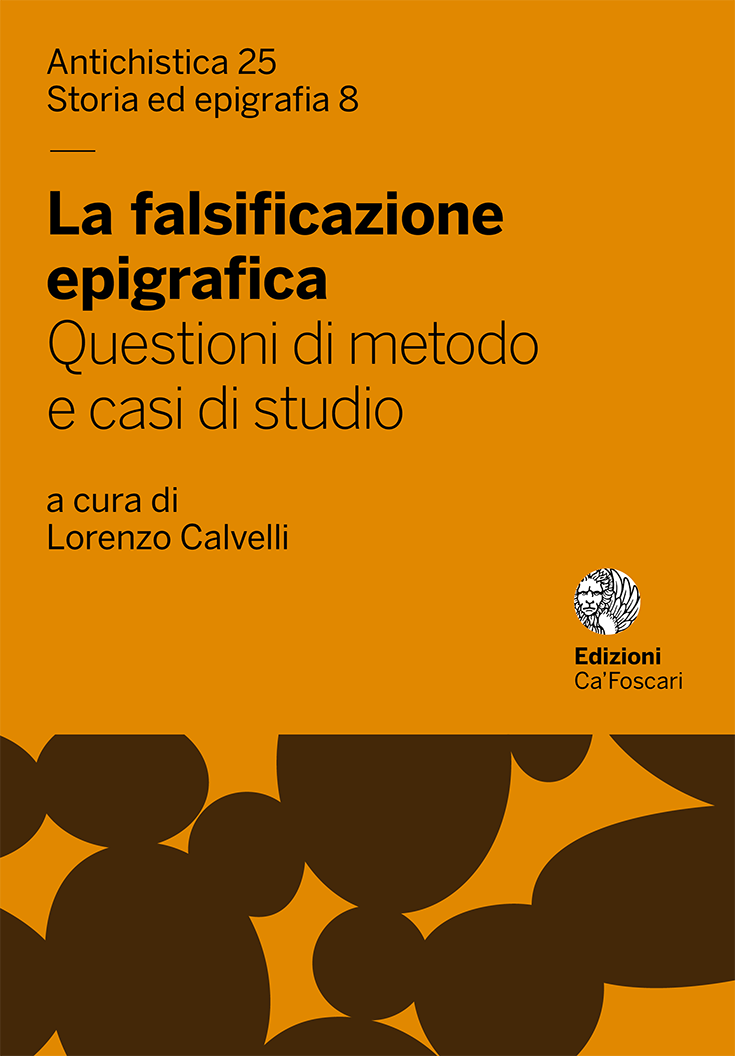
    La falsificazione epigrafica:Questioni di metodo e casi di studio

    a cura di Lorenzo Calvelli  
    book cover 

    Collana | Antichistica
    Volume 25

    Il libro indaga le complesse articolazioni della falsificazione epigrafica, un fenomeno ampiamente attestato in Italia fra il tardo Medioevo e il XVIII secolo. Le iscrizioni non genuine o falsae, come le chiamava Theodor Mommsen, sono quelle che si presentano come antiche, ma in realtà non lo sono. Possono essere prodotte tanto su supporto materiale, quanto semplicemente su carta. Al loro interno si distinguono diverse tipologie di documenti: falsi realizzati a scopo di dolo, repliche di iscrizioni antiche, nonché testi o monumenti che si ispirano a modelli epigrafici classici. Il volume raccoglie quindici saggi scientifici, che esaminano singoli casi di falsificazione, ricostruiscono l'epistemologia della critica dei falsi e riabilitano numerose epigrafi ritenute erroneamente false, confermandone invece l'effettiva antichità. 

     Copyright © 2019 Lorenzo Calvelli. This is an open-access work distributed under the terms of the Creative Commons Attribution License (CC BY). The use, distribution or reproduction is permitted, provided that the original author(s) and the copyright owner(s) are credited and that the original publication is cited, in accordance with accepted academic practice. The license allows for commercial use. No use, distribution or reproduction is permitted which does not comply with these terms.


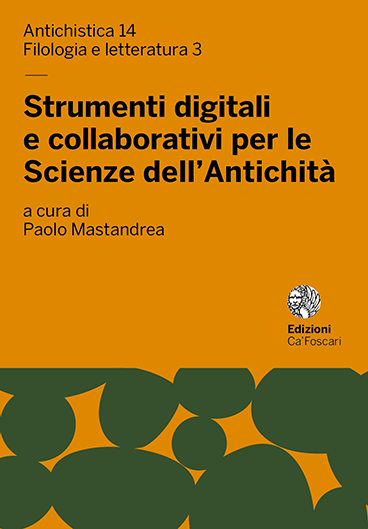
    Strumenti digitali e collaborativi per le Scienze dell’Antichità

    a cura di Paolo Mastandrea  
    book cover 

    Collana | Antichistica
    Volume 14 

    Il libro costituisce l’esito di un Convegno internazionale di studi tenutosi all’Università Ca’ Foscari nel 2014, e si propone quale momento di riflessione sopra le opere di digitalizzazione e ricerca condotte a livello accademico su materiali e testi inerenti alle Scienze dell’Antichità. I contributi in esso raccolti rispondono all’esigenza di porre a confronto esperienze maturate in ambiti disciplinari apparentemente distanti fra loro (dall’archeologia all’epigrafia, dalle letterature antiche e premoderne al diritto romano) ma accomunate da punti di contatto significativi. Lo scopo è di individuare nella collaborazione interdisciplinare nuove linee di ricerca, capaci di estendere le potenzialità degli attuali sistemi automatici di indagine. 

    Copyright © 2017 Paolo Mastandrea. This is an open-access work distributed under the terms of the Creative Commons Attribution License (CC BY). The use, distribution or reproduction is permitted, provided that the original author(s) and the copyright owner(s) are credited and that the original publication is cited, in accordance with accepted academic practice. The license allows for commercial use. No use, distribution or reproduction is permitted which does not comply with these terms. 


    Monday, September 7, 2026

    La tragedia di Eschilo: testo, ipotesti, performance: Atti del Convegno Internazionale (Pisa, 1-2 ottobre 2025)

  • Enrico Medda(editor)
  • Andrea Taddei(editor)
  •  La tragedia di Eschilo: testo, ipotesti, performance: Atti del Convegno Internazionale (Pisa, 1-2 ottobre 2025)

    The study of Aeschylus’ tragedy requires the integration of diverse and complex skills: textual criticism, literary criticism, performance studies, historical-anthropological approaches, and analysis of ancient and modern reception. The research group members of the 2022 PRIN project dedicated to Aeschylean tragedy some of these lines at the international conference held in Pisa on October 1-2, 2025, whose proceedings this volume collects. Among the topics addressed: the Aeschylean conception of language, various aspects of the Libation Bearers (Electra’s role and ritual texture of the first episode), a group of possibly Aeschylean adespota fragments, mythic geography in Prometheus Bound, metaphorical landscapes in the Suppliants, the link between Aeschylean diction and previous archaic lyric models, some typical Aeschylean figures of repetition, the development of Iphigenia’s character in the major tragedians. The interdisciplinary dialogue illuminates Aeschylus’ dramaturgical evolution, emphasizing intertextuality and performative staging. 

     
    TitleLa tragedia di Eschilo: testo, ipotesti, performance
    SubtitleAtti del Convegno Internazionale (Pisa, 1-2 ottobre 2025)
    ContributorEnrico Medda(editor)
    Andrea Taddei(editor)
    DOIhttps://doi.org/10.30687/979-12-5742-013-0
    Landing pagehttps://edizionicafoscari.it/en/edizioni4/libri/979-12-5742-013-0/
    Licensehttps://creativecommons.org/licenses/by/4.0/
    PublisherEdizioni Ca’ Foscari – Venice University Press
    Published on2026-02-26
    Series
    • Lexis Supplements vol. 22
    • ISSN Print: 2724-3362
    • ISSN Digital: 2724-3362
    ISBN979-12-5742-013-0 (PDF)
     

    The Reception of Sumerian Literature in the Western Periphery

    Maurizio Viano (author)
    The Reception of Sumerian Literature in the Western Periphery - cover image 

    This book investigates the transmission of Sumerian literature to Syria and Anatolia (i.e. the Western periphery) during the Late Bronze Age. Sumerian is the most ancient language so far documented and remained for about three millennia the language of culture in Mesopotamia for its association with scribal education. With the end of the Old Babylonian period, Sumerian literary and lexical texts were disseminated to regions outside Mesopotamia. The volume, however, is not limited to the documentation stemming from peripheral sites but also includes a comprehensive study of contemporary Mesopotamian sources, i.e. Middle Babylonian and Middle Assyrian. Sumerian literature is best known through the Old Babylonian texts, to which countless studies were dedicated, while the subsequent period is poorly known and has been neglected by scholars for the scarcity of sources. Nevertheless, the Late Bronze Age is extremely important for the Sumerian literature because the process of selection and modification of texts that ended up in the first millennium canonization started in this period. Therefore, this book aims at filling a gap in our comprehension of the history of Sumerian literature. The primary objective of this book is the identification of the tradition of texts discovered in the Western periphery in comparison with second and first millennium Mesopotamian sources. The subject has been approached from different perspectives, taking into account philological, cultural, and historical aspects. 

    DOIhttps://doi.org/10.14277/978-88-6969-076-1
    Landing pagehttps://edizionicafoscari.it/en/edizioni4/libri/978-88-7543-417-5/
    Licensehttps://creativecommons.org/licenses/by/4.0/
    CopyrightMaurizio Viano
    PublisherEdizioni Ca’ Foscari – Venice University Press
    Publication placeVenice, Italy
    Published on2016-07-08
    Series
    • Antiquity Studies vol. 9
    • ISSN Print: 2610-9344
    • ISSN Digital: 2610-9344
    ISBN978-88-6969-076-1 (PDF)


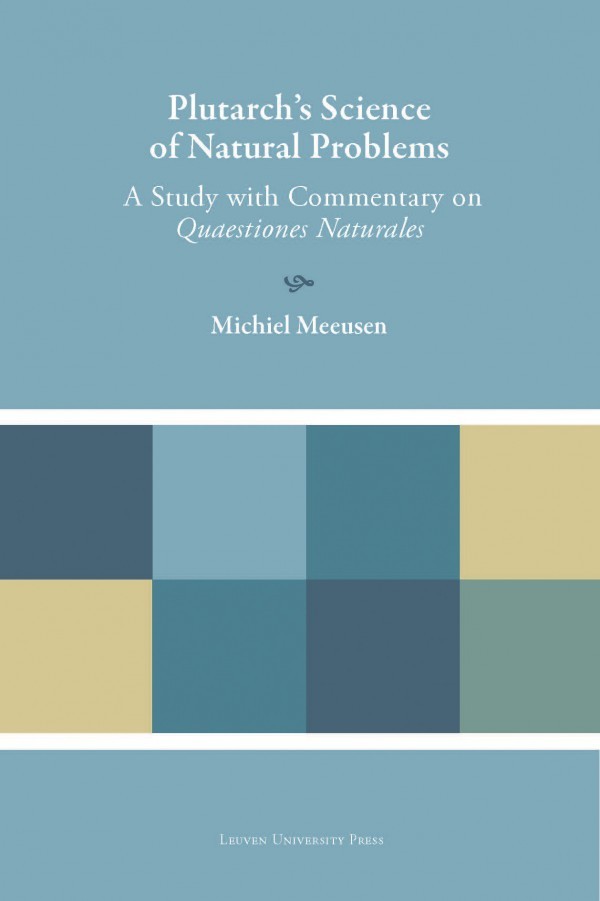
    Plutarch's Science of Natural Problems: A Study with Commentary on Quaestiones Naturales

    Michiel Meeusen (author)
    Plutarch's Science of Natural Problems: A Study with Commentary on Quaestiones Naturales - cover image 

    The role of natural science in the Roman Imperial Era In his Quaestiones naturales, Plutarch unmistakeably demonstrates a huge interest in the world of natural phenomena. The work of this famous intellectual and philosopher from Chaeronea consists of forty-one natural problems that address a wide variety of questions, sometimes rather peculiar ones, and answers pertaining to ancient Greek physics, including problems related to the fields of zoology, botany, meteorology and their respective subdisciplines. By providing a thorough study of and commentary on this generally neglected text, written by one of the most influential and prolific writers from Antiquity, this book contributes to our better understanding of Plutarch’s natural scientific programme and, the condition and role of ancient natural science in the Roman Imperial Era in general. This publication is GPRC-labeled (Guaranteed Peer-Reviewed Content). 

    DOIhttps://doi.org/10.11116/9789461662293
    Landing pagehttps://chooser.crossref.org/?doi=10.11116%2F9789461662293
    Licensehttps://creativecommons.org/licenses/by-nc/4.0/legalcode
    PublisherLeuven University Press
    Publication placeLeuven, BE
    Published on2017-02-10
    Series
    • Plutarchea Hypomnemata vol. 1
    • ISSN Print:
    • ISSN Digital:
    ISBN978-94-6270-084-0 (Hardback)
    978-94-6166-229-3 (PDF)


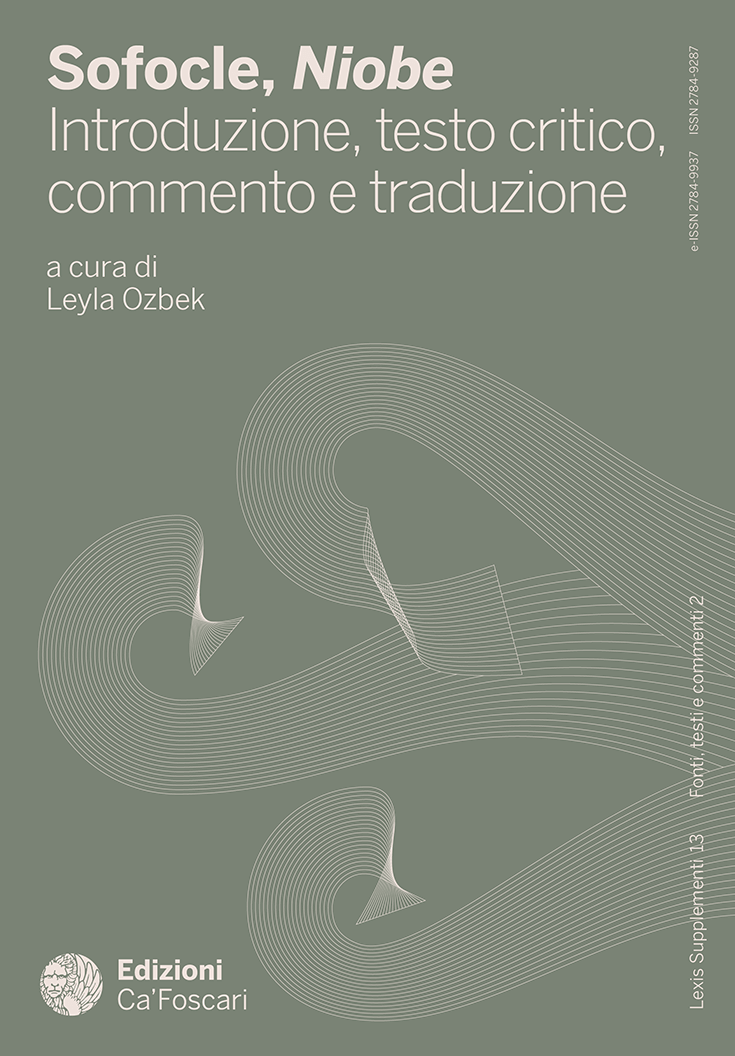
    Sofocle, Niobe: Introduzione, testo critico, commento e traduzione

    Leyla Ozbek (editor)
    Sofocle, Niobe: Introduzione, testo critico, commento e traduzione - cover image 

    The myth regarding Niobe was already extremely famous in ancient times, and her actions still resonate today. She offended the goddess Leto by comparing her own offspring to Leto’s two children, Apollo and Artemis, and was punished by the goddess in a horrendous way, with the killing of her children. Her legendary mourning is already quoted in one of the most famous passages of the Iliad, during the encounter between Achilles and Priam. While Aeschylus, in his now fragmentary play on Niobe, represented on stage her silent mourning on the tomb of her children (a prelude to her metamorphosis into a forever weeping stone on Mount Sipylus), Sophocles focused his tragedy on the most shocking part of the myth: the killing of Niobe’s sons and daughters by Apollo and Artemis. This volume contains a new critical edition of Sophocles’ Niobe with a translation and a commentary. The text also includes fragments and testimonia that were not taken into account in the fourth volume of TrGF by Stefan Radt. The papyrus fragments and testimonies have been re-edited following direct personal re-examination of the original manuscripts. The introduction focuses on the content and mutual collocation of the fragments and testimonies, proposing a new dispositio fragmentorum (accompanied by a new numeration). This new disposition will shed new light on the overall reconstruction of the plot of the tragedy and of its staging. In the commentary, testimonia and fragments, in which the text is preserved in full or can be at least partially reconstructed, are followed by an Italian translation. The translation is followed by a general introduction in which the content and the context of each fragment and testimony are given, together with a metrical analysis of the passage (in the case of poetic fragments) and a commentary that examines textual and papyrological problems, as well as aspects of vocabulary, grammar and syntax, trying also to reconstruct key scenes of the play and their staging. Visual representations of Niobe’s myth that are useful for understanding important details of the story are discussed and examined within the commentary. The volume is closed by an appendix that considers four fragments to which Radt refers at the end of his introduction to the Niobe. These fragments have been attributed to this play in the past but should not be considered as part of it now, either because their attribution is erroneous or, at best, because it is extremely doubtful. 

    DOIhttps://doi.org/10.30687/978-88-6969-710-4
    Landing pagehttps://edizionicafoscari.it/en/edizioni4/libri/978-88-6969-738-8/
    Licensehttps://creativecommons.org/licenses/by/4.0/
    CopyrightLeyla Ozbek
    PublisherEdizioni Ca’ Foscari – Venice University Press
    Publication placeVenice, Italy
    Published on2023-12-20
    Series
    • Lexis Supplements vol. 13
    • ISSN Print: 2724-3362
    • ISSN Digital: 2724-3362
    ISBN978-88-6969-710-4 (Paperback)
    978-88-6969-710-4 (PDF)