Thursday, March 2, 2017

Open Access Publications from Ausonius Éditions

Open Access Publications from Ausonius Éditions
LOGO AUSONIUS JAUNE WEB


ausonius est l’une des très rares équipes CNRS à posséder son propre service de publications. À travers plusieurs collections bien spécifiques, nos ouvrages font connaître les résultats des programmes de recherche d’Ausonius, mais également les travaux de chercheurs extérieurs au laboratoire, en publiant prioritairement les ouvrages collectifs, les fouilles archéologiques, les recueils d’inscriptions. Tous ces ouvrages sont le fruit d’un travail technique et graphique de haut niveau, car nous avons à cœur de faire de beaux livres, sous un format pratique et agréable, à des prix relativement limités, et dans des délais de fabrication assez brefs, afin d’assurer leur diffusion dans les meilleures conditions possibles auprès de la communauté scientifique internationale.

Le forum en Gaule et dans les régions voisines Bouet Alain (éd.)
Collection Mémoires (31)
Bordeaux, 2012 - 406 p.   50 €

Le forum, cœur politique de la civitas romaine, est à l’origine d’une abondante littérature. Les découvertes archéologiques qui se sont multipliées ces dernières années ont permis de faire avancer la connaissance sur un certain nombre de complexes. Cet ouvrage, issu du séminaire d’archéologie romaine de l’Université de Toulouse, a pour ambition de faire le point sur quelques uns de ces ensembles. Le forum est étudié ici sur la longue durée, des premiers ensembles monumentaux de terre et de bois de la Protohistoire qui font l’objet de débats sur la nature de leur fonction jusqu’au devenir du forum à la fin de l’Antiquité. Cet ouvrage fait une large part à la Ga .../... (plus)

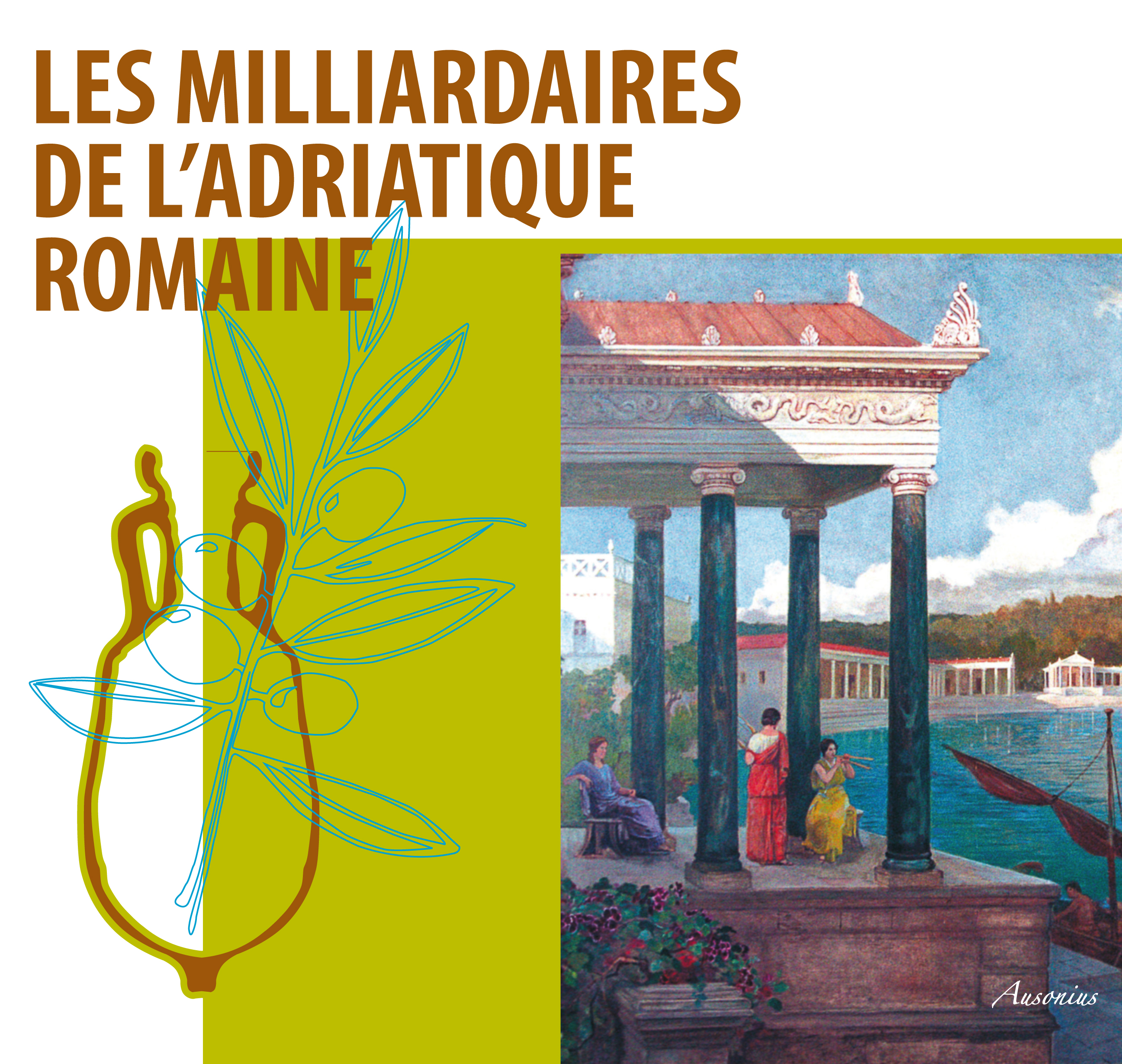
Les milliardaires de l'Adriatique romaine Tassaux Francis, Jean-Courret Ezéchiel, Tassaux Yolande
Collection Catalogue d'exposition 
Bordeaux, 2010 - 59 p.   5 €
(Épuisé papier : PDF téléchargeable)

Ce catalogue a été réalisé à l'occasion de l'exposition "Les Milliardaires de l'Adriatique Romaine" organisée par l'institut Ausonius à l'Archéopôle d'Aquitaine du 19 Mars au 18 Juin 2010.

Peu avant notre ère, l'empereur Auguste et ses proches, enrichis pas les guerres civiles, installent de somptueuses villas maritimes dans la petite péninsule de l'Istrie (actuelle Croatie), attirés par un climat de riviera et les promesses d'une terre fertile. L'exposition qui s'est tenu du 19 Mars au 18 Juin 2010 à l'Archéopôle d'Aquitaine présente les résultats des fouilles menées dans cette région depuis quinze ans par l'institut Ausonius et fait revivre ces villas, qui n'ét
 .../... (plus)

D'Olbia à Tanaïs : territoires et réseaux d'échanges dans la mer Noire septentrionnale aux époques classique et hellénistique Müller Christel
Collection Scripta antiqua (28)
Bordeaux, 2010 - 453 p.   10€
(Épuisé papier : PDF téléchargeable)

Malgré les ouvrages pionniers d'E.Minns et M.I.Rostovcev, les rivages de la Mer Noire septentrionale n'ont longtemps évoqué, chez les historiens occidentaux, que l'image d'un monde semi-barbare aux confins de l'"hellenikon". Depuis une vingtaine d'années cependant, la rencontre avec l'historiographie soviétique et le dévoilement progressif de riches sources documentaires ont permis l'abandon de ces poncifs au profit d'une véritable réflexion, dont le présent ouvrage se voudrait un aboutissement au moins partiel. Le Pont Nord, si éloigné soit-il d'un centre égéen supposé, forme, aux époques classique et hellénistique, un monde ouvert et dynamique, comme le montre, l'analyse de .../... (plus)

Les "Beneficiarii" : militaires et administrateurs au service de l'empire : Ier s. a.C.-VIe s. p.C Nelis-Clément Jocelyne
Collection Études (5)
Bordeaux, 2000 - 557 p.   10€
(Épuisé papier : PDF téléchargeable)

Les armées au service de l'administration de Rome et de ses provinces constituent le thème central de cet ouvrage consacré aux beneficiarii, des soldats libérés des corvées militaires à proprement parler et choisis pour être mis au service personnel des officiers, procurateurs, préfets et gouverneurs provinciaux. Cette étude s'appuie sur l'ensemble des sources littéraires, épigraphiques, papyrologiques et archéologiques, du Ier s.a.C. au VIe s.p.C., et s'attache à illustrer les multiples fonctions exercées par des bénéficiaires, dans toutes les régions de l'Empire. Débutant par une réflexion méthodologique sur l'exploitation des sources, elle aborde des questions telles .../... (plus)


Du statère au sesterce. Monnaie et romanisation dans la Gaule du Nord et de l’Est ( IIIe s. a.C. / Ier s. p.C. ) - PRIX SoPHAU 2014 Martin Stéphane
Collection Scripta antiqua (78)
Bordeaux, 2015 - 488 p.   25 €

CATALOGUE À TÉLÉCHARGER SUR https://hal.archives-ouvertes.fr/hal-01344885
ADDENDUM À TÉLÉCHARGER ICI EN PDF

Une des conséquences les plus manifestes de la conquête des Gaules fut sans conteste le passage de la monnaie gauloise à la monnaie romaine. Jusqu’à présent, aucune étude détaillée n’y avait pourtant été consacrée. En confrontant les données numismatiques aux sources archéologiques, littéraires et épigraphiques, et en s’appuyant sur plus d’une centaine de cartes et de graphiques produits spé
 .../... (plus)

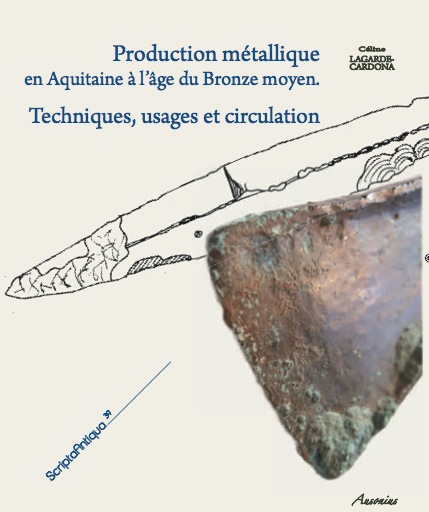
Production métallique en Aquitaine à l'âge du Bronze moyen. Techniques, usages et circulation Lagarde-Cardona Céline
Collection Scripta antiqua (39)
Bordeaux, 2012 - 420 p.   25€
Catalogue des objets étudiés PDF

Cette étude porte sur la culture matérielle métallique et sur son artisanat en tant que production socioculturelle des communautés occupant l’Aquitaine à l’âge du Bronze moyen (xviie-xive siècle a.C.). Les objets métalliques ont été étudiés selon diverses méthodes de recherche : typologiques, technologiques et contextuelles. La restitution du cadre environnemental met en évidence les transformations, à l’échelle de la vie humaine, qui se sont opérées dans la zone de l’estuaire, jouant un rôle dans le développement du système technique et économique des sociétés. L’examen fonctionnel puis morpho-typologique des objets métalliques permet d’établir plusieur .../... (plus)

Open Access Journal: Pegasus - Berliner Beiträge zum Nachleben der Antike

[First posted in AWOL 28 December 2013, updated 2 March 2017]

Pegasus - Berliner Beiträge zum Nachleben der Antike
ISSN: 1436-3461
Pegasus 8
Einmal im Jahr erscheint das mehrsprachige Periodikum des Census -  der Pegasus. Er versteht sich grundsätzlich als Diskussionsforum für alle mit antiken Traditionen befassten Disziplinen. Anders als die Datenbank des Census setzt er keine zeitlichen  Begrenzungen, sondern öffnet den Blick auf alle nachantiken Epochen. Neben Untersuchungen, die dem breiten Spektrum der Antikentradition gewidmet sind, werden hier Ergebnisse präsentiert, die unmittelbar der Arbeit mit der Datenbank entstammen. So zeigt sich im Pegasus die Präsenz der antiken Bilderwelt wie sie uns –  gefiltert durch den Blick früherer Epochen – auch heute noch gegenwärtig ist.

Seit 2010 werden die Pegasus-Hefte, deren Erscheinen mindestens fünf Jahre zurückliegt, als PDF-Dokumente auf dem edoc-Server der Berlin-Brandenburgischen Akademie der Wissenschaften bereitgestellt.
Über die Inhaltsverzeichnisse der einzelnen Hefte auf dieser Seite (siehe unten) gelangen Sie direkt zu den jeweiligen Aufsätzen im Volltextangebot...

Multiculturalism, Race & Ethnicity in Classics Consortium (MRECC)

Multiculturalism, Race & Ethnicity in Classics Consortium (MRECC)
MRECC is an international organization founded in October 2016 by faculty and graduate students in classics and education from six different universities across the United States. Since then, it has grown to include 290 affiliated students, staff, faculty, and independent researchers from a variety of backgrounds and institutions worldwide. The purpose of this organization is to facilitate discussion and establish a supportive network of international scholars interested in topics related to multiculturalism, race, and ethnicity in classics whether that is from the perspective of languages, literature, pedagogy, and/or material culture. We are not only dedicated to promoting the study of multiculturalism, race, and ethnicity but also committed to increasing the diversity of students, staff, and faculty within the professional world of classics. It is our hope in the coming years to set up panels, publications, and an annual conference as we grow our affiliation with other established classics organizations. For more information on the founding and aim of MRECC, please see the Mission page. If you are interested in becoming an official member, check out our Membership page for more information on how to register. If you are part of an organization that would like to be affiliated with MRECC and have us post about your events and publications, please send an email to the MRECC Executive Board at multiculturalclassics@gmail.com. And don’t forget to join the conversation on Facebook and follow us on Twitter. Thank you and welcome to MRECC!

Wednesday, March 1, 2017

Open Access Magazine: Hebdomada Aenigmatum: magazine of crosswords, quizzes and other games in Latin language

[First posted in AWOL 10 November 2013, updated 1 March 2017]

Hebdomada Aenigmatum
Cover
Hebdomada Aenigmatum is the first monthly magazine of crosswords and puzzles in Latin. Launched in June 2014 by the Italian Cultural Association Leonardo, it is available free of charge in printable pdf format upon registration on our website.

The magazine features several crosswords and word puzzles in Latin, a section with global news, a comic strip of Incredibilis Snupius (Snoopy) and a section on miscellaneous subjects (movies, recipes, sport, etc.). The magazine also features a variation of Sudoku with Latin numbers. Not everybody knows that the Sudoku is a modern version of the “Latin square”. Hebdomada Aenigmatum has therefore recovered the Latin origins of one of the most popular games in the world.

The editor-in-chief is Luca Desiata alias "Lucas Cupidus", an executive at the Italian energy company Enel and a Professor at the Luiss Business School in Rome.


Recently Published Open Access Books and Articles at Archaeopress

Recently Published Open Access Books and Articles at Archaeopress


Eastern Sudan in its Setting The archaeology of a region far from the Nile Valley by Andrea Manzo. viii+82 pages; illustrated throughout with 38 colour plates. Available both in print and Open Access. Cambridge Monographs in African Archaeology 94. ISBN 9781784915599. Book contents pageDownload

Eastern Sudan, like other regions far away from the Nile valley, has often been overlooked historically on account of a kind of prejudice towards areas lacking in monumental or urban remains or evidence of any literary production. Despite the relevance of the deserts and marginal areas becoming increasingly evident in the last year or so, in Sudan only a few research projects have been conducted in these regions. The ongoing research project in Eastern Sudan by the University ‘L’Orientale’ has provided a preliminary reconstruction of the history of the region from c. 6000 BC to AD 1500. This publication outlines this reconstruction and also considers the more general setting known for the other regions of northeastern Africa. Several issues remain to be clarified and understanding of some phases is still limited, nevertheless it can be safely stated that Eastern Sudan, was in ancient times, as it is now, a crossroads between the Nile basin, Eastern Desert, the Ethio-Eritrean highlands and the Red Sea, represented a crucial region in several respects: the spread of domestic crops and animals towards the Ethio-Eritrean highlands, the spread of the Sahelian crops towards India via the Red Sea and Arabia, as well as the long-distance trade network characterizing northeastern Africa in the 3rd and 2nd millennia BC.

This book is also available to buy in paperback priced £25.00.

Access Archaeology: This imprint is designed to make archaeological research accessible to all and to present a low-cost (or no-cost) publishing solution for academics from all over the world. Material ranges from theses, conference proceedings, catalogues of archaeological material, excavation reports and beyond. We provide type-setting guidance and templates for authors to prepare material themselves designed to be made available for free online via our Open Access platform and to supply in-print to libraries and academics worldwide at a reasonable price point. Click here to learn more about publishing in Access Archaeology.

Note for downloading: PDF displays best in Chrome. For best results right-click 'Download (pdf)' below and use the option 'Save link as...' to save a local copy to your computer/device. Please ensure file has finished downloading before opening and be sure to use desktop PDF reading software rather than browser-based software, otherwise file may appear corrupted.


The Death of the Maiden in Classical Athens Ο ΘΑΝΑΤΟΣ ΤΗΣ ΑΓΑΜΟΥ ΚΟΡΗΣ ΣΤΗΝ ΑΘΗΝΑ ΤΩΝ ΚΛΑΣΙΚΩΝ ΧΡΟΝΩΝ by Katia Margariti. xlviii+636 pages; 105 plates in colour and black & white. Text in Greek with extensive 63 page english summary. Available both in print and Open Access.ISBN 9781784915476. Book contents pageDownload The present study examines the death of maidens in classical Athens, combining the study of Attic funerary iconography with research on classical Attic maiden burials, funerary inscriptions, tragic plays, as well as the relevant Attic myths.

The iconography of funerary reliefs focuses on the idealized image of the deceased maiden, as well as the powerful bonds of love and kinship that unite her with the members of her family, whereas the iconography of vases emphasizes the premature death of the maiden, the pain of loss and mourning felt by her family, as well as the observance of the indispensable funerary rites concerning her burial and ‘tomb cult’. Particularly interesting is the fact that the ‘traditional’ theory according to which the loutrophoros marked the graves of the unmarried dead alone has been proven non valid.

The study of classical Attic maiden burials indicates that the prematurely dead maidens were buried as children who didn’t live long enough to reach adulthood.

The untimely death of maidens in Attic drama and mythology is beneficial to the family or the city. In great contrast to that, the premature death of real - life Athenian maidens was a terrible disaster for the girls’ families, as well as the polis itself. Despite this, the iconography of dead maidens in classical Athens is in accordance with the ‘image’ of the deceased maidens presented by funerary epigrams, tragedy, and mythology. It has to be noted though, that the same is not true in the case of maiden burials.
This book is also available to buy in paperback priced £110.00. Access Archaeology: This imprint is designed to make archaeological research accessible to all and to present a low-cost (or no-cost) publishing solution for academics from all over the world. Material ranges from theses, conference proceedings, catalogues of archaeological material, excavation reports and beyond. We provide type-setting guidance and templates for authors to prepare material themselves designed to be made available for free online via our Open Access platform and to supply in-print to libraries and academics worldwide at a reasonable price point. Click here to learn more about publishing in Access Archaeology. Note for downloading: PDF displays best in Chrome. For best results right-click 'Download (pdf)' below and use the option 'Save link as...' to save a local copy to your computer/device. Please ensure file has finished downloading before opening and be sure to use desktop PDF reading software rather than browser-based software, otherwise file may appear corrupted.


Materials, Productions, Exchange Network and their Impact on the Societies of Neolithic Europe Proceedings of the XVII UISPP World Congress (1–7 September 2014, Burgos, Spain) Volume 13/Session A25a edited by Marie Besse and Jean Guilaine. vi+82 pages; illustrated throughout in black & white. Available both in print and Open Access.ISBN 9781784915254. Book contents pageDownload Scholars who will study the historiography of the European Neolithic, more particularly with regards to the second half of the 20th century and the beginning of the 21st century, will observe a progressive change in the core understanding of this period. For several decades the concept of ‘culture’ has been privileged and the adopted approach aimed to highlight the most significant markers likely to emphasise the character of a given culture and to stress its specificities, the foundations of its identity. In short, earlier research aimed primarily to highlight the differences between cultures by stressing the most distinctive features of each of them. The tendency was to differentiate, single out, and identify cultural boundaries. However, over the last few years this perspective has been universally challenged. Although regional originality and particularisms are still a focus of study, the research community is now interested in widely diffused markers, in medium-scale or large-scale circulation, and in interactions that make it possible to go beyond the traditional notion of ‘archaeological culture’. The networks related to raw materials or finished products are currently leading us to re-think the history of Neolithic populations on a more general and more global scale. The aim is no longer to stress differences, but on the contrary to identify what links cultures together, what reaches beyond regionalism in order to try to uncover the underlying transcultural phenomena. From culturalism, we have moved on to its deconstruction. This is indeed a complete change in perspective. This new approach certainly owes a great deal to all kinds of methods, petrographic, metal, chemical and other analyses, combined with effective tools such as the GIS systems that provide a more accurate picture of the sources, exchanges or relays used by these groups. It is also true that behind the facts observed there are social organisations involving prospectors, extractors, craftsmen, distributors, sponsors, users, and recyclers. We therefore found it appropriate to organise a session on the theme ‘Materials, productions, exchange networks and their impact on the societies of Neolithic Europe’.

How is it possible to identify the circulation of materials or of finished objects in Neolithic Europe, as well as the social networks involved? Several approaches exist for the researcher, and the present volume provides some examples.
This book is also available to buy in paperback priced £24.00. 

The Ancient Skyscape over the Sanctuary of Egyptian Gods in Marathōn Taken from Liber Amicorum–Speculum Siderum: Nūt Astrophoros edited by Nadine Guilhou with the help of Antigoni Maniati. Pages 153-166.Download By Themis G. Dallas

In the present paper we study the orientation of the sanctuary of Egyptian Gods in Marathōn and calculate that it belongs to the Equinoctial Group in the classification of Egyptian temples. We also reproduce the ancient skyscape over the area and associate astronomical phenomena with the major feasts most probably celebrated in that temple. We conclude that Navigium Isidum and Inventio Osiridis may be associated with the acronychal rising and setting of Canopus (or the constellation of Argo Navis in general) and Lychnapsia with the Perseids meteor–shower. Connections of Pēlusia and Serapia to astronomical phenomena are more problematic, but we also examine such possibilities.

KEY WORDS: Marathōn, Sanctuary of Isis, Ptolemaic & Helleno–Roman Period, Ancient Astronomy, Canopus, Ancient Skyscapes, Ancient Egyptian & Hellenic Feasts.

Instant Messaging: Dance, Text, and Visual Communication on Archaic Corinthian and Athenian Vases by Tyler Jo Smith Taken from Epigraphy of Art edited by Dimitrios Yatromanolakis. Pages 145-163.Download Although a great deal has been written over the years about the association between ancient Greek vases and drama, far less attention has been given to the relationship between figure-decorated pottery and dance. On the one hand, this hardly seems surprising, especially in the case of tragedy, which drew its subjects from the shared textual tradition of epic and myth. On the other hand, it is very surprising, as dance would have been a part of everyday experience. ...


Tracing Letters on the Eurymedon Vase: On the Importance of Placement of Vase-Inscriptions by Georg Simon Gerleigner Taken from Epigraphy of Art edited by Dimitrios Yatromanolakis. Pages 165-184.Download This chapter intends to show the vital importance of considering very carefully the placement of an inscription within a vase-painting when interpreting it, using the much-discussed Eurymedon Vase as a case in point...


Production, consumption and political complexity: early medieval pottery in Castile and Southern Tuscany (7th-10th centuries) by Francesca Grassi Taken from Social complexity in early medieval rural communities edited by Juan Antonio Quirós Castillo. Pages 91-112.Download This paper, which compares two groups of rural villages in north-western Spain and central Italy, is inspired by the first results of the research project Earmedcastile, currently ongoing at the University of the Basque Country and funded by the H2020 Program. It focuses on the study of the complex dynamics of social, political and economic life in the rural areas of the ancient County of Castile and Southern Tuscany. The systems of production, distribution and consumption of household ceramics in the 7th-10th centuries are analysed, and the results are related to other archaeological indicators at the sites.

After a review of the European state of the art on material culture studies in early medieval societies, the methods and objectives of the research underway in Spain are presented. The first case studies from the County of Castile and a case study from Italy are discussed, using the same methodology.

The purpose is to show the potentiality and limitations of the use of ceramics in the study of early medieval society, as well as the political and economic structure of these territories.

Inequality and social complexity in peasant societies. Some approaches to early medieval north-western Iberia Taken from Social complexity in early medieval rural communities by Juan Antonio Quirós Castillo. Pages 1-16.Download This introduction provides an overview of the two main topics analysed in this book in the framework of medieval peasant studies: social inequality and social complexity in peasant communities. The chapter is divided into three sections. Firstly, Iberian case studies are presented, followed by an explanation of the concepts and terminology used throughout the book. Secondly, the single chapters that follow are contextualised from the perspective of settlement patterns, food, craft production systems and social practices. Finally, some generalisations are made in order to connect single case studies with general trends.

Internal-Handled Bowls – Puzzling pots from Bronze Age Mesopotamia Taken from Parcours d’Orient: Recueil de textes offert à Christine Kepinski by Ulrike Bürger & Peter A. Miglus. Pages 21-34.Download Recent excavations at Bakr Awa in Iraqi Kurdistan yielded a peculiar type of pottery vessel with inward bent handles. The authors’ curiosity was aroused and lead to an intensive literature research for comparisons. The surprising result was a catalogue of at least sixty specimens from all over southern and eastern Mesopotamia, including several variants as well as miniature vessels. Furthermore, it became apparent that this type had been in use for quite a long time, from the Early Dynastic to the Isin-Larsa Period. A wide range of interpretations for their function can be found in the literature, but the most convincing one is that as an enhanced pot stand.

Statio amoena Sostare e vivere lungo le strade romane edited by Patrizia Basso and Enrico Zanini. viii+264 pages; illustrated throughout in black & white. All papers in Italian with English abstracts. Available both in print and Open Access. 295 2016. ISBN 9781784914998. Book contents pageDownload The Roman road system was the main service infrastructure for administrative management, economic operation and defense of the empire.

Along with roads, a key element of this infrastructure were the resting places more or less directly linked with vehiculatio / cursus publicus, or with a system run or controlled by the state to ensure essential services (safe stop, supplies, maintenance of horses and other animals) to those traveling on behalf of the public administration.

New archaeological research and new studies on a rich and diverse body of extra-archaeological sources have recently reported the attention of the international scientific community on the subject of parking places, within the more general theme of the smaller settlements in the Roman world and their evolution in late antiquity and early medieval times.

This volume brings together contributions from scholars from three different generations, starting from different sources and methodological approaches, converging towards the construction of an area of common reflection on a theme still relatively underdeveloped. The goal is to lay the foundation for a deepening of the interdisciplinary debate and to develop new research projects.
This book is also available to purchase in paperback priced £40.00. Italian description:
Il sistema stradale romano rappresentava la principale infrastruttura di servizio per la gestione amministrativa, il funzionamento economico e la difesa dell’impero.

Insieme con le strade, elemento fondamentale di questa infrastruttura erano i luoghi di sosta più o meno direttamente legati con la vehiculatio/cursus publicus, ovvero con il sistema gestito o controllato dallo stato per assicurare i servizi indispensabili (sosta sicura, rifornimenti, cambio dei cavalli, manutenzione di animali e mezzi) a chi viaggiava per conto della pubblica amministrazione.

Nuove ricerche archeologiche e nuovi studi su un ricco e variegato corpus di fonti extra-archeologiche hanno recentemente riportato l’attenzione della comunità scientifica internazionale sul tema dei luoghi di sosta, all’interno della tematica più generale degli insediamenti minori nel mondo romano e della loro evoluzione in epoca tardoantica e altomedievale.

Questo volume raccoglie contributi di studiosi di tre diverse generazioni che, partendo da sistemi di fonti e da approcci metodologici differenti, convergono verso la costruzione di un terreno di riflessione comune su un tema ancora relativamente poco frequentato. L’obiettivo è quello di gettare le basi per un approfondimento del dibattito interdisciplinare e per lo sviluppo di nuovi progetti di ricerca, più organici e specificamente mirati.

Journal of Hellenistic Pottery and Material Culture Volume 1 2016 edited by Dr Patricia Kögler, Dr Renate Rosenthal-Heginbottom and Prof. Dr Wolf Rudolph (Heads of Editorial Board). xiv+212 pages; illustrated throughout in colour and black & white. Available in print and Open Access. 1 2016. ISBN 2399-1852-1-2016. Download ISSN 2399-1844 (Print) ISSN 2399-1852 (online) Table of Contents:
A Fill from a Potter’s Dump at Morgantina – by Shelley Stone
Trade in Pottery within the Lower Adriatic in the 2nd century BCE – by Carlo De Mitri
Hellenistic Ash Containers from Phoinike (Albania) – by Nadia Aleotti
Pottery Production in Hellenistic Chalkis, Euboea. Preliminary Notes – by Yannis Chairetakis
A Terracotta Figurine of a War Elephant and Other Finds from a Grave at Thessaloniki – by Eleni Lambrothanassi & Annareta Touloumtzidou
Moldmade Bowls from Straton’s Tower (Caesarea Maritima) – by Renate Rosenthal-Heginbottom
Greco-Roman Jewellery from the Necropolis of Qasrawet (Sinai) – by Renate Rosenthal-Heginbottom

ARCHAEOLOGICAL NEWS AND PROJECTS
Panathenaic Amphorae of Hellenistic and Roman Times – by Martin Streicher

BOOK REVIEWS
Shelley C. Stone, Morgantina Studies 6. The Hellenistic and Roman Fine Wares – by Peter J. Stone
Pia Guldager Bilde & Mark L. Lawall (eds.), Pottery, Peoples and Places, BSS 16 – by Kathleen Warner Slane
Susan I. Rotroff, Hellenistic Pottery. The Plain Wares, Agora 33 – by Patricia Kögler
Also available in print 2016 PRINT SUBSCRIPTION RATES (1 issue in 2016): (please order via the downloadable form - click here to follow the link):
£50.00 (plus standard shipping rates)
Agents will receive 25% discount on institutional print price including shipping rates as stated
Individuals (please order via the website - click here to follow the link):
£30.00 (plus standard shipping rates)
Note for downloading: PDF displays best in Chrome. For best results right-click 'Download (pdf)' below and use the option 'Save link as...' to save a local copy to your computer/device (or hold 'Alt' and click for Mac users). Please ensure file has finished downloading before opening, otherwise file may appear corrupted.


Archeologia dell’acqua a Gortina di Creta in età protobizantina by Elisabetta Giorgi. x+288 pages; illustrated throughout in black & white. Italian text with English abstracts for each chapter. Available both in print and Open Access. Limina/Limites: Archaeologies, histories, islands and borders in the Mediterranean (365-1556) 5. ISBN 9781784914455. Book contents pageDownload Ancient aqueducts have long commanded the attention of archaeologists, both for their intrinsic, monumental importance and for their significance as infrastructures closely related to the concept of civilisation. An aqueduct, in fact, is an artefact that has a great potential for providing information concerning at least two major aspects of ancient society: those relating to structural, technical, and engineering matters, and those relating to building and construction technology. These topics have enjoyed considerable attention in past studies, and in recent years they have also been integrated with a multi-disciplinary and contextual approach. They have further increased the potential of the analysis of ancient hydraulic systems, turning them into historical subjects capable of expanding our knowledge of the urban and social transformation of ancient cities and their territories.

The current study of the early Byzantine aqueduct of Gortyn (Crete) follows this tradition, but starts from a viewpoint related not so much to the aqueduct itself, as to a series of questions about the city: what was the appearance of Gortyn in the early Byzantine era? How did the inhabitants live? Where did they live and what did they do for living?

The aqueduct was born with the Roman city and accompanied it for its entire lifetime, constituting the backbone around which the various forms of urban settlement were redrawn at each major historical stage. Its vital link with everyday life makes the aqueduct a key witness for the study of the transformations of the city over the long term.
This book is also available to buy in paperback priced £40.00. Access Archaeology: This imprint is designed to make archaeological research accessible to all and to present a low-cost (or no-cost) publishing solution for academics from all over the world. Material ranges from theses, conference proceedings, catalogues of archaeological material, excavation reports and beyond. We provide type-setting guidance and templates for authors to prepare material themselves designed to be made available for free online via our Open Access platform and to supply in-print to libraries and academics worldwide at a reasonable price point. Click here to learn more about publishing in Access Archaeology. Note for downloading: PDF displays best in Chrome. For best results right-click 'Download (pdf)' below and use the option 'Save link as...' to save a local copy to your computer/device. Please ensure file has finished downloading before opening, otherwise file may appear corrupted.


Enfoques metodológicos en el estudio de los asentamientos fortificados de la edad del hierro Aproximación teórica a la metodología de estudio sobre la defensa del territorio en la Prehistoria Final Europea by Óscar Rodríguez Monterrubio. 145 pages; illustrated throughout in colour and black & white. Spanish text with English Abstract. Available both in print and Open Access.ISBN 9781784914493. Book contents pageDownload This volume focuses on the main methodological perspectives currently existing in studies on Iron Age fortified settlements. Current investigations can be characterised according to three methodological approaches: analytic, landscape and componential analysis. These approaches can be traced since the 70s and are found all around Europe from the Baltic regions to the Mediterranean coast. They are examples of diachronic and versatile methodological procedures in use today and applicable to different contexts of the European Iron Age. We introduce digital archaeology at the end of this paper. In each one of the chapters we shall focus not only on the theoretical perspective of the approach but also on its practical application to the study of actual fortified settlements from different geographic contexts. In conclusion, and despite the difficulties of using these methods when investigating Iron Age settlements, they seem to be as versatile as they are adaptable and they have evolved adopting new methods of tele-detection and geographic information systems which update and refresh them as current methodological approaches. This book is also available to buy in paperback priced £30.00. Access Archaeology: This imprint is designed to make archaeological research accessible to all and to present a low-cost (or no-cost) publishing solution for academics from all over the world. Material ranges from theses, conference proceedings, catalogues of archaeological material, excavation reports and beyond. We provide type-setting guidance and templates for authors to prepare material themselves designed to be made available for free online via our Open Access platform and to supply in-print to libraries and academics worldwide at a reasonable price point. Click here to learn more about publishing in Access Archaeology. Note for downloading: PDF displays best in Chrome. For best results right-click 'Download (pdf)' below and use the option 'Save link as...' to save a local copy to your computer/device. Please ensure file has finished downloading before opening, otherwise file may appear corrupted.


Journal of Greek Archaeology Volume 1 2016 Sampler edited by John Bintliff (Ed. in Chief). p. i-vi; 109-148; 406-420; 466-470. Black & white and colour illustrations.Download Archaeopress is delighted to be launching a new journal in October 2016 with an editorial board headed by John Bintliff (Edinburgh University, U.K. and Leiden University, The Netherlands). The scope of this journal is Greek archaeology both in the Aegean and throughout the wider Greek-inhabited world, from earliest Prehistory to the Modern Era. Thus we include contributions not just from traditional periods such as Greek Prehistory and the Classical Greek to Hellenistic eras, but also from Roman through Byzantine, Crusader and Ottoman Greece and into the Early Modern period. Outside of the Aegean contributions are welcome covering the Archaeology of the Greeks overseas, likewise from Prehistory into the Modern World. Greek Archaeology for the purposes of the JGA thus includes the Archaeology of the Hellenistic World, Roman Greece, Byzantine Archaeology, Frankish and Ottoman Archaeology, and the Postmedieval Archaeology of Greece and of the Greek Diaspora.

This Open Access sampler has been designed to act as an introduction and taster to the scope and style of this new journal. It includes one complete paper and two review articles as well as full contents listings for Volume 1 and subscription information (including some special offers).
Creative Commons License
This Open Access sampler is available here as a free download and is made available under a Creative Commons Attribution-NonCommercial-NoDerivatives 4.0 International License. Please feel free to re-post online, circulate electronically to colleagues and to host on personal servers.
For more information on the journal please see the dedicated page on our website. Click here to subscribe to Volume 1, 2016, available from October 2016. Note for downloading: PDF displays best in Chrome. For best results right-click 'Download (pdf)' below and use the option 'Save link as...' to save a local copy to your computer/device.

Dja’de el-Mughara (Aleppo) by Eric Coqueugniot Taken from A History of Syria in One Hundred Sites by Y. Kanjou and A. Tsuneki (eds). Pages 51-53.Download Excavated as part of the rescue campaigns of the Tishreen Dam in the Euphates valley, the Neolithic tell of Dja’de el Mughara has yielded archaeological levels belonging mostly to the 9th millennium BC (9310-8290 cal. BCE). It concerns a crucial phase in the process of Neolithisation, the one which corresponds to the end of the period of gestation, and invention of the domestication of plants (raw agricultural practices but with wild cereals). ...


Open Access Journal: Deltion archaiologikon: ekdidomenon apo tēs genikēs ephoreias tōn archaiotētōn

ISSN: 2365-4716
Cover
4.1888
5.1889
6.1890
7.1891
8.1892