Tuesday, October 23, 2018

Pennsylvania Sumerian Dictionary News

ePSD2 Public Beta 3 (built 2018-10-23)
Welcome to the new version of the electronic Pennsylvania Sumerian Dictionary, ePSD2. Here we provide listings of over 12,000 Sumerian words, phrases and names, occurring in almost 100,000 distinct forms a total of over 2.27 million times in the corpus of texts indexed for the Dictionary. The corpus covers, directly or indirectly, about 100,000 of the 134,000+ known Sumerian texts.
ePSD2 is organized as a glossary with a collection of subprojects providing the corpora. You can browse the subprojects and their individual glossaries, or you can work with the entire ePSD2 glossary and corpus by using the top-level ePSD2 project.
ePSD2 is a work in progress. See the News page for what changes between the releases, and see the What's Next? pagefor some of the things we are planning.
Here's a list of the things you can find here:

Glossaries and Tools

Sub-corpora

Pompeii Bibliography and Mapping Project

[First posted in AWOL in 2015, updated 23 October 2018]

Pompeii Bibliography and Mapping Project
http://digitalhumanities.umass.edu/pbmp/wp-content/uploads/2014/11/Slider2-e1416753144757.jpg
The Pompeii Bibliography and Mapping Project is working to create a unique resource that binds two resources in a single, online location. The first is a database of citations and full-text repository relating to the ancient city of Pompeii.  The second is a Geographical Information System (GIS) map of that ancient city. The PBMP’s ultimate goal is online interface that will allow a user to navigate the bibliographic database and repository via the GIS map or, conversely, to illustrate places in the GIS map found in a search of the database or repository. These components are described in greater detail in the following sections.
Bibliographic Database – Based on the more than 18,000 references detailed in L. García y García’s landmark publication, Nova Bibliotheca Pompeiana (vols I-III), the bibliographic database is designed to be an exhaustive catalog of all works related to Pompeii. Although the Nova  Bibliotheca Pompeiana is the core of the database, works produced  after 2011 when volume III of the Nova Bibliotheca Pompeiana was published are being incorporated.

Geographical Information System (GIS) – The online GIS is a dynamic map of the places and objects in ancient Pompeii. Its most basic function is to allow a user to navigate the physical landscape of the ancient city. The current GIS is exceptionally robust: more than 15,000 objects and properties are contained in over 400 files. In its current iteration, ESRI’s ArcGIS Online platform is  used to display and deliver these a subset of these files. In addition to navigating via the online map, users are able to download the base files and perform more advanced analyses and/or modify their geometry based on new archaeological interpretations. We hope that in the future, scholars will upload those new files back to the PBMP for use (navigation or download by others) of those alternate interpretations.
Interface – Both components eventually will be accessed via a single user interface. Users will be able to begin their search via the GIS map or the bibliographic database, a choice that will determine the search environment. For example, as the user selects a place or places in the map, the right side of the interface will display all available information for that place, from simple citations to full-text documents. In this way, using the GIS interface can be imagined as moving the map over the top of a pyramid, to the apex of a unique and structured set of citations and references that lead down to a vast repository of articles, books, and images. Should the user prefer to explore the bibliographic database and full-text repository, the interface will adjust to provide more space for standard bibliographic and full-text search tools. When a search is conducted and records are selected, relevant locations appear highlighted in the reduced sized GIS map. In this way, the metaphorical topical landscapes within the scholarship on Pompeii can be not only expressed as a list, but also can be visualized and given physical structure in the map. The act of searching the subject repository thus creates an instant gazeteer of the results that can be used with the list of citations.

And see AWOL's Roundup of Resources on Ancient Geography

Open Access Journal: Religious Studies News

[First posted in AWOL 21 July 2013, updated 23 October 2018]

Religious Studies News
ISSN: 0885-0372
Religious Studies News (RSN) is the newspaper of record for the field especially designed to serve the professional needs of persons involved in teaching and scholarship in religion (broadly construed to include religious studies, theology, and sacred texts). Published quarterly online by the American Academy of Religion, RSN is received by some 9,000 scholars and by libraries at colleges and universities internationally. Religious Studies News communicates the important events of the field and related areas and examines critical issues in education, pedagogy (especially through the biannual Spotlight on Teaching), theological education (through the annual Spotlight on Theological Education), research, publishing, and the public understanding of religion. It also publishes news about the services and programs of the AAR and other organizations, including employment services and registration information for the Annual Meeting and related activities. It does not accept books for review.

For current online issues of RSN as of January 1, 2015, click here.


Back Online Issues:
May 2014
October  2013
March 2010 to May 2013
PDFs of print issues prior to March 2010 are here.

Monday, October 22, 2018

Bible Geocoding: The location of every identifiable place mentioned in the Bible

Bible Geocoding: The location of every identifiable place mentioned in the Bible

Complete Bible

Google Earth (KMZ)
Satellite map of the places in the Bible
Also available: KMZs arranged by book and by chapter. Turn book or chapter layers on and off to see patterns across the Bible.

Individual Books

Use Google Earth to open KML and KMZ files.

New Testament

And see AWOL's Roundup of Resources on Ancient Geography

Open Access Journal: Anales de Arquelogía Cordobesa

Anales de Arquelogía Cordobesa
ISSN: 1130-9741
Encabezado de página
Anales de Arqueología Cordobesa (AAC) es una revista de periodicidad anual, publicada por el Grupo de Investigación Sísifo (PAIDI HUM-236) del Área de Arqueología de la Universidad de Córdoba, en colaboración con el servicio de publicaciones de Diputación Provincial de Córdoba. Surgida en 1990 como herramienta de apoyo y difusión para los resultados del proyecto de investigación que entonces desarrollábamos en la Subbética Cordobesa, con el tiempo AAC ha ido evolucionando, al tiempo que ganaba crédito entre la comunidad científica, hasta convertirse en lo que hoy es: una revista sólida, comprometida y de vocación internacional, que tiene como principal objetivo científico el servir como vehículo para dar a conocer de manera rigurosa los resultados de la investigación arqueológica española y extranjera (europea o no), propiciando la discusión y el debate, al tiempo que la puesta en común de problemas, teorías y novedades de interés general. Fiel a un concepto amplio de Arqueología, AAC acoge trabajos comprendidos desde la Prehistoria hasta nuestros días, primando aquéllos que aborden cuestiones generales o temas ajenos a la estricta realidad arqueológica cordobesa. 

Núm. 28 (2017)

DOI: https://doi.org/10.21071/aac.v28i0


Tabla de contenidos


ARTÍCULOS


Sergio ESPAÑA-CHAMORRO
PDF
11-32

Julio C. RUIZ RODRÍGUEZ
PDF
33-62

Alberto GAVINI
63-72

Luigi QUATTROCCHI
73-98

Antonio Pio DI COSMO
99-126

Jaime VIZCAÍNO SÁNCHEZ, José Miguel NOGUERA CELDRÁN, María José MADRID BALANZA
PDF
127-152

Carmen GARCÍA BUENO
PDF
153-180

Juan Ramón GARCÍA CARRETO, Juan Antonio MARTÍN RUIZ
PDF
181-190

Adela DÍAZ DOMÍNGUEZ, Virgilio MARTÍNEZ ENAMORADO
PDF
191-204

Marcos Octavio LABRADA OCHOA
PDF
205-230

Luca SCALCO, Monica SALVADORI
231-250


1995

Núm. 6 (1995)


New Open Access Journal: Conatus: Journal of Philosophy

Conatus: Journal of Philosophy
Online ISSN: 2459-3842
Page Header

Conatus - Journal of Philosophy is the biannual scholarly publication of the NKUA Applied Philosophy Research Laboratory; it is an international open-access peer reviewed academic journal (both print and electronic) dedicated to the dissemination of original philosophical research. The journal invites original unpublished papers within any field of Philosophy or application of Philosophical method to any areas of intellectual and practical life. Conatus is the result of the partnership of the NKUA Applied Philosophy Research Laboratory and the National Documentation Center, the latter providing ePublishing, indexing and abstracting services.
Publishing with Conatus is a process totally free of cost; open-access, Crossref DOI assignment, abstracting, indexing as well as light-editing services are being provided at no cost for the authors by the National Documentation Center and Conatus - Journal of Philosophy respectively.
While not focused exclusively on Ancient Philosophy Conatus includes substantial ancient content.

See AWOL's full List of Open Access Journals in Ancient Studies

The Munich Open-access Cuneiform Corpus Initiative (MOCCI)

The Munich Open-access Cuneiform Corpus Initiative (MOCCI) 
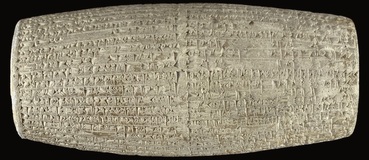
NeriglissarCylinder
A key objective of the newly established Chair for the Ancient History of the Near and Middle East is the promotion of the digital humanities and easily accessible open-access data in order to widely disseminate, facilitate, and promote the active use and understanding of official inscriptions and archival texts of the Middle East in Antiquity, with an initial focus on those of ancient Mesopotamia (written in the cuneiform script and in the Akkadian and Sumerian languages), in academia and beyond. Headed by Prof. Dr. Karen Radner and Dr. Jamie Novotny, the MOCCI research staff seeks to create new and innovative ways for users to access the important and varied contents of numerous geo-referenced and linguistically-annotated editions of ancient records, primarily from the first millennium BC. Our aim is to make many of the rich primary sources of Assyria, Babylonia, and their contemporaries available online for free in a fully searchable and richly annotated (lemmatized) format.

Current work

At the moment, our work focuses on two principal digital text corpora:
(1) Official Inscriptions of the Middle East in Antiquity (OIMEA); and
(2) Archival Texts of the Middle East in Antiquity (ATMEA).

(1) The Official Inscriptions of the Middle East in Antiquity (OIMEA) project includes several sub-projects that are directly or indirectly managed by various members of our team, in particular Alexa Bartelmus and Jamie Novotny. In addition to Akkadian and Sumerian texts, OIMEA will include other corpora of official inscriptions written in other languages, including Aramaic, Luwian, Phoenician, Old Persian, and Urartian. The current OIMEA projects are:
(a) The Royal Inscriptions of Assyria online (RIAo);
(b) The Royal Inscriptions of Babylonia online (RIBo);
(c) The Inscriptions of Suhu online (Suhu);
(d) Electronic Corpus of Urartian Texts (eCUT); and
(e) Achaemenid Royal Inscriptions online (ARIo).