Second, online edition of a thesis presented to the Committee on Degrees in Folklore and Mythology in partial fulfillment of the requirements for the Degree of Bachelor of Arts with Honors, Harvard College, Cambridge, Massachusetts, 27 March 1970.
Use the following persistent identifier: http://nrs.harvard.edu/urn-3:hul.ebook:CHS_TeskeR.The_Origins_of_the_Goddess_Ariadne.1970.
Copyright, Robert T. Teske. Published here with permission of the author.
Thursday, April 9, 2026
The Origins of the Goddess Ariadne
Plato’s Counterfeit Sophists
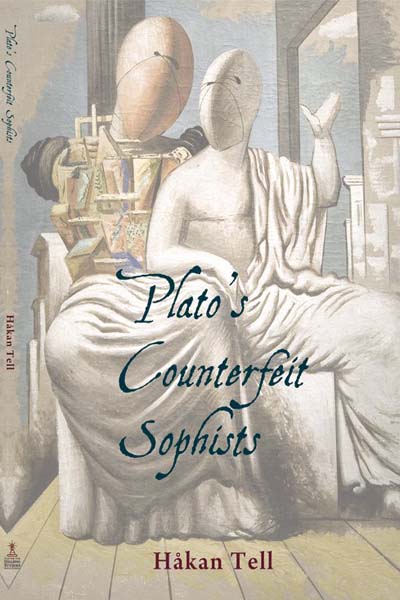
This book explores the place of the sophists within the Greek wisdom tradition, and argues against their almost universal exclusion from serious intellectual traditions. By studying the sophists against the backdrop of the archaic Greek institutions of wisdom, it is possible to detect considerable intellectual overlap between them and their predecessors. This book explores the continuity of this tradition, suggesting that the sophists’ intellectual balkanization in modern scholarship, particularly their low standing in comparison to the Presocratics, Platonists, and Aristotelians, is a direct result of Plato’s condemnation of them and their practices. This book thus seeks to offer a revised history of the development of Greek philosophy, as well as of the potential—yet never realized—courses it might have followed.
Available for purchase in print via Harvard University Press.
Tell, Håkan. 2011. Plato's Counterfeit Sophists. Hellenic Studies Series 44. Washington, DC: Center for Hellenic Studies. http://nrs.harvard.edu/urn-3:hul.ebook:CHS_Tell.Platos_Counterfeit_Sophists.2011.
This work is licensed under a Creative Commons 3.0 License.
In Her Own Words: The Life and Poetry of Aelia Eudocia
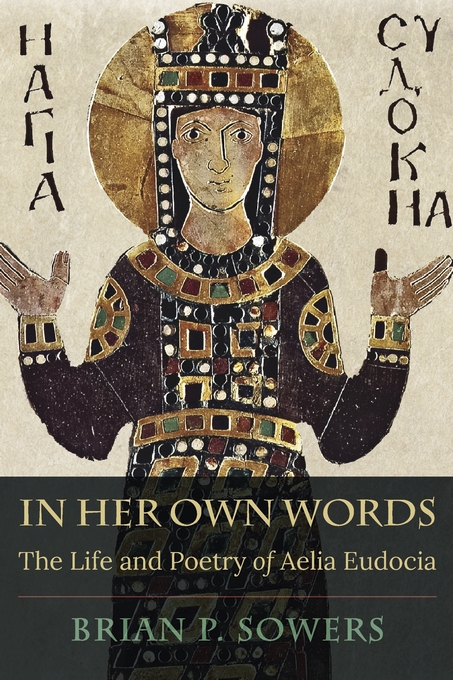
In Her Own Words: The Life and Poetry of Aelia Eudocia is the first full-length study to examine Eudocia’s writings as a unified whole and to situate them within their wider fifth-century literary, social, and religious contexts. Responsible for over 3,000 lines of extant poetry, Eudocia is one of the best-preserved ancient female poets. Because she wrote in a literary mode frequently suppressed by proto-orthodox (male) leaders, much of her poetry does not survive, and what does survive remains understudied and underappreciated. This book represents a detailed investigation into Eudocia’s works: her epigraphic poem in honor of the therapeutic bath at Hammat Gader, her Homeric cento—a poetic paraphrase of the Bible using lines from Homer—and her epic on the fictional magician-turned-Christian, Cyprian of Antioch. Reading her poetry as a whole and in context, Eudocia emerges as an exceptional author representing three unique late-antique communities: poets interested in preserving and transforming classical literature; Christians whose religious views positioned them outside and against traditional power structures; and women who challenged social, religious, and literary boundaries.
Available for purchase in print via Harvard University Press.
Sowers, Brian P. 2020. In Her Own Words: The Life and Poetry of Aelia Eudocia. Hellenic Studies Series 80. Washington, DC: Center for Hellenic Studies. http://nrs.harvard.edu/urn-3:hul.ebook:CHS_SowersBP.In_Her_Own_Words.2021.
This work is licensed under a Creative Commons 3.0 License.
ΕΛΛΗΝΙΚΑ ΓΡΑΜΜΑΤΑ: ΕΙΣ ΤΑΣ ΑΝΑΤΟΛΙΚΑΣ ΕΠΑΡΧΙΑΣ ΤΟΥ ΒΥΖΑΝΤΙΟΥ ΚΑΤΑ ΤΟΥΣ ΔΥΟ ΠΡΩΤΟΥΣ ΑΙΩΝΑΣ ΤΗΣ ΑΡΑΒΟΚΡΑΤΙΑΣ (Ζ’ & Η’)
This thesis covers Greek literature (“Letters”) in the eastern provinces of Byzantium during the first two centuries of Arab rule (the 7th and 8th centuries). In it, the author aims to project the true value of this literary production, which he sees as underestimated, through its comparison to that of the ancient Greeks. The author attempts to provide evidence that Greek literature and opportunities for its study were still prevalent, especially in the eastern provinces. Monks throughout Syria and Palestine took it upon themselves to preserve ancient Greek culture, demonstrating their vital role in the development of the sacred and secular state under Arab rule. However, as a result of an intense crisis between the separate branches of the church, interest in the study of ancient Greek authors waned. The authors of this period therefore turned to the creation of hymns, treatises against heresy, and hagiological writings.
Online edition of a 2007 dissertation submitted to the School of Philosophy, National and Kapodistrian University of Athens. Copyright, Sameh Farouk Soliman. Published here by permission of the author.
Use the following persistent identifier: http://nrs.harvard.edu/urn-3:hul.ebook:CHS_Soliman.Ta_Ellinika_Grammata.2007.
This work is licensed under a Creative Commons 3.0 License.
Wednesday, April 8, 2026
The Power of Thetis and Selected Essays
Laura Slatkin’s influential and widely admired book, here published in a second edition together with six additional essays, explores the superficially minor role of Thetis in the Iliad. Highly charged allusions reverberate through the narrative and establish a constellation of themes that link the poem to other traditions. Slatkin uncovers alternative traditions about the power of Thetis and shows how an awareness of those myths brings a far greater understanding of Thetis’s place in the thematic structure of the Iliad. The six additional essays included in this volume—some of them classics, some never before published—cover a broad range of topics in the study of the Greek Epic: the workings of genre in Hesiod and Homer; the poetics of exchange; and the nature of enmity and friendship. The volume also includes a study of the Hesiodic Catalog of Women and reflections on particular heroes, such as Diomedes and Odysseus.
Available for purchase in print via Harvard University Press.
Slatkin, Laura. 2011. The Power of Thetis and Selected Essays. Hellenic Studies Series 16. Washington, DC: Center for Hellenic Studies. http://nrs.harvard.edu/urn-3:hul.ebook:CHS_Slatkin.The_Power_of_Thetis_and_Selected_Essays.2011.
This work is licensed under a Creative Commons 3.0 License.
The Purpled World: Marketing Haute Couture in the Aegean Bronze Age
During the Aegean Bronze Age (ca. 3000–1500 BCE), the spread of woolen textiles triggered an increased demand for color. The dyes included those made from the labor-intensive processing of crocus stamens for saffron dye and even more costly dyes made from certain sea snails (the Muricidae/Murex). Minoan and Mycenaean textile producers (the palaces) operated mainly in the Black Sea region, rich in gold. “Purpled world” is Morris Silver’s term for this emergent ideology.
In Part I of The Purpled World, Silver demonstrates how the palaces embedded commercial motivation into traditional rituals, played out in purpose-built textile exhibition spaces, including labyrinths. In Part II, he mines textual, archaeological, and iconographic evidence to reveal the international textile trade. In Parts III and IV, Homer’s Trojan War is seen as a trade war, and Homeric heroes have roles as traders and/or agents for Poseidon. In Part V, Silver considers the before-and-after of this “purpled world”: Jason and the Argonauts, and the so-called collapse of the Mycenaean Palaces as a manifestation of vertical disintegration in the Aegean textile industry.
The Purpled World integrates all these forms of evidence with interpretative insights from Maslovian psychology, as well as the disciplines of fashion studies, marketing, and economics.
Available for purchase in print via Harvard University Press.
Silver, Morris. 2023. The Purpled World: Marketing Haute Couture in the Aegean Bronze Age. Hellenic Studies Series 92. Washington, DC: Center for Hellenic Studies. http://nrs.harvard.edu/urn-3:hul.ebook:CHS_SilverM.The_Purpled_World.2023.
This work is licensed under a Creative Commons 3.0 License.
Aspects of History and Epic in Ancient Iran: From Gaumāta to Wahnām
Aspects of History and Epic in Ancient Iran focuses on the content of one of the most important inscriptions of the Ancient Near East: the Bisotun inscription of the Achaemenid king Darius I (6th century BCE), which in essence reports on a suspicious fratricide and subsequent coup d’état. Moreover, the study shows how the inscription’s narrative would decisively influence the Iranian epic, epigraphic, and historiographical traditions well into the Sasanian and early Islamic periods.
Intriguingly, our assessment of the impact of the Bisotun narrative on later literary traditions—in particular, the inscription of the Sasanian king Narseh at Paikuli (3rd–4th centuries CE)—necessarily relies on the reception of the oral rendition of the Bisotun story captured by Greek historians. As Rahim Shayegan argues, this oral tradition had an immeasurable impact upon the historiographical writings and epic compositions of later Iranian empires. It would have otherwise remained unknown to modern scholars, had it not been partially preserved and recorded by Hellanicus of Lesbos, Herodotus, Ctesias, and other Greek authors. The elucidation of Bisotun’s thematic composition therefore not only allows us to solve an ancient murder but also to reevaluate pre-Thucydidean Greek historiography as one of the most important repositories of Iranian epic themes.
Available for purchase in print via Harvard University Press.
Shayegan, M. Rahim. 2012. Aspects of History and Epic in Ancient Iran: From Gaumāta to Wahnām. Hellenic Studies Series 52. Washington, DC: Center for Hellenic Studies. http://nrs.harvard.edu/urn-3:hul.ebook:CHS_ShayeganM.Aspects_of_History_and_Epic_in_Ancient_Iran.2012.
This work is licensed under a Creative Commons 3.0 License.
Open Access Monograph Series: Ugaritica
[First posted in AWOL 1 March 2012, updated (corrected URLs) 8 April 2026]
Ugaritica in AMAR
One of a series of AWOL pages seeking to pull together publication series digitized and served through AMAR: Archive of Mesopotamian Archaeological Site Report
See more Series in AMAR
Tuesday, April 7, 2026
Paideia and Cult: Christian Initiation in Theodore of Mopsuestia
Paideia and Cult explores the role of Christian education and worship in the complex process of conversion and Christianization. It analyzes the Catechetical Homilies of Theodore of Mopsuestia as a curriculum designed to train those seeking initiation into the Christian mysteries. Although Theodore gave considerable attention to teaching creedal theology, he sought to go beyond simply communicating information. His catechetical preaching set the teaching of Christian ideas within the context of religious community and ritual participation. In doing so he sought to produce a Christianized view of the world and of the convert’s place in a community of worship. Theodore’s attention to the communal, cognitive, and ritual components of initiation suggest a substantive understanding of religious conversion, yet one that avoids an overemphasis on intellectual and psychological transformation. Throughout this study catechesis emerges as invaluable for comprehending the ability of clergy to initiate new members as Christianity gained increasing prominence within the late Roman world.
Available for purchase in print via Harvard University Press.
Schwartz, Daniel L. 2013. Paideia and Cult: Christian Initiation in Theodore of Mopsuestia. Hellenic Studies Series 57. Washington, DC: Center for Hellenic Studies. http://nrs.harvard.edu/urn-3:hul.ebook:CHS_SchwartzD.Paideia_and_Cult.2013.
This work is licensed under a Creative Commons 3.0 License.
Plato’s Wayward Path: Literary Form and the Republic
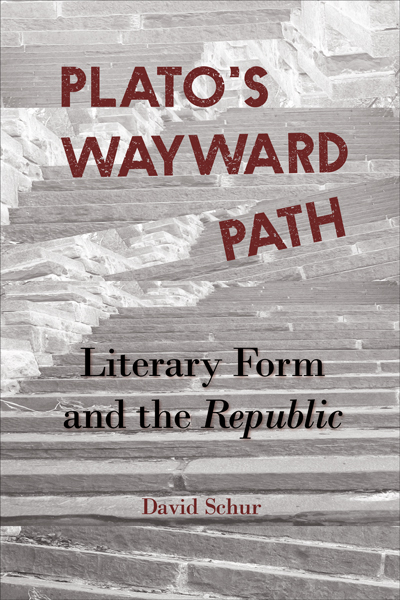
Since Friedrich Schleiermacher’s work in the 1800s, scholars interested in the literary dimension of Plato’s writings have sought to reconcile the dialogue form with the expository imperative of philosophical argument. It is now common for mainstream classicists and philosophers to attribute vital importance to literary form in Plato, which they often explain in terms of rhetorical devices serving didactic goals. This study brings the disciplines of literary and classical studies into methodological debate, questioning modern views of Plato’s dialogue form.
In the first part of this book, David Schur argues that the literary features of Plato’s dialogues—when treated as literary—cannot be limited to a single argumentative agenda. In the second part, he demonstrates the validity of this point by considering a rhetorical pattern of self-reflection that is prominent in the Republic. He emphasizes that Plato’s book consistently undermines the goal-driven conversation that it portrays. Offering a thought-provoking blend of methodological investigation and methodical close reading, Schur suggests that the Republic qualifies the authority of its conclusions by displaying a strong countercurrent of ongoing movement.
Available for purchase in print via Harvard University Press.
Schur, David. 2015. Plato's Wayward Path: Literary Form and the Republic. Hellenic Studies Series 66. Washington, DC: Center for Hellenic Studies. http://nrs.harvard.edu/urn-3:hul.ebook:CHS_SchurD.Platos_Wayward_Path.2015.
This work is licensed under a Creative Commons 3.0 License.
Concordia discors: Eros and Dialogue in Classical Athenian Literature
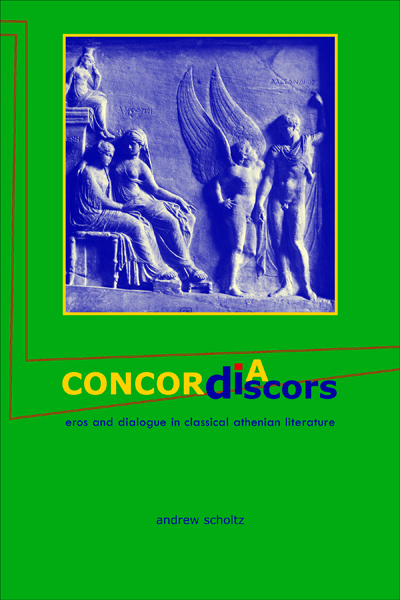
Writing to a friend, Horace describes the man as fascinated by “the discordant harmony of the cosmos, its purpose and power.” Andrew Scholtz takes this notion of “discordant harmony” and argues for it as an aesthetic principle where classical Athenian literature addresses politics in the idiom of sexual desire. His approach is an untried one for this kind of topic. Drawing on theorists of the sociality of language, Scholtz shows how eros, consuming, destabilizing desire, became a vehicle for exploring and exploiting dissonance within the songs Athenians sang about themselves. Thus he shows how societal tension and instability could register as an ideologically charged polyphony in works like the Periclean Funeral Oration, Aristophanes’s Knights, and Xenophon’s Symposium.
Available for purchase in print via Harvard University Press.
Scholtz, Andrew. 2007. Concordia discors: Eros and Dialogue in Classical Athenian Literature. Hellenic Studies Series 24. Washington, DC: Center for Hellenic Studies. http://nrs.harvard.edu/urn-3:hul.ebook:CHS_ScholtzA.Concordia_Discors.2007.
This work is licensed under a Creative Commons 3.0 License.
Citizenship Practised, Citizenship Imagined: Multiple Ways of Experiencing Citizenship in the Greek World
Potsdamer altertumswissenschaftliche Beiträge What makes a citizen a citizen? How do the values and practices of institutional and social life in ancient cities shape the identities of citizens? How did phenomena such as migration and the integration of foreigners into civic communities affect the discourse and reality of citizenship in the ancient Greek world? How was citizenship experienced beyond the polis?
The contributions collected in this book attempt to answer such questions by fostering dialogue between scholars who have focused on the institutional aspects and those who have concentrated on the discursive and performative dimensions of Greek citizenship. It has become increasingly clear today that ancient Greek citizenship should be approached as a multifaceted phenomenon. Drawing on a wide range of source material, including inscriptions, material remains, and literary texts from Archaic Greece to the imperial period, this volume offers fresh insights into the institutions, practices and values that defined Greek citizenship status.
ISBN 978-3-515-13759-1 Medientyp Buch - Kartoniert Auflage 1. Copyrightjahr 2025 Verlag Franz Steiner Verlag GmbH
Maybachstr. 8
70469 StuttgartUmfang 316 Seiten Abbildungen 2 farb. Abb., 4 s/w Tab. Format 17,0 x 24,0 cm Sprache Englisch
Monday, April 6, 2026
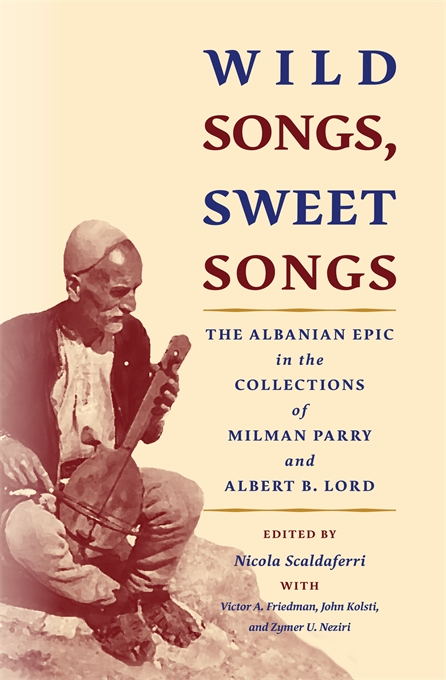
Wild Songs, Sweet Songs: The Albanian Epic in the Collections of Milman Parry and Albert B. Lord
Milman Parry Collection of Oral Literature Series
In the 1930s, Milman Parry and Albert B. Lord, two pioneering scholars of oral poetry, conducted adventurous fieldwork in the Kingdom of Yugoslavia and northern Albania, collecting singularly important examples of Albanian epic song. Wild Songs, Sweet Songs presents these materials, which have not previously been published, for the first time.
Nicola Scaldaferri and his collaborators provide a complete catalogue of the Albanian texts and recordings collected by Parry and Lord; a selection of twelve of the most significant texts, including the longest Albanian epic ever collected, in Albanian with accompanying English translations; four essays contextualizing the materials and outlining their significance; and an assortment of related photographs and documents. The book is an authoritative guide to one of the most significant collections of Balkan folk epic in existence.
Available for purchase in print via Harvard University Press.
Scaldaferri, Nicola, ed. 2021. Wild Songs, Sweet Songs The Albanian Epic in the Collections of Milman Parry and Albert B. Lord. Milman Parry Collection of Oral Literature 5. Cambridge, MA: Milman Parry Collection of Oral Literature. http://nrs.harvard.edu/urn-3:hul.ebook:ScaldaferriN.Wild_Songs_Sweet_Songs.2021.
This work is licensed under a Creative Commons 3.0 License.
Loving Humanity, Learning, and Being Honored: The Foundations of Leadership in Xenophon’s Education of Cyrus
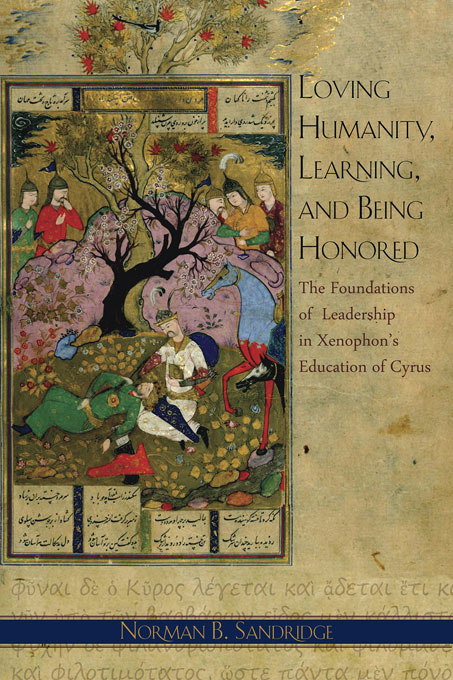
Xenophon is generally thought to have done his best theorizing on leadership through his portrayal of Cyrus the Great, the first king of the Persian Empire. In this book, Norman Sandridge argues that Xenophon actually reduces his Theory of Leadership to a set of fundamental traits, namely, the love of humanity, the love of learning, and the love of being honored. These so-called fundamental traits are the product of several rich contexts across culture and across time: the portrait of Cyrus seems as much a composite of Persian folklore as a pointed response to Plato’s Philosopher King. Sandridge further argues that Xenophon’s Theory of Leadership is effective for addressing many problems of leadership that were familiar to Xenophon and his fourth-century Athenian contemporaries, notably Plato and Isocrates. By looking at the contexts in which Xenophon’s theory was conceived, as well as the problems of leadership he sought to address, this book sees Xenophon as attempting a sincerely laudatory though not ideal portrait of Cyrus. The study thus falls between interpretations of the Education of Cyrus that have seen Cyrus as either a perfect leader or an ironically flawed one.
Available for purchase in print via Harvard University Press.
Sandridge, Norman B. 2012. Loving Humanity, Learning, and Being Honored: The Foundations of Leadership in Xenophon's Education of Cyrus. Hellenic Studies Series 55. Washington, DC: Center for Hellenic Studies. http://nrs.harvard.edu/urn-3:hul.ebook:CHS_SandridgeN.Loving_Humanity_Learning_and_Being_Honored.2012.
This work is licensed under a Creative Commons 3.0 License.
Literary History in the Parian Marble
Inscribed some time after 264 BCE, the Parian Marble offers a chronological list of events with an exceptional emphasis on literary matters. Literary History in the Parian Marble explores the literary and historiographical qualities of the inscription, the genre to which it belongs, and the emerging patterns of time. Endorsing the hypothesis that the inscription was originally displayed at a Parian shrine honoring Archilochus, Andrea Rotstein argues that literary history was one of its main concerns. Though it may be conventional in its focus on the chronology of poets, their inventions and victories, the Parian Marble is nonetheless idiosyncratic in the range of authors displayed. By reconstructing the methods by which information might have been obtained, Rotstein contributes to an understanding of the way literary history was practiced within the local communities of ancient Greece, away from the major Hellenistic centers of scholarship.
The Parian chronicle has not been the subject of a comprehensive study for almost a century. Literary History in the Parian Marble brings to the English-speaking audience up-to-date information about the inscription, including a revision of Felix Jacoby’s Greek text and a complete translation.
Available for purchase in print via Harvard University Press.
Rotstein, Andrea. 2016. Literary History in the Parian Marble. Hellenic Studies Series 68. Washington, DC: Center for Hellenic Studies. http://nrs.harvard.edu/urn-3:hul.ebook:CHS_RotsteinA.Literary_History_in_the_Parian_Marble.2016.
This work is licensed under a Creative Commons 3.0 License.
Tufts Greek Reading List Reader
This digital edition of several Ancient Greek texts provides word-level textual annotations and sentence-by-sentence translations.
Click here to search the texts for Ancient Greek lemmas or English glosses.
Author Work Sections Aeschylus Eumenides Read Christian Scripture John 1-3 Herodotus Histories 1.1-1.13 1.29-1.33 1.46-1.56 1.79-1.89 1.107-1.141 1.152-1.153 1.204-1.216 Hesiod Theogony Read Hesiod Works and Days Read Homer Iliad Book 22 Homer Odyssey Book 9 Lysias On the Murder of Eratosthenes Read Plato Apology Read Sophocles Ajax Read Lucian True History Book 1 Euripides Bacchae Read
Sunday, April 5, 2026
“Mixed Aorists” in Homeric Greek
“The Homeric poems provide some of the easiest reading in Greek literature, as well as some of the most rewarding, and so we are introduced to them at an early stage in our study of the language. But when we learn more, we discover that Homeric Greek is not so simple after all. Some of its phenomena remain unexplained after two millennia of scholarship. For instance, we come across imperatives like οἴσετε, ἄξετε, ὄρσεο, λέξεο, δύσεο, βήσεο and secondary tense forms like ἄξοντο, ἐδύσετο, ἐβήσετο, ἵξον. When we look in the usual grammar books, Smyth for example,[1] we find these forms labeled “mixed aorists,” and are told that they combine the sigma of the first aorist with the thematic vowel of the second aorist. That description is an admission of ignorance. How could such a “mixture” happen? What kind of process is being attributed to the grammar of the epic language? What is Homeric grammar anyway? How can one tell what is grammatical and what is not?
In order to answer such questions, we must start by understanding the peculiar character of the epic language: its basic units are not so much single words as formulae ready-made to fit various parts of the hexameter verse.”
— From the Introduction
Online version of a 1990 volume in the series Harvard Dissertations in Classics, by Garland Press. Copyright, Catharine P. Roth. Published here with permission of the author.
Use the following persistent identifier: http://nrs.harvard.edu/urn-3:hul.ebook:CHS_Roth.Mixed_Aorists_in_Homeric_Greek.1990.
This work is licensed under a Creative Commons 3.0 License.
Lovers of the Soul, Lovers of the Body: Philosophical and Religious Perspectives in Late Antiquity
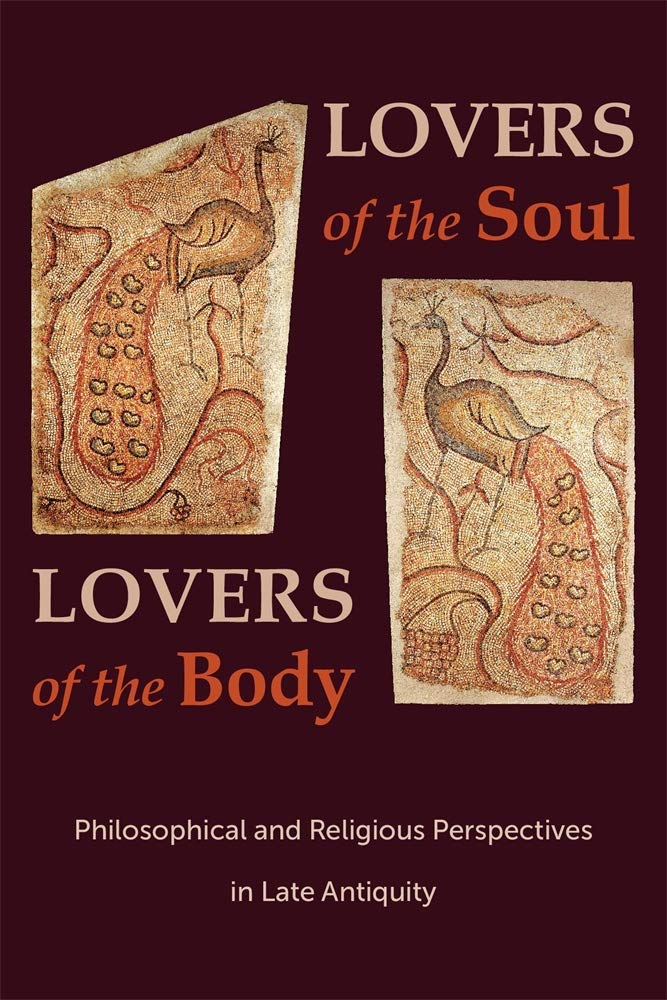
The relationship between the soul and the body was a point of contentious debate among philosophers and theologians in late antiquity. Modern scholarship has inherited this legacy, but split the study of the relation of body and soul between the disciplines of philosophy and religion. Lovers of the Soul, Lovers of the Body integrates, with Plato and Aristotle in the background, philosophical and religious perspectives on the concepts of soul and body in the transformative period of the first six centuries CE, from Philo to Olympiodorus. The polyphonic—but not dissonant—philosophical and theological dialogue is recreated and rethought by an international group of leading experts and up-and-coming scholars in ancient philosophy, theology, and religion.
The synthetic approach of the volume presents the understanding of human psychology in late antiquity, without labels and borders. It invites both experts and enthusiasts to crisscross the pathways of philosophy and religion in pursuit of new crossroads and greater common ground.
Available for purchase in print via Harvard University Press.
Slaveva-Griffin, Svetla, and Ilaria L. E. Ramelli, eds. 2022. Lovers of the Soul, Lovers of the Body: Philosophical and Religious Perspectives in Late Antiquity. Hellenic Studies Series 88. Washington, DC: Center for Hellenic Studies. https://nrs.harvard.edu/URN-3:HUL.EBOOK:CHS_RamelliIlLE_Slaveva-GriffinS_eds.Lovers_of_the_Soul_Lovers_of_the_Body.2022.
This work is licensed under a Creative Commons 3.0 License.
Au prisme des goûts: Sociétés phéniciennes et puniques

Enquête sur la construction du goût dans la Méditerranée du ier millénaire av. n. è., cet ouvrage explore les dimensions alimentaires, esthétiques et stylistiques des sociétés phéniciennes et puniques, sans cesse façonnées par des interactions ethniques et culturelles. À travers une approche pluridisciplinaire et comparatiste, les auteurs s’attachent à croiser les sources traditionnelles (textuelles, archéologiques et iconographiques) avec des outils innovants (analyses biochimiques des restes et archéozoologie) pour étudier les stratégies de distinction et d’adaptation développées par ces sociétés. Ils s’interrogent aussi sur les modalités selon lesquelles certains goûts sont attribués aux Phéniciens au regard des « Autres », qu’il s’agisse des auteurs grecs et latins ou d’interprétations modernes.
Le texte seul est utilisable sous licence Creative Commons - Attribution - Pas d'Utilisation Commerciale - Pas de Modification 4.0 International - CC BY-NC-ND 4.0 . Les autres éléments (illustrations, fichiers annexes importés) sont « Tous droits réservés », sauf mention contraire.
Éditeur : Casa de Velázquez
Lieu d’édition : Madrid
Publication sur OpenEdition Books : 4 juillet 2025
ISBN numérique : 978-84-9096-446-0
DOI : 10.4000/14a8b
Collection : Collection de la Casa de Velázquez | 203
Année d’édition : 2025
ISBN (Édition imprimée) : 978-84-9096-445-3
Nombre de pages : XIII-374
Bruno D’Andrea, Marie De Jonghe et Mohamed Tahar
IntroductionComment écrit-on une histoire des goûts dans les sociétés phéniciennes et puniques ?
I. — Les goûts et les habitudes alimentaires
Carlos Gómez Bellard
Pas seulement des galettes : l’alimentation phénicienne et puniqueAna Delgado Hervás
Jerarquías del gusto en los mundos fenicio-púnicosAlimentos, género y distinción social
Silvia Valenzuela-Lamas et Ariadna Nieto Espinet
Consommation de viande comme élément distinctif en Méditerranée pendant l’âge du FerLeonardo Bison, Tamar Hodos, Lucy Cramp et al.
Il consumo di carne e latticini nella Sardegna punicaUn’indagine sul contenuto della ceramica da cucina
Massimo Botto
Studio delle pratiche alimentari e rituali a Pani Loriga (vi-iv s. a.C.)Il contributo delle analisi biochimiche
José Luis López Castro
El vino fenicio de Oriente a OccidenteLa difusión del gusto por el vino a comienzos de la Edad del Hierro en la cuenca del Mediterráneo occidental
Francesca Spatafora
Conservazione, preparazione e consumo di alimenti in un’area di confine: la Sicilia punica tra indigeni e greciAntonio Sáez Romero
Tutto finisce a tarallucci e vinoUna panoramica della produzione, preparazione e consumo alimentare nella baia di Cadice nel I millennio a.C.
Maria Giulia Amadasi Guzzo
Occasioni e modi di consumo animale nel mondo fenicioBruno D’Andrea
Questioni di gustiI cervidi nel bestiario e nelle pratiche alimentari e sacrificali del mondo fenicio
Sara Giardino
Preparazione e consumo di alimenti nei contesti santuariali fenicio-puniciDati a confronto dal Mediterraneo orientale e occidentale
II. — Les choix culturels, esthétiques et stylistiques : le goût comme « mode de vie »
Adriano Orsingher
«De gustibus est disputandum»Il gusto nella Sicilia occidentale dell’età del Ferro attraverso il caso di Mozia
Francisco B. Gomes
Made in the MediterraneanConsumo, corporalidad e identidad en la Primera Edad del Hierro del sur de Portugal (s. viii/vii-v a.C.)
Marie De Jonghe
La norme des uns, le goût des autresConstruction et représentation de la distinction sociale en contexte funéraire phénicien
Lilia Khelifi
Goûts, démarcation sociale et interaction culturelleLe cas de la nécropole de cap Zebib (Tunisie)
Federico Cappella
La Red Slip WareL’occasione sociale, gli usi alimentari, la classe funzionale da Oriente a Occidente (ix-vii s. a.C.)
Fabiola Zielli
Bacini, mortai e forme tripodateL’uso della ceramica da preparazione nella pratica rituale del tofet di Mozia
Yamen Sghaïer
Penser le goût culturel punique par le prisme de la céramiqueRéflexions autour du cap Bon et du Sahel
Jérémy Artru
La parure grecque au goût des Carthaginois ?Essai de contribution de l’iconographie monétaire à l’étude du goût punique (ive-iie s. av. n. è.)
Sonia Hafiane-Nouri
Goût spécifique ou iconographie ordinaire ?Les stèles votives de Carthage dédiées par des suffètes
Maroua Yahyaoui
Mélange de goûts, mélange de stylesObservations à propos d’une stèle néopunique inédite provenant de la région du Kef
Francisco Machuca Prieto
Distinción, gusto y mito de los orígenes en la Turdetania romanaGiuseppe Garbati
Note di chiusura
Una rete progressiva di relazioniIl «gusto» come oggetto di indagine in contesto fenicio
Histoires des handicaps à travers les siècles: Identifications, trajectoires, institutions et sociabilités

L’histoire des personnes dites handicapées, sourdes ou malades mentales est peu étudiée sur la longue durée. L’ouvrage comble cette lacune en posant les questions — du Paléolithique jusqu’à nos jours — de l’identification des personnes handicapées, de leurs trajectoires personnelles et collectives, des institutions et des communautés de vie qui les concernent, des sociabilités et des mobilisations collectives dont elles sont à la fois les objets et les sujets. Comme le dit Henri-Jacques Stiker, auteur de l’ouvrage fondateur de 1982 Corps infirmes et sociétés : « Prometteuse et réjouissante est la manifestation d’une génération d’historiennes et d’historiens venant d’horizons différents qui s’intéressent à la surdité, à l’infirmité ou à la folie et à leur croisement. »
Le texte seul est utilisable sous licence Creative Commons - Attribution - Pas d'Utilisation Commerciale - Pas de Modification 4.0 International - CC BY-NC-ND 4.0 . Les autres éléments (illustrations, fichiers annexes importés) sont « Tous droits réservés », sauf mention contraire.
Éditeur : Presses universitaires de Rennes
Lieu d’édition : Rennes
Publication sur OpenEdition Books : 19 février 2026
ISBN numérique : 979-10-413-1077-7
DOI : 10.4000/15q46
Collection : Histoire
Année d’édition : 2026
ISBN (Édition imprimée) : 979-10-413-0827-9
Nombre de pages : 332
Henri-Jacques Stiker
PréfaceNinon Dubourg, Gildas Brégain et Fabrice Bertin
IntroductionPremière partie. Les évolutions des identifications
Bénédicte Lhoyer
L’Ancien Égyptien face à la différence et à l’infirmitéHélène Leuwers
L’infirmité provoquée par le chirurgien : reconnaissance et réparation en justice (xive-milieu du xvie siècle)Pauline Hervois
Regards pluriels sur les infirmités au xixe siècleL’analyse de listes nominatives du recensement et du recrutement militaire dans le canton de Saint-Bonnet (Hautes-Alpes)
Deuxième partie. Les trajectoires personnelles et collectives
Bert Watteeuw
Ninon Dubourg (trad.)
Un portrait extrêmeSe souvenir de Matthias Jacque, un double amputé transtibial (1654)
Louis Bertrand
« C’est où les oubliettes ? »Résistances, résignations et attachements d’une femme aveugle travaillant en CAT (années 2000)
Aude de Saint Loup
Louis, sourd-muet « converti » au tournant du xive siècleMatthieu Rajohnson
Baudouin IV de Jérusalem : la royauté à l’épreuve de la lèpreFederico Guariglia
« Carles, li reis, nostre emperere » faibleVieillesse et pouvoir chez Charlemagne
Anaïs Bourgeat
Pierre Creusé et les autres« Histoire admirable » et parcours d’un malade prodigieux 1628-1660
Marie-Hélène Bouchet
Les devenirs d’anciennes élèves sourdes bordelaises (1859-1903)Troisième partie. Les institutions et les communautés de vie
Ninon Dubourg
« Morte a ce monde », vivre dans la léproserie de Cornillon (Liège) au xve et xvie sièclesRebecca P. Scales
La politique familiale de la Colonie de Saint-Fargeau, 1919-1939Anne Roekens
D’un asile à l’autreLogiques de relégation de filles « anormales » de l’institut de Bouge vers le Beau-Vallon (Belgique, 1922-1947)
Quatrième partie. Les sociabilités et les mobilisations collectives
Hélène Coqueugniot
Indices anthropologiques et archéologiques de sociabilité et de considération collective : à propos de deux sépultures paléolithiques de jeunes infirmesLucie Laumonier
Les sociabilités des personnes infirmes et démentes à la fin du Moyen Âge dans le diocèse de MagueloneScarlett Beauvalet, Emmanuelle Berthiaud et Audrey Duru
« Nos pensionnaires sourds et muets » : l’abbaye Saint-Jean à Amiens au début du xviiie siècleAlexandre Sumpf
Droit de cité et devoir de paroleL’Union panrusse des soldats mutilés entre guerres et révolutions (1915-1919)
Jérôme Bas
La matrice sanatorialeMobilisations de tuberculeux et politisation de la cause de la réadaptation durant l’entre-deux-guerres
Myriam Winance
Des « arriérés profonds » aux enfants polyhandicapésL’action du CESAP pour déconstruire l’inéducabilité et faire de tout enfant un enfant à éduquer
Soline Vennetier
« Alone, we can do so little. Together, we can do so much. »Associations et mobilisations collectives transnationales dans le domaine de la surdicécité en France et en Europe (1960-2010)
Gildas Brégain, Ninon Dubourg et Fabrice Bertin
Conclusion. Pour un renouvellement des approches de l’histoire du handicap, de la surdité et des troubles psychiques au travers des siècles
Subscribe to:
Comments (Atom)




 Posts
Posts


 Stumble It!

