Sunday, March 29, 2020

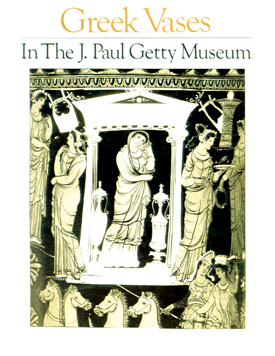
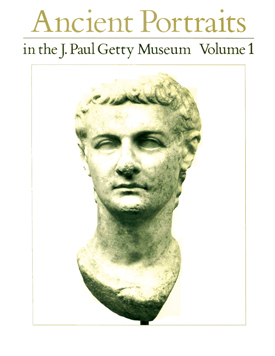
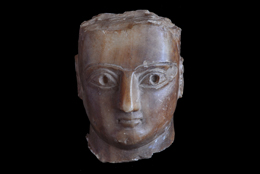
Getty Publications Virtual Library: Free digital backlist titles from the Getty Publications Archives: Antiquities

 [First posted in AWOL 21 January 2014, updated 29 March 2020]

Getty Publications Virtual Library
Free digital backlist titles from the Getty Publications Archives
Getty Publications produces award-winning titles that result from or complement the work of the J. Paul Getty Museum, the Getty Conservation Institute, and the Getty Research Institute. This wide variety of books covers the fields of art, photography, archaeology, architecture, conservation, and the humanities for both the general public and specialists. Publications include illustrated works on artists and art history, exhibition catalogues, works on cultural history, research on the conservation of materials and archaeological sites, scholarly monographs, critical editions of translated works, comprehensive studies of the Getty's collections, and educational books on art to interest children of all ages.
A selection of the titles avaiable:
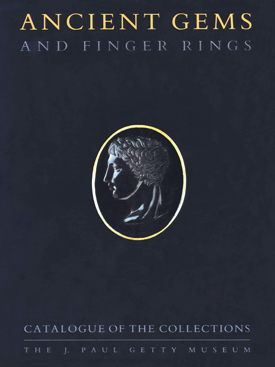
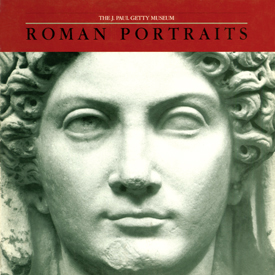
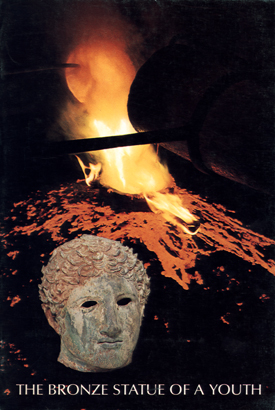
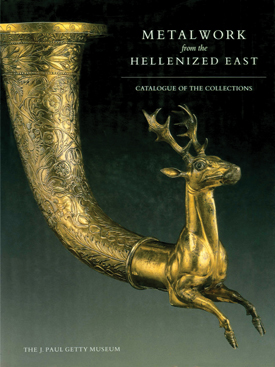
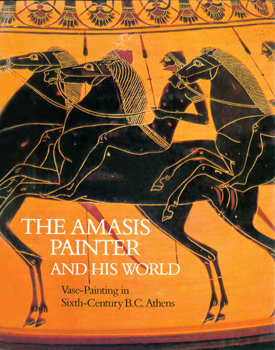
Klaus Parlasca, Guntram Koch, Helga Herdejurgen, Susan Walker, Anne F. Eberle, Guntram Koch, Anne F. Eberle, Henning Wrede, Ioanna Spiliopoulou-Donderer
1990
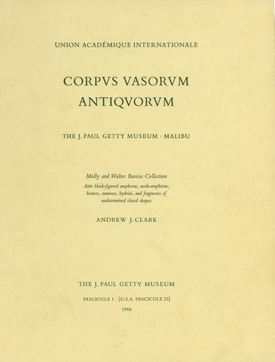
David Rinne, Jiri Frel
1975
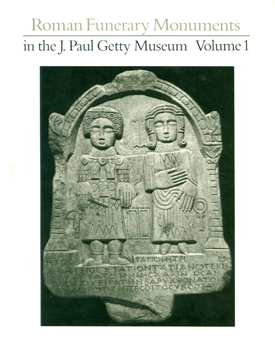
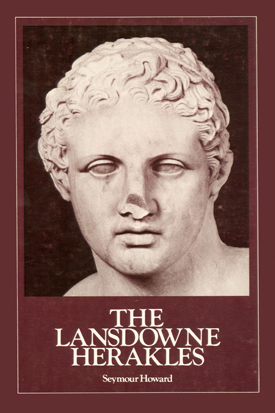
Seymour Howard
1978
Nicholas Stanley Price, Paolo Mora, Marta de la Torre, Demetrios Michaelides, Giorgio Capriotti, Lorenza D'Alessandro, Jan Kosinka, Paolo Pastorello, Werner Schmid, Neville Agnew, Richard Coffman, Po-Ming Lin, Eric Doehne
1991
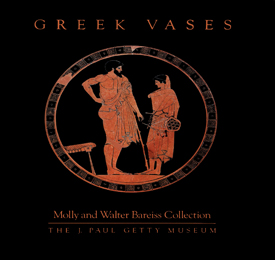
Janos Gy. Szilagyi, William R. Biers, Cynthia Hoyt-Grimes, Donna Carol Kurtz, John Boardman, Martin Robertson, Elfriede R. Knauer, Susan B. Matheson, J.R. Green, Mario A. Del Chiaro, Toby Schreiber
1986
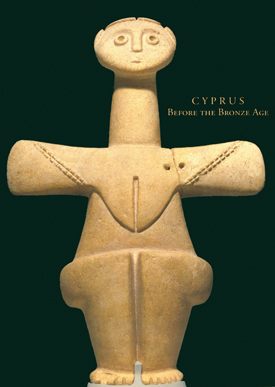
Vassos Karageorghis, Edgar J. Peltenburg
1990
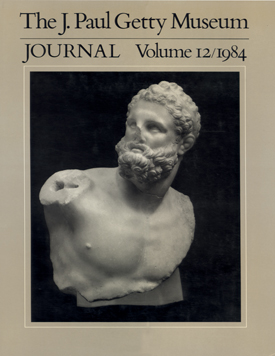
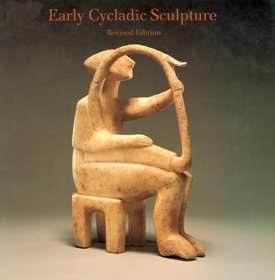
Pat Getz-Preziosi, Brunilde Sismondo Ridgway, Guntram Koch, Jiri Frel, Reynold Higgins, Alain Pasquier, Birgitta Lindros Wohl, Mario A. Del Chiaro, David Ball, Frank Bommer, Hille Kunckel, Anna Manzoni Macdonnell, Georges Daux, Stanley M. Burstein,Jaan Puhvel, Marit Jentoft-Nilsen, Gillian Wilson, Adrian Sassoon, Charissa Bremer-David
1984
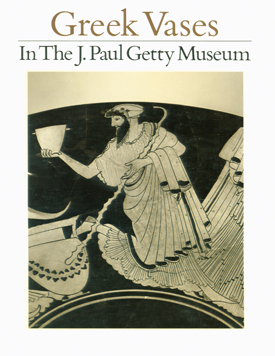
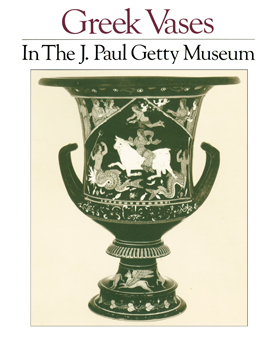
Dyfri Williams, Jiri Frel, E. Anne Mackay, Brian Legakis, Martin Robertson, Adrienne Lezzi-Hafter, Frank Brommer, Shirley J. Schwarz, Mario A. Del Chiaro, Marit Jentoft-Nilsen, Toby Sheiber, Peter J. Connor, H.A.G. Brijder
1983
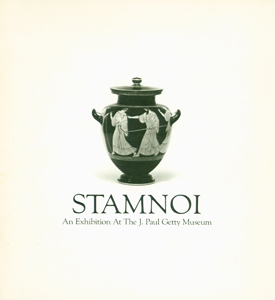
Marion True, Jiri Frel, and Dietrich von Bothmer
1983
Sinclair Hood, J.L. Benson, Mary B. Moore, Warren G. Moon, Diana Buitron, Mark Ontansky, Karen Manchester, Jiri Frel, Marion True, Katherine A. Schwab, J.R. Green, Karl Schefold, Marit Jentoft-Nilsen, A.D. Trendall, Mario A. Del Chiaro, Frederike van der Wielen-van Ommeren, Frank Brommer, A. Anne Mackay, D.C. Kurtz
1985
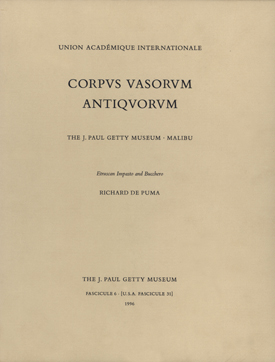
Joachim Raeder, Flemming S. Johansen, Sheldon Nodelman, Klaus Parlasca, Susan Wood, Siri Sande
1987

  

The Electronic Text Corpus of Sumerian Royal Inscriptions

[First posted in AWOL 11 November 2013, updated 29 Mzarch 2020]

The Electronic Text Corpus of Sumerian Royal Inscriptions
The Electronic Text Corpus of Sumerian Royal Inscriptions (= ETCSRI) project aims to create an annotated, grammatically and morphologically analyzed, transliterated, trilingual (Sumerian-English-Hungarian), parallel corpus of all Sumerian royal inscriptions.

ETCSRI is a fully lemmatized corpus; all words in it are tagged in order to generate glossaries. Its glossaries of Sumerian and various categories of proper names can therefore be used as convenient indices of the whole corpus of Sumerian royal inscriptions.

The designation of seal inscriptions now also includes CDLI's S-numbers. Seal inscriptions can therefore be searched according to their S-number in the pager. Writing, e.g., "CDLI Seals 005885" in the search bar will find "Amar-Suena 2029add". Searching for "CDLI Seals" will bring up all the CDLI seals within the ETCSRI corpus.

One may also search for the CDLI P and Q-numbers, excavation numbers, museum numbers, and accession numbers, as well as the collection name in the search bar of the pager. A search for "P232380" will bring up "Gudea 011"; a search for "Q001136" will bring up "URU-KA-gina 20add"; a search for "OIM A04105" will display "Gudea 016"; and "Yale Babylonian Collection" will show 116 records.

The CDLI publication history will now show in the Item View (under the heading "Bibliography") and is also searchable. The search "!cat FAOS" displays 457 returns; the search "!cat Edzard" displays 6 returns.

ETCSRI is developed at the Department of Assyriology and Hebrew Studies (Institute of Ancient Studies, Eötvös L. University, Budapest) by Gábor Zólyomi as part of The Open Richly Annotated Cuneiform Corpus with the continuous assistance and help of Steve Tinney.

Funding for ETCSRI was provided by the Hungarian Scientific Research Fund (OTKA) between 2008.10.01—2013.06.30 (project no. K75104).

If you cite the corpus, please use the next citation form: Zólyomi, Gábor - Tanos, Bálint - Sövegjártó, Szilvia. The Electronic Text Corpus of Sumerian Royal Inscriptions. 2008-. http://oracc.museum.upenn.edu/etcsri/index.html

The latest text added: Šulgi 100add
 
Do a a full text search in ETCSRI. [HELP]
The date of last modification: 12 Sep 2019

Amharic Corpus

[First posted in AWOL 4 October 2018, updates 29 March 2020]

Amharic Corpus
http://web-corpora.net/AmharicCorpus/search/images/EANC-logo.png
The page you are currently viewing is a web interface for the pilot version of Amharic corpus. The corpus size so far is about 23 millions tokens. The texts of the corpus have been automatically annotated with a part of speech analyzer. There is a disambiguation in the corpus, i. e. each token is annotated with one appropriate analyse.

Most tokens in the current version of the corpus belong to news texts. The rest of the texts include blogs and nonfiction (Wikipedia articles and essays). Eventually we intend to increase the number and diversity of texts and add fiction texts to the corpus.

The latest update
May 25th, 2016.


Created by
Maria Obedkova under guidance of Boris Orekhov within the project of HSE School of Linguistics


Web interface
The search platform of the Eastern Armenian National Corpus (EANC) was used for this corpus. You can read about making search queries at EANC help page.

Saturday, March 28, 2020

CSAI: Corpus of South Arabian Inscriptions

 [First posted in AWOL 4 October 2010, updated  (new URLS) 28 March 20120]

CSAI: Corpus of South Arabian Inscriptions
project_image
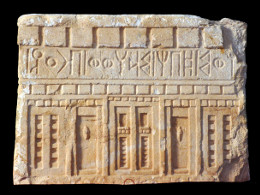
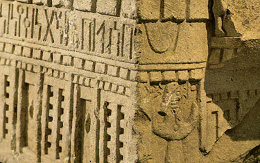
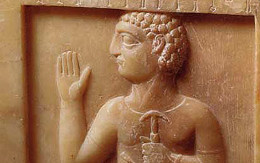
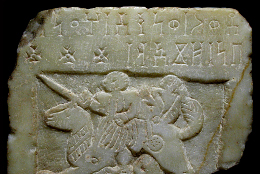
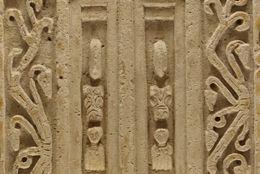
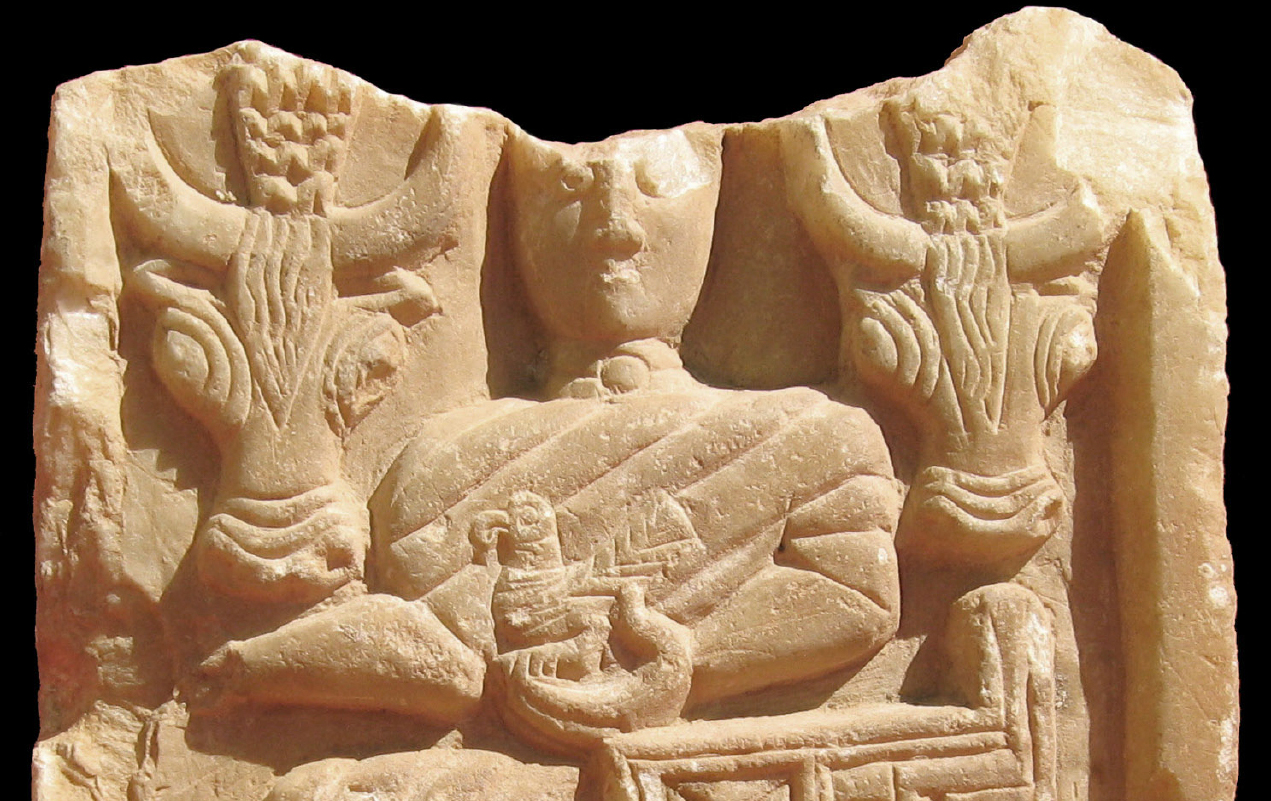
The ASA (Ancient South Arabian) corpus is one of the most interesting collections of epigraphic documents of the Semitic world, first and foremost for its vastness. With its over 15,000 inscriptions, it is the first-hand, written documentation of the culture that flourished in South Arabia from the late second millennium BC to the sixth century AD. At present, CSAI contains a collection of some 8,150 texts digitized by the team of the University of Pisa under the direction of A. Avanzini.

CORPORA BY LANGUAGE\

corpus_image

Corpus of Ḥaḍramitic Inscriptions

The collection includes about 900 inscriptions which date from between the 7th century BC and the end of the 3rd century AD. After an early period of formation characterised by a strong Sabaean cultural and linguistic influence, around the 5th-4th century Ḥaḍramawt became a kingdom with its own political importance. Its main activity was trading in incense, which grew in various regions of the country.
corpus_image

Corpus of Minaic Inscriptions

The corpus of the Minaic inscriptions is composed by almost 1,400 texts, gathering all the epigraphic texts left in Minaic (elsewhere called Madhabaic) language. These come from the Jawf valley in northern Yemen (Corpus of Central Minaic inscriptions), but also from outside South Arabia, as the Minaean traders visited and settled in other regions and sites of the Arabian Peninsula and the Near East (Corpus of Marginal Minaic inscriptions).
corpus_image

Corpus of Qatabanic Inscriptions

The Corpus of Qatabanic inscriptions comprises in total more than 1,800 texts. It has been divided into three linguistic varieties: beside the inscriptions of the Central Qatabanic, the two small corpora of Marginal Qatabanic and Awsanite inscriptions has been created, because these documentations show several linguistic and cultural features that distinguish them from the Qatabanic language of the mainland.
corpus_image

Corpus of Sabaic Inscriptions (work in progress)

The Corpus of Sabaic inscriptions is the largest linguistic corpus of South Arabian texts. To date, of the approximately 5,000 Sabaic inscriptions, more than two thirds have been published in DASI. This corpus is divided into three major historical linguistic periods: early, middle and late. We have also identified a number of regional varieties such as the Corpus of Early Sabaic inscriptions from Ethiopia (that is being compiled) and - in the Middle phase - the Central, Northern and Southern Sabaic.
corpus_image

Corpus of Undefined Ancient South Arabian Language inscriptions (work in progress)

This corpus collects all the South Arabian texts which cannot be assigned to any specific language, because they convey no information about their linguistic provenance, nor on their geographic or chronological setting. The majority of them are fragmentary or simply onomastic texts.

CORPORA BY SCRIPT TYPOLOGY

corpus_image

Corpus of Ancient South Arabian Minuscule texts (work in progress)

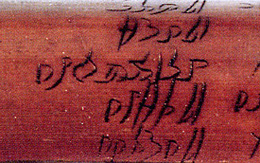
This is a small corpus, comprising some 40 texts, written in a new script and on a different support than the inscriptions in monumental writing engraved on stone, bronze or rocks. The first two wooden sticks texts were discovered at the beginning of the 1970's, during clandestine excavations in as-Sawdāʾ. The scholar Mahmoud al-Ghul was the first to partially decipher these new documents.

COLLECTIONS BY DEPOSIT

collection_image

Collection of the objects from the European museums

Since the beginning of the nineteenth century, the political presence and scientific expeditions of Europeans in the Arabian Peninsula inaugurated the establishment of European private and public collections of ancient South Arabian material, which constantly increased during the following decades.
collection_image

Collection of the objects from the USA museums

The Collection of the objects from the USA museums in DASI gathers the South Arabian antiquities housed in USA museums and private collections.
collection_image

Collection of the objects from the Yemeni museums

The digital cataloguing of the South Arabian inscriptions and artefacts housed in the Yemeni museums is one of the activities of the project CASIS, funded by the Italian Ministry for the University and Research for the years 2007-2010.

Friday, March 27, 2020

Open Access Journal: A bibliography of the survival of the classics

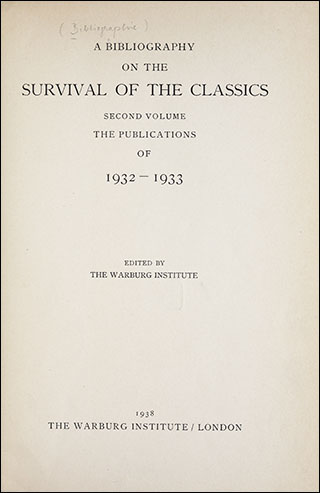
A bibliography of the survival of the classics
Introimage
Titelzusatz:the publications of ... =
Paralleltitel:Kulturwissenschaftliche Bibliographie zum Nachleben der Antike
Verf.angabe:ed. by The Warburg Institute
Erschienen:1.1931(1934) - 2.1932/33(1938)
Bitte beachten Sie die lokalen Bestandsangaben (s. unten).
Verlagsort:Heidelberg
Verlag:Universitätsbibliothek Heidelberg
Jahr:0000
Umfang:Online-Ressource
Fussnoten:Digitalisierungsabsicht ; Reproduktion
Angaben zum Titel:Haupttitel 1.1931: A bibliography on the survival of the classics. - Paralleltitel 1.1931: Kulturwissenschaftliche Bibliographie zum Nachleben der Antike
Datenträger:Online-Ressource
Dokumenttyp:Bibliografie
 Zeitschrift
Sprache:eng
Original:Elektronische Reproduktion von: A bibliography of the survival of the classics. - London: Inst., 1934
ZDB-Idn:3006731-5
K10plus-PPN:1688770895
2.1932-33 (1938)

See AWOL's full List of Open Access Journals in Ancient Studies

Digitized Corpus Inscriptionum Latinarum (CIL) at Arachne

 [First posted in AWOL 30 January 2012.  Most recently updated 27 March 2020]

Corpus Inscriptionum Latinarum (CIL)
The Corpus Inscriptionum Latinarum (CIL) is a comprehensive collection of ancient Latin inscriptions from all corners of the Roman Empire. Public and personal inscriptions throw light on all aspects of Roman life and history. The Corpus continues to be updated with new editions and supplements by the Berlin-Brandenburgische Akademie der Wissenschaften.
\
This digitized version of the CIL will initially comprise of the more than 50 parts (of vols. I-XVI + auctaria and of v. I (edition altera)) published before 1940. Available funding covers the digitization of the volumes with an imperfect OCR searching capability. The goal is to eventually create a keyword searchable database to contain also future volumes of the CIL as they fall outside of copyright restrictions and to eventually do the same for the Inscriptiones Graecae.
The printed version of the CIL presently consists of 17 volumes in approximately 70 parts, recording some 180,000 inscriptions. Thirteen supplementary volumes have plates and specialized indices. The first volume, in two sections, covered the oldest inscriptions, to the end of the Roman Republic; volumes II to XIV are divided geographically, according to the regions where the inscriptions were found and within these divisions also by inscription type. A two-volume "Index of Numbers," correlating inscription numbers with volume numbers, was published in 2003.

Background

In 2009 the Heads of the libraries of the American Academy in Rome, Rebecka Lindau, and École Française de Rome, Yannick Nexon, met to discuss the possibility of digitizing the volumes of the Corpus Inscriptionum Latinarum currently out of copyright. This had been a desire of both for a long time. Soon the Deutsches Archäologisches Institut and the Head of its library, Thomas Fröhlich, joined the project. Providing a server to host the volumes was more of a challenge. The DAI and Reinhard Foertsch at the University of Cologne came to the rescue with their object database Arachne, which is dynamically connected to international aggregators such as Claros or the multinational European project Carare, and freely available on the Web.
The members of the project are:
Rebecka Lindau (rebecka.lindau@aarome.org) and Paolo Imperatori (paolo.imperatori@aarome.org), the American Academy in Rome; Thomas Fröhlich (thomas.froehlich@dainst.de) and Paola Gulinelli (paola.gulinelli@dainst.de), Deutsches Archäologisches Institut; Elena Avellino (elena.avellino@efrome.it), l’École française de Rome; Reinhard Foertsch (foertsch@uni-koeln.de), Universität zu Köln (for Arachne).
The project partners are grateful to Institutum Romanum Finlandiae, Svenska Institutet i Rom, and the British School at Rome for lending some volumes for scanning.

The following volumes are online:

Title Parts
vol. I Inscriptiones Latinae antiquissimae ad C. Caesaris mortem.1863  

vol. I² Inscriptiones Latinae antiquissimae ad C. Caesaris mortem. pars I Fasti consulares ad a. u. c. DCCLXVI. Elogia clarorum virorum. Fasti anni Iuliani. Cura TH. MOMMSEN, W. HENZEN, CHR. HUELSEN. 1893
  pars II, fasc. I Inscriptiones Latinae antiquissimae. Cura E. LOMMATZSCH. 1918
  pars II, fasc. II Addenda. Nummi. Indices. Cura E. LOMMATZSCH, H. DESSAU.

vol. II Inscriptiones Hispaniae Latinae. Edidit AEM. HÜBNER. 1869  
  Supplementum. 1892

vol. III Inscriptiones Asiae, provinciarum Europae Graecarum, Illyrici Latinae. Edidit TH. MOMMSEN. 1873 pars I Inscriptiones Aegypti et Asiae. Inscriptiones provinciarum Europae Graecarum. Inscriptionum Illyrici partes I-V
  pars II Inscriptionum Illyrici partes VI. VII. Res gestae divi Augusti. Edictum Diocletiani de pretiis rerum. Privilegia militum veteranorumque. Instrumenta Dacica
  Supplementum. Inscriptionum Orientis et Illyrici Latinarum supplementum. Edid. TH. MOMMSEN, O. HIRSCHFELD, A. DOMASZEWSKI pars I (fasc. I-III. 1889 1893). 1902.
  Supplementum. Inscriptionum Orientis et Illyrici Latinarum supplementum. Edid. TH. MOMMSEN, O. HIRSCHFELD, A. DOMASZEWSKI pars II (fasc. IV-V). 1902 (impr. iter. 1967)

vol. IV Inscriptiones parietariae Pompeianae Herculanenses Stabianae. Edid. C. ZANGEMEISTER, R. SCHOENE. 1871  
  Supplementi pars I Tabulae ceratae Pompeiis repertae. Edidit C. ZANGEMEISTER. 1898
  Supplementi pars II Inscriptiones parietariae et vasorum fictilium. Edidit A. MAU. 1909

vol. V Inscriptiones Galliae Cisalpinae Latinae. Edidit TH. MOMMSEN. pars I Inscriptiones regionis Italiae decimae. 1872 (impr. iter. 1959)
  pars II Inscriptiones regionum Italiae undecimae et nonae. 1877

vol. VI Inscriptiones urbis Romae Latinae. Collegerunt G. HENZEN, I. B. DE ROSSI, E. BORMANN, CHR. HUELSEN, M. BANG. pars I Inscriptiones sacrae. Augustorum, magistratuum, sacerdotum. Latercula et tituli militum. Edid. E. BORMANN et G. HENZEN. 1876
  pars II Monumenta columbariorum. Tituli officialium et artificium. Tituli sepulcrales reliqui: A-Claudius. Edid. E. BORMANN, G. HENZEN, CHR. HUELSEN. 1882
  pars III Tituli sepulcrales: Claudius-Plotius. Edid. E. BORMANN, G. HENZEN, CHR. HUELSEN. 1886
  pars IV, fasc. I Tituli sepulcrales: Plotia-Zozon. Inscriptiones varii argumenti. Fragmenta. Edidit CHR. HUELSEN. 1894
  pars IV, fasc. II Additamenta. Edidit CHR. HUELSEN. 1902
  pars IV, fasc. III Additamentorum auctarium. Edidit M. BANG. 1933
  pars V Inscriptiones falsae. Edid. E. BORMANN, G. HENZEN, CHR. HUELSEN. 1885
  pars VI, fasc. I Index nominum. Edidit M. BANG. 1926

vol. VII Inscriptiones Britanniae Latinae. Edidit AEM. HUEBNER. 1873  

vol. VIII Inscriptiones Africae Latinae. Collegit G. WILMANNS. Edidit TH. MOMMSEN. 1881 pars I Inscriptiones Africae proconsularis et Numidiae
  pars II Inscriptiones Mauretaniarum
  Supplementi pars I Inscriptiones Africae proconsularis. Edid. R. CAGNAT, I. SCHMIDT. 1891
  Supplementi pars II Inscriptiones provinciae Numidiae. Edid. R. CAGNAT, I. SCHMIDT. Commentariis instruxerunt I. SCHMIDT, H. DESSAU 1894
  Supplementi pars III Inscriptiones Mauretaniae. Miliaria et instrumentum domesticum. Edid. I. SCHMIDT, R. CAGNAT, H. DESSAU. 1904
  Supplementi pars IV Inscriptiones Africae proconsularis. Edid. R. CAGNAT, H. DESSAU. 1916

vol. IX Inscriptiones Calabriae, Apuliae, Samnii, Sabinorum, Piceni Latinae. Edidit TH. MOMMSEN. 1883  

vol. X Inscriptiones Bruttiorum, Lucaniae, Campaniae, Siciliae, Sardiniae Latinae. Edidit TH. MOMMSEN. 1883 pars I
  pars II

vol. XI Inscriptiones Aemiliae, Etruriae, Umbriae Latinae. Edidit E. BORMANN. pars I Inscriptiones Aemiliae et Etruriae. 1888
  pars II, fasc. 1 Inscriptiones Umbriae, viarum publicarum, instrumenti domestici. 1901
  pars II, fasc. 2 Addenda ad partes priores et indicum capita tria. 1926

vol. XII Inscriptiones Galliae Narbonensis Latinae. Edidit O. HIRSCHFELD. 1888  

vol. XIII Inscriptiones trium Galliarum et Germaniarum Latinae. Edid. O. HIRSCHFELD et C. ZANGEMEISTER. pars I, fasc. 1 Inscriptiones Aquitaniae et Lugudunensis. Edidit O. HIRSCHFELD. 1899
  pars I, fasc. 2 Inscriptiones Belgicae. Edidit O. HIRSCHFELD. 1904
  pars II, fasc. 1 Inscriptiones Germaniae superioris. Edidit C. ZANGEMEISTER. 1905
  pars II, fasc. 2 Inscriptiones Germaniae inferioris. Miliaria Galliarum et Germaniarum. Edid. TH. MOMMSEN, O. HIRSCHFELD, A. DOMASZEWSKI. 1907
  pars III, fasc. 1 Instrumentum domesticum I. Edidit O. BOHN. 1901
  pars III, fasc. 2 Instrumentum domesticum II. Edidit O. BOHN. Insunt signacula medicorum oculariorum. Edidit AEM. ESPÉRANDIEU. 1906
  pars IV Addenda ad partes primam et secundam. Edid. O. HIRSCHFELD et H. FINKE. 1916
  pars VI Signacula publice laterculis impressa. Edidit E. STEIN. Accedunt signacula laterculis a privatis impressa. Edidit E. VOLKMANN. 1933

vol. XIV Inscriptiones Latii veteris Latinae. Edidit H. DESSAU. 1887  
  Supplementum Ostiense. Edidit L. WICKERT. 1930.
  Supplementi Ostiensis fasciculus II. Indices topographicos composuit L. WICKERT. 1933

vol. XV Inscriptiones urbis Romae Latinae. Instrumentum domesticum. Edidit H. DRESSEL pars I Edidit H. DRESSEL. 1891
  pars II, fasc. 1 Edidit H. DRESSEL. 1899

vol. XVI Diplomata militaria. Post TH. MOMMSEN edidit H. NESSELHAUF. 1936  

Priscae Latinitatis monumenta epigraphica. Tabulae lithographae. Edidit FR. RITSCHL. 1862 (impr. iter. 1961 et 1968) ISBN 3-11-001417-3. Accedunt: Priscae Latinitatis epigraphicae supplementa quinque. Edidit FR. RITSCHL. 1862-1864  

Auctarium Exempla scripturae epigraphicae Latinae a Caesaris dictatoris morte ad aet. Iustiniani. Edidit AEM. HUEBNER. 1885  

Thursday, March 26, 2020

CHS Online Open House | Disease and Social Order: The Plague Narratives of Thucydides and Lucretius, with Robert Cioffi

Online Open House | Disease and Social Order: The Plague Narratives of Thucydides and Lucretius, with Robert Cioffi
We are excited to welcome Robert Cioffi of Bard College for an Online Open House. The title of the discussion is “Disease and Social Order: The Plague Narratives of Thucydides and Lucretius”. The discussion will take place on Thursday, April 2 at 11:00 a.m. EDT, and will be live-streamed on the Center for Hellenic Studies YouTube channel and recorded.
Robert introduces these narratives as follows:
Thucydides wrote The History of the Peloponnesian War about the conflict between Athens and Sparta, because he believed that it was the greatest conflict in human history and that his account would serve as a “possession for ever” for future readers. It was published sometime near the end of the fifth century (it’s hard to be precise when although it should be sometime after 404 BCE). The selection that you have is from the early years of the war, and focuses on the rise and fall of the Athenian leader Pericles. It begins with his funeral oration for the first who died in the war and it ends with his obituary (2.65). I chose this passage because of its narrative of the plague of 430 BCE. I, at least, find myself thinking often of this passage in these days of emergency and I hope that you will find something of value here. You might think of other texts you’ve encountered where disease and plague is important.
Lucretius’ On the Nature of Things is a Latin poem that tries to convey the philosophy of Epicurus—a Greek philosopher who lived in the fourth century BCE—in verse. Lucretius’ poem was published sometime in the 50s BCE. (Cicero knows about it in 54 BCE.) You have here the final section, which ends with a description of the same plague in Athens as in Thucydides’ History and clearly seems to be engaging with his text. Some of the key claims of Lucretius’ work are that the entire world—from your pen to the gods—are composed of indivisible bits of matter (atoms), that (almost) every observable phenomenon in the world can be explained by the movement of those atoms, and that, therefore, “death is nothing to us” (since there is no afterlife). The plague forms an understandably jarring conclusion to such a poem, so jarring that some scholars have wondered whether Lucretius’ work is unfinished. If you’re interested in Lucretius and his philosophy, I recommend the work of Stephen Greenblatt (reviewed here: https://www.theguardian.com/books/2011/dec/23/the-swerve-stephen-greenblatt-review).
In preparation for the discussion, you might like to read:
Thucydides 2.34–65. The selection should start here:
http://www.perseus.tufts.edu/hopper/text?doc=Thuc.+2.34&fromdoc=Perseus%3Atext%3A1999.01.0200
Lucretius On the Nature of the Universe Book 6, line 1100–END
The selection starts at p. 272 according to the book’s page numbering:
http://files.libertyfund.org/files/2242/Lucretius_1496_Bk.pdf
Robert Cioffi
Robert Cioffi is Assistant Professor of Classics at Bard College. His research interests and recent publications center on Greek prose fiction of the Roman imperial period and travel, ethnography, and identity in the ancient world. He is currently completing a monograph on the ethnographic discourse of the Greek novels, entitled Narrating the Marvelous: The Greek Novel and the Ancient Ethnographic Imagination. Recent publications include articles on epiphany in the Greek novels, the relationship between Greek and Roman novels, and travel in the Roman world. In addition to his scholarly publications, he is a contributor to the London Review of Books. He is also developing two new areas of research. The first is focused on the Renaissance reception of the Greek novels. The second is about the representation of ghosts and the supernatural in Greek literature.