De Gruyter is offering free access, via institutions, to 75000 e-books until 30 June 2020. Please bring this to the attention of your libraries:
https://www.reforc.com/uber-75-000-ebooks-kostenfrei-zuganglich/
Wednesday, June 3, 2020
Tuesday, June 2, 2020
Studies in Semitic Vocalisation and Reading Traditions
Studies in Semitic Vocalisation and Reading Traditions
Aaron Hornkohl and Geoffrey Khan (eds.)
Aaron Hornkohl and Geoffrey Khan (eds.)
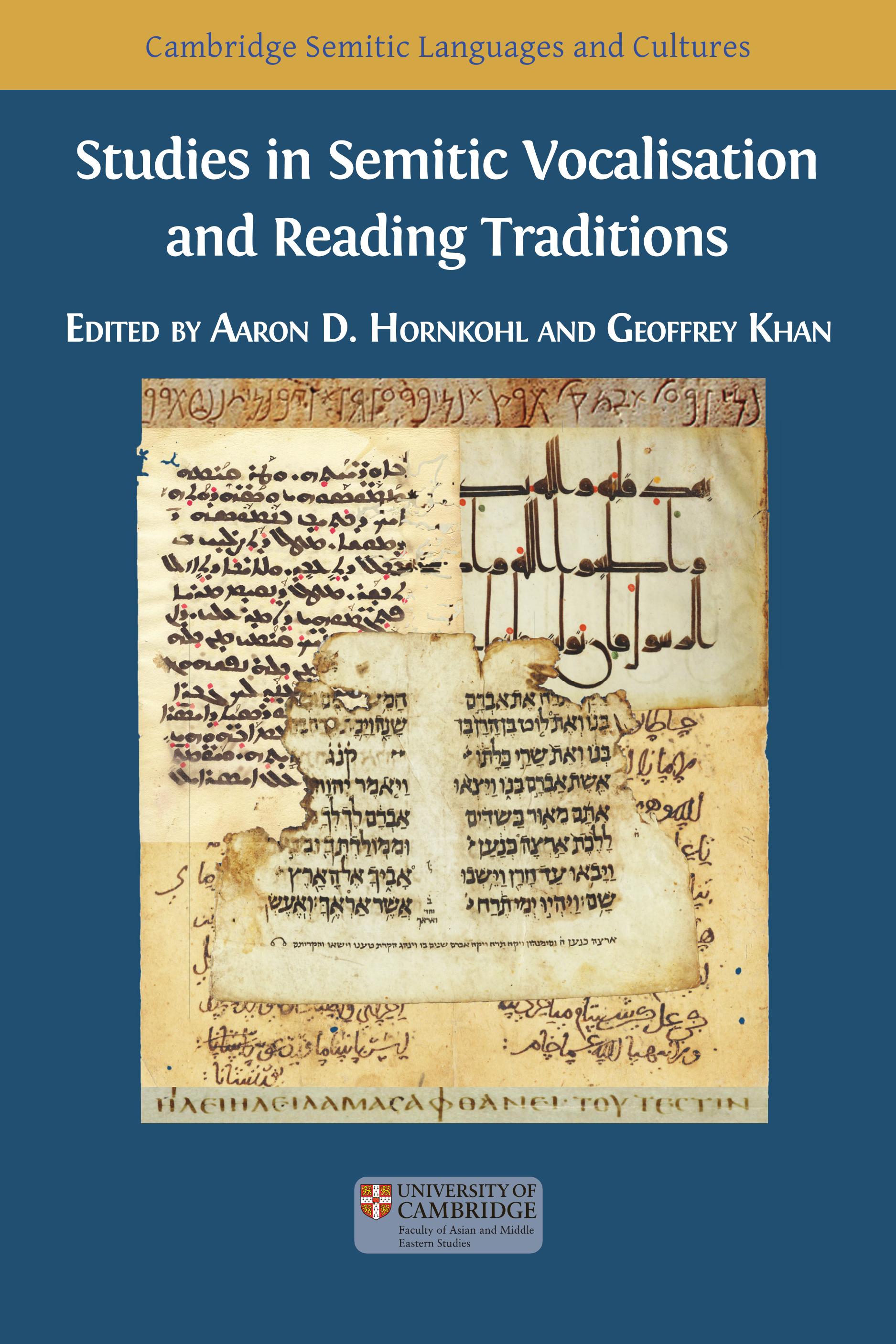
Studies in Semitic Vocalisation and Reading Traditions
Aaron Hornkohl and Geoffrey Khan (eds.) | June 2020
708 pp. | 4 b&w (pbk)/colour (hb) Illustrations | 6.14" x 9.21" (234 x 156 mm)DOI: 10.11647/OBP.0207Semitic Languages and Cultures vol. 3 | ISSN: 2632-6906 (Print); 2632-6914 (Online)ISBN Paperback: 9781783749355
ISBN Hardback: 9781783749362
ISBN Digital (PDF): 9781783749379
Subject Codes: BIC: CFF (Historical and comparative linguistics), CFP (Translation and interpretation); BISAC: REL006020 (RELIGION / Biblical Biography / General), LAN009010 (LANGUAGE ARTS & DISCIPLINES / Linguistics / Historical & Comparative)
This volume brings together papers relating to the pronunciation of Semitic languages and the representation of their pronunciation in written form. The papers focus on sources representative of a period that stretches from late antiquity until the Middle Ages. A large proportion of them concern reading traditions of Biblical Hebrew, especially the vocalisation notation systems used to represent them. Also discussed are orthography and the written representation of prosody.
Beyond Biblical Hebrew, there are studies concerning Punic, Biblical Aramaic, Syriac, and Arabic, as well as post-biblical traditions of Hebrew such as piyyuṭ and medieval Hebrew poetry. There were many parallels and interactions between these various language traditions and the volume demonstrates that important insights can be gained from such a wide range of perspectives across different historical periods.
Robert Crellin and Lucia Tamponi - Vowel Quantity and Quality in Neo-Punic and Latin Inscriptions Download
Robert Crellin and Lucia TamponiAaron D. Hornkohl - Discord between Tiberian Written and Reading Traditions Download
Aaron D. HornkohlVincent DeCaen and B. Elan Dresher - Pausal Forms and Prosodic Structure in Tiberian Hebrew Download
Vincent DeCaen and B. Elan DresherBenjamin Outhwaite - The Tiberian Tradition in Common Bibles from the Genizah Download
Benjamin OuthwaiteJosé Martínez Delgado - The Prosodic Models of Andalusi Hebrew Metrics Download
José Martínez DelgadoIndex
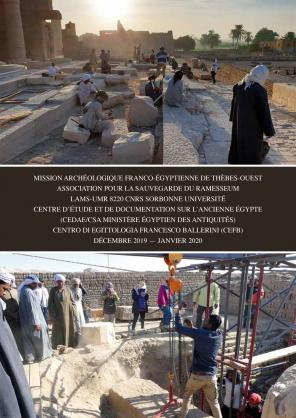
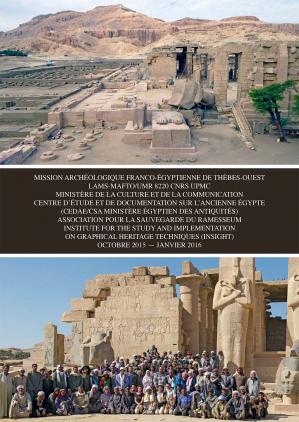
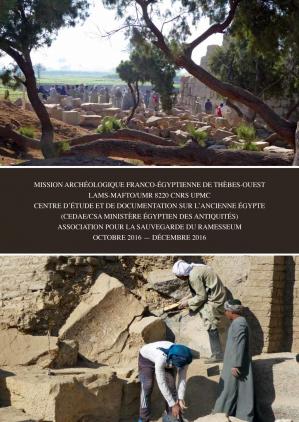
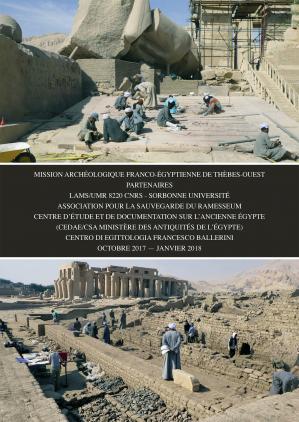
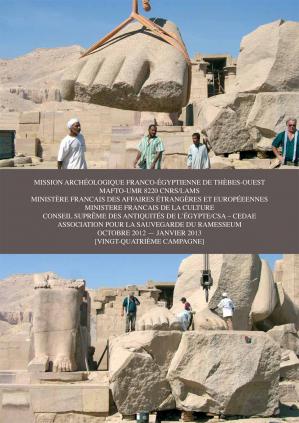
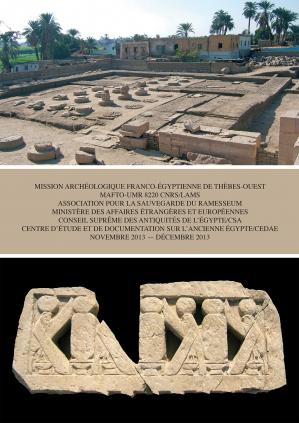
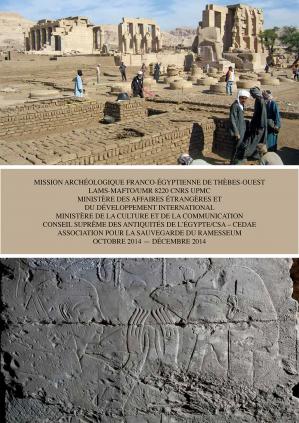
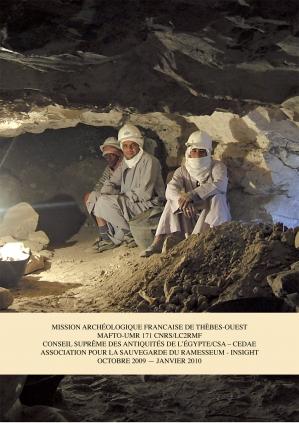
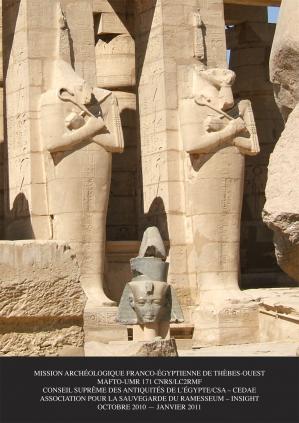
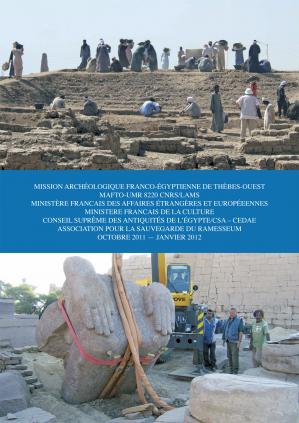
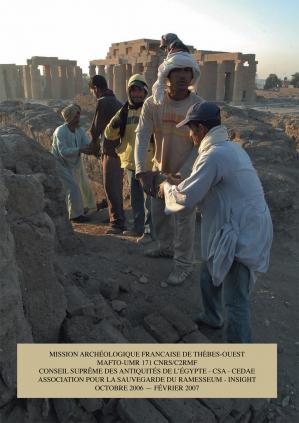
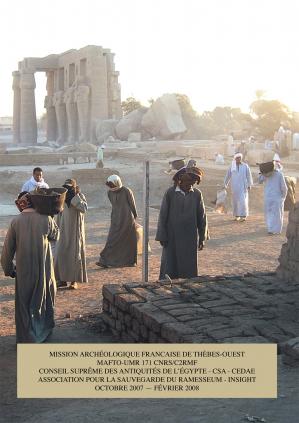
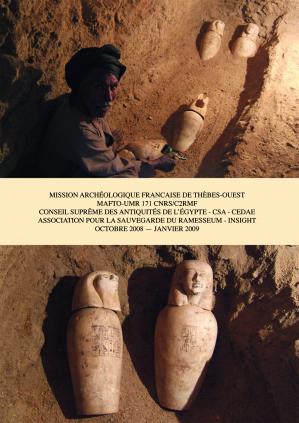
Open Acccess Annual Reports: Rapports préliminaires de la Mission Archéologique Française de Thèbes-Ouest
Rapports préliminaires de la Mission Archéologique Française de Thèbes-Ouest
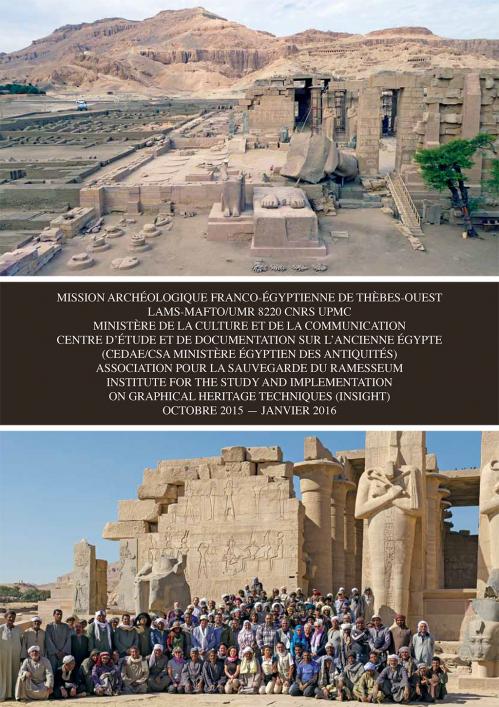
Les Rapports préliminaires de la Mission Archéologique Française de Thèbes-Ouest constituent un compte-rendu des fouilles et des travaux de restauration entrepris dans le cadre d'un partenariat franco-égyptien (CNRS/ASR/CEDAE-CSA). Il s'agit d'un descriptif des opérations effectuées sur le terrain (Ramesseum, Vallée des Rois et tombes thébaines) au fil des campagnes, et des premiers résultats qui ne peuvent cependant être considérés comme définitifs. Ils sont consultables à titre purement informatif mais ne peuvent être reproduits.
Rapports 2018-2019-2020
Rapports 2015 - 2018
Rapports 2012 - 2015
Rapports 2009 - 2012
Rapports 2006 - 2009
See AWOL's full List of Open Access Journals in Ancient Studies
Roman Law Resources
[First posted in AWOL 12 August 2011, updated 2 June 2020]
Roman Law Resources
Ernest Metzger, University of Glasgow School of Law
Roman Law Resources
Ernest Metzger, University of Glasgow School of Law

This site provides information on Roman law sources and literature, the teaching of Roman law, and the persons who study Roman law. The site is available in English and German. Users are invited to submit to this site any materials or information which might interest other users.
noticesCall for Submissions: Roman Legal Tradition. The Editor and Board of Roman Legal Tradition welcome submissions for the forthcoming issue. Roman Legal Tradition is a peer-reviewed journal dedicated to the civilian tradition in ancient, medieval, and modern law. It is published by the Ames Foundation at the Harvard Law School and the Alan Rodger Endowment at the University of Glasgow.
Idem ...Society for Classical Studies/Archaeological Institute of America Annual Meeting, Washington, DC. 2-5 i 2020.
Idem ...Association of Ancient Historians Annual Meeting, Iowa City, Iowa. 23-25 iv 2020.
Idem ...European Society for Comparative Legal History. 6th Biennial conference, Lisbon. 'Professions and Methods in Comparative Legal History'. 1-3 vii 2020.
Idem ...LXXIVème Session de la Société Internationale Fernand de Visscher pour l'Histoire des Droits de l'Antiquité, 5-9 i 2021, Santiago.
Idem ...Deutsche Rechtshistorikertag. 7-11 ix 2020, Zurich.
Idem ...American Society for Legal History Annual Meeting 2019. Boston, Massachusetts. 21-24 xi 2019.
Idem ...XXIVth Annual Forum of the Association of Young Legal Historians. 'Identity, Citizenship and Legal History'. 5-8 vi 2019, Brussels.
Idem ...materialsAbbreviations
A list of abbreviations that are common in Roman law literature.Bibliographies
An index to relevant bibliographies and catalogues of materials available over the Internet.Justinian's Codex in English: corrections and comments
Users may consult the corrections submitted by contributors, and may submit corrections themselves.Justinian's Digest in English: corrections and comments
Users may consult the corrections submitted by contributors, and may submit corrections themselves.Literature
An index of literature collections on Roman, civil, and ancient law, available over the internet.Rescripta
193-305 AD: from the Accession of Pertinax to the Abdication of Diocletian. Prepared to accompany Emperors and Lawyers, 2nd ed. (Oxford: Oxford University Press, 1994), by Tony Honoré.Sources
An index to relevant primary sources available over the Internet.Teaching Materials
An index to relevant teaching materials available over the Internet.informationBlogs and Discussion Forums
A directory of sites where subjects of interest to users of this site are discussed.Journals
An index to websites of relevant journals.Portals
An index of internet portals for Roman, civil, and ancient law.Societies and Projects
An index of societies and projects relating to Roman, civil, and ancient law.peopleIn Memoriam
We remember.legacy pagesElectronic Reprints
A small number of articles, which have been published elsewhere, are reprinted at this site.Directory of Legal Historians
Links to directories of legal romanists and other legal historians.
See also AWOL's list of Open Access Ancient Law Journals
Filming Antiquity
[First posted in AWOL 21 February 2017, updated 2 June 2020]
Filming Antiquity
Filming Antiquity
Filming Antiquity is an interdisciplinary collaboration and digitisation project initially funded by a grant from the Centre for Humanities Interdisciplinary Research Projects (CHIRP) at University College London (UCL). Between 2014 and 2016, Filming Antiquity digitised excavation films from the Harding archive held in the UCL Institute of Archaeology and continues to make these films accessible through this project website. The project team members came from three different UCL departments: Archaeology, English and Information Studies.
The project had three main objectives: a) the digitisation of excavation films currently held in the UCL Institute of Archaeology (IoA), b) an interdisciplinary symposium with screenings of a sample of the digitised films and discussion and c) the construction of an online archive of these films and supporting materials.
The films we digitised feature excavations and local context in 1930s British Mandate Palestine. The early 20th century saw radical developments in technologies of transmission and mass communication. In this period archaeology gradually shifted from amateur to professional practice, as the first generations of trained archaeologists solidified their techniques in the field. Supported by the industrialists and museums who funded their work, these archaeologists embraced moving image technology to record life and work on site. These amateur productions were sometimes shown alongside public exhibitions of artefacts as cinematic proof of the spadework tackling the problems of ancient civilisations within a changing modern context.
The collection of these artefacts into an online archive will contribute to dialogues on information storage and knowledge production through digital resources. Filming Antiquity provides a model for making excavation films accessible and inviting public discussions and interdisciplinary scholarship through online platforms.
Excavation Films Online
There are a growing number of organisations putting archive excavation films online. Some of the footage we have been looking at in the context of Filming Antiquity is listed below. This list will be added to as new footage is put online.
Stonehenge Panorama (1900) - British Film Institute
A History of Pathe Baby films, and digitised Pathe Baby films, including travelogues and documentaries (not excavation, but some feature archaeological sites) - Princeton University Special Collections.
‘A Day at Jebel Moya: Part Three’ (1912-1913) – Wellcome Library
In two parts: Part 1; Part 2. For further details, see Angela Saward’s Filming Antiquity guest post.
'Luxor at Wembley' (1924) film on the reconstruction of Tutankhamun's tomb at the British Empire Exhibition at Wembley, London - British Pathe
Petrafilmen (1924) film of the ancient city of Petra, in Jordan - via Danish Film Institute on European Film Gateway
Elinor Gardner's Excavations in Greece (1926) - British Film Institute
'Baskett-Lowke in Egypt' (c. 1927) - Huntley Film Archive
Excavation films from Tell en-Nesbeh (1926, 1935) - Bade Museum
‘Digging Into the Past: Egyptian Excavations of the Metropolitan Museum of Art’ (c. 1930) – Metropolitan Museum of Art, New York. Read more about the history of the Met's educational "Cinema Films" here.
Tell el-Amarna (1930-33) in two parts: Part 1; Part 2 - Hilary Waddington for the Egypt Exploration Society. Further details can be found in our Media section.
Libyan Desert (1930) Ralph Alger Bagnold & friends explorations of the prehistoric landscape and art of the Sahara by car - British Film Institute
Excavations at Mount Carmel, filmed by archaeologist Dorothy Garrod, 1931 - Pitt Rivers Museum
Excavations at Nineveh, c. 1931-1933, thought to have been filmed by archaeologist Reginald Campbell Thompson – Royal Asiatic Society. Further information here and here.
‘The Human Adventure’ (1932-1936) – Charles Breasted & James Henry Breasted for the Oriental Institute, Chicago (with sound)
Early 20thC films relating to the ancient city of Petra, Jordan, listed at the Petra1929 website.
Biskupin Pomnik Historii (2014). Incorporates 1930s excavation footage of Iron Age settlement remains and excavation in Poland - English language version here. Polish language version here.
Newsreel footage of Mortimer Wheeler at Verulamium (St Albans, Hertfordshire, UK): ‘Roman Bathroom is Found At St Albans’; ‘Old Roman City Excavated Near St Albans’- British Movietone
Newsreel footage of excavations at Maiden Castle (Dorset, UK): "Picture Paragraphs in the Week's News: First Snapshot is digging at historic Maiden Castle site, which dates back to 4th Century B. C."- British Movietone
Sutton Hoo excavations, 1939 - British Museum.
Films in the collection of the University of Pennsylvania Museum, c. 1930s/1940s including travels to archaeological sites around the world, and episodes of 1950s CBS archaeology game show What in the World? (hosted on Internet Archive).
"Triumph Ovre Time" (1947) - Margaret Thompson (prod.); Oscar Broneer (dir.). More information here and here.
‘To Work’ (1950) – M. R. Apted for the Egypt Exploration Society.
"Archaeology Archives" - a collection of British Pathe newsreels featuring archaeology.
Monday, June 1, 2020
Teaching Classics in the Digital Age
Teaching Classics in the Digital Age

About the Congress
Digital media provide new possibilities for teaching and outreach in Classics. But how can we best make use of the new technologies, both at university and in communicating with the broader public?
The conference Teaching Classics in the Digital Age aims at presenting current approaches to digital teaching and sharing best practices by bringing together different projects and practitioners from all fields of Classics (including Classical Archaeology, Greek and Latin Studies and Ancient History).
Furthermore, it aims at starting a discussion about principles, problems and the future of teaching Classics in the 21st century within and beyond its single fields.
We consider the following as key questions:
- How can digital methods and research approaches be implemented in teaching at university level? - Which technical possibilities are suitable for digital teaching and how can they be used successfully?
- What are the limitations of and obstacles for applying digital teaching methods in Classics?
- How can digital methods help us to reach out to teachers and students at primary and secondary schools as well as to the broader public?
- How can digital methods contribute to the dissemination of Classics as part of a lifelong education?
The virtual meeting room is accessible under: https://us02web.zoom.us/j/82377778816 (ZOOM Meeting-ID: 823 7777 8816) by entering the password 150620.
Participation in the conference is free. In order to estimate the required technical capacities, please register at: feuser@klassarch.uni-kiel.de and/or kwesselmann@email.uni-kiel.de.
LatinOWL
[First posted in AWOL 31 March 2013, updated 1 June 2020]
LatinOWL
LatinOWL
The Latin Online Word Lookup (LatinOWL) is an iOS app that, by using data from the Perseus Latin Word Tool, allows a user to lookup any Latin word, locate the root (i.e. nominative noun/adjective or the 1st person singular present active indicative for verbs), and parse the entered form. It gives all possible forms for the word entered. This tool also links the roots to the online Lewis & Short dictionary from Perseus, and also from that dictionary, provides links to all the works in the Perseus database that are quoted in the dictionary.
The program is copyright 2013 Scot Mcphee.
##Notice
##Open Source Licence
- Many thanks must go to Matt Gallagher of CocoaWithLove for the 'XPathQuery' class used in this project. I am very glad he built that wrapper around libxml2 and not me.
- This project also uses the 'Reachability' class from Apple.
This work is licensed under a Creative Commons Attribution-NonCommercial-ShareAlike 3.0 Australia License.

Important legal information follows. You are legally obligated to obey these license terms:
http://creativecommons.org/licenses/by-nc-sa/3.0/au/
- You must credit the software to me, i.e. Scot Mcphee or http://github.com/scotartt or something similar.
- Your derivate source code must be in a public git repository.
- It must have these same licence conditions attached to it (this includes your 'derivate works' i.e. modification that you make - they must also carry this same licence).
- Please note that the 'non commercial' aspect of this licence means that you cannot sell a binary based on a derivate of this source code in the iTunes App Store (free is fine).
- This licence does not apply to source files I have included from other sources (see Notice). Those sources have copyright and licence conditions which are individually indicated at the top of the relevant file. It also obviously doesn't apply to Apple components which are linked to the binary at the compilation/linking build stage (etcetera), or anything else of that nature which I have no legal right to impose this licence on.
- This text does not supercede the legalese in the linked licence detail; it's just a plain-English explanation of it's implications.
Subscribe to:
Posts (Atom)





 Posts
Posts


 Stumble It!

