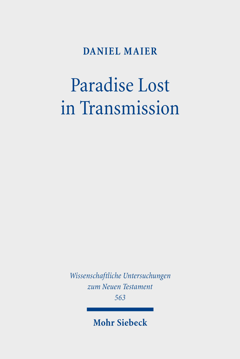
Wissenschaftliche Untersuchungen zum Neuen Testament (WUNT I) 563
Daniel Maier offers a comprehensive re-examination of the Apocalypse of Peter, one of the earliest Christian apocalyptic texts, and reconstructs its vision of the fate of the righteous after death. He argues that this text articulates an elaborate and influential model of Paradise as a return to a heavenly Eden, rather than as an abstract or purely spiritualized state. This model is neither marginal nor secondary but belongs to a formative phase of early Christian eschatological imagination. The author combines detailed philological analysis with source/redaction criticism and tradition-historical comparison. He examines all extant textual witnesses, with particular attention to the Ethiopic transmission and its embedding within a Pseudo-Clementine framework. By reading the Ethiopic material not as a late or secondary accretion but as a decisive witness to early interpretive trajectories, the author challenges long-standing reconstructions that grant one version near-exclusive authority in establishing the text.
The Apocalypse of Peter, Maier argues, envisions the post-mortem destinies of both the righteous and the sinners in terms of spatial concreteness, sensory experience, and communal forms of existence. Paradise is depicted as a restored Eden characterized by light, fragrance, and abundant joy, thereby integrating Jewish apocalyptic traditions of Eden, resurrection, and judgment with emerging Christian eschatology. Maier further demonstrates that motifs such as post-mortem salvation, otherworldly mediation by angels and patriarchs, and embodied perception are structurally linked to broader early Christian debates about resurrection, justice, and divine mercy.
Sponsored by: Schweizerischer Nationalfonds (SNF)
Table of contents:1. The Purpose of the Study
1.1 The Significance of the Apocalypse of Peter
1.2 Challenges and Structure of the Study
2. Introduction to the Apocalypse of Peter
2.1 Genre, Structure, and Content
2.2 Locating the Apocalypse of Peter: Revisiting the Question of Provenance
2.3 Dating the Apocalypse of Peter: Establishing Its Historical and Literary Context
3. The Transmission of the Apocalypse of Peter
3.1 The Greek Witnesses
3.2 The Ethiopic Manuscripts
3.3 Methodology: Determination of Original Content
4. Evidence for Editorial Changes in the Ethiopic Apocalypse of Peter
4.1 The Eternity of Hell in the Ethiopic Version
4.2 High Christology in Eth. Apoc. Pet. 15-16
4.3 The Prospect of Post-Mortem Salvation through Intercession of the Righteous Ones
4.4 Results: Implications for the Reliability of the Ethiopic Version
5. Evidence for Editorial Changes in the Akhmîm Codex
5.1 The Shift from Prophecy to Report: The Change in Narrative Tense
5.2 Structural Reordering: The Sequence of Hell and Paradise
5.3 Results: Implications for the Reliability of the Akhmîm Codex
6. Recovering Eden: Reconstructing the Earliest Christian Description of Paradise
6.1 The Macrostructure
6.2 Setting the Scene
6.3 The Scaffolding of the Vision of Paradise
6.4 Paradise Lost? A Comparison of the Versions
6.5 The Paradise Passages in Their Respective and Interconnected Contexts
6.6 Results: Paradise Restored
7. Situating the Apocalypse of Peter within Early Christian Accounts of Paradise
7.1 Paradise in Translation: From Eden to Eschatology
7.2 Paradise in Early Christianity: Past, Present, and Future
7.3 Paradise in the Apocalypse of Peter: A Distinctive Vision in Comparative Perspective
8. Reconstructing Paradise: Conclusions and New Trajectories
8.1 Method and Milestones: Summary of the Steps
8.2 The Road Thus Far: Synthesis of the Core Results
8.3 The Path Ahead: Trajectories for Future Research
8.4 Epilogue: The Meaning of Paradise





 Posts
Posts


 Stumble It!


No comments:
Post a Comment