2022 Conference Co-Sponsored by Freer Gallery of Art and Arthur M. Sackler Gallery, the Smithsonian's National Museum of Asian Art
October 2021 (Virtual) and 2022 (Washington, D.C.)
The Academic Research Institute in Iraq (TARII) is pleased to welcome you to the first TARII research conference. Join scholars and colleagues from across Iraq and internationally to hear about and discuss the various research being conducted in and on Iraq – from ancient to modern. Due to continued health concerns, the conference will now include a virtual component in October 2021 and a conference at the Freer Gallery of Art in Washington, D.C. in 2022.
virtual program
Although the conference has been moved in consideration of the health and well-being of all attending, we still look forward to informative scholarly research presentations and discussions. Each session will include presentations from scholars followed by a discussion. Questions will be taken from the audience as well. Presentations in each session are not listed in the order in which they will be given. Abstracts and biographies, when available, can be accessed by clicking on the title of the session.
opening remarks
Join us on 6 October at 10 am EST / 5:00 pm AST for welcoming and opening remarks from:
Dr. Peter Wien, President, The Academic Research Institute in Iraq; Professor of Modern Middle East History, University of Maryland in College Park
Dr. Chase Robinson, Dame Jillian Sackler Director of the Arthur M. Sackler Gallery and Freer Gallery of Art, Smithsonian Institution
Wednesday, 6 October
Cultural Heritage Preservation Projects: 10:30am - 12:00 pm EST / 5:30 pm - 7:00 pm AST
Dr. Darren Ashby, University of Pennsylvania: The Iraq Heritage Stabilization Program: 2018-2021
Dr. Katharyn Hanson, Smithsonian Institution: The Nimrud Rescue Project
Moderator: Dr. Mark Altaweel
Archaeology Projects: 12:30 pm - 2:30 pm EST / 7:30pm - 9:30 pm AST
Dr. Badir Albadran, University of Basrah: The limits of Holocene Marine Transgression into Southern Mesopotamia
Dr. Holly Pittman, Pennsylvania University Museum: Returning to Lagash: New excavations building on previous campaigns
Dr. Glenn Schwartz, Johns Hopkins University: Excavations at Kurd Qaburstan: Recent Results at a Second Millennium BC Urban Site on the Erbil Plain
Dr. Tracy Spurrier, University of Toronto: Introducing Hama: The Discovery of a Lost Neo-Assyrian Queen Laid to Rest amongst a Curious Cache of Bronze Coffins in the Nimrud Tombs
Dr. Jason Ur, Harvard University: The Erbil Plain Archaeological Survey, Kurdistan Region of Iraq
Moderator: Dr. Abdulameer Al-Hamdani
Thursday, 7 October
Gender Studies: 8 am - 9:30 am EST / 3 pm - 4:30 pm AST
Dr. Hadeel Abdelhameed, La Trobe University: Gendering Iraqi Traumatic Narrative: A postcolonial Gaze at Methal Ghazy’s Ladies’ Performance 2009
Ramyar Jamal, American University in Iraq, Sulemaniyah: The Gendered Impacts of the Concept of Masculinity on Iraqi Kurdish Men
Dr. Alissa Walter, Seattle Pacific University: Gender Norms, Sex Work, and the Law in Sanctions-Era Iraq
Moderator: Dr. Nadje Al-Ali
Art and Visual Studies: 11 am - 12:30 pm EST / 6 pm - 7:30 pm AST
Dr. Huma Gupta, Massachusetts Institute of Technology: From Sumer to Shakriya: The Antediluvian Legacy of Ṣarīfa Architecture in Iraq
Dr. Alyaa Naser, University of Baghdad: Theater of Violence: A Reality and Its Double in Hassabballah Plays
Dr. Elizabeth Rauh, American University in Cairo: Wet Pressure Points: The Southern al-Ahwar Marshes as Fluid Site, Substance, and Process in Contemporary Iraqi Printmaking
Moderator: Dr. Nada Shabout
Friday, 8 October
Archival Research: 12:30 pm - 2:00 pm EST / 7:30 pm - 9:00 pm AST
Michael Brill, Princeton University: The Last Jews of Babylon: Profiling Iraq's Jewish Community
Mélisande Genat, Stanford University: State Law and Tribal Justice in Iraq: the TCCDR files (1918-1958)
Dr. Samuel Helfont, Naval War College: Ba'thist Iraq at the End of History
Moderator: Dr. Elizabeth Bishop
Registration for the virtual component is open now! Although registration is free, it is required to attend.
Check back for updates or keep up with TARII by joining our mailing list.
TARII wishes to thank the U.S. Embassy in Baghdad for providing full funding to several Iraqi scholars who will travel and present at the conference in Washington, D.C. next year.
Wednesday, September 29, 2021
From ancient to modern: the current state of research on Iraq: The TARII research conference
Tuesday, September 28, 2021
Kritische Edition der sahidischen Version des Johannesevangeliums:Text und Dokumentation
Volume 56 in the series Arbeiten zur neutestamentlichen Textforschung
Open Access
- Languages: German, Coptic
- Publisher: De Gruyter
- Copyright year: 2021
- Audience: Researchers and students in the fields of theology (New Testament), Egyptology, and Coptology
- Pages
- Front matter: 10
- Main content: 348
- Keywords: New Testament; Sahidic; Gospel of John
eBook
- Published: October 4, 2021
- ISBN: 9783110592153
Hardcover
- Published: October 4, 2021
- ISBN: 9783110590210
Sahidic is one of the most important Coptic literary dialects. A modern, critical edition of the Sahidic translation of the New Testament has long been missing from the academic field. A research project funded by the FWF Austrian Science Fund (P29315) has now made it possible to produce a critical edition of the Sahidic Gospel of John, based on 172 different preserved manuscripts, most of them fragments.
Frontmatter
Open Access
I Vorwort
Open Access
V Inhaltsverzeichnis
Open Access
IX 1. Einleitung
Hans Förster
Open Access
1 2. Kritische Edition der sahidischen Version des Johannesevangeliums
Hans Förster, Kerstin Sänger-Böhm and Matthias H. O. Schulz
Open Access
19 2.1 Pericope adulterae ‒ Das Ostrakon London, British Museum, EA 21424
Matthias H. O. Schulz
Open Access
115 Anhang 1 Übersicht aufgenommener Handschriften
Matthias H. O. Schulz
Open Access
121 Anhang 2 Paratexte
Matthias H. O. Schulz
Open Access
173 Anhang 3 Johannesevangelium (lykopolitanisch)
Kerstin Sänger-Böhm and Matthias H. O. Schulz
Open Access
259 Anhang 4 Johannesevangelium (proto-bohairisch)
Kerstin Sänger-Böhm and Matthias H. O. Schulz
Open Access341
297 Bibliographie
Open Access
Textile-Dates: On-line database for 14C-dated textiles (from early times until the end of 1rst millennium AD)
The purpose of this homepage is ...
...twofold – and therefore it is actually a project, not "just" a database:
Overview and easy access
First of all it wants to give an overview on as well as easy access to reliably dated textiles from the 1st millennium BC and AD. This, actually, is a desideratum, since during the last decades, quite a number of textiles have been radiocarbon dated. However, the places of publication of these results frequently are rather hard to locate and only known to those who ordered or undertook the analyses. This is one of the foremost reasons why textiles – quite undeservingly – are still not being used as an historical source to the extent they could be.
The benefit for other textiles
Secondly: Sustained benefit of radiocarbon analysis is achieved when we can apply the datings also to related textiles bearing no such indicators as stratigraphy, dating inscriptions or radiocarbon analysis. These related textiles mostly are of a similar style, sometimes also showing analogies in technique or iconography.
Trend-setter or old fashioned?
However, what is needed most is to know whether the radiocarbon dated textile in question is typical of its kind, representing the average life span of its group, or whether– by pure coincidence – we have a precursor, an unusually early item, or – in contrast – an old fashioned, unusually late one.
The lonely highlight
In order to know for sure we need to have several (in strict statistical terms: ten!) samples safely dated. Collections, however, usually do not possess several textiles of one kind. Also, frequently there is the desire to have "highlights" being dated or unusual objects – which per se are difficult to compare with other textiles.
Look out for parallels
Therefore, it is essential to have parallels, i. e. several examples of one type dated, to improve progress in our ability to evaluate textiles historically and to make the most of the – still rather expensive – radiocarbon analyses. A type or group of textiles could consist of items which have in common an unusual iconographical feature or weaving structure (cf. "How to use – Parallels"). Consequently, it would be important and wise to first check parallels in other collections, get in touch with colleagues in charge and agree upon the analyses of related textiles, before the actual radiocarbon analysis is going to be undertaken.
Communicate!
We want to facilitate, encourage and promote this important communication. Therefore, in the database you will find a column called "Parallels", which indicates whether one or several parallels to a particular textile have already been radiocarbon dated. If you find out that, e. g., two items parallel to your textile in question have already been dated it would be most valuable if you added an analysis of your textile. In this case, please, let us know that your textile belongs to such a group.
Monday, September 27, 2021
Open Access Journal: Latina et Graeca
[First posted in AWOL 19 April 2014, updates 27 September 2021]
| ISSN 0350-414X (Tisak) | |
| ISSN 2718-2843 (Online) |

Publisher: Institute for Classical Languages and Ancient Civilizations Latina et Graeca, Zagreb
Izdavač: Institut za klasične jezike i antičku civilizacija Latina et Graeca, Zagreb
And see AWOL's list of
Croatian Open Access Archaeology Journals
Old Dongola: Continuity and change from the Medieval period to the 21st century
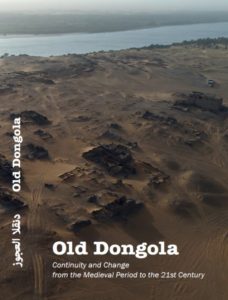
Warsaw 2021
ISBN: 978-83-953362-3-2 (print)
ISBN: 978-83-953362-4-9 (online)
Pages: 164
Soft coverFunding: The DIALOG project, ‘ArchaeoCDN. Archaeological Centre of Scientific Excellence’, Ministry of Education and Science of the Republic of Poland, Qatar-Sudan Archaeological Project (QSAP), European Research Council (ERC).
This book is special in that it is the PCMA’s first venture into the field of collaborative archaeology. It was conceived to respond to the desire of local communities to learn more about the history of the landscape they have lived in and to the development of which they have contributed.
Old Dongola has been excavated and conserved by Polish expedition for more than 60 years. The new project—Old Dongola: Development, Heritage, Archaeology, initiated in 2019—has extended the research scope to the post-medieval Islamic period and the living heritage in the region, integrating active engagement and collaboration with local communities as well as sustainable development. Old Dongola is a continuously evolving heritage landscape, and this book, published bilingually in English and Arabic, is aimed to raise awareness of its importance among both the Sudanese and the international audience.
This brief introduction to the history of the urban site starts with the founding of the city as the capital of the medieval Nubian Kingdom of Makuria in the 6th century AD and continues through the present day, showing how the heritage landscape of today was shaped by cultural, economic, social and spiritual activities over the centuries. The Christian heritage that has been uncovered and conserved by Polish teams since 1964 is magnificent, yet the history of the city did not end with the collapse of the Makurian Kingdom. Old Dongola remained an important regional centre and the hub of Islamic teaching, and is the ancestral home of local residents living in the surrounding villages. Hence the strong ties that link the site to today’s local communities. Therefore, bringing together the results of archaeological research and the knowledge and practice of local communities has been crucial in the making of this book.
For download (PDF files):
Full Text (PDF)Chapters in English:
- 1. Title pages (598 KB)
- 2. Acknowledgments (127 KB)
- 3. Introduction (473 KB)
- 4. Old Dongola today (2728 KB)
- 5. The history of Old Dongola (2018 KB)
- 6. Investigating Old Dongola (2790 KB)
- 7. Working together for the heritage at Old Dongola (2790 KB)
- 8. Respecting the heritage place during your visit (196 KB)
- 9. Further reading and online resources (481 KB)
Chapters in Arabic:
- 1. صفحة عنوان الكتاب (572 KB)
- 2. شكر وتقدير (48 KB)
- 3. مــقـدمــــة (343 KB)
- 4. دنقلا العجوز اليوم (2036 KB)
- 5. تاريخ دنقلا العجوز (1871 KB)
- 6. دراسة دنقلا العجوز (670 KB)
- 7. العمل معاً من أجل تراث دنقلا العجوز (1013 KB)
- 8. احترام المكان التراثي أثناء زيارتك (149 KB)
- 9. قراءات إضافية ومصادر عبر الإنترنت (493 KB)
Sunday, September 26, 2021
New Fragments of Menander’s 'Epitrepontes'
In this brand new and exquisite 2021 translation of the classic Greek play, Epitrepontes, or 'The Arbitration', produced around 300 BC, Menander tackles the subject of a broken marriage. Charisios has left his young wife Pamphile over a suspected infidelity and moved in with his neighbour to drown his sorrows in wine and women, specifically, a spirited harp-girl called Habrotonon. The irate father-in-law will not tolerate this waste of a good dowry and demands of his daughter that she divorce. Bravely she holds out against her father's tirades and remains loyal to her husband.
A complex and masterly dramatic sequence ensures that by the end 'all's well that ends well' - and Menander has struck a blow for equality of the sexes, for understanding over arrogance and pride. Menander's subtle and, ultimately, good-natured treatment of marital crisis and family tensions, themes which, despite the ancient dress of strict metre and theatrical convention, are strikingly modern, not to say timeless.
A large portion of the Epitrepontes was recovered from oblivion in 1905. Now, this startling collection of the new fragments, complete with papyrological readings, translation and commentary, brings together the scholarly work from separate fragments to date, including the author's own edition and interpretation and a revised text of the play in entirety included as an appendix.
The commentary aims to explain the printed text, to place Menander's language in the context of Athenian dramatic art and rhetoric, and to appreciate his subtle insights into the psychology of his characters, from the huffy father-in-law Smikrines to the 'little people' of the comedy, the slaves, each with their private agenda.
PublishedJune 4, 2021CategoriesCopyright (c) 2021 William FurleyThis work is licensed under a Creative Commons Attribution-NonCommercial-NoDerivatives 4.0 International License.
Details about this monograph
ISBN-139781914477409Date of first publication2021-06-04doi10.14296/420.9781914477409





 Posts
Posts


 Stumble It!

