Friday, June 3, 2011

Open Access Journal: Rivista di Studi Sudasiatici

Rivista di Studi Sudasiatici
ISSN (print) 1970-951X
ISSN (online) 1970-9501
La Rivista di Studi Sudasiatici (RiSS) è un'iniziativa di studiosi italiani di ambito sudasiatico, i quali ritengono che nel mondo accademico si avverta il bisogno di un nuovo veicolo di espressione e confronto dedicato allo studio di tutti gli aspetti delle civiltà dell'Asia meridionale (indiana, tibetana, singalese ecc.). Lo scopo della rivista è coinvolgere in un ampio dibattito studiosi interessati all'Asia meridionale da ogni prospettiva (filologica, antropologica, storica, glottologica, linguistica, sociologica, archeologica) così come studiosi che non siano specialisti di questa area geografica (filosofi, linguisti, sociologi ecc.). Inoltre gli obiettivi della rivista includono lo studio approfondito degli scambi culturali tra Asia meridionale e aree contigue quali Asia centrale, Sudest asiatico, penisola arabica ecc. Ancora, la rivista si occuperà di integrare i temi classici della filosofia sudasiatica nel dibattito filosofico contemporaneo.


2006


Bookmark and  Share so Your Real Friends Know that You Know

Thursday, June 2, 2011

Scholarly publication in Academia.edu

 [Originally posted 5/8/10, updated 9/8/10, updated 11/1/10, updated 6/2/11]

Academia.edu

I have been reminded by more than one correspondent that many scholars, both affiliated and unaffiliated, do not have access to institutional repositories like the ones mentioned at Ancient World in Open Access Institutional Repositories. Some of them may choose to make uses of Academia.edu. Since I first posted this message in June 2009 a very large number of people have joined the site and archived their articles there.


A developing social network focused on the scholarly community, Academia.edu is now developing a critical mass of participants in ancient studies.

It is an increasingly important locus for the deposit of scholarly articles, as well as a place to provide links to scholarly articles online elsewhere - either at publishers' sites or at institutional repositories. A significant advantage it has over other such sites is the ability for participants to build networks among themselves, and to request personalized alerts for new content from periodicals and for material deposited by other members of the network.

It shows real promise as a model of social networking based on existing academic hierarchies.

I'm there. So are many of you. I encourage others to join us. Unaffiliated and independent scholars are welcome and encouraged.

Useful also is the ability to register multiple academic affiliations.  A more recent innovation it the ability to ask a question of those who are connected to you.

It is possible to add terms to the taxonomy of Research Interests, and to use these interests to connect with others who share them.

A useful way to find colleagues and friends  is to search for the page of a journal you read, and review the list of "followers".


Bookmark and  Share so Your Real Friends Know that You Know

Archaeological Group Blog: Then Dig

Then Dig
Then Dig is a group blog that centers on the archaeological short-form. Conceived after a popular blog carnival leading up to the Blogging Archaeology session at the 76th meeting of the Society for American Archaeology, Then Dig intends to bring the best of archaeological blogging together in one place.

Then Dig is hosted by the Archaeological Research Facility at the University of California, Berkeley.

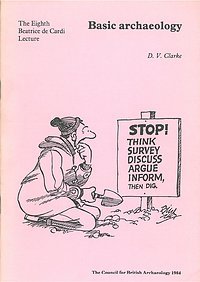
The name, Then Dig, was inspired by an illustration accompanying D.V. Clarke’s lecture on Basic Archaeology

Wednesday, June 1, 2011

Islamic Scientific Manuscripts Initiative

Islamic Scientific Manuscripts Initiative


The Islamic Scientific Manuscripts Initiative is a joint project of :


  • Institute of Islamic Studies at McGill University, Montreal, Canada; McGill University, Montreal, Canada
  • Max Planck Institute for the History of Science, Berlin, Germany; Max Planck Institute for the History of Science
  • American Council of Learned Societies (USA)


(ISMI) contains  information on over 1,500 scientists, their works, and their social  milieu, spanning the entire Islamic world, from Islamic Spain to India  and the borders of China, beginning in the 8th century and continuing  until the 19th. These works in astronomy, mathematics, physics,  geography, mechanics, and related disciplines number in the thousands  and are represented, conservatively speaking, by tens of thousands of  manuscript copies spread throughout the world. 

Much more than a simple catalogue, ISMI provides information on the  authors, content of the texts, readership and ownership, institutional  locations where the manuscripts were copied, studied, and taught, the  relationship of original texts and their commentaries and  supercommentaries, and other information that will help draw a picture  of the social and intellectual contexts of these works.  
   
ISMI aims to contribute to our understanding of the role of rationalism  in traditional Islamic societies and the interplay of science and  religion within them, and more generally to treat science in Islam as a  humanistic enterprise.

Cross-posted from Access to Mideast and Islamic Resources (AMIR) [ISSN 2160-3049]

Tuesday, May 31, 2011

News from Perseus

Announcements

  • May 27, 2011: A new release of our source code is now available on SourceForge. Updated data and text files are also available here

  • May 23, 2011: Thanks to a grant from the Google Digital Humanities program, Perseus is pleased to publish TEI XML digital editions of Dio Chrysostom and Dionysius.
    Support from the Mellon Foundation has allowed us to add TEI XML digital editions for Jerome, Minucius Felix, and Tertullian.
    This release also includes fixes for line number displays in recently released texts, typos in Elegy & Iambus, the citation scheme in Athenaeus and entity voting errors.

  • April 14, 2011: Thanks to a grant from the Google Digital Humanities program, Perseus is pleased to publish a TEI XML digital edition of Diodorus. Support for the Cybereditions project from the Mellon Foundation has allowed us to add as well TEI XML digital editions for Curtius, Horace, Cicero, Ovid, Sidonius, Prudentius and Seneca the Elder.
    Thanks to support from the U.S. Department of Education and the Max Planck Society we have also been able to publish Edward William Lane's Arabic-English Lexicon.

Aigyptos Egyptological Bibliographical Database

AIGYPTOS is now part of the Online Egyptological Bibliography
Dear AIGYPTOS users,

Most of the AIGYPTOS records have now been imported into the Online Egyptological Bibliography (OEB) and can be accessed there. The remainder will be revised and imported within the next couple of months. As it was in AIGYPTOS, a field specific structured search has now been implemented in the OEB, including database search by keywords (in English language).

The OEB provides its users with far more data, covering almost all Egyptological publications from the early 19th century to the present. However, since it must be largely self sustaining in the future, it has been designed as a pay site.

We like to thank you again for your support of AIGYPTOS and would be happy to welcome you at the OEB.

PD Dr. Martina Ullmann (München)
Dr. Andreas Hutterer (München)
Stefanie Hardekopf, M.A. (Heidelberg)

Friday, May 27, 2011

Meta: SPARC introduces Open-access Journal Publishing Resource Index

SPARC introduces Open-access Journal Publishing Resource Index
New resource helps streamline launch and operation of open-access
journals

For immediate release
May 26, 2011

For more information, contact:
Jennifer McLennan
(202) 296-2296
jennifer [at] arl [dot] org


Washington, D.C. – SPARC (the Scholarly Publishing and Academic Resources Coalition) today released a free online Open Access Journal Publishing Resource Index with information and documents to support the launch and operation of an open-access journal. Materials in the index will help libraries, presses, and other academic units on campuses as they work together to make the work of their researchers more widely available.


This new resource is launched in conjunction with the SPARC Campus-based Publishing Resource Center (http://www.arl.org/sparc/partnering), which delivers a guide to critical issues in campus-based publishing partnerships, case studies, a bibliography and resource list, an index of collaborative initiatives (operated in partnership with Columbia University Libraries), and access to the LIBPRESS online discussion forum (operated by the University of California). The Center is overseen by an editorial board representing library and university press staff who are actively engaged in creating and managing publishing partnerships.

The new index complements the rich existing resource center by pointing to relevant sections in existing open-access journal publishing guides and to sample journal proposals, policies, bylaws, and other documentation to help with planning, development, and collaboration issues. Topics covered include:
•                  New Journal Planning
•                  Journal Publishing Program Policies
•                  Governance
•                  Editorial
•                  Marketing & Promotion
•                  Technical Platforms
•                  Sustainability Planning


Relevant sections of existing open-access publishing guides, including those by David Solomon, Carol Sutton, Kevin Stranack, Jan Velterop, Howard Goldstein and Raym Crow, and others are indicated under each topic area.

By highlighting samples and best practices, the index will help give campuses the tools they need to develop and maintain long-term, successful open-access publishing ventures. “As campus-based publishing gets more ambitious in scope, it’s important to build on the successes and challenges of earlier initiatives and adopt best practices,” said Raym Crow, senior consultant at SPARC. “Ultimately, campus-based publishing can offer universities greater control over the intellectual products they help create. SPARC is pleased to provide another tool to support libraries and publishers in sustainable, professional, open-access publishing.”

Lee C. Van Orsdel, Dean of University Libraries at Grand Valley State University, says faculty are beginning to consult librarians for advice on journal publishing options, including open-access models, and the SPARC site is a welcome resource. “We’re deepening our knowledge as quickly as possible, but it's a whole new area of expertise for most of us,” she said. “It will save us time and increase the probability that we can get to the right solution when advising our faculty on their best options.” 
The editorial board invites contributions from other campuses to help build this resource and expand the bibliography – especially with primary research papers on collaboration issues. “SPARC hopes this will seed an effort where people will give documents to share, making it a community hub,” said Crow. Members of the board and how to contact the managing editor with suggestions are detailed on the Center home page.

The Open Access Journal Publishing Resource Index is available online at http://www.arl.org/sparc/partnering
SPARC
SPARC (Scholarly Publishing and Academic Resources Coalition), with SPARC Europe and SPARC Japan, is an international alliance of more than 800 academic and research libraries working to create a more open system of scholarly communication. SPARC’s advocacy, educational and publisher partnership programs encourage expanded dissemination of research.