Showing posts with label Technology. Show all posts

Tuesday, October 18, 2022

Open Access Journal: Archaeoastronomy and Ancient Technologies

 [First posted in AWOL 8 August 2016, updates 18 October 2022]

Archaeoastronomy and Ancient Technologies
ISSN: 2310-2144

Journal "Archaeoastronomy and Ancient Technologies is an international scientific journal of open access (Creative Commons Attribution 4.0 International License). Its primary aim is to publish peer-reviewed studies on ideas about the sky and celestial phenomena in ancient societies (archaeoastronomy, cultural astronomy) and on ancient technologies. AaATec publishes articles in the scope of anthropology, archeology, history and philosophy of science, linguistics, religious studies, art studies and other interdisciplinary scholarship in the humanities. The journal is a unique platform for communication between researchers of various scientific fields who study the ancient world using the methods of their sciences.

Archaeoastronomy and Ancient Technologies (AaATec)
Volume 10, Number 1, 2022

Table of Contents

Vodolazhskaya, L.N.

Inverted analemmatic sundial of the Bronze Age
Archaeoastronomy and Ancient Technologies 2022, 10(1), 1-29
Review 10 weeks
Published: 16 March 2022
Download PDF (English)
DOI: 10.24412/2310-2144-2022-101129

Usachuk, A.N.; Polidovich, Yu.B.

Archaeological evidence of barrow robbery in Donbass in the late 19th and early 20th centuries
Archaeoastronomy and Ancient Technologies 2022, 10(1), 30-66
Review 4 weeks
Published: 28 June 2022
Download PDF (Russian)
DOI: 10.24412/2310-2144-1013066

Gienko, E.G.

Reconstruction of the sunrise at the winter solstice on the Saratsky Sunduk sanctuary in the era of Okunev culture
Archaeoastronomy and Ancient Technologies 2022, 10(1), 67-78
Review 6 weeks
Published: 17 September 2022
Download PDF (Russian)
DOI: 10.24412/2310-2144-2022-1016778

Gaspani, A.; Spagocci, S.

A method for dating archaeological structures based on astronomical alignments
Archaeoastronomy and Ancient Technologies 2022, 10(1), 79-90
Review 6 weeks
Published: 4 October 2022
Download PDF (English)
DOI: 10.24412/2310-2144-2022-1017990


Tuesday, July 7, 2020

Open Access Journal: Archeomatica

[First posted in AWOL 30 April 2013, updated 7 July 2020]

Archeomatica
ISSN: 2037-2485
http://www.archeomatica.it/images/logo_web_archeomatica.gif


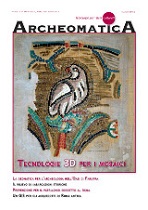
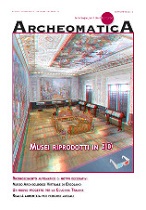
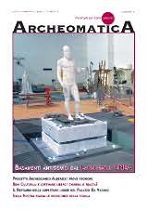
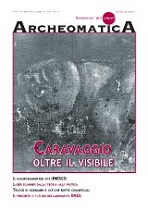
Archeomatica è una nuova rivista multidisciplinare, stampata in Italia, dedicata alla presentazione e alla diffusione di metodologie avanzate, tecnologie emergenti e tecniche per la conoscenza, la documentazione, salvaguardia, conservazione e valorizzazione del patrimonio culturale.

La rivista si propone di pubblicare articoli di valore significativo e duraturo scritti da ricercatori, archeologi, storici, conservatori e restauratori coinvolti in questo settore, per la diffusione di nuove metodologie specifiche e dei risultati sperimentali. Archeomatica solleciterà il dibattito costruttivo sulle ultime applicazioni scientifiche, per il confronto di idee  e delle scoperte relazionate ad ogni aspetto del settore dei beni culturali.

Archeomatica è destinata anche ad essere una fonte primaria di informazioni multidisciplinari e di divulgazione per il settore del patrimonio culturale.


2020

N. 1 - Gen/Mar
N. 1 - Gen/Mar

2019

N. 1 - Gen/Mar
N. 1 - Gen/Mar
N. 2 - Apr/Giu
Archeomatica 2 2018
N. 3 - Lug/Set
N. 3 - Lug/Set
N. 4 - Ott/Dic
N. 4 - Ott/Dic
Special Issue 2019
Image

2018

N. 1 - Gen/Mar
N. 1 - Gen/Mar
N. 2 - Apr/Giu
Archeomatica 2 2018
N. 3 - Lug/Set
N. 3 - Lug/Set
N. 4 - Ott/Dic
N. 4 - Ott/Dic

2017

N. 1 - Gen/Mar
N. 1 - Gen/Mar
N. 2 - Apr/Giu
N. 2 - Apr/Giu
N. 3 - Lug/Set
N. 3 - Lug/Set
N. 4 - Ott/Dic
N. 4 - Ott/Dic
Special Issue 2017
Special Issue 2017

2016

N. 1 - Gen/Mar
N. 1 - Gen/Mar
N. 2 - Apr/Giu
N. 2 - Apr/Giu
N.3 - Lug/Set
N.3 - Lug/Set
N. 4 - Ott/Dic
N. 4 - Ott/Dic

2015

N. 1 - Gen/Mar
N. 1 - Gen/Mar
N. 2 - Apr/Giu
N. 2 - Apr/Giu
N. 3 - Lug/Set
N. 3 - Lug/Set
N. 4 - Ott/Dic
N. 4 - Ott/Dic
Special Issue 2015
Special Issue 2015

2014

N. 1 - Gen/Mar
N. 1 - Gen/Mar
N. 2 - Apr/Giu
N. 2 - Apr/Giu
N. 3 - Lug/Set
N. 3 - Lug/Set
N. 4 - Ott/Dic
N. 4 - Ott/Dic

2013

N. 1 - Gen/Mar
N. 1 - Gen/Mar
N. 2 - Apr/Giu
N. 2 - Apr/Giu
N. 3 - Lug/Set
N. 3 - Lug/Set
N. 4 - Ott/Dic
N. 4 - Ott/Dic

2012

N. 1 - Gen/Mar
N. 1 - Gen/Mar
N. 2 - Apr/Giu
N. 2 - Apr/Giu
N. 3 - Lug/Set
N. 3 - Lug/Set
N. 4 - Ott/Dic
N. 4 - Ott/Dic

2011

N. 1 - Gen/Mar
N. 1 - Gen/Mar
N. 2 - Apr/Giu
N. 2 - Apr/Giu
N. 3 - Lug/Set
N. 3 - Lug/Set
N. 4 - Ott/Dic
N. 4 - Ott/Dic

2009 - 2010

N. 0 - Novembre 2009
N. 1 - Gen/Mar
N. 1 - Gen/Mar
N. 2 - Apr/Giu
N. 2 - Apr/Giu
N. 3 - Lug/Set
N. 3 - Lug/Set
N. 4 - Ott/Dic
N. 4 - Ott/Dic

Monday, October 24, 2016

Open Access Book: Mobilizing the Past for a Digital Future

Mobilizing the Past for a Digital Future
Print
Download the Book | Buy the Book
Mobilizing the Past is a collection of 20 articles that explore the use and impact of mobile digital technology in archaeological field practice. The detailed case studies present in this volume range from drones in the Andes to iPads at Pompeii, digital workflows in the American Southwest, and examples of how bespoke, DIY, and commercial software provide solutions and craft novel challenges for field archaeologists. The range of projects and contexts ensures that Mobilizing the Past for a Digital Future is far more than a state-of-the-field manual or technical handbook. Instead, the contributors embrace the growing spirit of critique present in digital archaeology. This critical edge, backed by real projects, systems, and experiences, gives the book lasting value as both a glimpse into present practices as well as the anxieties and enthusiasm associated with the most recent generation of mobile digital tools.
This book emerged from a workshop funded by the National Endowment for the Humanities held in 2015 at Wentworth Institute of Technology in Boston. The workshop brought together over 20 leading practitioners of digital archaeology in the U.S. for a weekend of conversation. The papers in this volume reflect the discussions at this workshop with significant additional content. Starting with an expansive introduction and concluding with a series of reflective papers, this volume illustrates how tablets, connectivity, sophisticated software, and powerful computers have transformed field practices and offer potential for a radically transformed discipline.
Edited by Erin Walcek Averett, Jody Michael Gordon, and Derek B. Counts
With additional contributions by Rebecca Bria, Bridget Buxton, William Caraher, J. Andrew Dufton, Steven J. R. Ellis, Samuel B. Fee, Shawn Fehrenbach, Eric C. Kansa, Morag M. Kersel, Marcelo Castro López, Christopher F. Motz, Brandon R. Olson, Eric E. Poehler, Adam Rabinowitz, Ted Roberts, Shawn Ross, Matthew Sayre, Adela Sobotkova, Matthew Spigelman, John Wallrodt, and Steven Wernke.

Download the book or individual chapters either from this website (below) or with full metadata at a stable URL from Digital Commons at the University of Wisconsin-Milwaukee. A paper copy of the book is available at Amazon.com.
Complete Book Download | Complete Book from Digital Commons | Purchase the Book in Paper
Table of Contents
Introduction. Mobile Computing in Archaeology: Exploring and Interpreting Current Practices Jody Michael Gordon, Erin Walcek Averett, and Derek B. Counts Download | Chapter from Digital CommonsSupplemental Materials
1.1. Why Paperless: Technology and Changes in Archaeological Practice, 1996–2016 John Wallrodt Download | Chapter from Digital Commons | Supplemental Materials

1.2. Are We Ready for New (Digital) Ways to Record Archaeological Fieldwork? A Case Study from Pompeii Steven J. R. Ellis Download | Chapter from Digital Commons | Supplemental Materials

1.3. Sangro Valley and the Five (Paperless) Seasons: Lessons on Building Effective Digital Recording Workflows for Archaeological Fieldwork Christopher F. Motz
Download | Chapter from Digital CommonsSupplemental Materials

1.4. DIY Digital Workflows on the Athienou Archaeological Project, Cyprus Jody Michael Gordon, Erin Walcek Averett, Derek B. Counts, Kyosung Koo, and Michael K. Toumazou
Download | Chapter from Digital Commons | Supplemental Materials

1.5. Enhancing Archaeological Data Collection and Student Learning with a Mobile Relational Database Rebecca Bria and Kathryn E. DeTore
Download | Chapter from Digital Commons | Supplemental Materials

1.6. Digital Archaeology in the Rural Andes: Problems and Prospects Matthew Sayre
Download | Chapter from Digital Commons | Supplemental Materials

1.7. Digital Pompeii: Dissolving the Fieldwork-Library Research Divide Eric E. Poehler
Download | Chapter from Digital Commons | Supplemental Materials

2.1. Reflections on Custom Mobile App Development for Archaeological Data Collection Samuel B. Fee Download | Chapter from Digital Commons | Supplemental Materials
2.2. The Things We Can Do with Pictures: Image-Based Modeling and Archaeology Brandon R. Olson Download | Chapter from Digital Commons | Supplemental Materials
2.3 Beyond the Basemap: Multiscalar Survey through Aerial Photogrammetry in the Andes Steven A. Wernke, Gabriela Oré, Carla Hernández, Aurelio Rodríguez, Abel Traslaviña, and Giancarlo Marcone Download | Chapter from Digital Commons | Supplemental Materials
2.4. An ASV (Autonomous Surface Vehicle) for Archaeology: The Pladypos at Caesarea Maritima, Israel Bridget Buxton, Jacob Sharvit, Dror Planer, Nikola Mišković, and John Hale Download | Chapter from Digital Commons | Supplemental Materials
3.1. Cástulo in the 21st Century: A Test Site for a New Digital Information System Marcelo Castro López, Francisco Arias de Haro, Libertad Serrano Lara, Ana L. Martínez Carrillo, Manuel Serrano Araque, and Justin St. P. Walsh Download | Chapter from Digital Commons | Supplemental Materials
3.2. Measure Twice, Cut Once: Cooperative Deployment of a Generalized, Archaeology-Specific Field Data Collection System Adela Sobotkova, Shawn A. Ross, Brian Ballsun-Stanton, Andrew Fairbairn, Jessica Thompson, and Parker VanValkenburgh Download | Chapter from Digital Commons | Supplemental Materials
3.3. CSS for Success? Some Thoughts on Adapting the Browser-Based Archaeological Recording Kit (ARK) for Mobile Recording J. Andrew Dufton Download | Chapter from Digital Commons | Supplemental Materials
3.4. The Development of the PaleoWay Digital Workflows in the Context of Archaeological Consulting Matthew Spigelman, Ted Roberts, and Shawn Fehrenbach Download | Chapter from Digital Commons | Supplemental Materials
4.1. Slow Archaeology: Technology, Efficiency, and Archaeological Work William Caraher Download | Chapter from Digital Commons | Supplemental Materials
4.2. Click Here to Save the Past Eric C. Kansa Download | Chapter from Digital Commons | Supplemental Materials
5.1. Response: Living a Semi-digital Kinda Life Morag M. Kersel Download | Chapter from Digital Commons | Supplemental Materials
5.2. Response: Mobilizing (Ourselves) for a Critical Digital Archaeology Adam Rabinowitz Download | Chapter from Digital Commons | Supplemental Materials
***
Some open access content that complements this book:
J. Huggett, “Challenging Digital Archaeology.” Open Archaeology 1 (2015): 79-85.
J. Huggett, “A Manifesto for an Introspective Digital Archaeology,” Open Archaeology 1 (2015): 86-95.
Eric C. Kansa, Sarah Whitcher Kansa, and Ethan Watrall, eds. Archaeology 2.0: New Approaches to Communication and Collaboration. Cotsen Digital Archaeology 1. Cotsen Institute of Archaeology 2011. 
Brandon R. Olson and William R. Caraher, Visions of Substance: 3D Imaging in Mediterranean Archaeology. Grand Forks, ND: The Digital Press at the University of North Dakota 2015.
Christopher H. Roosevelt, Peter Cobb, Emanuel Moss, Brandon R. Olson & Sinan Ünlüsoy, “Excavation is Destruction Digitization: Advances in Archaeological Practice,” Journal of Field Archaeology 40.3 (2015), 325-346.

Monday, February 23, 2015

NU Digital Heritage: Inscribed Stones

NU Digital Heritage: Inscribed Stones
http://www.nu-digitalheritage.com/_assets/images/product/small/mother-goddess-small.png?action=thumbnail&width=500
Aims
NU Digital Heritage seeks to promote and communicate the value of the past by increasing access to the archaeology and material culture of Hadrian's Wall for those that cannot always experience it directly.

History & Vision
NU Digital Heritage was founded by Prof Ian Haynes and Dr Rob Collins at Newcastle University in 2014 through support of the Higher Education Innovation Fund.

Teaching and research in Archaeology at Newcastle University has always benefitted from access to fine collections from great museums and sites in the Hadrian’s Wall World Heritage Site, and new technology offers novel ways for both students and enthusiasts to engage with the remains of the past.

Significantly, the growth of 3D capture and print technology allows us to share the world class archaeology with the rest of the world!


One of the planned uses of these digital models will be for use as a teaching resource for initiatives such as their free online Massive Online Open Course Hadrian’s Wall: Life on the Roman Frontier. Follow the links to see part one, part two and part three of our blog series.  - See more at: http://www.wessexarch.co.uk/blogs/news/2015/02/23/laser-scan-GNM-no-4#sthash.N7aw8cB3.dpuf

Tuesday, February 17, 2015

Now Online: Archaeological Research in the Digital Age. Proceedings of the 1st Conference on Computer Applications and Quantitative Methods in Archaeology Greek Chapter (CAA-GR) Rethymno, Crete, 6-8 March 2014.

Papadopoulos, C., Paliou, E., Chrysanthi, A., Kotoula, E., and Sarris, A. (Eds) 2015. Archaeological Research in the Digital Age. Proceedings of the 1st Conference on Computer Applications and Quantitative Methods in Archaeology Greek Chapter (CAA-GR) Rethymno, Crete, 6-8 March 2014Rethymno: Institute for Mediterranean Studies – Foundation of Research and Technology (IMS-Forth). ISBN: 978-618-81780-0-7.
http://www.caa-gr.org/sites/default/files/caa_gr_logo_web_1.png
In total, 33 papers were submitted for consideration, with 30 papers accepted – after a thorough peer reviewing process – to be included in this volume. We are grateful to the members of the scientific committee for their invaluable contribution to the publication of the proceedings.
And see the CAA-GR 2014 Website.