[First posted in AWOL 20 March 2022, updated 31May 2026]
La collection AEGIS, associée au groupe de recherches Aegean Interdisciplinary Studies (CEMA-INCA-UCL), met à la disposition des scientifiques et des amateurs éclairés l'état des lieux de la recherche en matière d'archéologie du monde égéen et minoen en particulier. Monographies, thèses, actes de colloques etrapports de fouilles se complètent pour offrir une vue d'ensemble de cet espace-temps capital pourla compréhension de la Préhistoire en Méditerranée et de ses prolongements historiques, politiques,culturels, symboliques et sociaux.
The series AEGIS (Aegean Interdisciplinary Studies) attempts to make the results of new archaeological research on Aegean and especially Minoan societies available to the scientific and wider public at a rapid pace. Monographs, PhD dissertations, proceedings of scientific meetings and excavation reports complete each other to offer a general view of this time frame which is of primary importance to understand the ancient world and its historical, political, symbolical and social sequences.
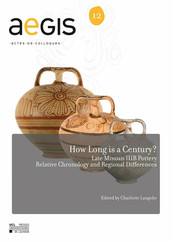
How Long is a Century?
Late Minoan IIIB Pottery. Relative Chronology and Regional Differences
Charlotte Langohr (dir.)2017…
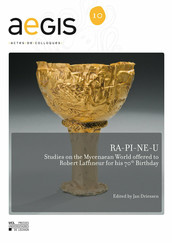
RA-PI-NE-U
Studies on the Mycenaean World offered to Robert Laffineur for his 70th Birthday
Jan Driessen (dir.)2016…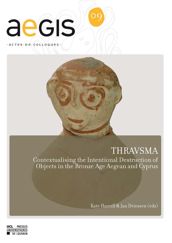
THRAVSMA
Contextualising the Intentional Destruction of Objects in the Bronze Age Aegean and Cyprus
Kate Harrell et Jan Driessen (dir.)2015…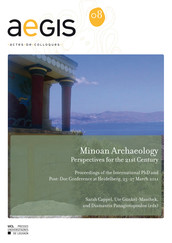
Minoan Archaeology
Perspectives for the 21st Century
Sarah Cappel, Ute Günkel-Maschek et Diamantis Panagiotopoulos (dir.)2015…
Cretan Cities: Formation and Transformation
Florence Gaignerot-Driessen et Jan Driessen (dir.)2014…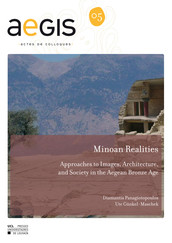
Minoan Realities
Approaches to Images, Architecture, and Society in the Aegean Bronze Age
Diamantis Panagiotopoulos et Ute Günkel-Maschek (dir.)2012…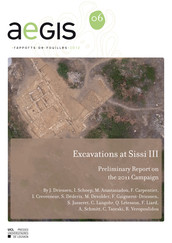
Du Phénotype au génotype
Analyse de la syntaxe spatiale en architecture minoenne (MMIIIB – MRIB)
2009…
PERIFEREIA Étude régionale de la Crète aux Minoen Récent II-IIIB (1450-1200 av. J.-C.)
La Crète centrale et occidentale
2009…





 Posts
Posts


 Stumble It!

