Digital technologies are driving important changes in archaeology.
Despite the increasing acceptance of digital technology in daily life,
however, determining how to assess digital scholarship has proved
difficult: many universities remain unsure about how to evaluate digital
work alongside more traditional forms of print publication when faced
with tenure and promotion decisions. Recognizing the value of digital
scholarship, and aiming to encourage its practice, the AIA offers this
award to honor projects, groups, and individuals that deploy digital
technology in innovative ways in the realms of excavation, research,
teaching, publishing, or outreach.
Nomination Process
Nominations of projects and
individuals are welcome. Nominations may be made by anyone, including
the project director or the principal members of the team responsible
for the digital creation. Nominations of collaborative projects are
encouraged. At least one member of the leadership team, or any
individual nominee, must be a member in good standing of the AIA. Please
submit the AIA membership number(s) with the nomination.
Materials to Be Submitted
- Name of Project
- Nomination form
Additional Information
Because the field of digital archaeology is still nascent and the
application of digital technologies to archaeology is in constant flux,
the committee reserves the right to modify this award as the field
evolves. Furthermore, the committee also reserves the right not give
the award if no deserving project is nominated.
Notifications Procedure
The committee will review nominations and make a decision by October.
This decision then needs to be approved by the AIA’s Governing Board.
In November, AIA Staff will contact all nominators regarding the status
of their nomination. The winner will be celebrated at the Awards
Ceremony in January.
Nomination Form
[Recent] Recipients
2025
International Digital Dura-Europos Archive (IDEA)
The
Archaeological Institute of America is pleased to present the 2025
Award for Outstanding Work in Digital Archaeology to the project
“International Digital Dura-Europos Archive (IDEA).” IDEA uses Linked
Open Data methodologies to virtually reassemble and improve the
accessibility of digital archival content related to the archaeological
site of Dura-Europos in Syria. The project is creating the first
globally accessible, multilingual, interinstitutional register of
content related to the site in order to address the fragmentation of
contextually related collections, siloed disciplinary expertise, and
long-standing access inequities resulting from early excavations.
This register, housing approximately 25,000 records, takes the form
of a Linked Open Data dataset curated through interdisciplinary
collaboration and engagement with Syrian communities. The methods
developed by the project use digital tools to work around issues of
community displacement, inability to travel, and language barriers that
have historically complicated community engagement efforts related to
regions suffering conflict or crisis. Importantly, by championing the
concept of “nanopublications,” IDEA is contributing to larger
conversations in the field about how to more ethically and transparently
credit the paid and unpaid labor of the many individuals engaging in
archaeological work in the field and in archives.
IDEA’s commitment to creating an accessible and user-friendly web
application in English and Arabic that provides dynamic access to the
site’s rich history illustrates a dedication to bridging knowledge gaps
and enhancing educational opportunities. The project’s approach fosters
inclusivity by inviting participants from diverse backgrounds,
particularly Syrian heritage professionals, to contribute actively to
the curation of content, ensuring a richer and more equitable
representation of history. Ultimately, IDEA sets a standard for ethical
practices in heritage management, making it a vital contribution to the
fields of archaeology, cultural studies, and digital humanities.
2024
A Cemetery and Quarry from Imperial Gabii , edited by Laura M. Banducci and Anna Gallone
The
Archaeological Institute of America is pleased to present the 2024
Award for Outstanding Work in Digital Archaeology to the project A Cemetery and Quarry from Imperial Gabii.
Since 2009, the Gabii Project, an international archaeological
initiative led by Nicola Terrenato and the University of Michigan, has
been investigating the ancient Latin town of Gabii, which was both a
neighbor of, and a rival to, Rome in the first millennium BC. A Cemetery
and Quarry from Imperial Gabii edited by Dr. Laura M. Banducci and Ms.
Anna Gallone, is a hybrid volume that explores the close but sometimes
tense relationship between where people lived, worked, traded, and
buried their dead, highlighting how the distinction between spaces of
the living and spaces of the dead was not so clear-cut.
This second publication of the Gabii Project represents another
innovative step in the dissemination of modern archaeological data. The
book is structured in a “layered” format, with a descriptive narrative;
phasing, features, and their interpretation; and stratigraphy and
technical reports. An interactive 3D model, based on photogrammetric
models produced at the time of excavation, is linked throughout the text
by individual stratigraphic unit numbers and archaeological features.
Crucially, the book is both open access and linked to the openly
accessible Gabii database, reaching the largest possible audience, and
housing the complete data collected during the excavations.
The interactive section that complements the narrative text includes 3D
models, descriptions, and links to the online database. This is where A
Cemetery and Quarry from Imperial Gabii is making innovative strides in
digital archaeology. Users can freely access the 3D model of the site
and explore details about each stratigraphic unit, including links to
related stratigraphic units, photos, various types of finds, and
interpretative descriptions of the human activities associated with each
unit. From the 3D model, readers can also link back to where the
context they are exploring is mentioned in the text and view the
narrative text and the 3D model side by side for parallel exploration.
Digital and hybrid publishing in archaeology is an area of active
experimentation and innovation. The Gabii Project is making courageous
and groundbreaking efforts in this area, exploring and testing out new
approaches to effectively communicate complex information by linking
narrative text to 3D models and other digital components that cannot be
accommodated by conventional publication. The innovative approach should
be an inspiration to other projects to explore new ways to disseminate
and integrate their project’s data and interpretations. For these
reasons, the Archaeological Institute of America is proud to present the
2024 Award for Outstanding Work in Digital Archaeology to A Cemetery
and Quarry from Imperial Gabii.
2023
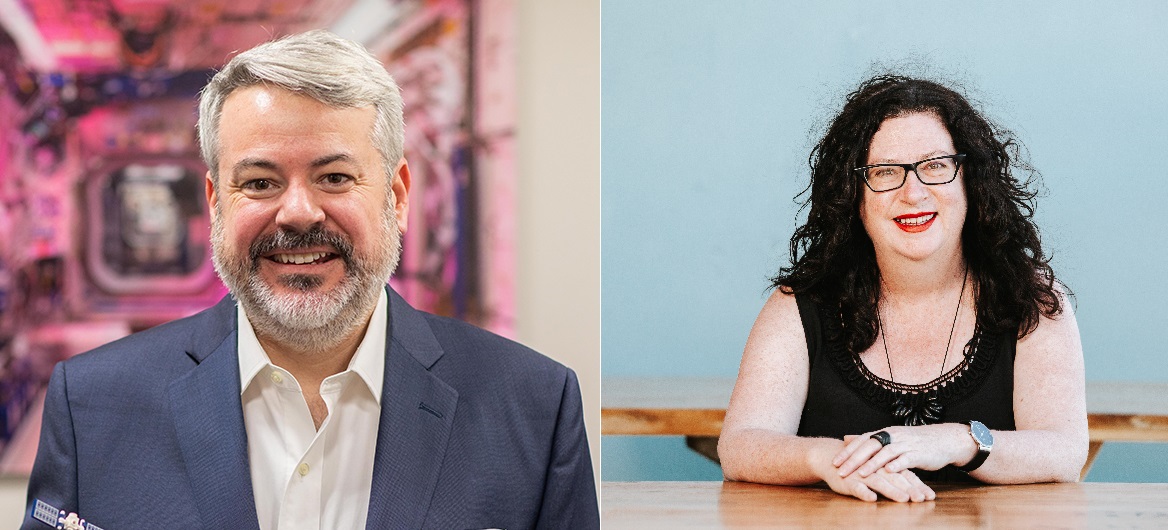
International Space Station Archaeological Project
Accepted by Justin Walsh and Alice Gorman
The
Archaeological Institute of America is pleased to present the 2023
Award for Outstanding Work in Digital Archaeology to Dr. Justin Walsh
and Dr. Alice Gorman for their project International Space Station Archaeological Project.
The International Space Station Archaeological Project (https://issarchaeology.org/) is
the first full-scale investigation of the material culture of a human
habitat in space, focusing on the crew of the International Space
Station as a “microsociety in a miniworld” (ISS website). Started in
2015, the project has developed innovative approaches that leverage
digital tools and processes to document the International Space Station
as an archaeological site, especially the use of both historic and
directed photography to capture relationships between people, places,
and things over time. The project also seeks to innovate methods for
applying archaeological study to new environments; in this case, it is
outer space, but it can also be applied to other contexts that are
dangerous or difficult for archaeologists to visit, such as polar
research stations, ships or submarines, or high-altitude mountain peaks.
From January to March 2022, the team conducted the first archaeological
experiment in space, working in collaboration with ISS astronauts to
collect data that will be used to train a machine learning algorithm to
automatically label objects in historic imagery.
This is a highly innovative contemporary archaeology project that
pushes the boundaries of the discipline by expanding archaeology into an
entirely new context. The project communicates effectively to diverse
audiences in appropriate formats, from social media and popular news
outlets to peer-reviewed publications. It has huge public interest, with
over 3,100 followers on Twitter, making archaeology (and archaeology in
space!) accessible and relevant. It also leads us to question what
constitutes archaeological data, material culture, and primary sources
in the contemporary world. Finally, the unique setting of the project is
forcing innovation in ways that may have application for other projects
and disciplines. For their efforts in exploring the frontiers of the
discipline (“Boldly going where no archaeologists have gone before,” as
they state on their website) and for their exemplary public engagement,
we are delighted to give to the International Space Station Archaeological Project the 2023 AIA Outstanding Work in Digital Archaeology Award.
2022
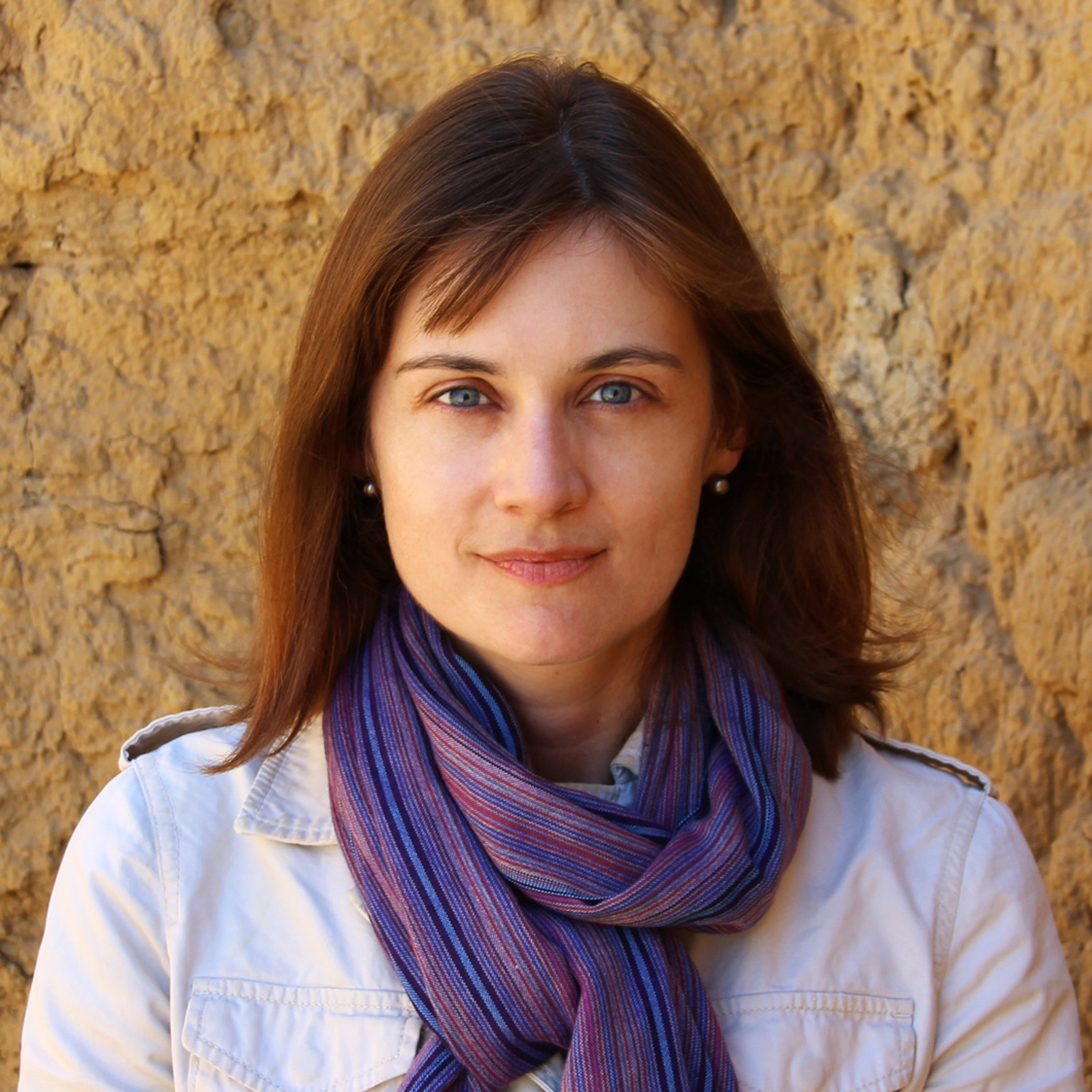
Constructing the Sacred: Visibility and Ritual Landscape at the Egyptian Necropolis of Saqqara
Accepted by Elaine A. Sullivan
The
Archaeological Institute of America is pleased to present the 2022
Award for Outstanding Work in Digital Archaeology to Dr. Elaine A.
Sullivan for the project Constructing the Sacred: Visibility and Ritual
Landscape at the Egyptian Necropolis of Saqqara (project website: https://constructingthesacred.org/).
Constructing the Sacred: Visibility and Ritual Landscape at the
Egyptian Necropolis of Saqqara, demonstrates how monograph publications
can take advantage of digital media in a way that would not be nearly as
effective in print. Rather than standing as supplements to Dr.
Sullivan’s argument, the interactive maps and 3D models are integrated
and necessary components of that argument. Archaeology as a discipline
still has very few models for how to assess digital projects, and the
publication of this work by Stanford University Press goes a long way
toward beginning to normalize born-digital scholarship.
The technologies used in the project are robust and sustainable. Good
digital work does not have to be custom-built from scratch, and the
fact that Dr. Sullivan chose a ready-to-use platform means that she was
able to focus her efforts on the argument and its clear communication.
Furthermore, Dr. Sullivan goes beyond the research questions addressed
by the project to show readers how she did the work and to provide
access to all the well-documented source data. This allows readers to
move from passive viewing to active engagement with the models and
underlying data and to see the implementation of good practices in data
description.
Constructing the Sacred: Visibility and Ritual Landscape at the
Egyptian Necropolis of Saqqara demonstrates new ways of integrating
digital materials and monograph publication, pushing the boundaries of
what scholarship can be in a digital space. It is most deserving of the
AIA’s 2022 Outstanding Work in Digital Archaeology Award.
2021
Nunalleq: Stories from the Village of Our Ancestors
Accepted by Alice Watterson
The
Archaeological Institute of America is pleased to present the 2021
Award for Outstanding Work in Digital Archaeology to the project
“Nunalleq: Stories from the Village of Our Ancestors” (project website: http://www.seriousanimation.com/nunalleq/).
“Nunalleq: Stories from the Village of Our Ancestors” is a free,
interactive, educational resource that tells the story of the
archaeological excavations of a pre-contact Yup’ik sod house in
Quinhagak, Alaska. This project is unlike any that we have awarded in
the past. Not only is educational outreach the focus—something at the
heart of the AIA’s mission—but the project was co-designed by the local
Native community in Quinhagak and archaeologists from the University of
Aberdeen and University of Dundee. The project presents archaeological
evidence together with traditional Yup’ik knowledge and storytelling,
highlighting the diverse ways people connect with the past. Excavation
data is combined with Yup’ik storytelling, dance, art, and shared
experiences across generations, and presented in a hands-on interface
shaped in collaboration with the local community. The digital format
allows objects to be brought out of a sterile, museum setting and into a
living culture. Spoken word is privileged over written text to
underscore the value of Elder knowledge in the Yup’ik culture.
This project embodies the strengths of what archaeology can do and
the committee sees it as a model for the future of our discipline. For
the collaboration with the Yup’ik people of all generations, the
willingness to highlight diverse narratives and approaches to the past
through innovative and accessible content, and the commitment to
educating future generations, “Nunalleq: Stories from the Village of Our
Ancestors” is most deserving of the AIA’s 2021 Outstanding Work in
Digital Archaeology Award.

2020 Award for Outstanding Work in Digital Archaeology Winner
2020
The Flowerdew Hundred: Exploring a Cultural Landscape Through Archaeology
Accepted by Anastasia Dakouri-Hild
The
Archaeological Institute of America is pleased to present the 2020
Award for Outstanding Work in Digital Archaeology to The Flowerdew
Hundred: Exploring a Cultural Landscape Through Archaeology project
(https://flowerdewhundred.org/).
“Flowerdew Hundred: Exploring a Cultural Landscape Through
Archaeology” is a newly launched resource through the University of
Virginia that harnesses a local archaeological assemblage to simulate
archaeological fieldwork in an online environment. The project focuses
on the site of Flowerdew, east of Hopewell, VA, and in particular on the
“Stone House” excavation material, which is housed in the Alderman
Library at UVA. This collaborative, open-source project involved three
years of digitizing descriptive data, artifacts, maps, and diaries, in
addition to conducting new research on this collection, including the
creation of a new digital image archive for the finds, an artifact
database, Harris matrices, a new 2D site plan, and an interactive 3D
model. This extensive work was collaborative, involving undergraduate
and graduate students, historical archaeologists, and staff from the
Flowerdew Hundred Collection at Alderman Library and was funded by a
Learning Technology Incubator grant from UVA. The final product is
hosted on a WordPress website that contextualizes the site, provides new
information on the phases beyond the Colonial period, and encourages
both archaeology students and the general public to explore the complex
cultural landscape of early Virginia. This dynamic educational resource
enhances research on Flowerdew while also enabling hands-on, immersive
learning. It helps elucidate archaeological concepts, while at the same
time it explores the stories of the complex past of the site that
involved Native Americans, Africans, and Europeans.
For its leveraging of digital scholarship, simulation, and hands-on,
active lab learning to provide a top-quality educational resource, The
Flowerdew Hundred is a most deserving recipient of the 2020 Outstanding
Work in Digital Archaeology Award.
2019
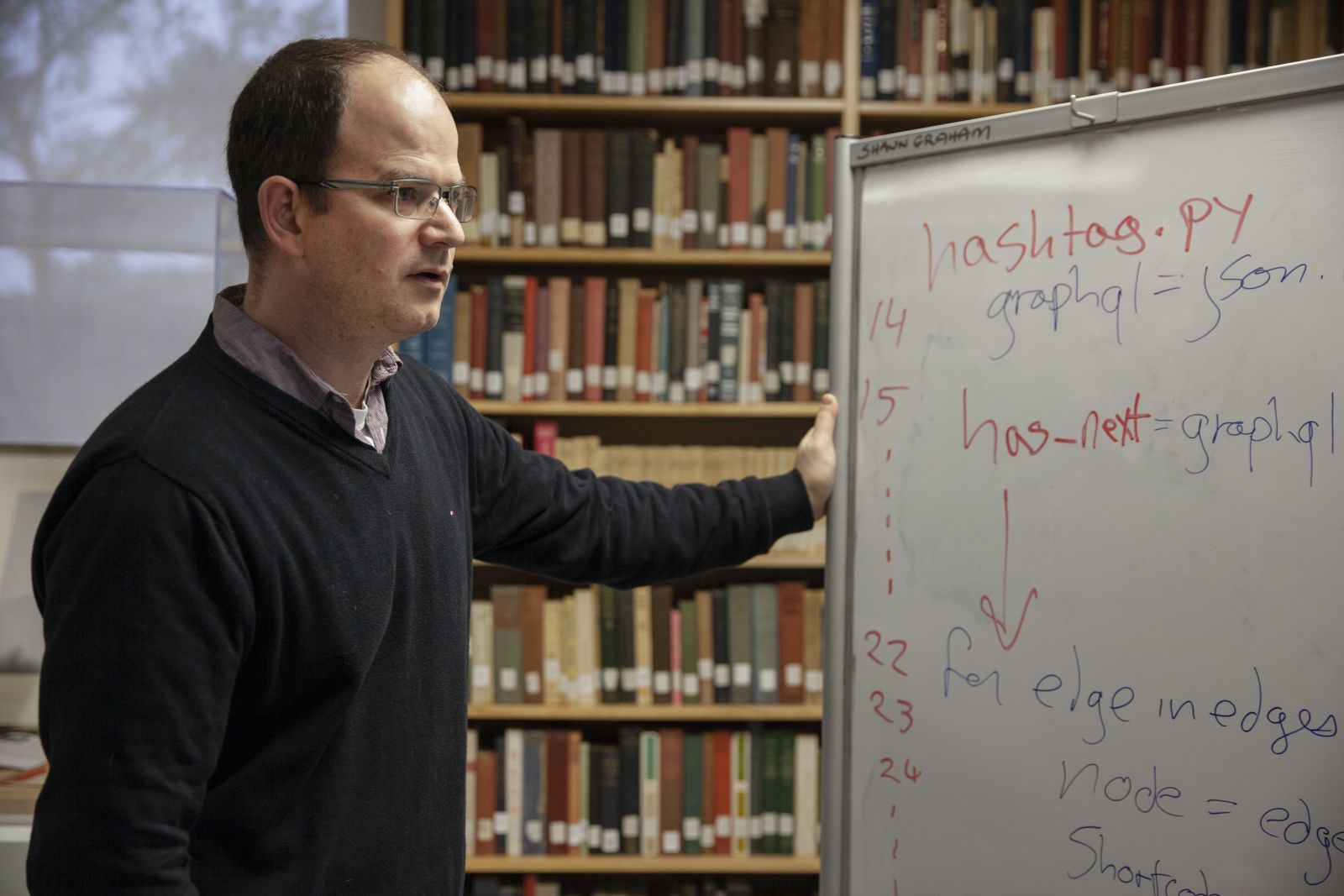
Open Digital Archaeology Textbook Environment
Accepted by Shawn Graham
The
Archaeological Institute of America is pleased to present the 2019
Award for Outstanding Work in Digital Archaeology to The Open Digital
Archaeology Textbook Environment.
The Open Digital Archaeology Textbook Environment (ODATE) supports
the development of an innovative open-access, integrated digital
laboratory, and e-textbook project. ODATE itself is an open-source
environment (http://o-date.github.io)
that brings together collections of interactive live-coding notebooks
written in Python or R and provides reusable, replicable, and
reproducible datasets and coding spaces for learning digital methods in
archaeology. These notebooks are integrated with an open-sourced
textbook that can be remixed into coursepacks. ODATE develops the skills
that allow for and encourages the creation, use, and re-use of digital
archaeological data in meaningful ways that enrich our knowledge of past
societies. This pedagogical resource is a first for our discipline and
will be an invaluable resource for students at all levels, from high
school to graduate school. Such resources are increasingly in demand as
the price of textbooks escalates, intellectual expertise in open content
can be hard to find, and clear, trustworthy, and reusable code is not
always available.
For its impact as a unique pedagogical resource, its usability and
accessibility, and for its encouragement to develop innovative digital
methods and techniques, The Open Digital Archaeology Textbook
Environment is a most deserving recipient of the 2019 Award for
Outstanding Work in Digital Archaeology.










 Posts
Posts


 Stumble It!

