Friday, February 3, 2023

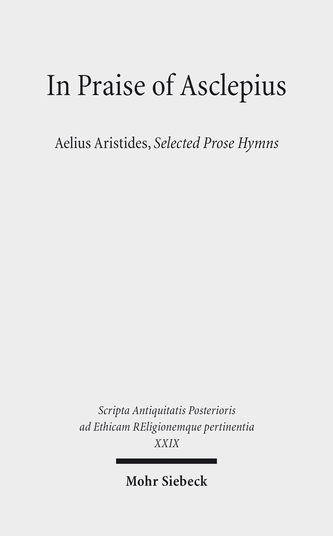
In Praise of Asclepius: Aelius Aristides, Selected Prose Hymns

Introduction, Text, Translation and Interpretative Essays by Christian Brockmann, Milena Melfi, Heinz-Günther Nesselrath, Robert Parker, Donald A. Russell, Florian Steger, Michael Trapp. Ed.by Donald A. Russell, Michael Trapp, and Heinz-Günther Nesselra
In Praise of Asclepius

[Ein Loblied auf Asklepios. Aelius Aristides, Ausgewählte Prosahymnen.]

eBook PDF
ISBN 978-3-16-156426-0
Open Access: CC BY-NC-ND 4.0
Sponsored by: Akademie der Wissenschaften zu Göttingen

In the middle decades of the second century AD the acclaimed orator Aelius Aristides wrote a number of prose hymns to traditional Greek gods and thereby demonstrated that the cults of these gods had not yet become obsolete and were more than just a topic of backward-looking paideia. This volume presents four of these texts, specifically those that focus on the god of healing, Asclepius, together with a new edition of the Greek text, a new English translation with commentary, and a number of essays shedding additional light on these texts from various perspectives. All in all, the volume wants to show how in these texts of Aristides the author's rhetorical skills, his outlook on the world and his personal religiosity come together to form a remarkable whole.

Open Access Journal: AGATHOS: Revue ivoirienne de philosophie antique

 
Agahos

Dans sa genèse et dans sa double structure conceptuelle et historique, toute philosophie est, avant tout, une mise en scène épistémique aux influences multiples et variées. Elle est un foyer pluriel de rencontres, un carrefour où des personnages conceptuels viennent encoder et décoder leurs discours. Pour le penser, la revue Agathos est un creuset d’incubation et de maturation de soi, un point de ralliement des savoirs passés, présents et à venir.

Agathos est ainsi un point focal de la pensée antique dans ses relations avec les autres champs de connaissance. Elle a pour vocation de promouvoir la production scientifique dans le vaste champ qu’ouvre la philosophie antique. En s’inscrivant dans ce champ disciplinaire, elle vise à relever les malentendus, dénouer les équivoques, revigorer les études antiques à travers un cheminement heuristique clair, et un questionnement tant érudit que fécond. Agathos vise également à constituer, pour l’espace francophone, un médium d’intégration ou de coopération institutionnelle au service de la recherche.

Par ailleurs, composante de l’expression idiomatique « Kalos kagathos » que la littérature grecque antique utilisait pour désigner ce qui est « beau et bon », le terme grec ancien « agathos », c’est-à-dire « bien », est un adjectif qui traduit lexcellence de caractère, la vertu. En cela, la revue Agathos est un espace de coalition entre les pensées du passé et celles d’aujourd’hui, pour que naissent de nouvelles promesses de réalisation d’un discours heuristique, exigeant et urgent en faveur de la philosophie antique.

Si, dans La République, Platon utilisait « to kalon », forme neutre de « kalos », pour définir lidéal, et si l’exégèse de Luc Brisson traduit « Kalos kagathos » par « perfection humaine », la revue Agathos ambitionne d’être ce lieu de la recherche de l’idéal, de la perfection. Elle entend, par des contributions scientifiques de qualité, privilégier la quête de l’excellence. Elle veut apporter à l’actualité pensante, l’appui de la philosophie antique dont les avancées épistémiques ne se laissent pas jaunir par le temps.

En définitive, la revue Agathos se veut, à la fois, un instrument de pérennisation et de renouvellement du savoir. C’est un outil méthodologique et épistémologique permettant aux chercheurs et aux enseignants-chercheurs de retrouver les approches anciennes. Comme telle, elle s’efforce de faire éclore des paradigmes discursifs nouveaux, ou de nouvelles formes d’intelligibilités arrimées à des sources et ressources théoriques, doctrinales et conceptuelles, issues du creuset de la philosophie antique, dans un cheminement novateur et critique.
See AWOL's full List of Open Access Journals in Ancient Studies

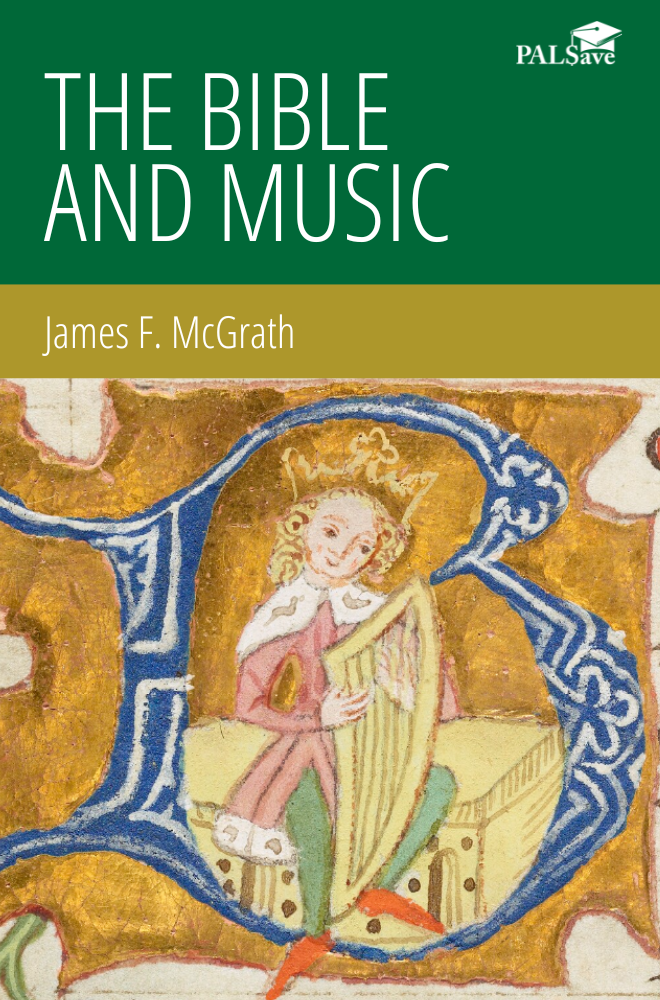
The Bible and Music

James F. McGrath
Cover image for The Bible and Music

Book Description: James F. McGrath’s The Bible and Music offers what no previous textbook on the subject has before. It provides an overview of the intersection of the Bible and music, from ancient Israelite music and the musical notation in ancient Hebrew manuscripts to the reception of the Bible in classical, rock, hip hop, country, and other genres, alongside embedded videos allowing readers to listen as they read. This textbook does all that and more and, as an open textbook, it costs nothing.


License

Icon for the Creative Commons Attribution 4.0 International License

The Bible and Music by James F. McGrath is licensed under a Creative Commons Attribution 4.0 International License, except where otherwise noted.

Cover image: Psalter, Bodleian Library MS. Don. e. 248, fol. 20v by Bodleian Libraries, University of Oxford is licensed under CC-BY-NC 4.0. Photo © Bodleian Libraries, University of Oxford.

Unless otherwise indicated, videos are embedded under the Standard YouTube License. See Media Bibliography for a complete list.

Primary Subject
Sacred and religious music
Additional Subject(s)
Bibles, Music
Publisher
PALNI Press
Publication Date
January 31, 2023
Ebook ISBN
978-1-956390-15-5


Thursday, February 2, 2023

Muße und Rekursivität in der antiken Briefliteratur

Hrsg. v. Franziska C. Eickhoff
Muße und Rekursivität in der antiken Briefliteratur

[Leisure and Recursivity in Ancient Epistolography. With a View to Other Genres.]

2016. X, 313 pages.

Otium 1

eBook PDF
ISBN 978-3-16-154539-9
Open Access: CC BY-NC-ND 4.0
Sponsored by: DFG – Sonderforschungsbereich 1015 Muße (Freiburg)

 There are many more descriptions of leisure moments to be found in ancient epistolography than in other genres. They often partly portray a certain way of life and mostly reflect the situation, depicted as a moment of calm and leisure, in which the letter is written or read. This volume's contributions take different approaches in order to investigate the mise en scène of this phenomenon and consist of semantical studies of the otium lexicography and researches in the functions of leisure. Articles on selected authors of ancient epistolography investigate, for example, Epicurus, Horatius and Seneca's philosophical letters, while Ovid's letters of exile, letters written by members of the Roman aristocratic elite Cicero and Pliny as well as Aelian's and Libanios' Greek epistolography of the Roman Empire are also featured. Additional essays focus on the function of leisure research in Catullus, the Augustean literature and humanist neo-Latin epistolography literary genres. The collection's introduction aims to shed light on the theoretical connection and structural similarities between leisure and epistolography.

Survey of contents
Franziska C. Eickhoff/Wolfgang Kofler/Bernhard Zimmermann: Muße, Rekursivität und antike Briefe. Eine kurze Einleitung

Von Jesus zur neutestamentlichen Theologie: Kleine Schriften II

Jörg Frey. Hrsg. v. Benjamin Schliesser
Von Jesus zur neutestamentlichen Theologie

[From Jesus to New Testament Theology. Selected Writings II.]

eBook PDF
ISBN 978-3-16-155016-4
Open Access: CC BY-NC-ND 4.0

The second volume of collected essays by Jörg Frey contains 22 essays that illuminate the theological claims of New Testament texts from a philological and historical perspective. Issues discussed span the messianism of Jesus and the implicit Christology of his proclamation, the relevance of apocalypticism for Jesus, the different New Testament patterns of interpreting his death, and Paul's background and development as well as questions on his theologies of justification and the cross. Further studies discuss New Testament concepts of salvation, the new covenant in Hebrews, ecclesiological and eschatological issues and the problem of the construction of a Theology of the New Testament. The author demonstrates that the New Testament is to be read both historically and theologically, and that its interpretation is also fruitful for issues of contemporary faith.

Survey of contents
Eine persönliche Zwischenbilanz: Mein Weg vom Lesen des Neuen Testaments zur Neutestamentlichen Wissenschaft – Der historische Jesus und der Christus der Evangelien – Jesus und die Apokalyptik – Zum Verständnis der Wunder Jesu in der neueren Exegese – Probleme der Deutung des Todes Jesu in der neutestamentlichen Wissenschaft. Streiflichter zur exegetischen Diskussion – Die Deutung des Todes Jesu als Stellvertretung – Die paulinische Antithese von »Fleisch« und »Geist« und die palästinisch-jüdische Weisheitstradition – Paulus als Pharisäer und Antiochener – Paul the Apostle – A Life between Mission and Captivity – Paulus und die Apostel. Zur Entwicklung des paulinischen Apostelbegriffs und zum Verhältnis des Heidenapostels zu seinen »Kollegen« – Lohngedanke und Rechtfertigung bei Paulus – Rechtfertigungstheologie im Ersten Korintherbrief – Paulinische Perspektiven zur Kreuzestheologie – Die alte und die neue διαθήκη nach dem Hebräerbrief – Heil. Neutestamentliche Perspektiven – »Himmels-Botschaft«. Die neutestamentliche Rede vom Himmel und ihre kerygmatische Funktion – »God Is Love«. On the Textual Tradition and Semantics of a Core Expression of the Christian Notion of God – Vom Windbrausen zum Geist Christi und zur trinitarischen Person. Stationen einer Geschichte des Heiligen Geistes im Neuen Testament – Apostelbegriff, Apostelamt und Apostolizität. Neutestamentliche Perspektiven zur Frage nach der 'Apostolizität' der Kirche und der 'apostolischen Sukzession'- Neutestamentliche Perspektiven und Impulse zur Entwicklung christlicher Gemeinden – New Testament Eschatology: Classical Issues, Disputed Themes, and Current Perspectives – Zum Problem der Aufgabe und Durchführung einer Theologie des Neuen Testaments 


Das Leben des Weisen: Philon v. Alexandria, De Abrahamo

Eingel., übers., komm. u. m. interpretierenden Essays vers. v. Matthias Adrian, Maximilian Forschner, Daniel Lanzinger, Heinz-Günther Nesselrath, Maren R. Niehoff, Friederike Oertelt, Simone Seibert u. Nicolai Sinai. Hrsg. v. Daniel Lanzinger
Das Leben des Weisen

[The Life of the Sage. Philo of Alexandria, De Abrahamo.]

eBook PDF
ISBN 978-3-16-159352-9
Open Access: CC BY-NC-ND 4.0

Philo's biography of Abraham is an invitation to Judaism – written in a political context in which Jews had to fight for their rights. The present volume offers a new German translation of the treatise with introduction and annotations as well as six essays illustrating the text from the perspective of various disciplines.


Wednesday, February 1, 2023

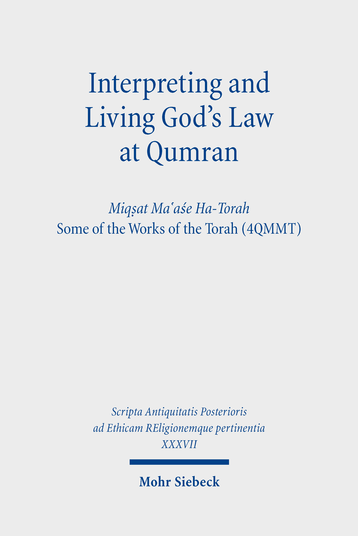
Interpreting and Living God's Law at Qumran: Miqṣat Ma῾aśe Ha-Torah, Some of the Works of the Torah (4QMMT)

Introduction, Text, Translation and Interpretative Essays by Jonathan Ben-Dov, John J. Collins, Lutz Doering, Jörg Frey, Charlotte Hempel, Reinhard G. Kratz, Noam Mizrahi, Vered Noam, Eibert Tigchelaar
Interpreting and Living God's Law at Qumran

[Leben und Interpretation des Gesetzes Gottes in Qumran. Miqṣat Ma῾aśe Ha-Torah, Einiges von den Werken der Tora (4QMMT).]

eBook PDF
ISBN 978-3-16-159706-0
Open Access: CC BY-NC-ND 4.0
Sponsored by: Akademie der Wissenschaften zu Göttingen

The text Miqṣat Ma῾aśe Ha-Torah, Some of the Works of the Torah (4QMMT), is one of the most interesting texts among the famous Dead Sea Scrolls discovered near the settlement of Khirbet Qumran and its vicinity in the middle of the twentieth century and by now published in full. It is a writing in the form of a letter by an unknown author to an equally unknown addressee, written in second person singular and plural. This document is the earliest evidence of a proper interpretation of the Jewish Torah, the so-called Halakhah, from pre-Christian, Hellenistic times as it later became customary and widely attested in rabbinical Judaism. This volume – after a short introduction on the findings at the Dead Sea in general and the text Miqṣat Ma῾aśe Ha-Torah in particular – provides a new edition and translation as well as several contributions from renowned scholars on the manuscripts, the language and content plus literary and historical contexts of this writing.