Showing posts with label Babylonia. Show all posts

Monday, January 11, 2021

Edition Topoi Collections: Babylonian Diaries

[First posted in AWOL 4 June 2018, updated 11 January 20201] 
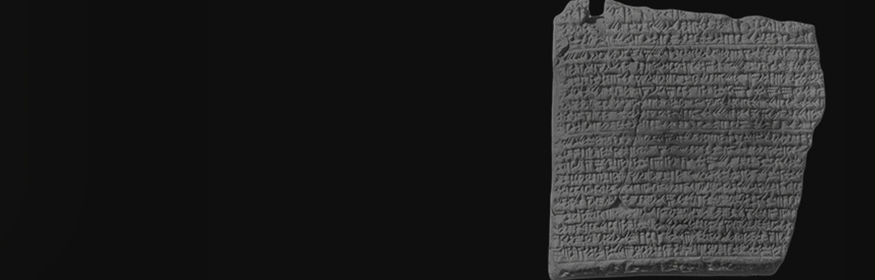
Babylonian Diaries

http://repository.edition-topoi.org/BDIA/ServiceBDIA/Images/BDIA.jpg

Abstract

The astronomical diaries are a genre of Babylonian cuneiform texts, published by Herman Hunger based on earlier work of Abraham Sachs. Their first three volumes have been digitized and converted to a canonical data format. This publication extends the edited texts by astronomical data and structured analysis.

Description

The Babylonian astronomical diaries comprise a group of cuneiform texts which record natural events in time spans from months to a whole year.
The most important among these texts are astronomically relevant observations as well as meteorological observations which mainly relate to changes of wind or rain. In addition, monthly summaries state market prices of key commodities and particularly serious state events such as wars and famines.
The diaries systematically record these events in canonical form and thus enable us to theoretically evaluate the observations. The period we observed ranges from the 6th century BCE to 60 BCE. This group of texts is the only ancient text corpus comprising systematical daily observations over a long period of time. The texts may rightly be considered to mark the empirical peak of ancient astronomy.

Institutions

Humboldt-Universität zu Berlin

Keywords

Ancient Astronomy, Babylon, diaries, cuneiform texts, meteorology

DOI

10.17171/1-3

Citation

Babylonian Diaries, 2016, Gerd Graßhoff, Gordon Fischer, Edition Topoi, DOI: 10.17171/1-3

Thursday, September 21, 2017

Revised and Corrected Texts of Walker and Dick's Induction of the Cult Image in Mesopotamia (2001)

 Revised and Corrected Texts of Walker and Dick's Induction of the Cult Image in Mesopotamia (2001)

Updated Critical Edition of Mīs by Michael B. Dick
What follows are thoroughly updated files based on the Walker & Dick 2001 Critical Edition. These are temporarily available on this Siena College Web Page; eventually they will be part of the University of Pennsylvania’s Oracc collection. The files here are in PDF format. Some editing on them continues, e.g. I am continuing to place the English translation side by side with the Akkadian/ Sumerian rather than following as in the Book.Though these texts show page numbers, they do not correspond to those of the 2001 book.
  • Use of these texts in scholarship should follow the Budapest Convention of November 2001.
  • I ask you to send me corrections, new readings, new bibliography, and new texts for incorporation (with due credit to you): dick@siena.edu
  • For incantation Tablet V, I have also included the Word 2010© file so that somebody familiar with Oracc’s *.ATF file format might help me in my gradual converting the text to that standard. If some kind soul could please send me several files or parts of that file showing the various steps in that conversion so I can use that as a template n all the files.


Texts and Photos:

Thursday, October 6, 2016

The Melammu Project: The Heritage of Mesopotamia and the Ancient Near East

[First posted in AWOL 22 September 2011. Update 6 October 2016]

The Melammu Project: The Heritage of Mesopotamia and the Ancient Near East
 http://www.aakkl.helsinki.fi/melammu/layout/melammulogo.jpg

The Melammu Project investigates the continuity, transformation and diffusion of Mesopotamian and Ancient Near Eastern culture from the third millennium BCE through the ancient world until Islamic times. It has two main activities: to organize conferences, and to provide resources relevant to the project on its website.
Melammu Symposia are held regularly and serve to promote interdisciplinary research and cross-cultural studies by providing a forum in which cultural continuity, diffusion and transformation in the ancient world can be assessed systematically on a long-term basis. The emphasis is on continued interchange of ideas between specialists in different disciplines, with the goal of gradually but steadily increasing the number of participants and thus breaking down the walls separating the individual disciplines. Although each symposium focuses on a different theme, since the primary purpose of the symposia is to encourage interdisciplinary cooperation per se, papers and posters not necessarily related to a specific theme but contributing to the overall scope of the project are welcome at every meeting. 
The on-line resources provided by the Melammu Project include a database, a bibliography, a PDF library, and links to websites relevant to the project's focus. The database aims to collect textual, art-historical, archaeological, ethnographic and linguistic evidence concerning the heritage of Mesopotamia and the Ancient Near East and to make it easily accessible on the Internet. All resources are open-ended, and everyone is invited to contribute new information through the website's submission forms.
 The Melammu Project
  
   General description
   Search string
   Browse by topic
   Search keyword
   Submit entry
  
   About
   Open search
   Thematic search
   Digital Library
   Submit item
  
   Ancient texts
   Dictionaries
   Projects
   Varia
   Submit link
  FAQ
  Contact us
  About
 

Tuesday, January 24, 2012

The Sealands Archaeology and Environment Program Online

The Sealands Archaeology and Environment Program:  Connecting viable pasts to sustainable futures
The Sealands Archaeology and Environment Program conducts archaeological, geoarchaeological, and paleoenvironmental research, in order to understand how cities in Iraq sustained themselves through deep time. The results of this work will guide projects to restore environmental services to Iraq's southern cities, promote resilient environmental management strategies, and support sustainable lifeways for the future.


We take our name from the marsh realm between Sumer and Elam, known during the second millennium BCE as “The Sealands” or “Mat Tamti,” which encompassed much of the area of the now-dry Hammar marshes. Based on inscriptions from the site, Roux suggested that Tell Abu Salabikh, formerly at the center of Lake Hammar, was seat of the historical figure Marduk-apla-iddina II (biblical Merodach-Baladan), and center city of The Sealands.
Always a place of refuge and sustenance at the heart of the Mesopotamian marshlands, The Sealands, and their highly productive marshland lifeways, remain virtually unexplored by archaeologists.