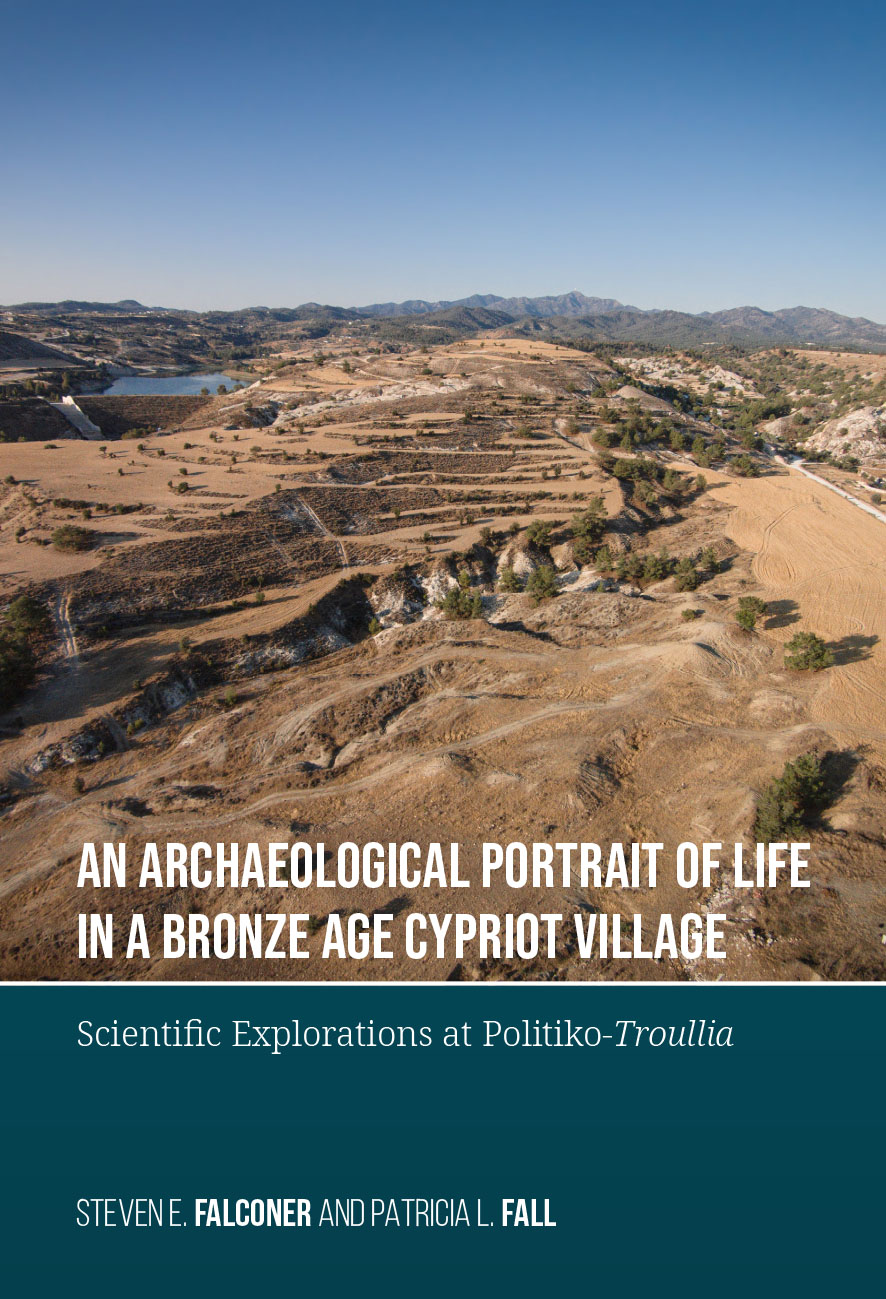
Paperback ISBN: 9789464263671 | Hardback ISBN: 9789464263688 | Imprint: Sidestone Press | Format: 150x220mm | 90 pp. | Language: English | 6 illus. (bw) | 29 illus. (fc) | Keywords: Cyprus; archaeology; bronze age; Politiko-Troullia; metallurgy; feasting; social identity; agriculture | download cover | DOI: 10.59641/d4g0a1b2c3 | CC-license: CC BY 4.0Archaeological research conducted at Politko-Troullia, Cyprus offers a portrait of life in a prehistoric Cypriot village during the formative centuries preceding the first cities on the island. We tell the story of an international team of university undergraduates, graduate students, professional staff, and professors who lived and worked together to discover how people lived in the Cypriot countryside 4000 years ago. For about six weeks each year between 2004 and 2019, project members dedicated themselves from sunrise to sunset to the recovery and analysis of the archaeological and ecological remains left behind by Bronze Age Cypriots, illuminating the intimate details of daily life in antiquity.
The evidence from Politiko-Troullia highlights the emergence of Cypriot community identity as a key element in the development of Cypriot urbanized civilization. Stylized human plank figures and a multitude of butchered deer bones, associated with concentrated evidence of spinning, weaving, and dying, provide compelling evidence for celebration of communal identity through feasting, and social relations conveyed by iconography and textiles. Metallurgical evidence across the settlement suggests that backyard copper smelting and casting was virtually ubiquitous in the households of Politiko-Troullia. Scientific analyses of plant and animal remains portray intensive orchard cultivation, and sheep and goat herding on adjacent hillsides, accompanied by hunting of feral pigs and wild Mesopotamian fallow deer in the Troodos Mountain foothills. Radiocarbon dating defines the lifespan of Troullia between about 2050 and 1900 BCE and establishes the timing of major landscape impacts just after 2000 BCE, when the settlement shifted upslope and abandoned its well in response to accentuated local erosion and downcutting.
Thus, the archaeological exploration of Politiko-Troullia offers a dramatic case study of life in a pre-urban Cypriot community as its inhabitants responded to their changing environment and moulded the social foundations of ancient Cypriot civilization.
Preface
Chapter 1. How Archaeology Works
1.1 Welcome to Our Research Project!
1.2 What is Archaeology?
1.3 Charting Time Archaeologically
1.4 Exploring Early Civilization on Cyprus
1.5 Scientific Study of Cypriot Bronze Age SocietyChapter 2. Field Investigations at Politiko-Troullia
2.1 Fieldwork Begins!
2.2 Archaeological Survey
2.3 Soil Resistivity Testing
2.4 Excavation of Politiko-Troullia
2.4.1 Radiocarbon Dating of Politiko-Troullia
2.4.2 The Bronze Age Settlement EmergesChapter 3. Deciphering Archaeological Evidence
3.1 Artifacts: The Objects People Make and Use
3.1.1 Pottery
3.1.2 Ground Stone Implements and Gameboards
3.1.3 Stone and Metal Tools
3.1.4 Small Personal Possessions
3.2 Ecofacts: Plant and Animal EvidenceChapter 4. The Story of Settlement at Politiko-Troullia
Chapter 5. Plants, Animals, and Landscapes at Politiko-Troullia
5.1 Botanical Remains, Crop Cultivation, and Local Vegetation
5.2 Animal Bones, Herding, and HuntingChapter 6. Politiko-Troullia: A Portrait of Life in the Bronze Age
6.1 Social Identity in Bronze Age Cyprus
6.2 Exploring the Pre-Urban Foundations for Cypriot CivilizationEndnotes
Acknowledgements
References





 Posts
Posts


 Stumble It!


No comments:
Post a Comment