Aaron D. Hornkohl (author)
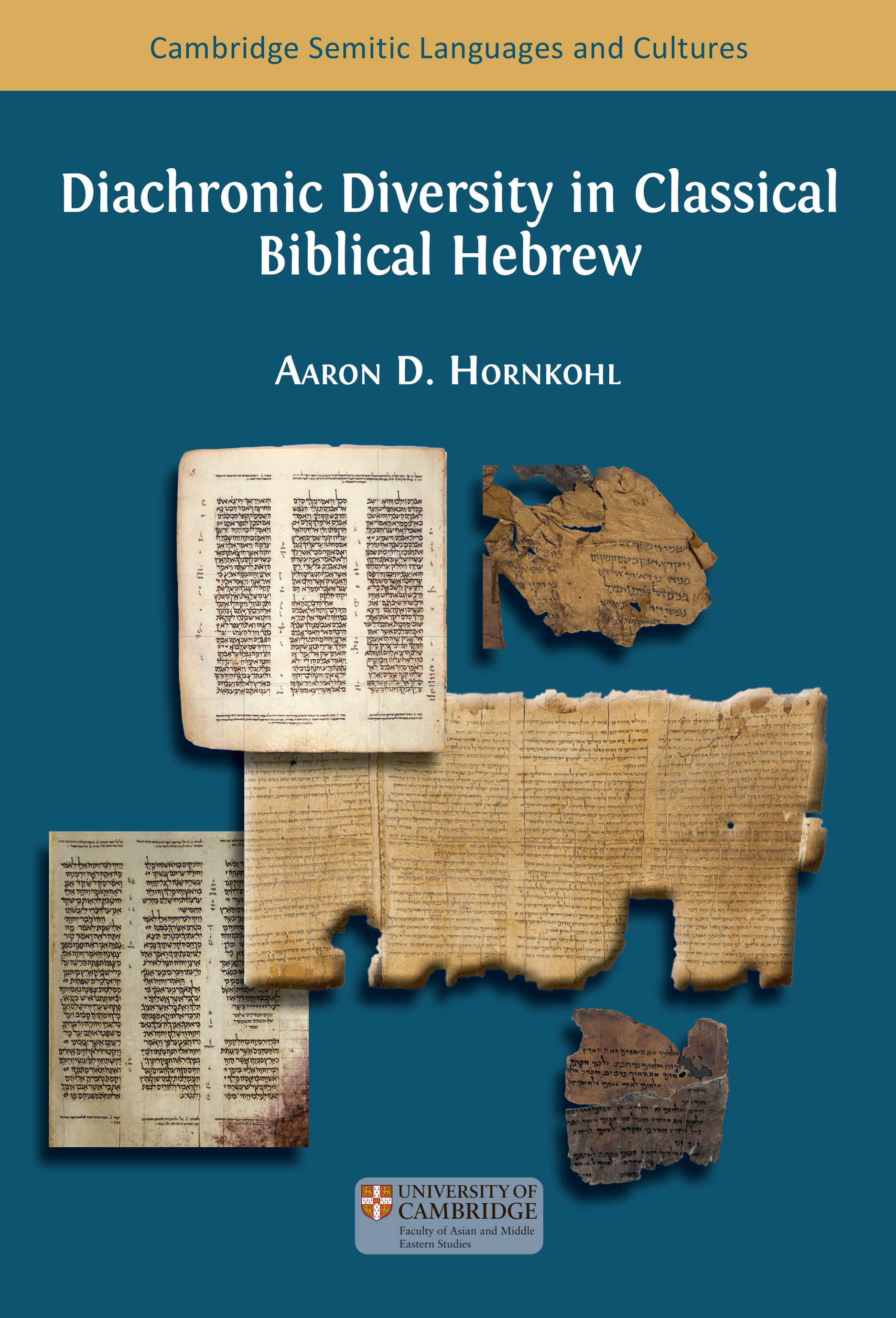
According to the standard periodisation of ancient Hebrew, the division of Biblical Hebrew as reflected in the Masoretic tradition is basically dichotomous: pre-exilic Classical Biblical Hebrew (CBH) versus post-Restoration Late Biblical Hebrew (LBH). Within this paradigm, the chronolectal unity of CBH is rarely questioned—this despite the reasonable expectation that the language of a corpus encompassing traditions of various ages and comprising works composed, edited, and transmitted over the course of centuries would show signs of diachronic development. From the perspective of historical evolution, CBH is remarkably homogenous. Within this apparent uniformity, however, there are indeed signs of historical development, sets of alternant features whose respective concentrations seem to divide CBH into two sub-chronolects. The most conspicuous typological division that emerges is between the CBH of the Pentateuch and that of the relevant Prophets and Writings. The present volume investigates a series of features that distinguish the two ostensible CBH sub-chronolects, weighs alternative explanations for distribution patterns that appear to have chronological significance, and considers broader implications for Hebrew diachrony and periodisation and for the composition of the Torah.
Book Series
- Semitic Languages and Cultures vol. 29
- ISSN Print: 2632-6906
- ISSN Digital: 2632-6914
Copyright
Aaron D. HornkohlPublished On
2024-11-11ISBN
Paperback978-1-80511-435-2Hardback978-1-80511-436-9PDF978-1-80511-437-6Language
- English
Print Length
270 pages (xiv+256)Dimensions
Paperback156 x 19 x 234 mm(6.14" x 0.75" x 9.21")Hardback156 x 22 x 234 mm(6.14" x 0.88" x 9.21")Weight
Paperback522g (18.41oz)Hardback698g (24.62oz)OCLC Number
1468770545LCCN
2023513475





 Posts
Posts


 Stumble It!


No comments:
Post a Comment