Complete digital versions of all our books are made freely available
online via our website. You can find the link on each book's main page.
These versions can be read on any computer or mobile device that is
connected to the Internet.
In addition to these free online editions, downloadable and printable
pdfs can be purchased for all our titles. We also offer ebook files (in
either ePub or mobi formats), although currently these are only
available for select titles.
Why the American Numismatic Society is Open Access . . . and
why your institution, learned society, publisher, etc., should be, too
Academic
and scholarly publication is at a crossroads as publishers, authors,
and institutions of research and higher learning consider both the
financial and ‘moral’ implications of publishing new scholarship as Open Access.
The American Numismatic Society (ANS) has adopted what some would
consider a progressive approach, while others would find these points to
simply be common sense and good manners. As you read the points below, I
challenge you to formulate arguments against each one that does not
include money. Profit and loss in academic publishing is a very real
concern, but it can be demonstrated (and has been in my nine years of
experience as an academic publisher) that publishing niche scholarship
is (and likely always will be) a money-losing venture. Publication is
often built into the mission statements of learned societies, and
funding needs to be sought from sources beyond book sales and journal
subscriptions to keep the publishing enterprise sustainable.
The ANS has addressed each of the following problems in its efforts
to make published research open without taking a hit financially.
Problem: Gold Open Access
One method some publishers use to offset production costs is to
charge those authors (or their institutions) who wish to make their
research freely available online immediately upon publication instead of
waiting some contractually agreed amount of time before being given
permission to post the work the web or via a university repository.
These costs often range from the hundreds into the low thousands of
dollars (e.g., Maney Publishing’s “Article Publishing Charge”
(APC) for immediate Open Access publication). Charging authors for Open
Access creates an economic barrier to scholars, some of whom cannot
afford the fee, and whose institutions may not have budgeted for such
costs. Unaffiliated and independent scholars are especially affected by
these fees, which they have to pay out-of-pocket and may even require
securing a loan.
What the ANS is Doing About It: It is our
opinion that authors (and their institutions) should never be charged to
make their own research available to the world immediately upon
publication.
Problem: Embargo Periods
Going hand-in-glove with “gold” Open Access is the common practice of
an embargo period, which is the time (anywhere from one to five years
in most cases) between when research is published and when an author can
make that work freely available. The point of the embargo period is to
allow the publisher to recover the production costs of that publication
prior to making it available as Open Access. Authors are forbidden to
post more than a citation or abstract, and their work is often locked
behind a paywall until the embargo expires. Timely research becomes less
so as long as the embargo period lasts, except to those readers who opt
for early access. Scholars who wish to access that author’s work must
either pay to access the publication, wait until the embargo ends, ask
the author for a PDF offprint (which is normally forbidden) or their
login credentials to a paywalled platform (even more forbidden). As with
file-sharing of other media, many people tend to look for the free
version of something they would otherwise have to pay for, thereby
short-circuiting the embargo period and the paywall, which nets both the
publisher and paywall provider nothing, i.e., the same amount they
would make by giving away the published work.
What the ANS is Doing About It: Authors of ANS publications may place their published work wherever they like upon publication, and may assign to it whichever Creative Commons license that they are the most comfortable using. A brief word on the types of Creative Commons licenses follows below.
Problem: Paywalls
As stated above regarding embargos on published research, paywalls do
little to discourage the exchange of files between colleagues, and also
place a barrier in the way of scientific progress. Platforms such as JSTOR
can strike a happy medium in curating content into packages to which
institutional libraries may subscribe, thereby providing a revenue
stream for publishers. That same content can be shared with individuals
on a non-commercial basis provided the publisher has successfully
negotiated a content-sharing agreement.
What the ANS is Doing About It: The ANS has
such an agreement with JSTOR, and is making some of its publications
available on that platform for library subscribers, while also making
those same publications available for free to individuals via the Hathi Trust Digital Library and with our own Digital Library.
Problem: “Predatory” Publishers
Following the paywall model is the usury of so-called “predatory”
publishers that charge libraries and individuals hundreds and even
thousands of dollars to access newly published research. Authors should
be wary of publishing in journals owned by these companies as their work
will reach a limited set of eyes. If most authors found other journals
in which to publish, the dearth of content would force predatory
publishers to either change their business model or to close entirely.
Libraries can also choose not to subscribe to those journals, favoring
instead those with a more reasonable Open Access policy.
What the ANS is Doing About It:The ANS has
no intention of partnering with any of the large publishing companies
that choose to lock current research behind paywalls with formidable
access costs.
Problem: Geography-Based Access
Some Open Access content is not globally available. Sometimes this is
a technical issue, and, for some publishers, this is a conscious
decision based on their understanding and implementation of copyright.
Actively choosing to limit access to content that is otherwise open
deprives international scholars of their ability to read that work
freely, at which point they must resort to paying for access, or to
bending the rules and asking colleagues for a free copy or access
to something.
What the ANS is Doing About It: The ANS makes every effort to ensure that its Open Access content is available worldwide. Much of it is hosted via numismatics.org
and various subdomains. Agreements signed with partners such as
HathiTrust make sure that the content is available globally without
restriction. ANS, 0000.999.52801Problem: Profit-Based Publishing
One of the greatest mistakes a learned society or institution can
make is to become focused on making its publications turn a profit.
Scholarly publications typically cater to a niche market and sell dozens
or occasionally hundreds of copies over a period of three years. Sales
beyond three years of the original publication date are rare. If an
organization recognizes the fact that it will realize little (or no)
profit from the sale of what it publishes, it can strategize how to pay
the not inconsiderable production costs. These costs can be built into
annual budgets, can be inserted into grant applications for projects,
and can be sought in the form of subventions. Basing choices of what to
publish by what the publisher (or Board) thinks will sell can be a
mistake, especially when what is to be published fulfills the mission of
the parent institution.
What the ANS is Doing About It:The ANS
favors a mission-based approach to publishing. It understands that some
publications will never recover their production costs, but nevertheless
that the content is exceedingly important in fulfilling the Society’s
stated goals for research and dissemination of that research.
Problem: “Commercial” Publications
Non-profit, academic institutions historically have published
scholarship as non-commercial ventures. As stated above, the publication
of journals and monographs is hardly a money-making enterprise. Books
and subscriptions are sold in order to recover some production costs.
Recently one major international rights-holder
updated its Terms of Service regarding the reproduction of its images
in scholarly publications, classing journals and scholarly monographs as
“commercial”, which then allows charging for image permissions.
Typically a reciprocal relationship exists between institutions where no
permissions fees are charged for non-commercial, scholarly, short-run
publications. In switching the Terms of Service to “commercial”, the
budget for publishing books or articles featuring images from one of
these rights-holders expands by hundreds if not thousands of dollars.
This charge represents another barrier to scholarship; publishers will
simply go elsewhere for similar images. This also actually hurts the
rights holder, in effect limiting wider access to its own holdings and
hiding them behind a self-inflicted paywall. What the ANS is Doing About It: The ANS
will never class scholarly publications as “commercial,” and will not
charge reproduction fees for the use of its images in scholarly
publications.
Problem: Permissions Charges
Most academic publishers ask the authors to pay for their own image
permissions. The publishers cannot themselves afford to pay the fees, so
the charges get passed to the author. For many authors, however, many
of their images can be used without any permissions fees because of the
non-commercial nature of their work. Should an institution opt to charge
an author for an image, it is possible that the author will opt to find
a similar image elsewhere, or will choose not to use an image at all.
Either way, the rights holder receives no revenue, and also loses
whatever additional exposure it would have otherwise received via a
credit line in the publication. Charging authors for image permissions
further limits access to content that would otherwise be freely
available.
What the ANS is Doing About It: The ANS will not charge authors for the use of its images in non-commercial publications. ANS, 1916.192.368Problem: Print-Only Publishing
Arguably the biggest roadblock to Open Access research is publishing
solely in print. Publishing in print restricts access to the content
locked on the pages and favors those readers with library access or the
ability to purchase the publication. Print editions of scholarship,
while useful to many, are themselves silos of information, unable to
interact with anything other than the active reader. This is the
opposite of Open Access. Making print editions available online as
digital editions unlocks that content, making it searchable, and perhaps
more importantly, gives the content the ability to link to any other
data available openly online, as well as making itself available to be
linked to from other online sources.
What the ANS is Doing About It: The ANS
will continue to produce print editions of scholarship, but it will make
digital editions of all of its publications past, present, and future
available online as Open Access. Doing so allows the ANS to play well
with others, to be a good academic citizen, and to contribute to the
work of others. By sharing publications openly, this guarantees that
multiple copies will be made and circulated thereby preventing loss of
that content should something happen to the original publisher.
A Word on Creative Commons Licensing
There are several varieties of Creative Commons (CC) licensing
available to authors and publishers that both protect and promote
content on the Internet and elsewhere. Anything published as Open Access
must have a CC license attached to it, otherwise the content is not
free to use. Most Open Access publications have a CC-BY (users must cite the source) or CC-BY-NC (citation required, and must be used for non-commercial purposes only). On rare occasions, the most open CC license, CC0
(content may be used for any purpose, commercial or otherwise, with or
without citation) is used. The ANS’s Open Access publications online are
posted under a CC license, usually CC-BY or CC-BY-NC. Its publications
on HathiTrust are posted as CC0. The ANS works with its authors to
determine which CC license they are most comfortable with prior to
posting their work online. ANS, 1927.64.5Conclusions:
If Open Access publication of content is not part of your
institution’s/society’s/publisher’s strategy, it should be. As authors
and as consumers of content, it is within your rights to ask (and in
some cases demand) that your research (or the scholarship you need) be
made openly available online. Open Access does not require the cessation
of the sale of that same content. Many readers still prefer to read
printed books and journals, and will pay for them (or will ask their
libraries to pay for them). Most readers prefer a suite of media with
which to work, using print in concert with digital as they produce new
scholarship. The end goal of the production of that scholarship should
not be to make money, but instead to advance the humanities, arts, and
sciences. The best way to do that is to make that scholarship available
immediately to the world upon publication. Openly. The ANS hopes that
other institutions, learned societies, and publishers will share in this
approach to placing published work online without cumbersome
restrictions. The Internet is genetically predisposed to facilitate such
sharing, which makes it the greatest enabler of advancing our
collective intellectual enterprise.
We believe scientific information should be available at all time, at all places and to each and every one. Therefore everyone is free to browse, search and read most of our publications online in our digital library. We only ask a small fee for downloading the PDF, this helps us keeping our library running!
Dans les Commentaires de la guerre des Gaules de César, le terme
d’”oppidum” – qui désigne dans ces écrits toute forme d’agglomération
fortifiée – est...
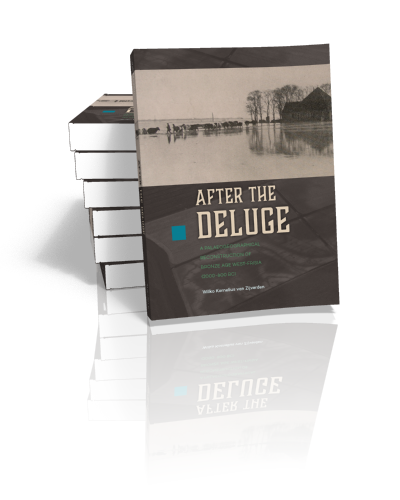
2000 jaar geleden waren het roerige tijden in Nederland. De
zuidelijke Nederlanden waren nog maar enkele tientallen jaren geleden
veroverd door de Romeinen toen ze...
Edited by Roald Docter, Ridha Boussoffara & Pieter ter Keurs |
2015
Carthage is mainly known as the city that was utterly destroyed by
the Romans in 146 BC. This book tells the story about this fascinating
city, which for centuries was the centre of a far-flung trade network in
the Mediterranean....
This volume is a collection of papers written by staff members of the
Faculty of Archaeology and presents a good overview in time and space
of the kind of research the Institute in Leiden is doing. The time
periods vary...
The famous ‘Silk Roads’ have long evoked a romantic picture of travel
through colourful civilizations that connected the western and eastern
poles of Eurasia, facilitating...
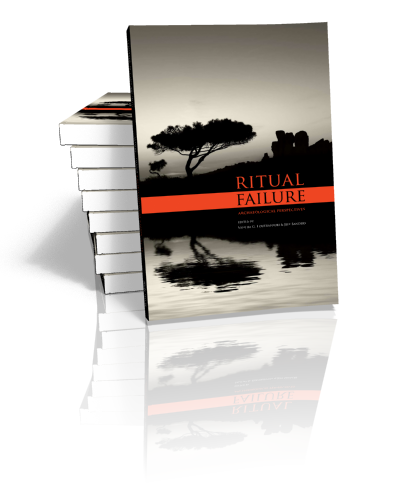
Edited by Vasiliki G. Koutrafouri & Jeff Sanders |
2013
‘Ritual Failure’ is a new concept in archaeology adopted from the
discipline of anthropology. Resilient religious systems disappearing,
strict believers and faithful practitioners not performing...
Neue Forschungen zum ‘Versenkten Peristyl’ auf dem Palatin Von 2005 bis 2010 untersuchte ein internationales Forscherteam einen zentralen Bereich der römischen Kaiserpaläste auf dem...
De vaak honderden aardewerkfragmenten die in Oss-Ussen werden
aangetroffen in waterputten, kuilen, greppels en huisplattegronden
vormden het aangrijpingspunt voor een studie naar het aardewerk uit...
In 2012 it was 50 years ago that the initial independent core of the
Faculty of Archaeology was founded. On the occasion of this 50th
anniversary the Board of the Faculty of Archaeology has asked the
editors of the Analecta...
Jasper de Bruin, Guus Besuijen, Hans Siemons & Jeroen van Zoolingen |
2012
Even ten noorden van Goedereede, in de Oude Oostdijkpolder, bevond
zich in de Romeinse tijd een nederzettingsterrein. Hier vonden in de
jaren ’50 en ’80...
Beneath the surface of Aardenburg, a small town in the south-western
part of the Netherlands, lie the remains of a Roman settlement that is
presumed...
Since the Bronze Age, and possibly even before that, people occupied
the area around Oss. They built timber farmhouses, worked fields, herded
cattle, and buried...
After World War II huge land consolidation projects measuring
thousands of hectares were carried out in West-Frisia. Large scale
excavations of Bronze Age settlement sites...
‘Leatherwork from Elephantine’ describes, illustrates and analyses
the finds from the excavations at Elephantine island (Aswan, Egypt) that
are conducted by the German Archaeological Institute...
Olaf E. Kaper, met bijdragen van Maarten J. Raven en Ben J.J. Haring |
2016
De tentoonstelling Koninginnen van de Nijl, in het
Rijksmuseum van Oudheden in Leiden, bevat een groot aantal Oudegyptische
teksten. De sarcofaag van koningin Nefertari is...
Edited by Katina T. Lillios and Michael Chazan |
2016
This volume honors the career and contributions of Andrew M.T. Moore.
Moore’s groundbreaking work at Abu Hureyra, Syria and excavations at
Neolithic sites in Croatia...
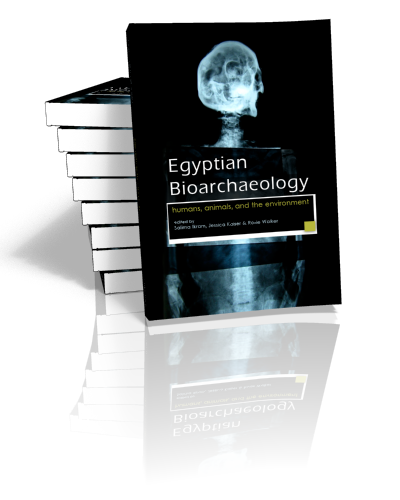
Edited by Salima Ikram, Jessica Kaiser & Roxie Walker |
2015
Although the bioarchaeology (study of biological remains in an
archaeological context) of Egypt has been documented in a desultory way
for many decades, it is...
This catalogue presents the ancient Egyptian footwear in the
collection of the Coptic Museum in Cairo. The catalogue contains
detailed descriptions and measurements, photographs and drawings. Each
description of a footwear category is followed by short discussions,
addressing topics such...
Edited by Susanna Harris & André J. Veldmeijer |
2014
This pioneering volume brings together specialists from contemporary
craft and industry and from archaeology to examine both the material
properties and the cultural dimensions of...
The famous ‘Silk Roads’ have long evoked a romantic picture of travel
through colourful civilizations that connected the western and eastern
poles of Eurasia, facilitating...
The case of Deir Alla is a social and economic case study of
developing Third World agriculture. The study is based upon historical
sources, contemporary...
Edited by Vasiliki G. Koutrafouri & Jeff Sanders |
2013
‘Ritual Failure’ is a new concept in archaeology adopted from the
discipline of anthropology. Resilient religious systems disappearing,
strict believers and faithful practitioners not performing...
Edited by André J. Veldmeijer & Salima Ikram |
2013
The present work is the result of the First International Chariot
Conference, jointly organised by the Netherlands-Flemish Institute in
Cairo (NVIC) and the American...
In 2012 it was 50 years ago that the initial independent core of the
Faculty of Archaeology was founded. On the occasion of this 50th
anniversary the Board of the Faculty of Archaeology has asked the
editors of the Analecta...
The Coptic monastery and cemetery Deir el-Bachit stands on the
hilltop of Dra’ Abu el-Naga, the well-known necropolis in Qurna (West
Bank, Luxor). It is...
The ancient Egyptian city of Tell el-Amarna (or Amarna, ancient
Akhetaten) was the short-lived capital built by the controversial
Pharaoh Akhenaten, probably the father of...
The discovery of Tutankhamun’s tomb by Howard Carter in 1922 is one
of the most significant archaeological discoveries of all time. It took
Carter and...
Throughout history, climate change has been an important driving
force behind human behaviour. This archaeological study seeks to
understand the complex interrelations between that behaviour...
After World War II huge land consolidation projects measuring
thousands of hectares were carried out in West-Frisia. Large scale
excavations of Bronze Age settlement sites...
The Leatherwork from Dra Abu el Naga (Luxor, Egypt)
André J. Veldmeijer, with contributions by Daniel Polz and Ute Rummel |
Forthcoming
This volume describes, illustrates, and analysis the finds from the
excavations at Dra Abu el-Naga, an important necropolis on the east bank
of the Nile...
The excavations of Gebel Adda (Lower Nubia) by the American Research
Center in Egypt’s Nubian Expedition (1962-1966, directed by Nicholas B.
Millet) yielded large quantities...
The AWOL Index: The bibliographic data presented herein has been programmatically extracted from the content of AWOL - The Ancient World Online (ISSN 2156-2253) and formatted in accordance with a structured data model.
AWOL is a project of Charles E. Jones, Tombros Librarian for Classics and Humanities at the Pattee Library, Penn State University
AWOL began with a series of entries under the heading AWOL on the Ancient World Bloggers Group Blog. I moved it to its own space here beginning in 2009.
The primary focus of the project is notice and comment on open access material relating to the ancient world, but I will also include other kinds of networked information as it comes available.
The ancient world is conceived here as it is at the Institute for the Study of the Ancient World at New York University, my academic home at the time AWOL was launched. That is, from the Pillars of Hercules to the Pacific, from the beginnings of human habitation to the late antique / early Islamic period.
AWOL is the successor to Abzu, a guide to networked open access data relevant to the study and public presentation of the Ancient Near East and the Ancient Mediterranean world, founded at the Oriental Institute, University of Chicago in 1994. Together they represent the longest sustained effort to map the development of open digital scholarship in any discipline.




















 Posts


 Stumble It!


