Showing posts with label Macedonia. Show all posts

Saturday, November 28, 2020

Open Access Journal: Systasis: E-Journal of the Association of Classical Philologists "Antika"

[First posted in AWOL 10 February 2010. Updated 28 November 2020]

Systasis: E-Journal of the Association of Classical Philologists "Antika"
ISSN: 1857-5129
logo systasis mk
Името на списанието (во превод "Состав") потекнува од големото откритие на професор М. Д. Петрушевски, кој во 1980 година (преиздадено во 1990 г.) во Скопје го објави својот превод на Аристотеловото дело „За поетиката“ (Περὶ ποητικῆς). Тој откри, дека во дефиницијата за трагедијата не стои изразот прочистување на страстите (κάθαρσις παθημάτων), или некоја друга синтагма, туку состав од дејства (σύστασις πραγμάτων), што предизвикуваат жал и страв, што е најважна характеристика на трагедијата.
Дека составот на делото од соодветни компоненти е основа за тоа да биде токму такво дело, на книжевно-теоретски и философски план покажа професор Елена Колева, во своето дело "Систаса на прагми" (Охрид, 1992), со што од книжевно-теоретски аспект го потврди лингвистичкото откритие на М. Д. Петрушевски.
Списанието е отворено за статии, резимеа на магистерски трудови, резимеа на докторски трудови, преводи од класични автори, пофалени/наградени семинарски работи, кратки белешки и прикази на книги од областите што ги покриваат класичните студии во поширока смисла на зборот: класична филологија, историја на стариот век, археологија, епиграфија, палеографија, и други области врзани за антиката, но и за нејзиниот континуум и наследство и дидактика на класичните дисциплини.
Членови на редакцијата на Systasis се членови на Здружението „Антика“ во соработка со колеги од регионот и Европа. Списанието се уредува двапати годишно.
The name of our periodical, Systasis, meaning 'a composition', relates to the great discovery made by our Professor M. D. Petruševski, who published his translation of Aristotle's Poetics (Περὶ ποητικῆς) in Skopje, the Republic of Macedonia, in 1990. He emended the phrase in Aristotle's definition of tragedy, usually known as κάϑαρσις παϑημάτων, to σύστασις πραγμάτων, i.e. 'a composition of acts' that cause fear and compassion—the essential characteristics of tragedy.

The thesis that the composition of the components of a deed determine literary genre was elaborated on theoretical and philosophical grounds by Professor Elena Koleva in her work 'The composition of Acts', published in Ohrid in 1992. In this book, she developed the linguistic discovery of M. D. Petruševski on literary theoretical grounds.


Тhe e-journal is edited by the members of Antika, the Association of Classical Philologists of the Republic of Macedonia, in collaboration with colleagues from the region and throughout Europe. It is open for the publication of articles, summaries of master’s theses, summaries of doctoral theses, translations of classical authors, academic papers adjudged of distinction and book reviews on subjects from the wider range of classical studies: classical philology, history of the ancient world, archaeology, epigraphy, paleography, and other subjects related to antiquity, as well as to the continuity, heritage and didactics of classical disciplines.
Systasis 37 (2020) 

Systasis 36 (2020)  

Systasis 35 (2019) 

Systasis 34 (2019) 

Systasis 33 (2018) 

Systasis 32 (2018) 

Systasis 31 (2017) 

Systasis 30 (2017)


Thursday, October 31, 2019

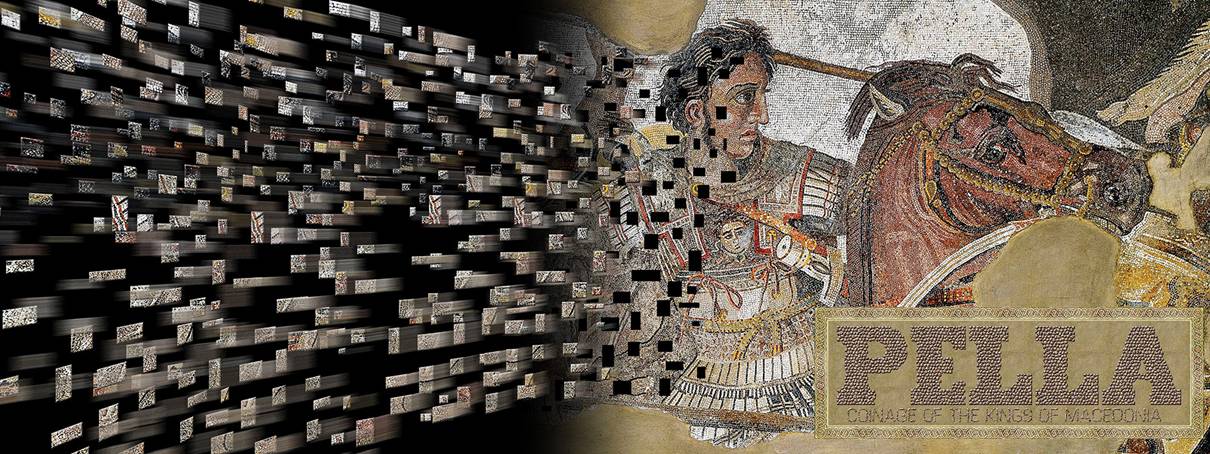
Pella: Coinage of the Kings of Macedonia

[First posted in AWOL 19 November 2015, updates 31 October 2019]

Pella: Coinage of the Kings of Macedonia
As a component of the National Endowment of the Humanities funded Hellenistic Royal Coinages project, PELLA is an innovative research tool aiming, among other things, to provide a comprehensive typology and catalogue of the coinages struck by the Macedonian kings of the Argead dynasty (c. 700–310 BC), arguably the most influential coinages of the ancient Greek world. Fueled first by indigenous precious metal mines in their native Macedonia, and later by the spoils of their conquests, including the rich treasures of the Persian Empire, the Argeads’ numismatic output was monumental. For centuries after their deaths, coins in the name of Philip II (ruled 359–336 BC) and Alexander the Great (ruled 336–323 BC) continued to be produced by successor kings, civic mints, and imitators from Central Asia to Central Europe. The coinage of the Argeads themselves and that produced in their names has been extensively studied, but to date no comprehensive, easily accessible catalogue of their coinages exists. PELLA is designed to fill that gap, cataloguing the individual coin types of the Argead kings from Alexander I (ruled 498–454 BC), the first of the Macedonian kings to strike coins, down to Philip III Arrhidaeus (ruled 323–317 BC), the last of the titular kings to do so. Included as well as are the numerous posthumous civic and successor coinages struck in the names of the kings.
The current version of PELLA provides links to examples of the coinage (in the name) of Alexander the Great and Philip III Arrhidaeus present in a dozen collections located in the United States and Europe (see Contributors). The PELLA project currently focuses on the coinage (in the name of) Alexander III and Philip III, using reference numbers from Martin Price's  The Coinage in the Name of Alexander the Great and Philip Arrhidaeus  , London 1991, as the means of organizing the coinages from various institutions. The next stage will focus on the coinage (in the name of) Philip II, using Le Rider,  Le monnayage d'argent et d'or de Philippe II frappé en Macédoine de 359 a 294 , 1977, as the means of organizing the coinages. Pella will then focus on the coinages of Alexander I to Perdiccas III using SNG ANS as the means of organizing the coinages from various institutions.
PELLA is made possible by stable numismatic identifiers and linked open data methodologies established by the Nomisma.org project. Coin type data are made available with an Open Database License. All images and data about physical specimens are copyright of their respective institutions. Please see the Contributors page for further details about individual licenses. The current version of PELLA uses the numbering system and typology originally created and published in Price (1991) with the addition of modifications that greatly enhance the volume’s usefulness as an online resource.

Monday, December 24, 2018

Open Access Journal: Μακεδονικά - Makedonika

[First posted in AWOL 21 January 2016, updated 24 January 2018]

Μακεδονικά - Makedonika
e-ISSN:2241-2018
ISSN:0076-289X
Η Εταιρεία Μακεδονικών Σπουδών, με ιδιαίτερη χαρά σας υποδέχεται στη νέα ιστοσελίδα του περιοδικού της Μακεδονικά, το οποίο εκδίδεται ανελλιπώς από το 1940 ως σήμερα.
Σας προσκαλεί να ερευνήσετε τα πλούσια περιεχόμενα του μακρόβιου περιοδικού της, τα οποία αφορούν στην ιστορία του βόρειου ελληνικού χώρου και κυρίως αυτήν της Μακεδονίας, την αρχαιολογία, τις τέχνες, τη λαογραφία και τη γλωσσολογία.
Η ανάρτηση των ψηφιοποιημένων τόμων θα γίνει σταδιακά και μέχρι την πλήρη ανάρτηση του συνόλου των τόμων, οι ερευνητές έχουν τη δυνατότητα να αναζητήσουν την πλήρη ψηφιοποιημένη μορφή του περιοδικούΜακεδονικά και στον ιστότοπο της Εταιρείας:  www.ems.gr

Η ηλεκτρονική αυτή έκδοση των Μακεδονικών υλοποιείται χάρη στη γόνιμη συνεργασία του Εθνικού Κέντρου Τεκμηρίωσης (ΕΚΤ), η οποία σύντομα θα επεκταθεί και με την ανάρτηση του περιοδικού Ελληνικά.
Η ηλεκτρονική έκδοση του περιοδικού Μακεδονικά θα κυκλοφορεί συγχρόνως με την έντυπη μορφή του, η οποία κανονικά θα διατίθεται από το βιβλιοπωλείο της Εταιρείας και τα συμβεβλημένα βιβλιοπωλεία

Πίνακας Περιεχομένων


Άρθρα


Κατερίνα Ρωμιοπούλου
PDF
1-5

Φωτεινή Ζαφειροπούλου
PDF
7-24

Πέτρος Θέμελης
PDF
25-

Πολυξένη Αδάμ-Βελένη
PDF
31-63

Κυριάκος Ι. Κωνσταντούλας
PDF
65-82

Κατερίνα Τζαναβάρη
PDF
83-98

Ευαγγελία Δ. Στεφανή
PDF
99-123

Μαρία Λιλιμπάκη-Ακαμάτη
PDF
125-138

Αναστασία Χρυσοστόμου
PDF
139-156

Νεκτάριος Πουλακάκης
PDF
157-173

Νεκτάριος Πουλακάκης, Ειρήνη Ψαρρά
PDF
175-200

Γεωργία Καραμήτρου-Μεντεσίδη
PDF
201-218

Λ. Γ. Γκέλου
PDF
219-233

Βασιλεία Φ. Πέτσα
PDF
237-243

Ιωάννης Τουράτσογλου
PDF
245-247

Αργυρώ Β. Τατάκη
PDF
249-253

Μαρία Λιλιμπάκη-Ακαμάτη
PDF
255-262

Σύμμεικτα


Dean Sakel
265

Βιβλιοκρισίες


Αθ. Ε. Καραθανάσης
PDF
269-274

Αθ. Ε. Καραθανάσης
PDF
274-283

Μαρία Ι. Καζαμία-Τσέρνου
PDF
283-300

Νέλλη Μελίδου-Κεφαλά
PDF
301-308

Ελένη Γαβρά
PDF
308-315
Κατά τεύχος 

Tuesday, January 13, 2015

Open Access Journal: Macedonian Archaeological News

[First posted in AWOL 16 December 2009. Updated 13 January  2015]

Македонски археолошки весник - Macedonian Archaeological News
ISSN: 1857-6729

[No longer accessible at its original location online. The above link is to the most recent version on the Wayback Machine, the following link is to the original location Македонски археолошки весник - Macedonian Archaeological News]
Електронското списание „Македонски археолошки весник“ е заеднички проект на Управата за заштита на културното наследство на Република Македонија и Институтот за општествени и хуманистички истражувања Евро-Балкан.
Негова основна функција е да ја запознае македонската и светската јавност со резултатите од археолошките истражувања кои се преземаат на територијата на Република Македонија. Со самото тоа, Македонскиот археолошки весник, еднаш месечно ќе ги презентира, афирмира и промовира карактеристиките на позначајните наоди откриени на различни археолошки локалитети, кои хронолошки припаѓаат на историските епохи од праисторијата до доцносредновековниот период. Дел од нашата мисија ќе биде да ја приближи македонската археолошка наука до меѓународната стручна и поширока јавност.
The electronic newsletter Macedonian Archaeological News is a joint project of the Cultural Heritage Protection Office of the Republic of Macedonia and the Institute for Social Sciences and Humanities Euro-Balkan.
Its basic purpose is to inform the public in Macedonia and worldwide of the results of the archaeological research undertaken on the territory of the Republic of Macedonia. Hence, Macedonian Archaeological News will present and promote the features of the most significant finds discovered at various archaeological sites, stretching from prehistory to the late Middle Ages. A part of our mission will be to bring the Macedonian archaeological science closer to the academic circles worldwide and to the general public.

Friday, October 24, 2014

In­schrif­ten von Philippi im Bild

In­schrif­ten von Philippi im Bild
http://www.philippoi.de/images/titelstein.gif
Auf dieser Seite werden die Bilder der In­schrif­ten von Philippi (Ma­ke­do­nien) allen In­ter­ess­ier­ten zugäng­lich ge­macht. Die Tex­te der grie­chi­schen und la­tei­ni­schen In­schrif­ten wur­den im Jahr 2000 in dem "Ka­ta­log der In­schrif­ten von Phil­ip­pi" (vgl. das Li­te­ra­tur­ver­zeich­nis) erst­mals in einem Band zu­sam­men­ge­stellt. Aus Um­fangs- wie aus Ko­sten­grün­den war nie­mals ge­plant, die­sem Band auch Pho­to­gra­phien bei­zu­ge­ben. Im Zu­ge meiner Be­ru­fungs­ver­hand­lun­gen an der Fried­rich-Alex­ander-Uni­ver­sität Er­lan­gen-Nürn­berg hat der Kanz­ler dieser Uni­versi­tät, Herr Tho­mas A. H. Schöck, Mit­tel be­wil­ligt, die die An­stel­lung einer Hilfs­kraft für drei Jah­re er­mög­li­chen, um die Phil­ip­pi-Dias zu scan­nen und ins Netz zu stel­len. Ihm gilt da­her mein be­son­derer Dank. Mein Dank gilt so­dann mei­nem Mit­ar­beit­er, Herrn Hol­ger Ibisch, der sich be­reit­wil­lig und ein­ge­hend mit der Hard- und Soft­ware ver­traut ge­macht hat, die er­for­der­lich ist, um eine solche In­ter­net-Sei­te zu ge­stal­ten. Er wur­de un­terstützt von Herrn Björn Nord­gauer, der die Da­ten­bank ent­wor­fen und pro­gra­mmiert hat. Auch ihm dan­ke ich herz­lich.

Das Projekt Der Aufbau dieser Sammlung Die Vorgeschichte Die Literatur Die Inschriften Neue Inschriften

Monday, February 11, 2013

Open Access Journal: HAEMUS: An electronic journal for the history and archaeology of the Balkan peninsula


A peer reviewed open access journal for the history and archaeology of the Balkan peninsula.
In the beginning, the journal will be published annually, with the possibility of a semi-annual publication, depending on the number of submissions. Research articles will be called for on all aspects of the history and archaeology of the Balkan peninsula, from prehistory and antiquity to our times, including studies of clas­sical and modern science. The journal will contain the standard co­lumns for these types of publications: articles and papers, dis­cussions, essays, biographies, bibliographies, reviews, summaries, etc. The articles, published in English, will be accessible to the wider academic community, as well as to the devotees of history and archaeology who will have the opportunity to read them in an electronic version.
HAEMUS Journal Vol. 2
Call for papers – HAEMUS Journal Vol.3 (2017) 

Tuesday, June 5, 2012

Online Catalogue of the sculptures in the Archaeological Museum of Salonica

Catalogue of the sculptures in the Archaeological Museum of Salonica
G. Despinis - T. Stefanidou-Tiveriou - E. Voutiras
The Archaeological Museum of Salonica holds one of the largest and most diverse collections of ancient sculpture in Greece. This is caused by the fact that the holdings of the collection derive from a wide geographical range. Most of the sculptures emerged in and around the city of Salonica, but objects found in various sites of the ancient landscapes of Macedonia and Thracia were also added to the Museum's inventory. Therefore it is possible to regard the collection as reasonably representative for the sculpture of the north-Aegaean area up to the Propontis to some extent. Chronologically the sculptures cover the complete range of ancient art, from the archaic period (2nd half of the 6th century BC) all the way up to the late antiquity (4th and 5th century AD). Therefore, in 1989, three professors of archaeology (G. Despinis, Th. Stefanodou-Tiveriou and E. Voutiras) initiated a research program in order to gather the complete collection of antiquities of the Archaeological Museum of Salonica, as well as to catalogue and publish it. Thanks to the active support of Ioulia Vokotopolou, the ephor in charge, the required permission from the central administrative bureau for the antiquity service (ΚΑΣ) was soon granted so that it was possible to tackle the project in 1990. Until 1998, the gathering and studying of the material was funded by a public research program. Additional financial assistance was rendered by the Cast Museum of the University of Salonica. The superintendents as well as the staff of the museum always helped benevolently. Since 1998, Prof. B. Schmidt-Dounas has also been working in the editorial department and the group of contributors has extended to doctoral candidates within the department of Archaeology in the University as well as to employees of the Archaeological Service.
The main goal of the project is to publish a scientific catalogue with all sculptures of the Archaeological Museum of Salonica. So far, four volumes are planned. The first was published in 1997, the second in 2003. The third volume is in preparation.
Meanwhile, the register, which is kept in the Cast Museum of the University of Salonica along with the photographical archive, contains about 1500 entries. The objects were newly measured, described and recorded. The sculptures were photographed from several different perspectives, whenever possible from all four sides. The information concerning their origin was systematically rechecked to the extent available.
Besides preparing the catalogue, it seemed useful to use a database, in order to make it easier to use the archive and to enable the connection with similar projects. This task was tackled in cooperation with the CoDArchLab. Consequently, the Arachne website made the part of the archive that was already published electronically available to an even wider public.

Arachne