Showing posts with label Egyptian. Show all posts

Tuesday, November 1, 2022

Thesaurus Linguae Aegyptiae
 [First posted in AWOL 29 October 2010, updated 1 November 2022]

Thesaurus Linguae Aegyptiae
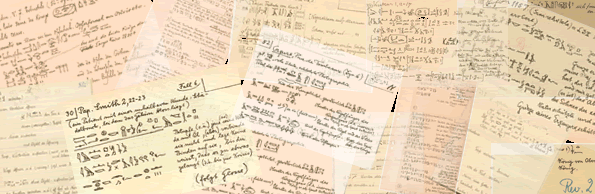
Slips from the Zettelarchiv

In the Thesaurus Linguae Aegyptiae (TLA), you’ll find a wide variety of writings, from terse labels to extensive narratives, produced by Egyptian scribes and recorded on the walls of temples and tombs, on stelae, papyrus, and ostraca, on tomb equipment, tools, vessels, and instruments.

Explore the earliest religious texts of humankind, read ancient letters, tales, netherworld texts, or an early state treaty, try to comprehend ancient mathematics, astronomy and magical practices, find out about treatments undertaken by Egyptian physicians.

The Egyptian-Coptic language is the human language with the longest documented lifetime, spanning more than 4,000 years from the invention of the hieroglyphic script around 3,000 BCE up to its extinction at around 1,400 CE. Its vocabulary reflects the knowledge and worldviews of one of the formative cultures of the ancient world.

The TLA provides the worldwide largest electronic corpus of lemmatized Egyptian texts transliterated from hieroglyphic, hieratic, and Demotic records, with Coptic as a planned addition in the near future. The TLA offers two core tools for searching the Ancient Egyptian text world and its vocabulary, the text corpus and the lemma lists.

Please cite this website as:

Thesaurus Linguae Aegyptiae <https://thesaurus-linguae-aegyptiae.de>, Corpus issue 17, Web app version 2.0, 10/31/2022, ed. by Tonio Sebastian Richter & Daniel A. Werning by order of the Berlin-Brandenburgische Akademie der Wissenschaften and Hans-Werner Fischer-Elfert & Peter Dils by order of the Sächsische Akademie der Wissenschaften zu Leipzig (accessed: 11/1/2022)

Saturday, April 23, 2022

Digitale Einführung in die hieroglyphisch-ägyptische Schrift und Sprache

[First posted in AWOL 6 Jylu 2018, updated 23 April 2022]

Digitale Einführung in die hieroglyphisch-ägyptische Schrift und Sprache

Daniel A. Werning
Humboldt-Universität zu Berlin: Berlin 2018–...
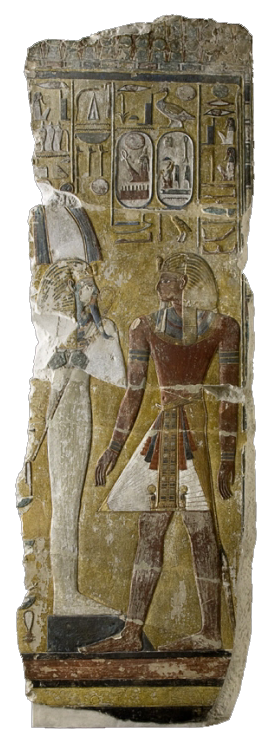
Grabpfeiler mit der Darstellung König Sethos I. vor dem Gott Osiris (Berlin ÄM 2058), ©Foto: Ägyptisches Museum und Papyrussammlung der Staatlichen Museen zu Berlin, Fotograf/in: Sandra Steiß, CC BY-NC-SA 3.0 DE


Inhalt

Grammatik Übungen
Schriftsystem
§1   Schriftsprachstufe
§2   Schriftsysteme und Transliteration Übung 1
§3   Das hieroglyphisch-ägyptische Alphabet und „Einkonsonantenzeichen“
§4   Interpunktion in der Transkription
§5   Nicht-Schreibung von Halbkonsonanten/Halbvokalen
§6   Aussprache von Worttranskriptionen
§7   Kategorisierungszeichen: „Klassifikatoren“ Übung 2
§8   Funktion von Klassifikatoren
§9   Wortzeichen: „Logogramme“
§10   Überbegriff „Semogramm“
§11   Mehrkonsonantenzeichen
§12   Phonogramme als Phonetische Komplemente
§13   Phono-Repeater
§14   Zeichenfunktionsklassen und Multifunktionalität Übung 3
Lexikographie
§15   Erman & Grapow, Wörterbuch der aegyptischen Sprache
§16   Alternative Transkriptionssymbole
§17   Schreibvarianten aufgrund hintergründigen Lautwandels
§18   Lautannäherungsschreibungen
§19   Moderne Transkriptionen
§20   Computer-Kodierung von Transkription nach Manuel de Codage
§21   Suche im Thesaurus Linguae Aegyptiae Übung 4
Substantiv
§22   Die Wortart „Substantiv“
§23   Genus des ägyptischen Substantivs
§24   Numerus des ägyptischen Substantivs
§25   Bestimmtheit
§26   „Genitiv“-Attribute: „direkter Genitiv“ und „indirekter Genitiv“
§27   Umstellung honorum causa Übung 5
Pronomina
§28   Personalpronomina I: „Suffixpronomina“
§29   Suffixpronomina an Substantiven
§30   Demonstrativpronomina I: Hauptreihen
§31   Demonstrativpronomina II: Nebenreihen
Verben
§32   Verben: die Haupt-Verbwurzelklassen Übung 6
§33   Die Haupttempora: „Imperfektiv“ sḏm(⸗f), „Anterior“ sḏm.n(⸗f) und „Subjunktiv“ sḏm(⸗f)
§34   Der verbale Hauptsatz mit Imperfektiv, Anterior und Subjunktiv
§35   Der Imperfektiv-Hauptsatz mit S–V–S'–O Übung 7
§36   Personalpronomina II: „Enklitische Personalpronomina“
§37   Identifikation und Reihenfolge von Aktanten nach Verben
§38   Sonderfall sḏm.n(⸗j)-w(j): Anterior mit Subjekt und Objekt der 1SG
§39   Der Subjunktiv als Objekt-Gliedsatz nach rḏ(j) ‘geben, veranlassen’ Übung 8
§40   „Perfektiv“ sḏm(⸗f) und „Posterior“ sḏm.w(⸗f)
§41   Der verbale Hauptsatz mit Perfektiv und Posterior
§42   Perfektiv vs. Anterior und dtsch. hörte vs. hat gehört
§43   Der Posterior unter Druck
§44   Wege zur Bestimmung von Verbalformen
§45   Anterior im performativen Gebrauch: der Sonderfall ḏ(j).n(⸗j) n⸗k … Übung 9
§46   Negierte Verbalsätze Übung 10
Adverbiale
§47   Präpositionen
§48   Adverbien
§49   Adverbialphrasen als Prädikat: der „Adverbialsatz“
§50   Semantisch besondere Adverbialsätze
§51   Adverbialsatz und Verbalsatz in Konkurrenz
§52   Existenzsätze
§53   Adverbiale Substantive Übung 11
Adjektive
§54   Adjektive
§55   Adjektive als Attribut
§56   Substantivierte Adjektive
§57   Adjektive als Prädikat: der „Adjektivalsatz“
§58   Indefinitpronomina
§59   Anstelle von adjektivischer Steigerung
§60   Adjektive im Bahuvrīhi-Kompositum: die „nfr-ḥr-Konstruktion“ Übung 12
Nominalsätze
§61   Personalpronomina III: „Selbständige Personalpronomina“
§62   Substantive und Pronomina als Prädikat: „Nominalsätze“
§63   Gebrauch des Nominalsatzes
§64   Negation des Nominalsatzes
§65   Prädikatstypen: Verbalsätze, Adverbialsätze, Adjektivalsätze und Nominalsätze Übung 13
Zahlen und Aufzählung
§66   Zahlen
§67   Datumsangaben
§68   Nominalphrasen
§69   Koordination, Disjunktion und Apposition Übung 14
Resultativ
§70   Der „Resultativ“ sḏm
§71   Der Resultativ als Hauptsatz
§72   Der Resultativ von rḫ ‘kennenlernen’ Übung 15
Nisben
§73   Adjektivische Derivation: die „Nisben“
§74   Sonderformen de präpositionaler Nisben
§75   Erkennbarkeit von Nisben Übung 16
Infinite Verbalformen
§76   Der Imperativ sḏm
§77   Das „Negativkomplement“ sḏm.w Übung 17
Satzfolgen
§78   Adverbiale Nebensätze und parataktische Hauptsätze
§79   Verbalsatzkategorien: Tempus, Aspekt und Modus Übung 18
Passiv
§80   Passive Verbalformen
§81   Gebrauch und Erkennbarkeit der passiven Verbalformen
§82   Sonderfälle in Bezug auf die Aktanten am Passiv Übung 19
Nominale Verbalformen
§83   Die finiten „Nominalen Verbalformen“
§84   Nominale Verbalformen als substantivische Verbalformen
§85   Nominale Verbalformen in der „Emphatischen Konstruktion“
§86   Nominale Verbalformen als initialer Nebensatz (Konverben)
§87   Erkennung Nominaler Verbalformen Übung 20
Weitere spezielle Verbalformen
§88   Der „Kompletiv“ sḏm.t(⸗f)
§89   Die „konsekutiven“ Verbalsuffixe -jn, -ḫr und -kꜣ
§90   Rede- und Rednereinleitungen
§91   Dreimal jn, ḫr und kꜣ: ein Überblick Übung 21
Infinitiv
§92   Der Infinitiv sḏm
§93   Verbalsätze mit Infinitiv: „Periphrastische Verbalsätze“
§94   Der pleonastische Infinitiv sḏm.t Übung 22
Partizipien
§95   Partizipien I: das merkmallose „Neutrale Partizip“
§96   Partizipien II: das „Distributive Partizip“
§97   Besondere Partizipialformen zweiradikaliger Verben
§98   Das Posteriore „Partizip“ sḏm.tï.f
§99   Spaltsätze Übung 23
Relativsätze und Relativformen
§100   Der Relativsatz mit Relativpronomen
§101   „Relativformen“: Relativsätze in Verbalform
§102   Die sḏm pw jr.n(⸗f)-Konstruktion
§103   Relativsätze mit passiven Partizipien
§104   Adjektivische vs. adverbiale Attribute und „Virtuelle Relativsätze“ Übung 24
Übersichten
§105   Übersicht über die Verbalformen des Mittelägyptischen

Verzeichnisse

Glossierungsabkürzungen

Abkürzungen, allgemein

Zeittafel

Zeichen- und Vokabellektionen

Bibliographie


Zitieren Sie diese Grammatik:

Daniel A. Werning. (2018-…). Digitale Einführung in die hieroglyphisch-ägyptische Schrift und Sprache, Humboldt-Universität zu Berlin, http://hdl.handle.net/21.11101/0000-0007-C9C9-4 (Zugriff: 7 Dezember 2021).

Kommentieren Sie diese Grammatik hier.

 See also AWOL's  list of Open Access Textbooks and Language Primers Relating to the Ancient World


Monday, June 7, 2021

Corpus of Ptolemaic Inscriptions (CPI)

Corpus of Ptolemaic Inscriptions (CPI)

Welcome to the homepage of the Corpus of Ptolemaic Inscriptions (CPI) project, which aims to create a Corpus of up-to-date editions of the Greek, bilingual and trilingual inscriptions on stone from Ptolemaic Egypt (323-30 BCE), numbering around 650 items, based on material collected and annotated by the late Peter Fraser FBA (1918-2007). The first volume of the Corpus, Alexandria and The Delta (Nos. 1-206), was published by OUP in April 2021. A companion volume of essays exploring different aspects of the epigraphy of Ptolemaic Egypt, The Epigraphy of Ptolemaic Egypt, was published by OUP in October 2020.

The CPI project has been funded by a grant from the Arts and Humanities Research Council, with further support from the Leverhulme Trust and the John Fell Fund, and is based at the Centre for the Study of Ancient Documents in Oxford.

Thursday, April 25, 2019

Index of Ptolemaic Texts

Index of Ptolemaic Texts
 
L'index des textes ptolémaiques permet de rechercher les attestations d'un mot dans la base de données.
[Access is free and immediate after registration]
L'index des textes ptolémaiques permet de rechercher les attestations d'un mot, d'un acteur ou d'un rite, soit dans la base de données complète, soit pour un temple donné. Il ne s'agit pas d'un dictionnaire ou d'un lexique. Aucune traduction n'est fournie; la signification du mot doit ressortir du contexte. La base de données n'offre que des résultats 'bruts'; aucune lemmatisation lexicographique ou grammaticale n'a été exécutée.
The index of Ptolemaic texts is not a dictionary or a lexicon. It enables you to search for attestations of a word, an agent, or a ritual, either in the complete database or for a specific temple. No translation is provided; the meaning of the word derives from the context. The database offers only 'raw' results; no lexicographic or grammatical lemmatization has been performed.

Sunday, August 26, 2018

VÉgA Vocabulaire de l’Égyptien Ancien - Vocabulary of Ancient Egyptian

VÉgA Vocabulaire de l’Égyptien Ancien - Vocabulary of Ancient Egyptian
VÉgA makes it possible to model and present the evolving knowledge of ancient Egyptian by bringing together and cross-checking the words, where they have appeared, the references, their hieroglyphic forms, as well as creating links to a collection of records related to the texts in question. VÉgA is accessible using a simple web browser. There are no other installation requirements. Its interface was custom-created for the Egyptologists allowing them to easily and quickly create interactive notes. You are experiencing a problem? Contact us at contact@vega-vocabulaire-egyptien-ancien.fr

Tuesday, March 13, 2018

The Writing of a Skillful Scribe: An Introduction to Hieratic Middle Egyptian Through the Text of the Shipwrecked Sailor

The Writing of a Skillful Scribe: An Introduction to Hieratic Middle Egyptian Through the Text of the Shipwrecked Sailor
Poe, William Clay
Date: 2008

Abstract:

This book is an introduction to the principal form of the literary language of ancient Egypt. It is assumed that most people who use this text will be interested primarily in the Egyptian language as a component of the study of the culture of ancient Egypt and so will not be focused primarily upon the structure of Egyptian grammar. A major rationale for the organization of the book has thus been to introduce the student as quickly as possible to the reading of a connected narrative. In order to do this, the book has been narrowly focused; it uses a single rather simple, but nevertheless elegant, piece of literature to present examples of the principal structures of Middle Egyptian. The Story of the Shipwrecked Sailor has been selected as the single source for all of the examples in the text.
And see also AWOL's  list of

Saturday, October 29, 2016

Wörterbuch der Ägyptischen Sprache facsimile Online

[First posted in AWOL 1 February 2014, updated 29 October 2016]

WÖRTERBUCH DER AEGYPTISCHEN SPRACHE im Auftrage der deutschen Akademien hrsg. von Adolf Erman und Hermann Grapow. Bd. I-V.

Unveränderter Nachdruck. Berlin, 1971

[.pdf 64 мб]

Словарь разбит на файлы в соответствии с алфавитным порядком. В тех случаях, когда конец одной буквы и начало другой приходятся на одну страницу, эта страница в соответствующих файлах повторяется. Файлы объемом свыше 5 мб разделены на две части.

Тома I-V отсканированы и предоставлены в наше распоряжение Еленой Певчевой.
Том VII отсканировал и предоставил в наше распоряжение мистер D. Charles Pyle (Salt Lake City, USA).

Bd. I Bd. II Bd. III Bd. IV Bd.V

Vorwort + A
[.pdf 1,17 мб]
m
[.pdf 4,53 мб]
H (H-HmD)
[.pdf 2,43 мб]
s (s-srftt)
[.pdf 4,5 мб]
q
[.pdf 1,79 мб]
j
[.pdf 3,3 мб]
n
[.pdf 4,51 мб]
H (Hn-HDDdnt)
[.pdf 2,78 мб]
s (srm-sDD)
[.pdf 4,37 мб]
k
[.pdf 1,42 мб]
a
[.pdf 2,05 мб]
r
[.pdf 1,98 мб]
x
[.pdf 3,42 мб]
S
[.pdf 3,55 мб]
g
[.pdf 1,26 мб]
w
[.pdf 4,01 мб]
h
[.pdf 900 кб]
X
[.pdf 1,15 мб]
t
[.pdf 2,6 мб]
b
[.pdf 1,83 мб]
z
[.pdf 1,97 мб]
T
[.pdf 1,63 мб]
p
[.pdf 1,95 мб]
d
[.pdf 1,79 мб]
f
[.pdf 325 кб]
D + Unlesbares
[.pdf 2,61 мб]

Bd. VI
Deutsch-Aegyptisches Wörterverzeichnis.
Berlin-Leipzig, 1950.
S. 1-75 [.pdf 3,61 мб] S. 76-155 [.pdf 3,48 мб] S. 156-256 [.pdf 4,7 мб]
Bd. VII
Rücklaufiges Wörterverzeichnis.
Berlin, 1971.
S. 1-67 [.pdf 3,35 мб] S. 68-132 [.pdf 3,11 мб]


DIE BELEGSTELLEN zu WÖRTERBUCH DER AEGYPTISCHEN SPRACHE. Bd. I-V.
Berlin, 1940 (II), 1951 (III), 1953 (IV, V), 1958 (I).


Все тома приложений, за исключением тома II, имеющего особую структуру, разделены на 2 части: текстовую (pt1) и иероглифическую (pt2).
Внутри каждой части файлы разбиты по объему.

II, III и IV тома отсканированы и предоставлены в наше распоряжение Владиславом Киселевичем.


Bd. I Bd. II Bd. III Bd. IV Bd.V

pt1_1-45
[.pdf 5,76 мб]
S. 1-201
[.pdf 6 мб]
pt1_1-48
[.pdf 5,83 мб]
pt1_1-35
[.pdf 3,7 мб]
pt1_1-37
[.pdf 3,98 мб]
pt1_46-96
[.pdf 6,22 мб]
S. 202-410
[.pdf 6,04 мб]
pt1_49-97
[.pdf 5,61 мб]
pt1_36-85
[.pdf 5,13 мб]
pt1_38-95
[.pdf 6,09 мб]
pt2
[.pdf 2,98 мб]
S. 411-639
[.pdf 6,66 мб]
pt2
[.pdf 5,32 мб]
pt2
[.pdf 4,64 мб]
pt2
[.pdf 4,26 мб]
Сокращения
[.pdf 836 кб]
S. 640-767
[.pdf 3,72 мб]

Tuesday, October 20, 2015

The RES-project (Revised Encoding Scheme for hieroglyphic)

The RES-project (Revised Encoding Scheme for hieroglyphic)
https://mjn.host.cs.st-andrews.ac.uk/egyptian/res/res.gif 
This is the home page of the RES encoding scheme for hieroglyphic.

General documentation

  • M.-J. Nederhof. A Revised Encoding Scheme for Hieroglyphic. In Proceedings of the XIV Computer-aided Egyptology Round Table, Pisa, Italy, July 2002. [pdf]
  • M.-J. Nederhof. The Manuel de Codage encoding of hieroglyphs impedes development of corpora. In S. Polis and J. Winand, editors, Texts, Languages & Information Technology in Egyptology, pp. 103-110. Presses Universitaires de Liège, 2013. [pdf]

Description of the encoding scheme

The implementation: res2image

(The implementation from the download link below is in C. This is not maintained at present. I recommend that you use the alternative implementation in Java.)

Applications

Links

Tuesday, September 22, 2015

Vygus Egyptian Dictionary

Vygus Egyptian Dictionary
This dictionary was compiled and sorted using Luca Brigatti’s HIEROWORD program http://home.comcast.net/~thot/ It is arranged by Gardiner sign number and not by the more traditional transliteration order.
Using this method means not having to remember all the different transliterations for each sign
e.g. Z9 which is used as a first glyph for these transliterations.
wp / wHm / mabA / Hsb / HD / xbi / xbsw / swA / sD / Sbn / Dwyw
Use the ‘Search’ function of the .pdf to search for :-word meanings / MDc / Gardiner glyphs No’s. Several signs look similar in printed material so check alternative signs if you cannot find the one you’re looking for
Best viewed at 150%, otherwise some glyphs do not show correctly. Any mistakes or additions please let me know. 
Mark Vygus 2015

Monday, July 16, 2012

Chicago Demotic Dictionary: "T"

The Demotic Dictionary of the Oriental Institute of the University of Chicago
As part of its ELECTRONIC PUBLICATIONS ON-LINE, the Oriental Institute Publications Office announces an additional letter, T, for the Chicago Demotic Dictionary, edited by Janet H. Johnson. This document is available in the Adobe Acrobat Portable Document Format (PDF) file.
Letters completed to date include:


Completed Letters Download
Prologue Download PDF Terms of Use
3 Download PDF Terms of Use
'I Download PDF Terms of Use
c Download PDF Terms of Use
Y Download PDF Terms of Use
W Download PDF Terms of Use
B Download PDF Terms of Use
P Download PDF Terms of Use
F Download PDF Terms of Use
M Download PDF Terms of Use
N Download PDF Terms of Use
R Download PDF Terms of Use
L Download PDF Terms of Use
H Download PDF Terms of Use
H2 Download PDF Terms of Use
H3 Download PDF Terms of Use
H4 Download PDF Terms of Use
SH Download PDF Terms of Use
Q Download PDF Terms of Use
K Download PDF Terms of Use
G Download PDF Terms of Use
T Download PDF Terms of Use
TJ Download PDF Terms of Use
DJ Download PDF Terms of Use
Problematic Entries Download PDF Terms of Use
Problematic Entries 2 Download PDF Terms of Use


For an up to date list of all Oriental Institute publications available online see: