A digital model of Babylon is under development. Both archaeological
material and ancient texts are used on a detailed level for the
reconstruction of this famous ancient city. Architectural computer
programs are used for building the model, which is placed in
environmental and historical contexts. An integrated GIS analysis is
used for the city’s relation to the surroundings on different scales.
The model will be used for developing and testing alternative
reconstructions, creating new questions and providing answers. The
development of the city is shown on different historical levels. Maps
and other drawings are exported from the model.
Model of Babylon during the final part
of the reign of Nebuchadnezzar II. Processional Way in front of the
Ishtar Gate of glazed bricks. Street covered with limestone and breccia
stones.
The ArchiCAD program is used for the model and the Artlantis program
for the renderings. The preliminary work has been part both of the Urban
Mind Project at Uppsala University and the Excellence Cluster Topoi at
Freie Universität Berlin. Inspection on site has been facilitated by
Word Monuments Fund and State Board of Antiquities and Heritage. The
project is associated with the Babylon project
at Vorderasiatisches Museum in Berlin, where a reworking of the
findings of Koldewey’s famous excavation 1899-1917 is in preparation.
It is the intention in the coming years to use the model for detailed
interpretations of the different periods of the city’s history thereby
including both the large numbers of contemporary ancient texts and the
archaeological material. The large-scale excavations with registration
of find spots of huge numbers of objects combined with the use of modern
technology allow for promising advances in the interpretation of
Babylon.
These
contain Greek and/or Coptic magical and liturgical texts from Egypt and
other parts of the Roman Empire, as well as Aramaic incantation bowls
from the Prosopographic Database of Magical Bowls produced by Ortal-Paz Saar.
2 new text entries, bringing the total to 169. The two texts we chose for this update are
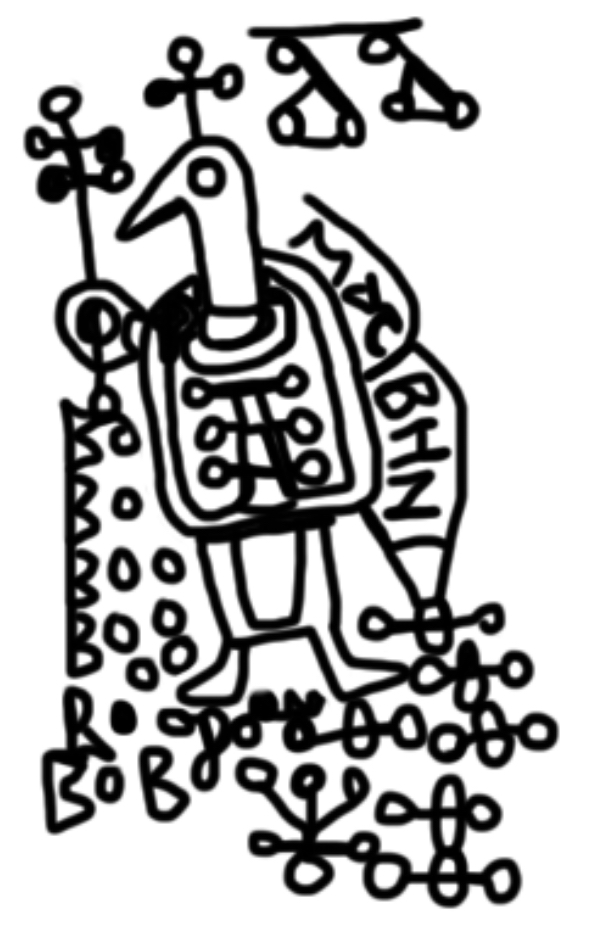
P. Palau Rib. Inv. 412R,
an amulet for protecting animals, containing the incipits (first lines)
of the four canonical gospels, Psalm LXX 90, and the Letter of Jesus to
Abgar.
[First posted on AWOL 8 May 2018, updated 23 December 2021]
Verbum Vitae
ISSN: 1644-8561 (print) ISSN: 2451-280X (on-line)
Published since 2002, "Verbum Vitae" is issued biannually by the
Institute of Biblical Studies of the Faculty of Theology, The John Paul
II Catholic University of Lublin, Poland. Each issue of the journal
includes scholarly articles dedicated to a specific biblical theme and
presented in three sections: (I) Old Testament, (II) New Testament,
and (III) Patristics and the Life of the Church. The final "Life of the
Church" perspective tries to broaden out each issue's given topic into
its multiple connections and implications, mostly dogmatic, moral,
pastoral, liturgical, or sociological. The forth section of the journal
always consists of reviews of recently published monographs and
collections on biblical themes. Because of the
journal's interdisciplinary character, it seeks to include among the
contributors not only biblical scholars but also theologians of various
specializations.
Unlike
other regions of the Mediterranean, the environmental conditions at
many sites in Egypt offer ideal conditions for the exceptional
preservation of many wooden objects. Yet despite this abundance of
archaeological material, surprisingly little is known about the
socio-economic networks associated with the craft of woodworking. The
aim of the Medjehu project is to trace these important networks through a
multidisciplinary approach that includes systematic analysis of wood
species (both Egyptian and imported), detailed technological
examination, and stylistic and epigraphic study of each object.
Concomitant with this, the Medjehu project aims to conserve and protect
this unique historical heritage through conservation missions in the
field and in museums and through the collaborative development and
training of Egyptian wood conservators.
By
bringing together the expertise of an international team of specialists
and dissemination of our research through international conferences,
exhibitions and publications, the Medjehu project proposes to redraw the
economic and social history of woodcraft along the Nile.
by Miljana Radivojević, Benjamin Roberts, Miroslav Marić, Julka Kuzmanović-Cvetković, Thilo Rehren
Paperback; 205x290mm; 698pp; 340 figures; 70 tables (colour throughout). 806 2021. Available both in print and Open Access. Printed ISBN 9781803270425. Epublication ISBN 9781803270432.
The Rise of Metallurgy in Eurasia is a landmark study in the
origins of metallurgy. The project aimed to trace the invention and
innovation of metallurgy in the Balkans. It combined targeted
excavations and surveys with extensive scientific analyses at two
Neolithic-Chalcolithic copper production and consumption sites, Belovode
and Pločnik, in Serbia. At Belovode, the project revealed
chronologically and contextually secure evidence for copper smelting in
the 49th century BC. This confirms the earlier interpretation of c.
7000-year-old metallurgy at the site, making it the earliest record of
fully developed metallurgical activity in the world. However, far from
being a rare and elite practice, metallurgy at both Belovode and Pločnik
is demonstrated to have been a common and communal craft activity.
This monograph reviews the pre-existing scholarship on early metallurgy
in the Balkans. It subsequently presents detailed results from the
excavations, surveys and scientific analyses conducted at Belovode and
Pločnik. These are followed by new and up-to-date regional syntheses by
leading specialists on the Neolithic-Chalcolithic material culture,
technologies, settlement and subsistence practices in the Central
Balkans. Finally, the monograph places the project results in the
context of major debates surrounding early metallurgy in Eurasia before
proposing a new agenda for global early metallurgy studies.
About the Authors Miljana Radivojević holds the Archaeomaterials Lectureship at the
UCL Institute of Archaeology (UK), where she graduated in
Archaeometallurgy. She has spent more than 20 years publishing on early
metallurgy in the Balkans and southwest Asia and the role of aesthetics
in the invention of novel technologies. ;
Benjamin Roberts has spent over 20 years researching and
publishing on European Copper and Bronze Age archaeology and frequently
metallurgy and metal objects across Europe. He co-edited with Chris
Thornton Archaeometallurgy in Global perspective: Methods and Syntheses (2014) and is currently leading Project Ancient Tin. ;
Miroslav Marić is a specialist in the Neolithic-Bronze Age of the
central Balkans at the Institute for Balkan Studies, Serbian Academy of
Sciences and Arts, Serbia. He is the field director of the Gradište
Iđoš project. ;
Julka Kuzmanović-Cvetković was the Senior Custodian (now retired)
at the Homeland Museum of Toplica in Prokuplje, Serbia. She spent more
than four decades excavating the site of Pločnik, and developed a unique
open air archaeo-park on the site that attracts tourists from the
region, and across the globe. ;
Prof Thilo Rehren is the A.G. Leventis Professor for Archaeological Sciences and Director of the Science and Technology, Nicosia, Cyprus.
Cette base de données recense les objets provenant du site
archéologique de Coptos (Égypte), et désormais conservés hors du site,
afin de contextualiser les découvertes, études ou les problématiques
particulièrement illustrées par ce site.
Elle a été initiée en 2011, dans le but de rassembler rapidement ce matériel et de donner accès à sa diversité.
La richesse des documents (re)découverts et le
travail d’investigation parfois long, maintes fois recommencé, nous ont
convaincue de partager ce collationnement en le publiant en ligne.
Les dépouillements sont toujours en cours et la base est amenée à
être régulièrement enrichie de nouvelles références et partenariats.
The AWOL Index: The bibliographic data presented herein has been programmatically extracted from the content of AWOL - The Ancient World Online (ISSN 2156-2253) and formatted in accordance with a structured data model.
AWOL is a project of Charles E. Jones, Tombros Librarian for Classics and Humanities at the Pattee Library, Penn State University
AWOL began with a series of entries under the heading AWOL on the Ancient World Bloggers Group Blog. I moved it to its own space here beginning in 2009.
The primary focus of the project is notice and comment on open access material relating to the ancient world, but I will also include other kinds of networked information as it comes available.
The ancient world is conceived here as it is at the Institute for the Study of the Ancient World at New York University, my academic home at the time AWOL was launched. That is, from the Pillars of Hercules to the Pacific, from the beginnings of human habitation to the late antique / early Islamic period.
AWOL is the successor to Abzu, a guide to networked open access data relevant to the study and public presentation of the Ancient Near East and the Ancient Mediterranean world, founded at the Oriental Institute, University of Chicago in 1994. Together they represent the longest sustained effort to map the development of open digital scholarship in any discipline.







 Posts
Posts


 Stumble It!

