Showing posts with label Palmyra. Show all posts

Monday, June 23, 2025

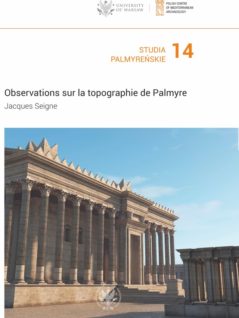
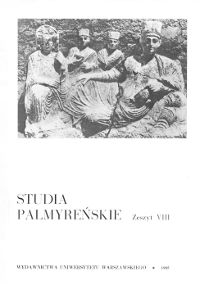
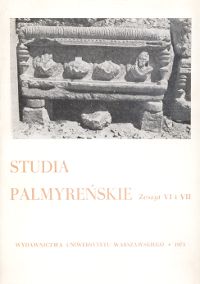
Open Access Journal: Studia palmyreńskie

[First posted in AWOL  9 April 2018, updated (new URLs) 23 June 2025

Studia palmyreńskie
ISSN: 0081-6787
Die Zeitschrift Studia Palmyreńskie erschien von 1966 bis 2013. Seit 2014 wird sie als monographische Reihe veröffentlicht. 
Der inhaltliche Fokus liegt auf den Ausgrabungen von Palmyra und seiner Umgebung sowie auf der Geschichte der Stadt, ihrer Religion oder ihren epigraphischen Hinterlassenschaften. Herausgegeben werden Zeitschrift „Studia Palmyreńskie“ vom Polish Centre of Mediterranean Archaeology der Universität Warschau.


Tuesday, May 25, 2021

Wisconsin Palmyrene Aramaic Inscription Project

 [First posted in AWOL 8 April 2015, updated (new URL) 25 May 2021]
https://asset.library.wisc.edu/1711.dl/WPAIPCollMedia/M/h1380-f3f4f.jpg
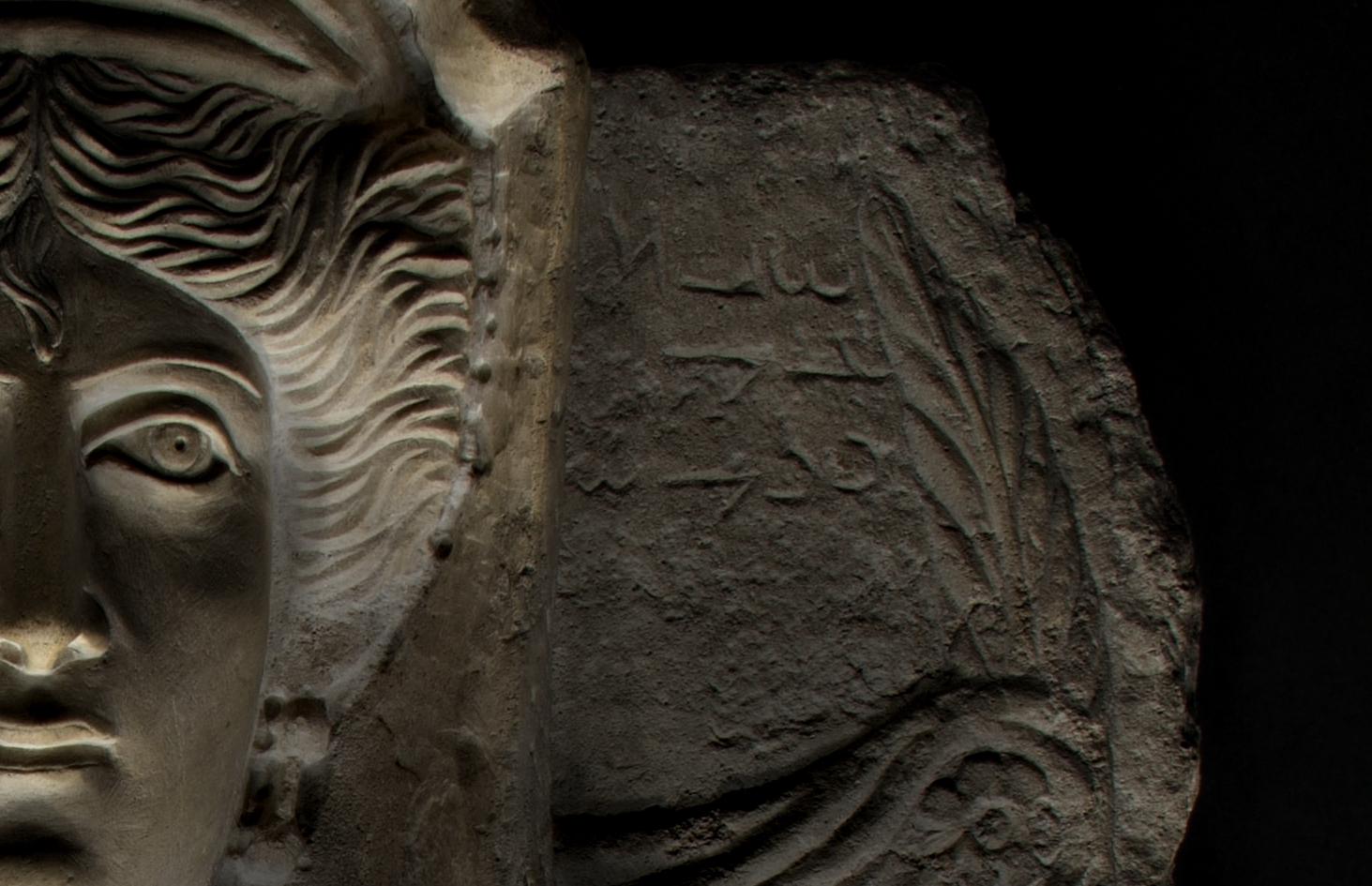
The Roman-controlled city of Palmyra (1st c. BCE–3rd c. CE), once a major economic hub in the Levant, is the source of thousands of inscriptions in a dialect of Aramaic, as well as many in Latin and Greek (Yon 2012). The entire corpus of Palmyrene Aramaic inscriptions known before 1996 has been collected in the comprehensive volume, Palmyrene Aramaic Texts (Hillers & Cussini 1996); those inscriptions discovered since 1996 have been recently published as well (Yon 2013; see also Yon 2012 for the Greek and Latin inscriptions from Palmyra). These studies have contributed greatly to the study of Palmyrene Aramaic, but none of them have directly addressed the development of the locally indigenous script (paleography), nor do the studies of Hillers & Cussini 1996 and Yon 2013 provide photographs or drawings of the inscriptions (in contrast, see Yon 2012 for photos of the Greek and Latin texts), nor do they provide translations. Previous studies of the script (paleography) have usually been limited to short, now outdated articles whose authors worked without the benefit of high-quality photographs and comprehensive textual editions (e.g., Naveh 1970; Klugkist 1983).
The immediate goal of the Wisconsin Palmyrene Aramaic Inscription Project (WPAIP) is to re-collate the corpus of Palmyrene Aramaic inscriptions as we are able, providing detailed photographic records and new editions of each epigraph. In this project, several facets of the inscriptions will be investigated. These facets include the development of and stylistic variation within the Palmyrene Aramaic script; the language represented in the epigraphs; the onomastic features (personal naming conventions) and prosopography (familial relations) exhibited in the epigraphs (e.g., Stark 1970; Piersimoni 1995); and the modes and avenues of the inscriptions’ distribution through the antiquities market since the 19th century. These goals are commensurate with those of the Palmyra Portrait Project of Aarhus University in Denmark (link below), which is currently working to compile a comprehensive catalogue of Palmyrene portraiture. Yet, the compilation of the corpus of epigraphic texts for the purposes of research is important not only for its own sake, but because of its preservation of Syrian cultural heritage in the face of recent Syrian political unrest. This new danger poses a clear and immediate threat not only to the current Syrian population, but to Palmyrene antiquities as well, placing a major portion of Roman-era Syrian culture in jeopardy. The ruins of the ancient city are in danger, with increasing numbers of objects being sold on the black market. In light of the imminent threat to Palmyra and its unique cultural and linguistic heritage, the immediate goals of this project contribute to a much wider goal as well: the participants hope, in some small way, to make a lasting contribution to the preservation of Palmyrene history and culture.

In the Collection
Friday, September 15, 2017

Six Palmyrene Portraits Destroyed in Manbij, Syria: A Salvage Reading

Six Palmyrene Portraits Destroyed in Manbij, Syria: A Salvage Reading

Bulletin of the American Schools of Oriental Research, May 2017,"Six Palmyrene Portraits Destroyed in Manbij, Syria: A Salvage Reading" by Jeremy M. Hutton (University of Wisconsin-Madison).
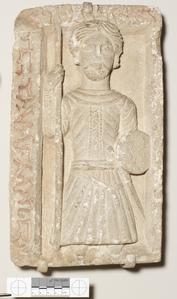
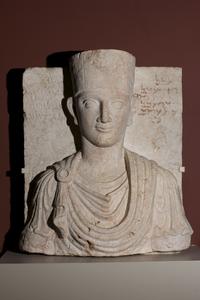
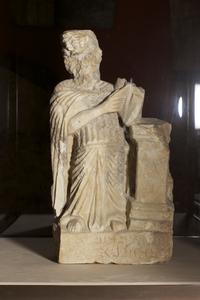
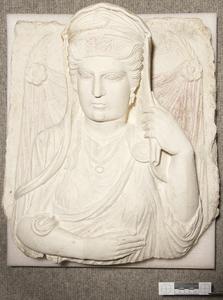
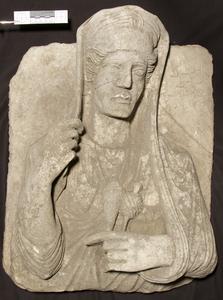
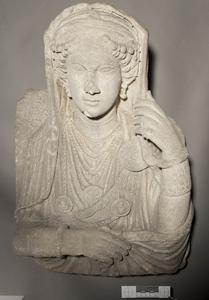
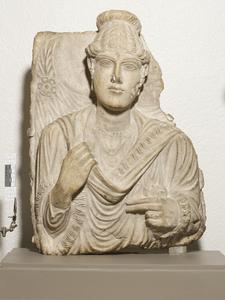
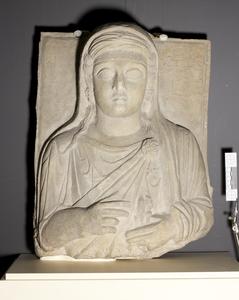
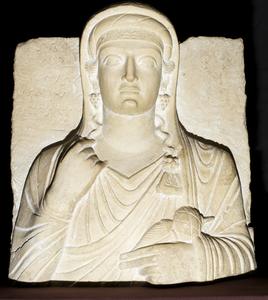
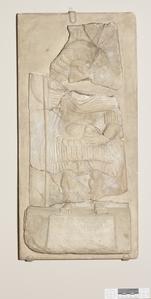
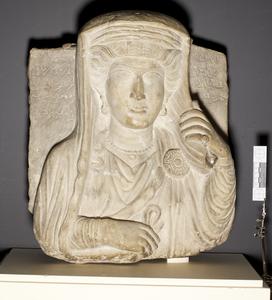
Operatives of the Islamic State reportedly destroyed six Palmyrene funerary busts and statue fragments in Manbij, Syria, on July 2, 2015. This article considers the ethical implications of publishing photographs of antiquities that have been destroyed, arguing that in such dramatic cases as destruction, it is justified to publish readings. Photographs of these antiquities are then analyzed, their physical and iconographic characteristics described, and readings for three of the inscriptions suggested. Finally, the loss of data caused by the items' destruction is measured against the loss of data occasioned by looting.
Available without charge until September 22, 2017

Thursday, June 1, 2017

Pal.M.A.I.S.: Palmira, Missione Archeologica Italo-Siriana

Pal.M.A.I.S.: Palmira, Missione Archeologica Italo-Siriana
http://users.unimi.it/progettopalmira/images/header.jpg
Palmira (Tadmor, Repubblica Araba Siriana) ha conosciuto un periodo di straordinario sviluppo nella piena età imperiale romana, tra I e III sec. d.C.: "caravan city", città carovaniera - secondo la celebre definizione dello storico russo Rostovzev -, posta in un'oasi del deserto siriano a metà strada tra il Mediterraneo e l'Eufrate, deve prosperità e ricchezza alla sua posizione e alle vie commerciali che l'attraversavano...

Saturday, April 30, 2016

ICONEM's digitalized 3D model of the Temple of Bel, Palmyra, post destruction

ICONEM's digitalized 3D model of the Temple of Bel, Palmyra, post destruction

https://d35krx4ujqgbcr.cloudfront.net/avatars/77e89a8925aa4f069f762e441687c23e/f00fdd48135a4ab89b4efdd7ba61e569.jpeg
In partnership with the DGAM, the ICONEM’s team was the first one to be in Palmyra since Daesh’s departure. New phase of the major project « Syrian Heritage », this mission has been an opportunity to give a clear picture of the damages suffered by the « pearl of the desert », and more specifically by the Temple of Bel as it has been left behind by Daesh fighters, using photogrammetry. 

The digitalized 3D model allows us to observe the existence of stone blocs remaining almost intact, meaning that there might be some hope for a partial reconstruction. Some other blocs however have been dynamited. 

ICONEM’s support in Palmyra has been found essential in order to document the appearance and state of the site right after it’s liberation, which is going to be helpful to the scientific community. Dedicated in 32 AD and consecrated to the protective divinity of Palmyra, the Mesopotamian god Bel, the Temple of Bel was before its destruction one of the best preserved antique temples of Syria.

Wednesday, October 21, 2015

New Palmyra: Modeling Past the Future

New Palmyra: Modeling Past the Future
http://www.newpalmyra.org/sites/default/files/styles/featured_project_slider/public/freebassel-palmyra-04.jpg?itok=1dJFpbYn
Today, the #NEWPALMYRA project launched a new online community platform and data repository dedicated to the capture, preservation, sharing, and creative reuse of data about the ancient city of Palmyra.
 The organization issued an open call for historical data and artistic work to virtually reconstruct Palmyra’s cultural heritage. The collected data will be released into the public domain under a Creative Commons Zero license at NewPalmyra.org.

“For millennia, the ancient Syrian city of Palmyra was a vital crossroads of trade and culture. We are hearing the senseless destruction of this archeological treasure by ISIS as a clarion call for the world to celebrate the cultural heritage of Syria,” said Barry Threw, Executive Director of #NEWPALMYRA. “By sharing data and encouraging its use in creative explorations we hope to promote cultural understanding."

The archives will launch with models based on the 3d virtual reconstruction of Palmyra started by Bassel Khartabil, a Damascus-based technologist and community organizer, and originator of #NEWPALMYRA. “Palmyra is the most important archeological site in Syria,” says Khartabil, “We hope that by honoring its memory with a virtual site of collaboration we can build a new community and highlight the plight of the Syrian people.”

“Bassel is proving yet again that by digitally preserving Palmyra he was far ahead of the curve. ISIS has committed crimes against humanity, deleting the archives upon which our modern civilizations are based,” said Jon Phillips, leader of the #FreeBassel campaign. "The #NEWPALMYRA project picks up Bassel's work and amplifies it through collaboration with international partners."

Through its international affiliates, #NEWPALMYRA will source archeological and historical data, share it with the community, and output art exhibitions, salons, and creative works using this data to carry the rich history of Palmyra forward to new generations.

Call for Participation

Join us in making #NewPalmyra reality. We're looking for contributors of all sorts: 3D modelers, archaeologists, artists, curators, developers, educators, journalists, researchers, wikimedians. You can do now:
  • Meet us in Paris Oct 30-31 at the #ProtoCultural #NewPalmyra hackfest
  • Talk to us realtime, #newpalmyra on freenode IRC
  • Issues, code, data in our GitHub projects
  • Email us info@newpalmyra.org
  • Follow us and spread the word on our Facebook, Instagram, Twitter
  • Subscribe to our email newsletter
  • Contribute info and media about Palmyra to Wikimedia Commons, Wikipedia, etc; we freely use these materials and will contribute more back.

Monday, April 29, 2013

Palmyrena: City, Hinterland and Caravan trade between Occident and Orient

Palmyrena: City, Hinterland and Caravan trade between Occident and Orient
Palmyrena: City, Hinterland and Caravan Trade between Orient and Occident is a four year (2009-2012) joint Syrian-Norwegian research project on the relationship between the ancient city of Palmyra and its hinterland. The project is funded by the Norwegian Research Council. Palmyra is situated at the oasis of Tadmor in the Syrian semi-desert, between the fertile valleys of the Orontes and the Euphrates. Through most of its pre-modern history, the village of Tadmor had a population ranging into the hundreds or thousands. In the first centuries CE the settlement grew into a city with an estimated population of 150.000 - 200.000, establishing it as one of the largest and most important cities of the Roman Empire in the mid-third century. A city the size of Palmyra depended on large quantities of water, food, fuel and building materials. In the ancient period most of these resources had to be secured within the distance of a few days travel. In the case of Palmyra, these surroundings were constituted by the precarious environment of arid steppes and mountains, inhabited by nomadic pastoralists both before and during the peak of Palmyrene urbanity. An important aim of our project is to understand how the oasis-city utilized its territory for agriculture, pastoralism, water harvesting, transport and defense. This is the subject of a joint Syrian-Norwegian archaeological survey between Palmyra and Isriyeh. The first season was conducted in 2008, and the survey will also cover pre-historic and Islamic periods...

Publications[Digital]

Field-reports
2011 survey
Preliminary report (136 kb PDF)
Historical period (28 mb PDF)
2009 survey
1. Introduction (24 kb PDF)
2. Historical period (5,3 mb PDF)
3. Prehistoric period (3,1 mb PDF)
2008 survey
Preliminary report (8,2 mb PDF)
 
Articles, theses, books
2012
Seland, Eivind Heldaas: "Death or taxes : Choosing itineraries between the Persian Gulf and the Mediterranean in the mid-18th century". Academic Quarter 4, Spring 2012: 97-108 (external link).
Seland, Eivind Heldaas: "Trade and Christianity in the Indian Ocean During Late Antiquity". Journal of Late Antiquity 5 (1): 72-86 (external link).
2011
Anfinset, Nils: "The formation of economic systems and social institutions during the fifth and fourth millennium BC", in Interweaving worlds. Systemic Interactions in Eurasia, 7th to 1st Millennium BC, eds. T.C. Wilkinson, S. Sherratt & J. Bennet, 2011. London, Oxbow Books: 145-157. (external link)
Finsås, Martine Solenes: Romersk Palmyra? Kvalitativ og kvantitativ analyse av romersk innflytelse påpalmyrenernes private identitet. Thesis for the MA-degree, Department of Archaeology, History, Cultural Studies and Religion, University of Bergen. (external link)
Ruset, Hildegunn Maria Haanes: Pastoral Nomads on the Syrian steppe in the early Bronze Age: a study of burial monuments in the hinterland of Palmyra. Thesis for the MA-degree, Department of Archaeology, History, Cultural Studies and Religion, University of Bergen. (external link)
Seland, Eivind Heldaas: "Kameler og kamelkaravaner i romersk kunst". Klassisk Forum 2-2011: 45-53. (external link)
Seland, Eivind Heldaas: "The Persian Gulf or the Red Sea? Two axes in ancient Indian Ocean trade, where to go and why".World Archaeology 43 (3): 398-409. (external link)
 
2010
Anfinset, Nils: Metal, Nomads and Culture Contact, Equniox. London. (external link)
Seland, Eivind Heldaas: "Palmyra – Karavanehandel og geopolitikk i romersk Syria". Klassisk Forum 2-2010: 54-69. (external link)
Anfinset, Nils and Jørgen Christian Meyer: "The Hinterland of Palmyra". Antiquity 84 (324), June 2010. (external link)
Anfinset, Nils, Jørgen Christian Meyer and Eivind Heldaas Seland: "Palmyrena: City, Hinterland and Caravan Trade between Orient and Occident". Posters for the museum in Palmyra. (1,9 mb low-res PDF)