Sunday, June 28, 2020

Open Access Journal: SBL International Cooperation Intitiative (ICI) Newsletter

[First posted in AWOL 29 Jue 2018, updasted 28 June 2020]

International Cooperation Intitiative (ICI) Newsletter
Each month, the chair of the ICI Executive Board distributes a newsletter to the ICI liaison network, the ICI advisory board, and to any other persons who are interested in the work of the ICI and have asked to be included in the listserv. The SBL web master maintains an archive of the ICI newsletters. Individual newsletters may be accessed by clicking on a year on the chart below. If you would like to be included in the newsletter mailing, please contact Louis Jonker or Beth Tracy.


JAN FEB MAR APR MAY JUN JUL AUG SEP OCT NOV DEC
2009 2009 2009 2009 2009 2009 2009 2009 2009 2009
2010 2010 2010 2010 2010 2010 2010 2010 2010 2010 2010 2010
2011 2011 2011 2011 2011 2011 2011 2011 2011 2011 2011 2011
2012 2012 2012 2012 2012 2012 2012 2012 2012 2012 2012 2012
2013 2013 2013 2013 2013 2013 2013 2013 2013 2013
2014 2014 2014 2014 2014 2014 2014 2014 2014 2014    
2015 2015 2015 2015 2015 2015 2015 2015 2015 2015 2015  
    2016 2016 2016 2016 2016 2016
2017 2017 2017 2017 2017 2017 2017 2017 2017 2017 2017  
2018 2018 2018 2018 2018 2018 2018 2018 2018 2018 2018 2018
2019 2019 2019 2019 2019 2019 2019 2019 2019
2020    2020              

Agamemnon, a performance history

Agamemnon, a performance history
Agamemnon, a performance history is the APGRD's second interactive/multimedia ebook. The ebook draws on a unique collection of archival material and research at the APGRD and beyond; it uses images, film, bespoke interviews with creative practitioners and academics, and digital objects to tell the story of a play that has inspired countless interpretations onstage and onscreen, in dance, drama, and opera, across the globe from antiquity to the present day.
The new ebook will be released in three two-chapter instalments. Quicker to download and easier on storage requirements, these instalments allow us to maximise the digital material we can include in each volume. The first instalment – Beginnings & Whose Play? - is free to download now as an iBook from Apple Books.

DOWNLOAD the iBook (for Apple devices)*

Agamemnon, a performance history: Beginnings & Whose Play? Beginnings: focussing on the opening scene of the tragedy, this chapter explores how the play has been linked to 'origins' or 'beginnings’. Aeschylus is seen as the 'father of tragedy’ and Agamemnon is the first play in a trilogy that has often been staged at the founding of dramatic festivals and institutions round the world. Whose Play? asks who is the main character in Aeschylus’ tragedy and shows how Agamemnon himself has rarely been the dominant focus of his name-play. Instead, it is Clytemnestra who controls events and who has fascinated playwrights and audiences across millennia.

* iTunes states that to view this book you must have an iPad with iBooks 2 or later and iOS 5 or later, or an iPhone with iOS 8.4 or later, or a Mac with OS X 10.9 or later. However, we have also discovered that some interactive features may require OS X 10.10 or later in order to work properly. macOS Catalina 10.15.3 is known to have a few issues with keynote files, this may affect the animated timeline and map. In our testing, Catalina 10.15.4 has not presented the same problems. If you are using older systems you may need to update your software.

Forthcoming:

Agamemnon, a performance history: Homecoming & Lyric: (forthcoming) Homecoming asks what kind of character is Agamemnon? How has his masculinity been understood at different times and in different places? How easy is homecoming for soldiers after a war? Lyric: focuses on the enslaved Trojan Priestess, Cassandra and the Chorus of old men from Argos, who both have a central role in this play and yet have little or no power to make things happen. The Choral Odes and Cassandra's prophetic song have proved both a challenge and a cue for enormous creativity in many modern productions and versions.

Agamemnon, a performance history: Endings & Iconography: (forthcoming) Endings considers what it has meant to stage Agamemnon as a single play, when it is itself only the first play in a trilogy. Is there closure? How effective is this as a stand-alone play? Just as the opening scene of the tragedy has resonated across time and place, so too has the final scene of violence and political insurrection. Iconography looks at the strong iconographic tradition surrounding this play - from Agamemnon's chariot to the bath in which he is murdered, the carpet of tapestries to Clytemnestra's axe. The chapter revolves around a photographic gallery showcasing how modern productions have tackled these iconic moments.

EPUB versions for devices other than Apple will follow.

See also: Medea, a performance history for the download links to our first interactive/multimedia ebook.


Saturday, June 27, 2020

Open Access Journal: Archaeobios

[First posted in AWOL 20 September 2009. Updated 27 June 2020]

Archaeobios
Electronics ISSN 1996-5214
Desde el año 2007, Arqueobios viene brindando a toda la comunidad su revista de investigación Archaeobios, con el fin principal de mostrar las investigaciones a las cuales está avocada y contribuir a la diversificación de la misma para todos sus visitantes e investigadores.  

Since 2007, Arqueobios been providing the entire community his research journal Archaeobios, the primary purpose of showing the investigations which are doomed and contribute to the diversification of the same for all visitors and researchers.


Archaeobios 2019 ( 12 Files )

Portada2019
Revista de Bioarqueología "ARCHAEOBIOS" N° 12 ISSN 1996-5214 - Diciembre 2019.
Carátula:
Estatuillas de madera de la época Chimú saliendo de un bosque de “algarrobos” Prosopis pallida.

Archaeobios 2018 ( 11 Files )

Portada2017
Revista de Bioarqueología "ARCHAEOBIOS" N° 12 ISSN 1996-5214 - Diciembre 2018.
Carátula:
Tinajas de la época Chimú conteniendo chicha y acompañados con mazorcas de Zea mays “maíz” de proto-razas costeras, parecidas a Proto-Alazán.
Archaeobios 2017

Archaeobios 2017 ( 19 Files )

Portada2017
Revista de Bioarqueología "ARCHAEOBIOS" N° 11 ISSN 1996-5214 - Diciembre 2017.
Carátula:
Vértebras de tiburones de un yacimiento precerámico de la costa norte y especies de tiburones y otras especies cartilaginosas que habitan en lo mares de la costa norte.
Archaeobios 2016

Archaeobios 2016 ( 12 Files )

Portada2016
Revista de Bioarqueología "ARCHAEOBIOS" N° 10 ISSN 1996-5214 - Diciembre 2016.
Carátula:
Evolución fenotipica del Perro Sin Pelo Peruano, a partir del ancestro Canis lupus "lobo", la raza de perro siberiano, un individuo intermedio que porta el gen FOXI3 que está en proceso de la Displasia Ectodérmica Canina (DEC) y el producto final de la mutación: una raza de perro sin pelo nativa de América.
Archaeobios 2015

Archaeobios 2015 ( 18 Files )

Portada2015
Revista de Bioarqueología "ARCHAEOBIOS" N° 9 ISSN 1996-5214 - Diciembre 2015.
Carátula:
Mapa de América mostrando la fauna representativa de cada región del Neotrópico.
Archaeobios 2014

Archaeobios 2014 ( 8 Files )

Portada2014
Revista de Bioarqueología "ARCHAEOBIOS" N° 8 ISSN 1996-5214 - Diciembre 2013.
Carátula:
Vasija doméstica de la cultura Chimú conteniendo tubérculos de “papa” de la variedad “peruanita”, se observa granos de almidón teñidos con fluorescencia adheridos a las paredes internas de la vasija.
Archaeobios 2013

Archaeobios 2013 ( 9 Files )

A2013Revista de Bioarqueología "ARCHAEOBIOS" N° 7 ISSN 1996-5214 - Diciembre 2013.
Carátula:
Pigmentos del tatuaje de la Dama de Cao.
Archaeobios 2012

Archaeobios 2012 ( 10 Files )

A2012Revista de Bioarqueología "ARCHAEOBIOS" N° 6 ISSN 1996-5214 - Diciembre 2012.
Carátula:
Escenario marino con “llamas” consumiendo algas marinas como parte de su dieta.
Archaeobios 2011

Archaeobios 2011 ( 8 Files )

A2011Revista de Bioarqueología "ARCHAEOBIOS" N° 5 ISSN 1996-5214 - Diciembre 2011.
Carátula:
Cadena de ADN formada a partir de semillas de Zea mays “maíz” que participan como los núcleotidos y también inflorescencias de  teosinte que forman los puentes de hidrógeno entre ambas cadenas.
Archaeobios 2010

Archaeobios 2010 ( 9 Files )

A2010Revista de Bioarqueología "ARCHAEOBIOS" N° 4 ISSN 1996-5214 - Diciembre 2010.
Carátula:
Imagen satelital de la lengua de aguas cálidas sobre el pacífico ecuatorial oriental en el climax de un evento El Niño, con imágenes de la iconografía mochica, una de las culturas que más impacto tuvo con El Niño.
Archaeobios 2009

Archaeobios 2009 ( 12 Files )

A2009Revista de Bioarqueología "ARCHAEOBIOS" N° 3 ISSN 1996-5214 - Diciembre 2009.
Carátula:
Representación del ancestro del “perro doméstico” Canis lupus familiaris, el “lobo” Canis lupus, a partir del cual derivan los diversos morfotipos y razas de perros de la América prehispánica.
Archaeobios 2008

Archaeobios 2008 ( 10 Files )

A2008Revista de Bioarqueología "ARCHAEOBIOS" N° 2 ISSN 1996-5214 - Setiembre 2008.
Carátula:
Recreación de una posible escena de captura de peces en un ambiente de estuario, con el pez Micropogonias altipinnis "corvina dorada" cuyos restos son los más representativos en los basurales paijanenses de la costa norte.
Archaeobios 2007

Archaeobios 2007 ( 1 Files )

A2007Revista de Bioarqueología "ARCHAEOBIOS" N° 1 ISSN 1996-5214 - Setiembre 2007.
Carátula:
Panorama crepuscular del muelle de la caleta de Huanchaco, recreando un escenario con alpacas e iconografía mochica.

15 more volumes of Brown Judaic studies

15 more volumes of Brown Judaic studies have been added in JSTOR. To see all 65 open access volumes go here.

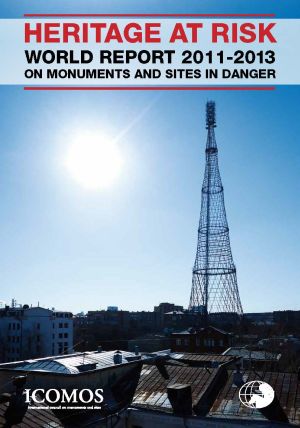
Open Access Journal: Heritage at Risk

[First posted in AWOL 7 August 2016, updated 27 June 2020]

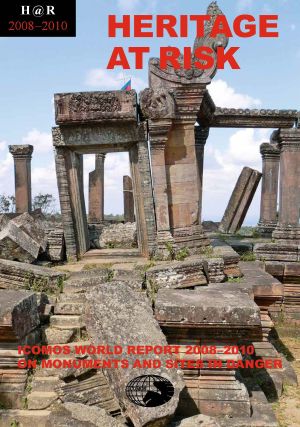
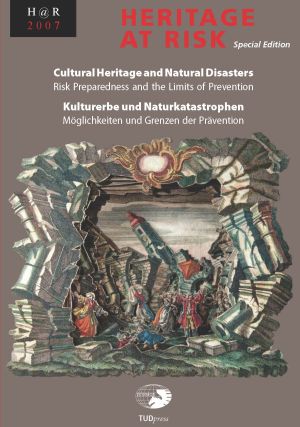
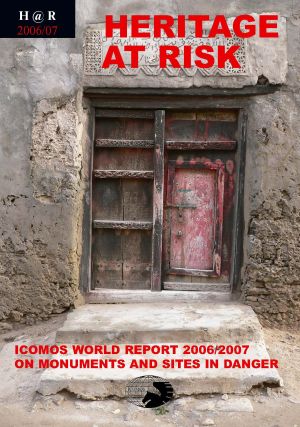
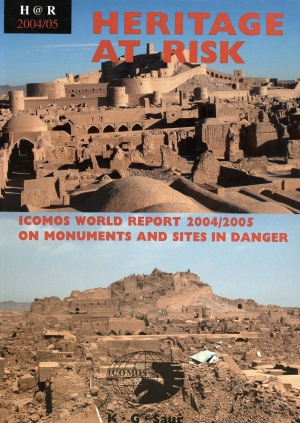
Heritage at Risk
ISSN-Print: 2365-5607
ISSN-Internet: 2365-5615
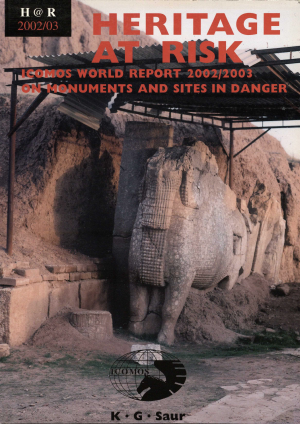
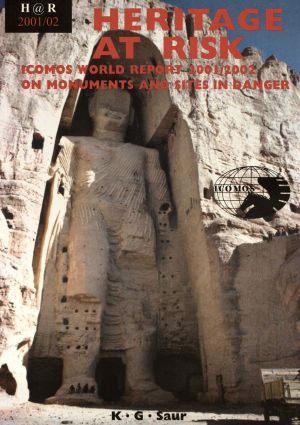
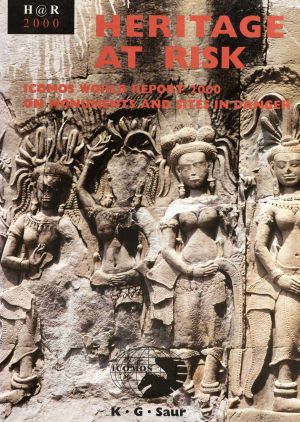
Die Heritage at Risk-Reihe (World Reports on Monuments and Sites in Danger) wurde 1999 von ICOMOS International auf der Generalversammlung in Mexiko ins Leben gerufen mit dem Ziel, eine breite Öffentlichkeit möglichst aktuell über die gravierendsten Bedrohungen für das Kulturerbe, darunter für UNESCO-Welterbestätten, zu informieren, repräsentative Fallstudien vorzustellen und wenn möglich Lösungsansätze anzubieten. Zu diesem Zweck werden jedes Mal die Nationalkomitees und wissenschaftlichen Komitees von ICOMOS aufgefordert, Berichte vorzubereiten.

Seit dem Jahr 2000 sind mehrere Heritage at Risk-Bände mit einer Vielzahl von Länder- und Themenberichten erschienen, des Weiteren sogenannte „Special Editions“ zum sowjetischen Bauerbe, zum Unterwassererbe und zur Gefährdung des Kulturerbes durch Naturkatastrophen.

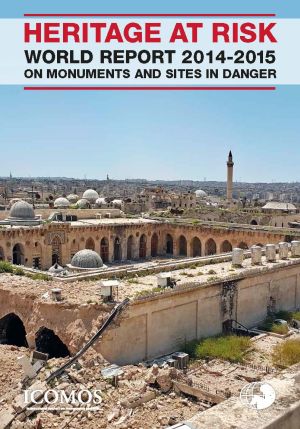
Klicken Sie auf das Archiv, um alle zum Download zur Verfügung stehenden Bände dieser Reihe anzusehen.
2015
H@R 2014-2015


2000


Friday, June 26, 2020

ePSD2 2.1 (2020-06-21)

ePSD2 2.1 (2020-06-21)
Clay tablet with Sumerian text about sale of 35 date-palms, circa 2000BCE
Ur III sale of 35 date-palms, ca. 2000BCE, Nippur. Penn Museum N 800. ePSD2 version here; CDLI page at cdli.ucla.edu/P121474
Welcome to the new version of the electronic Pennsylvania Sumerian Dictionary, ePSD2, a Sumerian portal.
Here we provide listings of over 12,000 Sumerian words, phrases and names, occurring in almost 100,000 distinct forms a total of over 2.27 million times in the corpus of texts indexed for the Dictionary. The corpus covers, directly or indirectly, about 100,000 of the 134,000+ known Sumerian texts.
For a quick start, open up the main Sumerian glossary and try typing English, Sumerian or transliterations into the search bar. If you're new to Oracc, the Oracc "Getting Started" page explains the essentials of Oracc data and the interface you are using now.
The About page gives an overview of the various components of ePSD2 with links to help you find your way around.
ePSD2 development is ongoing. See the News page for what changes between the releases, and see the What's Next? page for some of the things we are planning.

Zoom workshop "Recent Developments in Digital Assyriology"

Zoom workshop "Recent Developments in Digital Assyriology"

When: 26th August 2020 16.00-19.30 and 27th of August 2020 16.00-19.30
(all Helsinki times)
Where: Everywhere, open for registered participants
Organizer: Prof. Saana Svärd

Hosted by: Centre of Excellence in Ancient Near Eastern Empires
(ANEE), University of Helsinki
(www.helsinki.fi/ancient-near-eastern-empires)

Now that conference travel has ground almost to a total standstill,
ANEE’s Team 1 (“Digital Humanities Approaches”) is pleased to invite
you to a Zoom event: “Recent Developments in Digital Assyriology”.
During the workshop, Digital Assyriology projects will present their
work, both WIP and finished. The focus of the workshop is particularly
on text based studies. General themes for presentations include:
producing electronic text data, annotating texts, visualizing textual
information, and using the text data. Prof. Niek Veldhuis from
Berkeley will keynote the event with the presentation titled “Changing
the Business of Assyriology: Data and Data Analysis.” Full program
will be announced in the beginning of August in ANEE web pages
(www.helsinki.fi/ancient-near-eastern-empires).

The event is open to registered audience members and there will be
time for audience questions. Timetable allows scholars to participate
from US and Canada as well. Anyone interested in the event should fill
in the e-registration form:
<https://elomake.helsinki.fi/lomakkeet/105983/lomake.html.
Registration closes on the 19th of August>.