Showing posts with label Libya. Show all posts

Tuesday, April 23, 2024

Inscriptions of Greek Cyrenaica - Greek Verse Inscriptions of Cyrenaica

[First posted in AWOL 30 August 2017, updates (Second Edition) 23 April 2024]

Inscriptions of Greek Cyrenaica - Greek Verse Inscriptions of Cyrenaica. Second Edition
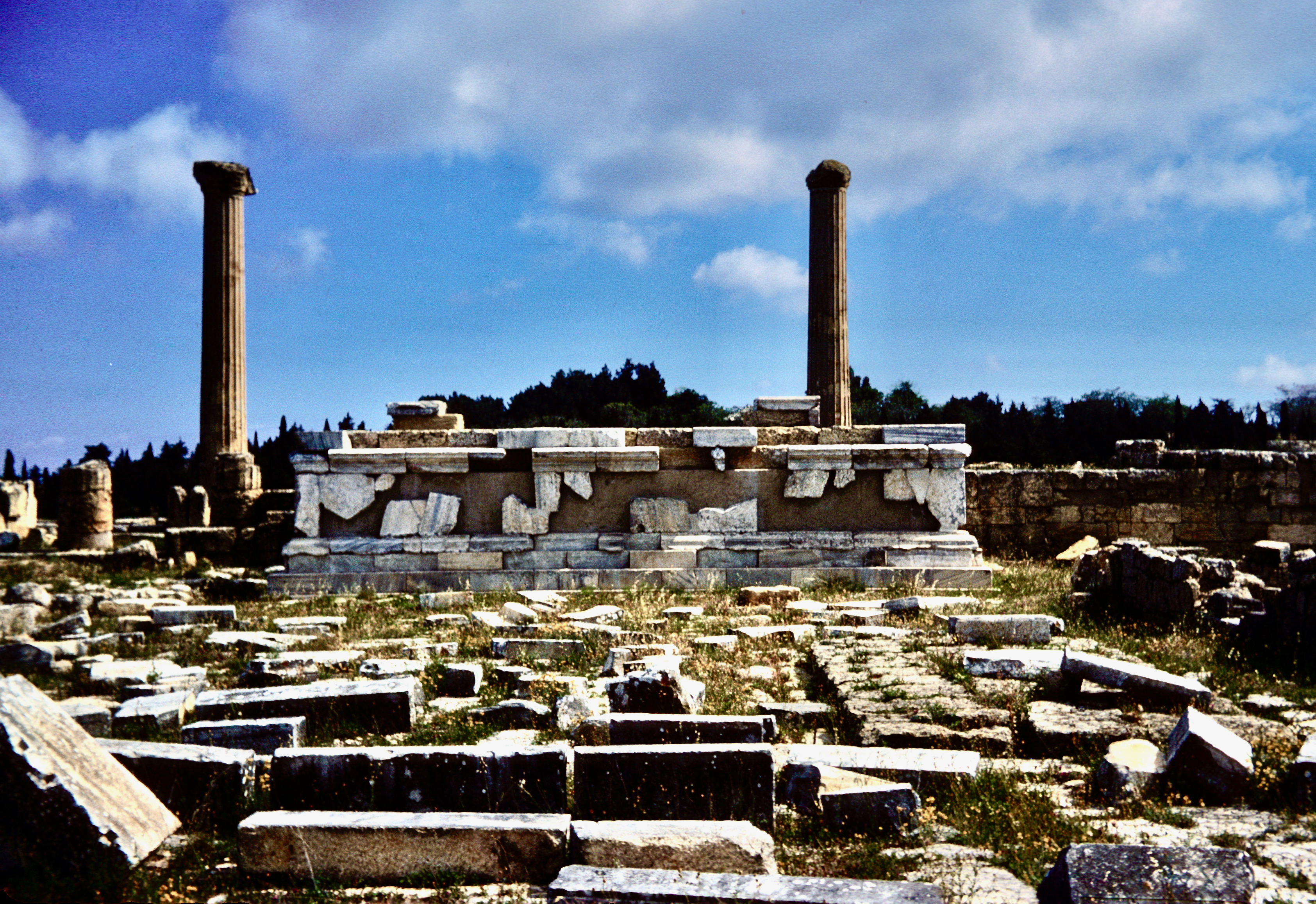
igcyr100000view

About

This second edition of the Inscriptions of Greek Cyrenaica (IGCyr) and the Greek Verse Inscriptions of Cyrenaica (GVCyr) updates two corpora published online in 2017, the first collecting all the inscriptions of Greek (VII-I centuries B.C.) Cyrenaica, the second gathering the Greek metrical texts of all periods (VI B.C.-VI A.D.). These new critical editions of inscriptions from Cyrenaica are part of the international project Inscriptions of Libya (InsLib). They now include all the inscriptions known to us in February 2024, coming from this area of the ancient Mediterranean world, assembled in a single online and open access publication.

In this section you will find general information about the project IGCyr-GVCyr. First of all the origin of the project and the history of its evolution into the wider international project Inscriptions of Libya (InsLib) are presented; secondly the composition of the corpora and the specifics of the digital edition are described; next you will find a sketch of the history of Greek Cyrenaica; then an outline of the history of scholarship regarding archaeological and epigraphic research about Cyrenaica.

The project

A comprehensive corpus of the inscriptions of Greek Cyrenaica was a longstanding desideratum among the scholars of the ancient world. Greek inscriptions from Archaic, Classical and Hellenistic Cyrenaica were up to 2017 scattered among many different, sometimes outdated publications, while new texts had been discovered and edited in between. After the launching of the 1st edition, some errors were detected, new finds and some neglected fragments were available for addition, further studies were published, making a second edition desirable. Moreover, with the new tool EFES, implementing a digital epigraphical corpus was made much easier.

 How to cite this publication: Dobias-Lalou, Catherine. Inscriptions of Greek Cyrenaica. Second Edition in collaboration with Alice Bencivenni, Hugues Berthelot, with help from Simona Antolini, Silvia Maria Marengo, and Emilio Rosamilia; Dobias-Lalou, Catherine. Greek Verse Inscriptions of Cyrenaica. Second Edition in collaboration with Alice Bencivenni, with help from Joyce M. Reynolds and Charlotte Roueché. Bologna: Alma Mater Studiorum Università di Bologna, 2024. ISBN 9788854971370, https://doi.org/10.60760/unibo/igcyrgvcyr2. Recommended abbreviations: IGCyr2 and GVCyr2.
 

Thursday, February 10, 2022

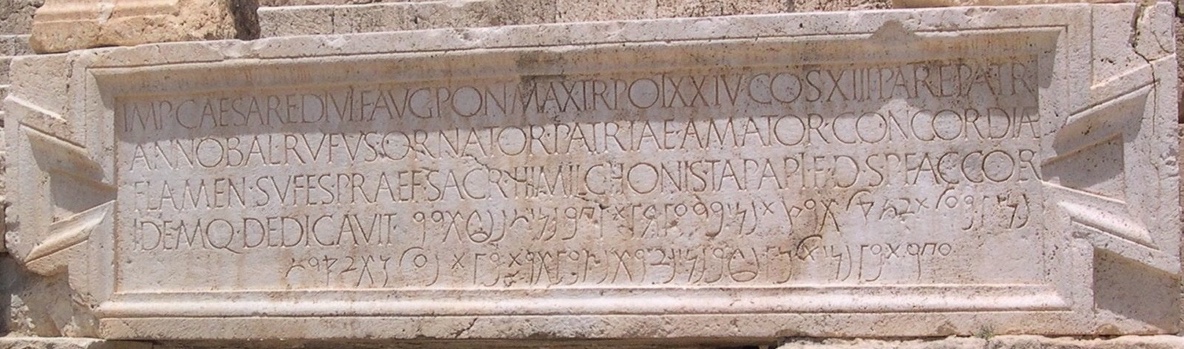
Inscriptions of Roman Tripolitania 2021

[First posted in AWOL 28 September 2009, updated 10 February 2021]
 

Inscriptions of Roman Tripolitania 2021 

 wp0394

Created by Charlotte Roueché, Gabriel Bodard and Irene Vagionakis

The edition is designed to draw on and enhance IRT 2009: http://inslib.kcl.ac.uk/irt2009/

With contributions from Caroline Barron, Francesca Bigi, Catherine Dobias-Lalou, Usama Gad, Philip Kenrick, Robert Kerr, Michael Mackensen, Ignazio Tantillo

 The full bibliographical description of this publication:
Inscriptions of Roman Tripolitania (2021), by J. M. Reynolds, C. M. Roueché, G. Bodard, C. Barron and others
available at: http://irt2021.inslib.kcl.ac.uk
ISBN 978-1-912466-25-2
This should be abbreviated to IRT2021
GitHub repository: https://github.com/IRT2021/IRT-EFES


 Tripolitana in Pleiades

Sunday, March 4, 2018

Open Access Journal: Africa Romana

[First posted in AWOL 3 August 2012. Updated 4 Mar 2018]

Africa Romana
ISSN: 1828-3004
Atti del XX Convegno
Nel tentativo di incentivare gli studi sull'evo antico nell'Africa settentrionale il Centro di Studi interdisciplinari sulle Province Romane ha promosso l'edizione di una serie di volumi curati da autori italiani e maghrebini. 
Solo per restare all'ultimo decennio e senza contare gli innumerevoli articoli e le ormai decine di migliaia di pagine che raccolgono gli Atti del convegno L'Africa Romana, ricordiamo:
  • Uchi Maius, 1, Scavi e ricerche epigrafiche in Tunisia, a cura di A. Mastino e M. Khanoussi, 1997;
  • P. Ruggeri, Africa ipsa parens illa Sardiniae. Studi di storia antica e di epigrafia, 1999;
  • S. Aounallah, Le Cap Bon, jardin de Carthage. Recherches d'épigraphie et d'histoire romano-africaines (146 a.C.-235 p.C.), 2001;
  • P. Salama, Les bornes milliaires du territoire de Tipasa (Maurétanie Césarienne), 2002;
  • A. M. Corda (a cura di ), Uomo, Territorio, Ambiente. La cooperazione italo-tunisina nel settore archeologico, 2002;
  • M. Milanese (a cura di ), Uchi Maius tardo antica e islamica. Miscellanea di studi 1997/2002, 2003;
  • R. Zucca, Sufetes Africae et Sardiniae. Studi storici e geografici sul Mediterraneo antico, 2004;
  • A. Ibba, G. Traina, L'Afrique romaine de l'Atlantique à la Tripolitaine (69-439 ap. J.-C.), 2006;
  • A. Ibba (a cura di, con la collaborazione di M. Abid, Z. Benzina Ben Abdallah, C. Cazzona, D. Sanna, R. Sanna, E. Ughi, disegni di S. Ganga ), Uchi Maius, 2: Le iscrizioni, 2006.
Conscio dell'importanza del libro con insostituibile strumento formativo primario, il Centro di Studi interdisciplinari sulle Province Romane ha sempre posto gratuitamente a disposizione di Università e Istituti di ricerca algerini, libici, marocchini e tunisini e di giovani studiosi meritevoli di attenzione, questi volumi, al fine di incentivare la ricerca scientifica e di agevolare la formazione di elementi validi ma economicamente svantaggiati.


Allegati 
Elenco delle tesi di dottorato di argomento africano (file PDF - 37 Kb)
Università degli Studi di Sassari.
Elenco delle tesi di laurea di argomento africano (file PDF - 32 Kb)
Università di Sassari e Cagliari.
Elenco delle pubblicazioni del Dipartimento di Storia (file PDF - 65 Kb)
Università degli Studi di Sassari.
Atti dei convegni

Monday, April 10, 2017

Polish Archaeological Mission in Ptolemais (Libia)

Polish Archaeological Mission in Ptolemais (Libia)
Polskie Wykopaliska Archeologiczne w Ptolemais (Libia)
Since 2001 the Institute of Archaeology of the Warsaw University has conducted excavations in Ptolemais, an important antique city in Cyrenaica (Libya). Apart from research works on the new urban plan of Ptolemais (officially established in the III rd. c. B.C.), excavation works are carried out in vicinity of the famous Palazzo delle Colonne. The main goal of this project is to obtain new information concerning the architecture of one insula (quarter), thus broadening our knowledge about the living conditions of the inhabitants of the city from the Hellenistic period to the appearance of the Arabs in the mid VII th, c. A.D. At present, we have uncovered one, very well preserved house dated to the III rd. c. A.D. with a rich decoration of its central, residential part, concentrated round a four column peristyle.

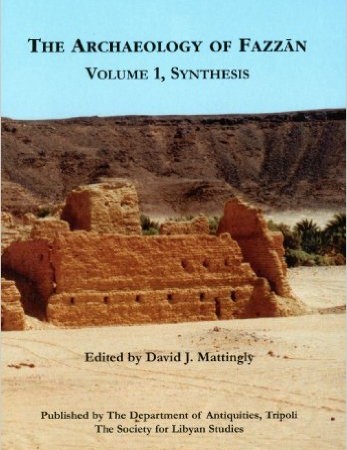
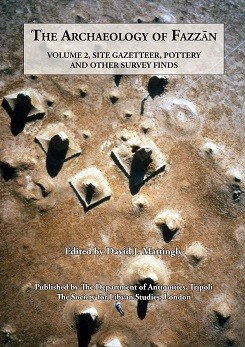
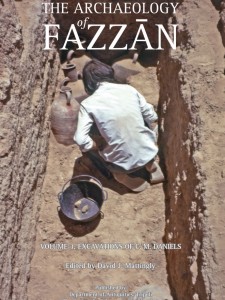
Open Access Monograph Series: The Archaeology of Fazzan

The Archaeology of Fazzan
Society for Libyan Studies
The Archaeology of Fazzan is a major series of reports on the archaeology and history of Libya’s southwest desert region. The key element of the story of Fazzan is the existence here of an early Libyan civilisation, the Garamantes, and the publication of these volumes puts into the public domain a rich dossier of information about their antecedents and descendants in this desert environment.
This was a singularly important moment in Libya’s cultural history, with resonances also in Sub-Saharan Africa. There is great interest in the published volumes from specialists in Saharan, Sub-Saharan and Mediterranean archaeology and history, as for the first time we can see in detail the effect of early Trans-Saharan links.
Please choose which titles you wish to access from the list below. More titles will be added in due course. 
 
The Archaeology of Fazzan, Volume 1
 
The Archaeology of Fazzan, Volume 2
 
The Archaeology of Fazzan, Volume 3

Sunday, February 19, 2017

Wednesday, September 21, 2016

Cyrenaica Archaeological Project

Cyrenaica Archaeological Project
The Cyrenaica Archaeological Project (CAP) is an international mission under the direction of Professor Susan Kane, Oberlin College, USA. CAP is the successor to the American archaeological mission in Cyrene that excavated the Sanctuary of Demeter and Persephone in the Wadi Bel Gadir under the direction of Professor Donald White, University of Pennsylvania. 

Using the Wadi bel Gadir as its starting point, the ultimate aim of the Cyrenaica Archaeological Project is to characterize the nature, pattern, and dynamics of human habitation and land use in the city of Cyrene and its territory. Cyrene is the lynchpin for understanding the area that it dominates and future investigations will consider the micro-region of Cyrene within the wider regional context of the Cyrenaica. 

In addition to its archaeological work, CAP is collaborating with the Department of Antiquities in Shahat on a series of capacity building and infrastructure improvement projects
Mission
Project History
Setting
Extramural Sanctuary

Research
Restoration
Capacity Building

Google Earth
Publications

Friday, July 1, 2016

Open Access Journal: Archaeological Horizons | افاق اثرية

Archaeological Horizons | افاق اثرية
آفاق أثرية - صحيفة مستقلة تُعنى بشؤون الآثار والمتاحف
Archaeological Horizons (افاق اثرية) is the name of an Arabic-language periodical about Libyan archaeology, archaeological sites, museums, and all other related matters. It was founded in July 2011, during an explosion of print media that occurred once cities like Benghazi were free of the regime, and its most recent issue appeared in September 2014. All 19 issues of the periodical are available for free download as PDFs at the following site: http://afaqatherya.com/

The periodical is full of all sorts of interesting information—there are articles about numerous different sites in Libya (from ancient to early modern), news about digs and expeditions, calls for action regarding antiquities lost during the regime or during the revolution, and even the occasional publication (and translation into Arabic if necessary) of Islamic grave inscriptions or pre-Islamic ones. Foreign works on Libyan archaeological matters are also taken into notice; for example, in Issue 19 (2014), the 2013 volume of the journal Libyan Studies is reviewed.

For those who are interested in the entire gamut of Libyan archaeology — from the perspective of Libyan writers(!) — this periodical provides great starting points as well as up-to-date news. Given recent upheavals in Libya, its publication has no doubt had to take a break, but here’s hoping we see Issue 20 in the near future…

حميل العدد Download issue 19


عدد شهر سبتمبر


September


2014


آفاق أثرية - العدد 0
عدد شهر يوليو
July
2011
آفاق أثرية - العدد 1
عدد شهر أغسطس
August
2011
آفاق أثرية - العدد 2
عدد شهر سيتمبر
September
2011
آفاق أثرية - العدد 3
عدد شهر أكتوبر
October
2011
آفاق أثرية - العدد 4 و 5
عدد مزدوج شهر نوفمبر وديسمبر
November + December
2011
آفاق أثرية - العدد 6
عدد شهر يناير
January
2012
آفاق أثرية - العدد 7+8
عدد مزدوج شهر قبراير ومارس
February +March
2012
آفاق أثرية - العدد 9
عدد شهر أبريل ومايو
April +May
2012
آفاق أثرية - العدد 10
عدد شهر يونيو
June
2012
آفاق أثرية - العدد 11
عدد شهر يوليو و أغسطس
July + August
2012
آفاق أثرية - العدد 12
عدد شهر ديسمبر
December
2012
آفاق أثرية - العدد 13
عدد شهر فبراير
Febreuary
2013
آفاق أثرية - العدد 14
عدد شهر يونيو
June
2013
آفاق أثرية - العدد 14
عدد شهر أكتوبر
October
2013
آفاق أثرية - العدد 14
عدد شهر مارس
March
2014