The Umm El-Jimal Project
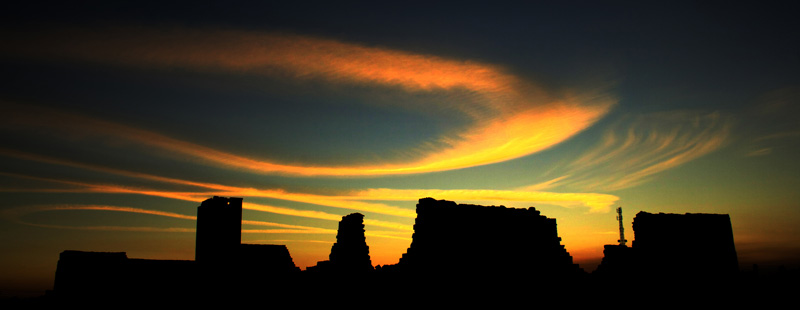
Our warm welcome to the Umm el-Jimal Project website! Located in northern Jordan, Umm el-Jimal is home to almost two thousand years of fascinating history and culture—as well as a vibrant modern community. The best-preserved Byzantine town in the Southern Hauran region, archaeological investigation has been underway on location for over a century. This website is part of an ongoing international effort to understand Umm el-Jimal and its regional context from a holistic approach that integrates traditional academic research with cutting-edge technology and a deeply-rooted community perspective. We aim to make ummeljimal.org an evolving online hub for academic research, cultural preservation, sustainable tourism, and community development at Umm el-Jimal.

LIBRARY
The Umm el-Jimal Project's Library page is an evolving digital repository for journal articles, book chapters, reference works, and other publications and printed resources related to ancient and modern Umm el-Jimal. It includes academic and popular material about Umm el-Jimal, beginning from the site's modern era of research with Howard Butler's Princeton expedition all the way through the project partners' most recent work. Several of the works are out of print or otherwise unavailable. All items are made available to download for personal use only, and if under copyright remain the intellectual property of their author(s) and publisher.The project's main published work, Umm el-Jimal: A Frontier Town and its Landscape in Northern Jordan, Volume 1 (1998), is only available directly from the Journal of Roman Archaeology. However, the book is still in print; purchase inquiries are welcome at jra [at] journalofromanarch [dot] com.Have a copy of and appropriate rights to an already published resource not available here, regardless of language? Please Contact Us to share relevant publications.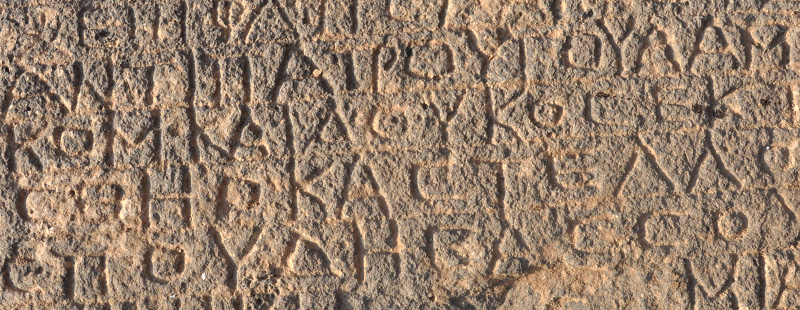

Brown 2009
"The Druze Experience at Umm el-Jimal."
PDF format (1.6MB)

Butler 1913a
"Ancient Architecture." In Syria. Div. II, Part 3.
PDF format (29.7MB)

Cheyney et al 2009a
"Archaeological Development and Economy of Housing at Umm el-Jimal."
PDF format (1.9MB)

Cheyney et al 2009b
"Umm el-Jimal Cemeteries Z, AA, BB, and CC: 1996 and 1998 Field Reports."
PDF format (6.8MB)

de Vries 1979
"Research at Umm el-Jimal, Jordan, 1972-1977."
PDF format (1.7MB)

de Vries 1990
Umm el-Jimal, Gem of the Black Desert: A Brief Guide to the Antiquities.
PDF format (3.2MB)

de Vries 1992
"The Umm el-Jimal Project, 1981-1992."
PDF format (4.1MB)

de Vries 1995
"The 1993 and 1994 Field Seasons at Umm el-Jimal."
PDF format (1.6MB)

de Vries 2000
"Continuity and Change in the Urban Character of the Southern Hauran from the 5th–9th Century."
PDF format (1.4MB)

de Vries 2007
"Paradox of Power: Between Local and Imperial at Umm el-Jimal."
PDF format (4.5MB)

de Vries 2009a
"Site Presentation in Jordan: Concept Design and the January 2009 Documentation Season."
PDF format (418KB)

de Vries 2009b
"Between the Cults of Syria and Arabia: Traces of Pagan Religion at Umm el-Jimal."
PDF format (934KB)

de Vries 2010
"On the Way to Bostra: Arab Settlement in South Syria Before Islam."
PDF format (1.6MB)

de Vries 2011
"Be of Good Cheer! No One on Earth is Immortal: Religious Symbolism."
PDF format (3.5MB)

Horsfeld 1937
"Umm al-Jamal."
PDF format (3.2MB)

Littman 1913a
"Arabic Inscriptions." In Syria. Div. IV, Sec. D.
PDF format (430KB)

Littman 1913b
"Greek and Latin Inscriptions." In Syria. Div. III, Sec. A, Part 3.
PDF format (17.6MB)

Littman 1913c
"Semitic Inscriptions." In Syria. Div. IV, Sec. A.
PDF format (13.7MB)

Littman 1913d
"Safaitic Inscriptions." In Syria. Div. IV, Sec. C, Part 3.
PDF format (590KB)






 Posts
Posts


 Stumble It!


No comments:
Post a Comment