Showing posts with label Persian Gulf. Show all posts

Sunday, August 26, 2018

The Origins of Doha and Qatar

The Origins of Doha and Qatar
بفضل منحة برنامج الأولويات الوطنية للبحث العلمي المقدمة من الصندوق القطري لرعاية البحث العلمي (عضو في مؤسسة قطرالتعليمية ) تكونَّ هذا الموقع الالكتروني بهذة الحُلة، (رقم المنحة) 010- 6 -421 -5
.جميع ما سيذكرهنا من تصريحات ترجع تحت مسؤولية مؤلفيها فقط
 أصول الدوحـة ” هواسم المشروع البحثي العلمي لجامعة كلية لندن قطر المدعوم من قبل الصندوق القطري لرعاية البحث العلمي والذي يهدف إلى أستكشاف أساس النمو التاريخي للدوحة, وتحولها لمدينة حديثة, بما في ذلك التغيرات والتجارب التي طرأت على حياة مواطنيها , وذلك من خلال مجموعة من الدراسات الاثرية والبحوث التاريخية أضافةً للاستماع إلى شهادات الناس الشفهية , وسيتم خلال المشروع تطبيق تقنيات تحليلية تفصيلية للسجل الأثري للدوحة ومنطقة البـدع بأستخدام أفضل الممارسات العلمية الحالية في مجال البحوث والدراسات الأثرية
وتشمل أهداف المشروع البحثية المحددة: تتبع مدى التغيرات المادية والمنظور الحضري الذى طرأ على منطقة البــدع والدوحة عبر الفترات الزمنية, وذلك من خلال دراسة الخرائط الجغرافية, والصور الجوية, ودراسة طبقات الترسبات الأثرية . وسيتم  تجميع السجل التاريخي للدوحة ومنطقة البدع من خلال الرجوع للمصادرالعربية والاوربية على حد سواء فضلاً على شهادات الناس الشفهية
This website was made possible by NPRP grant no. 5-421-6-010 from the Qatar National Research Fund (a member of Qatar Foundation). The statements made herein are solely the responsibility of the authors.
The Origins of Doha and Qatar is a UCL Qatar research project, supported by the Qatar National Research Fund that explores the foundation and historic growth of Doha and other coastal cities through a combination of archaeological investigation, historical research and oral testimony. The project applies detailed analytical techniques to the archaeological record of Doha, Bidda’, Fuwairit, and other settlements according to current best practice in archaeological research.
Specific aims include tracing of the changing physical extent and urban configuration of coastal cities in Qatar through time, using historic maps, aerial photographs and the excavation of archaeological deposits. This is complimented by a compiling a comprehensive historical record of Qatar from both European and Arabic sources, as well as oral testimony.

Thursday, February 1, 2018

Open Access Journal: Kuml

Kuml
ISSN: 2446-3280
Sidehovede 
Jysk Arkæologisk Selskab har siden 1951 udsendt årbogen Kuml, som har udviklet sig til et af dansk arkæologis vægtige skrifter. Artiklerne henvender sig både til fagfolk, amatører og alment arkæologisk interesserede.
Årbogen indeholder først og fremmest artikler om forhistorisk arkæologi og middelalderarkæologi, men også om kulturhistoriske emner i almindelighed. Endvidere er der i Kuml anmeldelser af diverse udgivelser.
Kuml udsendes gratis til medlemmer af Jysk Arkæologisk Selskab, der ligeledes kan erhverve bogudgivelserne til medlemspris.
Kontingentet fastsættes på den årlige generalforsamling og udgør i øjeblikket 200 kr. pr. år, hvortil skal lægges forsendelsesomkostninger.


1955


1951

Årg. 1, Nr. 1 (1951)

Wednesday, July 5, 2017

The Ancient Saar Project: London-Bahrain Archaeological Expedition (updated 2017)

[First posted in AWOL 22 September 2014, updated 5 July 2017]

The Ancient Saar Project: London-Bahrain Archaeological Expedition

Robert C Killick, 2007 (updated 2017)

The excavations at Saar, Bahrain, took place between 1990 and 1999. The work was undertaken by the London-Bahrain Archaeological Expedition which was formed specifically for the purpose. The UK academic supporter of the project was the Institute of Archaeology, University College, London. In Bahrain, the Expedition received the patronage of the Amir, the late Shaikh Isa bin Sulman Al-Khalifa. The project was funded mainly by the business community in Bahrain, as well as by the British Academy and other academic funding bodies (for a full list, see Appendix 1 in Saar Volume 3). The directors were Robert Killick, Jane Moon, and Harriet Crawford (for the period 1990-5).

The site of Saar had been previously excavated by a Jordanian expedition (results unpublished) and it was clear from that work that the settlement was inhabited for part of the Early Dilmun period (late third and early second millennia BC) and then abandoned. This corresponds to the period of Bahrain's involvement in Arabian Gulf trade when commodities were shipped through Bahrain, from Oman and the Indus, on their way to the cities of southern Babylonia, and vice versa. A procedure documented, if patchily, in the cuneiform records of the time.

Nearly all previous archaeological work on this period prior to the excavation of Saar has focused on the extensive burial mounds and on isolated temples. The importance of Saar, therefore, resides in the fact that it is the first (and currently only) Early Dilmun settlement to have been investigated in any detail. This importance has been recognised by the Government of Bahrain which has placed the 'Saar Heritage Park' on the Tentative World Heritage List.

The Saar Settlement

The settlement itself is located on a small but prominent eastern outcrop of a limestone ridge which provides about the only natural elevation in the northern part of Bahrain. Immediately west of the settlement, and on the highest part of the ridge, is the Saar burial field, while to the south there are two cemetery complexes of interconnected graves. The settlement is spread over an estimated area of between 15,000 and 23,000 sq m, of which 7,500 sq m was excavated by the end of the project. Saar is a well laid out settlement with a main street running up from the southeastern outskirts; a temple in the centre at the crossroads of the settlement; and two- and three-roomed buildings, constructed in rows (e.g. Block A) with standard room plans and suites of domestic installations. Over 80 buildings, mainly houses, were investigated by the Expedition, as well as a well and a gypsum kiln. All these are described in detail in Saar Report 3. On the basis of pottery comparisons, the duration of the settlement is currently estimated to be about 250 years, from 2100 to 1850 BC approximately. 

Reports:

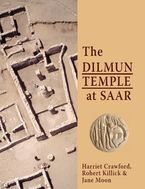
Saar Excavation Report 1 Saar Excavation Report 1
The Dilmun Temple at Saar
edited by Harriet Crawford, Robert Killick, and Jane Moon
    Full Report PDF 11 Mb
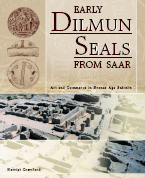
Saar Excavation Report 2 Saar Excavation Report 2
Early Dilmun Seals from Saar, fragments of art and administration
by Harriet Crawford
    Full Report PDF 6 Mb
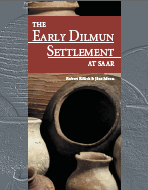
Saar Excavation Report 3 Saar Excavation Report 3
The Early Dilmun Settlement at Saar  
by Robert Killick and Jane Moon
    Full Report PDF 45 Mb

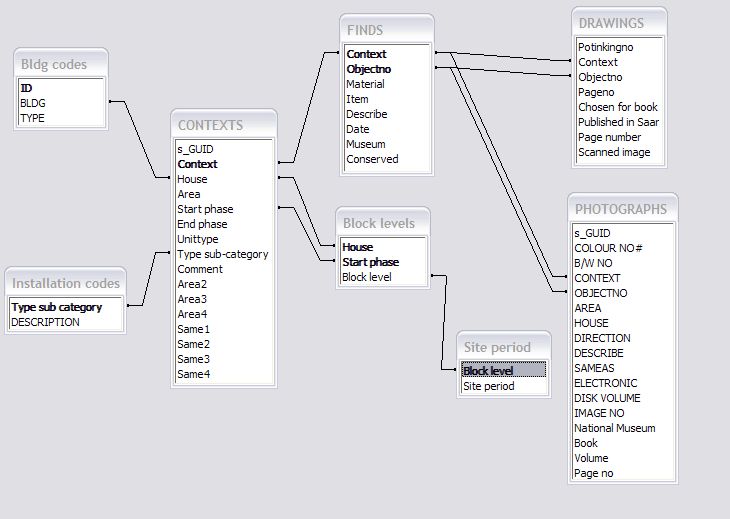
Database Documentation:

Database Documentation PDF 54 Kb
Entity Relationship Diagram JPG 48 Kb

Database Tables:

ARCHITECTS PLANS CSV 12 Kb
Bldg codes CSV 1 Kb
Bldg measurements CSV 4 Kb
Block levels CSV 6 Kb
CONTEXTS CSV 730 Kb
DRAWINGS CSV 27 Kb
FILE LIST CSV 5 Kb
GRAVES CSV 4 Kb
FINDS CSV 2.08 Mb
Installation codes CSV 1 Kb
Pottery periods CSV 2 Kb
PHOTOGRAPHS CSV 520 Kb
Pot versus strat CSV 5 Kb
Room types CSV 1 Kb
SAMPLING CSV 53 Kb
SECTIONS CSV 20 Kb
Site period CSV 1 Kb
SITE SUPERVISORS PLANS CSV 45 Kb

JPG Images:

Thumbnail of Bahrain map Bahrain map
Early Dilmun sites in Bahrain
JPG 53 Kb
Thumbnail of Cemeteries Cemeteries
The Northern Burial Complex
JPG 266 Kb
Thumbnail of Double chamber burials Double chamber burials
Two-tier Early Dilmun burials along the southwestern edge of the Saar mound-field
JPG 267 Kb
Thumbnail of Honeycomb cemetery Honeycomb cemetery
Part of the Southern Burial Complex
JPG 313 Kb
Thumbnail of Middle East map Middle East map
Southwestern Asia
JPG 153 Kb
Thumbnail of Saar area map Saar area map
Archaeological remains in the Saar area
JPG 155 Kb
Thumbnail of Settlement limits Settlement limits
Location and extent of the Saar settlement
JPG 118 Kb
Thumbnail of Site aerial Site aerial
The Early Dilmun settlement at Saar from the air, taken in 1993 (S)
JPG 272 Kb
Thumbnail of Site and eastwards Site and eastwards
The plain to the east of the settlement (E)
JPG 350 Kb


Tuesday, April 7, 2015

The Qatar Digital Library (QDL)

The Qatar Digital Library (QDL)

http://www.qdl.qa/sites/all/themes/QDLTheme/logo.png

What is the Qatar Digital Library?

The Qatar Digital Library (QDL) is making a vast archive featuring the cultural and historical heritage of the Gulf and wider region freely available online for the first time. It includes archives, maps, manuscripts, sound recordings, photographs and much more, complete with contextualised explanatory notes and links, in both English and Arabic.

How did the QDL come about?

The QDL has been developed as part of a 10-year Memorandum of Understanding on Partnerships between the Qatar Foundation, the Qatar National Library and The British Library. The website was developed by the Partnership in collaboration with Cogapp. The agreement of work for the first phase of the Partnership began in 2012, with the digitisation of a wide range of content from the British Library’s collections. Find out more about the Partnership.

Friday, October 5, 2012

Kuwaiti-Slovak Archaeological Mission to Failaka (KSAM)

Kuwaiti-Slovak Archaeological Mission to Failaka (KSAM)
The Kuwaiti-Slovak Archaeological Mission to Failaka (KSAM) was established  following an original idea of Mr Shehab A. H. Shehab, Department of Museums and Antiquities Director, National Council for Culture, Arts & Letters (NCCAL), State of Kuwait. His visit to the Slovak Academy of Sciences (SAS) Institute of Archaeology in May 2004 resulted in the agreement for a five year scientific programme signed between the National Council for Culture, Arts & Letters, State of Kuwait, and the Institute of Archaeology, Slovak Academy of Sciences, Slovak Republic, in September 2004 in Nitra. The KSAM project could have not materialized and would not have taken its present shape if not for the constant and generous support of the NCCAL presided by Secretary General Mr Bader S. A. Al-Rifai, and the kindest, expeditious and effective role of Mr Shehab A. H. Shehab. Regarding the prolific and smooth cooperation with NCCAL, the help of the Secretary General Assistant for Antiquities and Museums and Engineering Affairs Sector, Mr Ali Al-Youha, must be pointed out. Without him the documentation and preliminary conservation of the site as it is being realized would hardly be possible.

KSAM has been designed as a joint Kuwaiti-Slovak multidisciplinary research project fostering international cooperation and ties between young-generation researchers. The KSAM project was developed and has been elaborated and steered by Ms Lucia Benediková and Mr Peter Barta.

As for the Slovak side, the mission has been working under the auspices of the SAS Institute of Archaeology. Thanks to Mr Karol Pieta, SAS Institute of Archaeology scientific secretary and Slovak team director, the mission has been able to take advantage of the presence of specialists in environmental archaeology and geo-disciplines that strongly cross-fertilize archaeological research. Apart from senior archaeologists and academicians, the fieldwork has very much benefited from the presence of graduates and undergraduates in archaeology and neighbouring disciplines coming from Kuwait (National Council for Culture, Arts & Letters, State of Kuwait), Slovakia (Institute of Archaeology, Slovak Academy of Sciences, Nitra, and from the Department of Archaeology, Constantine the Philosopher University, Nitra) and Turkey (Prehistoric Section, Istanbul University). For analyses of particular material groups that require a special approach KSAM cooperates with Kuwaiti (KISR and KOC), German, Czech, Belgian, British, Polish and Turkish laboratories and specialists. In their laboratories steatites, bitumens, metals, mortars, obsidians, archaeobotanical and archaeozoological material have been analysed and investigated.

Four excavation seasons have taken place on Al-Khidr – in 2004, 2006, 2007 and by mid April 2008 the last field work season came to ist end. From 2009 onwards the material studies are scheduled that shall be concluded by a publication of the results.

Thanks to the really warm and cordial welcome of the mission by the National Council for Culture, Arts & L.

About the mission
Geography
History
- - - - - - -
Research
Sites of interest
Publications
Training
- - - - - - -
Team
Contact
Collaborating partners
Web links
- - - - - - -
Gallery

Papers in scientific journals 

  • Pieta, K. – Shehab, S. A. H. – Benediková, L. – Bielich, M. – Tirpák, J. – Bartík, M.: Archaeological and Geophysical Survey at Deserted Early Islamic Village Al-Qusur, Failaka Island, State of Kuwait. Ve službách archeologie 1/09, 2009, 29–35.
    pdf Click to display or download

     
  • Barta, P. – Benediková, L. – Hajnalová, M. – Miklíková, Z. – Belanová, T. – Shehab, S. A. H.: Al-Khidr on Failaka Island: Preliminary Results of the Fieldworks at a Dilmun Culture Settlement in Kuwait. TÜBA-AR, Turkish Academy of Sciences Journal of Archaeology 11, 2008, 121–134.
    pdf Click to display or download

     
  • Shehab, S. A. H. – Bartík, M. – Tirpák, J. – Ďuriš, J. – Barta, P. – Benediková, L. – Bielich, M.: Survey and Mapping of Al-Quraniya, Failaka Island, State of Kuwait. Ve službách archeologie 2/08, 2008, 17–22.
    pdf Click to display or download

     
  • Miklíková, Z. – Barta, P.: KSAM renews archaeozoological research in Kuwait. International Council for Archaeozoology (ICAZ) Newsletter 8/2, 2007, 1.
    pdf Click to display or download

     
  • Barta, P. – Bartík, M. – Benediková, L. – Ďuriš, J. – Pieta, K. – Shehab, S. A. H. – Štolc, S., Jr. – Tirpák, J.: Geophysical prospecting of the Bronze Age site Al-Khidr, Failaka Island, State of Kuwait. Študijné zvesti Archeologického ústavu SAV 41, 2007, 69–73.
    pdf Click to display or download

     
  • Pieta, K. – Shehab, S. A. H. – Tirpák, J. – Bielich, M. – Bartík, M. – Ďuriš, J.: Archaeological and geophysical prospecting of deserted Early Islamic village Al-Qusur (Failaka Island, State of Kuwait). Študijné zvesti Archeologického ústavu SAV 41, 2007, 74–76.
    pdf Click to display or download

     
  • Benediková, L. – Barta, P.: Kuwaiti-Slovak Archaeological Mission. Bulletin of The Society for Arabian Studies 12, 2007, 23–25.
    pdf Click to display or download