Tuesday, September 30, 2025

Writing and Religious Traditions in the Ancient Western Mediterranean

a cura di
Lorenzo Calvelli - Università Ca’ Foscari Venezia, Italia - email orcid profile 
María Dolores Dopico Caínzos - Universidad de Santiago de Compostela, España - email orcid profile
book cover 

Collana | Antichistica
Volume 44 | Miscellanea | Writing and Religious Traditions in the Ancient Western Mediterranean

From the sacred spaces of the Iberian Peninsula to those of Italy and the surrounding islands, this volume opens a window onto the vibrant world of ancient religions as seen through the lens of epigraphy. Inscriptions are investigated as objects conveying written messages that could circulate among humans but were also addressed to the divine. Their analysis contributes to the understanding of rituals and gestures that have long disappeared but that can be reconstructed through a refined interdisciplinary approach. By weaving epigraphy with archaeological evidence and literary sources, the book conjures a rich tapestry of individual and collective practices, offering readers not only accomplished scholarship but also a vivid journey into the multifaceted universe of sanctuaries in the ancient Mediterranean.


Permalink http://doi.org/10.30687/978-88-6969-931-3 | e-ISBN 978-88-6969-931-3 | ISBN (PRINT) 978-88-6969-932-0 | Pubblicato 24 Settembre 2025 | Lingua en, es, it

Working Methodology

The Iberian Peninsula

The Italian Peninsula and the Surrounding Islands

Conclusions


Castra et Villae in der Spätantike: Fallbeispiele von Pannonien bis zum Schwarzen Meer

Orsolya Heinrich-Tamáska (Hrsg.)
 

Castellum Pannonicum Pelsonense  

In acht Studien werden neue Forschungsergebnisse zur spätantiken Militär- und Villenanlagen (3.-7. Jh. n. Chr.) von Pannonien bis zum Schwarzen Meer vorgelegt. Sie richten den Blick über die Donauprovinzen hinaus nach Westen bis an den Oberrhein und nach Süden bis zum Zentralbalkan. Die Beispiele belegen die Bedeutung landschaftsarchäologischer Betrachtungen für die Rekonstruktion der mikro- und makroregionalen Einbindung einzelner Anlagen und zeigen, wie sich hieraus neue aufschlussreiche Hinweise bezüglich ihrer funktionalen Bedeutung ergeben.

Identifier

ISBN 978-3-96929-477-2 (PDF)

Veröffentlicht

24.09.2025
Die Printausgabe erschien 2022 bei der Verlag Marie Leidorf GmbH, Rahden/Westf., ISBN 978-3-89646-158-2.
Titelei
Orsolya Heinrich-Tamáska
5-6
Inhalt
7
Ádám Szabó, Orsolya Heinrich-Tamáska, Endre Tóth, Knut Rassmann, Ádám Braun, Ákos Pető
55-123
László Rupnik, Zoltán Czajlik, András Bödőcs
In memoriam Dr. Ödön Rádai
125-150
Autoren
225


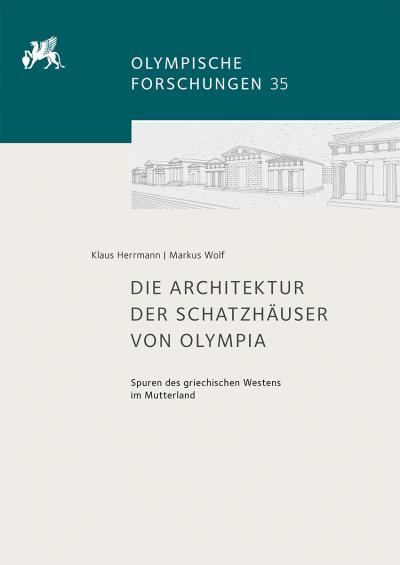
Die Architektur der Schatzhäuser von Olympia: Spuren des griechischen Westens im Mutterland

Klaus Herrmann [Author]
Markus Wolf [Author]
OF_35_Cover 

Since June 2018, research has been conducted on the treasury buildings from the Archaic and Early Classical periods in Olympia. The new study is based on the estate of the bauforscher Klaus Herrmann, who passed away in 2015, with the aim of compiling all information on the buildings into a final publication. To this end, a new overall plan of the treasury terrace and new architectural drawings of series of architectural elements not yet recorded, as well as computer drawings of the reconstruction of the treasuries, have been produced. Another interesting question discussed here is the provenance of many of these buildings from the home cities of the western Greek colonies in southern Italy, Sicily and Albania.  

Published

September 9, 2025

Online ISSN

2569-6394

Print ISSN

0474-1242

Bibliographic Information and Reviews


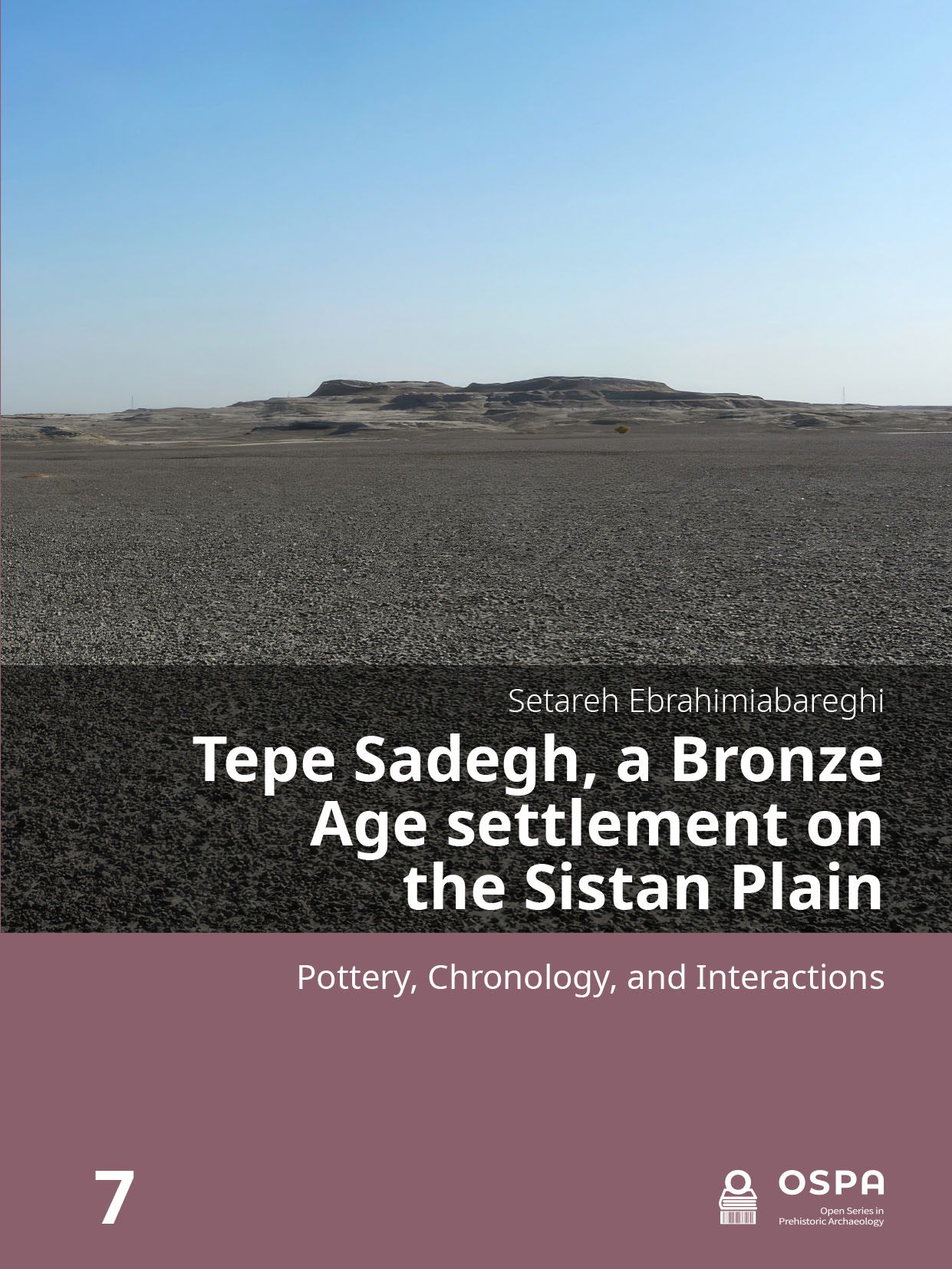
Tepe Sadegh, a Bronze Age settlement on the Sistan Plain: Pottery, Chronology, and Interactions

Setareh Ebrahimiabareghi

This book offers the first comprehensive analysis of the typology and chronology of pottery from Tepe Sadegh, located on the Sistan Plain of southeastern Iran. Tepe Sadegh, a suburban settlement situated 75 km southeast of Zabol and 13 km southwest of the prominent Bronze Age site Shahr-i Sokhta, serves as one of its satellite settlements. Shahr-i Sokhta, a UNESCO World Heritage site and one of the largest Bronze Age urban centres in the region, spans four distinct periods of occupation over nearly 1,200 years. The hot, arid climate of Sistan has been particularly favourable for preserving organic and ceramic samples, enabling detailed studies of chronology.

Pottery, a cornerstone of human culture from the Neolithic era to the present, is a critical tool in archaeological research. The classification of ceramic styles and their similarities or differences provides insights into cultural change and interactions. Before this study, the pottery of Tepe Sadegh was poorly documented, and limited research had been conducted on the satellite sites of Shahr-i Sokhta. By addressing this gap, the study not only enhances understanding of Tepe Sadegh’s cultural evolution but also contributes valuable data to the broader understanding of the Bronze Age in Eastern Iran.

By analysing materials such as pottery and radiocarbon-dated charcoal from Tepe Sadegh, this research establishes both a relative and absolute chronological framework. Absolute dating is complemented by comparative analysis with other Indo-Iranian Bronze Age sites, yielding a revised chronology for the period. These findings illuminate the cultural sequences of the region, the process of urbanization, and the increasing socio-cultural complexity of the Sistan Plain during the Bronze Age.

Paperback ISBN: 9789464281026 | Hardback ISBN: 9789464281033 | Imprint: Sidestone Press Dissertations | Format: 210x280mm | 368 pp. | Open Series in Prehistoric Archaeology 7 | Series: OSPA: Open Series in Prehistoric Archaeology | Language: English | 222 illus. (bw) | 81 illus. (fc) | Keywords: Tepe Sadegh; bronze age; Sistan Plain; pottery typology; ceramic chronology; Shahr-i Sokhta; satellite settlements; cultural interactions; urbanization; eastern Iran archaeology | download cover | DOI: 10.59641/t7366wf | CC-license: CC BY-NC 4.0

Foreword (by Albert Hafner, Rouhollah Shirazi)
Acknowledgment
Deutsche Zusammenfassung
English Summary
Persian Words Based on TAVO

1. Introduction and Environmental Context
1.1 Introduction
1.2 History of Research in Shahr-i Sokhta
1.3 Methodology
1.4 Natural Environment and Geographical Conditions of Sistan and Baluchistan

2. Chrono-Cultural Framework and Archaeological Sites
2.1 The Chrono-Cultural Framework of the Iranian Plateau and the Neighbouring Regions
2.2 Sistan
2.3 Baluchistan
2.4 Kerman Province
2.5 Afghanistan
2.6 Pakistan
2.7 Central Asia

3. Excavations at Tepe Sadegh
3.1 Tepe Sadegh
3.2 Method of Excavation

4. Pottery Analysis of Tepe Sadegh
4.1 Pottery of Tepe Sadegh
4.2 Typology

5. Chronology and Dating
5.1 Chronology
5.2 Radiocarbon Dating
5.3 Absolute Chronology of Comparable Sites

6. Synthesis and Conclusion
6.1 Synthesis
6.2 Chronology
6.3 Conclusion

Appendix
Repository, Data Collection
Drawings of Significant Potsherds of Tepe Sadegh

Bibliography


Monday, September 29, 2025

The Archaeology of Daily Life: A Late Antique House at Kom al-Ahmer, Northwestern Nile Delta

MARCHIORI, GIORGIA

The archaeological investigation and study of houses and domestic contexts is key to grasping how people lived in antiquity; it permits us to enrich and nuance our overall understanding of daily life during specific historical periods and also touches upon urbanism, economy, and social developments and is equally relevant even in areas with a wealth of preserved written evidence, such as in the case of Egypt. This research yielded a snapshot into the everyday life of a non-elite household of the Late Roman period in Egypt by focussing on a single case study house —inhabited between the late 4th and mid-5th century CE— from the site of Kom al-Ahmer, a settlement embedded in the Delta’s countryside, part of Alexandria’s hinterland, and involved in the Mediterranean trade network. The investigation analysed what could be discerned archaeologically about how this building was developed, occupied, and abandoned. This study led to the identification of phases of use corresponding to the inhabitants’ growing agency over the spaces where they carried out their daily activities, from domestic tasks to small-scale workshop crafts that expanded beyond the walls of the house. The Delta location prompted inquiring about the extent to which the geographical and environmental background shaped the house’s architectural design, influencing both planning and construction. The house’s design is also examined in light of the Egyptian architectural development and then cross-compared with a sample of contemporary houses from other regions of the Mediterranean to review if the affiliation to the broader Roman empire influenced the standard house form. The results of this research highlight the contribution of micro-scale investigation to the current macro-scale understanding and demonstrate the potential behind the meticulous study of domestic contexts.

Item Type:Thesis (Doctoral)
Award:Doctor of Philosophy
Keywords:Houses; domestic archaeology; Egypt; Nile Delta; Late Antiquity
Faculty and Department:Faculty of Social Sciences and Health > Archaeology, Department of
Thesis Date:2022
Copyright:Copyright of this thesis is held by the author
Deposited On:12 Dec 2022 10:05


Materia Magica Aegyptiae: The ancient Egyptian offering table as funerary landscape, ritual utensil, and unifier of elements

LUNDIUS, ESMERALDA,IRENE

Founded on a sample of 387 thoroughly studied cult items from museum collections in Europe, the US and Egypt, as well as 90 Asyutian offering tables, most of which were studied in situ, this thesis offers a diachronic analysis of the design, use, context, and provenance of ancient Egyptian offering tables and similar materia magica. A hands-on description of artefacts, including offering tables, soul-houses, offering trays and amulets, places them within a time- and geographic specific context, and relates their function and design to written and pictorial sources, tomb architecture, means of production, as well as ritual practice and religious/mythological notions. By applying an in-depth analysis of single, specific items, an attempt is made to reconstruct their function and meaning for users within a specific socio-cultural, geographical, and temporal setting. The unifying role of water within the Egyptian landscape and culture is highlighted. A conclusion is reached indicating how offering tables over time mirrored their socio-economic and religious context. From being a simple tool used during offering rituals, the offering table eventually became multi-functional and an essential element within ancient Egyptian religious practice – an embodiment of the entire funerary/ancestral cult, becoming a magical, transformative object in its own right.

Item Type:Thesis (Doctoral)
Award:Doctor of Philosophy
Keywords:Egyptology, ancient Egyptian magical practice, funerary archaeology, material culture, funerary landscape, ancient Egyptian funerary ritual
Faculty and Department:Faculty of Social Sciences and Health > Archaeology, Department of
Thesis Date:2022
Copyright:Copyright of this thesis is held by the author
Deposited On:31 Oct 2022 12:48


Urban fluctuations in the north-central region of the Nile Delta: 4000 years of river and urban development in Egypt

HINOJOSA-BALINO, ISRAEL

This research explored urban changes in the north-central region of the Nile Delta —from the beginning of the Dynastic period (ca. 3150 BCE) until the beginning of the Tulunid dynasty (868 CE)— using a multi-dimensional, long-term approach with different independent variables: Spatiotemporal, Cultural and Urbanistic, Hydrological or Geomorphological, Historical, and Contextual. To investigate the location, connectivity, and permanence of the known archaeological settlements in the Nile Delta, an extended version of the Egyptian Exploration Society’s Delta Survey database was created to analyse settlement patterns through time compared against an original reconstruction of a palimpsestual river network using remote sensing, historical sources, archaeological and geomorphological data, spatial and network analysis.
This investigation has studied the extent to which human agency and geomorphology are intertwined and shape urban patterns in the Nile Delta; against the long-lived idea that the Nile River has almost exclusively made Egypt and that the river fluctuations have shaped the Egyptian urban landscape. For some authors like Fernand Braudel, the Nile River has defined the Egyptian world to the point of accepting that Egypt was considered a gift from the Nile, whereas, by contrast, Mesopotamia was made by human hands. In this thesis, however, it is argued that humans and their politics have played a more important role in defining the Nilotic landscape. Hence, this research explored to what extent river shifts and human agency have impacted urban patterns and settlement locations from the Old Kingdom to the modern era with the construction of the High Aswan Dam.
Regardless of river fluctuations, settlements persisted, and disastrous events obliterating cities are exceptional events. Urban fluctuations, bliss or misery, heydays or collapse, are certainly political and social happenings intermingled with the omnipresent river Nile.

Item Type:Thesis (Doctoral)
Award:Doctor of Philosophy
Keywords:nile, delta, egypt, geomorphology, network analysis, GIS, icxitoca, urbanism, human use of space, databases, postgresql, time phases, dynasties
Faculty and Department:Faculty of Social Sciences and Health > Archaeology, Department of
Thesis Date:2022
Copyright:Copyright of this thesis is held by the author
Deposited On:18 Jul 2022 11:16


Serving the Living and the Dead: Ceramic Production in Copper Age Campania, Southern Italy

de Falco, Maria

The purpose of this study is to analyse the relationship between ceramic production and wider cultural processes taking place in Campania, and more widely in the Italian Peninsula, during the Copper Age (roughly 3900-2200 BC). The study aims to draw new inferences from the evidence of ceramic production by using a holistic approach. This integrates typological analysis typical of the Italian tradition with a broader, theoretically informed, technological approach involving macroscopic observations and archaeometric analyses, and applyies both to ceramic assemblages from four key multi-phase sites not previously investigated in this way.
These integrated typological and technological analyses of different ceramic assemblages make it possible to highlight and relatively date technological innovations as well as strong manufacturing traditions never previously fully characterised for Copper Age Southern Italy. Changes in production processes, vessel types as well as in aesthetics in Neolithic to Copper Age ceramics are defined, and possible functional and social explanations proposed.
It is argued that the important socio-economic changes occurring in Southern Italy, especially during the 3rd millennium BC, resulted in radical changes in the production and purpose, and symbolic and material value, of ceramic objects. Embedded in the cultural processes ongoing in this period, a shift from a ‘ritual’ to a ‘functional’ demand for ceramic production is theorised for the first time for these contexts. This integration of multiple lines of evidence (context, typology and technology) also highlights how research on ceramics can contribute to the definition and understanding of broader cultural processes at a regional and wider scale such as demands on production as well as symbolic, and economic drivers of change.

Item Type:Thesis (Doctoral)
Award:Doctor of Philosophy
Keywords:Copper Age, pottery, Italian Peninsula, Campania, technological change, ceramic technology, ceramic chaîne opératoire, archaeometry, petrography, typology, geochemistry, technological variability
Faculty and Department:Faculty of Social Sciences and Health > Archaeology, Department of
Thesis Date:2023
Copyright:Copyright of this thesis is held by the author
Deposited On:05 Jun 2024 11:42


Sunday, September 28, 2025

New Open Access Journal: AI & Antiquity: Journal of Teaching and Technology in Ancient Studies

Banner 

Founded in 2025, AI & Antiquity: Journal of Teaching and Technology in Ancient Studies (ISSN 3081-4553) was established on the conviction that Ancient Studies—encompassing history, archaeology, philology, and art history—urgently require a dedicated forum for critical reflection on pedagogy, teaching practices, and the transformative role of digital technologies in education. In a scholarly environment where research often takes precedence, this journal places teaching at the centre of attention: as a fundamental, creative, and intellectual dimension of professional practice in the study of the ancient world.

The journal’s mission is to foster dialogue among researchers, educators, and technologists committed to inclusive, active, and innovative pedagogies for engaging with the past. AI & Antiquity gives particular attention to perspectives historically overlooked in scholarship—especially those of women and other underrepresented groups—alongside the experiences of neurodivergent students and educators. As an online publication, it provides a dynamic platform for exchanging ideas and practices across disciplines and geographies. While artificial intelligence occupies a central place in this conversation, the journal also embraces a wide spectrum of digital tools—from immersive environments and data visualisation to collaborative platforms and gamified learning strategies—with the aim of reshaping how Antiquity is taught and learned in the 21st century.

AI & Antiquity is published under the umbrella of the Center for Innovation in Ancient Worlds (CIAW), a non-profit academic framework designed to sustain the journal and to foster new initiatives at the intersection of Ancient Studies, pedagogy, and digital innovation. Through CIAW, the journal benefits from a stable institutional base while remaining an independent academic initiative. It also counts on the support of the Area of Ancient History, Department of Sciences of Antiquity and the Middle Ages, Universitat Autònoma de Barcelona.

Drawing on the expertise of a distinguished editorial team and an international advisory board, AI & Antiquity ensures academic excellence, fosters interdisciplinary innovation, and seeks global relevance in every contribution it publishes.

Current Issue

Volume 1, Issue 1 (2025)

The inaugural issue of AI & Antiquity: Journal of Teaching and Technology in Ancient Studies launches the journal’s mission to explore the intersections of artificial intelligence, inclusive pedagogy, and ancient studies. This foundational volume gathers the proceedings of the First International Conference on Innovation and Technology in Ancient History Education, held online in May 2025 and hosted by the Universitat Autònoma de Barcelona.

The contributions reflect a broad range of perspectives, from digital epigraphy and ancient language learning to inclusive teaching, rhetorical practice, and the representation of gender and diversity in antiquity. Together, they highlight both the challenges and the opportunities posed by the rapid spread of generative AI in higher education, showing how ancient studies can play a leading role in rethinking teaching for the 21st century.

We also acknowledge with gratitude the work of peer reviewers, the members of the advisory and editorial boards, and the participating institutions, whose support has made this inaugural volume possible. This issue marks the beginning of a scholarly space dedicated to fostering critical dialogue, pedagogical innovation, and inclusive practices across the global community of ancient world studies.

Full Issue available in PDF:
Download PDF

Published: 2025-09-24

Articles

View All Issues

Call for Papers – Volume 2 (February 2026)

Deadline: October 30, 2025

The inaugural issue of AI & Antiquity: Journal of Teaching and Technology in Ancient Studies featured the proceedings of the First International Conference on Innovation and Technology in Ancient History Education, held online on May 7–8, 2025. Building on this foundation, the journal now invites submissions for its second volume. From 2026 onward, AI & Antiquity will publish two issues per year (February and September).

We welcome contributions from scholars, educators, and researchers engaged in rethinking how, why, and for whom Antiquity is taught today. We are especially interested in work that:

  • Integrates digital technologies with innovative pedagogical approaches.

  • Engages with neurodivergent perspectives.

  • Recovers or amplifies the voices of groups historically marginalized within Ancient Studies, particularly those of women and underrepresented communities.

Important Dates

  • Article submission deadline: October 30, 2025

  • Expected publication: February 2026

For submission guidelines and further details, please consult the Editorial Guidelines section on our website.

We look forward to your contributions and to building a dynamic, inclusive community committed to reshaping the future of Ancient Studies education.


See AWOL's full List of Open Access Journals in Ancient Studies