skip to main |
skip to sidebar
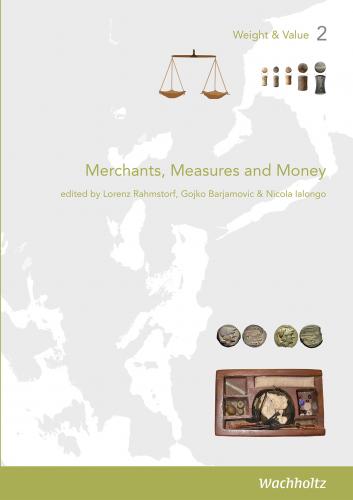
Merchants, Measures and Money: Understanding Technologies of Early Trade in a Comparative Perspective
- edited by Lorenz Rahmstorf, Gojko Barjamovic, Nicola Ialongo
-
Weight & Value
-
volume: 2
-
1. Auflage
-
29,7 cm x 21,0 cm
-
376
pp.
-
Release date: 31.03.2021
- 978-3-529-03541-8
This second volume in the series collects papers from
two workshops held at the University of Göttingen in 2019 and 2020. The
international meetings tackled questions related to merchants and money
in a comparative perspective, with examples spanning from the Bronze
Age to the early Modern period and embracing Europe, the Mediterranean,
Asia and East Africa. The first part of this volume presents historical
case studies of how merchants planned and carried out commercial
expeditions; how risk, cost, and potential profit was calculated; and
how the value of goods was calculated and converted. The papers in the
second part address current theories and methods on the development and
function of money before and after the invention of coinage. The
introduction of balance scales around 3000 BCE enabled the formation of
overarching indexes of value and the calculation of the commercial value
of goods and services. It also allowed for a selected set of
commodities to take on the role of currency. Around 650 BCE, this led to
the invention of coinage in the Eastern Mediterranean.





 Posts
Posts


 Stumble It!


No comments:
Post a Comment